Saturday, June 6, 2026
Home Blog Page 33

Taliban’s Internal Divisions Are No Longer Hidden — And That’s Why the Emirate Is at Risk

0

For the first time since returning to power, the Afghan Taliban are speaking less like rulers and more like a movement trying to convince itself to stay together.

Across Afghanistan, senior Taliban leaders are repeating the same words with unusual urgency: unity, obedience, loyalty to the Amir, survival of the Islamic system. When power feels secure, such language is unnecessary. When it feels threatened, it becomes constant.

This shift tells us something important: the Islamic Emirate is entering its most vulnerable phase.

When Leaders Start Warning Their Own Ranks

In recent weeks, figures ranging from Mullah Abdul Ghani Baradar to Defence Minister Mullah Yaqoob and Higher Education Minister Neda Mohammad Nadeem have delivered near-identical messages. None focused on economic recovery or diplomacy. All focused on discipline.

That uniformity is revealing. It suggests the leadership is less concerned about foreign pressure than about fractures within its own ranks.

The turning point came with unusually blunt remarks by Interior Minister Sirajuddin Haqqani, who openly criticised governance by fear and intimidation, warning that coercion cannot sustain a state. In Taliban political language, this was extraordinary.

The message was clear — and so was the reaction.

Kandahar Pushes Back

Soon after Haqqani’s remarks, senior figures close to Supreme Leader Haibatullah Akhundzada responded publicly. They warned against “distrust” and “division,” stressing that the Emirate’s survival depends on unity.

Nadeem, one of Akhundzada’s closest allies, repeated this message several times in a single week. That repetition was not accidental. It was defensive.

Former deputy foreign minister Abbas Stanikzai went even further, openly criticising the leadership’s direction. His departure from Afghanistan shortly afterward sent a signal: dissent has limits — and those limits are tightening.

What the Taliban Are Really Arguing About

The Taliban insist ideological unity remains intact. That may be true. But ideology is not the real battleground.

The internal disagreements revolve around three practical questions:

  • How rigid should social policies be, especially on women and education?
  • Can the Emirate survive permanent international isolation?
  • How much power should be concentrated in Kandahar — and in one man?

These are not minor differences. They go to the heart of whether the Taliban want to rule indefinitely or merely dominate temporarily.

Isolation Is Weakening the System

The Taliban may claim sovereignty, but isolation has consequences they cannot ignore.

Afghanistan’s economy is collapsing. Aid is conditional. Recognition remains distant. Sanctions limit basic governance. This does not just hurt ordinary Afghans — it erodes the state’s capacity to function.

Isolation also creates space for external actors to hedge their bets by supporting armed opposition or pressuring the Taliban indirectly.

Unity, in this context, is no longer a virtue. It is a survival strategy.

No Neighbour Is Truly Comfortable

Despite diplomatic engagement, no major regional power genuinely trusts the current Taliban system.

  • Pakistan faces escalating militant violence and is openly discussing political change in Kabul.
  • Iran has warned against exclusionary rule and quietly backed Taliban opponents.
  • Russia and China fear ISIS expansion, militant flows and regional instability.

Even India’s limited engagement is cautious and interest-based, not ideological.

The Taliban are increasingly surrounded by sceptics — not allies.

Why Loyalty Campaigns Signal Weakness

The Taliban’s turn toward clerics, mosques and public calls for renewed allegiance reflects a familiar authoritarian reflex. When institutions are weak, regimes rely on loyalty rituals.

These campaigns are meant to project strength. In reality, they expose anxiety.

Repeated demands for obedience suggest that obedience is no longer guaranteed.

Two Existential Dangers

The Emirate now faces two interconnected risks.

First, the risk of losing effective control as economic failure, regional hostility and internal dissatisfaction converge.

Second, the risk of leadership rupture, as Akhundzada’s rigid authority increasingly appears to some insiders as an obstacle rather than an anchor.

For his supporters, enforcing loyalty is the cheapest way to preserve the system.
For critics, leadership change appears the least costly path to adaptation.

The Moment Before the Shift

The Taliban are not collapsing. Not yet.

But they are no longer confident. Their unity is enforced, not organic. Their authority is asserted, not negotiated. Their legitimacy rests on fear, not consent.

History shows that such systems rarely break suddenly — but when they do, the break is decisive.

Afghanistan is once again approaching a turning point.
The only uncertainty is whether change will come through reform — or rupture.


Pakistan, Libya Explore Expanded Military Cooperation as Army Chief Visits Tripoli

0
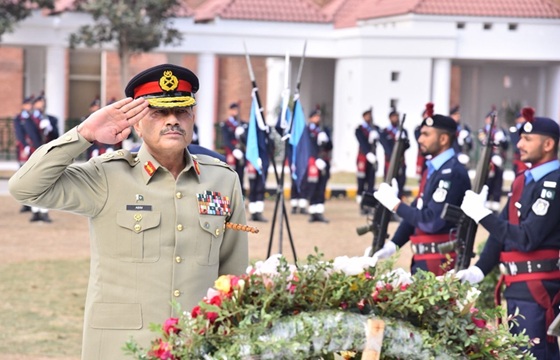
Field Marshal Syed Asim Munir, COAS & CDF, Pakistan, who is on a official visit to Libya, called on Field Marshal Khalifa Belqasim Haftar, Commander-in-Chief of the Libyan Arab Armed Forces.

Pakistan’s Chief of Army Staff and Chief of Defence Forces, Field Marshal Syed Asim Munir, held high-level talks with Libya’s top military leadership during an official visit to the North African country, focusing on regional security, counter-terrorism and defence cooperation, according to a statement issued by the Inter-Services Public Relations (ISPR).

During the visit, Field Marshal Munir called on Field Marshal Khalifa Belqasim Haftar, Commander-in-Chief of the Libyan Arab Armed Forces, and Lieutenant General Saddam Khalifa Haftar, Deputy Commander-in-Chief, the military’s media wing said.

Upon arrival, the Pakistan Army chief was accorded a guard of honour by a smartly turned-out contingent of the Libyan Armed Forces, reflecting the importance attached to the visit.

Focus on Security and Military Cooperation

According to ISPR, the meeting covered matters of mutual interest, evolving regional and global security dynamics, and avenues for enhancing bilateral defence and military-to-military cooperation.

Both sides emphasised the need to strengthen collaboration in key areas, including:

  • Professional military training
  • Capacity building and skill development
  • Counter-terrorism and security cooperation

The discussions come at a time when Libya continues to face complex security challenges, while Pakistan remains actively engaged in international efforts to combat terrorism and promote regional stability.

Commitment to Stronger Defence Ties

Field Marshal Asim Munir reaffirmed Pakistan’s commitment to expanding defence relations with Libya, stressing that cooperation would be pursued on the basis of shared interests, mutual respect and professional engagement.

He underscored Pakistan Armed Forces’ experience in counter-terrorism operations and institutional training, areas in which Pakistan has long provided support to friendly countries through military training programmes and advisory roles.

Field Marshal Khalifa Haftar, in turn, praised the professionalism and operational experience of the Pakistan Armed Forces and expressed Libya’s desire to further deepen defence cooperation between the two countries.

Senior Pakistani Officials Present

The meeting was also attended by Major General Faisal Naseer, Director General of Counter-Intelligence, highlighting the strategic nature of the discussions.

Broader Diplomatic Context

Pakistan and Libya have traditionally maintained cordial relations, with defence cooperation forming an important pillar of bilateral engagement. Defence analysts say the visit signals Pakistan’s continued outreach to countries in Africa and the Middle East, aimed at strengthening military diplomacy, sharing operational expertise, and contributing to regional peace and stability.

Poland Declares First Patriot Air Defense Unit Fully Operational

0
Surface-to-air missile launchers of the Patriot system of 37th Air Defense Missile Squadron from the 3rd Warsaw Air Defense Missile Brigade stand during a demonstration training of the IOC Initial Operational Capability of the anti-aircraft and anti-missile system and its integration into a IBCS command system, Sochaczew.

Poland has declared a major milestone in its national air and missile defense modernisation after the 37th Air Defense Missile Squadron reached Full Operational Capability (FOC) under the country’s flagship Wisła air and missile defense program, the Ministry of National Defense announced.

The squadron, part of the 3rd Warsaw Air Defense Missile Brigade, becomes the first unit to complete the initial phase of Wisła, marking a significant step toward building a fully integrated, layered air defense network for the country.

According to the defense ministry, the declaration of full operational capability followed comprehensive evaluations conducted in December, which focused on combat readiness, command-and-control procedures and the squadron’s ability to conduct real-world missions. During the assessments, key combat systems related to command, control and engagement were tested.

Patriot Systems Enter Active Service

Deputy Prime Minister and Minister of National Defense Władysław Kosiniak-Kamysz described the development as a major boost to Poland’s security, confirming that U.S.-made Patriot air defense systems are now fully operational within the Wisła framework.

“This is a good day for Poland’s security,” Kosiniak-Kamysz said. “The 37th Air Defense Missile Squadron has achieved full operational capability. This is the moment when the Wisła system — the Patriot launchers — begins real service in integrated air and missile defense.”

He emphasized that while advanced equipment is critical, operational effectiveness ultimately depends on trained personnel. “Equipment alone does not fight. The most important element is the soldier and their skills,” he said, thanking troops stationed in Sochaczew, where the squadron is based.

IBCS Integration and Future Phases

The defense minister highlighted that Wisła is designed as a networked system rather than a standalone capability, with command and control provided by the Integrated Battle Command System (IBCS).

“Further phases of the Wisła program are ahead of us,” Kosiniak-Kamysz said. “IBCS is the brain that connects sensors and effectors — from radars that collect data, through decision-making, to selecting which launchers should engage, whether Patriot systems or other platforms, including those linked to the F-35 program.”

In a later statement, he described the achievement as a historic moment for Poland’s air defense architecture.

“This is the implementation of the Wisła program — integrated air defense of the Polish state: missile defense, air defense and counter-drone defense,” he said.

Foundation of Poland’s Layered Air Defense

Wisła is Poland’s primary effort to establish a layered air and missile defense system capable of countering aircraft, ballistic missiles, cruise missiles and unmanned aerial threats. Its first phase centers on Patriot interceptors integrated with IBCS to enable sensor-to-shooter connectivity across multiple platforms.

The 37th squadron is among the first Polish units certified to conduct operational missions under this framework, moving beyond training or limited readiness status.

Polish officials have repeatedly stressed that Wisła will continue to expand in future phases, with additional sensors, interceptors and integration with other systems — including fifth-generation F-35 fighter jets — to create a unified national air defense picture.

Regional Security Context

The announcement comes as Poland accelerates military modernisation in response to heightened security concerns in Eastern Europe, driven by Russia’s war against Ukraine and the growing threat posed by missiles and drones across the region.

Warsaw has positioned Wisła as a cornerstone of its broader defense strategy, strengthening deterrence on NATO’s eastern flank.

Türkiye Weighs Returning Russian S-400s to Moscow in Bid to Repair U.S. Ties and Rejoin F-35 Programme

0
S-400 air defense systems

Türkiye is exploring the possibility of returning its Russian-made S-400 “Triumf” air defence systems to Moscow, a move that could mark one of the most significant strategic reversals by a NATO member since the Cold War and potentially end years of strained relations with the United States.

According to a Bloomberg report cited by defence analysts, Ankara’s reassessment of the controversial system reflects an intensified effort to normalise defence ties with Washington, lift U.S. sanctions and regain access to the F-35 Lightning II fighter jet programme, from which Türkiye was expelled in 2019 .

From Procurement Dispute to Strategic Test

Türkiye’s purchase of the S-400 in 2017 for $2.5 billion made it the first NATO country to acquire a high-end Russian air defence system. Ankara justified the decision by citing stalled negotiations with Washington over the Patriot missile system and restrictive technology-transfer terms.

However, the acquisition triggered a severe backlash from the United States, which argued the S-400 was incompatible with NATO systems and posed a security risk to allied platforms, particularly the F-35.

Washington responded by expelling Türkiye from the F-35 programme, imposing sanctions under the Countering America’s Adversaries Through Sanctions Act (CAATSA), and cutting Turkish defence firms out of the global F-35 supply chain.

Why the S-400 May Now Be a Liability

While Türkiye never fully operationalised the S-400 systems and instead kept them in storage, U.S. officials repeatedly insisted that partial measures were insufficient. Washington has made clear that full divestment of the system is the only path toward restoring defence cooperation.

U.S. Ambassador to Türkiye Tom Barrack recently reiterated that position, saying Ankara must “no longer operate or possess the S-400 system” to re-enter the F-35 programme.

Analysts say the growing importance of integrated digital warfare — based on stealth aircraft, sensor fusion and alliance-wide data sharing — has reduced the standalone military value of the S-400 while increasing its political and strategic cost.

Financial and Industrial Stakes

Türkiye’s exclusion from the F-35 programme has left a widening capability gap in stealth-enabled intelligence, surveillance and strike operations, while also damaging its defence-industrial ambitions.

Before its removal, Turkish firms were producing hundreds of critical F-35 components, a role worth billions of dollars over the programme’s lifetime.

Sanctions have also complicated Türkiye’s indigenous fighter project, KAAN, by limiting access to Western engines, avionics and advanced materials.

Diplomacy with Washington — and Moscow

President Recep Tayyip Erdogan reportedly raised the possibility of returning the S-400 during talks with Russian President Vladimir Putin in December, though Moscow has publicly denied receiving a formal request.

Kremlin spokesman Dmitry Peskov said Russia-Türkiye relations remain strong, while acknowledging unresolved issues.

Ankara is also reportedly seeking compensation for the S-400s, potentially through offsets tied to energy imports from Russia — a sensitive issue given Türkiye’s reliance on Russian oil and gas.

A Defining Choice for Türkiye

Strategically, abandoning the S-400 would signal a decisive pivot back toward NATO interoperability at a time of heightened tensions with Russia and instability across the Middle East and Eastern Europe.

As NATO’s second-largest military, Türkiye’s alignment choices carry outsized importance for alliance cohesion, particularly along its southern and southeastern flanks.

However, domestic resistance remains strong. Turkish officials have previously described the S-400 as a symbol of strategic autonomy, and some military sources insist that transferring the system is unacceptable.

What Comes Next

As 2026 approaches, the outcome of the S-400 dispute will shape not only Türkiye’s defence posture, but also the future of U.S.-Türkiye relations, NATO unity and Ankara’s access to next-generation military technology.

For Türkiye, the potential reward is clear: restored ties with Washington, re-entry into the world’s most advanced combat aircraft ecosystem, and renewed credibility within the Western security architecture.

The cost may be the abandonment of a once-defiant symbol of strategic independence — and a lasting recalibration of Türkiye’s geopolitical course.

Poland to Resume Anti-Personnel Mine Production, Citing Russia Threat and Border Security

0

Poland has decided to resume the production of anti-personnel landmines for the first time since the Cold War, with plans to deploy them along its eastern borders and potentially export them to Ukraine, Deputy Defence Minister Pawel Zalewski said.

The move comes as part of a broader regional shift, with nearly all European Union and NATO countries bordering Russia — except Norway — announcing plans to withdraw from the 1997 Ottawa Convention, which bans the use, production and export of anti-personnel mines.

Poland aims to use the weapons to reinforce its borders with Belarus and Russia’s Kaliningrad exclave under a major defensive initiative known as the “East Shield” programme.

“We are interested in large quantities as soon as possible,” Zalewski said.

Formal Decision Confirmed

Asked whether production could begin as early as next year, once Poland completes its withdrawal from the Ottawa Convention, Zalewski said he hoped it would.

“I would very much like that… We have such needs,” he said.

Poland began the formal withdrawal process from the treaty in August, having previously said production could resume if required. Zalewski’s remarks mark the first explicit confirmation from Warsaw that the decision has now been taken.

According to the Landmine and Cluster Munitions Monitor, Poland informed the United Nations in 1995 that it had halted the production of anti-personnel mines in the mid-1980s and had ceased exports.

Millions of Mines Planned

Belma, a state-owned defence manufacturer that already supplies the Polish armed forces with various types of mines, said the East Shield programme could see Poland equipped with millions of landmines to secure its roughly 800-kilometre (500-mile) eastern border.

“We are preparing for Polish demand to amount to 5–6 million mines of all types,” Belma’s chief executive, Jaroslaw Zakrzewski, told Reuters.

While the defence ministry has not yet placed a formal order, Zakrzewski said Belma could scale up production to 1.2 million mines annually starting next year, compared with its current output of around 100,000 mines per year.

Ukraine and Regional Demand

Zalewski said any decision to supply mines to Ukraine would depend on Poland’s production capacity, but stressed Warsaw’s strategic priorities.

“Our starting point is our own needs,” he said. “But for us Ukraine is absolutely a priority, because the European and Polish security line is on the Russia-Ukraine front.”

Belma’s CEO said exports to Ukraine were feasible and added that several NATO countries bordering Russia — including the Baltic states — had already expressed interest in purchasing anti-personnel mines.

Poland’s own defence requirements would take precedence, he said, but surplus production could be supplied to regional allies.

Regional Shift on Landmines

Earlier this year, Lithuania and Finland said they expected to begin producing anti-personnel mines in 2026, citing heightened security concerns following Russia’s full-scale invasion of Ukraine in 2022.

Latvia and Estonia have also announced their withdrawal from the Ottawa Convention, though neither has formally committed to production. Latvian officials say manufacturing could begin quickly if required, while Estonia has described it as a future option.

According to Poland’s foreign ministry, mine production could legally begin once the treaty’s six-month withdrawal period ends on February 20, 2026.

Ukraine has also announced its withdrawal from the Ottawa Convention, arguing that it needs greater freedom to defend itself against Russia, which is not a party to the treaty. Both Kyiv and Moscow have accused each other of using anti-personnel mines during the war.

Other major powers that have never signed the treaty include the United States and China.

Pakistan Navy Launches Fourth Hangor-Class Submarine ‘Ghazi’ in China

0
Hangor-class Submarines are equipped with Babur-lll (Hatf-VII) Nuclear Cruise Missiles, capable of showcasing Pakistan's Second Strike Capability in worst case Scenarios.

The Pakistan Navy on Tuesday launched its fourth Hangor-class submarine, PNS Ghazi, at the Shuangliu Base in Wuhan, China, marking another major milestone in Pakistan’s largest-ever naval modernisation programme.

With the launch of Ghazi, all four Hangor-class submarines being constructed in China have now entered the phase of rigorous sea trials and are in the final stages before their scheduled induction into the Pakistan Navy, according to a statement issued by the Inter-Services Public Relations (ISPR).

The Hangor-class submarine programme is part of a landmark defence agreement between Pakistan and China for the acquisition of eight advanced submarines, aimed at significantly enhancing Pakistan’s undersea warfare capabilities.

Major Naval Modernisation Project

Under the agreement, four submarines are being built in China, while the remaining four will be constructed in Pakistan at Karachi Shipyard and Engineering Works Limited (KS&EW) under a Transfer of Technology (ToT) arrangement. Defence analysts say the programme represents a critical step in strengthening Pakistan’s indigenous shipbuilding capacity and long-term self-reliance in naval defence.

Once inducted, the Hangor-class submarines will form the backbone of Pakistan Navy’s future undersea fleet, gradually replacing older platforms and expanding operational reach in the Arabian Sea and beyond.

Advanced Capabilities

According to ISPR, the Hangor-class submarines will be equipped with state-of-the-art weapons and sensors, enabling them to engage surface and subsurface targets at standoff ranges. The submarines are designed to conduct a wide spectrum of missions, including intelligence gathering, sea denial, anti-surface and anti-submarine warfare, and strategic deterrence.

Naval experts note that the addition of these submarines will substantially enhance Pakistan’s second-strike capability and improve its ability to safeguard sea lines of communication in a region witnessing growing maritime competition.

Regional Security and Cooperation

ISPR said the Hangor-class submarines will play a pivotal role in maintaining peace and stability in the region, underscoring Pakistan Navy’s emphasis on credible deterrence and maritime security.

The launching ceremony in Wuhan was attended by senior military and government officials from Pakistan and China, reflecting the deepening defence and strategic cooperation between the two countries.

Pakistan and China have maintained a long-standing naval partnership, encompassing warship construction, submarine technology, training, and joint maritime exercises. The Hangor programme is widely seen as one of the most significant manifestations of this cooperation.

Next Steps

Following the completion of sea trials, the submarines will undergo final inspections and acceptance procedures before being formally handed over to Pakistan. Construction of the remaining four submarines at KS&EW is progressing under Chinese technical support, with delivery expected in phases over the coming years.

The induction of the Hangor-class submarines is expected to significantly strengthen Pakistan Navy’s operational readiness and reinforce its role as a key maritime security provider in the Indian Ocean region.

Former Bulgarian Minister Emerges as Contender to Lead Trump’s Gaza ‘Board of Peace’

0
United Nations special envoy Nickolay Mladenov speaks during a press conference in Jerusalem, on 25 June 2020

Nickolay Mladenov, a former Bulgarian foreign and defence minister who later served as the United Nations’ top envoy for Middle East peace, is emerging as a leading contender to take on a senior role in Gaza under U.S. President Donald Trump’s proposed postwar framework, according to officials familiar with the discussions.

Mladenov’s name is circulating in Washington as a potential top official working on behalf of Trump’s so-called “Board of Peace,” a body expected to oversee governance and reconstruction in Gaza during a transition period. His candidacy has gained traction after fierce opposition forced the United States and Israel to look beyond former British prime minister Tony Blair, whose name triggered widespread backlash .

The contrast is striking. While Bulgaria has been rocked by protests over corruption and a cost-of-living crisis, Mladenov has been operating from Abu Dhabi, where he heads the Anwar Gargash Diplomatic Academy and has been involved in high-level diplomacy linking Europe, the Gulf and the Middle East.

A Familiar Figure in Middle East Diplomacy

Mladenov, 53, built a reputation as a pragmatic interlocutor during nearly six years as the UN special coordinator for the Middle East peace process, a post he held until 2021. In that role, he was unusually well regarded by all sides, including Israel, the Palestinian Authority and even Hamas.

“He has good knowledge of the region and good relations with almost everyone,” one Arab official who worked with him during that period told Middle East Eye.

Mladenov himself has said his Balkan background helped shape his approach. In a 2021 interview, he noted that the Balkans’ history of shifting borders, ethnic conflict and population exchanges gave him a deeper understanding of why the Israeli-Palestinian conflict could not be solved by simple territorial lines.

From Sofia to the Gulf

Born in 1972 into a family connected to Bulgaria’s communist-era elite, Mladenov reinvented himself politically after the fall of communism, becoming an advocate for European integration. He went on to serve as Bulgaria’s defence minister and later foreign minister, as well as a member of the European Parliament.

After leaving government, he transitioned to international diplomacy and later to the Gulf, joining a growing cohort of former Western and European officials recruited by wealthy Middle Eastern states to help shape policy, diplomacy and strategic messaging.

His career has not been without controversy. Mladenov appeared in the 2021 Pandora Papers, which revealed he had set up an offshore company in the Seychelles in 2013. He has said the company was never active and was created before he joined the UN.

UAE Ties and U.S. Calculations

Western officials say Mladenov’s close ties to the United Arab Emirates — and by extension Israel — are a key factor behind his consideration for the Gaza role.

“What matters is not the individual, but who is really in control of the process,” one Western official told Middle East Eye, adding that whoever is appointed is likely to face intense criticism.

Mladenov has also cultivated strong relations with Jared Kushner, Trump’s son-in-law, during negotiations over the 2020 Abraham Accords, which normalised relations between Israel and several Arab states, including the UAE. Kushner later said the administration relied heavily on Mladenov’s advice during those talks.

Mladenov has defended the accords, arguing they helped prevent Israel from formally annexing the occupied West Bank at the time.

Gaza Plan Still Stalled

Trump has touted progress on Gaza following a ceasefire brokered by U.S. envoys in October, but his administration’s broader 20-point plan for the territory has stalled. Despite the truce, hundreds of Palestinians have been killed in Israeli strikes that Gaza authorities say violate the ceasefire.

While the UN Security Council has approved a mandate for an international stabilisation force in Gaza, Arab and Muslim countries expected to contribute troops remain reluctant, fearing entanglement between Hamas — which remains armed — and Israeli forces occupying large parts of the enclave.

Among Gulf states, the UAE has emerged as the largest donor to Gaza, while Saudi Arabia and Qatar have distanced themselves from reconstruction plans absent a clear political settlement.

If appointed, Mladenov would likely act as a bridge between Washington, Gulf capitals and Palestinian technocrats on the ground — a role that underscores how postwar planning for Gaza is increasingly being shaped outside traditional multilateral frameworks.

Gaza Mission Dilemma: Pakistan Weighs U.S. Pressure Against Domestic Backlash

0

Pakistan’s most powerful military chief in decades is facing a defining test of his newly consolidated authority as the United States presses Islamabad to contribute troops to a proposed Gaza stabilisation force — a move analysts warn could trigger serious domestic backlash.

Field Marshal Asim Munir is expected to travel to Washington in the coming weeks to meet U.S. President Donald Trump, marking their third meeting in six months, according to two sources familiar with the matter. The talks are expected to focus heavily on Washington’s plans for a post-war security arrangement in Gaza, one of the sources told Reuters.

President Trump’s 20-point Gaza plan envisages a multinational force drawn largely from Muslim countries to oversee a transition period focused on reconstruction and economic recovery in the Palestinian territory, devastated by more than two years of Israeli military operations.

Many countries remain cautious about the proposal, which includes efforts to demilitarise Hamas. Analysts say such a mission could entangle participating states in renewed conflict while inflaming pro-Palestinian and anti-Israeli sentiment at home.

Balancing Washington and Domestic Politics

Munir has cultivated unusually close ties with Trump as part of an effort to repair years of strained relations between Washington and Islamabad. In June, the U.S. president hosted Munir for a private lunch at the White House — the first time a U.S. leader has received a Pakistani army chief without civilian officials present.

“Not contributing could annoy Trump, which is no small matter for a Pakistani state keen to remain in his good graces — especially to secure U.S. investment and security assistance,” said Michael Kugelman, senior fellow for South Asia at the Atlantic Council.

Pakistan, the world’s only Muslim-majority nuclear-armed state, maintains a battle-hardened military that has fought three wars with India and is currently engaged in counter-insurgency operations against Islamist militants it says are operating from neighbouring Afghanistan.

“There is greater pressure on Munir to deliver his capacity,” said defence analyst and author Ayesha Siddiqa, noting Pakistan’s military reach and experience.

Pakistan’s military, foreign office and information ministry did not respond to Reuters’ requests for comment. The White House also declined to comment.

Foreign Minister Ishaq Dar said last month Pakistan could consider peacekeeping contributions, but stressed that disarming Hamas “is not our job.”

Unprecedented Power, High Stakes

Earlier this month, Munir was formally appointed chief of Pakistan’s defence forces, placing the army, navy and air force under his command. He also received an extension through 2030 and will retain the rank of field marshal for life.

Under constitutional amendments passed by Pakistan’s civilian government last month, Munir now also enjoys lifetime immunity from criminal prosecution.

“Few people in Pakistan enjoy the luxury of being able to take risks more than Munir,” Kugelman said. “He has unbridled power, now constitutionally protected.”

Risk of Blowback at Home

In recent weeks, Munir has held meetings with military and civilian leaders from Indonesia, Malaysia, Saudi Arabia, Turkey, Jordan, Egypt and Qatar, according to military statements. Analysts believe these discussions are linked to consultations over the Gaza stabilisation force.

However, analysts say domestic opposition poses the greatest risk. Pakistan’s Islamist parties, deeply hostile to both the U.S. and Israel, retain the ability to mobilise large street protests.

A hard-line Islamist group known for violent protests over blasphemy laws was banned in October, with authorities arresting its leaders and more than 1,500 supporters. While the organisation has been outlawed, officials acknowledge its ideology still resonates.

Meanwhile, supporters of jailed former prime minister Imran Khan — whose party won the most seats in the 2024 elections — also remain strongly opposed to Munir.

“If things escalate once the Gaza force is on the ground, problems will emerge quickly,” said Abdul Basit, senior associate fellow at Singapore’s S. Rajaratnam School of International Studies.

“People will say Asim Munir is doing Israel’s bidding. It would be naïve not to see that reaction coming.”

Explainer: What Is Happening in South Yemen — and Why It Matters

0
People gather on the rubble of a house hit by a U.S. strike in Saada, Yemen

What Is the Latest Development in Yemen?

Yemen’s already fractured war has entered a new phase after fighters aligned with the Southern Transitional Council (STC) seized large parts of Hadhramaut, Yemen’s biggest and most resource-rich governorate.

Earlier this month, STC-backed forces captured Seiyun, a key inland city, and have since expanded control over oil fields, airports and security installations. The move signals a shift away from a national civil war toward a struggle over who controls the south of Yemen .

Who Are the Southern Transitional Council (STC)?

The STC is a southern separatist movement backed by the United Arab Emirates. While it is formally part of Yemen’s internationally recognised government, its long-term goal is the restoration of an independent South Yemen.

  • Founded in 2017
  • Emerged from the Southern Movement (al-Hirak)
  • Controls Aden, Yemen’s former southern capital
  • Holds three seats on the presidential council
  • Led by Aidaroos al-Zubaidi, Yemen’s vice-president

The STC presents itself as the only coherent authority in the south and increasingly behaves like a state-in-waiting .

Why Is Hadhramaut So Important?

Hadhramaut matters for three key reasons:

  1. Geography – It stretches from the Gulf of Aden to Saudi Arabia
  2. Energy – It holds about 80% of Yemen’s oil reserves
  3. Security – It contains smuggling routes and militant hideouts

Control of Hadhramaut gives the STC economic leverage, territorial depth and international relevance. Until recently, the region was loosely governed, with tribal groups sharing power with the central government .

What Triggered the STC’s Offensive?

In January 2025, the Hadhramaut Tribal Alliance seized several oil facilities, causing power cuts and protests. This instability created an opening.

On 3 December, STC-aligned Hadrami Elite Forces launched an operation called “The Promising Future”, capturing Seiyun and later expanding eastward. Tribal forces said their withdrawal was overseen by Saudi mediators, suggesting quiet regional coordination rather than open conflict .

Is This About Fighting the Houthis?

No — at least not directly.

The Houthis, who control northern Yemen and are backed by Iran, remain the dominant military force in the country. But analysts say the STC is not preparing for a major northern offensive.

According to defence analyst Andreas Krieg, the STC’s strategy is to:

  • Consolidate southern territory
  • Build institutions of governance
  • Avoid overstretching its forces
  • Use the threat of action as political leverage

A direct war with the Houthis would be costly and risky, potentially undoing the STC’s recent gains .

Why Are Saudi Arabia and the UAE Involved?

Saudi Arabia

  • Shares a 1,300 km border with Yemen
  • Wants border security and an exit from the war
  • Would tolerate an STC-led south if it is stable
  • Prefers diplomacy over renewed fighting

United Arab Emirates

  • Strong backer of the STC
  • Focuses on ports, shipping routes and coastal bases
  • Has influence in Aden, Mocha and Socotra
  • Uses proxy forces rather than large troop deployments

The UAE sees the STC as a reliable partner against Islamist groups and a tool to secure maritime trade routes near the Bab al-Mandab strait .

What About the Humanitarian Situation?

Yemen remains one of the world’s worst humanitarian crises:

  • Population: ~41 million
  • 70–80% live in Houthi areas
  • Over 4.5 million displaced
  • More than half of people in government areas face severe food insecurity
  • Flooding and disease have worsened conditions

Any political realignment in the south risks further disruption unless accompanied by stability and aid access .

What Happens Next in South Yemen?

STC forces have reportedly advanced into Al Mahra, Yemen’s easternmost governorate. Analysts believe the separatists are close to achieving full control of south-eastern Yemen.

Rather than military confrontation, Saudi Arabia is expected to respond through:

  • Diplomatic pressure
  • Financial leverage
  • Quiet warnings to STC and UAE leaders

The likely outcome is managed tension, not a decisive rollback of STC control.

The Bigger Picture

Yemen’s war is no longer just about who governs the country — but whether the country can remain united at all.

The STC’s advance in Hadhramaut suggests a future where:

  • The north remains Houthi-controlled
  • The south evolves into a de facto separate state
  • Regional powers prioritise stability over unity

In effect, Yemen may already be fragmenting — not through a peace deal, but through facts on the ground.

China’s Y-30 Transport Aircraft Makes Maiden Flight, Boosting PLA Airlift Power

0
Y-30 Transport Aircraft Takes First Flight

China has conducted the maiden flight of its new Xi’an Y-30 medium-to-heavy transport aircraft, marking a significant step in the People’s Liberation Army Air Force’s (PLAAF) efforts to strengthen intra-theatre logistics, rapid force projection and sustainment in contested environments.

The first flight took place at the Xi’an Aircraft Corporation (XAC) airfield in central China and was confirmed by defence analysts after low-resolution images circulated on Chinese social media. The Y-30 is designed to bridge the long-standing capability gap between the Y-9 tactical airlifter and the Y-20 strategic heavy transport, a shortfall that has constrained PLA operational flexibility for decades .

With a reported payload capacity of 37–40 tonnes — significantly higher than earlier estimates — the Y-30 enters the same operational class as the Airbus A400M, while surpassing platforms such as the C-130J Super Hercules in several performance areas. The aircraft is optimised to transport armoured vehicles, helicopters, artillery and mechanised infantry units, enabling rapid reinforcement and sustained expeditionary operations across the Indo-Pacific.

From Concept to Reality

The Y-30 programme traces its origins to the early 2010s, when Chinese aerospace circles began discussing the need for a new medium transport aircraft to replace ageing Y-8 and Y-9 fleets. Although the project appeared dormant for several years as China prioritised the Y-20, development continued quietly, with renewed activity becoming visible around 2022.

By early 2025, analysts reported that a prototype was nearing completion, culminating in the aircraft’s first flight late in the year. The timing aligns with a broader surge in Chinese aerospace milestones, including advances in sixth-generation fighter concepts, unmanned “loyal wingman” systems and long-range drone platforms, reflecting Beijing’s push to compress development timelines across multiple domains .

Design and Capabilities

The Y-30 is a high-wing, T-tail transport powered by four turboprop engines, a configuration chosen to optimise short-takeoff-and-landing (STOL) performance and operations from austere or damaged runways. Its estimated maximum take-off weight ranges between 100 and 120 tonnes, with an operational range exceeding 4,000 kilometres at full payload.

The aircraft is designed to operate from runways as short as 1,000 metres, significantly expanding the PLA’s options for dispersed basing and forward logistics. It can reportedly carry up to 120 paratroopers, perform heavy airdrops of up to 25 tonnes, and support medical evacuation missions with capacity for around 60 stretchers.

Advanced avionics, fly-by-wire controls and digital cockpit systems are intended to reduce crew workload and improve survivability in contested airspace. While not stealthy, the design incorporates basic signature-reduction measures to lower detection risk.

Strategic Implications

The introduction of the Y-30 has far-reaching implications for regional security. For scenarios involving Taiwan, the South China Sea or the Sino-Indian border, the aircraft enhances China’s ability to rapidly deploy and sustain forces under conditions of persistent surveillance and interdiction.

Regional militaries — including those of India, Japan, Australia and the United States — are reassessing PLA logistics depth as airlift capacity increasingly determines not just deployment speed, but the ability to sustain operations over time. Analysts also note the Y-30’s potential impact on the global defence export market, where a lower-cost Chinese alternative could challenge Western transports such as the A400M.

Looking Ahead

Despite its successful first flight, the Y-30 still faces extensive testing, certification and production challenges before entering service, likely in the late 2020s. Future variants could include aerial refuelling, airborne early warning, maritime patrol and electronic warfare versions.

Once operational at scale, the Y-30 is expected to form the backbone of the PLA’s mid-tier airlift fleet, operating alongside the Y-20 and Y-9 to create a layered, resilient logistics architecture.

The maiden flight of the Y-30 is therefore more than an aerospace milestone. It signals China’s determination to close remaining gaps in military mobility and reinforces the growing recognition that logistics and sustainment are decisive factors in modern warfare .

India Moves to Open Nuclear Power Sector to Private and Foreign Investment

0

India has proposed landmark legislation that would end more than six decades of state monopoly over nuclear power generation, allowing private companies — and even individuals — to build, own and operate nuclear reactors for the first time.

The proposed law, titled the Sustainable Harnessing and Advancement of Nuclear Energy for Transforming India Bill, 2025, must be approved by both houses of parliament before it can come into force.

Ending a Long-Standing Monopoly

Since 1962, India’s civil nuclear sector has been restricted to state-controlled entities under the Department of Atomic Energy, primarily the Nuclear Power Corporation of India (NPCIL). A 2015 amendment allowed other state-run companies to form joint ventures with NPCIL, leading to partnerships with NTPC, Indian Oil Corporation and NALCO. However, none of those projects have resulted in completed nuclear plants.

The new bill would dismantle those restrictions by allowing private players to fully own and operate nuclear power facilities. Sensitive activities — including uranium enrichment, spent fuel reprocessing and heavy water production — would remain under government control.

Why the Reform Matters

India aims to expand its nuclear power capacity to 100 gigawatts over the next two decades, up from just 8.2 GW currently, positioning atomic energy as a central pillar of its clean energy transition.

The proposed reform could unlock billions of dollars in private investment from major Indian conglomerates such as Tata Power, Adani Power and Reliance Industries, all of which have announced interest in nuclear energy. The legislation would also allow private firms to import and process uranium, while opening the door to foreign technology partnerships.

Foreign Investment and Technology

Global nuclear suppliers — including Westinghouse Electric and GE-Hitachi of the United States, France’s EDF, and Russia’s Rosatom — have expressed interest in India’s nuclear expansion plans. The bill permits foreign direct investment through joint ventures with Indian companies, though foreign-controlled firms would not be eligible to hold operating licences.

Liability Rules Eased

A key change in the proposed law is the removal of a controversial clause that allowed plant operators to seek compensation from equipment suppliers in the event of defects. That provision had long deterred foreign vendors.

By easing liability exposure, the new framework reduces legal risk, makes insurance coverage more feasible for suppliers, and is expected to attract greater international participation.

Safety and Compensation Framework

All nuclear operators would still require government licences and safety clearance from the Atomic Energy Regulatory Board. Companies would be required to maintain liability funds ranging from approximately $11 million to $330 million, depending on reactor capacity.

In the event of a nuclear accident, compensation would be drawn from operators’ insurance-backed liability funds, capped at 300 million Special Drawing Rights — an International Monetary Fund reserve unit — in line with international standards.

If passed, the bill would mark one of the most significant shifts in India’s energy policy, reshaping its nuclear sector and potentially accelerating the country’s transition to low-carbon power.

EU Defence ‘Flagship’ Projects in Limbo as Leaders Withhold Backing

0

The future of the European Union’s proposed “flagship” defence projects — including a high-profile counter-drone system initially dubbed a “drone wall” — is increasingly uncertain, as EU leaders prepare to avoid formally endorsing the plans at a summit in Brussels next week.

The proposals have become a focal point of a growing power struggle between the European Commission, which put them forward, and several national governments that argue large-scale defence initiatives should remain the responsibility of member states and NATO, rather than the EU’s executive arm.

Major defence players such as Germany, France and Italy have signalled a preference for developing military capabilities through flexible coalitions of countries instead of Commission-led projects. Diplomats said scepticism over the “flagship” concept was widespread, though its ultimate fate remains unclear.

“There is clear scepticism, but it’s too early to say whether the idea will survive,” one EU diplomat said, echoing the views of several others.

Northern and eastern European countries are expected to push back by voicing support for the projects at a meeting of leaders from the EU’s eastern flank in Helsinki on Tuesday, two days ahead of the Brussels summit, diplomats said.

Commission Push Meets Member State Resistance

The European Commission unveiled four flagship defence projects in October as part of a broader roadmap aimed at boosting Europe’s ability to defend itself by 2030. The plan reflected heightened concern over Russia following its 2022 invasion of Ukraine, as well as uncertainty about long-term U.S. security commitments to Europe under President Donald Trump.

The proposed initiatives include a European Drone Defence Initiative, initially branded as a “drone wall,” an Eastern Flank Watch to reinforce the EU’s borders, a European Air Shield and a European Space Shield.

The Commission had called on EU leaders to endorse the flagships by the end of the year. However, draft conclusions for Thursday’s summit — seen by Reuters — make no reference to the projects. Inclusion would require unanimous approval from all 27 EU leaders, which appears unlikely.

“The word ‘flagships’ is not mentioned because some member states are against the idea,” an EU official said on condition of anonymity. “But others want to move ahead.”

The Commission said it would continue working with member states to advance the projects, arguing they are “essential for Europe’s readiness by 2030.”

Drone Wall Draws Attention, But Divides Members

The drone wall concept gained prominence after around 20 Russian drones entered Polish airspace in September, followed by a series of drone incidents in Romania, Denmark and Germany. The Commission envisioned a Europe-wide network of sensors, jamming systems and defensive weapons to counter drone threats.

At the same time, EU countries are increasingly forming their own coalitions to jointly develop and procure defence systems, including counter-drone capabilities, outside the flagship framework.

“The actual work will be done by member states,” a second EU official said.

The Commission proposed designating the flagships as European Defence Projects of Common Interest, which would make them eligible for EU funding. However, officials noted that coalitions of member states could also put forward such projects, with governments retaining the final say over funding decisions.

The original drone wall proposal faced resistance from southern and western EU countries, which argued it focused too heavily on eastern Europe despite drones posing a continent-wide threat. Although the Commission later reworked the plan into a pan-European initiative, doubts remain about whether defence leadership should rest with the EU executive.

U.S. Tells Ukraine Withdrawal from Donetsk Is Key to Any Peace Deal

0

U.S. peace negotiators have told Ukraine that any agreement to end the nearly four-year-old war with Russia would require Kyiv to withdraw its forces from the eastern Donetsk region, according to an official familiar with the talks.

The proposal was conveyed during two days of negotiations in Berlin between Ukrainian and U.S. officials, the source said, speaking on condition of anonymity. Kyiv has requested further discussions, while a second person briefed on the talks said significant differences remain, particularly over territorial issues.

Ukrainian President Volodymyr Zelenskiy has been meeting in the German capital with U.S. envoy Steve Witkoff, President Donald Trump’s son-in-law Jared Kushner, and several European leaders as Washington presses Kyiv to make concessions in a bid to end Europe’s deadliest conflict since World War Two.

Despite the pressure, Ukrainian officials struck an optimistic tone in public.

“Over the past two days, Ukrainian-U.S. negotiations have been constructive and productive, with real progress achieved,” Rustem Umerov, secretary of Ukraine’s National Security and Defence Council, said in a post on X. He added that the U.S. delegation was working “extremely constructively” to help secure a lasting peace agreement.

Territory and NATO at Center of Talks

Ukraine said on Sunday it was prepared to drop its long-standing ambition to join NATO in exchange for firm Western security guarantees. However, it remains unclear how far the Berlin talks have advanced on that issue or on the future status of Ukrainian territory, both of which are seen as critical to any ceasefire.

Zelenskiy said on X after Monday’s meetings that “a great deal of work is under way on the diplomatic track,” without providing details.

In Moscow, Kremlin spokesman Dmitry Peskov said Russia’s demand that Ukraine not join NATO remained a “fundamental” condition for a peace settlement. He added that Moscow was expecting a briefing from Washington following the Berlin talks.

Russia claims to have annexed Ukraine’s eastern Donbas region — comprising Donetsk and Luhansk — as well as Crimea and three other regions, a move Kyiv and its European allies reject. Russian forces do not fully control all of the territory they claim, including roughly 20% of Donetsk.

Zelenskiy faces the challenge of appearing flexible to the Trump administration while avoiding concessions that could provoke domestic backlash. A poll published on Monday by the Kyiv International Institute of Sociology found that three-quarters of Ukrainians oppose major concessions to Russia.

While 72% of respondents said they could accept freezing the current front lines with limited compromises, 75% said any Russia-friendly deal involving further territorial losses or limits on Ukraine’s armed forces without clear security guarantees would be “completely unacceptable.”

“If security guarantees are not unambiguous and binding, Ukrainians will not trust them,” said KIIS executive director Anton Hrushetskyi.

Europe Faces a Critical Week

The Berlin talks come at the start of a crucial week for Europe. An EU summit on Thursday is expected to decide whether the bloc can back a large loan to Ukraine using frozen Russian central bank assets.

European governments are also grappling with criticism from Washington over migration, security and technology regulation, as the EU struggles to present a unified response.

EU foreign ministers meeting in Brussels on Monday agreed to pursue new sanctions targeting Russia’s so-called shadow fleet of oil tankers.

“The most important thing now is to ensure we can finance Ukraine,” Danish Foreign Minister Lars Lokke Rasmussen said. “Europe must show it is a strong player.”

European Commission President Ursula von der Leyen, NATO Secretary General Mark Rutte, and the leaders of France, Britain, Italy and Poland are among those expected to join further discussions in Berlin.

Pakistan Navy Tests FM-90 Missile, Reaffirms Maritime Defence Readiness

0
Pak Navy successfully conducts tests of new Surface-to-Air Missile

The Pakistan Navy on Monday reaffirmed its commitment to safeguarding the country’s maritime frontiers after successfully conducting a live firing test of a medium-range surface-to-air missile in the northern Arabian Sea, according to an official statement by the military’s media wing.

The test involved the FM-90(N) ER, a ship-borne air-defence missile system capable of intercepting fast, low-flying and highly manoeuvrable aerial threats. The firing comes at a time when Pakistan has increased its emphasis on maritime vigilance and integrated air-defense readiness, following months of heightened regional tensions.

Missile Test Demonstrates Combat Readiness After Pakistan–India Standoff

The latest drill follows a brief but high-intensity four-day confrontation between Pakistan and India, during which both sides exchanged missile and artillery fire and deployed drones, fighter jets and long-range precision systems.

Although the standoff did not escalate into a naval confrontation, the Pakistan Navy remained on heightened alert until a U.S.-mediated ceasefire was reached.

ISPR: Navy Ship Successfully Engaged Aerial Targets

In its statement, ISPR noted:

“Pakistan Navy successfully conducted a Live Weapon Firing (LWF) of the FM-90(N) ER Surface-to-Air Missile in the North Arabian Sea.”

The statement added that during the firepower demonstration, a Pakistan Navy warship “effectively engaged highly manoeuvrable aerial targets, reaffirming the Navy’s war-fighting capability and combat readiness.”

Commander Pakistan Fleet (COMPAK) personally observed the missile launch from a fleet unit at sea, underscoring the strategic significance of the drill.

ISPR further said the fleet commander praised the officers and sailors for their professionalism, precision and operational competence, reaffirming the Navy’s resolve to protect Pakistan’s maritime interests and sea lines of communication (SLOCs).

Why the FM-90(N) ER Test Matters

Defence officials note that the FM-90(N) ER system strengthens Pakistan Navy’s layered air defence by providing:

  • Engagement capability against aircraft, drones and anti-ship missiles
  • Faster reaction time in saturated threat environments
  • Greater survivability for frontline naval assets

The test is also part of Pakistan’s broader effort to upgrade its naval firepower, including expansion of its frigate fleet, acquisition of new UAV systems, and development of long-range precision-strike options.

Pakistan’s Military Increasing Focus on Integrated Readiness

The Navy’s demonstration follows a series of recent readiness activities across Pakistan’s armed forces.

Just last week, Chief of Defence Staff Field Marshal Asim Munir visited forward garrisons in Gujranwala and Sialkot, where he reviewed a field training exercise involving tanks, drones and real-time surveillance systems.

Munir emphasized that modern warfare demands agility, battlefield awareness, data-driven decision cycles and rapid technological adaptation, urging formations to build interoperability across land, air and maritime domains.

Growing Importance of Maritime Security

With over 1,000 km of coastline, major ports such as Karachi and Gwadar, and critical sea lanes supporting Pakistan’s trade and energy imports, naval preparedness remains a strategic priority.

The Northern Arabian Sea has also seen increased military activity involving:

  • U.S. and regional naval patrols
  • Escalating India-Pakistan airpower competition
  • Expansion of Chinese naval presence under CPEC cooperation

Against this backdrop, Pakistan Navy’s live missile firing is seen as a message of deterrence, preparedness and regional stability.

New Report Exposes Serious Weaknesses in Russia’s S-400 Air Defence

0
S-400 air defense systems

A new report by the Royal United Services Institute (RUSI) has uncovered major vulnerabilities in Russia’s S-400 air defence system—one of Moscow’s most celebrated strategic weapons. Despite its reputation as a world-class air defence platform, the S-400 appears heavily dependent on foreign electronics, materials, software, and a fragile production chain that could be targeted to undermine Russia’s operational capabilities.

Foreign Microelectronics at the Core of S-400 Weakness

RUSI’s analysis reveals that key components of the S-400 rely on technology sourced from abroad:

  • The system’s sophisticated electronics use materials produced by Rogers Corporation, a U.S. company with loose export controls and a major manufacturing base in China.
  • Another essential supplier of components is located in Kazakhstan, remains unsanctioned, and continues providing critical parts.

This dependence makes the S-400 vulnerable to export controls, sanctions pressure, and supply-chain disruption, potentially crippling its production and performance.

Russian Production Facilities Within Ukraine’s Strike Range

The report highlights that the S-400’s guidance and control systems are manufactured at just two sites in Russia—both within the reach of Ukraine’s Flamingo cruise missiles.
This geographic vulnerability exposes the S-400 supply chain to kinetic attack, placing its production capacity at direct operational risk.

Broader Weaknesses Across Russian Air Defence Systems

Beyond the S-400, RUSI notes that nearly all Russian air defence platforms rely on Western-made microelectronics, calibration tools, specialty ceramics, and foreign software used for radar and system design. These dependencies create multiple points of failure that can be exploited through:

  • Cyber intrusions
  • Export restrictions
  • Targeted sanctions
  • Disruptive strikes on production nodes

How Ukraine and Its Partners Could Exploit These Vulnerabilities

According to the report, Ukraine and supporting nations could significantly degrade Russia’s air defence capabilities by:

  1. Blocking modernisation of Russian microelectronics by targeting critical raw materials and equipment suppliers.
  2. Sanctioning providers of beryllium oxide ceramics, essential for radar systems in the S-400 and other platforms.
  3. Restricting high-end Western testing and calibration tools used in quality control of air defence equipment.
  4. Conducting cyber operations to compromise design software and disrupt production processes.
  5. Striking key industrial facilities involved in guidance and radar manufacturing.
  6. Imposing sanctions on repair and recovery services, particularly those dependent on Western machine tools.

Such measures could slow or halt Russia’s production of air defence interceptors at a time when Moscow is expending missiles faster than it can replace them.

Implications for Global Customers

RUSI warns that countries which have purchased or are considering purchasing Russian air defence systems—including the S-400—should reevaluate their resilience.
These systems may be vulnerable to:

  • Cyberattacks
  • Technical compromise
  • Supply-chain disruption
  • Sanctions pressure

The report suggests that international buyers might face severe maintenance and resupply challenges in a prolonged conflict scenario.

Impact on the Ukraine War

Russia’s air defence network—particularly the S-400—intercepts a majority of Ukrainian strikes targeting energy, industrial, and military infrastructure. If Ukraine and its partners succeed in disrupting interceptor production, RUSI argues, Kyiv could significantly increase damage to Russian targets in 2026, adding pressure on Moscow’s war machinery.

China’s New Stealth UCAV Seen Flying for First Time in Leaked Footage

0

For the first time, video footage has emerged showing what appears to be China’s next-generation stealth unmanned combat aerial vehicle (UCAV)—informally known as the Collaborative Combat Aircraft (CCA)—flying in formation with a PLA Air Force Y-8 or Y-9 transport aircraft.

Shared on the Chinese platform Weibo and amplified by OSINT analyst @RupprechtDeino, the footage offers the clearest evidence yet that China has entered an active flight-testing phase for its loyal-wingman-style drone program, potentially accelerating its path toward operational deployment.

The CCA represents a pivotal step in China’s bid to integrate unmanned platforms into future combat formations. With the PLA Air Force (PLAAF) pursuing increasingly sophisticated concepts such as autonomous teaming, distributed lethality, and network-centric operations, the CCA appears poised to become a central component of next-generation airpower.

A Stealthy Flying-Wing UCAV Built for High-Risk Missions

Believed to be developed by AVIC’s Hongdu Aviation Industry Group, the drone features a sleek flying-wing design, optimized for a low radar cross-section and minimal infrared signature. The footage shows no visible external sensors—further strengthening assessments that the aircraft is purpose-built for stealth.

Analysts suggest the CCA is designed to serve multiple high-stakes missions:

  • Loyal Wingman role: flying alongside manned fighters for data-sharing and tactical support
  • Deep-strike operations: penetrating hostile air defenses
  • SEAD/DEAD missions: targeting radar and missile sites
  • Electronic warfare and decoy operations: disrupting or confusing enemy networks
  • Target designation for long-range missiles

Its integration into “intelligent swarm” doctrine suggests the PLAAF aims to field UCAV formations capable of autonomous decision-making, coordinated strikes, and battlefield adaptation.

The UCAV’s pairing with a Y-8/Y-9 in the leaked video hints that the transport aircraft may have served as a mission control hub, testing real-time data exchange and coordinated maneuvers between manned and unmanned assets.

A Rare Glimpse Into a Secretive Program

The video, posted by Weibo user @lyman2003, reveals the CCA cruising in close formation with the PLA’s tactical transport aircraft—an unprecedented public sighting.
The presence of the Y-8/Y-9 suggests:

  • Testing of command-and-control links
  • Evaluation of multi-platform coordination
  • Airborne networking trials mirroring Western ABMS/FCAS concepts

China often uses controlled “leaks” to signal confidence in new capabilities, and analysts believe this footage may have been intentionally permitted to demonstrate progress without formal announcement.

How China’s CCA Compares to Global UCAV Programs

The emergence of the CCA invites comparisons with similar projects:

  • USAF: Kratos XQ-58A Valkyrie — low-cost attritable UCAV
  • Australia: Boeing MQ-28 Ghost Bat — loyal wingman system
  • Russia: S-70 Okhotnik-B — heavy stealth UCAV linked to Su-57

Key differences stand out:

  • China appears to be developing the CCA at a notably faster pace than U.S. or Australian equivalents
  • Its decentralized industrial model enables rapid prototyping and parallel production
  • However, China’s program remains far less transparent, with unclear information about AI autonomy, payloads, range, or mission reliability

While speed boosts China’s lead in fielding operational UCAVs, the opacity of the program makes it difficult to assess real-world performance or shortcomings.

What We Know So Far: Production, Prototypes, and Program Status

Evidence of the CCA has surfaced gradually:

  • 2022: First prototype spotted via satellite imagery
  • 2023: A second prototype appears, indicating rapid iteration
  • 2025: First public flight footage released, suggesting transition to early tactical testing

The program is likely linked to the secretive “J-XY” initiative, potentially part of China’s broader sixth-generation fighter ecosystem.

Manufacturers suspected:

  • Hongdu Aviation Industry Group — expertise in drones
  • Chengdu Aerospace Corporation — master of Chinese stealth designs

Both remain unconfirmed, consistent with China’s tight control over sensitive defence projects.

Strategic Implications: A Future Battlefield Shaped by UCAV Swarms

If the CCA becomes operational, the PLAAF could deploy 2–4 UCAV formations guided by a J-20 stealth fighter or ground-based command centers, enabling:

  • Deep-penetration strikes
  • Saturation attacks against air defenses
  • Coordinated electronic warfare
  • High-speed autonomous SEAD operations

Such systems would be especially impactful in contested theaters such as the Taiwan Strait or the South China Sea, where rapid dominance and distributed strike capability are essential.

The CCA’s integration into a “system of systems” approach—linking aircraft, drones, satellites, and ground stations—could give China a decisive edge in early-phase air superiority campaigns.

The Road Ahead: Potential Game-Changer or Unproven Prototype?

China’s unveiling strategy—quiet development followed by controlled exposure—suggests high confidence in the CCA’s trajectory. With its vast industrial base, China may outpace Western programs simply by producing UCAVs in large numbers, even if individual platforms lack perfect performance.

Yet major questions remain:

  • How autonomous is the CCA?
  • Can it reliably operate in contested electromagnetic environments?
  • What are its endurance and payload limits?
  • Will Beijing risk deploying it before rigorous testing is complete?

The next breakthrough will likely come from additional leaked footage or satellite imagery hinting at new prototypes, serial production, or operational trials.

For now, the CCA stands as one of the most significant unmanned aircraft developments of the decade—poised either to reshape air warfare or raise the stakes in the unfolding great-power drone race.

S-400 Standoff: Turkey Holds Firm as Washington Pushes F-35 Conditions

0
S-400 air defense systems

Turkey has reaffirmed that it will not abandon its Russian-made S-400 air defence system—even as diplomatic efforts intensify to bring Ankara back into the U.S.-led F-35 fighter jet programme. The stance underscores a deeper strategic divide within NATO at a time when global airpower politics are rapidly shifting.

The renewed discussions follow a warming of ties between Ankara and Washington after Donald Trump’s return to the White House, raising hopes that years of friction might finally ease. But despite this diplomatic thaw, both sides remain locked in a structural impasse: the United States is barred by law from readmitting Turkey into the F-35 programme unless it relinquishes the S-400, while Turkey insists that the system is a non-negotiable element of its sovereign defence posture.

The Turkish Defence Ministry reiterated this position in a press briefing, saying there were “no new developments on the S-400 system” despite ongoing talks to lift U.S. sanctions and reopen the path to F-35 procurement. The message was unmistakable—Ankara is prepared to remain outside the F-35 ecosystem rather than give up the advanced Russian platform it acquired in 2019.

Foreign Minister Hakan Fidan has meanwhile expressed optimism that sanctions could be resolved “very soon,” but U.S. officials continue to stress that American law leaves no flexibility. U.S. Ambassador Tom Barrack made it explicit:

“Turkey must no longer operate nor possess the S-400 to return to the F-35 programme.”

This contradiction—political goodwill vs. legal rigidity—reflects the core dilemma confronting both capitals.

Why the S-400 vs F-35 Standoff Matters for NATO

The dispute has become one of NATO’s most consequential internal challenges. It is not simply about incompatible weapons systems but about the tension between:

  • National strategic autonomy (Turkey)
  • Alliance-based interoperability (NATO and the U.S.)

NATO relies on integrated sensor networks, shared classified data, and seamless coordination. Washington argues that operating the S-400 alongside the F-35 risks exposing sensitive stealth signatures to Russian collection systems, eroding the foundation of fifth-generation warfare.

Turkey counters that the S-400 is operated independently and does not interface with NATO infrastructure. For Ankara, the issue is symbolic of a broader refusal to be constrained in its defence partnerships—especially amid complex threat environments in Syria, the Black Sea, the Eastern Mediterranean, and the Middle East.

Both sides agree on the value of restoring defence cooperation, yet their bottom lines remain fundamentally incompatible.

How the Crisis Began: From S-400 Purchase to F-35 Expulsion

Turkey purchased the S-400 from Russia in 2017 after years of frustration over failed negotiations for the U.S. Patriot system and limited technology transfer guarantees.

Deliveries began in July 2019. Washington immediately responded by:

  • Removing Turkey from the F-35 programme
  • Imposing CAATSA sanctions on Ankara’s defence procurement agency
  • Unwinding Turkey’s industrial role in the F-35 supply chain, a process costing the U.S. up to $600 million

Before its removal, Turkey had invested over $1 billion and planned to buy up to 100 F-35 jets.

President Erdoğan denounced the decision as unjust and insisted that the S-400 would remain active, though not integrated into NATO networks.

The rift became one of the deepest fractures in U.S.-Turkey relations in decades.

Strategic Implications for NATO’s Defence Architecture

Turkey’s S-400 stockpile presents practical and political challenges:

Operationally

  • NATO’s integrated air defence depends on shared classified data
  • The S-400’s origin and doctrine lie outside NATO standards
  • Coexistence with F-35s introduces risks that adversaries (namely Russia) could exploit to study stealth signatures

Politically

  • It raises questions about alliance discipline
  • It sets a precedent for future defence diversification by other NATO members
  • It complicates strategic planning at a time when NATO faces pressures from Russia, the Middle East, and the Black Sea

Still, Turkey remains NATO’s second-largest military power and occupies irreplaceable geography controlling access to the Bosphorus and Dardanelles.
This mix of strategic indispensability and strategic divergence has kept the alliance from imposing harsher measures.

Trump’s Return and the Reopening of Diplomatic Space

The return of Donald Trump has re-energised dialogue, with U.S. officials describing the current round as the “most productive in nearly a decade.” Both sides have signalled willingness to explore creative compromises, even if U.S. law limits how far Washington can go.

The new diplomatic climate reflects a more transactional approach to alliance politics—yet CAATSA sanctions remain intact unless Congress acts.

Turkey’s Backup Plan: Hedging With New Airpower Options

Turkey is not waiting passively. Ankara has:

  • Pursued Eurofighter Typhoon purchases from Qatar and Oman
  • Accelerated its indigenous fifth-generation fighter jet programme
  • Continued investing in layered missile defence architecture with the S-400 as a centrepiece

This signals a long-term strategy to reduce dependence on U.S. platforms and avoid political conditionality in future defence procurement.

Turkey maintains that while it welcomes renewed talks, sovereign defence decisions are not up for renegotiation.

A Test Case for NATO’s Future

The S-400 crisis has become a litmus test for NATO’s ability to operate in an era of:

  • Multipolar competition
  • Divergent national priorities
  • Rising indigenous defence industries among member states

Whether the dispute ends in compromise, legal adjustment, or prolonged stalemate will shape the future of alliance cohesion.

For now, Turkey stands firm, the United States stands constrained, and NATO watches as one of its most complex internal challenges continues to unfold.

Hadid-110: Iran’s Fastest Combat Drone Signals New Drone Doctrine

0

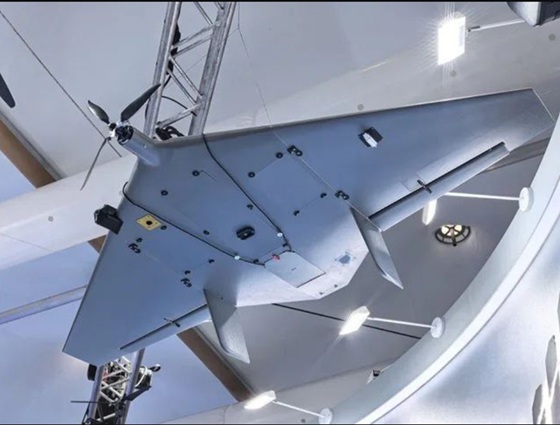
Iran’s public unveiling of the Hadid-110—a high-speed, jet-powered stealth combat drone—marks a major turning point in Tehran’s evolving drone warfare strategy. The platform represents a deliberate shift away from mass-produced, slow loitering munitions toward faster, stealth-enhanced strike systems designed to challenge modern air-defense networks across the Middle East.

Revealed during the Sahand 2025 military exercises, the Hadid-110 was introduced by the Islamic Revolutionary Guard Corps (IRGC) as Iran’s fastest stealth-configured UAV to date, reportedly capable of exceeding 500 km/h and operating inside contested airspace where legacy drones have become vulnerable.

Its debut comes as unmanned warfare has moved from a supporting role to a central tool of deterrence, retaliation, and power projection across the region—from the Persian Gulf to the Levant.

While Iranian state media has framed the Hadid-110 as a transformational leap in asymmetric warfare, the absence of independent performance verification has led global defense analysts to react with a mix of interest and caution.

Yet even without external confirmation, the drone’s introduction signals Iran’s commitment to pairing speed, low observability, and precision strike capability to compensate for adversaries’ technological superiority.

A Geopolitical Debut on a Multinational Stage

Iran showcased the Hadid-110 during Sahand 2025 drills in East Azerbaijan Province, held with the participation of Russia, China, India, Pakistan, and Central Asian SCO members, alongside observers including Saudi Arabia and Oman.

By introducing the drone in a multinational setting, Iran ensured the platform functioned both as a technical demonstration and a geopolitical message aimed at allies, competitors, and potential arms clients.

Tehran emphasized that the Hadid-110 is intended for deterrence and defensive precision strikes, highlighting its suitability for hitting radar systems, command centers, and critical infrastructure — core components of Iran’s long-standing anti-access/area-denial (A2/AD) doctrine.

Technical Profile: Speed, Stealth, and a Compressed Strike Window

The Hadid-110 features a jet engine engineered to sustain speeds of 500–517 km/h—far outpacing Iran’s propeller-driven Shahed-136 drones, which cruise around 185 km/h.

This speed dramatically reduces the time available for air-defense systems to detect, track, and intercept incoming threats, placing greater pressure on command-and-control networks.

Key Technical Characteristics

  • Speed: 500+ km/h (claimed)
  • Range: ~350 km
  • Endurance: 1 hour
  • Warhead: ~30 kg
  • Ceiling: 9.1 km
  • Radar Cross-Section: 0.01–0.02 m² (claimed)

Its delta-wing design supports both aerodynamic efficiency and reduced radar visibility. Though not comparable to advanced manned stealth aircraft, even partial stealth could challenge legacy regional radar systems.

With modest endurance and a tactical-range strike envelope, the Hadid-110 functions as a high-speed precision attack drone, intended to penetrate defenses, strike high-value targets, and expend itself in a single mission.

In capability terms, it sits somewhere between Russia’s Lancet and Israel’s Harop, but prioritizes speed over loiter time.

A Drone Born From Decades of Technological Reinvention

The Hadid-110 represents the newest phase of Iran’s drone evolution, which began under wartime scarcity during the Iran-Iraq War and accelerated through:

  • Reverse-engineering efforts
  • Battlefield experimentation
  • Technological lessons from captured foreign systems, most notably the U.S. RQ-170 Sentinel (2011)

The IRGC Aerospace Force has since driven drone innovation across stealth design, rapid prototyping, and battlefield integration.

First displayed publicly in February 2025, the Hadid-110—also referred to as Dalahu—was positioned as both a technological milestone and an emblem of national resilience under sanctions.

Crucially, the drone’s development reflects Iran’s experience in recent conflicts, including the widely reported 12-day confrontation with Israel, where slower drones struggled against modern interceptors. This reinforced Tehran’s belief that future drone survivability will depend on speed and reduced detectability—not sheer numbers.

Launch Flexibility: Designed for a Dispersed, Survivable Strike Force

One of the Hadid-110’s most strategically important features is its non-runway launch capability.
The drone can be fired from rail systems or with solid-fuel boosters, enabling launches from:

  • Mobile truck-based platforms
  • Concealed ground locations
  • Potentially even maritime vessels

Footage from Sahand 2025 showed the UAV being catapulted into flight before transitioning to jet propulsion, demonstrating a launch system optimized for dispersed operations and survivability under attack.

Regional Impact: A New Challenge for Middle Eastern Air Defenses

The introduction of a high-speed, semi-stealth attack drone forces regional adversaries—especially Gulf states and Israel—to reassess air-defense priorities.

Implications include:

  • Shorter detection and interception windows for Patriot and other regional air-defense systems
  • Increased interceptor expenditure and sensor fatigue
  • Potential need for upgraded radars, faster interceptors, and improved AI-driven tracking solutions

Analysts note that Iran’s UAV portfolio, ranging from slow kamikaze drones to high-speed stealth types, now presents a multi-layered threat spectrum requiring costly countermeasures.

Globally, the Hadid-110 may also attract interest from countries like Russia and China, where demand for affordable precision-strike UAVs continues to rise.

However, Iran’s reliance on domestically produced parts under sanctions raises questions about manufacturing scale and long-term sustainment.

Skepticism and the Need for Verification

Despite Iran’s ambitious performance claims, defense analysts stress that independent verification remains absent.
Past Iranian platforms have often shown lower performance than advertised once observed in real conditions.

Still, even discounted claims show the Hadid-110 represents a coherent response to evolving air-defense environments, emphasizing:

  • Speed
  • Survivability
  • Precision
  • Compressed engagement timelines

Iran positions the drone as a dedicated asset for penetrating layered defenses and striking high-value targets, reflecting a doctrinal shift from mass swarm tactics to more sophisticated unmanned strike capabilities.

Strategic Takeaway

More than a new drone, the Hadid-110 is a strategic signal: Iran intends to remain a disruptive, adaptive player in the regional and global unmanned warfare landscape.

It reinforces a future battlespace in which speed, stealth, and autonomy increasingly dominate—challenging traditional airpower assumptions and reshaping defensive planning across the Middle East.


Faiz Hameed Sentenced: First Ever Court Martial of a Former ISI Chief

0


Pakistan’s military has announced that former ISI Director General Lt Gen (Retd) Faiz Hameed has been sentenced to 14 years of rigorous imprisonment after a Field General Court Martial found him guilty on four major charges. This is the first time in Pakistan’s history that a former head of the ISI has been convicted through a court-martial process.

According to an ISPR press release, the proceedings began on 12 August 2024 under relevant sections of the Pakistan Army Act. The charges included:

  • Involvement in political activities
  • Violations of the Official Secrets Act deemed harmful to state security
  • Misuse of authority and government resources
  • Causing unlawful harm to individuals

After months of legal proceedings, the court found the retired general guilty on all counts and announced the sentence on 11 December 2025. The ISPR emphasized that Faiz Hameed was provided all legal rights, including the right to choose his own defence team. He also retains the right to appeal.

The press release added that investigations into additional political matters involving the former ISI chief are ongoing, including alleged attempts to create political unrest in collaboration with political actors.

Political Fallout and Government Response

No formal response has yet been issued by Faiz Hameed’s legal team.
Minister for Information Atta Tarar, however, welcomed the verdict, saying:

“The decision is based on evidence. Today, a person who crossed the red line has been held accountable.”

Last year, the ISPR confirmed that following Supreme Court orders, a detailed court of inquiry was launched into allegations filed in the Top City housing society case, leading to disciplinary action under the Army Act.

The inquiry concluded that Faiz Hameed was involved in multiple violations of the Pakistan Army Act after his retirement.

Legal Basis: How a Retired General Can Be Court-Martialed

Under the Army Act:

  • Section 92 generally bars court-martial actions against a retired officer after six months.
  • But Sections 31 and 40 create exceptions related to incitement to mutiny, financial corruption, fraud, and related misconduct.

These provisions enabled the continuation of proceedings against the retired ISI chief.

Background: The Top City Allegations

The Supreme Court had earlier directed the complainant to approach relevant authorities regarding their allegations. Following this, Army leadership formed a committee led by a Major General to investigate.

According to the petition filed by Moiz Ahmed Khan, owner of Top City housing society:

  • On 12 May 2017, Rangers and ISI personnel raided their office and residence in connection with a terrorism case.
  • The petitioner alleged that Faiz Hameed’s brother, Sardar Najaf, attempted mediation.
  • It was claimed that the retired general indirectly contacted the complainant through a relative to arrange a meeting.
  • During the meeting, Faiz allegedly offered to return stolen items except 400 tolas of gold and cash.
  • The petition further alleged that retired Brigadiers Naeem Fakhar and Ghaffar pressured the complainant to pay Rs 40 million and fund a private TV channel.

These allegations became the basis of the inquiry that ultimately led to disciplinary proceedings.

Past Examples: Senior Officers Who Faced Court Martial

Lt Gen (Retd) Asad Durrani

Court-martialed and stripped of benefits for co-authoring The Spy Chronicles with former RAW chief A.S. Dulat. His book was deemed to contain sensitive national security material.

Lt Gen Javed Iqbal (2012)

Convicted of espionage for allegedly sharing classified information with India’s RAW. Sentenced to 14 years, later released after a reduced term.

Brigadier Ali Khan (2011)

Charged for links with Hizb-ut-Tahrir and for attempting to incite rebellion within the military.

Lt Gen Ziauddin Butt (2001)

Detained and court-martialed after being appointed Army Chief by PM Nawaz Sharif in defiance of General Musharraf. Later cleared of major conspiracy charges.

Brigadier Niaz (1958)

Tried during Ayub Khan’s era for political activities and alleged conspiracy against the government.

A Historic Verdict With Wider Implications

The conviction of Faiz Hameed — a figure often seen at the center of Pakistan’s political-military controversies — marks a rare and unprecedented moment in the country’s civil-military dynamics.

Analysts believe the case may shape future norms of accountability within the armed forces, especially regarding officers accused of political engineering, influence-peddling, or misuse of authority.

Amid Tensions With Pakistan, Afghan Clerics Bar Citizens From Taking Part in Foreign Militancy

0

In a significant development amid worsening tensions with Pakistan, a nationwide assembly of Afghan clerics convened under the Taliban’s interim government has approved a resolution declaring that no Afghan citizen is permitted to take part in military activities abroad.

The gathering, held Wednesday in Kabul, brought together dozens of religious scholars from across Afghanistan. Senior Taliban officials — including Chief Justice of the Supreme Court Maulvi Abdul Hakim Haqqani, Minister for the Promotion of Virtue and Prevention of Vice Muhammad Khalid Hanafi, and Minister of Higher Education Nida Mohammad Nadim — also attended.

A two-page, five-point resolution was unanimously endorsed at the conclusion of the meeting. A copy obtained by the BBC states that Taliban Supreme Leader Hibatullah Akhundzada has not granted permission to any Afghan to engage in military operations outside the country, and any violation of this directive “is not permissible.”

The resolution further urges the Taliban interim government to take concrete steps to stop Afghans from joining conflicts abroad.

Context: Pakistan–Afghanistan Relations at Their Lowest Point

The clerics’ declaration comes at a time of deepening friction between Kabul and Islamabad.
Despite repeated demands, the Afghan Taliban have been unable — or unwilling — to stop cross-border attacks by the Tehrik-i-Taliban Pakistan (TTP). These tensions have resulted in armed clashes along the border and the prolonged closure of key crossings for nearly two months.

Multiple rounds of talks between Pakistani officials and the Taliban government — held in Doha, Istanbul and Riyadh — have failed to produce consensus on how to deal with the TTP. Pakistan has been calling on the Taliban to issue a clear religious decree against the group’s activities, but Kabul insists the matter is an “internal issue” for Pakistan.

Highlights of the Resolution: ‘Sacred Jihad’ if Afghanistan Is Attacked, but No Fighting Abroad

The resolution’s second clause states that fighting against foreign aggression on Afghan soil is both a religious obligation and a “sacred jihad.”

It continues:

“If anyone attacks Afghanistan or violates the sanctity of Muslims, all Afghans are duty-bound to defend their system, territory and values, and this defense shall be considered sacred jihad.”

Another key clause reiterates that Afghans cannot travel to other countries to take part in militancy — a point Afghan analysts believe is indirectly linked to Pakistan’s concerns.

Who Attended the Clerics’ Conference?

Organizers said each provincial Ulema Council sent at least three members, all personally appointed by Taliban leader Hibatullah Akhundzada.
The attendees included religious figures from the Ministry for the Promotion of Virtue, the Ministry of Education, the Ministry of Hajj and Religious Affairs, and the Supreme Court.

Observers note that while such resolutions do not always translate into strict enforcement, the Taliban typically use religious bodies to send signals to fighters and the public — particularly regarding groups like the TTP or foreign militant elements historically present in Afghanistan.

Implications: A Message to Afghans — and Possibly to Pakistan

Although the resolution does not name Pakistan or the TTP, analysts say its practical focus is unmistakable.

Analysis by Tahir Khan

Tahir Khan, an expert on Afghan affairs, told the BBC:

  • Pakistan’s demand for a fatwa appears to have influenced this latest resolution.
  • However, it is too soon to say whether it will reduce militant attacks inside Pakistan.
  • A similar religious decree issued in 2023, endorsed by Akhundzada, did coincide with a drop in attacks at the time.

He added that recent signs of Afghan citizens’ involvement in attacks inside Pakistan are also troubling for Kabul, as some non-state Afghan Taliban members — motivated by ideology or personal ties — have joined the TTP.

Analysis by Iftikhar Firdous

Journalist and Khorasan Diary editor Iftikhar Firdous said:

  • The resolution contains nothing fundamentally new; the Taliban have expressed these positions before.
  • Without naming the TTP, it is unclear whether Pakistan will see direct benefit.
  • Still, this could pave the way for another, more explicit directive targeting groups operating from Afghanistan.

He also noted that the clause on responding forcefully to foreign aggression may be a reference to recent Pakistani strikes inside Afghanistan, which Islamabad has justified as counterterrorism operations.

The Fatwa Issue Remains a Sticking Point

During bilateral talks following recent border clashes, Afghanistan’s deputy interior minister Rahmatullah Najib told Pakistani officials that:

  • A fatwa is issued by the Darul Ifta, not the government.
  • Pakistan should submit a formal request — but cannot dictate what the fatwa must say.

Pakistan’s Minister of State for Interior Talal Chaudhry responded by accusing the Taliban of avoiding a clear statement against the TTP because they “use them.”

Analysts say Pakistan wants a religious decree to undermine the ideological justification of TTP militants — many of whom swear allegiance to Akhundzada — in hopes of weakening their operational and moral standing.

Looking Ahead

Afghanistan’s resolution appears to attempt a balancing act: addressing Pakistani concerns, controlling Afghan fighters’ involvement abroad, and consolidating public support against any future foreign attack.

But whether this move will ease tensions or curb militancy remains uncertain.

For now, the clerics’ decision underscores how deeply the Taliban government is entangled in Pakistan’s security calculus — and how limited the prospects remain for a breakthrough in bilateral relations.