Sunday, April 12, 2026
Home Blog Page 41

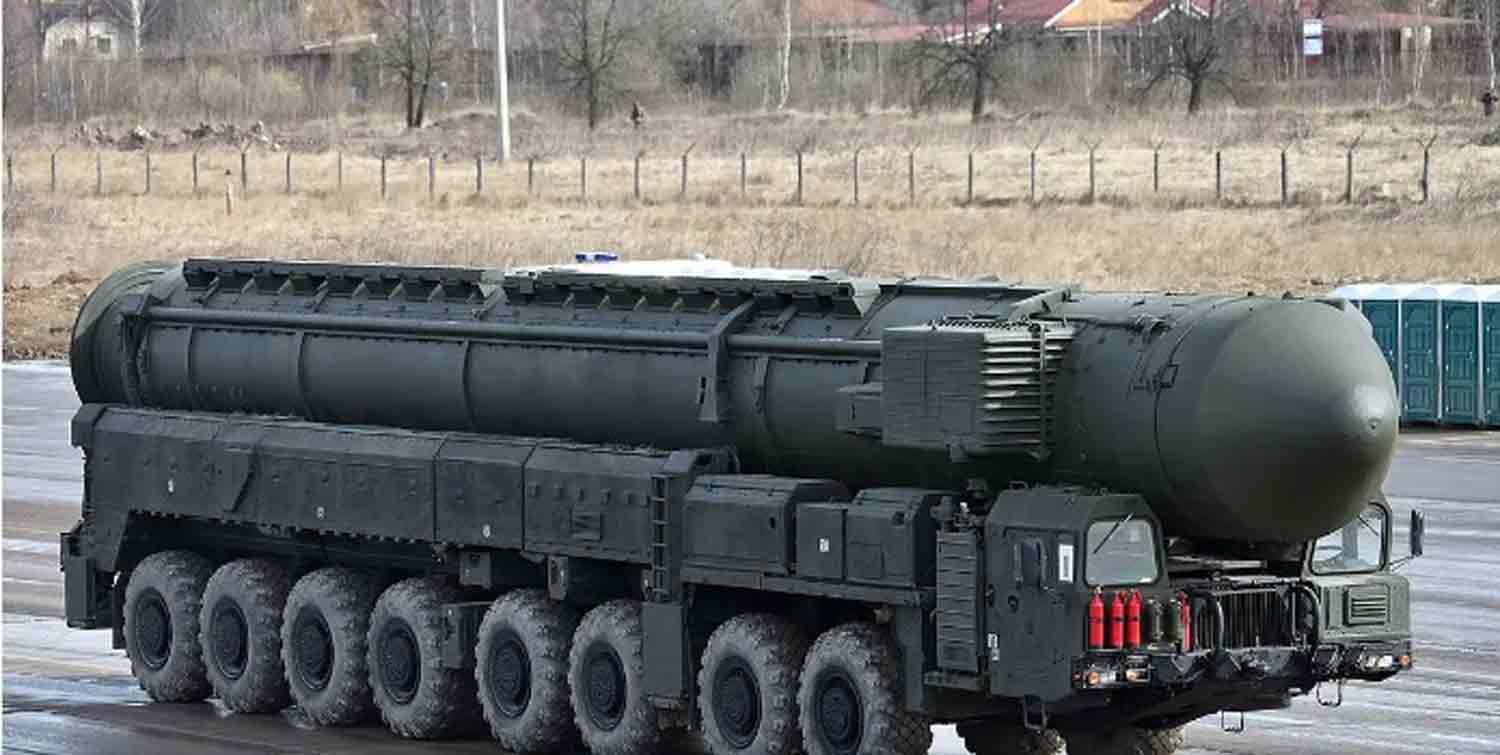
Congressional Budget Office projects US nuclear arsenal costs will reach $946 billion by 2034

0

The projected expenses for operating and modernizing America’s nuclear forces until 2034 are expected to reach $946 billion, which is 25% higher than the estimate from 2023, according to a report released by the non-partisan Congressional Budget Office on Thursday.

This new estimate does not account for an 81% cost overrun associated with the Sentinel, a new intercontinental ballistic missile being developed to succeed the Trident III, the backbone of the U.S. ICBM force, as noted in the report.

Analysts have indicated that this significant rise in the costs of managing and modernizing the world’s second-largest nuclear arsenal could hinder U.S. President Donald Trump’s commitment to increase the defense budget to $1 trillion by fiscal 2026. Nuclear weapons funding is shared between the Pentagon and the Department of Energy, which oversees the U.S. arsenal.

Daryl Kimball, the head of the Arms Control Association, an advocacy organization, remarked, ‘The costs of the current nuclear modernization program are escalating beyond all expectations.’

The CBO cautioned that Congress will need to determine in the coming years ‘what nuclear forces the United States should maintain in the future and the degree to which the nation will modernize.’

Trump has not yet outlined his nuclear weapons strategy or appointed senior officials to manage that strategy. Additionally, arms control discussions between Washington and Moscow have not resumed, even as the last agreement limiting the deployment of U.S. and Russian strategic forces is set to expire in less than a year.

In February, Trump expressed his opposition to the development of new U.S. nuclear weapons and criticized the high costs of sustaining the arsenal. He also showed interest in negotiating an arms control agreement with Moscow and Beijing, which is expanding its nuclear arsenal, albeit smaller than those of the U.S. and Russia.

The CBO indicated that the current plans by the Pentagon and the Department of Energy to operate U.S. strategic and tactical nuclear forces, as well as to acquire new bombers, submarines, and ICBMs, would incur an estimated cost of $946 billion, averaging $95 billion annually through 2034.

According to the report, the 2023 CBO projection estimated a total of $756 billion for the period from 2023 to 2032. The CBO indicated that this increase is primarily due to the rising expenses associated with various programs, such as the development and deployment of the Sentinel ICBM, the modernization of the Pentagon’s nuclear command, control, and communications systems, as well as enhancements to the Department of Energy’s production facilities.

Additionally, the updated projection is higher as it covers two additional years compared to the previous estimate.

US Congressional Republicans seek $27 billion for the Golden Dome under Trump tax legislation

0

U.S. Congressional Republicans are set to propose a comprehensive $150 billion defense initiative, which includes an initial $27 billion allocation to enhance President Donald Trump‘s contentious Golden Dome missile defense system, as indicated by a document and a congressional aide.

This initiative will supplement the already approved $886 billion national security budget for 2025 and will also finance the construction of 14 warships while increasing homeland security funding. It is part of Trump’s extensive tax reform plan, projected to reduce taxes by approximately $5 trillion and increase the federal debt by around $5.7 trillion over the next ten years.

The specifics of this proposal, which have not been disclosed before, aim to meet the military’s urgent requirements, according to Republican Senator Roger Wicker, chairman of the Senate Armed Services Committee, in an interview with Reuters. He emphasized that the focus is on enhancing critical sectors such as naval shipbuilding, missile defense, and space surveillance, as well as bolstering the military’s presence, especially in the Indo-Pacific region, as part of a larger strategy to avert conflict.

Wicker stated, ‘A strong military presence in the Indo-Pacific will deter China from disrupting the status quo, which has fostered unprecedented global prosperity for many.’ This initiative is designed to prevent war.

The Republican leaders of the House and Senate Armed Services Committees have collaborated on this legislation, which is expected to be revealed as early as Friday evening.

The $27 billion investment in the Golden Dome program will facilitate the development of additional missile interceptors and the acquisition of Terminal High Altitude Area Defense (THAAD) anti-ballistic missile systems, as per the congressional aide.

THAAD is manufactured by Lockheed Martin, while Elon Musk’s SpaceX and two other partners are reportedly leading candidates to secure a vital component of the Golden Dome initiative that would monitor incoming missiles, as reported by Reuters last week.

Mike Rogers, the chairman of the House Armed Services Committee, announced that the bill will be expedited through the committee next week, with the aim of reaching the president’s desk promptly. He stated, ‘We are revitalizing our defense industrial base, enhancing our capacity to deter adversaries such as China, and providing our servicemembers with the support they rightfully deserve.’

According to a congressional aide, both Republican Chairmen are aligned with Trump regarding the spending priorities outlined in the proposal. The bill allocates $29 billion for the acquisition of 14 new ships, marking what is described as a ‘historic largest-ever’ investment in unmanned vessels.

Additionally, as part of an $11 billion increase in combat aircraft purchases, the bill includes funding for approximately 40 Boeing Co F-15EX fighter jets, as noted by the congressional aide. Furthermore, $20 billion has been designated for the production of new munitions, the expansion of the supplier base, and the replenishment of critical mineral stockpiles.

The spending package also allocates $14 billion for the integration of artificial intelligence and the production of new low-cost weapons. The scale of the conflict in Ukraine has underscored the need for larger inventories of affordable weaponry.

In an effort to deter China, the package sets aside $6 billion for weapons procurement priorities in the Pacific region. It also invests significantly in the development of innovative technologies, including a $5 billion commitment to autonomous systems, a notable increase from the $500 million previously allocated by the Biden administration.

To tackle the Pentagon’s ongoing audit challenges, $700 million has been designated to expedite the implementation of more automated systems within Department of Defense business processes.

Importantly, a large portion of the funding designated in this package will remain available beyond the conclusion of the fiscal year, greatly enhancing the nation’s defense capabilities.

This initiative will progress through the reconciliation process, a legislative method that enables Congress to approve budget-related bills with a simple majority, circumventing the standard 60-vote requirement for most legislation.

Trump plans to propose a $100 billion arms package to Saudi Arabia, sources say

0
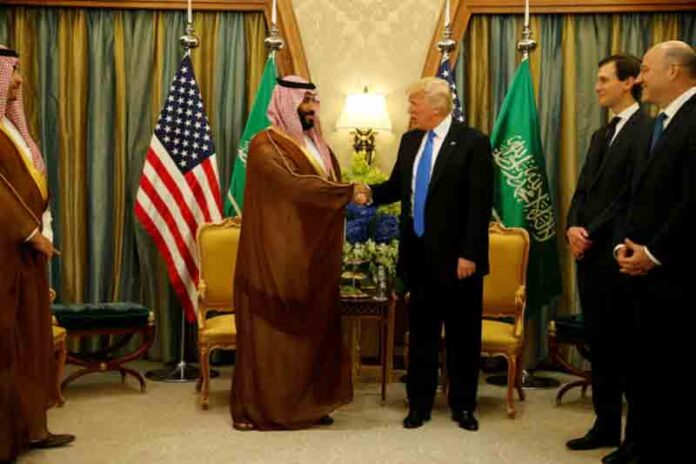
U.S. President Donald Trump meets with Saudi Arabia's Crown Prince Mohammed bin Salman (center L) at the Ritz Carlton Hotel in Riyadh, Saudi Arabia.

The United States is preparing to present Saudi Arabia with an arms deal exceeding $100 billion, according to sources familiar with the situation who spoke to Reuters. This announcement is expected to coincide with U.S. President Donald Trump‘s visit to the kingdom in May.

This proposed package follows the previous administration of President Joe Biden’s unsuccessful attempts to finalize a defense agreement with Riyadh, which was part of a broader initiative aimed at normalizing relations between Saudi Arabia and Israel. The Biden administration’s proposal included access to more advanced U.S. weaponry in exchange for Saudi Arabia ceasing its arms purchases from China and limiting Chinese investments in the country.

It remains unclear whether the Trump administration’s proposal will include similar stipulations. The White House and the Saudi government have not yet responded to requests for comments.

A U.S. Defense official stated, ‘Our defense relationship with the Kingdom of Saudi Arabia is stronger than ever under President Trump’s leadership. Maintaining our security cooperation is a vital aspect of this partnership, and we will continue to collaborate with Saudi Arabia to meet their defense requirements.’

During his first term, Trump touted arms sales to Saudi Arabia as beneficial for American jobs. Lockheed Martin Corp is expected to provide a variety of advanced weapon systems, including C-130 transport aircraft, according to two sources.

Additionally, one source indicated that Lockheed would supply missiles and radar systems. RTX Corp, previously known as Raytheon Technologies, is also anticipated to play a key role in the package, which will feature contributions from other major U.S. defense contractors such as Boeing Co, Northrop Grumman Corp, and General Atomics, as reported by four sources.

All sources requested anonymity due to the sensitive nature of the issue. RTX, Northrop, and General Atomics declined to comment, while Boeing did not respond immediately to a request for comment.

A representative from Lockheed Martin stated that foreign military sales are conducted as government-to-government agreements. Inquiries regarding these sales should be directed to the U.S. government. Reuters was unable to quickly determine how many of the available deals were new, as many have been in development for an extended period, according to two sources. For instance, the kingdom initially sought information about General Atomics’ drones b

ack in 2018. Over the last year, a $20 billion deal for General Atomics’ MQ-9B SeaGuardian drones and other aircraft has gained attention, as noted by one source. Several executives from defense firms are contemplating a visit to the region as part of a delegation, according to three sources.

The U.S. has a long history of supplying arms to Saudi Arabia, with Trump proposing around $110 billion in sales to the kingdom in 2017. By 2018, only $14.5 billion in sales had been initiated, leading Congress to scrutinize the agreements following the murder of journalist Jamal Khashoggi.

In 2021, under Biden’s administration, Congress enacted a ban on offensive weapons sales to Saudi Arabia in response to the Khashoggi incident and to urge the kingdom to de-escalate its conflict in Yemen, which has resulted in significant civilian casualties.

According to U.S. law, significant international arms deals require Congressional review before finalization. The Biden administration began to ease its position on Saudi Arabia in 2022 after Russia’s invasion of Ukraine affected global oil supplies.

The ban on offensive weapons sales was lifted in 2024 as Washington sought closer cooperation with Riyadh following Hamas’ attack on October 7, aiming to formulate a strategy for post-war Gaza.

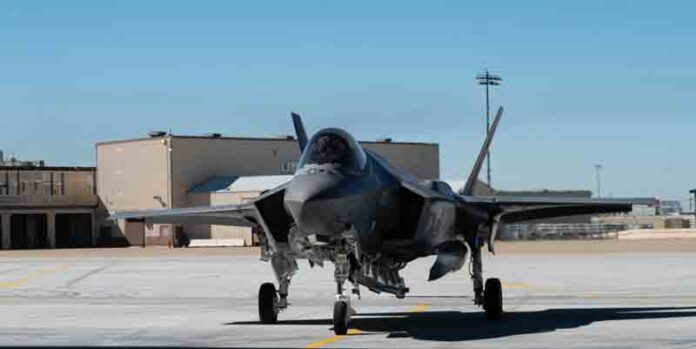
A potential agreement regarding Lockheed’s F-35 jets, which the kingdom has shown interest in for several years, is anticipated to be on the agenda, although three sources have downplayed the likelihood of finalizing an F-35 deal during the visit.

The United States ensures that its key ally Israel is provided with more sophisticated American weaponry compared to Arab nations, thereby granting it what is referred to as a ‘Qualitative Military Edge’ (QME) over its regional counterparts. Israel has possessed F-35s for nine years, establishing several squadrons.

A shocking claim has surfaced about a Russian Su-30SM that caught fire at the Rostov base

0
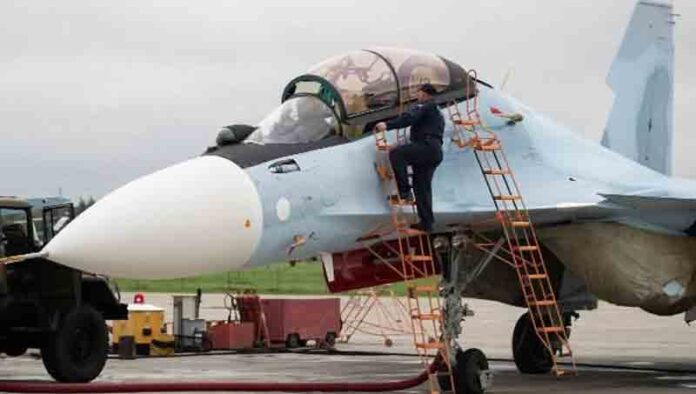
Su-30SM multirole fighter jet

On April 24, 2025, the Ukrainian Ministry of Defense reported that a Russian Su-30SM multirole fighter jet caught fire and was entirely destroyed at the central airbase in Rostov-on-Don, a significant military site in southern Russia. Ukrainian officials attributed the incident to an unnamed ‘resistance’ movement opposing the Russian government, although they did not directly link it to Ukrainian forces.

The Russian Ministry of Defense has not commented on the situation, providing neither confirmation nor denial. Meanwhile, some Russian media, including the aviation outlet Avia.pro, have speculated that the incident may involve an older, decommissioned Su-27 instead of the modern Su-30SM, prompting questions about the authenticity of the event.

The absence of verifiable information and the presence of conflicting accounts have left analysts uncertain about the actual events at this heavily secured military base and their implications for the security of Russian air forces. The Rostov-on-Don airbase, situated in Russia’s Rostov Oblast near the Ukrainian border, serves as a vital center for Russian air operations.

Its location near the ongoing conflict in Ukraine adds to its strategic importance, as it accommodates various military aircraft and support facilities. If confirmed, the reported destruction of a high-value asset like the Su-30SM, a sophisticated fighter jet valued at around $50 million, would be a significant setback for Russia’s air capabilities.

Ukrainian military intelligence, known as the GUR, supported the Ministry of Defense’s assertions, posting on X that the aircraft, identified by the tail number ’35,’ was completely incinerated.

A user on X, known as @kromark, referenced Sentinel satellite images that reportedly revealed a new burn mark at the airbase, which was not present five days prior, thereby supporting the Ukrainian narrative to some extent. However, in the absence of official confirmation from Russia or independent verification, the situation remains uncertain.

The Su-30SM, which is pivotal to this discussion, serves as a key component of Russia’s contemporary air force. Created by Sukhoi, the Su-30SM is a two-seat, twin-engine multirole fighter optimized for air dominance, ground assault, and maritime strike operations.

It was introduced into the Russian military in 2012 and represents an advanced version of the Su-30 series, featuring enhanced avionics, radar, and weaponry. The aircraft’s N011M Bars-R radar is capable of tracking multiple targets at distances over 100 miles, while its thrust-vectoring engines provide remarkable agility. With a payload capacity of up to 8 tons, it can carry precision-guided bombs, air-to-air missiles, and anti-ship munitions, making the Su-30SM a highly adaptable platform that has been extensively deployed in various conflicts, including those in Syria and Ukraine.

Its estimated price tag of $50 million reflects not only its cutting-edge technology but also the considerable investment needed for training and maintenance to ensure operational readiness. In contrast, the Su-27, which some Russian sources assert was the aircraft involved, is an older model.

First introduced in the 1980s by the Soviet Union, the Su-27 was a powerful air superiority fighter for its era, directly competing with the U.S. F-15 Eagle. Nevertheless, it does not possess the advanced electronics and multirole capabilities of the Su-30SM.

The Su-27’s radar and avionics are less advanced, and its weaponry options are more restricted. Although Russia still operates upgraded versions like the Su-27SM3, many of its airframes have been retired or assigned to less critical roles.

If the aircraft that was destroyed was indeed a Su-27, as indicated by Avia.pro, the operational impact of the loss may be minimal, suggesting a possible effort to minimize the incident’s significance or even to stage it for propaganda. The differing reports regarding the aircraft’s identity underscore a larger issue in evaluating the situation: the complexities of information warfare.

Ukrainian sources, including the GUR and posts on X, have quickly characterized the event as a successful sabotage, with some asserting it reveals weaknesses in Russia’s military infrastructure. For instance, a post by @ukrpravda_news on X claimed that the destruction signifies an increase in ‘resistance’ within Russia, although no evidence was provided to back this claim.

On the other hand, Russian media outlets like Avia.pro have expressed skepticism, questioning the accuracy of the incident’s portrayal and whether a high-value asset was involved at all. The lack of visual proof, such as photos or videos of the burning aircraft, further complicates the quest for clarity. While satellite imagery referenced on X provides a potential lead, it is currently not accessible for independent verification.

If Ukrainian assertions hold true, the destruction of a Su-30SM at Rostov-on-Don raises significant concerns regarding the security of Russia’s military airbases. Modern fighter jets are particularly vulnerable while on the ground, where they can be targeted by sabotage, drone strikes, or other forms of asymmetric warfare.

Airbases like Rostov-on-Don are generally fortified with multiple layers of defense, including perimeter security, anti-aircraft systems, and surveillance measures. A successful attack—whether through sabotage, as suggested by Ukrainian officials, or another approach—would indicate a failure in these protective protocols.

The suggestion of an inside job, as indicated by the ‘resistance’ narrative, introduces an additional layer of complexity. It raises the question of whether disgruntled personnel or local agents could have taken advantage of vulnerabilities in base security. While such scenarios remain hypothetical without solid evidence, they highlight the difficulties in safeguarding high-value assets in a tumultuous region.

This incident also draws parallels with other documented assaults on Russian airbases. Recently, Ukrainian forces have increasingly focused on Russian military infrastructure through long-range drone strikes and sabotage efforts. For example, on April 9, 2025, Russia’s Ministry of Defense reported intercepting 158 Ukrainian drones across various regions, including Rostov Oblast, although explosions were noted in the vicinity, as per the Kyiv Post.

Earlier, on March 20, 2025, Ukrainian forces claimed responsibility for a drone attack on the Engels-2 airbase in Saratov, which is home to strategic bombers, according to Newsweek. These incidents underscore a rising trend of asymmetric strategies aimed at disrupting Russia’s air operations far from the front lines.

If confirmed, the Rostov-on-Don incident would align with this trend, indicating that even well-protected facilities are vulnerable to such threats. Historically, the susceptibility of aircraft on the ground is not a recent issue. During World War II, both Allied and Axis forces targeted airfields to eliminate planes before they could take off, often achieving significant outcomes with limited resources.

In the Vietnam War, U.S. airbases in South Vietnam were frequently subjected to mortar and sapper attacks by Viet Cong forces, resulting in the loss of many aircraft. More recently, in 2012, Taliban insurgents breached Camp Bastion in Afghanistan, destroying six U.S. Marine Corps AV-8B Harrier jets in a daring nighttime assault.

These instances demonstrate that airbases, despite their critical strategic role, continue to be vulnerable targets for determined assailants. The Rostov-on-Don event, if it were an act of sabotage, would resonate with these historical examples, raising concerns about whether Russia’s air force has sufficiently evolved to meet contemporary threats.

From a technical standpoint, the loss of a Su-30SM would have significant repercussions for Russia’s air force. Each aircraft not only represents a substantial financial commitment but also encompasses a complex network of spare parts, skilled pilots, and maintenance teams. In recent years, Russia’s aerospace sector has encountered difficulties, including sanctions that have restricted access to Western components and technologies.

The process of producing or replacing a Su-30SM is lengthy and expensive, potentially straining Russia’s capacity to maintain its fleet of fighters. Furthermore, the psychological ramifications of losing such a resource on domestic soil could impact morale, especially if the narrative of “resistance” gains momentum.

Even if the aircraft in question was a Su-27, as some Russian reports suggest, the incident would still reveal weaknesses in base security, leading to increased scrutiny of Russia’s defensive strategies. To contextualize the Su-30SM on a global scale, it is beneficial to compare it with its Western equivalents.

The U.S. F-15E Strike Eagle, a multirole fighter of a similar generation, shares several characteristics with the Su-30SM, including advanced radar systems and a diverse array of munitions. However, the F-15E enjoys superior electronic warfare capabilities and integration with networked systems such as AWACS, providing it with an advantage in complex combat environments. Likewise, the European Eurofighter Typhoon delivers comparable multirole capabilities, featuring advanced sensors and an emphasis on network-centric warfare.

While the Su-30SM is a formidable aircraft, it falls short in these areas due to Russia’s slower pace in adopting fifth-generation technologies. Should Russia suffer losses of such assets to ground-based assaults, it could further widen the technological divide with Western air forces, particularly as the U.S. and its allies continue to advance.

The conflicting accounts regarding the Rostov-on-Don incident illustrate the complex information landscape that characterizes contemporary conflicts. Both Ukrainian and Russian entities have motivations to manipulate the narrative to serve their interests. For Ukraine, asserting the destruction of a Su-30SM enhances its reputation as a resourceful and resilient opponent capable of penetrating deep into Russian territory. Conversely, Russia’s portrayal of the incident as a trivial loss or a complete fabrication serves to downplay any perception of vulnerability.

The dependence on social media platforms like X for immediate updates, as evidenced by posts from @tweetsNVand @censor_net, highlights the rapid dissemination of information—and misinformation. However, in the absence of primary evidence such as wreckage images or official confirmations, analysts and observers are left to assemble a narrative with significant gaps.

The ramifications of this incident go beyond the immediate loss of an aircraft. Should sabotage be confirmed as the cause, it would underscore the increasing significance of asymmetric warfare in modern conflicts. Tactics such as drones, insider threats, and small-scale sabotage can yield disproportionate impacts, disrupting operations and compelling adversaries to reallocate resources for defense.

For Russia, safeguarding its airbases against such threats will necessitate not only physical defenses but also counterintelligence measures to thwart internal breaches. If Ukraine is indeed responsible for the attack, it would showcase its capability to exert influence beyond the battlefield, even while grappling with substantial challenges in maintaining its own air force, as highlighted by the reported loss of an F-16 pilot in combat on April 13, 2025, by the South China Morning Post.

In the aftermath of the Rostov-on-Don incident, the ambiguity surrounding the event raises numerous questions. Was a modern Su-30SM genuinely destroyed, or was an older Su-27 sacrificed for an undisclosed reason? How could a well-guarded airbase succumb to sabotage, and what does this indicate about Russia’s military weaknesses? While definitive answers may remain out of reach, the incident highlights the vulnerability of even the most sophisticated military systems when they are targeted on the ground.

Currently, the global community observes and anticipates evidence that may never surface, left to consider whether this was a daring act of defiance or a meticulously orchestrated deception in the ongoing shadow conflict. From an analytical viewpoint, the Rostov-on-Don incident illustrates the changing dynamics of warfare, where high-tech assets face increasing threats from low-cost, asymmetric strategies. The loss of a single fighter jet, though tactically important, is unlikely to shift the overall strategic equilibrium.

Nevertheless, it reveals a significant weakness: regardless of how advanced a military’s technology is, its effectiveness hinges on the security of its infrastructure. For Russia, this may lead to a reevaluation of base security measures and a renewed emphasis on mitigating insider threats.

For observers, it serves as a case study in the difficulties of verifying information within a polarized and contested information landscape. Will this incident signify a pivotal change in airbase protection strategies, or will it simply be a minor detail in a broader conflict? Only time, and possibly the emergence of new evidence, will provide clarity.

Kremlin considers resuming nuclear tests

0

Sergei Shoigu, the Secretary of the Russian Security Council, has issued a warning that Moscow may consider resuming nuclear testing.

In an interview with the state-run TASS news agency on April 24, Shoigu stated that Russia’s stance on nuclear testing will be contingent upon the actions of the United States in this area. He highlighted the aging components of the U.S. nuclear arsenal and the ongoing development of new weapon systems as potential triggers for Washington to initiate nuclear tests.

‘In such a scenario, Russia may respond with reciprocal measures,’ Shoigu remarked. He indicated that both the Russian defense ministry and the state atomic energy corporation are ready for this eventuality.

Furthermore, he pointed out that Russia has recently deployed several modernized strategic weapon systems, significantly bolstering its military capabilities.

Nevertheless, Shoigu mentioned that currently, there is no pressing need for Moscow to conduct nuclear tests.

The last nuclear test carried out by Russia was conducted by the Soviet Union on October 24, 1990, at Novaya Zemlya, after which the Soviet Union declared a unilateral moratorium on nuclear testing, a policy that Russia has continued to follow.

China plans to construct a nuclear reactor for a lunar base

0

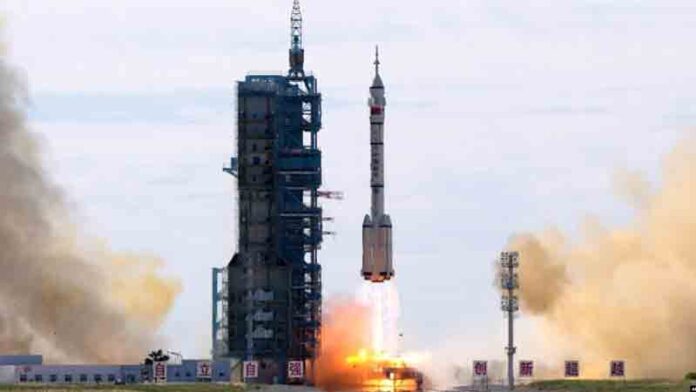
China is exploring the possibility of building a nuclear power facility on the Moon to support its collaborative International Lunar Research Station (ILRS) initiative with Russia, as revealed by a senior Chinese space official during a presentation on Wednesday.

Beijing’s aspirations to establish itself as a leading power in space have progressed consistently, with goals to land astronauts on the lunar surface by 2030 and to create a permanent, crewed lunar base by 2035.

The Chang’e-8 mission, planned for 2028, aims to establish the groundwork for these long-term goals. In a presentation in Shanghai, Pei Zhaoyu, the chief engineer for the 2028 mission, indicated that the energy infrastructure for the ILRS may depend not only on large solar power arrays but also on nuclear energy, along with pipelines and cables intended for heating and electrical distribution across the Moon’s surface.

A nuclear reactor on the Moon would act as the main power source for the ILRS. The mention of the nuclear plant concept in Pei’s presentation at a conference attended by representatives from 17 countries and international organizations involved in the ILRS further indicated China’s support for the initiative, even though no official announcement has been made by Beijing.

“A key consideration for the ILRS is power supply, and in this regard, Russia has a natural advantage,” Wu Weiren, chief designer of China’s lunar exploration program, stated to Reuters during the event.

“In terms of nuclear power plants, particularly in the context of deploying them in space, we are leading globally, ahead of the United States,” Wu added.

As highlighted in Pei’s presentation, the energy requirements of the lunar station are seen as a vital element for maintaining long-term operations, positioning nuclear power as a fundamental aspect of China’s space ambitions.

South Africa insists that Ukraine peace talks should occur without preconditions

0
South African President Cyril Ramaphosa

During a visit from Volodymyr Zelenskiy on Thursday, South African President Cyril Ramaphosa stated that peace negotiations between Kyiv and Moscow should commence without any preconditions, such as Ukraine surrendering territory to Russia.

This week, U.S. President Donald Trump criticized the Ukrainian leader for not acknowledging Russia’s annexation of Crimea as part of a U.S.-brokered peace agreement to resolve the conflict in Ukraine.

South Africa aims to position itself as neutral in the Ukraine conflict while maintaining strong ties with Russia, as both nations are members of the BRICS coalition, which seeks to counterbalance the Western-centric economic framework.

When asked if Ukraine might need to relinquish any land to Russia during peace discussions, Ramaphosa emphasized that such matters should be addressed at the negotiation table. He shared insights from South Africa’s own history, noting that the negotiations that ended apartheid were conducted without preconditions, as he explained in a press conference alongside Zelenskiy.

Zelenskiy arrived in South Africa just as Russia launched missile and drone attacks on Kyiv, resulting in at least eight fatalities. He shortened his visit, his first to an African nation, to return home in light of the assault.

Amid increasing pressure from Trump, he has been working to bolster international backing for Ukraine’s defense efforts and remarked that discussing Ukraine’s red lines in negotiations with Russia is futile without a complete ceasefire.

This week, Ramaphosa also engaged in separate phone conversations with Trump and Russia’s Vladimir Putin regarding the peace process in Ukraine.

Ramaphosa and Zelenskiy have met several times, including in Kyiv in 2023, as part of an African-led mediation initiative that has yet to yield significant progress.

Iran suggests discussions with European nations as US nuclear talks advance

0
Iranian Foreign Minister Abbas Araghchi gives a briefing on the sidelines of a UN event in Lisbon, Portugal.

On Thursday, Iran‘s Foreign Minister, Abbas Araqchi, expressed his willingness to visit France, Germany, and Britain for discussions, as Tehran aimed to capitalize on the progress made in nuclear negotiations with the United States. The E3 nations—France, Germany, and Britain—indicated in December their readiness to reinstate all international sanctions on Iran to deter its pursuit of nuclear weapons.

Since then, Tehran has been actively engaging in discussions regarding its nuclear program with the administration of U.S. President Donald Trump, which, according to analysts and diplomats, has not been aligning its strategies with European partners.

Araqchi noted on X, ‘Iran’s relations with the E3 have had their fluctuations in recent times. Currently, they are at a low point, whether we like it or not.’ He reiterated his call for diplomacy, stating, ‘Following my recent talks in Moscow and Beijing, I am prepared to initiate discussions by visiting Paris, Berlin, and London. The next move is up to the E3.’

On Monday, Trump remarked that the U.S. had productive discussions with Iran, just two days after the second round of negotiations concerning Tehran’s nuclear program. The third round is scheduled for Saturday in Oman.

Trump, who withdrew from the 2015 nuclear agreement between Tehran and global powers in 2018, has warned of potential military action against Iran unless a new agreement is swiftly reached to prevent its nuclear weapon development.

Iran maintains that its nuclear program is for peaceful purposes and is open to negotiating limited restrictions on its nuclear activities in exchange for the lifting of international sanctions. U.S. Secretary of State Marco Rubio stated on Tuesday that any agreement with the United States would require Iran to cease uranium enrichment and only allow imports necessary for a civilian nuclear program.

Iran has asserted that its right to enrich uranium is non-negotiable. In response to Rubio’s remarks, a senior Iranian official associated with the negotiating team reiterated on Wednesday that ‘zero enrichment is unacceptable.’


Pakistan has limited its airspace for Indian airlines and warned of possible water treaty violations

0
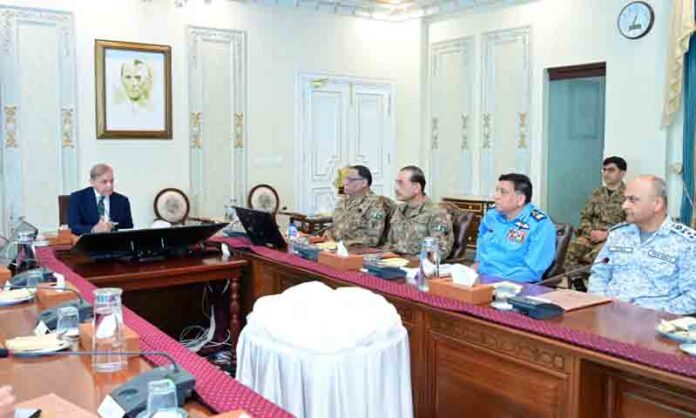
National Security Committee meeting Chaired by Prime Minister Shehbaz Sharif.

Pakistan has closed its airspace to Indian airlines and rejected India‘s suspension of a water-sharing treaty as a response to India’s actions following a deadly militant attack in Indian-administered Kashmir.

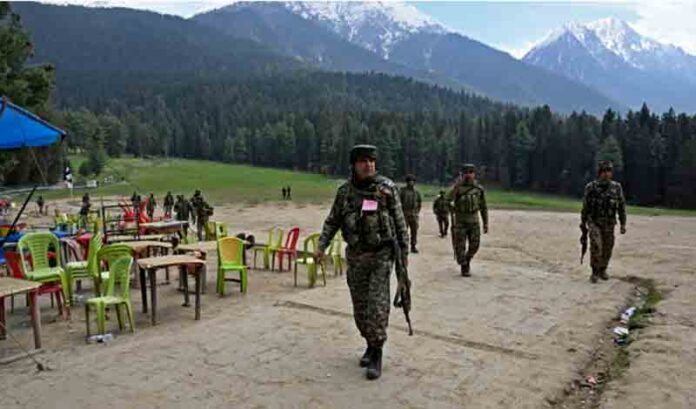
This announcement from the Prime Minister’s Office came after a National Security Committee meeting, which took place a day after India indicated that cross-border elements were involved in the attack that resulted in the deaths of 26 individuals at a popular tourist site.

Indian authorities released notices identifying three militant suspects, two of whom are claimed to be Pakistani, yet New Delhi has not provided evidence to support these claims or offered further details.

In retaliation, India downgraded its relations with Pakistan, suspending a long-standing treaty regarding the Indus River and closing the only land crossing between the two nations.

The Pakistani statement emphasized that any threat to its sovereignty and the safety of its citizens would be met with strong reciprocal actions across all areas. It also warned that any attempt to obstruct or divert water belonging to Pakistan would be viewed as an act of war.

These retaliatory measures were decided during a National Security Committee meeting in Islamabad, chaired by Prime Minister Shehbaz Sharif and attended by senior government and military officials, including the defense, foreign, and interior ministers, as well as the heads of the armed forces.

The Prime Minister’s Office stated that the committee expressed concern over the loss of tourist lives and reviewed India’s recent actions, labeling them as unilateral, unjust, politically motivated, extremely irresponsible, and lacking legal justification.

China surprises with a covert aircraft test in the northern skies on X

0
unmanned combat aerial vehicle, China

On a misty spring day in northern China, a brief sighting of an unidentified aircraft ignited excitement among aviation enthusiasts and analysts globally. Blurry images and low-quality videos circulated on social media platforms like X, depicting what seemed to be a new Chinese air vehicle in the midst of a test flight. This enigmatic craft, unlike the already known J-36 and J-XDS, suggested yet another advancement in China’s ambitious aerospace initiatives.

The sighting, reported by open-source intelligence (OSINT) analysts, has prompted inquiries into the characteristics of this platform and its implications for the rapid development of Chinese military aviation. Although information remains limited, the incident highlights a larger narrative of innovation, engineering excellence, and an unwavering commitment to transforming the future of aerial warfare. The images shared on X provided minimal clarity, revealing a shadowy outline against a cloudy backdrop.

One user, under the handle @RupprechtDeino, remarked on the footage’s ambiguity, initially misidentifying it as a distorted clip of the J-36 but later proposing it could be an unmanned aerial vehicle (UAV) or unmanned combat aerial vehicle (UCAV) due to its vague shape and potential tail design. Another observer noted that the craft appeared different from China’s established sixth-generation prototypes, intensifying speculation regarding its function and design. The absence of clear visuals has only heightened the curiosity, as analysts rush to assemble the scant evidence available.

What is evident, however, is that China’s aerospace sector is advancing at an astonishing rate, testing several advanced platforms within a few months—an engineering achievement that warrants attention. To grasp the importance of this sighting, it is essential to consider the two platforms currently undergoing testing in China: the Chengdu J-36 and the Shenyang J-XDS. The J-36, first identified on December 26, 2024, is a large, trijet, tailless aircraft developed by the Chengdu Aircraft Corporation.

Measuring approximately 75 feet in length and boasting a wingspan of 63 feet, this aircraft significantly surpasses China’s previous J-20 stealth fighter. Its design features a double-delta wing configuration and a tri-engine layout, which includes two side intakes and a dorsal diverters supersonic inlet, indicating a focus on stealth, extended range, and high-speed capabilities.

Experts believe it may function as a multi-role platform, excelling in air superiority, deep strike missions, or even serving as a command center for unmanned systems. The aircraft’s spacious internal weapons bay, likely capable of housing long-range missiles such as the PL-17, along with an estimated maximum takeoff weight of 50 to 60 tons, underscores its versatility and formidable nature.

The J-XDS, or J-50, is a smaller, twin-engine stealth fighter created by the Shenyang Aircraft Corporation. It was first noted around the same time as the J-36 and features a tailless, lambda-shaped wing with adjustable wingtips to improve agility and minimize radar visibility. Its diverters supersonic inlets and ventral centerline groove enhance its stealth capabilities, while the twin-engine bays with potential thrust-vectoring nozzles indicate high maneuverability.

In contrast to the J-36, the J-XDS seems specifically designed for air superiority, possibly intended for carrier operations due to its compact dimensions and sturdy tricycle landing gear. Recent test flights, including one on April 16, 2025, showed the absence of a pitot tube, suggesting it is in a more advanced prototype stage.

Collectively, these platforms illustrate China’s dual-track strategy in sixth-generation aviation, merging large, multi-role aircraft with nimble, stealth-oriented fighters. The appearance of a third, unidentified platform adds further complexity to this narrative, as OSINT analysts have speculated on its features based on limited visual evidence.

Some experts speculate that the aircraft could be an unmanned aerial vehicle (UAV) or an unmanned combat aerial vehicle (UCAV), due to the unclear features of its tail and the growing focus on autonomous technologies in contemporary warfare. Others suggest it may be a manned aircraft with a hybrid configuration, blending the multi-role capabilities of the J-36 with the stealth characteristics of the J-XDS.

Additionally, the possibility of it being an experimental platform designed to test advanced technologies such as sophisticated sensors, artificial intelligence, or innovative propulsion systems cannot be dismissed. The successful testing of a hypersonic detonation engine by China in 2022, as reported by the South China Morning Post, supports the notion that this new aircraft could serve as a testbed for next-generation propulsion systems.

Regardless of its intended function, this sighting underscores China’s capacity to manage multiple high-stakes development initiatives concurrently. Test flights represent a crucial phase in aerospace development, signifying the shift from conceptual design to practical validation.

For China, these trials demonstrate an evolved approach to rapid prototyping and iterative design. In contrast to conventional aerospace programs that may take decades, China has shortened its development timelines, allowing for frequent flight tests and quick design adjustments. For example, the J-36 completed three recorded test flights from December 2024 to March 2025, each yielding valuable data on its propulsion, stealth, and aerodynamic performance.

The J-XDS has experienced a similar path, with sightings noted in January, April, and later, often accompanied by high-resolution images that showcase gradual design modifications. The emergence of a third platform indicates a thriving innovation ecosystem, where research institutions, manufacturers, and the People’s Liberation Army Air Force work together seamlessly to advance technological frontiers.

This pace contrasts sharply with other global aerospace initiatives, especially the United States’ Next Generation Air Dominance (NGAD) program. The U.S. Air Force has made progress towards developing a sixth-generation fighter, having selected Boeing in March 2025 to construct the F-47, which will serve as the manned core of NGAD. However, the program is still in the engineering phase, with only conceptual designs and experimental X-plane flights confirmed so far.

A Congressional Budget Office analysis from March 2025 projected the F-47’s cost to exceed $300 million per unit, raising discussions about its affordability and timeline. In contrast, China’s capability to perform real-world tests on multiple platforms highlights a more flexible approach, emphasizing iterative advancements rather than long-term perfection. This difference is not a matter of superiority but rather of methodology—China’s frequent testing facilitates rapid learning, while the U.S. concentrates on integrating advanced technologies such as drones and AI into a cohesive ‘family of systems.’

Historically, China’s aerospace development has been characterized by a process of catching up and transformation. In the 1990s, its air force was heavily dependent on reverse-engineered Soviet designs, like the J-7, which is a variant of the MiG-21. The debut of the J-20 stealth fighter in 2017 represented a significant milestone, establishing China as a formidable player in fifth-generation aviation. Currently, with over 3,150 aircraft, including 2,400 combat aircraft, the People’s Liberation Army Air Force boasts the largest aviation force in the Indo-Pacific region.

The J-36 and J-XDS continue this legacy, integrating insights from the J-20 while adopting sixth-generation features such as all-aspect stealth, advanced sensors, and network-centric warfare. If confirmed, the new platform could further enhance this portfolio, potentially fulfilling specialized roles in electronic warfare, reconnaissance, or autonomous strike operations.

The development of such platforms presents significant technical challenges. Sixth-generation aircraft require advanced flight control systems to handle their inherently unstable designs, exemplified by the J-XDS’s tailless structure. The lack of vertical stabilizers necessitates continuous adaptive control, depending on horizontal surfaces for stability.

The J-36’s trijet configuration, featuring a distinctive intake design, indicates an emphasis on thrust redundancy and the capability for supercruise—sustained supersonic flight without the use of afterburners. Both aircraft are likely to utilize cutting-edge materials, including radar-absorbing composites, and incorporate AI for real-time processing of extensive sensor data.

The new platform, whether crewed or uncrewed, will encounter similar challenges, especially if it involves testing experimental technologies like directed-energy weapons or hypersonic propulsion. China’s capacity to address these issues demonstrates substantial investments in research, with organizations such as the Aviation Industry Corporation of China [AVIC] leading the charge in innovation. Other countries are also pursuing comparable goals, albeit at different speeds.

The United Kingdom’s Tempest initiative, in partnership with Italy and Japan, aims to develop a sixth-generation fighter by 2035, focusing on AI and drone integration. France and Germany’s Future Combat Air System [FCAS] has a similar timeline, concentrating on networked warfare. Although Russia’s Su-57 is a fifth-generation aircraft, it is being enhanced with sixth-generation technologies, although its progress is slower.

These initiatives, like NGAD, emphasize long-term strategic objectives, while China’s strategy is centered on achieving concrete milestones. The upcoming test flight of the new platform, despite its enigmatic nature, indicates that China is not postponing for perfection—it is actively building, testing, and refining its capabilities now.

The wider ramifications of this observation go beyond the aircraft itself. It signifies a global transition towards more rapid and adaptable aerospace development, fueled by innovations in digital design, additive manufacturing, and artificial intelligence. China’s capacity to evaluate three different platforms in rapid succession indicates a supply chain and workforce that can support high-speed innovation.

This stands in contrast to the U.S., where the high expenses and bureaucratic challenges associated with the Next Generation Air Dominance (NGAD) program have led to discussions about integrating existing platforms such as the F-35 and F-15EX into future plans. The emerging platform, whether it be a fighter jet, drone, or experimental model, represents this trend, suggesting a future where aerial combat depends on interconnected systems—manned aircraft, drones, and satellites—operating collaboratively.

The ambiguity surrounding the new platform raises doubts. The unclear images may be intentional, a strategy China has employed to shape narratives and confuse analysts. Previous leaks, such as those concerning the J-36 in December 2024, initially generated enthusiasm but ultimately revealed early-stage prototypes. The new aircraft could serve as a decoy, concealing advancements in another initiative, or merely function as a technology demonstrator.

Nevertheless, even as a test platform, it highlights China’s dedication to advancing its capabilities. Once regarded as derivative, the nation’s aerospace sector now attracts global interest, with each test flight providing insight into its developing competencies.

From an analytical standpoint, this event transcends the specifics of the aircraft and instead highlights a significant shift in aerospace innovation. China’s swift prototyping challenges the conventional approach of lengthy, multi-billion dollar programs, indicating that flexibility and rapid iteration may characterize the future of air power.

For the United States, this serves as a crucial reminder—not to incite panic, but to reevaluate strategic priorities. The pause for review of the Next Generation Air Dominance (NGAD) program, as mentioned by Air Force Secretary Frank Kendall, demonstrates a prudent strategy; however, caution should not lead to complacency. The new platform, still somewhat obscured, serves as a reminder that the competition for air superiority is intensifying, and stagnation is not an option.

As more detailed images and information become available, will they unveil a transformative development or merely represent another phase in China’s ongoing progress? Only time will reveal the answer, but the airspace is increasingly filled with potential.

Ukraine has acquired Japan’s covert satellite technology amid the ongoing conflict

0
synthetic aperture radar [SAR] satellites

Soaring high above the planet, a compact Japanese satellite moves quietly through the emptiness of space, its 3.6-meter antenna extended like a metallic blossom. Unlike conventional imaging satellites that depend on visible light, this satellite utilizes microwave signals to penetrate clouds, fog, and darkness, capturing high-resolution radar images of the terrain below. On April 21, 2025, Japan revealed its intention to share these images—generated by synthetic aperture radar (SAR) satellites managed by the Institute for Q-shu Pioneers of Space (iQPS)—with Ukraine’s military intelligence agency, the GUR. This represents the first instance of Japan providing such geospatial intelligence to a foreign country, a move that could transform Ukraine’s surveillance strategies amid its ongoing conflict.

The agreement, as reported by Intelligence Online, highlights a significant advancement in satellite imaging technology and emphasizes Japan’s cautious yet expanding involvement in global security collaboration. The importance of this development is rooted in the distinctive features of SAR technology.

Unlike optical satellites that require clear skies and daylight for effective imaging, SAR satellites send out microwave pulses that reflect off the Earth’s surface and return to the satellite, producing intricate two- or three-dimensional maps. This capability enables them to “see” through adverse weather conditions and at any hour, making them essential for military operations where timing and environmental factors are unpredictable.

For Ukraine, which has been engaged in a challenging conflict since Russia’s invasion in 2022, access to such intelligence could significantly improve its capacity to monitor troop movements, oversee supply routes, and evaluate damage to vital infrastructure, even during the harshest winter conditions or under dense cloud cover.

The iQPS satellites central to this agreement exemplify a significant milestone in aerospace technology. Established in 2005 as a spinoff from Kyushu University, iQPS set out to create a space industry in Japan’s southwestern Kyushu region. The company’s leading QPS-SAR satellites weigh only 100 kilograms, a mere fraction of the multi-ton giants typically employed for SAR imaging.

Despite their compact size, these satellites deliver a resolution of 46 centimeters, enabling them to identify objects smaller than a car. This capability is facilitated by a lightweight, deployable parabolic antenna that folds down to a compact 80 centimeters for launch and expands to 3.6 meters once in orbit. The antenna’s metallic mesh design, combined with sophisticated radar systems, empowers iQPS to generate high-quality images at a fraction of the cost of traditional SAR satellites, which can cost tens of billions of yen. iQPS claims their satellites are one-hundredth the price of conventional models, a groundbreaking development that has garnered interest from both commercial and military sectors.

The technical details of the QPS-SAR satellites merit close examination, as they underpin Japan’s support to Ukraine. Each satellite operates in low Earth orbit, roughly 600 kilometers above the Earth, utilizing an X-band radar system to send and receive microwave signals.

The satellites offer two observation modes: Stripmap Mode for extensive area coverage and Spotlight Mode for high-resolution imaging of specific targets. The deployable antenna, a patented innovation, features a spring-loaded mechanism that ensures a smooth, bowl-shaped surface in orbit, reducing signal distortion.

Since the debut of its inaugural satellite, Izanagi, in December 2019, iQPS has enhanced its technology by increasing the antenna’s rib count to boost surface accuracy and improve radar capabilities. By April 2025, iQPS plans to operate five satellites, with intentions to launch a seventh by late 2026 and ultimately establish a full constellation of 24 by 2027, aiming to deliver near-real-time imagery of any location on Earth every 10 minutes.

For Ukraine’s GUR, the operational benefits of SAR imagery are significant. The capacity to observe targets in darkness or through heavy snowfall is especially crucial in eastern Ukraine, where winter operations frequently occur under difficult conditions. SAR data can uncover the heat signatures of active engines, identify camouflaged vehicles, or map terrain alterations caused by artillery fire.

A 2024 report from Newsweek highlighted that Ukraine’s GUR was utilizing SAR satellites to “directly prepare strikes on the enemy,” with nearly 40% of imagery from Finland’s ICEYE satellites contributing to attacks that resulted in billions of dollars in damages. The integration of iQPS data could enhance these capabilities, allowing GUR to monitor Russian supply routes, pinpoint fortified locations, or confirm high-value targets with increased accuracy.

The agreement with Japan outlines a two- to three-month timeframe for incorporating iQPS systems into Ukrainian intelligence frameworks, ensuring that GUR can efficiently process and analyze the incoming data. Japan’s choice to share this technology with Ukraine marks a shift from its historically cautious stance on intelligence sharing.

Although Tokyo has consistently maintained a strong space program, its emphasis has typically been on domestic concerns, such as disaster monitoring in a nation vulnerable to earthquakes, typhoons, and volcanic activity.

The 2024 Noto Peninsula earthquake exemplified the effectiveness of iQPS satellites, which provided high-resolution imagery to support government and media response efforts, highlighting their value in crisis scenarios. However, the decision to share SAR data with a foreign military indicates a significant evolution in Japan’s aerospace objectives.

According to Intelligence Online, discussions between Japanese and Ukrainian officials commenced in late February 2025, triggered by a temporary halt in U.S. intelligence sharing with Kyiv earlier that year. Although U.S. assistance resumed by mid-March, this incident highlighted Ukraine’s necessity to broaden its intelligence sources, leading Japan to fill the gap.

To grasp the context of this agreement, it is beneficial to compare iQPS’s capabilities with those of other SAR providers aiding Ukraine. Finland’s ICEYE, Germany’s SAR-Lupe and SARah, and Italy’s COSMO-SkyMed constellations have been delivering radar imagery to Kyiv since at least 2022. ICEYE, a Finnish startup, operates the largest SAR constellation globally, with satellites achieving resolutions comparable to iQPS’s 46 centimeters.

Germany’s SAR-Lupe system, intended for military reconnaissance, provides high-resolution imaging but is constrained by its smaller constellation size. Italy’s COSMO-SkyMed, a dual-use system, offers both civilian and military imagery, emphasizing rapid revisit times.

While these systems have enhanced Ukraine’s intelligence capabilities, iQPS’s contribution is notable for its compact satellite design and cost-effectiveness, potentially establishing a new benchmark for small-scale SAR operators. In contrast to optical systems like France’s Pléiades Neo or commercial U.S. providers Maxar and BlackSky, which face challenges with cloud cover and nighttime limitations, SAR systems deliver continuous surveillance, making them an essential asset in contemporary warfare.

The development of Synthetic Aperture Radar (SAR) technology offers valuable insights into Japan’s involvement. Originating in the 1950s for military reconnaissance, SAR was initially dominated by superpowers such as the United States and the Soviet Union, which operated large, costly satellites.

The U.S. National Reconnaissance Office has historically utilized SAR for global surveillance, exemplified by the Lacrosse satellites that deliver sub-meter resolution imagery. In recent years, however, innovations in miniaturization and antenna technology have made SAR more accessible, allowing smaller nations and private enterprises to participate in the field.

Japan’s iQPS stands out as a notable example, leveraging decades of research from Kyushu University to develop satellites that match the performance of larger systems at significantly lower costs.

This trend is reflected in other countries as well, such as Canada’s RADARSAT program, which has been providing civilian SAR imagery since the 1990s, and China’s expanding fleet of military SAR satellites, which present a competitive challenge in the Indo-Pacific region.

Japan’s cautious approach to intelligence sharing is also indicative of its cultural and legal limitations. The nation’s post-World War II constitution underscores a commitment to pacifism, and its space policy has traditionally focused on non-military uses.

The choice to share SAR data with Ukraine, while not a direct military action, marks a notable advancement in Japan’s international engagement. This decision aligns with Japan’s broader strategy to enhance its geospatial intelligence capabilities, initially intended to support the Quad alliance [Japan, Australia, India, and the United States] in monitoring regional threats. However, the agreement with Ukraine indicates that Tokyo is prepared to broaden its role beyond established alliances, potentially paving the way for future collaborations.

Looking forward, the collaboration between iQPS and Ukraine may significantly impact the global satellite sector. iQPS’s innovative lightweight and cost-effective SAR satellites challenge the supremacy of established aerospace companies, demonstrating that smaller entities can provide impactful solutions. As iQPS grows its satellite constellation, it seeks to offer near-continuous surveillance, a capability that has typically been exclusive to government-funded initiatives.

This development could pique the interest of other countries in search of economical intelligence options, especially in areas vulnerable to conflict or natural disasters. For Ukraine, incorporating Japanese SAR data lessens its dependence on Western suppliers, serving as a safeguard against potential future interruptions in U.S. or European assistance.

The upcoming two- to three-month integration phase will be crucial, as GUR must modify its systems to accommodate the new data influx, a task that may challenge its technical capabilities but ultimately improve its operational adaptability. The emergence of commercial SAR providers like iQPS also prompts considerations regarding the future of military intelligence.

As private firms acquire the capacity to deliver near-real-time imagery, governments might increasingly rely on commercial sources instead of funding expensive national programs. This transition could democratize intelligence access while complicating oversight, as sensitive information becomes accessible to a broader array of stakeholders.

Currently, Japan’s choice to provide SAR imagery to Ukraine marks a significant technical and strategic achievement, linking advanced technology with practical military requirements.

The collaboration between Japan and Ukraine represents a significant transformation in the realm of global intelligence. A small Japanese startup’s capability to provide top-tier SAR imagery highlights the swift advancements in the space industry, where innovation and flexibility are beginning to surpass mere size.

For Ukraine, the arrival of Japanese data provides a strategic advantage, allowing its military to function with enhanced accuracy in a conflict where information is as vital as weaponry. However, the wider consequences—of a typically reserved nation like Japan engaging on the international front, and of private enterprises redefining military intelligence—indicate that this partnership is more than just a minor detail in an ongoing conflict.

It offers a preview of a future where the intersections of technology, security, and collaboration are being redefined. As iQPS’s satellites persist in monitoring the Earth, one ponders: who else might gain from their constant observation, and how will this new age of accessible intelligence influence future conflicts?

China’s gallium restrictions threaten the F-35’s radar and U.S. air superiority

0
The F-35A Lightning II, dubbed a “Frankenjet” and assigned to the 388th Fighter Wing, returns to Hill Air Force Base, Utah.

Inside the cockpit of an F-35 Lightning II, a pilot navigates the night sky, utilizing the jet’s sophisticated radar to identify threats that are not visible to the naked eye. The AN/APG-81 active electronically scanned array radar, the core of this fifth-generation stealth fighter, accurately monitors multiple targets, ensuring the pilot maintains superiority in combat.

However, this technological wonder, crucial to the United States’ air dominance, depends on a little-known metal: gallium. As of April 2025, China, which holds 98 percent of the global refined gallium supply, has imposed stricter export controls to the U.S., raising concerns about the production and upkeep of the F-35 and other essential military systems.

This action, part of a growing trade conflict, highlights a vulnerability that could alter the trajectory of U.S. military strength. The F-35, manufactured by Lockheed Martin, is not merely a fighter jet; it is a fundamental element of American defense policy. Engineered to function across air, land, and sea, it combines stealth, sensor integration, and network-enabled capabilities to surpass opponents.

Its AN/APG-81 radar, created by Northrop Grumman, represents a significant technological achievement, capable of detecting small targets at extensive ranges, disrupting enemy systems, and even facilitating cyber operations. Nevertheless, the radar’s high-frequency capabilities rely on gallium arsenide, a compound semiconductor that allows for the swift and dependable transmission of signals within the radar’s monolithic microwave integrated circuits.

The absence of gallium could jeopardize the radar’s performance and the F-35’s advantage in combat. As China’s export restrictions intensify, the U.S. is confronted with a supply chain crisis that affects not only the F-35 but also electronic warfare systems and communication devices, highlighting a strategic error that has developed over decades.

Gallium, a soft and silvery metal often derived from aluminum and zinc processing, plays a disproportionately significant role in military technology despite its relative obscurity. In the F-35’s radar system, gallium arsenide chips enable the AN/APG-81 to switch signals at high frequencies, providing the necessary clarity and range to detect stealthy opponents or small drones. These chips also exhibit greater resistance to heat and radiation compared to conventional silicon, making them well-suited for the demanding environments of modern warfare.

The radar’s capability to track multiple targets simultaneously, conduct electronic attacks, and exchange data with other platforms relies heavily on this material. Additionally, gallium is essential for the F-35’s electronic warfare suite, which features jammers designed to interfere with enemy radars and sensors, as well as its communication systems that depend on gallium nitride-based amplifiers for secure, high-bandwidth data transmission.

These systems allow the F-35 to function as a connected node in joint operations, sharing real-time intelligence with naval vessels, satellites, and ground forces. China’s supremacy in gallium production is remarkable; the U.S. Geological Survey reports that in 2023, China produced 98 percent of the world’s refined gallium, a dominance it has sustained for years. This control is attributed to its extensive bauxite reserves and superior refining capabilities, which far exceed those of other countries.

In December 2024, China intensified its export restrictions on gallium, germanium, and antimony, citing national security as the reason. This action is largely perceived as a response to U.S. limitations imposed on Chinese semiconductor companies. These restrictions persisted into 2025, leading to a halt in shipments to the U.S. and a surge in prices.

According to a report from the Center for Strategic and International Studies, gallium prices increased by more than 50 percent in 2024, with further hikes anticipated as supply diminishes. For the U.S. defense sector, this situation transcends mere economic implications; it represents a strategic constraint. The F-35 program, already one of the most costly in military history with a lifecycle expenditure surpassing $1.7 trillion, is especially at risk.

Lockheed Martin manufactures around 150 F-35s each year, with over 1,000 aircraft delivered to the U.S. and allied nations by early 2025. Each aircraft relies on gallium-based components for its radar, electronic warfare, and communication systems. The AN/APG-81 radar, for instance, incorporates thousands of gallium arsenide transmit-receive modules, each a remarkable feat of engineering.

A gallium shortage could lead to production delays, increased costs, or compel the Pentagon to prioritize maintenance over new aircraft production, potentially diminishing the number of operational jets. The cascading effects could jeopardize U.S. commitments to allies such as Japan, Australia, and NATO partners, who depend on the F-35 for their defense.

To grasp the importance of the F-35, one must examine its function in contemporary combat. The aircraft’s stealth features enable it to navigate through contested airspace, successfully avoiding sophisticated air defense systems such as Russia’s S-400 and China’s HQ-9. Its sensor fusion technology amalgamates information from radar, electronic warfare systems, and external inputs, providing the pilot with a cohesive overview of the battlefield.

The AN/APG-81 radar, utilizing a gallium arsenide core, is pivotal to this functionality, boasting a detection range exceeding 150 miles for fighter-sized targets and the capability to engage multiple threats at once. In comparison to competitors like China’s J-20 and Russia’s Su-57, the F-35’s radar delivers enhanced situational awareness, a vital edge in critical situations such as a potential conflict in the Taiwan Strait. However, a consistent supply of gallium is necessary to maintain this advantage, as its absence could jeopardize the U.S. and its allies.

The electronic warfare and communication systems, while not as prominent as the radar, are equally essential. The F-35’s electronic warfare suite, part of the ASQ-239 Barracuda system, employs gallium nitride amplifiers to jam enemy radar and disrupt missile guidance systems. These amplifiers, which function at higher power levels than gallium arsenide, are crucial for countering advanced threats like hypersonic missiles. Likewise, the aircraft’s communication systems, including the Multifunction Advanced Data Link (MADL), depend on gallium-based components to ensure secure, low-probability-of-intercept connections with other platforms.

These systems enable the F-35 to collaborate with assets such as the E-7 Wedgetail airborne early warning aircraft and Navy destroyers, enhancing its effectiveness in joint operations. A shortage of gallium could hinder the production of these components, diminishing the jet’s capacity to function in contested environments.

Historically, the U.S. has encountered vulnerabilities in its supply chain, but the current gallium crisis is particularly severe. The 1973 oil embargo revealed America’s reliance on foreign energy due to OPEC’s restrictions, leading to increased investments in domestic production. The gallium issue mirrors this situation, but the stakes are significantly higher in today’s climate of great power competition.

The U.S. has been aware of its dependence on Chinese gallium for decades, yet efforts to diversify sources have progressed slowly. A 2019 report from the Department of Defense highlighted gallium as a critical material, cautioning that supply disruptions could threaten military readiness.

Nevertheless, domestic production remains minimal, with the U.S. heavily dependent on imports from China and smaller suppliers like Japan and Germany. China’s export controls are not a new strategy; in 2010, Beijing briefly limited rare earth exports to Japan during a territorial dispute, causing significant disruptions in global markets. However, the current gallium restrictions are more focused, intended to undermine U.S. defense capabilities amid rising tensions.

The Biden administration’s sanctions on Chinese semiconductor companies in 2024, coupled with President Trump’s proposed 60 percent tariffs on Chinese imports in early 2025, have strengthened Beijing’s determination. Chinese state media has portrayed these export restrictions as a safeguard of national interests, yet analysts perceive a more intricate strategy at play.

According to a 2024 analysis by the Brookings Institution, ‘China is leveraging its dominance over essential minerals to exert pressure on the U.S. without resorting to military action.’ This subtle tactic could shift the power dynamics, especially in the Indo-Pacific region, where the F-35 plays a crucial role in U.S. strategy. The repercussions of the F-35 initiative are already evident, as Lockheed Martin has reported delays in component deliveries, although the company has not publicly linked these to gallium shortages.

Industry experts indicate that the Pentagon may be discreetly accumulating gallium, but its reserves are finite. The Defense Logistics Agency, tasked with securing essential materials, has faced challenges in sourcing gallium from alternative suppliers, as Japan and Germany do not have the capacity to fulfill U.S. needs. Gallium prices have skyrocketed, with some estimates indicating a doubling since the onset of restrictions, further straining defense budgets already burdened by inflation and competing demands.

Beyond the F-35, the gallium shortage poses a threat to the broader U.S. military capabilities. Electronic warfare systems, such as those on the EA-18G Growler, depend on gallium nitride for their high-power jammers, which are essential for neutralizing enemy air defenses. Likewise, satellite communication systems, critical for global command and control, utilize gallium arsenide solar cells for their effectiveness in extreme space conditions. A prolonged shortage could compel the Pentagon to ration components, prioritizing certain platforms over others.

The potential weakening of U.S. deterrence is particularly concerning in situations where electronic warfare and secure communications play a crucial role, such as a conflict with China regarding Taiwan. While the U.S. has several options, none provide an immediate solution. Prioritizing the diversification of supply chains is essential, with Japan and Germany ramping up gallium production, although their output remains minimal compared to China’s.

Canada and Australia, which possess substantial bauxite reserves, could emerge as future suppliers, but establishing the necessary refining infrastructure will require years. The Pentagon has committed to domestic initiatives, including a gallium recovery facility in Ohio, but these projects are not anticipated to be operational until 2028. Another potential solution is recycling gallium from electronic waste; however, current technologies are both inefficient and expensive.

Research is ongoing into alternative materials, such as silicon carbide for radar applications, but these have yet to become viable substitutes for gallium arsenide or nitride. Geopolitically, the U.S. is relying on its allies to mitigate China’s influence. The AUKUS agreement, which includes Australia and the United Kingdom, features initiatives aimed at securing critical minerals, while the Quad alliance with Japan, India, and Australia is investigating collaborative supply chain strategies.

Nevertheless, these initiatives encounter bureaucratic and economic challenges. For example, while Australia has the capacity to increase bauxite mining, it currently lacks the refining capabilities necessary to produce high-purity gallium.

Meanwhile, China is tightening its control, with reports indicating that Beijing may impose further restrictions on related materials such as indium and tellurium. The gallium crisis serves as a critical reminder of the vulnerabilities within America’s defense industrial base. For many years, the U.S. has prioritized cost efficiency over strategic resilience, leading to the outsourcing of essential materials to adversaries.

The F-35 represents a remarkable feat of engineering, illustrating a complex dilemma: its advanced technology renders it unparalleled, yet its dependence on a single foreign-sourced metal introduces a significant vulnerability. Its operational timeline, beginning with its inaugural flight in 2006 and culminating in its first combat use in 2018 with the Israeli Air Force, highlights its critical role.

The aircraft has conducted missions across Syria, Afghanistan, and the Indo-Pacific, demonstrating its adaptability. However, as China continues to impose export restrictions, the future of the F-35—and the United States’ capacity to project military strength—remains uncertain.

Moving forward, the U.S. must take immediate action to secure its supply chains, although this path is laden with obstacles. Establishing domestic production will necessitate substantial financial investment and years of development, all while diplomatic relations with China remain strained.

The Pentagon’s delay in addressing this vulnerability raises concerns regarding its readiness for upcoming conflicts. As the F-35 continues to be a pivotal element of U.S. military strategy, the ongoing gallium shortage serves as a poignant reminder that even the most sophisticated weaponry is only as robust as its most fragile component.

Will America be able to adapt before its rivals take advantage of this critical weakness? The outcome will influence the nature of future warfare.

What is truly unfolding between Trump and Tehran?

0
Iranian Foreign Minister Abbas Araghchi gives a briefing on the sidelines of a UN event in Lisbon, Portugal.

On the previous Saturday, the second round of nuclear negotiations between the US and Iran occurred in Rome, following an initial meeting a week earlier in Muscat, Oman. Both parties characterized the discussions as ‘constructive,’ yet this optimism was soon challenged by mixed signals from the Trump administration.

Despite the positive tone, it was uncertain if a new nuclear agreement was genuinely attainable. At the beginning of the talks, National Security Advisor Mike Waltz – known for his hardline stance on Iran – established a stringent requirement: Iran must fully dismantle its uranium enrichment program to secure any deal with the US.

However, after the Muscat meeting, Special Envoy to the Middle East Steve Witkoff, who led the US delegation, conveyed a contrasting perspective. In a Fox News interview, he indicated that Tehran might be permitted to retain limited uranium enrichment for peaceful energy purposes – a notion that would have been unacceptable just days prior. Witkoff underscored the necessity of rigorous verification measures to avert any militarization of Iran’s nuclear capabilities, including monitoring missile technology and delivery systems.

Notably, he did not mention ‘dismantlement.’ This change suggested that the administration could be contemplating a revised approach to the 2015 Joint Comprehensive Plan of Action (JCPOA) – the very agreement that Trump abandoned in 2018, labeling it a ‘disaster.’

However, the shift in stance was short-lived. Just a day later, Witkoff took to X to reaffirm the call for the complete dismantling of Iran’s nuclear and weapons programs.

What caused this sudden change in rhetoric? Axios reports that Trump convened with key national security advisors three days post the Muscat discussions to reevaluate the US approach. During this meeting, Vice President JD Vance, Witkoff, and Defense Secretary Pete Hegseth advocated for a more pragmatic strategy. They cautioned that demanding the total dismantling of Iran’s nuclear capabilities could jeopardize the negotiations, as Iran had already indicated that such extensive concessions were not negotiable. Vance even proposed that the US should prepare for some degree of compromise.

However, not all were in agreement. A competing faction, led by Waltz and Secretary of State Marco Rubio, held a different perspective. They contended that Iran’s current weaknesses presented the US with a rare advantage that should not be wasted. They maintained that if Tehran did not comply with US demands, the US should be prepared to take military action or support Israeli operations.

The divide reveals a significant strategic divide within the Trump administration. There exists a stark contrast between the hardline stance advocating for Iran’s total disarmament and a more adaptable approach focused on limiting weaponization while allowing for peaceful enrichment.

This creates a substantial gray area. The absence of a cohesive message – or even a fundamental agreement – could put the US at a disadvantage against a well-prepared and unified Iranian negotiating team. In essence, Trump is navigating a challenging balancing act. He clearly aims to prevent military escalation. The decision to appoint Witkoff, known for his willingness to negotiate, indicates a sincere commitment to diplomacy rather than aggressive posturing.

If hardliners had dominated in Washington, the second round of talks in Rome likely would not have occurred. On Monday, April 21, Trump cautiously informed reporters that the discussions were progressing “very well,” but cautioned that meaningful advancements would require time. His choice of language demonstrated a desire to remain adaptable while recognizing the intricacies – and potential dangers – of engaging in negotiations with Tehran.

There appears to be a heightened sense of optimism from the Iranian perspective. Foreign Minister Abbas Araghchi indicated that the two parties discovered considerably more shared interests in Rome compared to Muscat. His comments imply that progress is gaining traction and that significant advancements may be forthcoming.

Additionally, Araghchi’s travel plans drew attention; prior to his visit to Rome, he stopped in Moscow to meet with President Vladimir Putin and Foreign Minister Sergey Lavrov. He reportedly delivered a personal message from Supreme Leader Ayatollah Ali Khamenei, which he referred to as ‘a message to the world.’ This visit was not overlooked by the West, as it was widely seen as a public reaffirmation of the alliance between Moscow and Tehran.

Retired US Army Colonel and former Pentagon advisor Douglas MacGregor remarked on X that any substantial American military action against Iran would likely provoke a response from Russia, Tehran’s strategic ally.

On the same day, President Putin ratified a law establishing a Comprehensive Strategic Partnership with Iran, further solidifying their political and economic collaboration. In light of the delicate US-Iran negotiations, the Moscow-Tehran relationship appears increasingly significant. As these connections strengthen, Washington may encounter greater challenges in applying unilateral pressure on Iran.

In Tehran, not all officials are convinced about the negotiations. Many remain doubtful of Trump, particularly due to his 2018 decision to withdraw from the JCPOA, which still casts a long shadow. Their skepticism extends beyond Trump to a broader worry: that future US leaders might also change course. If Trump dismantled Obama’s agreements, what guarantees exist that his own deals won’t face the same fate?

Despite these concerns, major international media have reported that two additional rounds of discussions are scheduled: one in Geneva next week and another in Oman the following week. This ongoing diplomatic engagement indicates a mutual interest in maintaining dialogue.

Currently, both Trump’s cautious optimism and Iran’s reserved stance imply that, at least for now, the threat of conflict has diminished. This reduction in hostile rhetoric reveals a significant reality: despite ongoing distrust and internal political challenges, both parties recognize the importance of continued negotiations.

This is evident even to those outside the policy sphere. Conversely, in Israel, the atmosphere is much more tense. Prime Minister Benjamin Netanyahu, who has consistently expressed his doubts about engaging with Iran, has criticized the talks.

For Tel Aviv, these negotiations could weaken Tehran’s isolation and jeopardize Israel’s strategic standing. Nevertheless, Trump’s focus is not on regional dynamics but rather on his legacy. He aims to be remembered as the president who averted war and achieved a deal that resonates with the American populace. In this context, Netanyahu’s concerns may need to be set aside.

Trump and Zelenskiy clash again as the US warns of possible withdrawal from Ukraine talks

0
President-elect Donald Trump and Ukrainian President Volodymyr Zelenskiy shake hands inside the Notre-Dame de Paris Cathedral ahead of a ceremony to mark its re-opening following the 2019 fire, in Paris, France.

President Donald Trump criticized Ukraine’s President Volodymyr Zelensky on Wednesday for his assertion that Ukraine would not acknowledge Russian control of Crimea, labeling the comments as ‘very detrimental to the Peace Negotiations with Russia.’

Trump expressed disapproval of Zelensky’s remarks regarding Crimea, stating they hinder peace efforts with Russia and are ‘very harmful to the Peace Negotiations.’

Recognizing Russia’s control over Crimea would mark a significant shift in US policy after a decade and could challenge the long-standing post-World War II agreement that prohibits altering international borders through force.

Following Trump’s statement, Russian missiles targeted Kyiv and Kharkiv, resulting in at least two fatalities and around 50 injuries, according to Ukrainian officials.

Trump’s remarks followed a meeting in London intended to address the conflict in Ukraine, which was downgraded after US Secretary of State Marco Rubio announced he would not participate. Although Rubio was anticipated to engage with Ukrainian, UK, and European representatives, State Department spokesperson Tammy Bruce indicated that he withdrew due to ‘logistical issues.’

However, sources from the US and two European diplomats suggested that the decision stemmed from the administration’s belief that the discussions were not at a critical juncture, leading Rubio to conclude that his presence would not be the most effective use of his time.

One European diplomat remarked that it was preferable to allow discussions to unfold naturally rather than create a false sense of an imminent breakthrough.

Zelensky expressed on X Wednesday that emotions were running high following the talks. In what appeared to be a subtle rebuttal to Trump’s remarks about Zelensky’s reluctance to acknowledge Russian control over Crimea, Zelensky affirmed that Kyiv would adhere to its constitution: ‘Ukraine will always operate in accordance with its Constitution, and we are fully confident that our partners, particularly the USA, will align with its firm decisions.’

He also shared a screenshot of former Secretary of State Mike Pompeo’s 2018 Crimea Declaration, which denounced Russia’s occupation of the region.

Earlier on Wednesday, Britain’s Foreign Office had confirmed that the meeting would occur at a lower level. ‘Official level talks will proceed, but these will be closed to the media,’ the department communicated to journalists.

These developments introduce new uncertainty into the diplomatic efforts aimed at resolving Russia’s war. The United States has increasingly intensified its efforts to compel Kyiv towards an agreement, yet Ukraine remains resolute in its stance against relinquishing Crimea, which has been under Russian occupation since 2014, or any territories in eastern Ukraine that were seized following Moscow’s full-scale invasion in 2022.

On Wednesday, US Vice President JD Vance issued a warning regarding the potential cessation of negotiations, stating to reporters during his visit to India: ‘We have presented a clear proposal to both the Russians and Ukrainians, and it is now their responsibility to respond affirmatively, or the US will withdraw from this process. We have invested significant diplomatic efforts and groundwork.’

Meanwhile, Ukraine’s European allies, especially Britain and France, are striving to reconcile differences. The discussions on Wednesday were set to follow a meeting in Paris last week, where officials from the US, UK, France, and Germany deliberated on the American ceasefire framework.

Following Rubio’s decision to withdraw from the latest discussions, Bruce announced that President Donald Trump’s special envoy for Ukraine and Russia, Keith Kellogg, would represent the US in London instead. Additionally, Trump’s special envoy Steve Witkoff is anticipated to meet with Russian President Vladimir Putin in Russia on Friday, according to a US official.

The US proposal that has led to a stalemate involves acknowledging Russia’s control over Crimea, the southern Ukrainian peninsula that was annexed by Moscow, according to an official familiar with the situation who spoke to CNN. Additionally, it would establish a ceasefire along the conflict’s front lines, the official noted.

On Tuesday, Zelensky expressed his willingness to engage in discussions with Russia, but emphasized that Kyiv would not agree to any arrangement that legitimizes Moscow’s claim over Crimea. ‘Ukraine will not legally recognize the occupation of Crimea,’ he stated to reporters. ‘There is nothing to discuss. It contradicts our constitution.’

When asked for clarification on whether he implied that the US intended to maintain the current territorial boundaries, Vance responded on Wednesday, ‘No, I didn’t say that. What I meant is that the existing line, which is somewhat near them, is likely where the new boundaries in the conflict will eventually be drawn. This implies that both Ukrainians and Russians will need to relinquish some of the territories they currently possess. There will need to be some territorial exchanges.’

The conflict has intensified this week after a brief ceasefire during the Easter weekend, with both parties accusing one another of violations.

Complex discussions

Discussions in London were arranged as US officials expressed their dissatisfaction with the slow progress in ending the war. Trump indicated that the US would need to see a genuine desire from both parties to conclude negotiations, following Rubio’s warning that Washington might withdraw its efforts if no advancements were made.

A comprehensive framework has been shared with both parties, according to Rubio and the State Department, to assess if the existing differences can be reconciled swiftly. There are still elements of the framework that need to be finalized, and the US intends to collaborate with European allies and Ukraine on this matter this week, as reported by an official to CNN.

White House press secretary Karoline Leavitt stated on Tuesday that the negotiations were “hopefully moving in the right direction,” but she refrained from commenting on what a potential withdrawal from peace efforts might entail for the US. Moscow has previously delayed ceasefire discussions and turned down an earlier US proposal for a 30-day ceasefire that Kyiv had agreed to.

However, under Trump’s influence, both Ukraine and Russia have shown a willingness to negotiate for the first time in years; direct talks between the two sides have not occurred since the initial weeks of Moscow’s invasion in 2022.

On Monday, Putin suggested the possibility of direct discussions with Ukraine regarding a ceasefire to prevent attacks on civilian targets, but he noted that further clarification was needed on what constitutes a civilian target.

Kremlin spokesman Dmitry Peskov later affirmed Putin’s comments, stating that “(Putin) was referring to negotiations and discussions with the Ukrainian side,” as reported by Reuters, citing Russia’s Interfax news agency.

Experts warn that India’s military response to the Kashmir attack could threaten regional stability

0
Security personnel inspect the site in the aftermath of an attack as food stall chairs lie empty in Pahalgam, about 90km (55 miles) from Srinagar.

On Wednesday, analysts specializing in foreign affairs and defense from Pakistan criticized the Indian media for its provocative rhetoric regarding the recent incident in Indian-administered Kashmir. They cautioned that any military response from New Delhi would necessitate a reaction from Pakistan, thereby threatening regional stability.

The tragic event occurred on Tuesday afternoon when twenty-six individuals were shot at a tourist destination in Indian-administered Kashmir. The assault took place in Pahalgam, a well-known resort in the Anantnag district, where assailants emerged from the surrounding forest and opened fire on a crowd primarily composed of domestic tourists.

In response to this deadliest attack on civilians in the region in decades, India‘s defense minister pledged a decisive and unmistakable retaliation against both the perpetrators and the masterminds behind the attack, while Pakistan expressed its concerns regarding the incident. A relatively obscure militant organization, the ‘Kashmir Resistance,’ took responsibility for the attack via a social media post, claiming that over 85,000 ‘outsiders’ had settled in the area after coming as tourists and threatening violence against such settlers.

Since 1947, Kashmir has been a contested territory between India and Pakistan, both of which claim it in full but govern only parts of it. The region has suffered from prolonged insurgent violence, which New Delhi alleges is backed by Islamabad. Pakistan refutes these claims, asserting that it only offers diplomatic support to Kashmiris in their quest for self-determination.

Historically, such incidents have exacerbated tensions between India and Pakistan. For instance, a suicide bombing in Pulwama in 2019 resulted in the deaths of 40 Indian paramilitary personnel and led to cross-border airstrikes, bringing the two nations to the brink of war.

Aizaz Ahmed Chaudhary, a former Pakistani foreign secretary, expressed to Arab News that it is regrettable to hastily assign blame to Pakistan without thorough investigation or evidence, and to engage in warmongering. He suggested that India should approach the incident with a level-headed investigation, noting that Pakistan might be willing to assist in this inquiry.

Chaudhary emphasized that dialogue with Pakistan could facilitate identifying the true culprits who deserve punishment.

Additionally, retired Lt. Gen. Ghulam Mustafa, a geopolitical and defense analyst, characterized the attack as a ‘false flag operation,’ claiming it was strategically timed with US Vice President JD Vance’s visit to India. He criticized the Indian media’s portrayal of the situation, stating that India has generated considerable hype around the issue and must now take action, potentially against Pakistan along the Line of Control.

Former diplomat Masood Khalid expressed regret over the Indian media’s frenzied accusations against Pakistan, lacking any substantiated evidence. He questioned how militants could penetrate deep into the occupied territory of Indian-administered Kashmir with over 700,000 Indian troops stationed there. Khalid expressed hope that India would acknowledge the concerns of the Kashmiri people, who are fighting for their right to self-determination.

Dr. Qamar Cheema, executive director of the Sanober Institute, a think tank focused on Pakistan and South Asian issues, noted that India might further deteriorate its relations with Pakistan due to the delicate nature of the situation. He pointed out that the Indian media, which often reflects government perspectives, can influence public opinion in a way that legitimizes military actions against Pakistan, especially since the Indian defense minister has already conferred with military leaders.

Chaudhary stated that any military action by India against Pakistan would be deemed highly irresponsible. He emphasized that Pakistan possesses the capability to defend itself and would not remain passive; thus, India should refrain from such actions as they could have severe repercussions for the entire region.

Khalid concurred, asserting that Pakistan would be fully prepared to counter any aggressive actions from India.

A security official, speaking anonymously, noted that India was attempting to shift focus from the incident, despite the TRF already claiming responsibility for the attack. He questioned whether the implications of this panic had been considered, warning that Pakistan would not stay inactive in response to any cross-border actions, which could disrupt regional stability.

Israel Suspends Upcoming Attack on Iran’s Nuclear Sites Due to US Influence

0
Israeli and Iranian flags are seen in this illustration.

The New York Times reported that Israel was gearing up for a significant military operation targeting Iranian nuclear sites as early as May 2025. However, this initiative was postponed following a decision by U.S. President Donald Trump.

After months of internal discussions within his administration, Trump opted to pursue a new diplomatic approach with Tehran to limit its nuclear ambitions. This change occurred amidst escalating regional tensions, with Iran facing military and economic challenges, yet demonstrating a willingness for indirect talks.

Close sources to the Israeli government revealed that the intended operation aimed to postpone Iran’s nuclear progress by at least a year. For the operation to be effective and to reduce the risk of severe Iranian retaliation, it required active U.S. support.

While some American officials, including General Michael E. Kurilla, commander of CENTCOM, seemed receptive to offering logistical and operational assistance, others expressed concerns about the potential for regional escalation.

Director of National Intelligence Tulsi Gabbard notably issued a warning that an increase in U.S. military presence could lead to a wider conflict.

Israel’s strategy for the strike involved a heavy reliance on its airpower, utilizing F-35I Adir and F-15I Ra’am fighter jets to target Iranian nuclear facilities while neutralizing air defense systems. These advanced aircraft, known for their long-range and precision strike capabilities, were anticipated to penetrate deep into Iranian airspace.

However, attacking well-fortified locations like Natanz and Fordow necessitated the use of bunker-busting munitions such as the GBU-28 or GBU-57, which are exclusively available from the United States, highlighting the importance of U.S. cooperation. An initial strategy that included a combination of airstrikes and commando operations was also contemplated but ultimately set aside due to time limitations.

Concurrently, Israeli officials planned to implement electronic warfare and cyber operations to disrupt Iran’s command and control systems and weaken integrated defense networks. These tactics, which had been successfully tested in previous missions, were expected to enhance the overall air campaign. Given the operation’s magnitude, additional defensive measures were also put in place to mitigate potential Iranian retaliation or attacks from allied groups like Hezbollah.

Israel prepared its Iron Dome, David’s Sling, and Arrow missile defense systems, while the United States repositioned assets in the area, including THAAD and Patriot missile batteries, two aircraft carriers (Carl Vinson and Harry S. Truman), and several B-2 stealth bombers stationed at Diego Garcia.

The Israeli target list prioritized Iran’s key nuclear sites, with the Natanz facility, which contains thousands of uranium-enriching centrifuges, being a primary focus. Its deep underground location and multiple layers of reinforced concrete made it a formidable target requiring specialized weaponry.

The Fordow site, situated beneath a mountain near Qom, was deemed even more challenging to access and is equipped with advanced centrifuges capable of enriching uranium to near-weapons-grade levels. Other significant targets included the uranium conversion facility in Isfahan and missile fuel production sites.

Prior to any military engagement, Israel would need to neutralize Iran’s remaining air defense systems, especially the Russian-made S-300 batteries. The main objective was to undermine Iran’s nuclear and ballistic missile capabilities while minimizing its capacity for an effective counterattack. The urgency of this strategy was heightened by Israeli military successes in 2024, which included the destruction of weapon depots and air defense systems in Syria and Iran, the weakening of Hezbollah, and the downfall of the Assad regime, a crucial ally of Tehran.

However, during Israeli Prime Minister Benjamin Netanyahu’s visit to the White House in early April, Donald Trump announced the resumption of negotiations with Iran, temporarily halting any coordinated military actions. While Trump did not explicitly state he was countering Israeli plans, he expressed a preference for a diplomatic solution while also indicating that military options would remain available if negotiations failed.

This announcement coincided with the formal ratification of a 20-year strategic partnership between Iran and Russia, which was signed in January and recently approved by President Vladimir Putin, adding further complexity to the regional security landscape.

In the face of ongoing uncertainty, Israel has been actively preparing for possible conflict. The Israeli Air Force recently carried out exercises simulating Iranian missile attacks on key infrastructure as part of its operational readiness. On the U.S. front, the newly appointed Ambassador to Israel, Mike Huckabee, conveyed a strong warning, stating that Iran represents a direct threat to both Israel and the United States. Israeli President Isaac Herzog also criticized Iran’s regional ambitions and its use of proxy forces, emphasizing that Israel will not permit Tehran to develop nuclear weapons.

In parallel, CIA Director John Ratcliffe visited Jerusalem for discussions with Prime Minister Netanyahu and Mossad Director David Barnea. The talks addressed various scenarios, including the potential resumption of covert operations, stricter enforcement of economic sanctions, and the development of a new military strategy, regardless of U.S. involvement. While negotiations between the U.S. and Iran are anticipated to resume shortly, the specific details of a possible agreement remain uncertain, and the Trump administration continues to exert maximum pressure while leaving the door open for a diplomatic resolution.

Ultimately, Trump’s choice to temporarily withhold support for an Israeli strike on Iran indicates a strategic decision to favor diplomacy in a highly volatile context. While bolstering its military presence in the region and maintaining the option of force, the United States aims to assess Tehran’s intentions within a constrained timeframe. However, the precariousness of the situation, coupled with ongoing regional tensions and Israel’s strategic interests, points to a period of increased instability where any miscalculation could trigger a larger conflict.

Russia Tests Satellite Connectivity to Enhance the Operational Range of Long-Range Drones

0

On April 23, 2025, the Russian news agency TASS announced that the design bureau Intelligent Devices (Intelp) has commenced testing the first national real-time satellite communication system specifically designed for tactical long-endurance unmanned aerial vehicles (UAVs). This innovative system aims to enhance the operational autonomy of Russian UAVs, allowing them to function beyond the constraints of line-of-sight communication and ground-based relays, thereby significantly extending their operational range. This initiative is part of a larger strategy to bolster national capabilities in a domain that has become essential for contemporary conflicts and operations in remote areas such as the Arctic and maritime zones.

Focusing on communication technologies, Intelp has created a solution that is compatible with compact and mobile subscriber stations, featuring a reduced-aperture antenna. As stated by the bureau’s General Director, Alexander Kondrashina, the system adheres to regulatory emission standards while optimizing frequency utilization through code compression techniques. He also emphasized that the technology guarantees stable connectivity at the periphery of geostationary satellite coverage zones, as well as with future high-elliptical orbit constellations, making it ideal for reliable communications even in high-latitude regions. This is particularly pertinent for deployment along the Northern Sea Route and in maritime areas such as the Russian Far East, the Baltic Sea, the Black Sea, and the Caspian Sea.

Denis Fedutinov, an expert in unmanned aviation, underscored the importance of this technological advancement, noting that the integration of satellite communication allows UAVs to function well beyond the limits of traditional radio links. He pointed out that the system’s compact design and lightweight nature facilitate its use not only on larger drones but also on tactical platforms like the Orion (Inokhodets), Sirius (Inokhodets-RU), Helios-RLD, and upcoming models being developed under the Altius program. This represents a significant milestone for the Russian UAV sector.

From a technical perspective, the system mainly operates within the Ku frequency band, with plans for a C band version as well. It integrates a 35 cm diameter parabolic antenna with a feedhorn, transceiver, control and positioning modules, and an intelligent tracking system into a cohesive unit. This configuration enables a UAV to sustain communication with geostationary satellites while in motion. The antenna is capable of rotating at speeds of up to 200 degrees per second, ensuring a reliable connection even on high-speed UAVs or small marine vessels, with the entire subscriber station weighing less than 8 kg.

Additionally, Intelp indicated that the system supports quick reconfiguration of communication channel parameters at the software level. Featuring a built-in router, proprietary IP architecture, and a method for optimizing data structure and transmission volume, the system can be seamlessly integrated into any existing data network infrastructure. This flexibility meets the increasing demand for modularity in contemporary command and control systems.

This innovative solution provides reliable satellite coverage beyond the line of sight, even in Arctic regions, thanks to its compatibility with high-elliptical orbits, setting it apart from traditional systems. The United States has been a leader in this field for decades, outfitting UAVs such as the MQ-9 Reaper and RQ-4 Global Hawk with SATCOM links via WGS (Wideband Global SATCOM) satellites.

Similarly, Israel has equipped its Heron TP drones with comparable capabilities, while Turkey has integrated Ku-band satellite links into its Bayraktar Akinci and Anka UAVs. Although China is less forthcoming about its technical specifications, it has included SATCOM in its MALE-class drones like the CH-5 and is working on its own low-Earth orbit satellite constellations.

The United Kingdom is also enhancing its MQ-9B-based Protector RG Mk1 with satellite communication features. In light of these global developments, Russia is striving to improve its satellite communication capabilities for UAVs, aiming to extend these technologies to lighter and more adaptable platforms.

This initiative follows President Vladimir Putin’s directive in January for increased funding to expedite the rollout of low-Earth orbit satellite constellations. The commencement of testing for this inaugural satellite communication system designed for tactical long-endurance UAVs marks a pivotal advancement in modernizing Russia’s drone capabilities.

Its compact architecture, adaptable software, and functionality in underserved regions position it as a potentially game-changing asset for Russia’s UAV operations, mirroring a wider global shift towards more autonomous drone systems capable of executing intricate missions independently of ground-based infrastructure.


U.S. Air Force has ordered 19 Lockheed Martin TPY-4 radars to enhance long-range air surveillance

0
TPY-4 next-generation, ground-based radar developed by Lockheed Martin for the U.S. Air Force

In a recent article published on April 22, 2025, by the U.S. defense news source ‘Defense Daily’, it was disclosed that the U.S. Air Force has granted Lockheed Martin a total of $472 million for the purchase of 19 TPY-4 ground-based radar systems. These radars are being acquired through the Three-Dimensional Expeditionary Long-Range Radar (3DELRR) initiative, overseen by the Air Force Life Cycle Management Center (AFLCMC) located at Hanscom Air Force Base in Massachusetts.

The Lockheed Martin TPY-4 represents a state-of-the-art, L-band active electronically scanned array (AESA) radar, aimed at significantly improving long-range air surveillance and missile defense capabilities. It features Gallium Nitride (GaN) transmitter technology, which enhances power efficiency and reliability compared to previous systems. Its fully digital, software-defined architecture allows for quick adaptation to new threats and mission needs—essential traits for contemporary and future combat scenarios.

A notable feature of the TPY-4 is its 360-degree coverage and long-range detection ability, which can identify aerial threats, including low-profile unmanned aerial systems (UAS) and ballistic missiles, at ranges of up to approximately 556 kilometers (300 nautical miles). This capability remains effective even in environments with high electromagnetic interference.

The radar’s sophisticated signal processing improves its ability to detect smaller, stealthier targets, thereby bolstering defense and surveillance operations. Additionally, the radar’s modular and transportable design is a significant benefit.

It can be utilized in both fixed and mobile setups and is compatible with various transport modes, including C-130 and C-17 aircraft, ground vehicles, rail, and helicopters. This adaptability supports the U.S. Air Force’s Agile Combat Employment (ACE) strategy, which prioritizes the need for quickly deployable and resilient airpower systems.

On April 7, 2025, the U.S. Air Force marked a pivotal moment in its program with the receipt of its first TPY-4 radar. This delivery triggers government testing and lays the groundwork for full operational deployment, with plans to deploy up to 35 radar units by the end of 2028.

Despite facing some developmental setbacks, as highlighted in a Department of Defense Inspector General report regarding premature transitions into rapid fielding phases without adequate prototyping, recent progress indicates that the program is regaining momentum towards its capability goals.

The TPY-4 has garnered international interest, particularly from Norway, which has placed an order for 11 units, reflecting the system’s versatility across various operational contexts and threat scenarios. For the U.S. military, the TPY-4 significantly enhances detection and tracking capabilities against a wide array of aerial threats, bolstering situational awareness, defensive preparedness, and operational adaptability.

With its advanced AESA technology, digital flexibility, and portable design, the TPY-4 radar represents a vital investment that strengthens the Air Force’s capacity to secure airspace and effectively address contemporary threat challenges.

U.S. Deploys NMESIS Missile System in Luzon as Tensions Rise in the Indo-Pacific Near China’s Borders

0
Navy-Marine Expeditionary Ship Interdiction System (NMESIS)

In a decisive and strategically planned action, the United States Marine Corps (USMC) has deployed its advanced Navy-Marine Expeditionary Ship Interdiction System (NMESIS), equipped with Naval Strike Missiles (NSM), into the geopolitically sensitive Luzon Strait—one of the most contested and strategically important maritime routes globally. This historic deployment positions U.S. land-based missile systems closer to mainland China than ever before, signaling Washington’s heightened emphasis on force projection and deterrence within the crucial First Island Chain.

The announcement was made by Brigadier General Michael Logico, Assistant Exercise Director and spokesperson for Exercise Balikatan, the premier annual U.S.-Philippines military exercise. “I can confirm that NMESIS is already in the country,” Logico stated during a press briefing at Camp Aguinaldo in Quezon City. “I won’t disclose its location, but it will be involved. It will participate in the exercises,” he added.

Exercise Balikatan 2025—celebrating the 40th iteration of the bilateral exercise—will take place from April 21 to May 9, showcasing some of the most sophisticated joint interoperability drills between the two forces to date.

The NMESIS launcher, a land-based precision strike system designed to eliminate surface threats at extended ranges, incorporates the highly agile Naval Strike Missile, a subsonic sea-skimming cruise missile developed by Norway’s Kongsberg and the American defense leader Raytheon.

Boasting a combat radius of over 185 kilometers, the NSM offers unparalleled lethality and survivability, adept at circumventing contemporary air defenses while ensuring precise strikes on maritime targets. Its introduction greatly enhances the U.S. Marine Corps’ capacity for coastal denial operations, providing a swift, mobile, and lethal response to counteract hostile naval activities in contested waters.

The Luzon Strait, strategically positioned, is a vital maritime route linking the South China Sea to the Philippine Sea and the broader Western Pacific, effectively serving as a strategic pivot in the Indo-Pacific region. For the United States, this strait is crucial to its regional military strategy, granting essential access to the First Island Chain—an arc of islands from Japan through Taiwan to the Philippines—which underpins U.S. deterrence efforts in the Indo-Pacific.

By employing systems like NMESIS and the NSM, the United States is implementing its archipelagic defense strategy, aimed at neutralizing China’s Anti-Access/Area Denial (A2/AD) capabilities and limiting Beijing’s naval aspirations beyond its coastal waters.

Additionally, due to its proximity to Taiwan’s southeastern border, the strait serves as an optimal site for surveillance, early warning, and interception of potential maritime incursions by the People’s Liberation Army (PLA) in the event of a cross-strait conflict.

Maintaining oversight or continuous surveillance of the Luzon Strait enhances Washington’s capacity to react promptly and effectively in defense of Taiwan, a situation that defense strategists in both the Pentagon and Indo-Pacific Command are increasingly considering. At the same time, this deployment underscores America’s steadfast dedication to upholding the principle of Freedom of Navigation Operations (FONOP) in international waters, especially in light of escalating Chinese maritime claims throughout the South China Sea.

By installing advanced missile systems in Luzon, the United States is not only solidifying its military presence in the region but also reinforcing the global standards that support lawful access to crucial sea routes. Conversely, for China, the Luzon Strait is a critical channel essential to its maritime and nuclear strategy, particularly concerning its submarine fleet.

It is among the limited deep-water passageways that enable PLAN vessels, including the Jin-class nuclear-powered ballistic missile submarines (SSBNs) based at Hainan, to access the open Pacific Ocean without navigating the heavily monitored South China Sea.

The capacity of these SSBNs to carry out undetected deterrent patrols in the Pacific is vital for maintaining the credibility of China’s second-strike nuclear capability. However, this strategic flexibility is increasingly jeopardized by the expanding U.S. surveillance and interdiction capabilities established directly in the Luzon Strait.

This situation poses a risk to Beijing’s operational flexibility, raising fears that its deterrent capabilities could be monitored, compromised, or neutralized before they can carry out a retaliatory strike. Luzon is strategically located between Taiwan and northern Philippines—two critical points in the Indo-Pacific framework—making it a likely flashpoint or potential encirclement route in the event of a Taiwan crisis.

A prolonged military buildup by the U.S. or its allies in Luzon could effectively restrict China’s naval operations within the First Island Chain, while also enhancing Taiwan’s maritime defense. Thus, the Luzon Strait serves not only as a navigational bottleneck but also as a strategic pressure point, where control could influence the outcome of any future conflict in the Indo-Pacific. For the U.S., it provides a forward-operating base to counter Chinese expansion, conduct long-range precision strikes, and fulfill commitments to regional partners.

Conversely, for China, it represents a pathway to strategic depth, nuclear deterrence, and the ability to break out into the Pacific. The integration of NMESIS into Exercise Balikatan 2025 is part of a broader deployment of advanced U.S. military capabilities, including integrated air defense systems and sophisticated sensor networks designed to enhance joint readiness and survivability.

The exercise, which translates to ‘shoulder-to-shoulder,’ symbolizes not only military collaboration but also the increasing alignment of strategic interests between Washington and Manila. The decision to station NMESIS in the Philippines was reportedly finalized during a recent visit by U.S. Secretary of Defense Pete Hegseth, who announced a comprehensive security assistance package for Manila.

‘We have agreed that the United States will deploy more advanced military assets to the Philippines, including the NMESIS anti-ship missile system and high-capability unmanned surface vessels (USVs) during Balikatan this April,’ stated Hegseth.

These systems will enable U.S. and Philippine forces to conduct joint training utilizing advanced combat technologies to safeguard Philippine sovereignty,” he stated. The Secretary expressed concerns regarding China’s increasingly aggressive stance in the region, highlighting coercive maritime activities and territorial expansion in contested waters.

Manila is currently engaged in a prolonged territorial dispute with Beijing in the South China Sea, where China asserts nearly 90 percent of the waters under its so-called ‘nine-dash line’—a claim that has been deemed invalid by international law but is vigorously enforced through militarized artificial islands and persistent naval patrols.

The deployment of NMESIS follows last year’s significant introduction of the Mid-Range Capability (MRC) missile system, known as ‘Typhon,’ which is capable of launching both the SM-6 multi-role missile and Tomahawk cruise missiles. The arrival of Typhon provoked strong objections from Beijing due to its range of up to 2,000 kilometers, placing extensive areas of China’s eastern coastline within direct missile range from Philippine territory.

From northern Luzon, Typhon batteries can target China’s military facilities built on reclaimed reefs in the South China Sea, complicating Beijing’s strategic calculations in any potential regional conflict. Each Typhon unit consists of four mobile launchers, a command-and-control center, and support vehicles, operated by the U.S. Army’s Strategic Fires Battalion, which also includes High Mobility Artillery Rocket Systems (HIMARS) and the newly introduced Dark Eagle hypersonic missiles.

Collectively, the deployments of NMESIS and Typhon represent a significant transformation in America’s military posture across the First Island Chain—effectively turning Luzon into a forward-operating missile stronghold aimed at containing Beijing’s influence and supporting the evolving security framework of the Indo-Pacific.

USS Toledo Returns to Service Following Major Overhaul to Address Increasing Undersea Threats

0
nuclear-powered USS Toledo (SSN 769)

The USS Toledo (SSN 769), a highly capable nuclear-powered fast-attack submarine of the United States Navy, has officially resumed operational status after a lengthy and intricate Engineered Overhaul (EOH) at Norfolk Naval Shipyard. This development highlights America’s dedication to maintaining undersea dominance in an ever-changing security environment.

The comprehensive maintenance and modernization effort, which took years and involved millions of man-hours, was essential not only for prolonging the submarine’s service life but also for equipping it to face the growing geopolitical competition for supremacy in the world’s oceans.

The Toledo’s return to service represents more than just a technical achievement; it reinforces the strategic necessity of ensuring the U.S. submarine force retains its combat advantage—an essential element of American maritime power and deterrence. The EOH included extensive refits to both structural and system components, requiring the submarine to be drydocked for a complete overhaul aimed at improving its survivability, stealth, and lethality across various missions.

Captain Jip Mosman, Norfolk Shipyard Commander, expressed gratitude for the exceptional commitment demonstrated by the project team, ship’s crew, and industry partners who worked tirelessly to reach this milestone. Initially planned as a two-year project with an estimated 3.5 million man-hours of work, the overhaul ultimately extended beyond four years, reflecting the complexity and unexpected challenges involved in maintaining an aging yet strategically vital warfighting asset.

The Toledo arrived at Norfolk Naval Shipyard on January 21, 2021, but could not enter drydock until May 1, 2021, due to ongoing repairs at the facility, resulting in significant rescheduling of essential maintenance tasks.

The delays impacted the entire overhaul schedule, challenging logistical flexibility and industrial preparedness, while underscoring the pressure on the United States’ submarine maintenance infrastructure in light of increasing requirements for forward-deployed underwater capabilities. After undergoing one of the Navy’s most rigorous submarine modernization initiatives in recent history, the USS Toledo was officially declared operational on April 19, 2025, rejoining the fleet with enhanced systems, improved structural integrity, and prolonged service life.

In addition to routine repairs, the overhaul incorporated cutting-edge combat systems, advanced electronics, next-generation sensors, and enhancements for platform survivability to maintain operational effectiveness in high-threat and denied-access maritime scenarios.

As part of this modernization effort, the crew underwent refresher training on the newly installed systems to ensure complete mission readiness under operational stress. The Toledo’s return to the fleet represents a crucial advancement in sustaining the combat readiness of the U.S. Navy’s Improved Los Angeles-class submarines, especially as Russia and China continue to expand their naval presence in contested regions such as the Arctic, South China Sea, and North Atlantic.

Commissioned on February 24, 1995, the USS Toledo was specifically designed for multi-mission capabilities within the undersea domain, including anti-submarine warfare, anti-surface engagements, land-attack operations, covert intelligence collection, and support for special operations.

As a member of the Improved Los Angeles-class (688i), Toledo features enhanced acoustic stealth, upgraded sonar and combat systems, and diving planes capable of Arctic operations, setting it apart from earlier 688 models and making it well-suited for operations beneath the ice.

When surfaced, the submarine has a displacement of approximately 6,200 tons, which increases to around 6,900 tons when submerged, highlighting the class’s strong construction and payload capabilities. Measuring 360 feet in length, with a beam of 33 feet and a draft of 32.3 feet, Toledo is powered by a single S6G nuclear reactor that produces steam for two geared turbines, which drive a single shaft and propulsor with an estimated output of 35,000 shaft horsepower.

Although its maximum submerged speed is classified, it is believed that the vessel can achieve flank speeds exceeding 30 knots, allowing for swift maneuverability in vast maritime areas. Its nuclear propulsion system provides virtually unlimited range, enabling the submarine to remain submerged for up to 90 days, with operational constraints determined solely by crew endurance and onboard supplies.

With a certified test depth of over 800 feet and a likely actual maximum depth exceeding 1,000 feet, Toledo can operate in deep-ocean environments that are inaccessible to most rival navies, greatly enhancing its survivability and mission adaptability. The submarine is operated by a highly skilled crew of 147 personnel, including 18 officers and 129 enlisted sailors, forming a cohesive warfighting unit capable of conducting high-intensity undersea operations.

Toledo is outfitted with four bow-mounted 21-inch torpedo tubes, allowing it to launch Mk-48 ADCAP torpedoes for both anti-submarine and anti-surface warfare with deadly accuracy.

The platform can be set up to launch UGM-84 Harpoon anti-ship missiles and BGM-109 Tomahawk cruise missiles, enabling standoff land-attack capabilities from both torpedo tubes and, in certain models, 12 vertical launch system (VLS) cells. It has a total weapons capacity of 26 to 30 warloads, which includes torpedoes, missiles, and sea mines, allowing for extensive mission customization for conventional deterrence and area-denial operations.

The sensor systems feature the AN/BQQ-5 or AN/BQQ-10 sonar suite with active/passive arrays, AN/BQR-19 for high-frequency navigation and surfacing, and a towed array sonar for long-range submarine detection. The AN/BSY-1 integrated sonar and combat system improves fire control accuracy, while the AN/WLR-8 radar warning receiver and acoustic decoy systems enhance survivability in contested electromagnetic environments.

Toledo navigates using an inertial guidance system supported by GPS when surfaced and utilizes traditional periscopes along with photonic masts for stealthy visual surveillance. Designed with retractable bow planes for maneuvering under ice, the submarine can also accommodate Dry Deck Shelters, facilitating covert deployment of SEAL teams or unmanned undersea vehicles (UUVs).

Its anechoic coating and machinery isolation systems significantly lower its acoustic signature, making it nearly undetectable to enemy sonar—crucial for operating in hostile waters without being noticed.

The Toledo’s significance stems from its unparalleled blend of stealth, range, endurance, and versatility in missions, establishing it as a fundamental element of America’s global undersea strategy. Equipped with the Mk-48 ADCAP torpedo and AN/BSY-1 system, it is crucial for protecting carrier strike groups and ensuring maritime dominance in multi-domain operations.

In its land-attack capacity, the Tomahawk missile system has proven its effectiveness, as demonstrated when Toledo launched cruise missiles during Operation Iraqi Freedom in 2003, successfully targeting enemy command and control centers. Its intelligence, surveillance, and reconnaissance (ISR) capabilities were notably showcased during a 2019 deployment in the U.S. European Command’s operational area, earning a Navy Unit Commendation for executing unprecedented intelligence missions and enhancing NATO collaboration through joint anti-submarine warfare exercises.

Toledo is also capable of deploying special operations forces and unmanned underwater vehicles (UUVs) for unconventional warfare, strategically mining critical chokepoints, and delivering impactful results far exceeding its size through stealthy maneuvers and precise strikes.

With its nuclear propulsion and varied payloads, it supports extended global missions, including significant operations in the Mediterranean (1997–1998), assistance during Operation Enduring Freedom (2001–2002), strikes in Iraq (2003), and intelligence activities in the Eastern Atlantic (2019).

Whether operating autonomously or in conjunction with carrier groups, Toledo ensures a continuous U.S. presence in contested areas, providing reassurance to allies and deterring potential threats through credible undersea force projection.

Although it lacks nuclear ballistic missiles, the Tomahawk cruise missile capability provides a formidable conventional deterrent, threatening enemy infrastructure without escalating to strategic conflict. Its capacity to operate undetected in enemy coastal areas offers commanders vital intelligence and preemptive strike options during crises, enhancing the strategic significance of U.S. undersea doctrine. Enhancements made during the 2006–2009 Depot Modernization and the 2025 Engineered Overhaul have ensured the submarine remains at the forefront of lethality and survivability, incorporating the latest advancements in combat systems, sonar technology, and structural fortification.

The Combat Systems Department coordinates sonar, fire control, torpedo, and deck divisions to ensure smooth operational effectiveness in combat situations. During the Kursk submarine incident in 2000, Toledo was actively monitoring Russian naval movements in the Barents Sea, and despite Moscow’s assertions of a collision, U.S. seismic data and the submarine’s operational status validated its integrity, showcasing its stealth and resilience in high-stakes environments.

In 2019, Toledo reaffirmed its strategic importance through rapid-deployment ISR missions, receiving high praise and bolstering NATO’s undersea capabilities through effective multinational cooperation.

As the global undersea environment becomes increasingly competitive, the USS Toledo exemplifies America’s steadfast dedication to maritime supremacy through silent strength, strategic reach, and unwavering preparedness.