The transfer of U.S. B-1B Lancer strategic bombers to the United Kingdom has drawn significant attention from military analysts as tensions surrounding Iran continue to escalate.
Recent images and videos released from RAF Fairford air base in western England show the bombers preparing heavy bunker-busting munitions, fueling speculation that potential future strikes could target Iran’s underground military infrastructure.
The deployment comes amid intensified attacks on Iranian targets, with some eyewitnesses reporting explosions so powerful that they felt “earthquake-like” tremors.
Bombers Seen Loading Bunker-Busting Weapons
According to reports cited by Gulf News, the B-1B bombers observed at RAF Fairford were loading heavy bunker-penetrating munitions designed to destroy reinforced concrete structures and underground facilities.
The U.S. now has 15 bombers (12 B-1Bs and 3 B-52s) at RAF Fairford in the UK flying missions against Iran.
Footage shows U.S. B-1B bombers being loaded with bunker-buster JDAM bombs at RAF Fairford.
This suggests improving air superiority over parts of Iran, allowing bombers… pic.twitter.com/VUvBxrbrhP
— Clash Report (@clashreport) March 11, 2026
These weapons are specifically designed to strike hardened military sites such as:
- Underground missile bases
- Command and control centers
- Weapons storage depots
- Tunnel networks
The presence of such munitions has led analysts to believe that future strikes could focus on deep underground military infrastructure in Iran.
JDAM Precision Bombs Reportedly Prepared
Some of the aircraft are reportedly equipped with Joint Direct Attack Munitions (JDAMs) — precision-guided bombs that use satellite navigation to strike targets with high accuracy.
JDAM weapons can penetrate fortified structures and underground bunkers, making them suitable for attacking hardened military installations.
Unlike cruise missiles, which can be launched from very long distances, JDAM bombs require the aircraft to approach the target area relatively closely — typically within about 40 kilometers.
Military analysts note that such operations generally occur when enemy air defense systems have been weakened or suppressed, allowing bombers to operate closer to their targets.
B-1B Lancer: A Key U.S. Deep-Strike Bomber
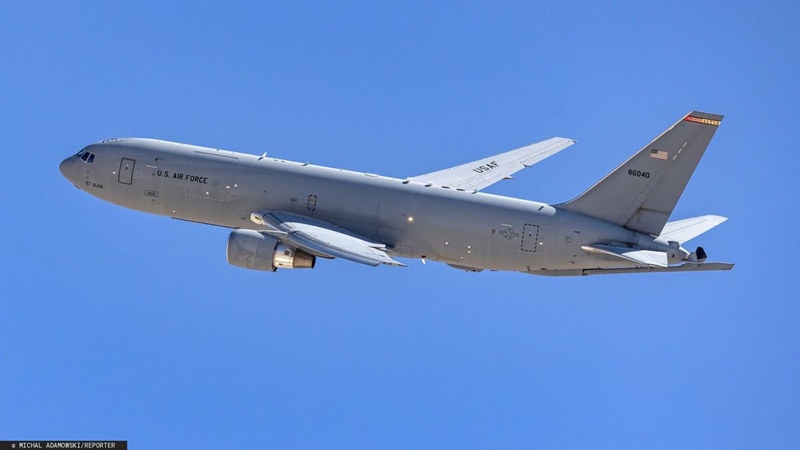
The B-1B Lancer is one of the most important long-range strike aircraft operated by the U.S. Air Force.
Introduced in the 1980s, the bomber was originally designed for nuclear missions during the Cold War. After the Cold War ended, however, the aircraft was adapted for conventional long-range strike operations.
Key capabilities of the B-1B include:
- Payload capacity of up to 34 tons of weapons
- Ability to fly at near-supersonic speeds
- Long-range strike capability
- Ability to carry large numbers of precision-guided bombs or cruise missiles
These capabilities make the aircraft particularly effective in deep-strike operations against hardened or high-value targets such as underground command centers or weapons depots.
Variable-Sweep Wing Design
One of the most distinctive technical features of the B-1B Lancer is its variable-sweep wing design.
The wings can be adjusted depending on the phase of flight:
- Extended wings during takeoff and landing improve lift and aircraft control.
- Swept-back wings reduce air resistance during high-speed flight.
This design allows the bomber to carry heavy weapons over long distances while still maintaining the ability to approach target areas at high speed if required.
Possible Targets: Iran’s Underground “Missile Cities”
Military analysts believe that potential targets for such bombers could include Iran’s extensive underground military infrastructure.
Over the past decade, Iranian media has repeatedly referenced networks of underground facilities often described as “missile cities.”
These complexes are typically built:
- Deep inside mountains
- Beneath layers of reinforced concrete
- Within extensive tunnel networks
They are believed to store ballistic missiles, drones, launch systems, and other strategic weapons.
Such underground facilities are designed to increase survivability during air attacks and make detection more difficult.
Strategy for Attacking Underground Facilities
Military experts say that completely destroying underground facilities can be extremely difficult.
Instead, a common strategy is to target tunnel entrances, access routes, or deployment corridors.
Even if the missiles themselves remain intact, destroying these access points can effectively trap weapons inside underground bases, preventing them from being deployed.
“Earthquake-Like” Explosions Explained
Reports of unusually powerful explosions during recent strikes have also attracted attention.
Some witnesses described tremors strong enough to feel like small earthquakes.
Experts explain that this phenomenon can occur when large explosions take place deep underground, causing shock waves to travel through soil and rock, producing noticeable ground vibrations.
Strategic Importance of RAF Fairford
The deployment of B-1B bombers to RAF Fairford carries both operational and political significance.
The base is one of the most important U.S. Air Force facilities in Europe and is frequently used to host American strategic bombers during deployments and exercises.
Its long runway and infrastructure make it ideal for operating heavy bomber aircraft.
From the UK, bombers can reach operational areas in the Middle East more efficiently than flying directly from the United States.
Limited Number of B-1B Bombers
The number of operational B-1B bombers in the U.S. Air Force inventory is relatively limited.
Some estimates suggest that around 40 aircraft remain operational, making their deployment in any military operation both strategically and symbolically significant.
Analysts say that positioning these aircraft in Europe could signal U.S. readiness to use heavy conventional strike power against hardened Iranian targets if tensions continue to escalate.
Rising Regional Tensions
The bomber deployment comes as the broader regional conflict expands.
Recent weeks have seen attacks targeting:
- Energy infrastructure
- Oil facilities
- Commercial shipping routes
Particular concern has focused on maritime routes near the Strait of Hormuz, one of the world’s most critical oil transit corridors.
Repeated incidents in the region have raised fears about global energy supply disruptions and further escalation of the conflict.