The Gulf Cooperation Council (GCC) states and Jordan have jointly submitted an urgent letter to the United Nations condemning what they described as escalating Iranian threats against regional states and attempts to impose unilateral control over the Strait of Hormuz.
The letter — signed by:
- Bahrain
- United Arab Emirates
- Saudi Arabia
- Kuwait
- Qatar
- Jordan
was addressed to UN Secretary-General António Guterres and the President of the UN Security Council for May.
The move represents one of the strongest coordinated diplomatic responses by Gulf states since the Strait of Hormuz crisis sharply escalated earlier this year.
🚨Bahrain, Saudi Arabia, the UAE, Kuwait, Qatar and Jordan sent a joint letter to the UN condemning Iran’s threats over the Strait of Hormuz and rejecting any attempt by Tehran to impose “new legal rules” or unilateral control over the strategic waterway.
The letter also… https://t.co/eF1g8wqa8U
— Adla Massoud (@Adlamassoud) May 14, 2026
Gulf States Reject Iran’s Claims Over Strait of Hormuz
The joint letter strongly rejected recent Iranian statements regarding what Tehran reportedly described as a new “administration” or legal framework governing the Strait of Hormuz.
The Gulf states emphasized:
No single country has the right to unilaterally control the strait or impose new legal rules governing international navigation.
The letter stressed that:
- The Strait of Hormuz is an international waterway
- Freedom of navigation is protected under international law
- Any attempt to use the waterway for political coercion threatens global security
The GCC states warned that efforts to transform the strait into a tool of “political or economic pressure” pose:
A direct threat to international peace and energy stability.
Why the Strait of Hormuz Matters
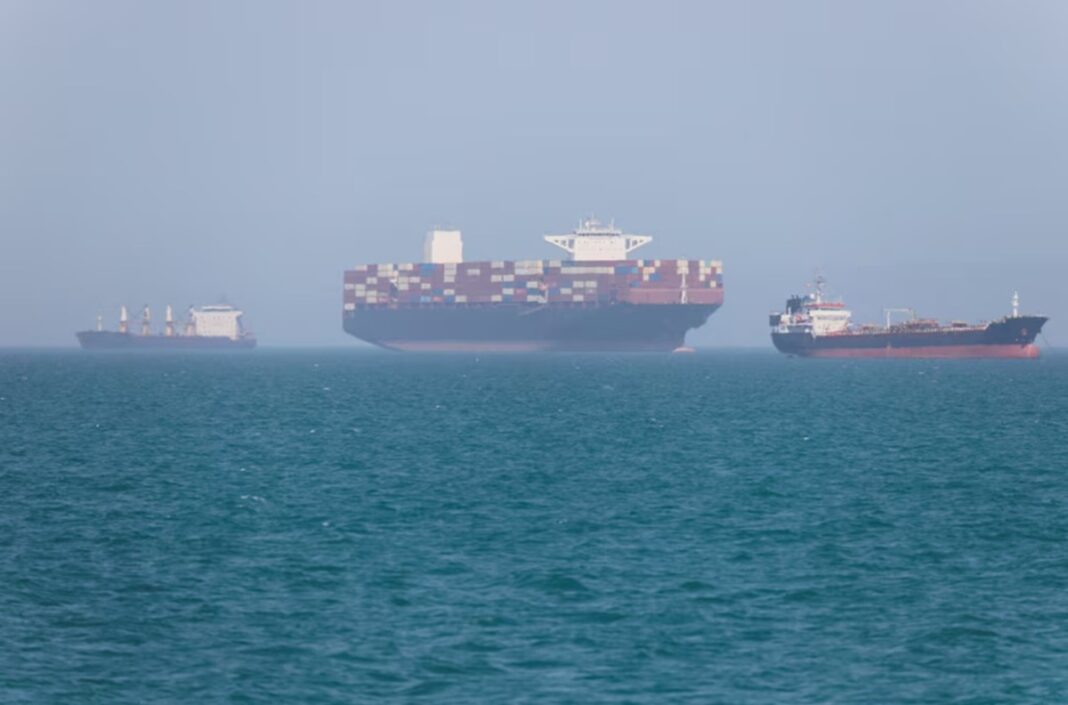
The Strait of Hormuz is one of the world’s most strategically important maritime chokepoints.
Approximately:
- 20% of global oil shipments
- Major LNG exports from the Gulf
- Critical commercial shipping traffic
pass through the narrow waterway connecting the Persian Gulf to the Arabian Sea.
Even limited disruption can trigger:
- Oil price spikes
- Supply chain instability
- Increased shipping insurance costs
- Global energy market volatility
ADNOC Tanker Attack Deepens Crisis
The letter also strongly condemned the reported Iranian drone attack targeting an Emirati tanker belonging to ADNOC while transiting the Strait of Hormuz.
According to the GCC states:
- The vessel was attacked by two drones
- The strike represented a serious escalation
- Commercial shipping safety had been directly endangered
The Gulf states described the incident as:
A flagrant violation of international law and UN Security Council resolutions protecting freedom of navigation.
UN Resolution 2817 at Center of Diplomatic Push
The joint letter specifically referenced UN Security Council Resolution 2817, which:
- Reaffirmed freedom of navigation in the Strait of Hormuz
- Condemned attacks on commercial shipping
- Rejected threats to close or obstruct the waterway
The GCC states argued that Iranian actions:
- Violate international law
- Threaten regional stability
- Undermine peaceful dispute resolution principles
They also urged the Security Council to remain actively engaged on the issue and consider additional measures to safeguard maritime security.
Iran’s Regional Pressure Campaign Under Scrutiny
The letter accused Iran of pursuing a broader pattern of:
- Escalation
- Political intimidation
- Threats against neighboring states
According to the Gulf states, Tehran’s rhetoric regarding:
- Security “management” of waterways
- Opposition to regional defense partnerships
- Pressure over foreign military cooperation
was unacceptable under international norms.
The GCC states emphasized that their security partnerships and defense arrangements remain:
Legitimate sovereign decisions protected by international law.
Growing Maritime Security Coalition Emerging
The diplomatic move comes amid broader international efforts to stabilize shipping lanes in the Gulf.
Several countries have recently discussed:
- Naval escort missions
- Maritime security coalitions
- Intelligence-sharing frameworks
- Expanded surveillance operations in the Strait of Hormuz
The latest GCC letter may further strengthen international support for:
Coordinated maritime protection initiatives.
Strategic Context: Regional Tensions Still High
The diplomatic escalation occurs against a backdrop of continuing regional instability involving:
- Iran-U.S. tensions
- Israeli-Iranian confrontation
- Maritime drone warfare
- Energy infrastructure attacks
Recent months have seen:
- Missile strikes
- Drone attacks on Gulf infrastructure
- Threats against shipping
- Expanded naval deployments
Despite intermittent diplomatic efforts, the region remains highly volatile.
Economic Stakes Extend Beyond the Gulf
The GCC states emphasized that the Strait of Hormuz crisis is not merely regional.
Major economies in:
- Asia
- Europe
- Global manufacturing sectors
depend heavily on uninterrupted Gulf energy exports.
Any sustained disruption could impact:
- Global inflation
- Industrial production
- Energy security
- International trade routes
The crisis therefore carries global economic implications far beyond the Middle East.
Calls for Accountability and Compensation
The letter also stated that the Gulf states reserve the right to pursue:
- Compensation
- Legal remedies
- International accountability
for any damages caused by Iranian actions threatening maritime navigation.
This includes:
- Material damage
- Environmental harm
- Economic disruption
- Risks to civilian shipping crews
Conclusion: Gulf States Draw a Clear Red Line
The joint GCC-Jordan letter marks a major diplomatic escalation against Iran at the United Nations.
The message from Gulf capitals is increasingly clear:
Freedom of navigation in the Strait of Hormuz is a non-negotiable international principle.
The coordinated response reflects growing regional concern that:
- Maritime coercion
- Threats against shipping
- Attacks on energy infrastructure
could destabilize not only the Gulf — but the broader global economy.
As tensions continue to rise, the Strait of Hormuz is becoming:
One of the world’s most dangerous flashpoints linking energy security, military competition, and international diplomacy.