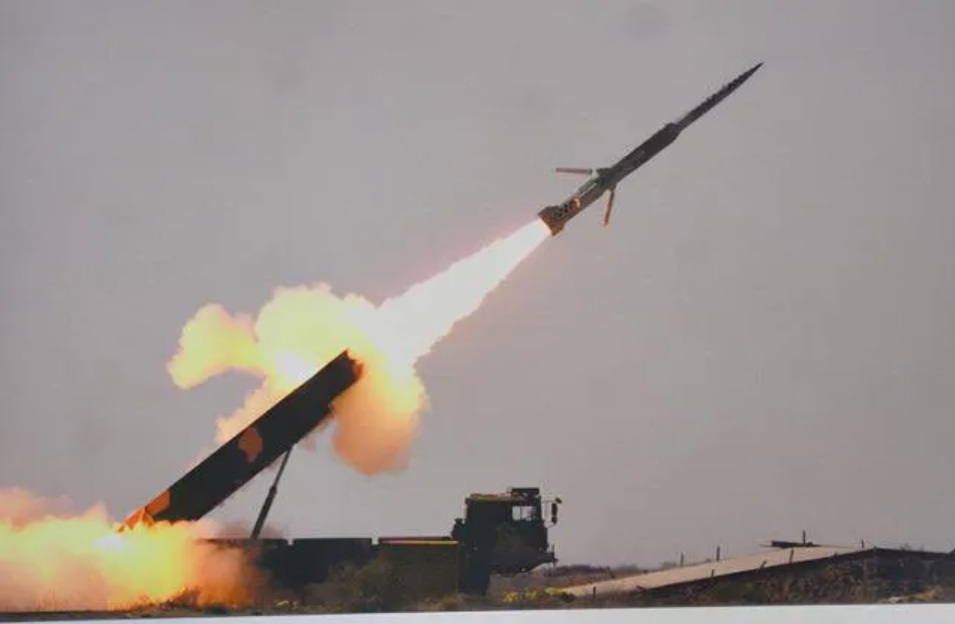
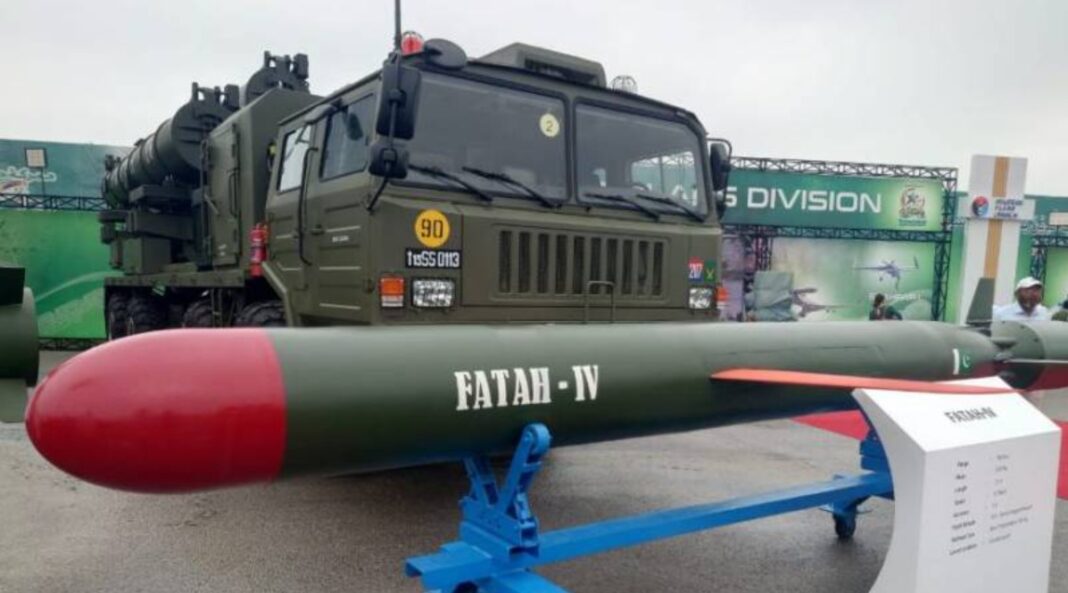
Pakistan’s Army Rocket Force Command has successfully conducted a training launch of the indigenously developed Fatah-4 Ground Launched Cruise Missile (GLCM), marking another significant step in Islamabad’s rapidly evolving precision-strike and tactical missile modernization program.
Pakistan successfully conducted a training launch of the indigenously developed Fatah-4 Ground Launched Cruise Missile.
Equipped with advanced avionics and state-of-the-art navigation systems, Fatah-4 is capable of engaging long-range targets with high precision. The launch was… pic.twitter.com/1IcitJVqm4
— International Defence Analysis (@Defence_IDA) May 14, 2026
According to the military statement, the missile is equipped with:
- Advanced avionics
- State-of-the-art navigational aids
- Improved survivability systems
- High-precision strike capability against long-range targets
The launch was conducted to:
Enhance troop operational readiness and validate technical parameters of newly integrated subsystems.
The test was witnessed by senior officers from the Army Rocket Force Command along with scientists and engineers from the developing agency.
Pakistan’s President, Prime Minister, Chairman Joint Chiefs of Staff Committee, Chief of Army Staff, Chief of Naval Staff, and Chief of Air Staff all congratulated the teams involved in the successful launch.
Fatah-4 Signals Expansion of Pakistan’s Precision Strike Doctrine
The Fatah-4 test comes amid growing regional attention on Pakistan’s expanding missile architecture following the recent unveiling of the Fatah-III supersonic cruise missile and heightened military signaling after India’s Agni-series MIRV missile validation.
Together, the developments suggest Pakistan is accelerating a broader shift toward:
- Precision-guided strike systems
- Mobile launcher survivability
- Rapid-response conventional deterrence
- Low-altitude tactical penetration capability
Rather than pursuing direct numerical parity with India’s strategic arsenal, Pakistan increasingly appears focused on:
Flexible, survivable, and precision-oriented strike systems.
What Makes Fatah-4 Significant?
While official technical details remain limited, available information suggests Fatah-4 incorporates several advanced features:
Key Reported Capabilities:
- Long-range precision strike profile
- Advanced inertial and navigational guidance
- Improved survivability against interception
- Enhanced operational flexibility
One of the most notable reported features is:
A proximity-fused fragmentation warhead designed for airburst lethality.
Unlike traditional contact-fused warheads that require direct impact, proximity-fused systems detonate near the target, releasing:
- High-velocity fragments
- Wide-area destructive effect
- Greater probability of target neutralization
Analysts note that such systems can significantly improve effectiveness against:
- Troop concentrations
- Radar systems
- Air defense assets
- Soft military infrastructure
Why Airburst Fragmentation Matters
Modern precision warfare increasingly emphasizes not only accuracy — but also optimized terminal effects.
Proximity-fused fragmentation warheads provide several advantages:
1. Larger Lethal Radius
Fragments spread over a wider area rather than concentrating at a single impact point.
2. Higher Kill Probability
Targets can be neutralized even without direct contact.
3. Improved Effectiveness Against Mobile or Soft Targets
Airburst detonation increases battlefield coverage.
Historical military assessments suggest such systems may deliver:
3–10 times greater lethality compared to older mechanical fuse systems.
Pakistan’s Army Rocket Force Gains Visibility
The latest launch also highlights the growing institutional prominence of Pakistan’s Army Rocket Force Command.
Over the past year, Pakistan has steadily increased public visibility surrounding:
- Fatah-series missile tests
- Tactical strike drills
- Precision-guided rocket systems
- Integrated missile readiness exercises
This reflects a broader doctrinal evolution emphasizing:
- Fast-response strike capability
- Distributed launcher survivability
- Tactical flexibility during regional crises
Connection to Regional Strategic Competition
The Fatah-4 test occurs during a period of intensified strategic competition across South Asia.
Recent developments include:
India:
- Agni-series MIRV missile tests
- BrahMos cruise missile expansion
- Layered missile defense deployment
- Aerospace modernization programs
Pakistan:
- Fatah-II and Fatah-III launches
- Tactical cruise missile modernization
- Expanded Army Rocket Force operations
- Precision strike integration
The broader trend is unmistakable:
South Asia is entering a more technologically advanced precision-strike era.
Low-Altitude Strike Systems Becoming Central
Pakistan’s recent military activity — including previous NOTAM restrictions and low-altitude operational corridors — strongly suggests growing focus on:
- Terrain-following missiles
- Drone-assisted warfare
- Electronic warfare integration
- Low-observable strike profiles
Cruise missile systems are increasingly valued because they can:
- Evade radar coverage
- Penetrate layered defenses
- Strike with minimal warning time
This reflects wider global military trends toward:
Faster, survivable, precision-guided conventional strike capability.
Strategic Implications for South Asia
The acceleration of precision-strike competition carries several implications:
1. Compressed Decision Timelines
High-speed weapons reduce reaction windows during crises.
2. Greater Escalation Risks
Precision conventional systems can create ambiguity during conflict escalation.
3. Increased Focus on Survivability
Mobile launchers and distributed systems become more important.
4. Shift Toward Conventional Deterrence
Both sides increasingly emphasize precision conventional strike capability.
No Official Range Released — Strategic Ambiguity Remains
Pakistan has not publicly disclosed the exact operational range or full technical specifications of Fatah-4.
This ambiguity itself serves strategic purposes by:
- Preserving uncertainty among adversaries
- Complicating defense planning
- Enhancing deterrence value
Pakistan has historically followed a similar approach with earlier missile systems before releasing fuller operational details later.
Conclusion: Pakistan Expands Precision Strike Architecture
The successful training launch of Fatah-4 demonstrates Pakistan’s continued investment in:
- Indigenous missile development
- Precision-guided strike systems
- Tactical survivability
- Integrated rocket force modernization
Alongside recent Fatah-series developments, the launch reinforces Islamabad’s effort to maintain credible deterrence in an increasingly competitive regional environment.
Most importantly, the test highlights how South Asia’s military competition is shifting:
- From numerical missile counts
- Toward precision, survivability, mobility, and rapid-response capability.
As both India and Pakistan accelerate missile modernization, the region’s strategic environment is becoming:
Faster, more technologically complex, and increasingly difficult to stabilize during crises.