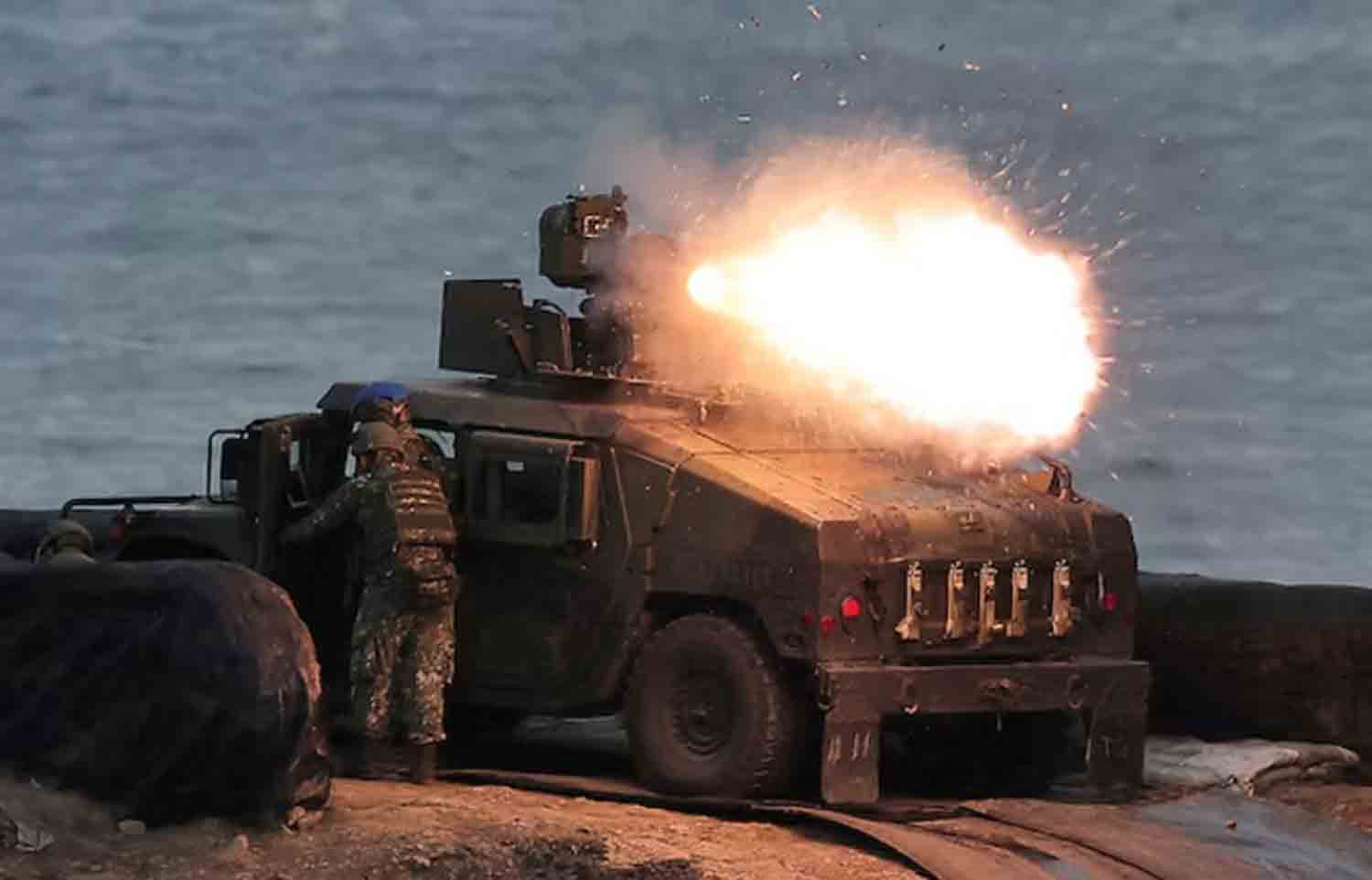
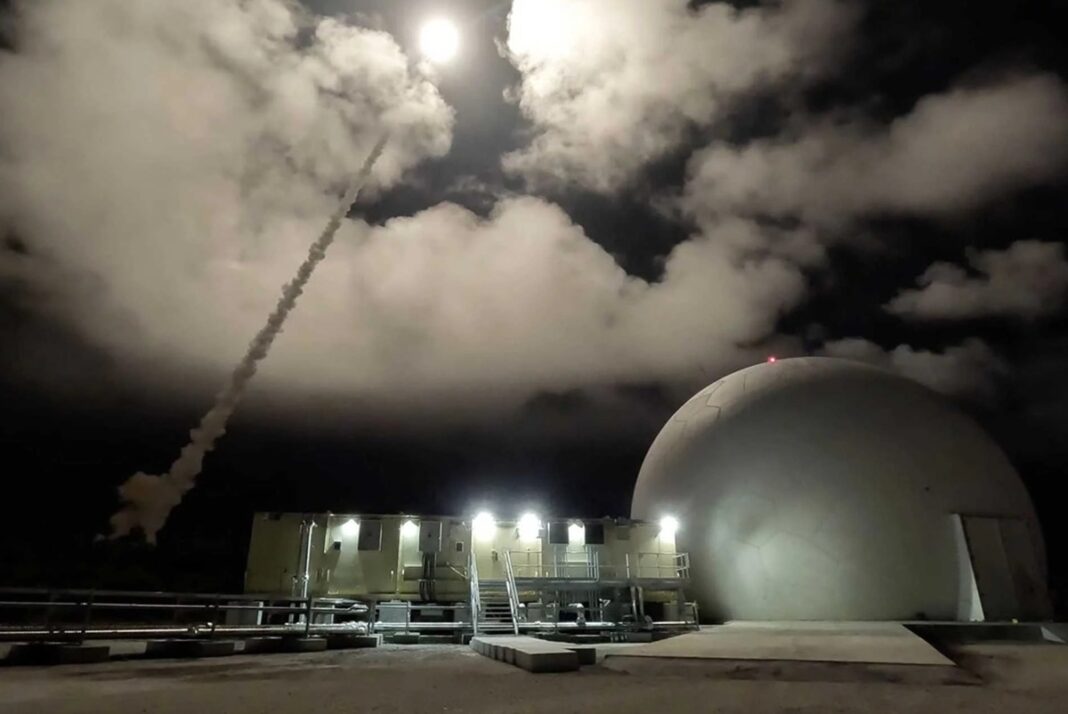
The United States is rapidly transforming Guam into a heavily fortified missile defense hub, investing nearly $1.9 billion to counter China’s expanding arsenal of ballistic and hypersonic weapons.
The latest step came on May 7, 2026, when the U.S. Missile Defense Agency awarded Lockheed Martin a $407 million contract modification, pushing the total value of the Aegis Guam System program to $1.935 billion.
This effort reflects a major shift in U.S. military strategy — from static defense to integrated, multi-layered missile defense networks designed for high-end warfare in the Indo-Pacific.
Aegis Guam System: Beyond Traditional Missile Defense
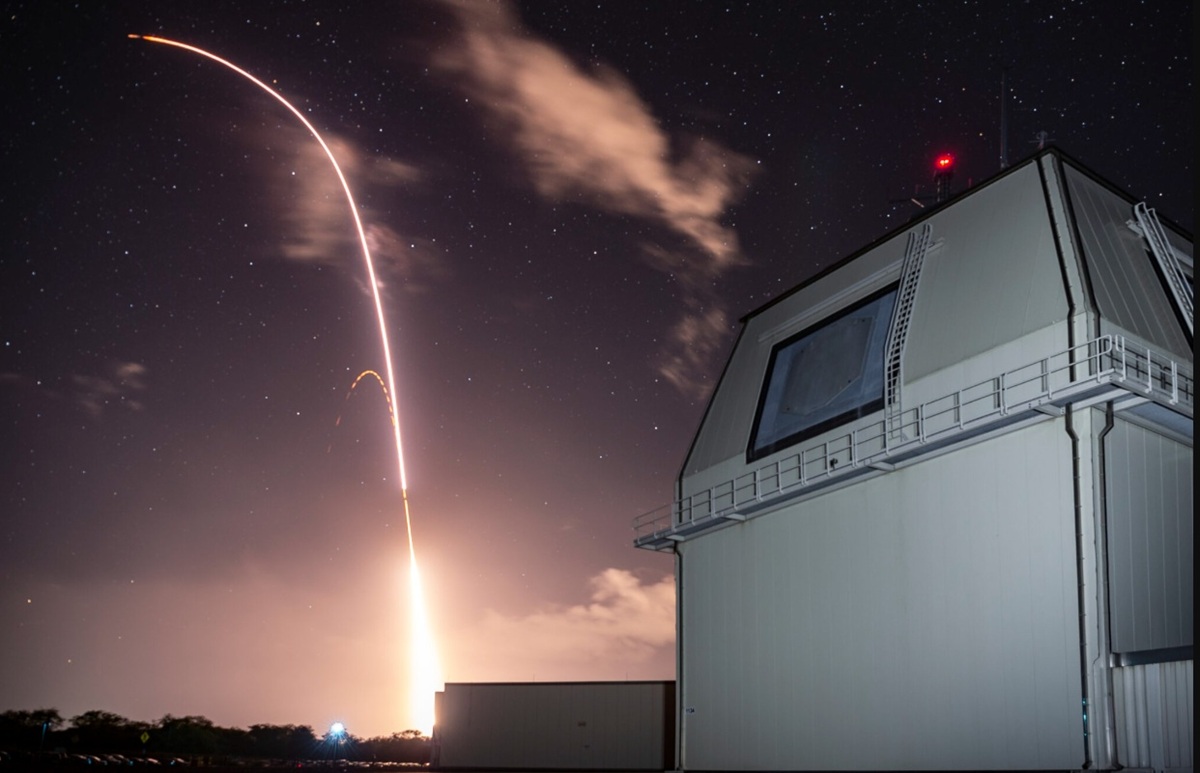
Unlike legacy systems, the Aegis Guam System is not a standalone shield. It is a fully integrated battle network linking multiple U.S. military branches into a single defensive architecture.
Core Capabilities:
- Integration of Navy, Army, and joint systems
- Real-time sensor fusion and threat tracking
- Coordinated interceptor launches across platforms
- 360-degree coverage against multi-directional threats
The system connects:
- SM-3 and SM-6 interceptors
- THAAD and Patriot PAC-3 MSE systems
- Advanced radars including SPY-1, SPY-6, TPY-6, and Sentinel A4
- Command networks like C2BMC and IBCS
This creates a single, unified engagement network, allowing one sensor to guide another system’s interceptor in real time.
Why Guam Matters: The Indo-Pacific’s Strategic Anchor
Guam sits at the heart of U.S. military operations in the Western Pacific.
- Roughly 3,000 km from China
- Home to Andersen Air Force Base
- Key hub for bombers, submarines, and logistics
In a Taiwan or wider Indo-Pacific conflict, Guam would serve as:
➡️ A forward strike base
➡️ A logistics hub for reinforcements
➡️ A command center for regional operations
This makes it a prime target for Chinese missile forces.
China’s Missile Threat: DF-26 ‘Guam Killer’ and Beyond
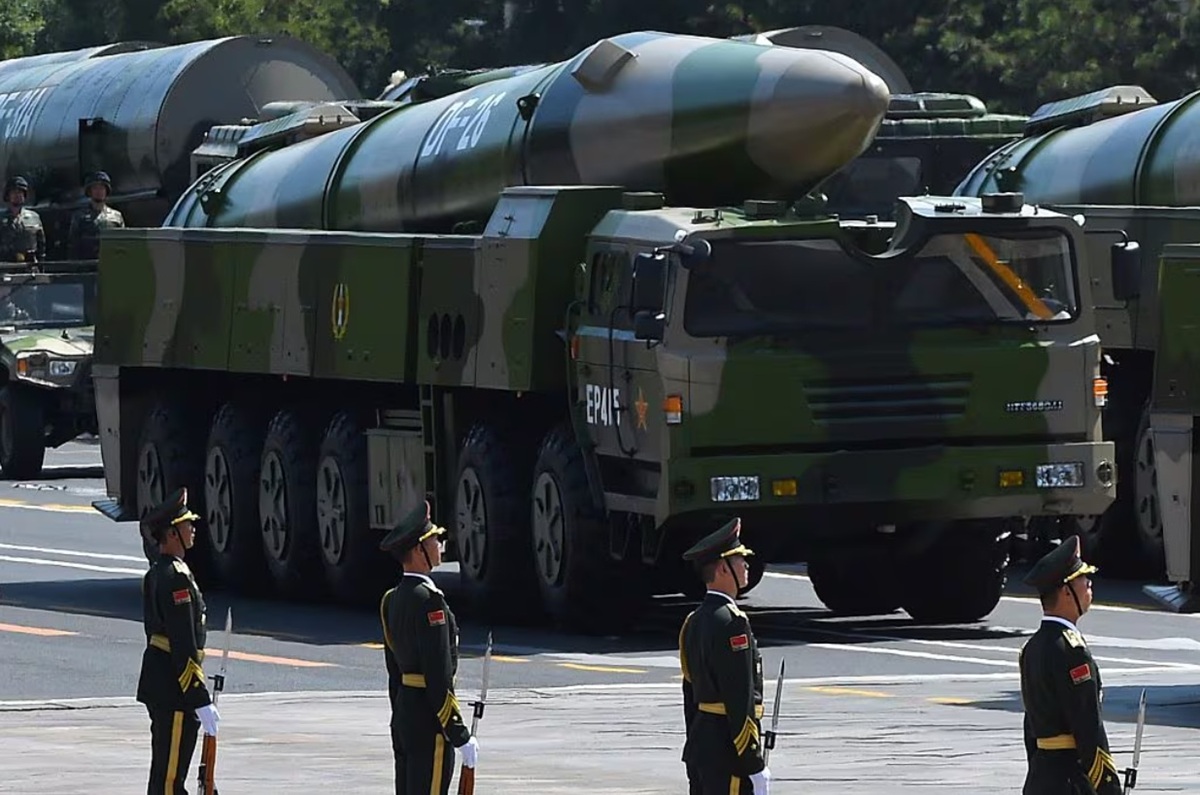
China’s People’s Liberation Army Rocket Force (PLARF) has developed a range of systems specifically designed to threaten Guam:
Key Threat Systems:
- DF-26 IRBM
- Range: 4,000–5,000 km
- Nicknamed: “Guam Killer”
- DF-21 MRBM
- Range: ~1,500–2,000 km
- DF-17 Hypersonic Glide Vehicle
- Range: ~1,800–2,500 km
These systems enable:
- Precision strikes on airfields and bases
- Saturation attacks with mixed missile types
- Hypersonic penetration of traditional defenses
The threat is not a single missile — but coordinated, multi-vector attacks combining ballistic, cruise, and hypersonic systems.
From Point Defense to 360° Warfighting Network
The Guam defense system marks a doctrinal shift:
Old Model:
- Isolated systems
- Limited engagement zones
- Service-specific operations
New Model:
- Distributed, networked defense
- Cross-service coordination
- Persistent 360-degree coverage
The integration of the Army’s IBCS allows:
➡️ Any radar to guide any interceptor
➡️ Faster engagement decisions
➡️ Greater survivability under attack
Lockheed Martin’s RIG-360 concept further enhances this by enabling remote targeting across systems.
Building a War-Ready Island
The missile defense system is part of a much larger buildup.
Key Investments:
- $7.3 billion in Guam military infrastructure
- $1.7 billion dedicated to missile defense
- Upgrades to Andersen Air Force Base
- Expansion of Naval Base Guam
- Deployment of Marines under Camp Blaz
Civilian infrastructure is also being upgraded:
- Port expansion (handles 90% of island imports)
- Fuel storage and logistics upgrades
- Power grid and communications resilience
Guam is being transformed into a fully hardened warfighting hub.
Limits of Missile Defense: Can Guam Be Fully Protected?
Despite advanced systems, challenges remain:
- Limited interceptor stockpiles
- Vulnerability to saturation attacks
- Electronic warfare risks
- Fixed geographic constraints
Recent conflicts have shown that:
Even advanced missile defenses can be overwhelmed by volume and complexity of attacks.
The Aegis Guam System is therefore designed not for perfect defense — but for:
✔️ Survivability
✔️ Operational continuity
✔️ Damage limitation
Strategic Significance: Blueprint for Future Wars
The Guam project is more than a regional defense effort.
It represents:
- A prototype for multi-domain missile defense
- A model for future peer conflict environments
- A shift toward resilient, distributed basing
If successful, similar systems could be deployed across:
- Japan
- Philippines
- Australia
- Other Indo-Pacific locations
Conclusion: Guam at the Frontline of Great Power Competition
The transformation of Guam underscores a critical reality:
The Indo-Pacific is entering an era of high-intensity, missile-centric warfare.
As China expands its strike capabilities, the U.S. is responding by:
- Hardening key bases
- Integrating defense systems
- Preparing for sustained conflict
Guam is no longer just a base — it is becoming a fortress at the frontline of US-China strategic competition.