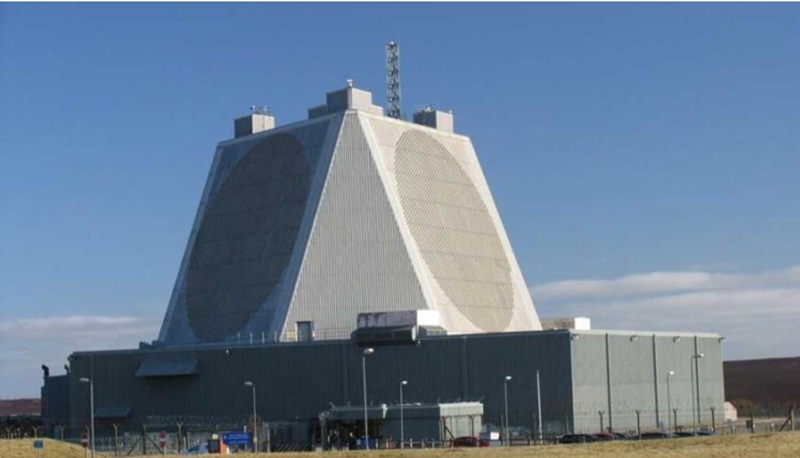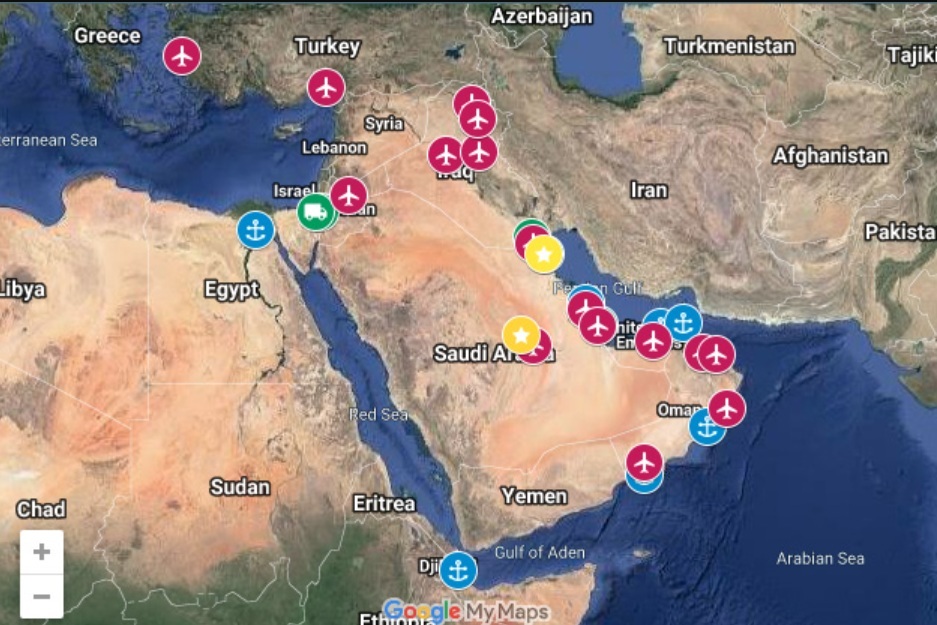
The current phase of the conflict is revealing a critical stress point in modern military operations: the sustainability of air defense under continuous attack.
Iranian missile and drone strikes have increased pressure on U.S. and allied bases across the Gulf, raising questions about how long existing defensive systems can maintain effective coverage under high-intensity conditions.
The Sustainability Problem in Air Defense
Air-defense systems are designed to intercept incoming threats—but they are not unlimited.
Key constraints include:
- Finite interceptor stockpiles
- High cost per interception
- Continuous operational demand
In high-tempo conflict scenarios, even advanced systems can face saturation pressure, where the volume of incoming threats begins to strain defensive capacity.

The Rise of Persistent Drone Threats
One of the most notable developments is the increasing role of drones.
- Low-cost, long-range drones can be launched in large numbers
- They are difficult to detect, especially at low altitude
- They can be used repeatedly to probe defenses
This creates a persistent challenge:
- Defenders must intercept every incoming threat
- Attackers only need some to get through
From Interception to Saturation
The shift in dynamics reflects a broader trend in modern warfare:
- Early phases focus on interception and control
- Sustained attacks shift toward overwhelming defenses over time
Even if defenses remain operational, they can become:
- Stretched across multiple locations
- Dependent on limited interceptor supplies
- Increasingly reactive rather than proactive
Geographic Expansion of Threat
The pressure is not limited to a single location.
Drone activity has expanded across multiple Gulf states, indicating:
- A widening operational footprint
- Increased reach of attack platforms
- Greater strain on regional defense coordination
This multi-theater pressure complicates defensive planning and resource allocation.
The Cost Imbalance
A key factor driving this dynamic is economic asymmetry.
- Interceptors can cost hundreds of thousands to millions of dollars
- Drones can be produced and deployed at a fraction of that cost
This creates a strategic imbalance:
Low-cost attacks vs high-cost defense
Over time, this favors the side capable of sustaining repeated, inexpensive strikes.
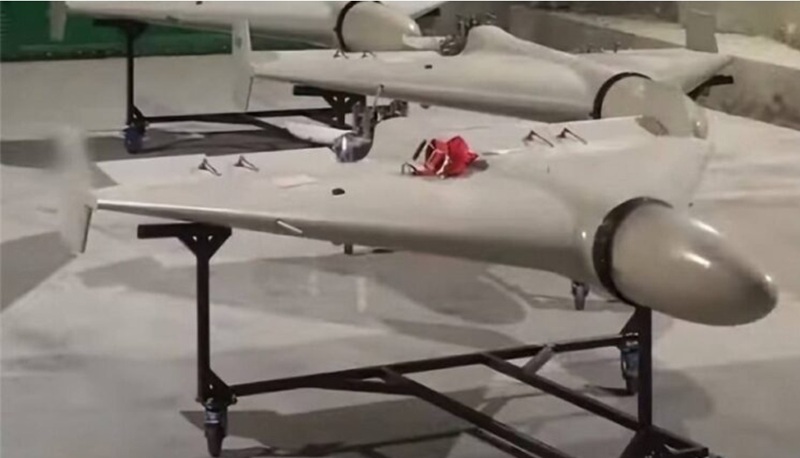
Cost Comparison: Real Systems
Offensive Systems (Drones)
Shahed-136 (Iran)
-
Type: Loitering munition (kamikaze drone)
-
Estimated cost: $20,000 – $50,000
-
Range: ~1,000–2,000 km
-
Strategy: Mass launch (swarm attacks)
Defensive Systems (Interceptors)
Patriot PAC-3
-
Cost per interceptor: ~$3–4 million
-
Role: Ballistic & cruise missile defense
Iron Dome (Tamir interceptor)
-
Cost per interceptor: ~$40,000 – $100,000
-
Role: Short-range rocket/drone defense
THAAD
-
Cost per interceptor: ~$8–12 million
-
Role: High-altitude ballistic missile defense
Cost Exchange Reality
| System | Cost |
|---|---|
| Shahed-136 Drone | $20K – $50K |
| Iron Dome Interceptor | $40K – $100K |
| Patriot PAC-3 | $3M – $4M |
| THAAD Interceptor | $8M – $12M |
Cost Imbalance
Destroying:
-
$30K drone with:
-
$100K interceptor = 3x cost
-
$3M interceptor = 100x cost
-
$10M interceptor = 300x cost
-
Are Defenses Designed for Short Conflicts?
Modern base defense systems are highly capable—but they are often optimized for:
- Short-duration, high-intensity engagements
- Specific threat scenarios
- Layered but finite coverage
Sustained, multi-day or multi-week attacks introduce a different challenge:
- Continuous resource consumption
- Maintenance and fatigue factors
- Logistical resupply requirements
The Role of Adaptation
As pressure increases, defenders are likely to adapt by:
- Deploying additional systems
- Increasing reliance on airborne surveillance
- Adjusting interception priorities
- Integrating electronic warfare and jamming
However, these adaptations also come with limits.
Strategic Implications
The evolving situation highlights several key trends:
1. Persistence Over Precision
Repeated, low-cost attacks can generate cumulative effects over time.
2. System Strain Without Collapse
Defenses may not fail completely but can become less effective under pressure.
3. Multi-Domain Pressure
Air, missile, and drone threats combine to stretch defensive networks.
Uncertainty and Escalation Risk
As the conflict continues, uncertainty becomes a defining factor.
- The true state of defensive capacity is not fully visible
- Both sides operate with incomplete information
- Miscalculation risks increase under sustained pressure
Conclusion
The current phase of the conflict underscores a fundamental reality of modern warfare:
Air defense is not just about capability—it is about endurance.
While U.S. and allied systems remain among the most advanced in the world, sustained drone and missile pressure is testing their limits in ways that traditional planning may not have fully anticipated.
As the situation evolves, the balance between offense, defense, and sustainability will play a decisive role in shaping the outcome.