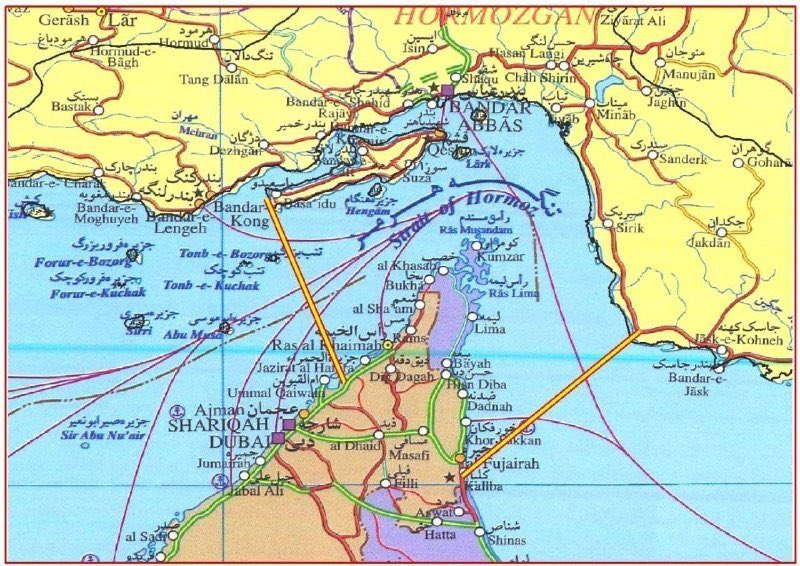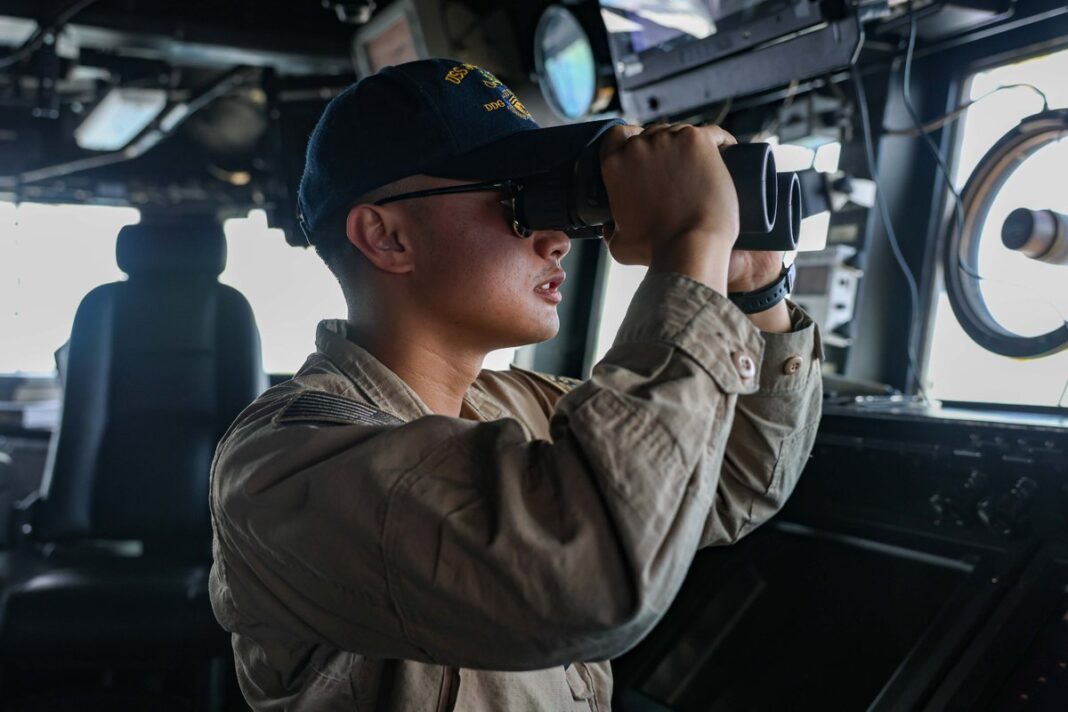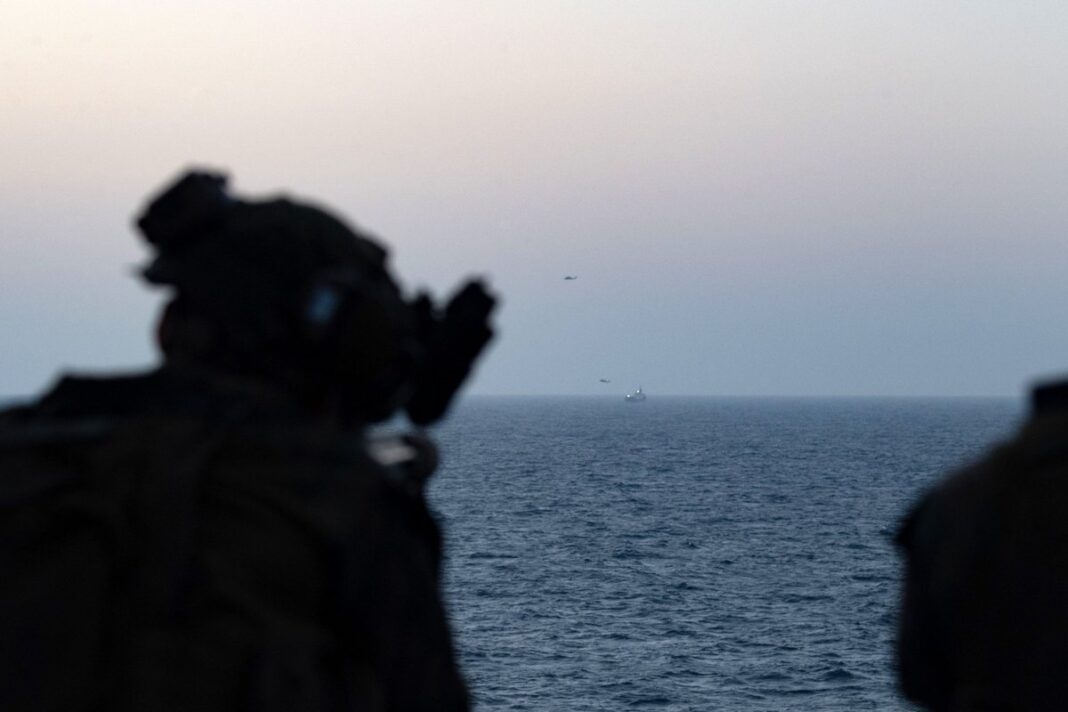
The United States has begun actively escorting commercial shipping through the Strait of Hormuz, marking a major escalation in the ongoing standoff with Iran.
According to U.S. Central Command (CENTCOM), two US-flagged merchant vessels successfully transited the strait, supported by American military forces.
U.S. Navy guided-missile destroyers are currently operating in the Arabian Gulf after transiting the Strait of Hormuz in support of Project Freedom. American forces are actively assisting efforts to restore transit for commercial shipping. As a first step, 2 U.S.-flagged merchant… pic.twitter.com/SVDxDhK72I
— U.S. Central Command (@CENTCOM) May 4, 2026
The move follows President Donald Trump’s directive to ensure safe passage through one of the world’s most critical energy corridors.
This is no longer a blockade.
This is active enforcement.
Operation in Motion
CENTCOM confirmed that American forces are now directly assisting commercial shipping, deploying:
- Guided-missile destroyers
- 100+ aircraft (land and sea-based)
- Approximately 15,000 troops
The mission effectively operationalizes earlier plans to counter Iran’s attempts to control maritime traffic through Hormuz.
Iran Draws a Red Line
Iran has responded with direct and explicit warnings.
A senior Iranian military official stated:
Any foreign military force entering or approaching the strait will be attacked
Iranian state media also claimed:
- US ships were prevented from entering
- A US vessel was struck (denied by CENTCOM)
These conflicting narratives highlight a rapidly intensifying information and military standoff.
A Collision Course Emerging
Today’s developments point to a dangerous pattern:
Friction is no longer contained—it is compounding
Each new move increases the likelihood of a direct encounter.
If the United States continues escort operations under current conditions, analysts warn:
A confrontation is not a question of “if”—but “when”
Strategy Shift in Washington
There are growing signs that Washington is no longer willing to wait for economic pressure alone to force Iranian concessions.
Earlier assumptions—that sanctions and blockade pressure would work quickly—are now being reconsidered.
Two possibilities are emerging:
Urgency Driven Shift
- Recognition that timelines were unrealistic
- Need to act before strategic conditions worsen
Controlled Provocation
- Forcing Iran into a response
- Creating justification for further military action
Either path increases escalation risk
A Long Operation Ahead
Even under favorable conditions, securing shipping through Hormuz is not a quick fix.
- The operation could take weeks
- Iran is likely to actively disrupt routes
- Sustained military presence will be required
This is not a short-term maneuver—it is a prolonged engagement
Tactical Success vs Strategic Reality
The US escort mission may achieve limited tactical gains:
✔ Ships can pass
✔ Routes can reopen
But it does not solve the core issue:
Iran’s structural leverage over Hormuz
Iran controls geography, proximity, and asymmetric capabilities—all of which remain intact.
Global Stakes — Beyond the Battlefield
The Strait of Hormuz carries roughly 25% of global seaborne oil, making it one of the most sensitive chokepoints in the world.
Any instability affects:
- Oil prices
- Global inflation
- Supply chains
Even limited disruptions ripple across global markets within days.
Escalation Becomes Self-Reinforcing
The most concerning trend is this:
Escalation is becoming automatic
- US increases presence → Iran responds
- Iran escalates → US reinforces
This cycle:
- Reduces space for diplomacy
- Increases risk of miscalculation
- Makes de-escalation harder over time
No Political Solution in Sight
Without a negotiated agreement:
- Military actions will continue
- Risks will accumulate
- Outcomes will become harder to control
Current efforts may manage symptoms—but they do not address the root conflict between Washington and Tehran.
Bottom Line
The United States has moved from pressure to enforcement.
Iran has moved from warning to deterrence.
And the Strait of Hormuz is now the frontline.
- Ships are moving
- Forces are deployed
- Red lines are drawn
The trajectory is clear: escalation is accelerating
Quick Take
- US escorts ships through Hormuz
- Iran warns of direct attacks
- 15,000 troops deployed
- Shipping resumes under military protection
- Escalation risk sharply rising