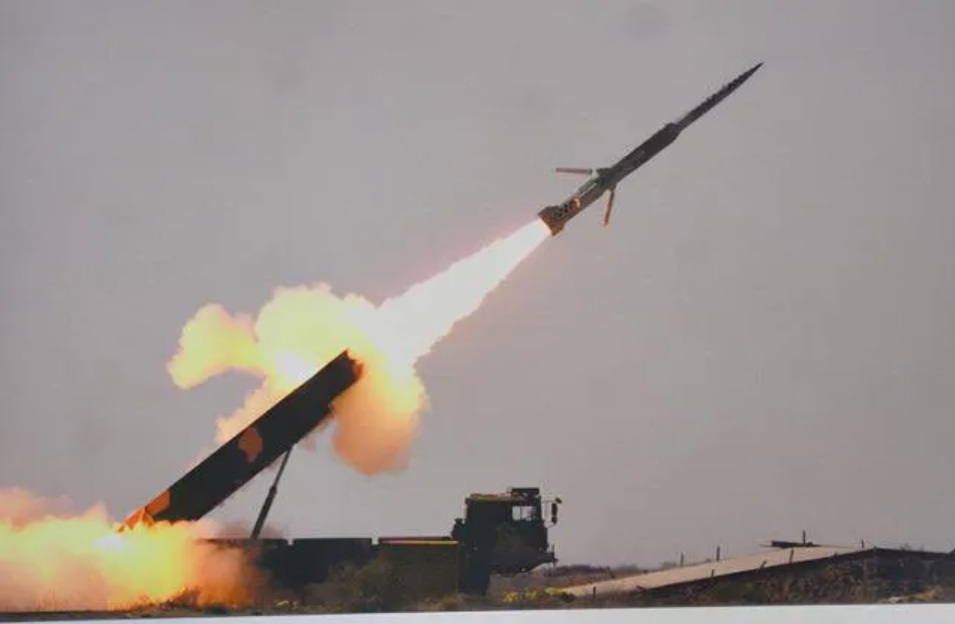
China’s navy has reportedly completed major type-certification trials for a new terminal air-defense and anti-missile system designed to counter some of the most difficult threats in modern naval warfare, including ultra-low-altitude sea-skimming missiles and potentially hypersonic weapons.
According to Chinese state media reports, a People’s Liberation Army Navy (PLAN) test and training unit conducted the trials in the Bohai Sea under highly contested electromagnetic conditions. The tests reportedly involved multiple high-speed drone targets simulating realistic anti-ship missile attack profiles.
The development signals another major step in Beijing’s effort to build a layered naval defense architecture capable of protecting carrier strike groups and frontline warships in increasingly contested maritime environments.
China Simulates Real Combat Conditions
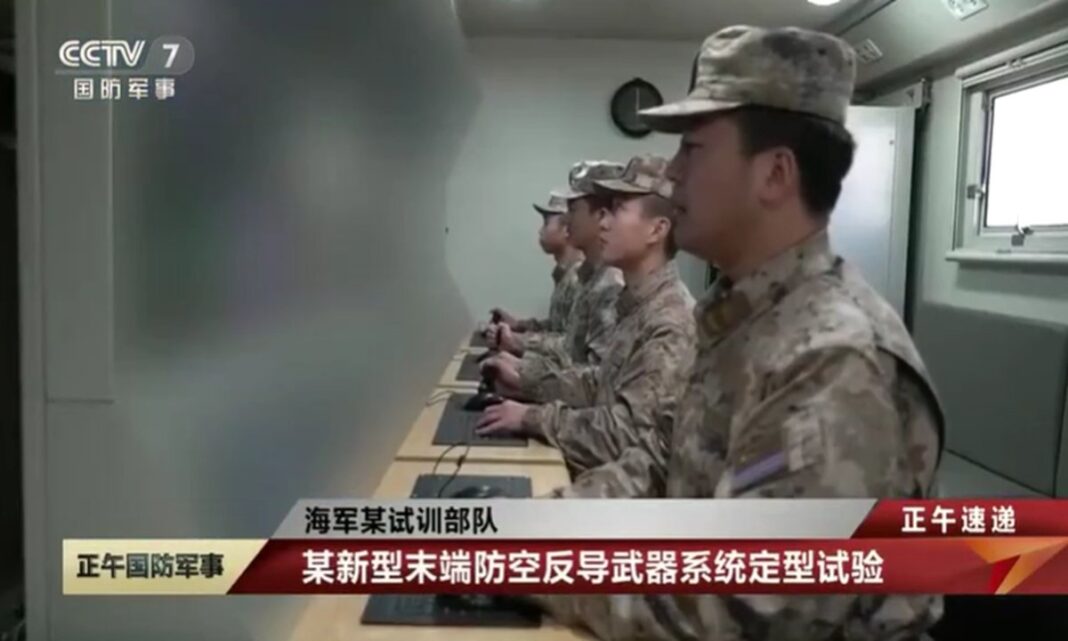
Footage broadcast by Chinese state television showed the new system intercepting and destroying several incoming drone targets performing ultra-low-altitude penetration maneuvers only meters above sea level.
Military commentators cited by Chinese media stated that the trials recreated modern combat conditions involving:
- Sea-skimming anti-ship missiles
- Swarming drone attacks
- Electronic warfare interference
- Hypersonic-like high-speed targets
Modern anti-ship missiles often fly just 5–10 meters above sea level to evade radar detection, making interception extremely difficult.
The ability to destroy such targets at close range is considered one of the most challenging missions in naval air defense.
What Is ‘Terminal’ Naval Defense?
Chinese military analysts described the system as part of the PLA Navy’s “terminal-layer interception” network.
Naval air defense generally operates in layers:
1. Area Air Defense
Long-range missiles engage threats far from the fleet.
2. Forward Point Defense
Medium-range systems intercept threats approaching warships.
3. Terminal Defense
The final protective layer destroys incoming missiles or drones moments before impact.
This final layer is critical because modern missiles can evade outer defenses using:
- Low-altitude flight
- High speed
- Electronic jamming
- Maneuvering trajectories
Possible Hypersonic Interception Capability
One of the most significant claims surrounding the new Chinese system is its possible ability to engage hypersonic threats.
Chinese experts suggested the system may use:
- Lofted dive interception profiles
- Advanced fire-control algorithms
- Kinetic-kill technologies
If accurate, this would allow interception of:
Missiles traveling above Mach 5
Hypersonic weapons are considered among the most difficult threats in modern warfare because they combine:
- Extreme speed
- Maneuverability
- Low reaction times
Very few countries currently claim credible naval hypersonic interception capability.
Heavy Blurring Suggests High Sensitivity
Observers noted that command-and-control screens shown in the televised footage were heavily blurred.
Chinese analysts interpreted this as a sign of:
- High technological sensitivity
- Classified software architecture
- Advanced sensor integration capability
The extensive censorship fueled speculation that the system incorporates:
- AI-assisted targeting
- Advanced radar fusion
- Sophisticated electronic warfare resistance
Electronic Warfare Resistance a Key Focus
The tests reportedly included “complex electromagnetic conditions,” highlighting the growing role of electronic warfare in naval combat.
Modern naval conflicts increasingly involve:
- Radar jamming
- Signal disruption
- Cyber-electronic attacks
- Decoy saturation tactics
Chinese analysts emphasized that modern missile defense systems must function effectively even in heavily jammed environments.
Survivability in electronic warfare conditions is now as important as missile range itself.
Closing China’s Naval Defense Gap
According to defense analysts, the new system fills a major gap between:
- The long-range HQ-9B missile system
- The short-range HQ-10 interceptor
- The Type 1130 close-in weapon system (CIWS)
This creates a more complete layered shield around Chinese naval formations.
👉 The broader objective is clear:
Improve survivability of aircraft carriers, destroyers, and amphibious task groups in high-intensity conflict.
Strategic Implications for the Indo-Pacific
The emergence of this new defense capability comes amid intensifying military competition in the Indo-Pacific.
China’s navy is rapidly expanding its:
- Aircraft carrier fleet
- Long-range missile inventory
- Blue-water operational reach
As anti-ship missile threats proliferate across the region, survivability of naval formations becomes increasingly important.
The new system could strengthen China’s ability to operate in contested areas including:
- The South China Sea
- The Taiwan Strait
- The Western Pacific
China’s Growing Focus on Carrier Protection
The PLA Navy is increasingly focused on protecting carrier strike groups from saturation missile attacks.
Potential threats include:
- U.S. anti-ship missiles
- Carrier-launched aircraft
- Hypersonic glide weapons
- Drone swarm attacks
The new terminal interception system appears designed specifically for:
Last-line defense in these high-threat environments.
Global Naval Arms Race Intensifies
China’s latest naval missile defense development reflects a broader global trend:
The race between offensive missiles and defensive interception systems is accelerating.
Countries worldwide are investing heavily in:
- Hypersonic weapons
- Directed energy systems
- AI-assisted targeting
- Layered missile defense architectures
As missile technology advances, navies are under increasing pressure to develop systems capable of surviving massed precision attacks.
Conclusion: China Builds a More Survivable Navy
The PLA Navy’s latest anti-missile trials highlight China’s determination to close critical gaps in naval survivability.
If the system performs as claimed, it could significantly strengthen:
- Carrier strike group protection
- Fleet survivability
- Defense against hypersonic and sea-skimming threats
Most importantly, it signals that China is rapidly evolving from a regional naval force into:
A technologically advanced maritime power preparing for high-intensity naval warfare in the Indo-Pacific.