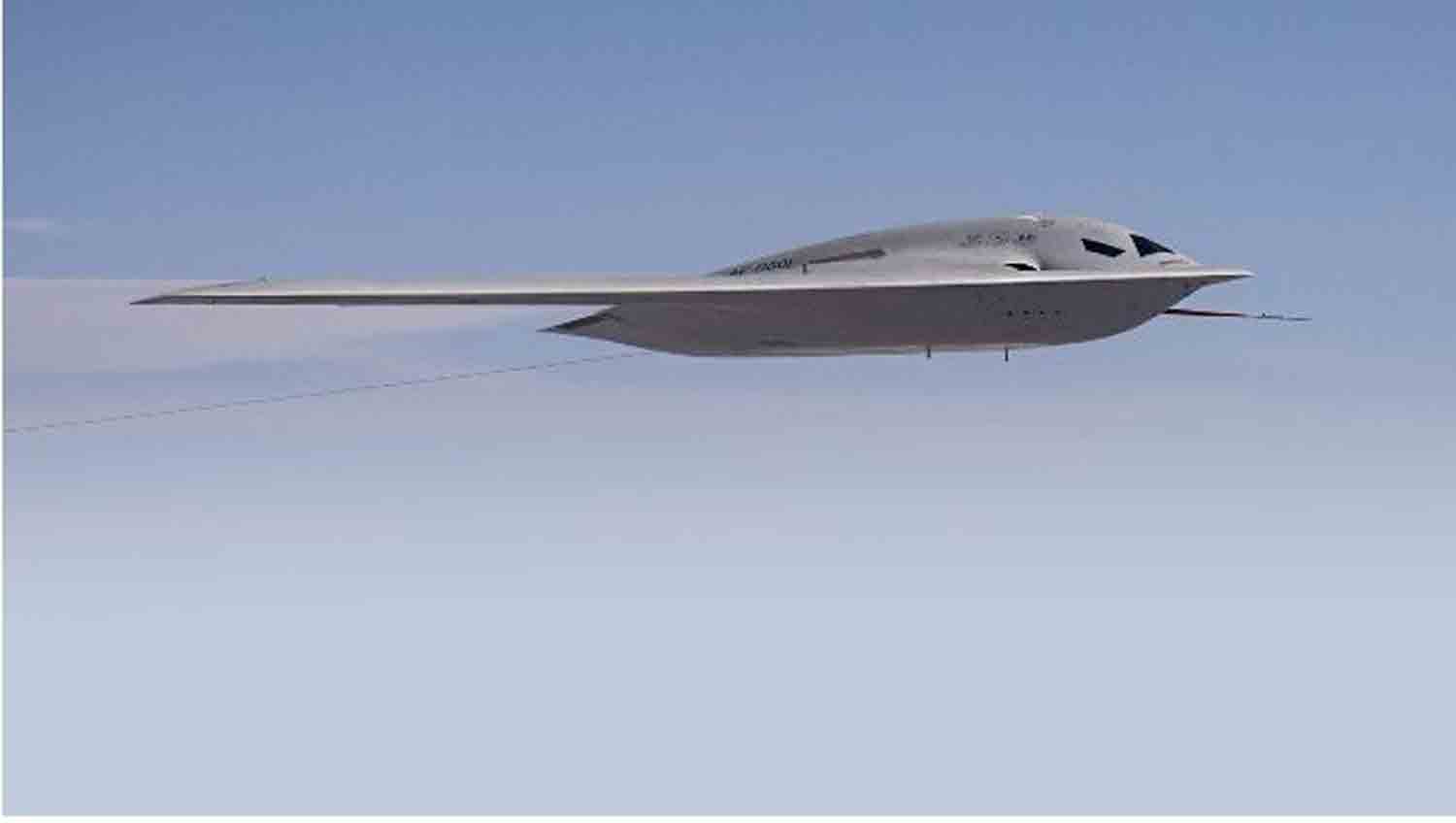
The U.S. Air Force’s next-generation stealth bomber, the B-21 Raider, has completed a major developmental flight test campaign in just 73 days — less than half of the planned 180-day timeline, marking a significant milestone in modern military aviation.
The accelerated testing cycle signals that the aircraft entered flight testing with unusually mature software, systems integration, and mission architecture, potentially allowing the United States to field the bomber faster than expected.
The B-21 Raider Combined Test Force, a partnership with @usairforce, cut a 180-day test plan to 73 days, securing $11.8B with half the missions.
We’re driving next-gen stealth forward, fast and focused. pic.twitter.com/mDejIVgp5x
— Northrop Grumman (@northropgrumman) May 7, 2026
Why the 73-Day Timeline Matters
Unlike typical flight test programs — which often face delays due to software issues and engineering rework — the B-21 campaign demonstrated:
- High sortie efficiency
- Minimal system instability
- Reduced need for regression testing
Crucially, multiple test objectives were validated within single sorties, eliminating the need for repeated flights.
This suggests a high level of design maturity before first flight, a rare achievement in stealth aircraft development.
Digital Engineering: The Hidden Advantage
A major factor behind the rapid progress is the program’s heavy reliance on digital engineering and pre-flight testing.
- Over 1,000 flight hours were conducted on surrogate aircraft before the B-21’s first flight
- Software certification timelines were reduced by roughly 50%
- More than $5 billion invested in digital infrastructure and model-based engineering
This approach allowed engineers to resolve complex integration challenges before physical flight testing began.
Integrated Testing Model Speeds Up Development
The B-21 program also introduced a new testing structure through its Combined Test Force (CTF).
Instead of separate testing phases, the CTF integrates:
- U.S. Air Force test personnel
- Northrop Grumman engineers
- Mission system specialists
- Logistics and maintenance teams
This allows simultaneous evaluation of:
- Flight performance
- Stealth characteristics
- Mission systems
- Sustainment procedures
The result is a compressed development cycle and faster transition to operational readiness.
Operational Edge: Range, Efficiency and Survivability
The B-21 Raider is designed for long-range, high-survivability missions in contested environments such as the Indo-Pacific.
Key Operational Advantages:
- Lower fuel consumption than legacy bombers
- Reduced reliance on vulnerable aerial refueling tankers
- Ability to sustain high-tempo operations
- Advanced stealth and electronic warfare integration
Recent successful aerial refueling tests with a KC-135 Stratotanker confirm the aircraft’s readiness for extended missions.
Strategic Role: Backbone of US Nuclear Deterrence
The B-21 is a central pillar of U.S. military modernization.
It will:
- Replace aging B-1B and B-2 bombers
- Form part of the nuclear triad modernization
- Integrate advanced weapons systems, including:
- AGM-181 Long Range Stand-Off missile
- AGM-158 JASSM-ER
- B61-12 and B61-13 nuclear bombs
The U.S. Air Force plans to procure at least 100 aircraft, with some studies suggesting up to 200 may be required for sustained operations.
Indo-Pacific Focus: Preparing for High-End Conflict
The B-21’s rapid progress is closely tied to evolving U.S. strategy in the Indo-Pacific.
In a potential conflict scenario involving China, the bomber’s capabilities are critical:
- Penetrating advanced air defenses
- Conducting deep-strike missions
- Operating with reduced tanker support
Reduced fuel consumption and improved endurance are particularly important, as tanker aircraft are increasingly seen as vulnerable targets in contested environments.
Design Evolution: Beyond Traditional Stealth
Unlike earlier stealth bombers, the B-21 integrates multiple advanced features:
- Software-managed emissions control
- Sensor fusion and secure networking
- Electronic warfare capabilities
- Infrared signature reduction
This makes the aircraft not just stealthy — but digitally integrated into modern combat networks.
Conclusion: A New Benchmark in Stealth Bomber Development
The B-21 Raider’s accelerated test campaign marks a major milestone in military aviation.
The key takeaway:
The United States is fielding a next-generation bomber faster, more efficiently, and with fewer risks than previous programs.
As global competition intensifies, particularly in the Indo-Pacific, the B-21 is set to become a cornerstone of long-range strike capability and strategic deterrence.