Reports alleging the existence of covert Israeli operating facilities deep inside western Iraq have transformed what was once a hidden logistical story into a potentially major geopolitical controversy — one that could reshape regional security calculations, Iraq’s sovereignty debate, and the evolving confrontation between Israel and Iran.
REVEALED: Israel has operated 2 secret military bases in Iraq’s western desert for over a year to support operations against Iran.
The U.S. knew since June 2025 but hid it from Baghdad—even forcing Iraq to shut down its radars, blinding them to the Israeli presence on their own…
— Amit Segal (@AmitSegal) May 17, 2026
If verified, the reported infrastructure suggests the Iran-Israel shadow conflict has evolved far beyond missile exchanges and proxy warfare.
Instead:
The Middle East may increasingly be entering an era of dispersed covert military ecosystems, where third-country territory quietly becomes an operational battlespace for long-range campaigns.
At the center of the controversy lies a deeply sensitive question:
Did Israel quietly establish operational support nodes inside Iraqi territory — and did Washington know while Baghdad remained unaware?
The allegations, still disputed and not independently verified publicly, have already triggered political backlash inside Iraq and revived longstanding fears that the country risks once again becoming a battleground for external powers.
What Are the Allegations?
According to reporting cited from The Wall Street Journal and later expanded by The New York Times, American and Iraqi officials allegedly indicated that covert facilities in western Iraq supported Israeli operational activity linked to Iran.
The reports claim:
- At least two covert operational sites may have existed intermittently for over a year
- Facilities allegedly supported long-range Israeli military activity
- The sites reportedly included:
- Helicopters
- Temporary landing strips
- Surveillance systems
- Vehicles
- Emergency recovery assets
- Temporary deployment structures.
If accurate, the alleged facilities would represent:
Force multipliers rather than traditional military bases.
In other words:
Not combat outposts — but logistical nodes designed to sustain long-range operations.
Why Western Iraq Matters Strategically
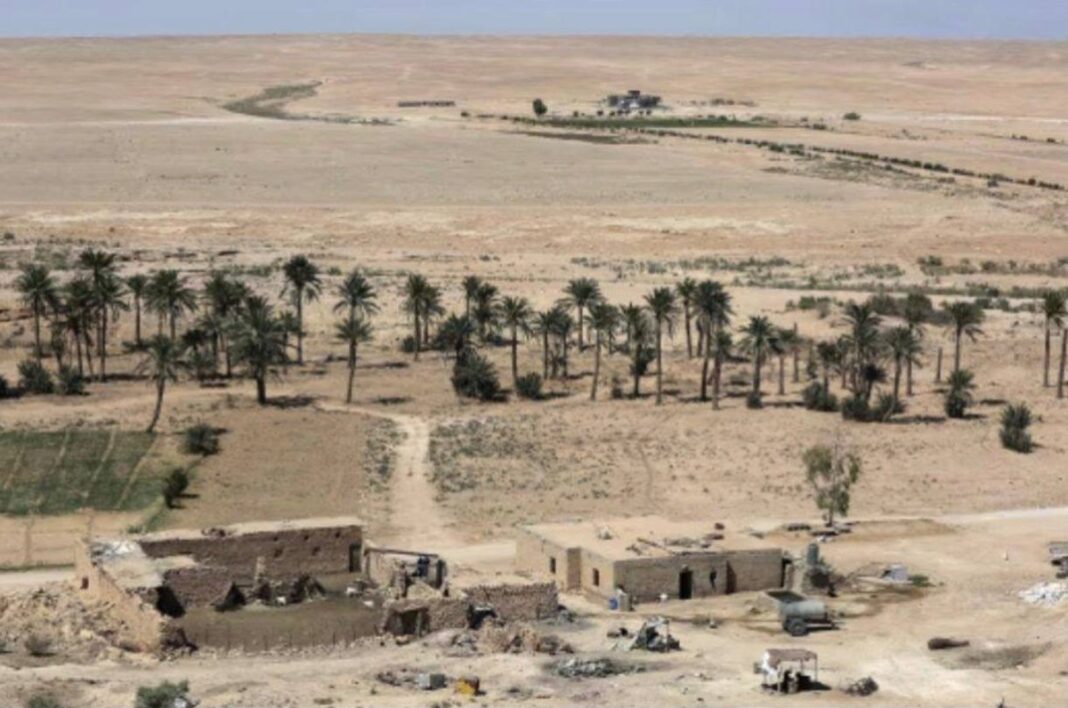
The alleged locations reportedly emerged in Iraq’s vast western desert — near intersections connecting:
- Saudi Arabia
- Jordan
- Syria
This geography matters enormously.
Military planners favor remote desert environments because they offer:
✔ Sparse population density
✔ Limited civilian observation
✔ Multiple movement corridors
✔ Reduced surveillance visibility
The area around al-Nukhaib reportedly attracted attention due to:
Minimal infrastructure and expansive terrain favorable for discreet activity.
For long-range operations directed at Iran, western Iraq potentially offers:
Strategic depth.
Aircraft, helicopters, special operations forces, or emergency recovery teams could theoretically operate with reduced logistical friction.
The Real Story May Be Logistics — Not Combat
One of the most misunderstood aspects of modern warfare is this:
Long-range campaigns depend on logistics more than firepower.
Military analysts increasingly emphasize:
Aircraft range alone rarely determines operational success.
Instead, endurance matters.
That requires:
- Refueling coordination
- Recovery teams
- Medical support
- Contingency staging
- Emergency extraction capability.
According to reporting, the alleged Iraqi facilities reportedly supported:
Air Mobility and Recovery Operations
Including helicopter activity tied to long-distance operational cycles.
Search and Rescue Capability
A critical requirement during sustained strike campaigns.
Electronic and Surveillance Support
Potentially enabling operational awareness.
Temporary Personnel Staging
Without establishing permanent military footprints.
If verified:
The installations would represent:
Operational enablers rather than frontline bases.
The Shepherd Incident That Turned a Secret Into a Political Storm
The controversy intensified dramatically following reports involving a local Iraqi shepherd.
According to accounts cited in regional reporting:
A shepherd identified as Awad al-Shammari allegedly encountered one suspected facility while herding livestock in a remote desert area.
Reports suggest he observed:
- Helicopters
- Soldiers
- Tents
- Landing infrastructure
before notifying authorities.
The circumstances surrounding his later death remain disputed.
Some reports allege aerial pursuit and gunfire, though independent confirmation remains unavailable.
What is clear, however, is that:
The alleged discovery transformed a hidden military story into a national political issue.
Subsequent Iraqi investigations reportedly encountered suspicious aerial activity, while at least one Iraqi soldier was reportedly killed during follow-up security efforts.
Did Washington Know — and Did Baghdad Not?
Perhaps the most politically explosive aspect of the story involves:
American prior awareness.
According to cited reporting:
Some American officials allegedly possessed prior knowledge of the facilities, while Iraqi authorities may not have been fully informed.
That possibility has triggered sharp reactions inside Iraq.
Political figures increasingly question whether:
Baghdad was intentionally excluded from sensitive operational information occurring on Iraqi soil.
The allegations raise broader concerns about:
- Coalition transparency
- Military sovereignty
- Intelligence-sharing limits
Former Iraqi officials reportedly warned against Iraq becoming:
An operational arena for wider regional confrontation.
Why Iraq’s Sovereignty Debate Matters
The issue cuts deeper than one alleged military story.
Iraq has spent years attempting to balance relations between:
- The United States
- Iran
- Gulf states
- Regional powers
But allegations of covert military activity by outside actors risk:
Reopening Iraq’s sovereignty crisis.
Political factions inside Iraq increasingly fear:
The country could once again become:
A geopolitical corridor for regional confrontation.
Some Iraqi officials reportedly characterized the alleged activity as:
“Zionist-American intrusion.”
Meanwhile, Iraqi security operations reportedly expanded across broad desert sectors following the controversy.
The Bigger Strategic Shift: Hidden Logistics Are Becoming the New Battlefield
The broader lesson emerging from these allegations is significant.
Modern Middle East conflict increasingly depends on:
Invisible infrastructure
Rather than conventional frontlines.
Today’s regional competition increasingly revolves around:
- Covert logistics corridors
- Temporary military nodes
- Distributed support architecture
- Strategic mobility networks.
This reflects a larger transformation in warfare.
The decisive advantage may no longer belong solely to:
Who has the strongest military.
Instead:
It belongs to whoever can quietly sustain operations over long distances without detection.
No Public Israeli Confirmation
It is important to note:
No public Israeli statement has directly confirmed the allegations.
Publicly verified coordinates also remain unavailable.
Independent confirmation of the scale, timeline, and precise nature of the facilities remains incomplete.
For now:
Much of the story rests on investigative reporting and unnamed official accounts.
That leaves critical questions unresolved.
Conclusion: Iraq May Be Entering a Dangerous New Strategic Reality
Whether every allegation proves accurate or not, the controversy points toward a larger regional trend:
Middle Eastern conflict is becoming more geographically dispersed, covert, and logistically complex.
The Iran-Israel confrontation increasingly appears less like a traditional military standoff —
and more like:
A decentralized operational ecosystem stretching across multiple countries.
For Iraq, that creates a dangerous challenge.
The country risks moving from:
Buffer state → to operational corridor
where competing powers quietly exploit geography, political ambiguity, and weak surveillance environments.
And for regional defense planners:
The most important warning may not be the alleged desert facilities themselves —
but the normalization of:
Hidden cross-border military ecosystems quietly reshaping deterrence without formal declarations of war.