Tuesday, April 7, 2026
Home Blog Page 127

North Korea is reportedly set to launch an ICBM in November, according to South Korean officials

0

North Korea has positioned a launcher following the completion of preparations for an intercontinental ballistic missile (ICBM) launch, with indications that the launch could occur in November, according to South Korean parliamentary sources referencing military intelligence.

South Korean lawmaker Lee Seong-kweun reported that a mobile launcher has been set up at a designated site for a potential ICBM test, including the atmospheric re-entry of a missile warhead, which may coincide with the U.S. presidential election on November 5.

Lee provided this information to reporters after a confidential parliamentary session with officials from the Defense Intelligence Agency (DIA). Another lawmaker, Park Sun-won, noted that the DIA does not currently believe a missile is loaded onto the launcher.

South Korean authorities have suggested that North Korea might seek to launch a long-range missile or conduct its seventh nuclear test around the time of the U.S. elections to emphasize its advancements in strategic weaponry.

South Korea’s Yoon and Canada’s Trudeau express concerns about North Korea’s role in the Ukraine conflict

0
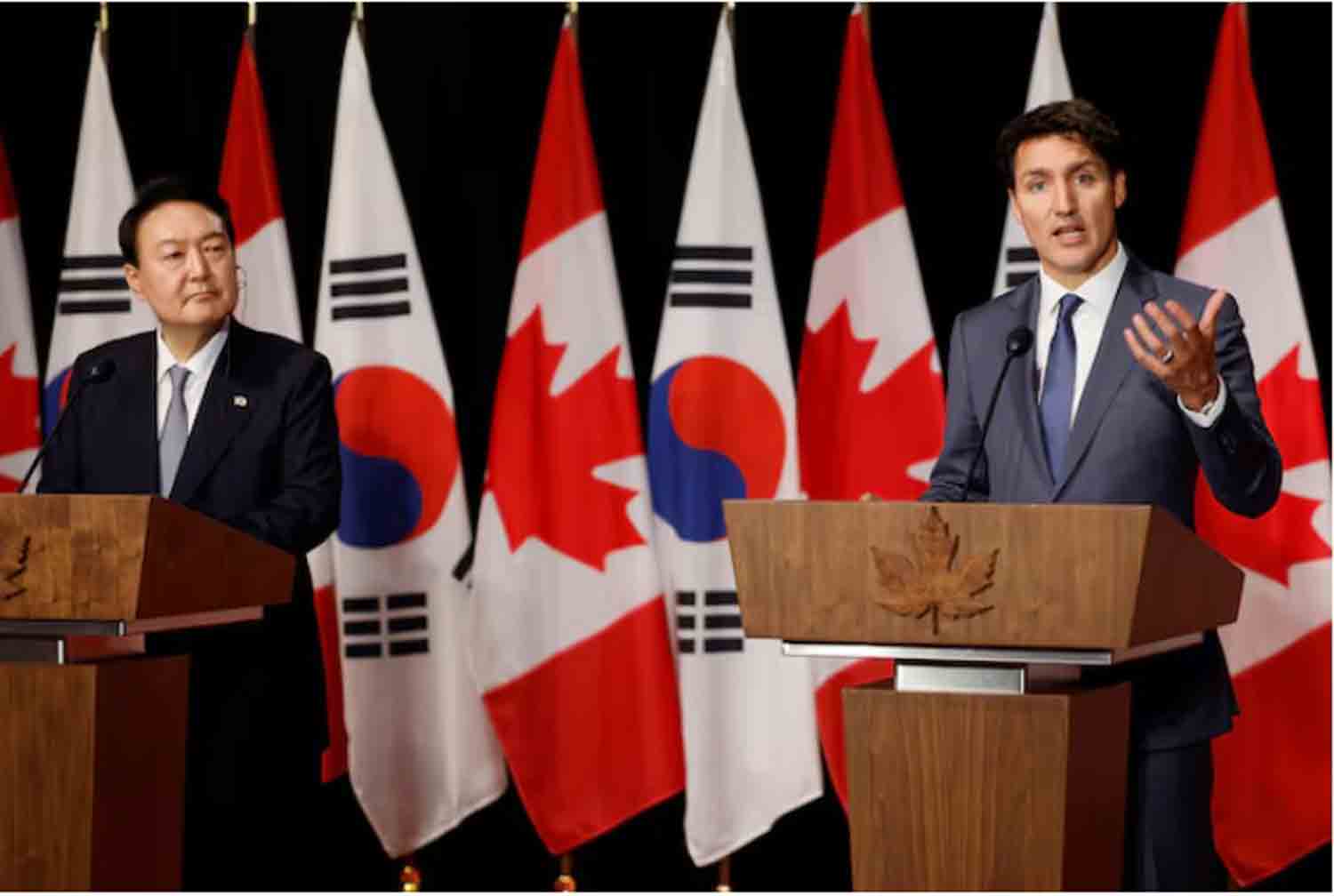
South Korean President Yoon Suk-yeol and Canada's Prime Minister Justin Trudeau take part in a news conference in Ottawa, Ontario, Canada.

Canadian Prime Minister Justin Trudeau indicated that the presence of North Korean troops in the Ukraine conflict is likely to intensify the war initiated by Russia, as reported by South Korean President Yoon Suk Yeol‘s office following a recent phone conversation between the two leaders. Trudeau emphasized that the ongoing war will significantly affect the security landscape in both Europe and the Indo-Pacific, advocating for enhanced collaboration between Canada and South Korea in response to the evolving situation.

On Tuesday, the United States confirmed the presence of North Korean soldiers in the Kursk region, a border area in Russia where Ukrainian forces executed a significant incursion in August, currently controlling hundreds of square kilometers. The Pentagon also noted that a few thousand additional troops were en route to the region. South Korean officials expressed concerns that some North Korean forces may have been deployed to the front lines and raised alarms about potential military support Russia might be offering to North Korea in exchange.

According to Yoon’s office, “Prime Minister Trudeau remarked that the likelihood of the Ukraine conflict escalating has increased due to the deployment of North Korean troops to Russia, which will affect the overall security of Europe and the Indo-Pacific.” Yoon also mentioned that the speed of North Korean troop movements related to the Ukraine conflict has exceeded expectations, resulting in a precarious situation.

Russian President Vladimir Putin has acknowledged the presence of North Korean troops in the conflict but emphasized that it is up to Russia to determine how to execute the partnership agreement he signed with North Korean leader Kim Jong Un in June.

The Pentagon has revised its estimate, now suggesting that 10,000 North Korean troops have been sent to eastern Russia for training, an increase from the previous estimate of 3,000 troops reported last Wednesday.

Russia’s Deputy FM held discussions with China’s Foreign Minister in Beijing

0
Flags of China and Russia are displayed in this illustration picture.

Russian Deputy Foreign Minister Andrei Rudenko held discussions with China‘s Foreign Minister Wang Yi in Beijing on Wednesday, as reported by Russia’s RIA agency. The purpose of Rudenko’s visit, a seasoned diplomat aged 62 who is fluent in English and Chinese according to TASS, remains unclear, including the specific topics addressed during his meetings with Chinese officials.

This visit coincides with escalating tensions regarding Russia’s ongoing conflict in Ukraine, particularly as NATO and South Korea have raised concerns about the potential involvement of North Korean forces alongside Russia.

Rudenko has played a significant role in strengthening Russia’s relations with North Korea since the onset of the full-scale invasion of Ukraine in February 2022. He was also part of the Russian delegations during early peace talks with Ukraine. Notably, just two months prior to the invasion, Rudenko emphasized that the nations of the post-Soviet region would continue to be a key focus of Russia’s geopolitical strategy.

According to RIA, Rudenko stated in December 2021, “Regardless of their development or direction, these countries will consistently remain a priority within our geopolitical agenda, irrespective of the prevailing geopolitical circumstances. This reflects our shared history from the Soviet era.”

Australia to enhance its missile defense capabilities in response to China’s recent test of ICBM in South Pacific

0
Australia's Minister for Defence Industry Pat Conroy.

Australia announced plans to enhance its missile defense capabilities in response to “significant concerns” regarding China‘s recent test of an intercontinental ballistic missile (ICBM) in the South Pacific. The country will also increase its weapons stockpiles and exports to security partners as the region transitions into a new “missile age.”

In a speech delivered on Wednesday, Minister for Defence Industry Pat Conroy emphasized that Australia is expanding its missile defense and long-range strike capabilities. He highlighted the importance of collaboration with security allies, including the United States, Japan, and South Korea, to promote regional stability.

Conroy articulated the necessity for increased missile capabilities, stating that the strategic rivalry between the United States and China is a central aspect of Australia’s security landscape. He noted that China conducted an ICBM test in September, with the missile traveling over 11,000 kilometers before landing in the Pacific Ocean, northeast of Australia. Conroy remarked that the Indo-Pacific region is on the brink of a new missile era, where missiles are increasingly viewed as “tools of coercion.”

There were considerable concerns raised regarding the recent ballistic missile test, particularly its implications for the South Pacific in light of the Treaty of Rarotonga, which designates the region as a nuclear weapons-free zone, he stated to reporters when asked about the issue. He also mentioned that Australia is equipping its navy destroyer fleet with SM-6 missiles to enhance its ballistic missile defense capabilities.

Earlier this month, Australia revealed a A$7 billion agreement with the United States to procure SM-2 IIIC and Raytheon SM-6 long-range missiles for its naval forces.

Additionally, Australia has committed to investing A$74 billion (approximately $49 billion) in missile acquisition and defense over the next ten years, which includes A$21 billion allocated for the Australian Guided Weapons and Explosive Ordnance Enterprise, aimed at establishing a domestic manufacturing capability.

“We need to demonstrate to potential adversaries that any aggressive actions against Australia would be futile and unsustainable in the event of a prolonged conflict,” Conroy emphasized during his address.

Australia is set to invest A$316 million to initiate local production of Guided Multiple Launch Rocket Systems (GMLRS) in collaboration with Lockheed Martin. This initiative aims to manufacture these rapidly deployable, surface-to-surface weapons for export starting in 2029. According to Conroy, the facility will have the capacity to produce 4,000 GMLRS annually, which represents a quarter of the current global output.

Additionally, France’s Thales will establish the production of 155mm M795 artillery ammunition, utilized in howitzers, at a government-owned munitions facility located in the small Victorian town of Benalla. This will mark the first dedicated forge outside the United States, with production expected to commence in 2028 and the potential to scale up to 100,000 rounds per year.

The ongoing conflict in Ukraine highlighted the demand for 155mm artillery shells, with usage reaching 10,000 rounds daily last year, surpassing European production capabilities. “In a world characterized by supply chain disruptions and strategic vulnerabilities, Australia must not only increase its missile acquisitions but also enhance domestic production,” he stated.

In August, Australia announced plans to co-manufacture long-range Naval Strike Missiles and Joint Strike Missiles with Norway’s Kongsberg Defence in Newcastle, marking the only production site outside of Norway. Furthermore, by the end of the year, the Australian navy will be equipped with Tomahawk missiles, boasting a range of 2,500 km (1,550 miles), thereby significantly expanding the fleet’s operational range.

North Korea and Russia’s actions in the Ukraine conflict cause major political upheaval

0

North Korea’s foreign minister visited Russia on Tuesday for discussions amid escalating tensions in the Russia-Ukraine conflict. NATO and South Korea have raised concerns that North Korean forces may soon support Moscow. U.S. President Joe Biden stated that Ukraine should retaliate against North Korean troops “if they cross into Ukraine.”

On Monday, NATO reported that thousands of North Korean soldiers were advancing toward the front lines, prompting Kyiv to request additional weaponry and an international strategy to counter this potential threat.

The Pentagon confirmed on Tuesday the presence of some North Korean troops in the Kursk region, a border area where Ukrainian forces made significant gains in August and currently control extensive territory. It was also noted that a few thousand more troops are en route to that region. The United States has indicated that any North Korean forces engaged in the conflict would be considered “fair game” for Ukrainian strikes, and Washington will not impose new restrictions on Ukraine’s use of American weaponry should North Korea enter the fray.

South Korea, which remains in a state of war with the nuclear-capable North since the Korean War from 1950 to 1953, has expressed strong disapproval of recent military deployments. Officials in Seoul are particularly concerned about the potential support that Russia might be offering to North Korea in exchange for its cooperation.

North Korean Foreign Minister Choe Son Hui arrived in Russia’s far eastern region on Tuesday, en route to Moscow, as reported by Russian state media. The specifics of her meetings during this second visit in six weeks remain unclear, according to Russian news agencies.

The Kremlin has indicated that President Vladimir Putin does not intend to meet with her. Following discussions with South Korean President Yoon Suk Yeol, Ukraine’s President Volodymyr Zelenskiy remarked that North Korea’s actions are escalating the conflict into a new international dimension.

“This war is becoming internationalized, extending beyond two countries,” Zelenskiy stated on X. He added that both leaders agreed to enhance intelligence sharing and increase communication at all levels to formulate a strategic response to this escalation.

Yoon conveyed to Zelenskiy that if North Korea were to receive assistance from Russia and gain military insights from its involvement in the conflict, it would represent a significant threat to South Korea’s security, according to his office. South Korea has indicated it may consider supplying weapons to Ukraine should North Korean forces participate in Russia’s military operations. Putin has not refuted claims regarding the presence of North Korean troops in Russia.

INFANTRY ROLES

The specific role of North Korean troops remains uncertain.

According to the Pentagon, there are initial signs that Russia may deploy them in infantry capacities. “We are concerned that Russia plans to utilize these soldiers in combat or to assist combat operations against Ukrainian forces in Kursk,” stated Pentagon spokesperson Major General Patrick Ryder during a press briefing, while he refrained from confirming reports of North Korean troops being present in Ukraine.

The Center for Strategic and International Studies (CSIS) indicated that the involvement of North Korean forces suggests a commitment beyond mere symbolism. “However, these troops are likely to serve in support roles and will represent less than 1% of Russia’s overall military strength,” the report noted. “Russia is in dire need of additional personnel, and this is part of its strategy to bolster its ranks without initiating a second mobilization,” it added, suggesting that their numbers could increase.

Furthermore, the troops may also serve a political purpose for both Russia and North Korea, potentially enhancing their influence in relation to China, which maintains a complicated partnership with both nations, while also sending a signal to Washington and its allies, according to Western diplomats and analysts. Gilbert Rozman from The Asan Forum remarked for the U.S.-based 38 North program that “the closer Moscow’s relationship with Pyongyang, the more leverage it anticipates over U.S. allies and China.”

Moscow seeks a partner that is antagonistic to the current global order, cautious of China yet not overtly confrontational, and capable of assisting with arms or labor requirements, he explained. The presence of a few thousand North Korean troops is unlikely to alter the trajectory of the conflict, suggesting it may be a Russian strategy to demonstrate to the United States the extent of its disruptive potential, as noted by a diplomat who requested anonymity. “Incorporating North Korean troops into a complex military operation is challenging. However, leveraging their presence to intimidate the United States and its allies in Asia is relatively straightforward,” the diplomat remarked.

TROOPS TRAINING

The conflict in Ukraine began with Russia’s invasion in February 2022, evolving into a protracted war primarily concentrated along the eastern front, resulting in significant casualties for both sides.

The Pentagon has reported an increase in the number of North Korean troops stationed in eastern Russia for training, rising from an estimated 3,000 to 10,000.

According to South Korean lawmakers who received updates from the nation’s intelligence agency, the Russian military is focusing on instructing North Korean soldiers in military terminology.

Additionally, Moscow is reportedly continuing to assist North Korea in its efforts to develop a fleet of reconnaissance satellites.

For several months, North Korea has been supplying Russia with short-range ballistic missiles, artillery shells, and various other munitions, as indicated by intelligence reports from the United States, South Korea, and Ukraine.

Canada alleges Indian Minister Amit Shah is involved in targeting Sikh separatists

0

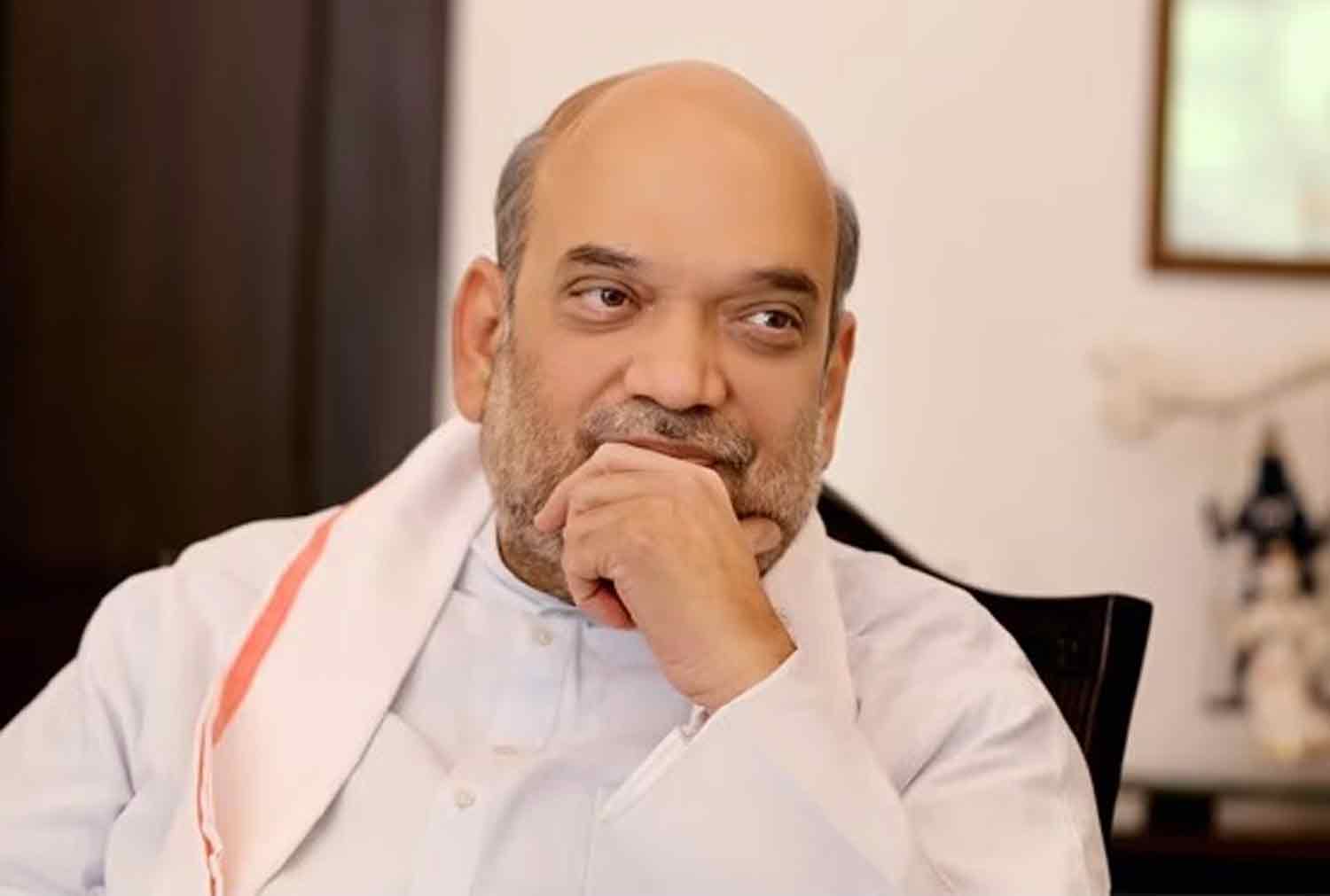
On Tuesday, the Canadian government accused Indian Minister of Home Affairs Amit Shah, a close associate of Hindu nationalist Prime Minister Narendra Modi, of orchestrating efforts to target Sikh separatists within Canada. The Indian government has rejected these allegations from Canada as unfounded and has denied any involvement in such activities.

The Washington Post was the first to report that Canadian officials claimed Shah was behind a campaign of violence and intimidation aimed at Sikh separatists in Canada.

During a parliamentary session, Canadian Deputy Foreign Affairs Minister David Morrison stated that he had informed the U.S.-based newspaper of Shah’s alleged involvement. “The journalist reached out to me and inquired if Shah was the individual in question. I confirmed that he was,” Morrison explained to the committee, although he did not provide additional details or evidence. The High Commission of India in Ottawa and the Indian foreign ministry have not yet issued a response.

India has labeled Sikh separatists as “terrorists” and a threat to national security. These separatists seek the establishment of an independent state called Khalistan, which would be formed from Indian territory. The insurgency that took place in India during the 1980s and 1990s resulted in the deaths of tens of thousands. This tumultuous period included the 1984 anti-Sikh riots, which claimed thousands of lives following the assassination of then-Prime Minister Indira Gandhi by her Sikh bodyguards, a response to her decision to deploy security forces to storm the holiest Sikh temple in an effort to eliminate Sikh separatists.

In mid-October, Canada expelled Indian diplomats, linking them to the murder of Sikh separatist leader Hardeep Singh Nijjar on Canadian soil in 2023. In retaliation, India also expelled Canadian diplomats. This incident is not isolated; there have been other allegations of India targeting Sikh separatists abroad. The United States has charged a former Indian intelligence officer, Vikash Yadav, for allegedly orchestrating a failed plot to assassinate Gurpatwant Singh Pannun, a dual U.S.-Canadian citizen and critic of India, in New York City.

The FBI has issued warnings against any retaliatory actions aimed at U.S. residents. Since announcing in November 2023 that it would formally investigate the allegations made by the U.S., India has remained largely silent. These accusations have strained the relationships between Washington, Ottawa, and New Delhi, which is often seen by Western nations as a counterweight to China.

Senior U.S. diplomat arrived in Taipei to mitigate the impact of Trump’s recent criticisms

0
Flags of Taiwan and U.S. are placed for a meeting.

A senior U.S. diplomat responsible for managing relations with Taiwan has arrived in Taipei, as announced by the de facto U.S. embassy on Tuesday. This visit comes as Taiwanese officials attempt to mitigate the impact of Donald Trump‘s recent criticisms regarding the island’s vital semiconductor industry and defense requirements.

Despite the absence of formal diplomatic relations, the United States remains Taiwan’s most significant international ally and arms provider, in the face of China’s claims over the island. The American Institute in Taiwan, which oversees the unofficial relationship, confirmed that Ingrid Larson, the Managing Director of its Washington Office, is in Taiwan for meetings scheduled from October 28 to November 1.

The trip is described as a demonstration of the United States’ strong commitment to Taiwan and aims to enhance the growing partnership between the two. During her stay, Larson is expected to engage in discussions on ongoing U.S.-Taiwan cooperation on various topics, including regional security, beneficial trade and investment, as well as educational and cultural exchanges.

Trump, the Republican candidate for the upcoming U.S. presidential election on November 5, has caused concern in Taiwan by suggesting both in July and again recently that the island should compensate the United States for its defense and that it has taken away American semiconductor business.

Taiwan has been accused of appropriating the chip industry, with Trump stating, “They want us to provide protection, yet they do not compensate us for it,” during his appearance on “The Joe Rogan Experience” podcast over the weekend. Following his remarks, American Depositary Receipts for Taiwan Semiconductor Manufacturing Co., the leading contract chipmaker and a key supplier for firms like Nvidia, fell by 4.3% on Monday, and its shares listed in Taipei dropped over 2% on Tuesday.

In response to Trump’s comments, Taiwan’s Premier Cho Jung-tai adopted a diplomatic stance, emphasizing that the relationship between Taiwan and the U.S. is founded on shared democratic values. “I believe there is a significant consensus among major U.S. political parties regarding the U.S.-Taiwan relationship,” he stated.

Economy Minister Kuo Jyh-huei expressed his respect for the views of “international friends.” He noted, “U.S. relations with Taiwan have evolved steadily, and both sides maintain a similar perspective on Taiwan.”

Although Taiwan lacks a formal defense treaty with the United States, it has substantial arms orders and has consistently affirmed its commitment to increasing military spending. The Taiwanese government firmly opposes Beijing’s claims of sovereignty. During Trump’s administration from 2017 to 2021, Taiwan received considerable support, including arms sales, a trend that has continued under President Joe Biden’s administration.

Trump engaged in a conversation with then-Taiwan President Tsai Ing-wen in 2016, shortly after his electoral victory, which incited anger in Beijing due to the United States’ lack of official recognition of Taiwan’s government, while it was met with enthusiasm in Taipei. However, with China’s increased military maneuvers around Taiwan, including a recent series of war games, Taipei is anxiously considering the implications of a potential new Trump administration, particularly in light of the close opinion polls.

In the months leading up to the election, two former high-ranking officials from the Trump administration, Kelly Craft and Nikki Haley, both of whom served as ambassadors to the United Nations, visited Taiwan. Craft remarked at a security forum in Taipei last month that “Trump will expect certain commitments from our allies worldwide, especially from partners like Taiwan that face threats. He will anticipate that you will fulfill your responsibilities as a security ally.”

China claims it has recovered underwater “lighthouses” and surveillance devices on the ocean’s surface

0
The Chinese flag is seen in this illustration.

China‘s Ministry of State Security announced on Tuesday that it has recovered surveillance devices located both on the ocean’s surface and beneath the waves, including underwater “lighthouses” designed to assist in the navigation of foreign submarines.

The ministry reported that it had discovered devices concealed on the seabed that were transmitting data capable of “pre-setting the field for battle,” as stated in an article on its official WeChat account, the most widely used social media platform in China.

Recent confrontations at sea and in the air between China and the Philippines in the South China Sea, a region marked by competing territorial claims, have heightened the potential for escalation, which could involve the United States due to its treaty obligations to defend the Philippines in the event of an attack. Additionally, China has conducted military exercises around Taiwan, simulating attacks and the deployment of naval and aerial forces, which has drawn criticism from both Taiwan’s government and the United States.

National security forces have confiscated various specialized technical devices intended for surveillance of marine information and data, concealed within the expansive sea, according to the state security ministry, which did not disclose the specific location of the discovery.

“Some of these devices function like ‘covert agents,’ drifting with the currents and providing real-time monitoring of activities in our territorial waters. Others serve as underwater ‘lighthouses,’ guiding foreign submarines that have intruded into our waters.”

China asserts its claim over nearly the entirety of the South China Sea, which overlaps with claims from Brunei, Malaysia, the Philippines, and Vietnam. Additionally, Beijing has stated that it will not abandon the option of using force regarding Taiwan, which contests China’s sovereignty claims and maintains that only its citizens can determine their future.

Analysts indicate that a submarine arms race is escalating between China and the United States along with its allies, with Beijing expected to deploy a new generation of nuclear-powered and armed submarines by the end of the decade.

The ministry stated that it is confronting a significant and complex covert challenge regarding deep-sea security, alongside the genuine risks posed by foreign espionage and intelligence operations. It will resolutely uphold China’s sovereignty, security, and developmental interests while playing a vital role in the establishment of a robust maritime nation.

US warned Iran at Security Council that there would be “severe consequences” for any further attack on Israel

0
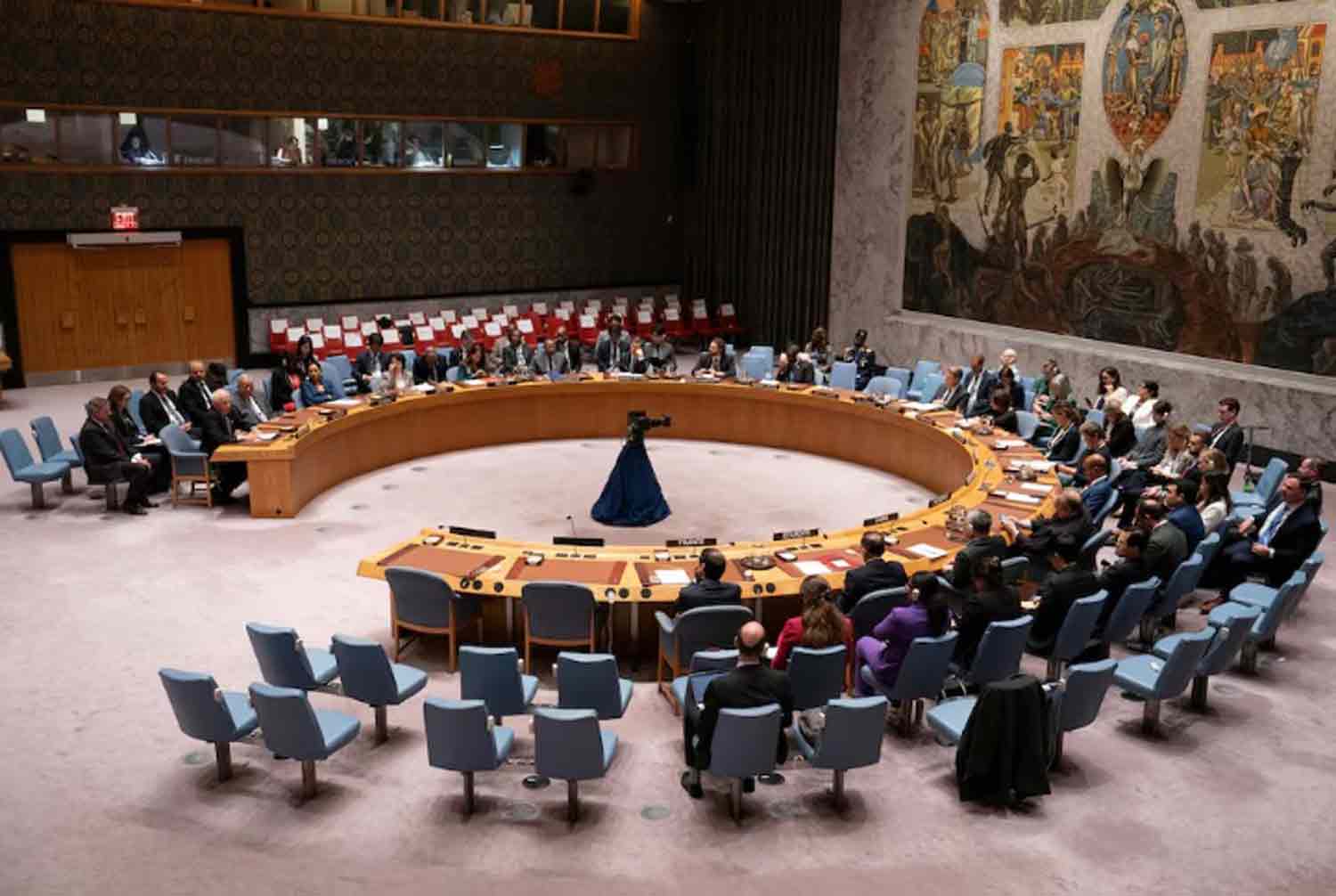
The United Nations Security Council meets on the escalation in fighting in Lebanon between Israel and Hezbollah during the United Nations General Assembly at U.N. headquarters in New York.

The United States issued a warning to Iran during a United Nations Security Council meeting on Monday, stating that there would be “severe consequences” for any further aggressive actions against Israel or U.S. personnel in the Middle East.

“We will not hesitate to act in self-defense. Let there be no misunderstanding. The United States seeks to avoid further escalation. We believe this should mark the conclusion of direct hostilities between Israel and Iran,” stated U.S. Ambassador to the U.N., Linda Thomas-Greenfield, addressing the 15-member council.

This Security Council session was convened following Israel’s airstrikes on missile production facilities and other locations in Iran early Saturday morning, which were in retaliation for Iran’s missile attack on Israel on October 1, involving approximately 200 ballistic missiles.

In response, Iran’s U.N. Ambassador Amir Saied Iravani accused the U.S. of being “complicit” due to its military support for Israel. “Iran has consistently advocated for diplomacy,” he remarked to the council. “Nevertheless, as a sovereign nation, the Islamic Republic of Iran maintains its right to respond at a time of its choosing to this act of aggression.”

Israel’s U.N. Ambassador Danny Danon urged the Security Council to implement “crippling sanctions” targeting Iran’s military and economic systems, emphasizing the need to take decisive actions to prevent a “lunatic regime” from acquiring nuclear capabilities.

He characterized Israel’s military actions against Iran as “measured and proportionate,” reaffirming the nation’s commitment to self-defense. “Any further aggression will be met with swift and decisive consequences,” Danon stated, while also clarifying that “Israel does not seek war.”

China’s U.N. Ambassador Fu Cong called for the United States—without naming it directly—to prioritize “saving lives and preventing war” and to support the U.N. Security Council in advocating for an immediate ceasefire in the Gaza Strip and a reduction in hostilities between Israel and Lebanon.

Russia’s U.N. Ambassador Vassily Nebenzia criticized the United States for its backing of Israel, asserting, “Jerusalem is unwilling to abandon its approach of resolving conflicts with neighbors solely through force. Their resolve to act in this manner is bolstered by support from American allies.”

Britain’s U.N. Ambassador Barbara Woodward advised Iran against retaliating to Israel’s recent attack, stating, “All parties must exercise restraint. Escalating violence will only exacerbate the situation.”

Pentagon confirmed no additional restrictions on Ukraine’s use of U.S. weapons if North Korea enters the conflict

0
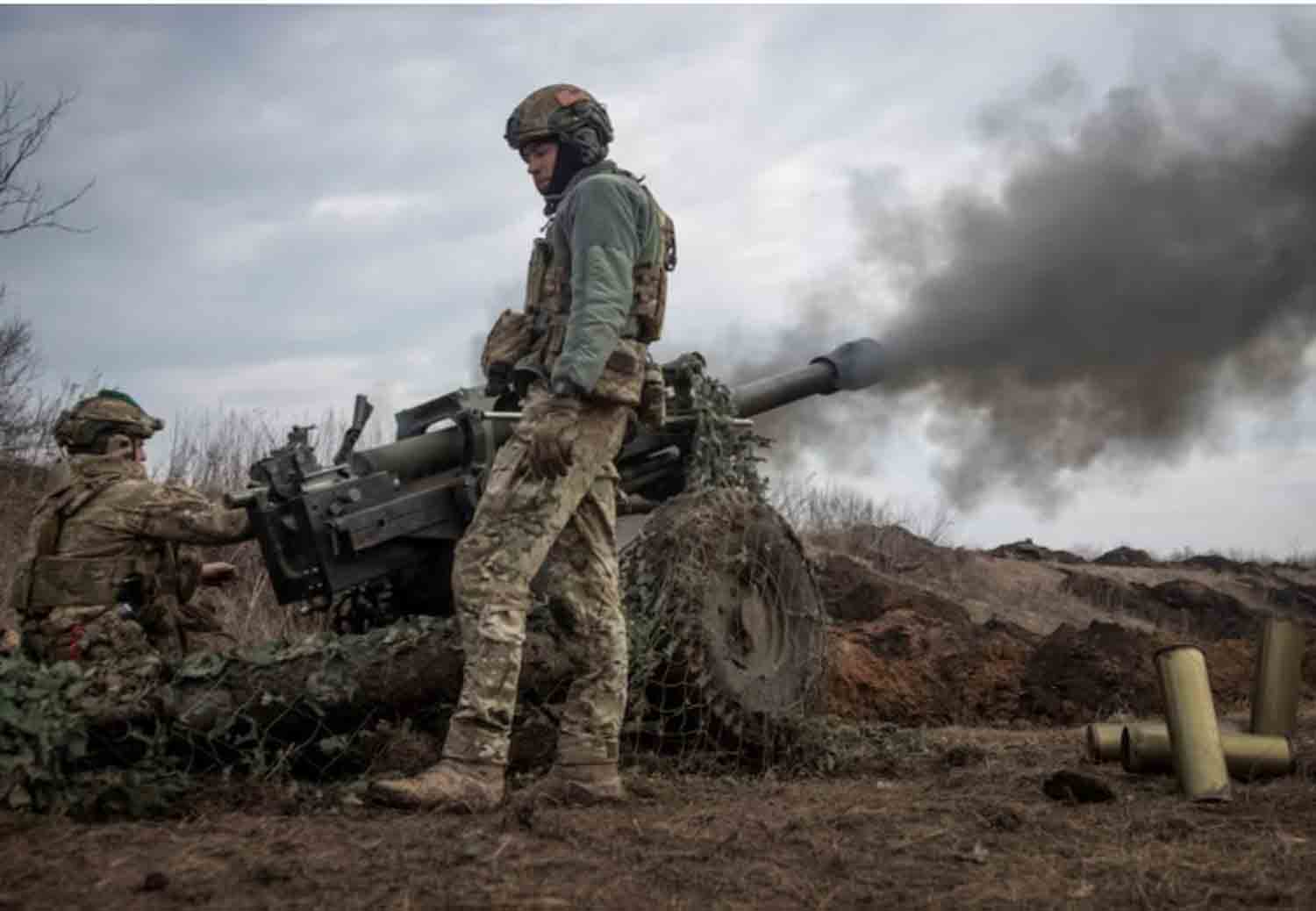
Ukrainian service members from a battalion, fire a howitzer M119 at a front line, amid Russia's attack on Ukraine, near the city of Bakhmut, Ukraine.

The Pentagon announced on Monday that the United States will not impose additional restrictions on Ukraine‘s use of American weaponry, even if North Korea becomes involved in Russia‘s conflict. This statement comes as NATO reported the deployment of North Korean military units to the Kursk region in Russia.

The presence of North Korean forces is raising alarm among Western nations, suggesting that the ongoing 2.5-year conflict in Ukraine may escalate, despite a shift in focus towards the Middle East. This development could indicate Russia’s strategy to mitigate its increasing battlefield losses and maintain gradual progress in eastern Ukraine.

NATO Secretary-General Mark Rutte expressed concerns, stating that the growing military collaboration between Russia and North Korea poses a threat to security in both the Indo-Pacific and Euro-Atlantic regions. U.S. President Joe Biden characterized the situation as “very dangerous.” The Pentagon has revised its estimate, now suggesting that approximately 10,000 North Korean troops have been sent to eastern Russia for training, a significant increase from the previous estimate of 3,000 troops reported last Wednesday.

A segment of those soldiers has already advanced closer to Ukraine, raising our concerns that Russia may deploy these troops in combat or to assist combat operations against Ukrainian forces in Russia’s Kursk Oblast, which borders Ukraine, stated Pentagon spokesperson Sabrina Singh, referencing a specific Russian region.

Initially, the Kremlin dismissed claims regarding a North Korean troop deployment as “fake news.” However, President Putin did not refute the presence of North Korean soldiers in Russia on Thursday, indicating that it is up to Moscow to determine how to execute its partnership treaty with Pyongyang.

Additionally, over the weekend, the Russian leader warned that Moscow would react appropriately if the U.S. and its allies facilitate Ukraine’s ability to strike deep into Russian territory, interpreting any such support from the West as “direct involvement of NATO” in the conflict. Nevertheless, the United States has not signaled any intention to endorse Ukraine’s request for deep strikes. A North Korean foreign ministry official did not verify the media reports regarding troop deployment to Russia but suggested that if such actions were taken, they would align with international norms.

Ukrainian military intelligence reported on Thursday that the first North Korean units have been observed in the Kursk border area, where Ukrainian forces have been active since a significant incursion in August. However, the Pentagon has not confirmed the presence of North Korean troops in Kursk. “It seems likely they are heading towards Kursk, but I don’t have further details at this time,” stated Singh.

Ukrainian President Volodymyr Zelenskiy characterized this development as an escalation by Russia. Foreign Minister Andrii Sybiha indicated that Kyiv had been alerting allies about the potential deployment for weeks and criticized them for not responding decisively. “The key message is to heed Ukraine’s warnings. The solution is to remove restrictions on our long-range strikes against Russia immediately,” he expressed on X.

Since their leaders convened in Russia’s Far East last year, military relations between North Korea and Russia have strengthened. They reconvened in June to establish a comprehensive strategic partnership that includes a mutual defense agreement. This has been followed by numerous high-level visits between the two nations, which share a brief border. North Korea’s foreign minister, Choe Son Hui, left Pyongyang on Monday for her second visit to Russia in six weeks.

Rutte remarked that the deployment of North Korean troops reflects “growing desperation” on Putin’s part. “Over 600,000 Russian soldiers have been killed or injured in Putin’s war, and he cannot maintain his offensive against Ukraine without external assistance,” Rutte noted.

Andriy Yermak, chief of staff to the Ukrainian president, emphasized that sanctions alone would not adequately address North Korea’s involvement. He stated that Kyiv requires “weapons and a clear strategy to deter North Korea’s increased participation.” “The adversary recognizes strength. Our allies possess that strength,” Yermak added on X.

Is the ‘axis of resistance’ against Israel beginning to weaken?

0

The ongoing conflict in the Middle East has profoundly altered the power dynamics, affecting not only the region itself but also extending its influence globally. This situation engages the critical geopolitical interests of significant regional and international players, including Iran, Israel, Saudi Arabia, Turkey, the United States, and Russia, resulting in changes to diplomatic and military approaches as well as shifts in power relations.

A recent illustration of this is the unexpected stance taken by Lebanese Prime Minister Najib Mikati, who issued a strong denunciation of Iran, diverging from the typical diplomatic norms of the country. Mikati criticized Tehran for its “blatant interference” in Lebanon’s domestic matters, specifically referencing remarks made by Iranian parliamentary speaker Mohammad Baqer Qalibaf.

Mikati’s primary grievance was related to discussions surrounding UN Resolution 1701, which regulates the situation in southern Lebanon following the conflict between Hezbollah and Israel. This resolution stipulates that only the Lebanese armed forces and UN peacekeepers are permitted in the region. However, Qlibaf’s suggestion to engage in talks about the resolution’s implementation with France acting as a mediator was perceived by Mikati as an effort to impose external oversight on Lebanon.

Qalibaf’s remarks, featured in Le Figaro, triggered significant backlash in Lebanon, especially from political factions that prioritize the nation’s sovereignty. Prime Minister Mikati emphasized that any matters related to the enforcement of international resolutions should be addressed exclusively by Lebanese authorities, deeming external interference unacceptable. He highlighted Lebanon’s willingness to collaborate with international partners, such as France, but insisted that all discussions must stem from a sovereign state. Additionally, the Prime Minister voiced concerns that such statements could further inflame an already volatile situation in a country enduring ongoing military strife.

In response, Mikati directed Lebanon’s foreign minister to summon the Iranian chargé d’affaires for clarification on Qalibaf’s comments. He recalled that during past visits by Iranian officials, including Foreign Minister Abbas Araghchi, he had made it clear that any interference in Lebanon’s internal matters would be viewed as a breach of sovereignty. Mikati further stressed that the current circumstances in Lebanon, marked by unprecedented aggression from Israel, necessitate a nuanced understanding and support from the international community, rather than efforts to impose external authority.

The heightened tensions surrounding remarks made by Iranian officials coincided with the recent visits of Qalibaf and Araghchi to Lebanon. Their statements were perceived by many in Lebanon as attempts to interfere in the nation’s political landscape. Notably, Araghchi dismissed a proposed roadmap for resolving the conflict, which had been put forth by Lebanese leaders Nabih Berri and Walid Jumblatt. This roadmap included provisions for a ceasefire, presidential elections, and the enforcement of UN Resolution 1701, but notably excluded Hezbollah. Such actions sparked significant backlash, particularly from those advocating for Lebanon’s right to self-determination free from outside influence.

France, a significant international ally of Lebanon and its former colonizer, also expressed disapproval of Iran’s stance. French President Emmanuel Macron articulated his concerns, stating that Iran’s actions pose a threat to the safety of Lebanon’s civilian population. He emphasized the necessity for Hezbollah to disarm and halt its terrorist activities to enable the Lebanese people to unite and restore stability. Macron’s comments were made in the context of ongoing French diplomatic initiatives aimed at resolving the crisis in Lebanon and providing support to a nation grappling with severe humanitarian and political issues.

Mikati’s remarks garnered considerable backing within Lebanon. Political figures such as Samir Geagea, leader of the Lebanese Forces party, and Sami Gemayel, head of the Kataeb party, praised the Prime Minister’s initiative. Geagea remarked that Mikati’s position instills hope that the state is beginning to assume responsibility for its internal matters, despite the challenging circumstances. Similarly, Sami Gemayel described Mikati’s stance as a crucial step toward restoring Lebanon’s sovereignty and state authority, emphasizing that future efforts should concentrate on bolstering state power and curtailing foreign interference.

Lebanon: An Ongoing Arena of Conflict

Lebanon has historically served as a battleground for both regional and global powers, where competing interests frequently clash. Its strategic position, along with its rich tapestry of religious and ethnic groups, has attracted external forces aiming to further their own agendas, often compromising Lebanon’s sovereignty and the welfare of its citizens.

Throughout the civil war that raged from 1975 to 1990, Israel was deeply involved in the conflict. Concerned about threats from Palestinian militant groups based in southern Lebanon, Israel launched military operations to protect its northern borders. In 1982, Israeli troops invaded Lebanon with the declared intention of removing the Palestine Liberation Organization (PLO). This intervention resulted in intricate alliances, including partnerships with certain Lebanese Christian militias such as the Lebanese Forces, which united against shared foes, including pro-Syrian and pro-Iranian factions. Israel’s engagement intensified the conflict and contributed to its duration.

Syria also played a pivotal role during this era. Claiming to restore order, Syrian forces entered Lebanon in 1976 and maintained a presence for nearly thirty years. This military involvement enabled Damascus to wield considerable influence over Lebanese political affairs, backing factions that aligned with its interests, such as the Amal Movement and later Hezbollah. Many Lebanese perceived Syria’s presence as an occupation that compromised the nation’s sovereignty.

Saudi Arabia primarily exerted its influence through Lebanon’s Sunni community. By establishing strong connections with influential families such as the Hariris, Riyadh aimed to mitigate the impact of Syrian and Iranian presence in the region. Rafik Hariri, a notable businessman and politician who held the position of Prime Minister multiple times, played a crucial role in these dynamics. Saudi financial assistance reinforced Sunni political entities, notably the Future Movement (Al-Mustaqbal), aligning their policies with Saudi interests. The assassination of Rafik Hariri in 2005 ignited the Cedar Revolution, a series of mass protests that ultimately resulted in the withdrawal of Syrian troops from Lebanon.

Even after the Syrian forces left, Lebanon continued to be a battleground for external powers attempting to assert their influence. Saudi Arabia persisted in its support for Sunni leaders, including Rafik’s son, Saad Hariri, who also ascended to the role of Prime Minister. Nonetheless, he encountered formidable opposition from Hezbollah, which had strengthened its position with Iranian backing. Concurrently, various Christian factions in Lebanon fostered close relationships with Western nations and, in certain instances, engaged with Israel. This intricate network of alliances exacerbated internal divisions and fueled ongoing political and economic turmoil.

During these challenging times, the priorities of external actors frequently overshadowed the needs and aspirations of the Lebanese populace. Various regional and global powers pursued their strategic goals, often intensifying sectarian divisions and hindering efforts to establish enduring peace and stability. The Lebanese people have frequently suffered the consequences of these conflicts, which are often driven by external interests.

Recent events, particularly the ongoing conflict between the Israel Defense Forces (IDF) and Hezbollah, have once again exposed Lebanon’s susceptibility to outside interference. Reports indicate significant losses within Hezbollah, including the deaths of high-ranking commanders, which have empowered the group’s domestic adversaries, presenting them with a chance to alter the power dynamics. Additionally, Western nations have intensified their efforts to diminish Iran’s influence in Lebanon. This renewed international engagement highlights a continuing pattern of external forces intervening in Lebanese matters to further their own interests, often disregarding the nation’s sovereignty and the well-being of its citizens.

Consequently, Lebanon’s history illustrates that the nation has frequently been caught in the crossfire of geopolitical maneuvering, with the welfare of its people often sidelined. For lasting peace and stability to be achieved, it is essential for external powers to honor Lebanon’s sovereignty and promote dialogue that prioritizes the interests of all its citizens.

Is Iran losing its influence?

The relationship between Iran and Lebanon has a long-standing history that predates the 1979 Islamic Revolution. However, it was post-revolution that the dynamics between the two nations shifted dramatically. Under the leadership of Ayatollah Khomeini, Iran embraced a strategy focused on exporting its Islamic revolution and providing support to Shiite communities abroad, which led to a deeper engagement with Lebanon’s Shiite population seeking assistance.

In the early 1980s, amidst Lebanon’s civil war, Iran capitalized on the political instability to enhance its influence. Through the Islamic Revolutionary Guard Corps (IRGC), Tehran began to offer financial and military support to local Shiite leaders. A significant outcome of this collaboration was the formation of Hezbollah in 1982, a Shiite militant group that emerged in response to Israel’s invasion of Lebanon. This organization not only became a key player in resisting Israeli occupation but also evolved into a major political force in Lebanon, advocating for the Shiite community’s interests and promoting an ideology closely tied to Iran.

Hezbollah has served as a crucial ally and a significant tool of Iranian influence in the Middle East. By supporting the group, Tehran has been able to fortify its regional standing, confront Israel, and shape Lebanon’s internal political landscape. Hezbollah has benefited from considerable resources provided by Iran, including financial support, military supplies, and training for fighters. This partnership has enabled Hezbollah to develop into a formidable military and political entity capable of impacting decisions within the Lebanese government.

Hezbollah has evolved into one of the most powerful political entities in Lebanon, actively engaging in both parliamentary and governmental roles. This positioning has allowed Iran to exert influence over Lebanese politics, promoting its own interests while countering the sway of other regional actors, notably Saudi Arabia and Israel.

In recent years, external entities, particularly Israel and Western nations, have escalated their efforts to diminish Iran’s foothold in Lebanon. Israel perceives Hezbollah as a significant threat to its national security, given the group’s missile capabilities and military strength, prompting operations aimed at dismantling Hezbollah’s infrastructure and targeting its leadership.

Israel’s strategy recognizes Lebanon’s internal divisions

Recent military actions have resulted in the deaths of several senior Hezbollah commanders and fighters, which has been viewed by domestic adversaries of the group as a chance to alter the existing power dynamics.

Israel’s approach has been informed by an awareness of Lebanon’s internal divisions. By capitalizing on the existing tensions among various political and religious groups, Israel aimed to ensure that its actions would either receive support or face minimal opposition from the Lebanese populace.

Iran currently faces a challenging situation. On one side, Tehran aims to sustain its influence in Lebanon and continues to utilize Hezbollah as a means of regional strategy. Conversely, engaging in direct military conflict with Israel or escalating tensions could result in severe repercussions for both Iran and the wider region. Economic sanctions, domestic issues, and international pressures constrain Iran’s capacity to address these challenges effectively.

To navigate this precarious landscape, Iran prefers to avoid direct military engagement, favoring a strategy centered on restraint and diplomacy. Tehran maintains its support for Hezbollah through political and economic means, seeking to bolster its influence without resorting to direct military action. However, the mounting pressure from Israel and Western nations, along with criticism from Lebanese officials, complicates this approach. The ongoing decline of Hezbollah could diminish Iran’s sway in Lebanon, posing a significant threat to Tehran’s strategic objectives.

The pressure on Iran and its allies increases the likelihood of further escalation in the Middle East. Should Iran opt for more assertive measures to protect its interests, it could trigger large-scale military confrontations, impacting not only Lebanon and Israel but also other regional nations. Given the intricate ethnic and sectarian dynamics, along with the presence of various armed factions, such a situation could lead to disastrous outcomes.

The circumstances in Lebanon illustrate the complex dynamics of the geopolitical landscape in the Middle East, where the interests of various nations are interconnected and frequently at odds. The Lebanese authorities’ criticism of Iran is indicative of a larger strategy employed by external powers to shift influence within the region. As pressure mounts, Iran faces the challenge of safeguarding its interests while managing the potential for conflict escalation.

To achieve stability, it is essential for the international community to engage in coordinated efforts that uphold Lebanon’s sovereignty and mitigate external interference. A pathway to peace and sustainable development can only be forged through dialogue and mutual understanding, taking into account the interests of all stakeholders, particularly the welfare of the Lebanese populace.

Remain calm; Biden’s influence on Israel’s operations against Iran

0

Hours after Iranian missiles struck Israel on October 1, the Biden conveyed an urgent message to Israel: Remain calm. Washington emphasized that Israel controlled the timeline and had the opportunity to carefully consider its response to an Iranian assault that U.S. intelligence suggested could have resulted in significant casualties had Israel, with American military assistance, not successfully countered the attack from its longstanding adversary.

Officials were concerned that such a large-scale Iranian offensive could provoke a swift and forceful Israeli reaction, potentially escalating tensions in the Middle East just weeks before the U.S. presidential election. This narrative, provided by current and former U.S. officials, outlines how the United States aimed to guide Israel’s actions during the three weeks leading up to its military response on Saturday, which involved airstrikes more focused on military objectives than initially anticipated by Washington.

Key Iranian air defense and missile production facilities were significantly damaged, thereby diminishing Iran’s military capabilities. However, crucially, Iran’s sensitive nuclear sites and energy infrastructure were left untouched, aligning with President Biden’s primary objectives.

Jonathan Panikoff, a former deputy U.S. national intelligence officer for the Middle East, emphasized the importance of U.S. pressure in this context. He noted that Israeli strategic choices would have been markedly different without the Biden administration’s influence to refrain from targeting nuclear or energy installations.

Israeli Prime Minister Benjamin Netanyahu refuted the notion that U.S. pressure influenced Israel’s decision to spare Iranian gas and oil facilities. He asserted that Israel selected its attack targets based on its national interests rather than American directives.

The Biden administration’s initial response was to recognize that Iran would face repercussions for the October 1 attack. A senior official from the administration stated, “In the hours following that attack, we committed to imposing serious consequences on Iran.”

U.S. Defense Secretary Lloyd Austin has engaged in approximately a dozen discussions with his Israeli counterpart, Yoav Gallant, since October 1. Austin, a retired four-star Army general, and Gallant have deliberated on potential responses to recent events. A U.S. official noted, “We were aware they were preparing for action, and he advocated for a proportional response.”

In the aftermath of Iran’s attack on October 1, U.S. Secretary of State Antony Blinken, along with other senior officials, reached out to European and Arab allies. He communicated that while Israel needed to respond, the U.S. was actively working to ensure that response was measured.

The question remains: what constitutes a proportional response that would effectively deter further Iranian aggression? Although the October 1 strike resulted in only one fatality—a Palestinian who died from falling debris—many of the missiles launched by Iran were not intercepted by Israeli or U.S. air defense systems.

Jeffrey Lewis, a non-proliferation expert at the Middlebury Institute of International Studies, indicated that satellite imagery analysis revealed at least 30 impacts at Israel’s Nevatim Airbase. This could imply that Israel was either attempting to conserve its limited air defense resources or believed that repairing the fortified facility would be more cost-effective than intercepting each missile launched by Iran. Lewis remarked, “Israel may have concluded that their stockpiles were depleting or that the cost of interceptors for ballistic missiles was prohibitive.”

Biden took steps to enhance Israel’s air defenses

Initially, when discussions began between the administration and Israeli officials, potential targets included Iran’s nuclear and oil facilities, according to a U.S. official. However, it was emphasized that Israel had not made a final decision regarding these targets. In response, U.S. officials sought to present an alternative strategy that involved various measures. This included efforts to impose oil sanctions aimed at Iran’s so-called “Ghost Fleet,” providing the Israelis with a non-military option to undermine Iran’s oil revenues.

A senior official from the Biden administration indicated that the U.S. took steps to enhance Israel’s air defenses prior to its planned strike on Iran. This involved the rare deployment of the Terminal High Altitude Area Defense (THAAD) system to Israel, accompanied by approximately 100 U.S. personnel to operate the system. Before this deployment, the U.S. sought clarity on Israel’s attack plans.

On October 9, President Biden spoke with Prime Minister Netanyahu, which allowed the U.S. to gain insight into Israel’s intended response and facilitated the deployment of THAAD, according to officials. As Iran issued warnings that its supporters could be targeted in retaliation for any Israeli action, Gulf states reiterated their stance of neutrality.

Saudi Arabia has been particularly cautious about potential Iranian attacks on its oil infrastructure, especially following a 2019 assault on its Abqaiq refinery that temporarily disrupted over 5% of the global oil supply, an incident Iran denied involvement in. To address Israel’s intent to retaliate against Iran’s oil sector, the Biden administration implemented sanctions, including an expansion of U.S. sanctions on Iran’s petroleum and petrochemical industries on October 11.

Additionally, the administration encouraged European allies to impose penalties on Iran Air, while simultaneously deploying the THAAD system as a deterrent, demonstrating U.S. support for Israel as a crucial component of this alternative strategy.

The administration contended that this approach would remain a significant deterrent and effectively impose costs on Iran, all while avoiding a broader conflict in the region that Washington believes Israel is not seeking, according to officials.

NUCLEAR NO-GO

In what many analysts interpreted as a warning to Iran, the U.S. military executed a strike against the Iran-aligned Houthis in Yemen using long-range B-2 stealth bombers. At that time, Austin emphasized that the strike showcased the Pentagon’s capability to target facilities that are difficult to access, regardless of how deeply they are buried or fortified. Amid rising speculation about a potential Israeli strike on Iran’s nuclear facilities, Washington conveyed to Israel that it could rely on U.S. support if Tehran ever decided to pursue nuclear weapons, a scenario that U.S. intelligence does not currently believe is in play.

Now is not the appropriate moment.

“The underlying message was that if Israel seeks U.S. assistance in targeting such sites in the future, they would need to adopt a more measured approach this time,” Panikoff noted. For Blinken, a carefully calibrated Israeli response to Iran could create opportunities for long-sought diplomatic objectives in a region already destabilized by a year-long conflict in Gaza between Israel and Iran-backed Hamas, as well as an intensifying war involving Israel and Lebanese Hezbollah, another ally of Iran. During his recent visit to the Middle East, Blinken informed Arab foreign ministers that discussions with Israel had progressed to a point where Israel would focus solely on military targets. He also conveyed that Iran should refrain from any further provocations, a message he hoped would reach Tehran.

On Sunday, following the recent attack, both Israel and Iran refrained from indicating any intention to escalate the situation further. Israeli Prime Minister Netanyahu asserted that the airstrikes effectively targeted Iran’s defense capabilities and missile production facilities. In contrast, Iranian Supreme Leader Ayatollah Ali Khamenei cautioned against overstating the impact of the attack that occurred on Saturday.

While the future of de-escalation between Israel and Iran remains uncertain, U.S. officials have indicated that the Biden administration has made significant efforts to break the ongoing cycle of direct confrontations that began in April. A senior official from the Biden administration stated, “If Iran opts to retaliate again, we will be prepared, and there will be repercussions for Iran. Nonetheless, we hope to avoid such a scenario.”

Biden’s approach to restraining Israel has faced criticism, particularly from opposition Republicans in the U.S., including Congressman Mike Turner, who chairs the House Intelligence Committee. Turner expressed to Fox News that the administration’s actions have restricted Israel’s capacity to effectively counter Iran’s threats.

Aaron David Miller, a senior fellow at the Carnegie Endowment for International Peace, noted that the ongoing exchanges of strikes may paradoxically increase Israel’s risk tolerance. He suggested that if former President Donald Trump were to win the presidential election on November 5, Israel might actively seek further opportunities, having demonstrated their capability to significantly damage Iran’s air defense systems.

Egypt proposed a preliminary two-day ceasefire in Gaza in exchange of four Israeli hostages

0
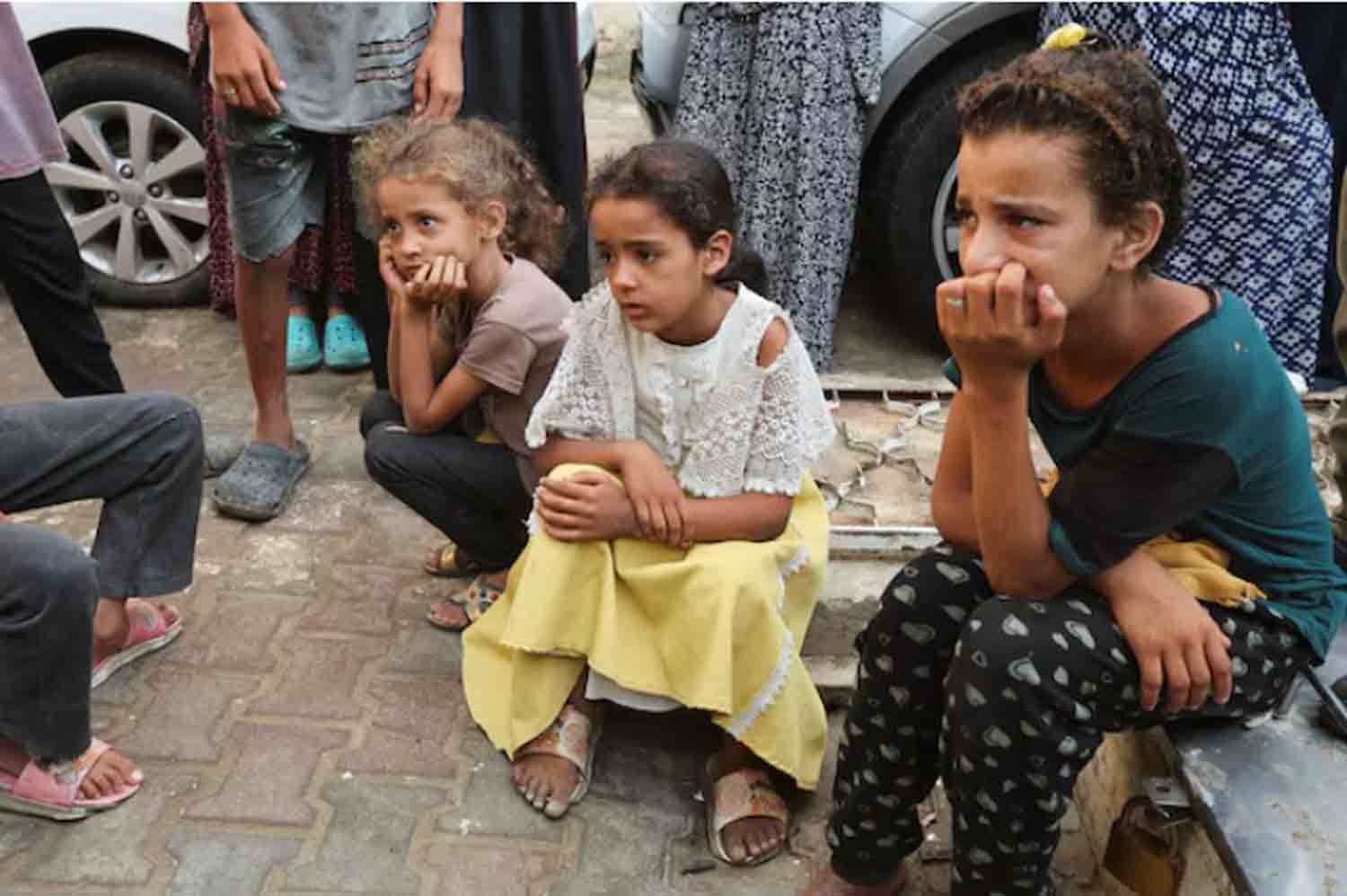
Children at tent camp for displaced people in Gaza

Egypt has put forward a proposal for a preliminary two-day ceasefire in Gaza, aimed at facilitating the exchange of four Israeli hostages held by Hamas for a number of Palestinian prisoners, as stated by the Egyptian president on Sunday. This announcement comes in the wake of Israeli military operations that resulted in the deaths of 45 Palestinians throughout the region.

Abdel Fattah al-Sisi, the Egyptian leader, made this declaration during a press conference in Cairo, where he was joined by Algerian President Abdelmadjid Tebboune. He emphasized that discussions should recommence within ten days following the implementation of the temporary ceasefire, with the goal of establishing a lasting peace.

While there has been no immediate response from either Israel or Hamas, a Palestinian official involved in the mediation process indicated to Reuters that there is an expectation for Hamas to consider the new proposals. However, he noted that Hamas remains firm in its stance that any agreement must lead to the cessation of hostilities and the withdrawal of Israeli forces from Gaza.

Israel has stated that the conflict will not conclude until Hamas is completely eliminated as both a military force and a governing authority in Gaza.

The United States, Qatar, and Egypt have been leading efforts to negotiate an end to the hostilities that began when Hamas militants attacked southern Israel on October 7 of last year, resulting in the deaths of 1,200 individuals and the abduction of over 250 hostages, according to Israeli reports.

Gaza health officials report that the death toll from Israel’s retaliatory air and ground operations in Gaza is nearing 43,000, leaving the densely populated region devastated.

An official familiar with the discussions informed Reuters on Sunday that the negotiations in Doha aim to establish a short-term ceasefire and facilitate the release of some hostages held by Hamas in exchange for the release of Palestinian prisoners by Israel.

The goal, which has remained elusive despite numerous mediation efforts, is to achieve an agreement between Israel and Hamas for a temporary cessation of hostilities lasting less than a month, with the hope that this could pave the way for a more lasting ceasefire.

On Sunday, at least 43 individuals killed in Gaza were reported from the northern part of the enclave, where Israeli forces have returned to eliminate Hamas fighters, who are believed to have regrouped in that area.

Severe Conditions in Northern Gaza

The United Nations has described the situation faced by Palestinian civilians in northern Gaza as “severe,” emphasizing that the ongoing conflict is being conducted with minimal consideration for international humanitarian law.

U.N. spokesperson Stephane Dujarric stated that Secretary-General Antonio Guterres is deeply troubled by the alarming levels of casualties, injuries, and destruction in the region. Civilians are reportedly trapped under debris, while the sick and injured are deprived of essential medical care. Families are struggling with a lack of food and shelter, and there are distressing accounts of family separations and numerous detentions.

Dujarric highlighted that Israeli authorities are obstructing the delivery of vital food, medicine, and other humanitarian supplies, endangering lives in the process. The extensive damage and lack of resources caused by Israeli military actions in the north have rendered life there increasingly untenable.

Israel maintains that its military operations comply with international law, asserting that it targets Hamas members who allegedly hide among civilians, a claim that Hamas disputes. Furthermore, Israel denies obstructing humanitarian aid to Gaza, attributing distribution issues to international organizations and accusing Hamas of misappropriating aid intended for the population.

Jabalia under scrutiny

On Sunday, an airstrike in Jabalia resulted in the deaths of 20 individuals, according to medics and the Palestinian news agency WAFA. Jabalia, the largest of the Gaza Strip’s eight historic refugee camps, has been the target of an Israeli military operation for over three weeks. In a separate incident, another Israeli airstrike hit a school in the Shati camp, which was providing shelter to displaced Palestinian families, killing nine and injuring 20, with several in critical condition, as reported by medical personnel.

Videos shared on Palestinian media, which Reuters has not yet verified, depicted individuals rushing to the site of the bombing to assist in evacuating the injured. The footage showed bodies strewn across the ground, while some people carried wounded children to vehicles for transport. The Israeli military stated it is investigating the reports regarding the school strike.

Among those who lost their lives in the Shati school attack were three local journalists: Saed Radwan, the head of digital media at Hamas Al-Aqsa television, along with Hanin Baroud and Hamza Abu Selmeya, as reported by Hamas media.

On the same day, the Israeli military announced that it had eliminated over 40 militants in the Jabalia region within the last 24 hours, in addition to dismantling infrastructure and discovering significant amounts of military equipment. According to the Gaza health ministry, Israeli military actions in Jabalia, Beit Hanoun, and Beit Lahiya have resulted in approximately 800 fatalities during the ongoing three-week offensive.

Netanyahu says Israel has significantly harmed Iran, while Khamenei downplays the damage

0
Iran's Supreme Leader Ayatollah Ali Khamenei speaks during a meeting

Israel’s airstrikes significantly impacted Iran‘s defense systems and missile production capabilities, according to Prime Minister Benjamin Netanyahu on Sunday. In contrast, Iranian Supreme Leader Ayatollah Ali Khamenei cautioned against overstating the effects of Saturday’s assault.

As conflict continues in Gaza and Lebanon, the potential for direct confrontation between Israel and Iran poses a risk of escalating into a broader regional conflict. Nevertheless, a day after the airstrikes, there were no indications that they would lead to further escalation.

Meanwhile, intense clashes in Lebanon between Israeli forces and Hezbollah, which is supported by Iran, persisted on Sunday. Reports indicated that an Israeli airstrike resulted in the deaths of eight individuals in a residential area of Sidon, according to medical sources. Netanyahu described the air force operations as having targeted Iran comprehensively, asserting that they effectively diminished Iran’s defense capabilities and its missile production aimed at Israel. He characterized the operation as “precise and powerful,” claiming it achieved all its intended goals.

Khamenei says Israel’s attack on Iran should neither be minimized nor exaggerated

The Islamic Republic has yet to indicate its response to the anticipated strikes that occurred on Saturday, which involved numerous fighter jets targeting locations near Tehran and in the western provinces of Ilam and Khuzestan. For months, these heavily armed adversaries have been locked in a cycle of retaliatory actions, with Saturday’s assault following an Iranian missile attack on October 1, most of which Israel claimed to have intercepted with its air defense systems.

Khamenei remarked that Israel’s strategic calculations “should be disrupted.” He emphasized that the recent attack on Iran, which resulted in the deaths of four soldiers and inflicted some damage, “should neither be minimized nor exaggerated.” Iranian parliament speaker Mohammad Baqer Qalibaf asserted that Iran has the right to self-defense and that its response “will be decisive, in accordance with the circumstances.”

U.S. President Joe Biden urged for a cessation of the escalating tensions, which have heightened concerns about a broader conflict in the Middle East stemming from the ongoing Israeli-Hamas situation in Gaza and Israel’s military actions in southern Lebanon aimed at curbing Hezbollah’s rocket attacks on northern Israel.

Israeli Defence Minister Yoav Gallant stated that Iran can no longer effectively utilize its allies, Hamas in Gaza and Hezbollah in Lebanon, against Israel. He remarked in a speech that these groups “are no longer an effective tool” for Tehran. Gallant further noted that Hamas is no longer operating as a military entity in Gaza, and that Hezbollah has lost much of its senior command and missile capabilities.

Despite these claims, Hamas has asserted its continued military operational capacity, while Israel has recently launched significant operations in northern Gaza targeting what it describes as regrouping Hamas fighters. Hezbollah, on the other hand, maintains that its command structure is intact and that it still possesses considerable missile capabilities.

In related developments, the Israeli military has called for the immediate evacuation of residents from 14 villages in southern Lebanon, advising them to move north of the Awali River. An Israeli airstrike in Sidon, a coastal city in southern Lebanon, resulted in at least eight fatalities and 25 injuries, according to the country’s health ministry. Additional strikes in the region included one in Zawtar al-Sharkiya that killed three and another in Marjayoun that claimed five lives.

Israel reported that four of its soldiers lost their lives in the ongoing conflict in southern Lebanon. In response, Hezbollah announced that it had launched a significant missile barrage at the Zevulon military industries facility located north of Haifa in northern Israel. The rockets struck a residential area, damaging a house and vehicles, prompting rescue teams to respond to extinguish the resulting fire. One woman sustained serious injuries, as reported by Israel’s ambulance service.

Iran and Israel: An Analysis of Their Offensive and Defensive Capabilities

0

Israel conducted a series of strikes on various Iranian sites early Saturday morning, asserting that it targeted military installations. This action represents the latest development in the ongoing tensions between the two Middle Eastern nations.

Israeli army spokesperson Daniel Hagari announced on X that the military executed “targeted and precise attacks against military targets in Iran,” emphasizing that these operations were aimed at neutralizing immediate threats to Israel. He confirmed that the wave of attacks had concluded.

Residents in Tehran reported hearing multiple explosions, which Iranian officials attributed to missile interceptions by the country’s air defense systems.

These Israeli airstrikes occurred less than a month after Iran launched an assault on major Israeli cities, firing at least 180 ballistic missiles on October 2. The Islamic Revolutionary Guard Corps (IRGC) claimed that the missile strikes were a response to civilian casualties in Gaza and Lebanon resulting from Israeli operations, as well as the targeted killings of IRGC, Hamas, and Hezbollah leaders. The IRGC indicated that the missiles were directed at three military bases in Tel Aviv.

In response to the October 2 missile attack, Israeli Prime Minister Benjamin Netanyahu promised retaliation, stating that Iran had “made a big mistake” and would “pay for it.”

As Israel and Iran, longstanding adversaries engaged in proxy conflicts for decades, move closer to a potential direct confrontation, it is essential to examine their military capabilities, their capacity to launch attacks against one another, and the strategies they may employ to protect their territories.

Personnel Strength

According to The Military Balance 2023, a report from the International Institute for Strategic Studies (IISS) based in the United Kingdom:

Iran boasts a total of 610,000 active military personnel, which includes 350,000 in the army, 190,000 in the Islamic Revolutionary Guard Corps (IRGC), 18,000 in the navy, 37,000 in the air force, and 15,000 in air defense. Additionally, Iran maintains a reserve force of 350,000. Mandatory conscription applies to Iranian men over the age of 18, with some exceptions.

In contrast, Israel has 169,500 active military personnel, comprising 126,000 in the army, 9,500 in the navy, and 34,000 in the air force. Israel’s reserve force is significantly larger, totaling 465,000. The country enforces conscription for most young men and women over 18, with specific exemptions.

Military Expenditure

As reported in a fact sheet by the Stockholm International Peace Research Institute (SIPRI) in April 2024:

In 2023, Iran allocated $10.3 billion for military purposes, reflecting a modest increase of 0.6 percent compared to 2022.

In the same year, Israel’s military expenditure reached $27.5 billion, marking a significant rise of 24 percent from the previous year, largely driven by the conflict in Gaza that escalated after October 7.

Land Forces

According to The Military Balance 2023:

Iran

Iran possesses over 10,513 battle tanks, more than 6,798 artillery pieces, and over 640 armored personnel carriers. The Iranian army operates 50 helicopters, while the Islamic Revolutionary Guard Corps (IRGC) has five.

Israel

In contrast, Israel maintains approximately 400 battle tanks, 530 artillery pieces, and over 1,190 armored personnel carriers.

Air Forces

As detailed in The Military Balance 2023:

Iran’s air force includes 312 combat-capable aircraft, with an additional 23 operated by the IRGC. The air force has two attack helicopters, while the army operates 50 and the IRGC has five.

Israel’s air force consists of 345 combat-capable aircraft and 43 attack helicopters.

Naval Forces

According to The Military Balance 2023:

Iran’s naval capabilities include 17 tactical submarines, 68 patrol and coastal combatants, seven corvettes, 12 landing ships, 11 landing craft, and 18 logistics and support vessels.

Israel’s navy comprises five submarines and 49 patrol and coastal combatants.

Air Defense Systems

As outlined in The Military Balance 2023:

Israel‘s air defense strategy is primarily based on the Iron Dome system, which reportedly intercepted the majority of Iranian missiles during a recent incident. This system utilizes radar technology to identify incoming threats, assessing their speed and trajectory. The control center determines whether a projectile is a danger to populated areas; non-threatening projectiles are permitted to land in uninhabited zones, while those deemed hazardous trigger the launch of interceptor missiles from the system’s battery, which holds 20 interceptors.

Israel operates 10 Iron Dome batteries strategically positioned across the country. In addition to the Iron Dome, other systems are in place to counter medium and long-range missile threats. David’s Sling is designed to intercept missiles within a range of 40 km (25 miles) to 300 km (186 miles), while the Arrow System is capable of targeting missiles up to 2,400 km (1,491 miles) away.

Iran: In February, Iran introduced the Azarakhsh, a short-range, low-altitude air defense system, which translates to “thunderbolt” in Persian. This system features infrared detection capabilities along with radar and electro-optical systems for target identification and interception, and it can be mounted on vehicles.

Iran possesses a diverse array of surface-to-air missile defense systems, including over 42 long-range models such as the Russian-made S-200s, S-300s, and the domestically produced Bavar-373. Additionally, it has more than 59 medium-range systems, including the US MIM-23 Hawk, HQ-2J, and Khordad-15, as well as 279 short-range systems like the Chinese-manufactured CH-SA-4 and 9K331 Tor-M1.

Ballistic Missiles

The Missile Defense Project, part of the Center for Strategic and International Studies (CSIS), a US think tank, reports that Iran possesses a minimum of 12 distinct types of medium-range and short-range ballistic missiles. These include the Tondar 69, which has a range of 150 km (93 miles), and the Khorramshahr and Sejjil missiles, both capable of reaching distances of up to 2,000 km (1,243 miles).

Israel, on the other hand, has at least four varieties of ballistic missiles that fall into the small, medium, and intermediate-range categories. These range from the LORA, which can travel 280 km (174 miles), to the Jericho-3, with a range estimated between 4,800 km (2,983 miles) and 6,500 km (4,039 miles).

Nuclear Capabilities

The Arms Control Association, a US-based organization, estimates that Israel has approximately 90 nuclear warheads in its arsenal. In contrast, Iran is not believed to possess nuclear weapons; however, it has developed an advanced nuclear program and operates multiple nuclear facilities and research centers. Supreme Leader Ali Khamenei issued a religious edict, or fatwa, in the early 2000s prohibiting the production of nuclear weapons, stating that it is forbidden in Islam. Nevertheless, in May, Iran indicated it might reconsider its nuclear policy if it perceives a threat to its existence.

Terrorist Incident in Ankara: A Signal to Erdogan?

0

As President Recep Tayyip Erdogan of Türkiye arrived in Kazan for the BRICS summit, alarming reports emerged from Ankara regarding a terrorist attack on the headquarters of the aerospace firm TUSAŞ. Three assailants, including a woman, were heavily armed with firearms and explosives as they breached the facility known for manufacturing military aircraft, drones, and upgrading F-16 fighter jets. The attack resulted in five fatalities and left over 20 individuals with serious injuries.

Security cameras captured the initial moments of the assault, with Turkish television channel A Haber noting that the attack coincided with a shift change among security personnel. Some of the attackers gained access to the building and took hostages, who were subsequently rescued by special forces, leading to the elimination of the terrorists. Russian President Vladimir Putin extended his condolences to Erdogan and denounced the attack. In response, Erdogan characterized the assault on TUSAŞ as an affront to the nation’s sovereignty and pledged to intensify efforts against terrorism.

Türkiye’s Interior Minister, Ali Yerlikaya, announced that one of the attackers had been identified as a member of the Kurdistan Workers’ Party (PKK), which is recognized as a terrorist organization by the Turkish government. In retaliation, the Turkish Air Force conducted strikes against PKK positions in Iraq and Syria. The Ministry of National Defense confirmed that an aerial operation targeting terrorist sites in northern Iraq and Syria was carried out, asserting that the action was taken in accordance with the self-defense rights outlined in Article 51 of the UN Charter. Reports indicated that 32 targets were successfully hit during the operation.

This rhetoric closely mirrors the strategy employed by Israeli Prime Minister Benjamin Netanyahu, who promptly initiated a military operation in Gaza in response to the violent attacks on October 7. Similarly, Hamas’s military wing not only took responsibility for these actions but also openly celebrated the violence, a pattern echoed by the PKK.

The rapid response from Turkish authorities is understandable, particularly since the incident occurred at the headquarters of TUSAŞ, a significant entity in Türkiye’s defense sector recognized for its advanced military technology development. TUSAŞ is involved in projects such as the Kaan fifth-generation fighter jets, Anka combat drones, and enhancements to F-16 fighter jets. Additionally, the vicinity of the production site includes the USET testing center for spacecraft and satellites, positioning TUSAŞ as a prime target for groups opposed to Türkiye’s military growth.

While it may seem grim and cynical, such attacks are seldom spontaneous; they are typically carefully orchestrated to achieve maximum effect. This leads to speculation that the timing of the assault was intentional, coinciding with Erdogan’s attendance at the BRICS summit in Russia, possibly aiming to compel him to shorten his visit. Nevertheless, if that was the intention, it has not succeeded, as Erdogan continued to engage in the summit’s “outreach/BRICS+” format.

In Türkiye, the recent terrorist attack has sparked a surge of speculation, driven by various theories and enigmas that are not without basis. Notably, a well-known Turkish television series had foreseen the October 23 attack in Ankara three years prior. The premiere episode of “The Organization,” which focuses on the operations of the MIT (Türkiye’s National Intelligence Organization), depicted a terrorist event at SİHA, a firm specializing in advanced military drones and involved in confidential defense projects. Within the narrative, Turkish engineers were victims of the attack, and critical information was compromised. Following this, Turkish intelligence operatives discovered that the assault had been orchestrated by foreign intelligence agencies.

Additionally, a significant exhibition highlighting Türkiye’s defense, aerospace, and aviation sectors is currently underway. The defense industry represents nearly 80% of Türkiye’s export figures, with the country exporting defense equipment worth $10.2 billion in 2023 alone. This suggests that the terrorists may have sought to undermine Türkiye’s military industrial complex, with a particular focus on TUSAŞ, a prominent player in the defense sector.

A notable coincidence is that the attack took place in a district of Ankara known as “Kahramankazan,” which was referred to as “Kazan” until 2016. Turkish political analysts interpret this incident as a “black spot,” suggesting it serves as a menacing signal to Erdogan regarding his collaboration with BRICS, particularly in light of the ongoing BRICS summit in Kazan. While Western nations attempt to disguise their dissatisfaction with Erdogan’s participation in the summit in Russia, it is evident that both Brussels and Washington are not pleased. NATO Secretary General Mark Rutte remarked that Türkiye’s accession to BRICS is a matter of national sovereignty; however, such a decision is likely to be perceived by the collective West as “unfriendly” at the very least, potentially prompting more drastic actions concerning the “Turkish issue.” In the meantime, Rutte quickly extended condolences to Türkiye and expressed strong condemnation of the attack.

Türkiye believes that the West is attempting to intimidate Erdogan through orchestrated acts of terrorism, utilizing the Kurdistan Workers’ Party as an “effective tool.” Özgur Özel, the leader of the main opposition Republican People’s Party (CHP), asserted that the timing of the attack was intentional. Additionally, some Turkish politicians suspect that this event may represent an external effort to undermine dialogue with Kurdish political entities within the country.

The relationship between the PKK and the United States continues to be a significant point of contention in the dynamics between Ankara and Washington. Although both nations officially designate the PKK as a terrorist organization, the US engages with the group, viewing collaboration with Kurdish factions as essential in the battle against ISIS. Washington often frames its support for the PKK as a strategic partnership focused on achieving immediate military goals. In contrast, Türkiye perceives this alliance as a direct threat to its national security, given that all Kurdish groups in the region are interconnected with the PKK and share similar aspirations for Kurdish autonomy.

The US has not only supplied military assistance to the People’s Defense Units (YPG) but has also provided training, which has raised significant alarm in Türkiye. Ankara has consistently cautioned that the arms and equipment delivered to Kurdish fighters in Syria could potentially be utilized against Turkish forces engaged in the ongoing conflict with the PKK in southeastern Türkiye. Furthermore, Türkiye asserts that the weapons supplied to the YPG have often been captured by the PKK, enabling assaults on the Turkish military.

America’s direct support for Kurdish forces sometimes creates tension between Washington and Ankara. Türkiye contends that the partnership with the YPG threatens its sovereignty and security. Despite Türkiye’s requests to halt support for PKK-affiliated groups and to sever connections with them, the US persists in providing military aid to the YPG.

In retaliation, Türkiye has launched several military operations in northern Syria, including Operation Olive Branch and Operation Peace Spring. These initiatives aim to push the YPG away from the border and create a “safe zone” to curb the expansion of Kurdish influence near Türkiye’s borders. Given the PKK’s involvement in the recent attack in Ankara, one might argue that the US holds some indirect accountability for this incident. Over recent years, Washington has cautioned Ankara about potential repercussions if it does not reduce its ties with Moscow and limit its growing relationship with Beijing.

At the same time, in line with its multi-vector foreign policy, Türkiye has sought to uphold its position as a dependable ally of the West within NATO while safeguarding its own national interests, fully aware of the challenges it would encounter otherwise.

In the summer of 2023, the prominent Turkish newspaper Yeni Şafak, which has ties to the government, reported that Washington was engaging in an unacknowledged conflict with Ankara by backing the PKK in Syria. Analysts from the publication noted that the PKK, which Türkiye has been actively fighting since 2015, including in Syria, was nearing a point of collapse. Despite this, the United States continued to support the Syrian affiliate of the PKK, known as the People’s Defense Units (YPG), through fighter training and military exercises. Turkish officials regard both the PKK and YPG as significant threats to national security. The Turkish military frequently conducts operations against Kurdish armed factions in northern Syria and maintains a substantial presence along the border. Ankara has consistently accused the US of supplying military assistance and weaponry to the YPG in northern Syria, while Washington has largely chosen not to respond.

A year later, in August, Turkish journalists revealed that the Biden administration was actively supporting Kurdish forces in Syria by providing them with Avenger short-range missile systems. Additionally, it was reported that the Pentagon had initiated training programs for Kurdish fighters on the operation of these systems. Reports from Syria TV, a channel linked to the pro-Ankara opposition, confirmed that the US had sent a new shipment of Avenger systems to northeastern Syria. US instructors also began training members of the Syrian Democratic Forces (SDF)—a coalition primarily composed of Kurdish groups—in the use of these systems. Last summer, Turkish officials consistently pledged to eliminate Kurdish forces from border regions in Syria and Iraq. Since October 2023, Türkiye has escalated its military operations in northern Syria, following an attack by PKK militants near the General Directorate of Security in Ankara. The Turkish military increased artillery strikes on significant Kurdish positions along the southern border, targeting industrial sites, SDF command centers, military stockpiles, and oil refineries. Despite the strong objections from Turkish officials, the US maintained its support for Kurdish units.

Coincidentally or not, the terrorist attack in Ankara coincided with Erdogan’s visit to Kazan to strengthen relations with the Global South. As a NATO member, he has emerged as a model for those alliance members who are hesitant to voice their dissent against the actions of Brussels and Washington. For these nations, Türkiye represents a potential path back to prioritizing their own national interests. In essence, Erdogan has fully committed to challenging the established norms set by the Americans for Western Europe and is attempting to extend this influence globally. However, his bold defiance of these rules may not be easily overlooked by Washington.

Will the Ukraine war overshadow Xi and Putin’s push for global reform?

0
Chinese President Xi Jinping meets with Russian President Vladimir Putin in Kazan, Russia.

The 2024 BRICS summit held in Russia this week served as a platform for Moscow and Beijing to express their mutual anti-Western sentiments and global aspirations. However, analysts suggest that the ongoing conflict in Ukraine may be straining the “no limits” partnership between the two nations.

The choice of Russia as the summit’s venue was strategically important, particularly in light of global efforts to isolate the country following its invasion of Ukraine.

“For Russia, hosting the summit is crucial to demonstrate that it is not alone and still has allies on the world stage,” stated Shiau-shyang Liou, an associate research fellow at the Taiwan-based Institute for National Defense and Security Research.

“China finds itself in a similar situation, facing sanctions from the United States, although it has not yet escalated to military confrontation. Thus, they share common interests and align on these matters,” Liou further explained.

The summit’s outcomes highlighted the collaborative ambitions of China and Russia within BRICS, which originally comprised Brazil, Russia, India, China, and South Africa but is now expanding to include new members such as Saudi Arabia, Iran, the United Arab Emirates, Egypt, and Ethiopia.

During the summit, both Beijing and Moscow outlined their intentions to develop economic systems independent of Western-led frameworks, celebrated the achievements of BRICS nations in various development projects, and promoted plans to steer the coalition of states towards a more interconnected future.

During his address at the BRICS summit, Russian President Vladimir Putin advocated for the establishment of various mechanisms aimed at circumventing conventional, Western-dominated systems that expose his nation to economic sanctions from the West.

He stated, “We believe that initiating a specialized mechanism for consultations among BRICS nations regarding matters related to the World Trade Organization will assist us in developing a unified stance on creating fairer rules within the global economy and reforming the international financial system,” as per the transcript provided by the Kremlin.

Chinese President Xi Jinping supported Putin’s statements, asserting that BRICS nations “should take a leading role in the reform process.”

“We must ensure that the international financial system accurately reflects the shifts in the global economic landscape,” Xi emphasized.

He further noted that BRICS member states should collaborate to establish BRICS as a primary platform for enhancing solidarity and cooperation among Global South countries and as a leader in advancing reforms in global governance.

However, Ali Wyne, a senior researcher at the International Crisis Group, indicated that China’s and Russia’s capacity to achieve significant outcomes from their commitments may encounter obstacles.

“The BRICS coalition is unlikely to attain geopolitical unity. China’s relationship with India is tense, as are Iran’s relations with Egypt and the United Arab Emirates. Furthermore, most member nations view their participation in BRICS as a way to enhance their foreign policy flexibility rather than as a strategy to oppose the West,” Wyne remarked.

The common goals of Beijing and Moscow may be eclipsed by more significant geopolitical concerns, particularly the ongoing conflict in Ukraine, according to analysts.

During the summit, China reaffirmed its dedication to finding a resolution to the war. Xi introduced the “Friends of Peace” initiative, a joint effort spearheaded by China and Brazil aimed at achieving a negotiated settlement to the conflict.

Intelligence from the U.S. and South Korea indicated that approximately 3,000 North Korean troops are undergoing training in Russia for potential deployment in Ukraine. Ukraine’s military intelligence reported that the number of North Koreans currently in Russia stands at 12,000.

Initially, the Kremlin downplayed the reports regarding North Korean troop movements; however, during the BRICS summit, Putin did not refute the presence of North Korean forces in Russia. This growing military collaboration between China’s neighboring countries places additional pressure on China and contradicts its aspirations for peace.

“North Korea is increasingly willing to disregard China’s preferences, not only by escalating its nuclear and missile activities in the Indo-Pacific but also by exacerbating an armed conflict in another region while Beijing aims to position itself as a peacemaker,” noted Wyne.

In June, Putin and North Korean leader Kim Jong Un formalized their military alliance through a mutual defense treaty. North Korea also maintains a similar agreement with China, making it the only nation to have established such a formalized relationship with Beijing.

“The challenge for China lies in deciding whether to uphold its commitment to defend North Korea, which could lead to involvement in the conflict in Ukraine. Should North Korea enter the war, it would introduce considerable uncertainty into China-North Korea relations,” stated Dingli Shen, an international relations scholar based in Shanghai.

China maintains a consistent and clear stance regarding the Ukraine crisis. Liu Pengyu, spokesperson for the Chinese Embassy in Washington, expressed in a statement to VOA, “We hope that all parties will engage in de-escalation efforts and remain dedicated to a political resolution.”

Israel strikes Iranian military installations, loud explosions heard

0

Israel’s military reported that it initiated strikes on Iranian military installations in the early hours of Saturday morning.

Residents in Tehran reported hearing loud explosions, which state television characterized as “powerful.”

According to Iran’s IRNA news agency, some of the noises in the capital were attributed to the activation of air defense systems, with a security official stating that “the air defense was successful.”

The news agency also indicated that operations at Tehran’s two primary airports remained normal.

Shortly after the attacks commenced, the White House issued a statement labeling the actions as “an exercise of self-defense” in retaliation for Iran’s ballistic missile strike on Israel on October 1.

During the strikes, Israeli Prime Minister Benjamin Netanyahu was reported to be in a bunker at Tel Aviv’s Kirya military base, as confirmed by his office. An image shared depicted him alongside Defense Minister Yoav Gallant and other military leaders.

Iraq’s Ministry of Transport announced that all air traffic at the nation’s airports has been halted until further notice.

The minister stated, as reported by the official INA news agency, that this decision was made “to ensure the safety of civil aviation in Iraqi airspace amid regional tensions.”

Both Israel and Iran have closed their airspace and issued warnings to pilots.

Live data from Flightradar24 indicates that flights are rerouting to avoid the area between Israel and Iran.

Axios reporter Barak Ravid noted that Israel’s military actions occurred in three waves, targeting various military installations, according to officials from the US and Israel.

Iranian state television reported explosions early Saturday morning in various locations across the country, including Tehran.

The Israel Defense Forces (IDF) stated, “In response to months of ongoing attacks, we are executing targeted strikes on military installations in Iran.” The IDF further elaborated that “since October 7th, Iran and its regional proxies have been persistently assaulting Israel on seven fronts, including direct strikes from Iranian territory.” An Israeli official confirmed that the security cabinet approved the operation during a secure conference call on Friday night.

U.S. officials indicated that the Biden administration was informed hours prior to the Israeli airstrike that occurred on Friday night. In a broader context, the U.S. military has increased its presence in the region in recent weeks in anticipation of a potential Israeli offensive against Iran.

The objective, according to U.S. officials, is to deter Iran from retaliating and to assist Israel in defending against further missile attacks. President Biden and Secretary of Defense Lloyd Austin made the decision to deploy a THAAD missile defense system in Israel, accompanied by a team of U.S. military personnel. This deployment implies that U.S. forces may become actively involved in the conflict between Israel and Iran on Israeli territory.

On Friday, just hours before the Israeli airstrike, CENTCOM announced the arrival of U.S. Air Force F-16s from the 480th Fighter Squadron, stationed at Spangdahlem Air Base in Germany, to U.S. Central Command.

Earlier this week, the FBI initiated an investigation into the unauthorized disclosure of classified U.S. intelligence documents concerning Israel’s plans for a potential strike against Iran.

This leak represents one of the most significant security breaches in the U.S. intelligence community in recent years. It revealed sensitive information about U.S. surveillance activities involving a key ally and could jeopardize the planned Israeli operation.

Israel’s leading military spokesperson announced on Saturday morning that the nation has completed its response to Iran.

“I can confirm that we have finalized the Israeli response to Iran’s assaults on Israel,” Rear Adm. Daniel Hagari stated in a video message released by the Israel Defense Forces.

“We executed targeted and precise strikes on military installations in Iran, neutralizing immediate threats to the State of Israel. The Israel Defense Forces has accomplished its mission,” he added.

Hagari cautioned that should Iran initiate “a new round of escalation,” Israel will be “compelled to respond.”

“Our message is unequivocal: Anyone who threatens the state of Israel and attempts to escalate tensions in the region will face severe consequences,” he remarked. “We have shown today that we possess both the capability and determination to act decisively, and we are prepared on both offensive and defensive fronts to protect the state of Israel and its citizens.”

US Defense Secretary Lloyd Austin and Israeli Defense Minister Yoav Gallant held discussions on Friday regarding Israel’s military actions targeting Iranian facilities.

According to Pentagon spokesman Maj. Gen. Pat Ryder, Austin highlighted the strengthened military presence of US forces aimed at safeguarding both American personnel and Israel.

“Secretary Austin reiterated the unwavering commitment of the United States to ensure Israel’s security and its right to self-defense,” Ryder stated. “He underscored the bolstered US military posture to protect US personnel, Israel, and regional allies against threats posed by Iran and its affiliated terrorist groups, as well as the US resolve to prevent any party from taking advantage of the current tensions or escalating the conflict in the area.”


Putin says decision to utilize North Korean troops is a matter for Russia alone

0
Russian President Vladimir Putin holds a permanent meeting of the Russian Security Council on nuclear deterrence.

President Vladimir Putin stated on Friday that the decision to utilize North Korean troops is a matter for Russia alone. He emphasized that if Ukraine seeks NATO membership, Moscow reserves the right to take necessary actions to safeguard its security.

On Wednesday, the United States reported evidence indicating that North Korea has dispatched 3,000 troops to Russia, potentially for deployment in Ukraine, a development that Western nations view as a notable escalation in the conflict.

According to Ukraine’s military intelligence, the initial North Korean units trained in Russia have been stationed in the Kursk region, a border area where Ukrainian forces gained territory from Russia in August. Putin remarked to Russian state television, “When we need to make a decision, we will do so… It is our sovereign right to determine whether we will utilize these troops or not; this is our prerogative.”

Putin remarked that the West has consistently stated that Ukraine has the autonomy to determine its own security measures, whether that involves NATO or not. He emphasized that it would be beneficial for all parties, particularly for the West, to recognize the ineffectiveness of this stance in their dealings with Russia.

During his visit to Pyongyang in June, Putin and North Korean leader Kim Jong Un formalized a comprehensive strategic partnership agreement. Article 4 of this agreement stipulates that if one party faces an armed attack from any state or coalition of states, the other party is obligated to provide immediate military and other forms of assistance using all available resources.

On Thursday, while Putin did not refute U.S. assertions regarding North Korea dispatching troops to Russia, he stated that it is ultimately up to Moscow to manage its defense obligations with Pyongyang. He also accused the West of exacerbating the conflict in Ukraine.

Warsaw and Seoul are close to finalizing a deal to produce K2 tanks in Poland, says President Duda

0

A potential agreement for the production of South Korean K2 tanks in Poland may be finalized in the upcoming weeks, according to Polish President Andrzej Duda. This development could significantly enhance Warsaw’s defense capabilities. In light of Russia‘s invasion of Ukraine, Poland has been increasing its military expenditures, with South Korea becoming a vital supplier of arms.

Hyundai Rotem, a South Korean company focused on industrial and defense projects, secured a deal in 2022 to provide 1,000 K2 tanks. However, it has only formalized a contract worth 4.5 trillion won (approximately $3.24 billion) for the export of 180 units thus far.

Poland aims to expedite the process by having the tanks manufactured domestically. “I anticipate that in the near future, we will finalize a crucial agreement that will lead to the actual Polonization of the K2 tank, meaning its production will take place in Poland,” Duda stated during his visit to Busan, South Korea. “All major issues have been settled,” he continued, noting that discussions are still ongoing regarding the selection of the production site.

The announcement was made two days following the United States’ assertion that it had observed indications of North Korea dispatching 3,000 troops to Russia for potential deployment in Ukraine. The office of South Korean President Yoon Suk Yeol has not yet provided a response to a request for comment regarding Duda’s statement.

On Thursday, the leaders of Poland and South Korea reached an agreement to expedite the finalization of a new contract for the export of South Korean K2 tanks to Poland by the year’s end.