Tuesday, April 7, 2026
Home Blog Page 137

Jens Stoltenberg asserts that military aid to Ukraine must persist despite concerns about Putin’s threats

0

NATO allies should not be discouraged from increasing military support to Ukraine due to Vladimir Putin‘s “irresponsible nuclear rhetoric,” stated outgoing NATO Secretary General Jens Stoltenberg in an interview with Reuters on Monday.

Stoltenberg’s comments followed Putin’s recent assertion that Russia might resort to nuclear weapons if faced with conventional missile strikes, and that any attack on Russia backed by a nuclear power would be viewed as a collective assault.

This warning from Putin coincides with discussions among the United States and its allies regarding the possibility of allowing Ukraine to launch conventional Western missiles into Russian territory. Ukraine has expressed a desire for authorization to target elements of Russia’s military operations.

Stoltenberg remarked, “What we have observed is a consistent pattern of reckless Russian nuclear rhetoric and messaging, and this aligns with that trend.” He is set to pass the NATO leadership to former Dutch Prime Minister Mark Rutte on Tuesday after a decade in his role.

no options without risk

NATO Secretary General Jens Stoltenberg stated, “Each time we have enhanced our support with new weaponry—be it battle tanks, long-range artillery, or F-16s—the Russians have attempted to thwart our efforts,” during an interview with Reuters at NATO’s headquarters near Brussels. He emphasized that these attempts have not been successful and that the latest developments should not deter NATO allies from continuing their support for Ukraine.

Stoltenberg noted that NATO has not observed any alterations in Russia’s nuclear stance that would necessitate a response from the alliance. As a former prime minister of Norway, he highlighted that the most significant threat to NATO would arise if President Putin were to achieve victory in Ukraine. “Such an outcome would signal that military aggression and threats against NATO allies yield results, ultimately making us all more vulnerable,” he remarked.

He also pointed out, “In warfare, there are no options without risk.” Meanwhile, the U.S. administration has shown hesitance in granting Ukraine the authority to launch strikes deep within Russian territory using long-range ATACMS missiles, citing concerns over escalating tensions with Moscow and the possibility of retaliation.

Some Western officials have raised doubts about the potential effectiveness of such strikes in altering the dynamics of the conflict. Stoltenberg remarked that there is “no silver bullet” capable of transforming the situation on the battlefield. However, he noted that significant strikes within Russia could contribute positively to the overall Western initiative aimed at assisting Ukraine in resisting Russia’s invasion.

He further emphasized that any negotiated resolution to the conflict must include security assurances for Ukraine from Western nations, particularly the United States. Without these guarantees, he warned, Russia would likely disregard any agreed-upon boundaries.

“When a line is established—whether it be the internationally recognized border or another ceasefire line—we must ensure that the conflict concludes there,” he stated. He pointed out that Russia has a history of attacking, pausing, and then resuming hostilities, referencing past agreements intended to resolve the ongoing conflict that began in 2014.

“I don’t believe we can alter President Putin’s perspective on Ukraine, but we can influence his decision-making by making it clear that the costs of continuing the war are so substantial that it would be more advantageous for him to recognize Ukraine as a sovereign and independent state.”

Lithuania has formally requested ICC to investigate Belarus for alleged crimes against humanity

0
The leader of the Belarusian democracy movement, Sviatlana Tsikhanouskaya speaks on the day she receives the 'European of the Year' prize at the National Museum of Denmark in Copenhagen, Denmark.

Lithuania has formally requested the International Criminal Court (ICC) to investigate Belarus for alleged crimes against humanity attributed to the authoritarian regime of Alexander Lukashenko. The Lithuanian Ministry of Justice stated that it is seeking an inquiry into the actions of Lukashenko’s government, which include forced deportations, persecution of individuals, and other inhumane acts that violate fundamental principles of international law.

The office of Lukashenko, who has been in power since 1994 and maintains a close relationship with Russian President Vladimir Putin, has not yet responded to the inquiry.

This initiative has garnered immediate backing from Sviatlana Tsikhanouskaya, the exiled leader of the Belarusian opposition, who resides in Lithuania. The Lithuanian government recognizes her as the legitimate leader of Belarus, rather than Lukashenko.

Tsikhanouskaya remarked, “The atrocities committed by this regime, including forced deportations, unlawful detentions, and torture, must not go unpunished. Lithuania’s bold stance inspires hope that the international community is beginning to hold the regime accountable for its crimes.”

Approximately 300,000 Belarusians have reportedly been compelled to leave their homeland, resulting in one out of every thirty residents of Belarus now living in exile. Tsikhanouskaya, who opposed Lukashenko in the August 2020 presidential election, fled the country following his declaration as the winner—a result widely criticized by both the opposition and Western nations as fraudulent. This election sparked widespread protests, which were met with severe repression by Lukashenko’s security forces, leading to thousands of arrests and many individuals seeking refuge abroad, particularly in Lithuania.

Although Belarus is not a member of the International Criminal Court (ICC), a member state can initiate a case at the ICC concerning alleged crimes partially occurring on its territory. A statement from Lithuania indicated that hundreds of thousands of Belarusians have sought humanitarian asylum in Lithuania and other European Union countries, with over 60,000 now residing permanently in Lithuania, many of whom have faced or continue to face pressure from the regime and its actions.

The statement emphasized that the forced deportation of individuals directly impacts Lithuania’s security interests, necessitating its engagement with the court. The ICC has not yet confirmed the receipt of a referral from Lithuania. Since the onset of the Ukraine war in February 2022, which Russia initiated partly from Belarusian territory, the ICC has issued arrest warrants for Putin, his chief of staff, the former defense minister, and the children’s commissioner. Russia has dismissed these actions as legally insignificant, given its non-participation in the ICC’s statute, and it is anticipated that Belarus may present a similar argument.

Lithuanian Justice Minister Ewa Dobrowolska remarked regarding Lukashenko, stating, “Putin is not the only one who should face justice at the court in The Hague. All his accomplices, who contribute to international crimes in Ukraine and beyond, must also be held accountable.”

Hezbollah is ready to confront any potential Israeli ground invasion in Lebanon

0
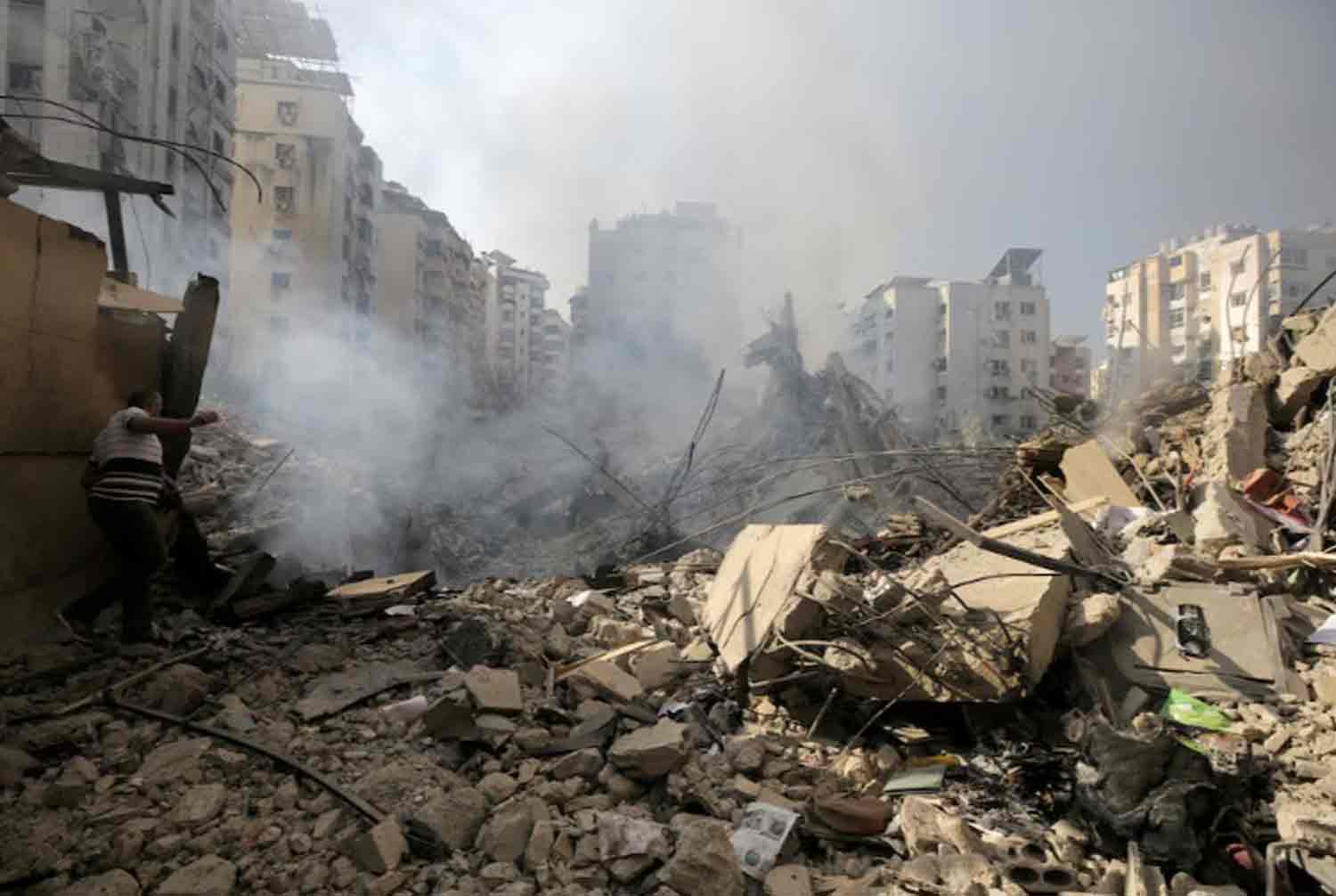
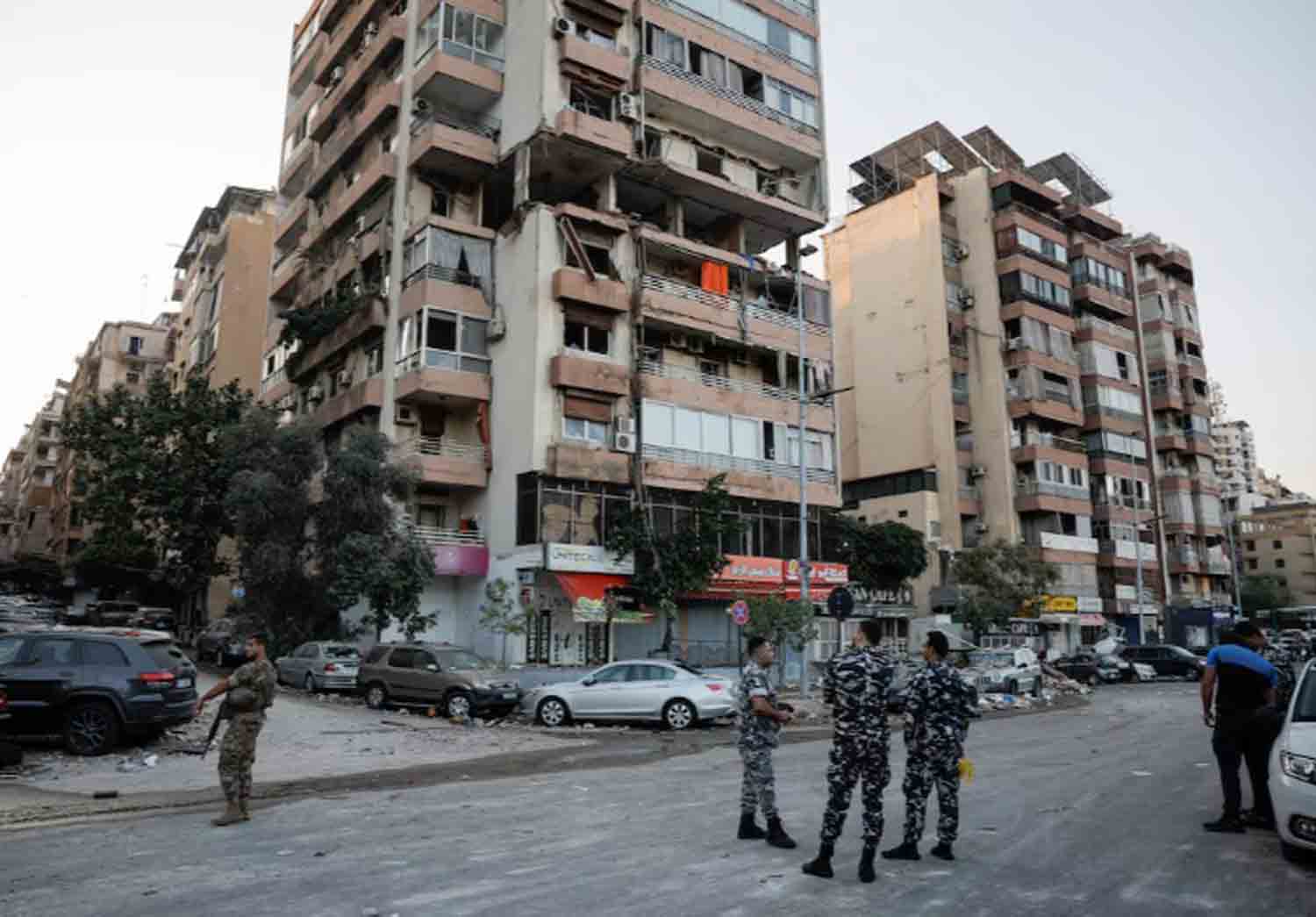
A man walks on the rubble of damaged buildings in the aftermath of Israeli air strikes on Beirut's southern suburbs, Lebanon

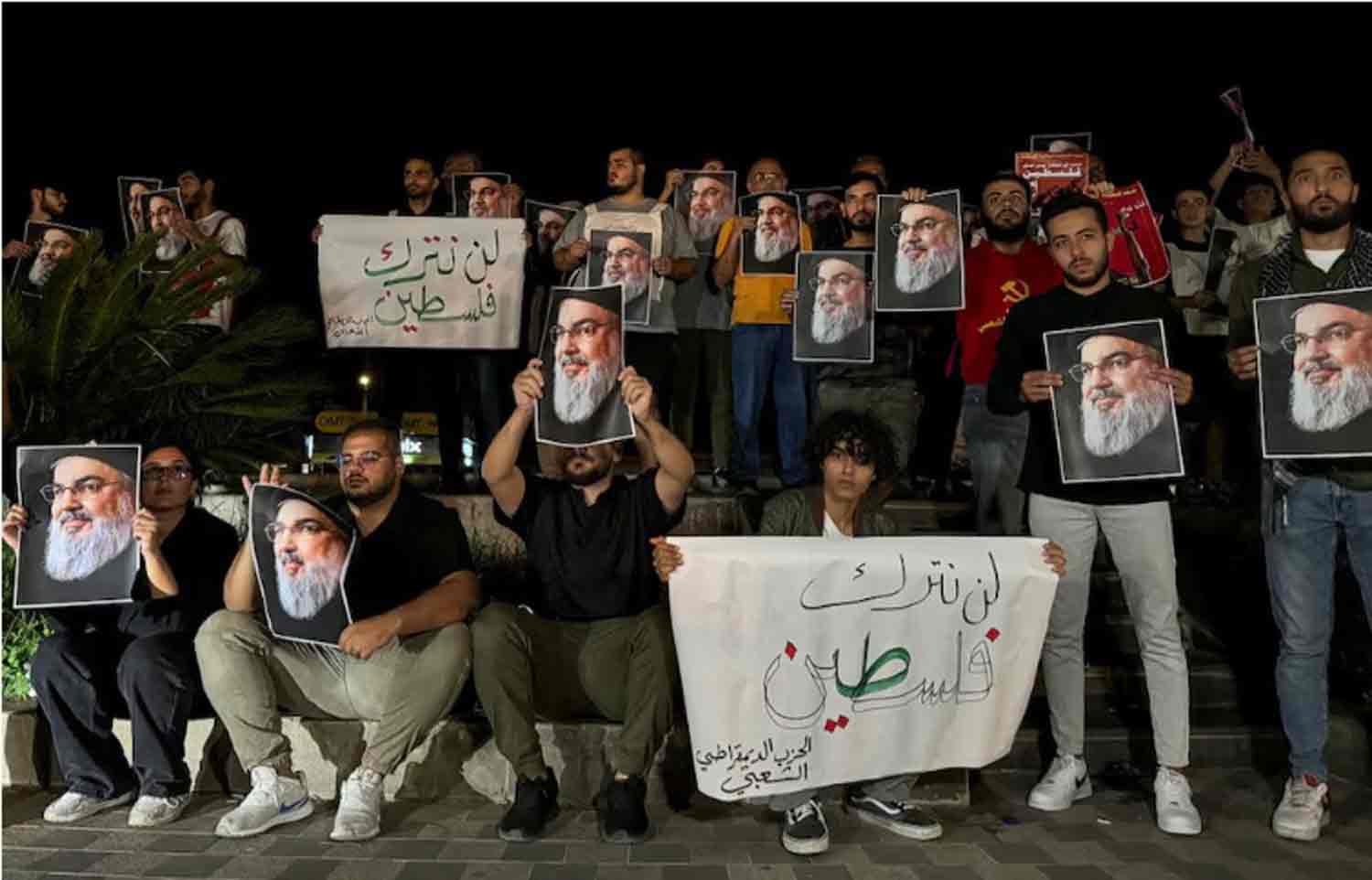
Hezbollah fighters are prepared to respond to any potential Israeli ground invasion of Lebanon, stated the group’s deputy leader, Naim Qassem, during his first public address since the recent Israeli airstrikes that resulted in the death of their long-time leader, Hassan Nasrallah. Qassem asserted that Israel will not succeed in its objectives.

“We are ready to confront any scenario, and if the Israelis opt for a land incursion, our resistance forces are fully prepared for ground combat,” he declared from an undisclosed location.

His remarks came as Israeli airstrikes continued to target locations in Beirut and other areas of Lebanon, marking a two-week escalation of attacks that have reportedly resulted in the deaths of approximately 1,000 Lebanese and displaced one million people, according to the Lebanese government.

The death of Nasrallah, along with significant losses to the organization’s communication infrastructure and the assassination of other high-ranking officials, represents a severe setback for Hezbollah since its establishment by Iran in 1982 to combat Israel. Under Nasrallah’s leadership, Hezbollah evolved into Lebanon’s most formidable military and political entity, exerting considerable influence throughout the Middle East.

Now, Hezbollah faces the daunting task of finding a successor to a charismatic leader who was revered by millions for his defiance against Israel, despite being labeled a terrorist by the West.

“We will appoint a new secretary-general for the party as soon as possible… and we will ensure that leadership roles are filled on a permanent basis,” Qassem confirmed.

Qassem stated that Hezbollah’s fighters have persistently launched rockets reaching up to 150 km (93 miles) into Israeli territory and are prepared to confront any potential ground invasion by Israel. “What we are doing is the bare minimum… We understand that this battle may be prolonged,” he remarked. “We will achieve victory as we did during the liberation of 2006 against the Israeli adversary,” he continued, referencing the last significant conflict between the two sides.

In response, Israel, which has also targeted leaders of the Palestinian militant group Hamas during the Gaza conflict, asserts that it will take all necessary measures to ensure the safe return of its citizens to evacuated areas along its northern border. A ground invasion has not been ruled out, and Israeli forces have been preparing for such an operation.

“The removal of Nasrallah is a crucial step, but it is not the final objective. To guarantee the return of Israel’s northern communities, we will utilize all our resources, and this includes you,” Israeli Defence Minister Yoav Gallant informed troops stationed at the northern border.

Other militants hit

Hours prior to Qassem’s remarks from Hezbollah, Hamas reported that an Israeli airstrike resulted in the death of its leader in Lebanon, Fateh Sherif Abu el-Amin, along with his wife, son, and daughter in the southern city of Tyre on Monday.

Additionally, the Popular Front for the Liberation of Palestine announced that three of its leaders were killed in a strike in the Kola district of Beirut, marking the first such incident within the city’s boundaries.

The recent surge of Israeli assaults on militant positions in Lebanon is part of a broader conflict that extends from the Palestinian territories of Gaza and the occupied West Bank to Yemen, Iraq, and within Israel itself. This escalation has heightened concerns that the United States and Iran may become embroiled in the conflict.

Destabilization across the region

Recent developments suggest that Israel remains committed to its military offensive, even following the elimination of Nasrallah, a key ally of Iran in the “Axis of Resistance” opposing Israeli and U.S. influence in the region.

Nasser Kanaani, spokesperson for the Iranian Foreign Ministry, asserted that Tehran would respond decisively to what it termed Israel’s “criminal acts.” This statement was made in light of the recent killings of Nasrallah and Brigadier General Abbas Nilforoushan, a deputy commander of the Iranian Guard, who also perished in the same attacks on Friday.

Russia has indicated that Nasrallah’s death has resulted in significant destabilization across the region.

A representative for British Prime Minister Keir Starmer stated that the UK is advocating for a ceasefire, while simultaneously reaffirming its “ironclad” support for Israel’s right to defend itself.

The United States, a close ally of Israel, has consistently backed the nation despite rising concerns regarding substantial civilian casualties.

While Arab nations have publicly condemned Israel’s actions, none have taken tangible measures to compel Israel to limit its military operations, which has frustrated residents in Beirut, such as Abou Imad.

“You can see them (Israel) taking control over all the Arab nations and subjugating us. This apathy is disgraceful for both the Lebanese and Palestinian people,” he expressed.

Ambitious plans to alter the power structure in the Middle East and unforeseen consequences

0
A man walks on the rubble of damaged buildings in the aftermath of Israeli air strikes on Beirut's southern suburbs, Lebanon

Israeli Prime Minister Benjamin Netanyahu stated on Saturday that the assassination of Hezbollah leader Hassan Nasrallah represents a significant shift in the regional power dynamics that could last for years.

Netanyahu perceives this moment as a chance to fundamentally alter the power structure in the Middle East, believing that Hezbollah has been severely weakened. However, achieving total victory remains a challenge, and those who attain their goals may find themselves facing unforeseen consequences.

Since September 17, Israel has inflicted a series of devastating blows on the Iran-backed militant group in Lebanon, beginning with the destruction of communication devices, followed by a large-scale airstrike in southern Beirut that resulted in the death of senior commander Ibrahim Aqil and numerous civilians. This was succeeded by an intense bombing campaign that escalated over the following days. By Friday evening, when Nasrallah was killed in a bombing that destroyed several buildings, Hezbollah’s top leadership had been nearly eradicated.

Recent history provides harsh lessons for Israeli leaders and others who harbor ambitious plans for significant changes in Lebanon and the broader Middle East.

In June 1982, Israel launched an invasion of Lebanon aimed at dismantling the Palestinian Liberation Organization. Additionally, it sought to create a pliable Christian-led government in Beirut and to expel Syrian forces from the nation.

The outcome was a failure on all fronts. While Palestinian armed factions were indeed forced to leave Lebanon through an American-mediated agreement that relocated them to Tunisia, Yemen, and other locations, the objective of suppressing Palestinian national aspirations alongside the PLO was not achieved. Just five years later, the First Palestinian Intifada erupted in Gaza and spread to the West Bank. Today, Palestinians remain as resolute and restless as ever in their opposition to Israeli occupation.

Bashir Al-Gemayel, a Maronite Christian militia leader and Israel’s primary ally in Lebanon during the invasion, was elected by parliament but was assassinated in a large explosion in east Beirut before he could assume office. His brother, Amin, succeeded him, and under his leadership, with substantial American support, Lebanon and Israel reached an agreement in May 1983 to establish normal bilateral relations. However, the government faced fierce opposition and collapsed the following February, leading to the agreement’s cancellation.

Following the September 1982 Sabra-Shatila massacres, the United States deployed troops to Beirut but withdrew after its embassy was bombed twice, along with attacks on US Marines and French military barracks in October 1983.

The Lebanese civil war reignited and continued for over six years.

Syrian forces, which had entered Lebanon in 1976 as a “deterrence force” under an Arab League mandate, remained until 2005, following the assassination of former Prime Minister Rafiq Al-Hariri.

One of the most significant consequences of the 1982 Israeli invasion was the emergence of Hezbollah, which engaged in a persistent guerrilla campaign that ultimately forced Israel to withdraw unilaterally from southern Lebanon. This marked the first and only instance of an Arab military force successfully compelling Israel to retreat from Arab territory. With support from Iran, Hezbollah proved to be far more formidable and effective than the Palestinian militants that Israel had previously expelled.

Hezbollah subsequently fought Israel to a stalemate in the 2006 war and continued to strengthen in the years that followed, bolstered by significant Iranian assistance.

Hezbollah currently finds itself weakened and disorganized, with evident infiltration by Israeli intelligence; however, it would be hasty to declare its end.

The 2003 US-led invasion of Iraq serves as a cautionary tale about the dangers of unchecked arrogance. As the Iraqi military disintegrated and American forces advanced toward Baghdad, the George W. Bush administration harbored illusions that Saddam Hussein’s downfall would trigger the collapse of governments in Tehran and Damascus, leading to a surge of liberal democracies throughout the region.

In reality, the US occupation of Iraq spiraled into a horrific cycle of sectarian violence, costing the US dearly in both lives and resources, while the Iraqi populace suffered even more. The execution of Saddam Hussein enabled Iran to extend its influence deep into Baghdad’s political landscape. Meanwhile, Al-Qaeda, which had been weakened by the US invasion of Afghanistan, found new life in Iraq’s Sunni regions, eventually evolving into the Islamic State in both Syria and Iraq.

As I observe the smoke rising from Beirut’s damaged southern suburbs, I am reminded of Condoleezza Rice’s remarks during the 2006 Israel-Hezbollah conflict, when she described the chaos and devastation as “the birth pangs of the new Middle East.”

Be cautious of those who herald a new beginning, the emergence of a new Middle East, or a redefined balance of power in the region. Lebanon exemplifies the potential pitfalls; it is a testament to the perils of unintended consequences.

Biden authorized $567 million in defense assistance for Taiwan

0
President Joe Biden speaks during the United Nations General Assembly

U.S. President Joe Biden authorized $567 million in defense assistance for Taiwan on Sunday, according to the White House. This decision represents the latest effort by the United States to enhance the island’s military capabilities amid escalating tensions with China.

Despite lacking formal diplomatic relations, the United States remains Taiwan’s primary international supporter and arms supplier. China has consistently urged Washington to cease its arms sales to Taipei, which it considers part of its territory.

The White House announced that Biden has granted the Secretary of State the authority to oversee the allocation of up to $567 million in defense materials and services from the Department of Defense, along with military education and training to assist Taiwan.

No additional details were provided. In April, Biden enacted a significant bill that allocates billions in new U.S. aid to Ukraine in its conflict with Russia, as well as support for Israel and Taiwan.

Taipei has expressed concerns regarding the postponement of U.S. arms shipments, particularly those involving upgraded F-14 fighter jets. Over the last five years, China has intensified its military and political pressure on Taiwan, which it considers a part of its territory, a stance that Taipei firmly opposes.

US shifts strategy on Haiti peacekeeping efforts in response to opposition from China and Russia

0
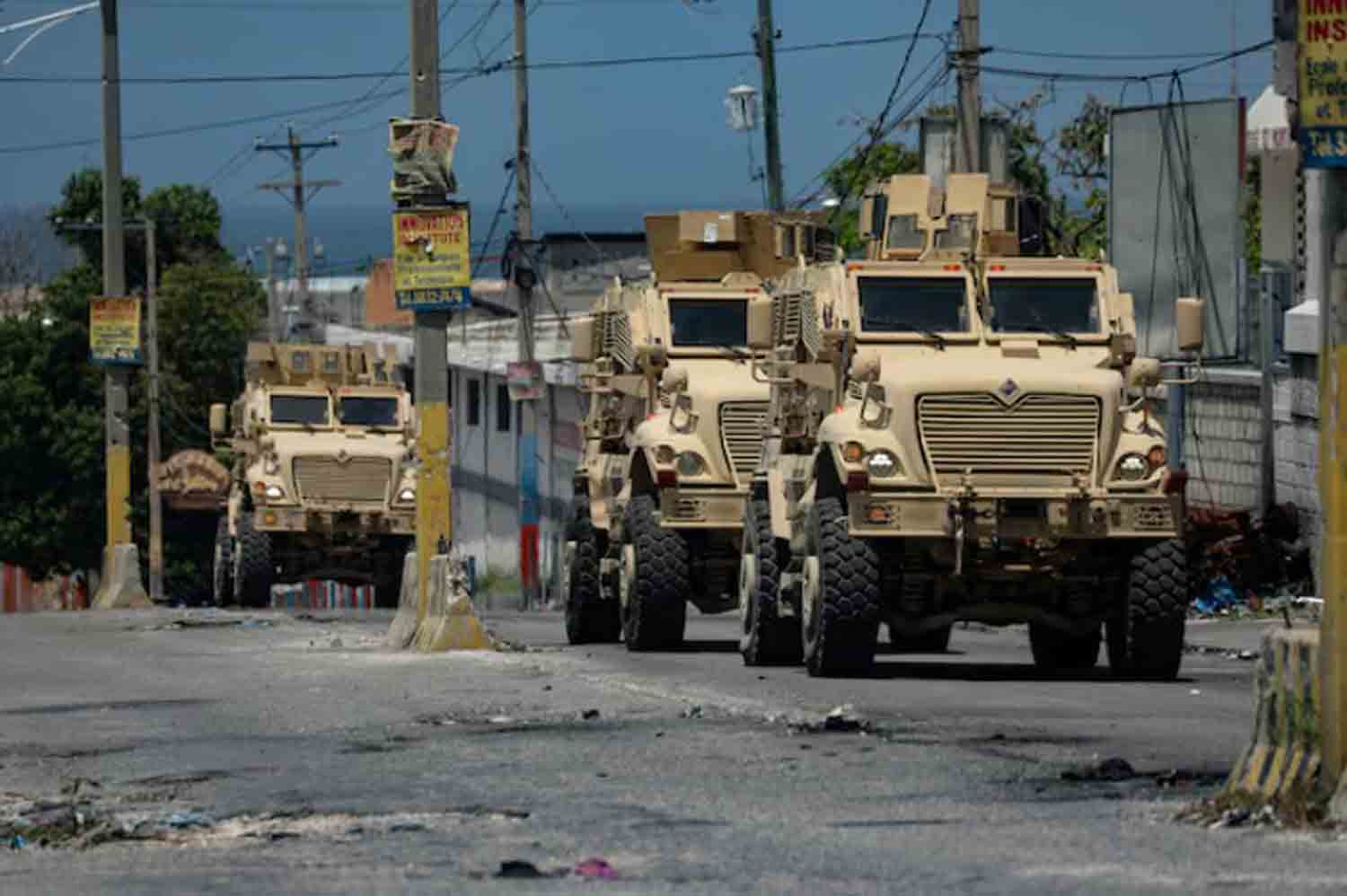
Kenyan police forces patrol a neighbourhood in Port-au-Prince, Haiti

The United States has abandoned its initiative for the U.N. Security Council to request a plan to convert a security mission aimed at combating armed gangs in Haiti into a formal U.N. peacekeeping operation. Some diplomats suggested this decision was made to placate Russia and China.

However, a senior official from the U.S. administration countered this interpretation, stating that the shift in strategy was in response to a recent appeal from Edgard Leblanc, the head of Haiti’s transition council, for a U.N. peacekeeping mission.

“It is not a matter of yielding to those who may not prioritize the welfare of the Haitian people,” the official, who requested anonymity, explained. “We are strategically navigating this situation and capitalizing on the momentum expressed by the Haitian president.”

The 15-member Security Council is scheduled to vote on Monday regarding a draft resolution to extend the mandate of the Multinational Security Support (MSS) mission until October 2, 2025. The U.N. initially approved this mission a year ago at the request of the Caribbean nation for assistance.

Diplomats indicate that Russia and China opposed the council’s request for a plan to transition the U.N.-backed security force into a formal U.N. peacekeeping mission, leading the U.S. to eliminate that language from the draft resolution, as reported by Reuters. Deputy Russian U.N. Ambassador Dmitry Polyanskiy stated on Sunday that Russia prefers to give the security force additional time to establish itself, emphasizing, “We don’t want to prejudge the outcome of the MSS. It is too early to draw conclusions.”

During the United Nations General Assembly last week, Haitian leaders expressed concerns about escalating insecurity in the country, despite the partial deployment of the security force. Powerful gangs, armed with weapons primarily trafficked from the United States, have formed a coalition in the capital, gaining control over most of the city and extending their influence to surrounding areas.

On Thursday, Leblanc addressed the U.N. General Assembly, asserting, “I am convinced that this change of status, while acknowledging that past mistakes must not be repeated, would ensure the complete success of the mission in Haiti.”

A senior U.S. official indicated that Washington plans to collaborate with partners in the upcoming weeks to address this issue. During a recent visit to Haiti, U.S. Secretary of State Antony Blinken discussed the possibility of converting the security force into a U.N. peacekeeping mission.

Many Haitians express concerns regarding a U.N. armed presence, recalling past missions that resulted in a severe cholera outbreak and incidents of sexual abuse.

The current international security mission, led by Kenya and authorized by the U.N. Security Council, does not operate under U.N. auspices; instead, it relies on voluntary contributions of funds and personnel from various countries.

Progress has been limited in restoring order in Haiti, with only 400 Kenyan police officers deployed and a significant funding gap.

Earlier this month, U.N. Secretary-General Antonio Guterres stated that deploying a U.N. peacekeeping force may not be the most effective solution for Haiti, which is grappling with a humanitarian crisis characterized by mass displacements, sexual violence, and widespread hunger.

According to U.N. estimates, gang violence has led to the displacement of over 700,000 individuals in Haiti.

Three Palestinian leaders killed in Israel strike in Beirut

0

A Palestinian militant organization announced on Monday that an Israeli airstrike in Beirut resulted in the deaths of three of its leaders, marking the first such attack within the city as Israel intensified its military actions against Iran‘s regional allies. The Popular Front for the Liberation of Palestine (PFLP) reported that the strike specifically targeted the Kola district of Beirut.

According to witnesses cited by Reuters, the attack struck the upper levels of an apartment building in that area. There has been no immediate response from the Israeli military regarding the incident.

The rising number of Israeli assaults on the Hezbollah militia in Lebanon and the Houthi militia in Yemen has raised concerns that the conflict in the Middle East could escalate further, potentially involving Iran and the United States, Israel’s primary ally.

The PFLP is among the militant groups actively engaged in opposition to Israel. On Sunday, Israel conducted airstrikes against Houthi positions in Yemen and targeted numerous Hezbollah sites across Lebanon, following the earlier assassination of a Hezbollah leader.

The health ministry controlled by the Houthis reported that airstrikes on Yemen’s port city of Hodeidah resulted in the deaths of at least four individuals and left 29 others injured. Israel stated that these strikes were a reaction to missile attacks launched by the Houthis. In Lebanon, officials confirmed that Israeli airstrikes on Sunday claimed the lives of at least 105 people.

According to Lebanon’s Health Ministry, over 1,000 Lebanese have died and 6,000 have been injured in the last two weeks, although the number of civilian casualties has not been specified. The government indicated that approximately one million people, representing a fifth of the population, have been displaced from their homes.

The ongoing Israeli airstrikes over the past fortnight have resulted in the deaths of several high-ranking Hezbollah officials, including the group’s leader, Sayyed Hassan Nasrallah. Israel has pledged to continue its military operations, asserting that its goal is to restore security to northern regions for residents who have been compelled to evacuate due to Hezbollah’s rocket fire.

On Sunday, Israeli drones were observed flying over Beirut, accompanied by the sounds of new airstrikes resonating throughout the Lebanese capital. Displaced families sought refuge for the night on benches at Zaitunay Bay, a popular area filled with restaurants and cafes along Beirut’s waterfront.

Numerous attacks by Israel have predominantly occurred in southern Lebanon, where Hezbollah, supported by Iran, conducts most of its activities, as well as in the southern suburbs of Beirut. The recent strike in the Kola district marks what seems to be the first assault within the boundaries of Beirut itself.

Local residents reported that Syrians who had fled the Israeli airstrikes were sleeping under a bridge in the area for several days. The United States has called for a diplomatic solution to the ongoing conflict in Lebanon while simultaneously authorizing an increase in military presence in the region.

When asked about the possibility of avoiding a full-scale war in the Middle East, U.S. President Joe Biden stated, “It has to be,” indicating his intention to discuss the situation with Israeli Prime Minister Benjamin Netanyahu.

US boosts air support and troop readiness for deployment in the Middle East

0
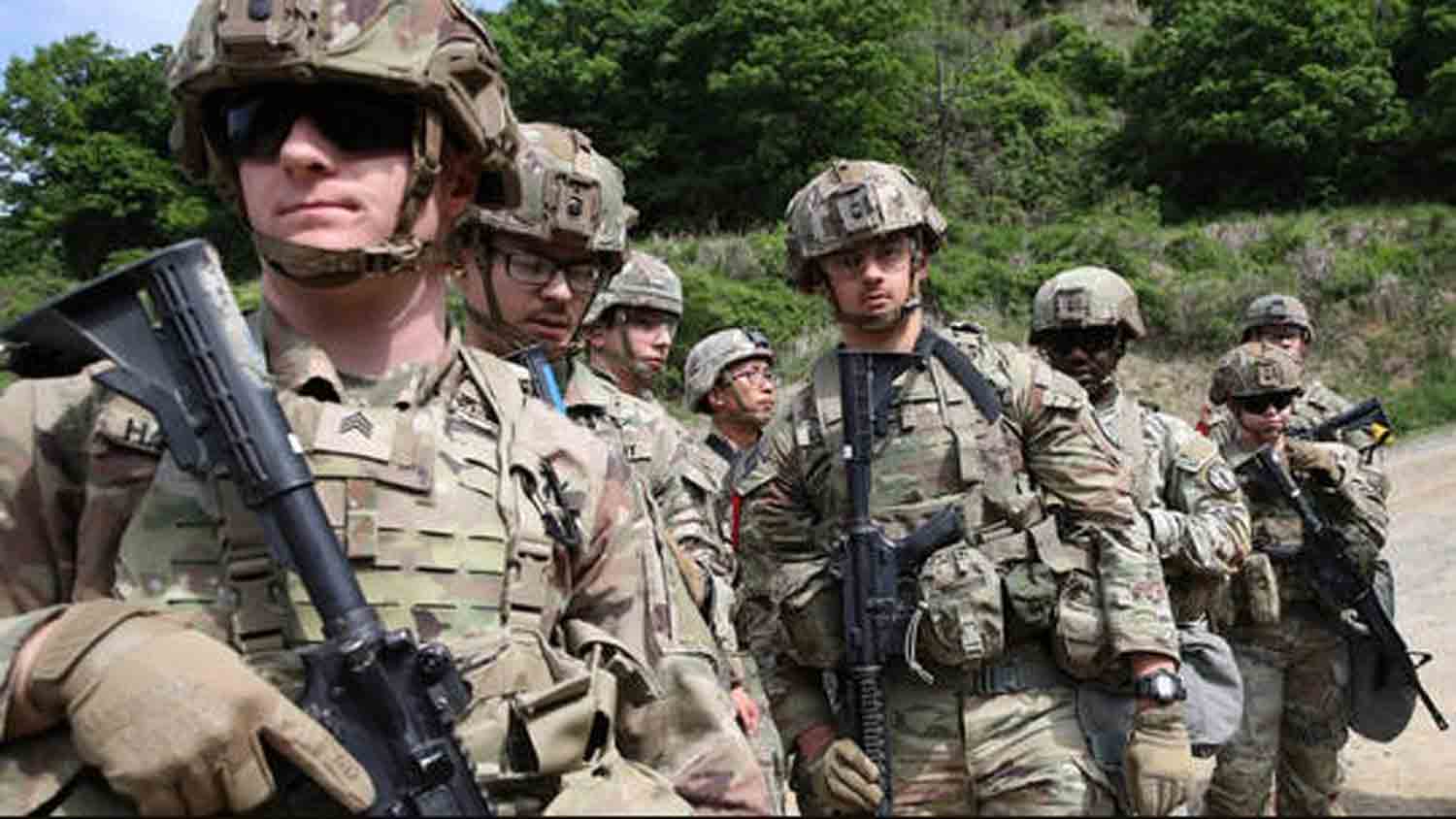
US service members

The U.S. military announced on Sunday that it is enhancing its air support capabilities in the Middle East and placing troops on a heightened state of readiness for potential deployment to the area, as it issued a warning to Iran regarding the escalation of the ongoing conflict.

This decision follows President Joe Biden‘s directive to the Pentagon to modify U.S. military positioning in the region, driven by growing concerns that Israel‘s recent elimination of the leader of Iran-supported Hezbollah could provoke a response from Tehran.

Pentagon spokesperson Major General Patrick Ryder emphasized the U.S. commitment to preventing Iran and its allied groups from taking advantage of the current situation or escalating the conflict.

He further warned that should Iran or its affiliated groups attempt to target American personnel or interests in the region, the United States would take all necessary actions to protect its citizens.

The Pentagon’s statement provided limited information regarding the extent of the new air deployment, indicating only that “we will further reinforce our defensive air-support capabilities in the coming days.”

On Sunday, Israel intensified its military actions in Lebanon, targeting Hezbollah following the elimination of the group’s leader, Sayyed Hassan Nasrallah, along with several other high-ranking commanders as part of an escalating offensive.

These strikes have significantly weakened Hezbollah, marking a series of devastating losses for the group after nearly a year of cross-border hostilities, which have exposed significant security vulnerabilities. However, this situation has raised concerns about the U.S. government’s stated objectives of containing the conflict and ensuring the safety of American personnel across the Middle East.

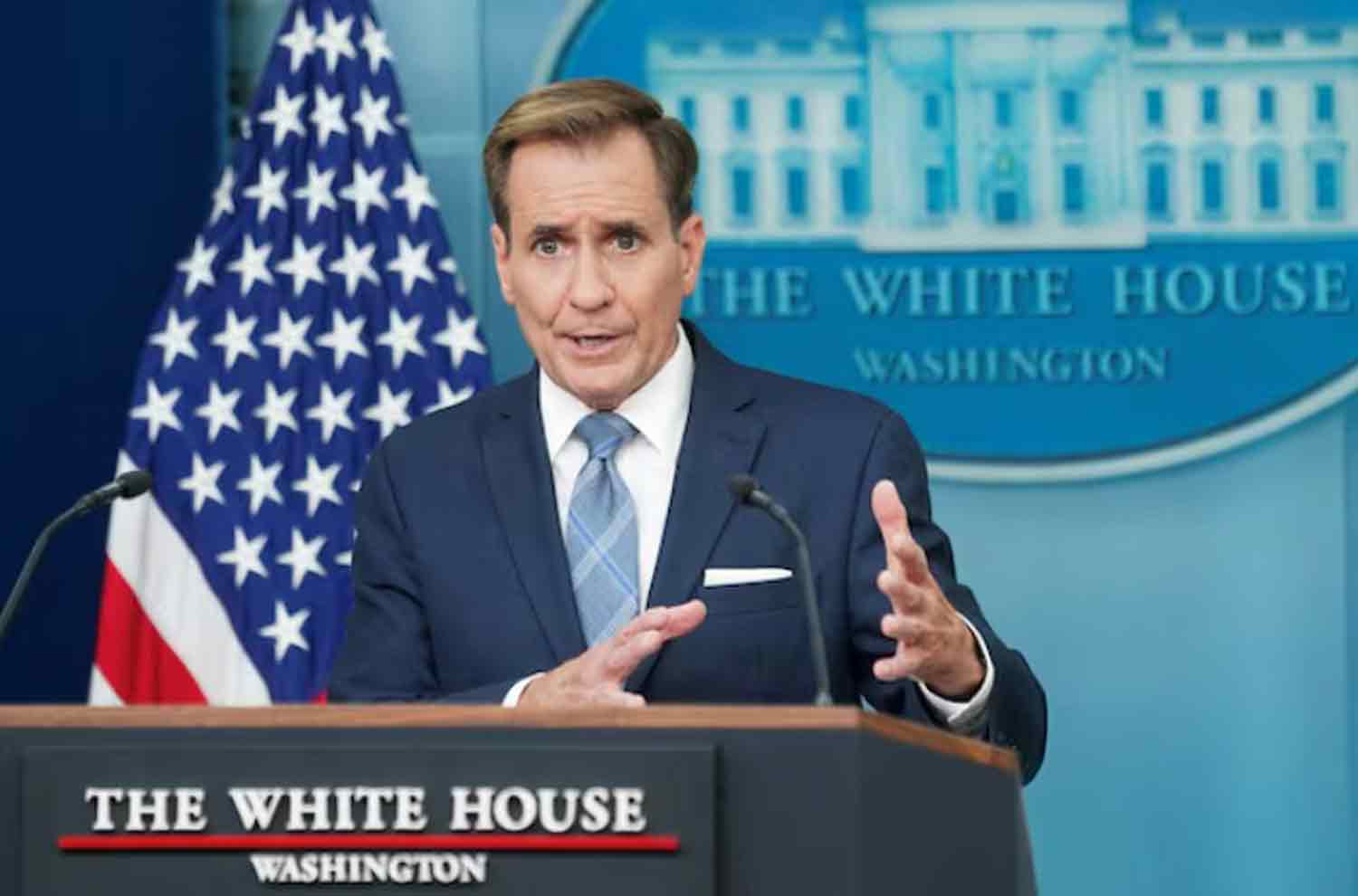
John Kirby, the White House national security spokesperson, noted on Sunday that the United States is closely monitoring Hezbollah’s attempts to address its leadership void and is in ongoing discussions with Israeli officials regarding appropriate next steps.

While the U.S. State Department has not yet mandated an evacuation from Lebanon, last week, U.S. officials informed Reuters that the Pentagon was deploying a small number of additional troops to Cyprus to assist in preparations for potential scenarios, including the evacuation of American citizens from Lebanon.

The Pentagon confirmed that U.S. forces are being positioned for possible deployment if necessary. “Secretary Austin has increased the readiness of additional U.S. forces to deploy, enhancing our preparedness to respond to various contingencies,” Ryder stated.

The Israeli military has launched airstrikes on Ras Isa and Hodeidah in Yemen

0

The Israeli military has announced that its fighter jets conducted airstrikes on Houthi positions in Yemen.

In a statement released on Sunday, the military confirmed that the strikes were aimed at Ras Isa and Hodeidah.

This operation followed a declaration from the Houthis, who claimed to have launched a ballistic missile targeting Ben Gurion International Airport near Tel Aviv.

The Houthi rebel group, which governs a significant portion of northern Yemen, has consistently targeted Israel and Israeli-affiliated vessels in the Red Sea, Gulf of Aden, and Bab al-Mandeb Strait since November of last year, framing these actions as a show of support for Palestinians facing attacks in the Gaza Strip.

US says all-out war not the way to return people to homes in northern Israel

0

Israel cannot ensure the safe return of residents to their homes in the northern region by engaging in a full-scale conflict with Hezbollah or Iran, stated John Kirby, the White House national security spokesperson, on Sunday.

On the same day, Israel targeted additional sites in Lebanon, intensifying its offensive against Hezbollah following the death of the group’s leader, Sayyed Hassan Nasrallah. Israel aims to secure its northern territories from Hezbollah’s rocket attacks and facilitate the return of thousands of displaced individuals.

Kirby emphasized to CNN, “Engaging in an all-out war with Hezbollah, especially with Iran, is not the solution. To ensure the safe and sustainable return of those individuals, we believe pursuing a diplomatic approach is essential.” The United States, a longstanding ally and primary arms supplier to Israel, is closely monitoring Hezbollah’s response to the leadership change and is in ongoing discussions with Israeli officials regarding the appropriate next steps.

Lebanon’s Health Ministry reports that over 1,000 Lebanese individuals have lost their lives and approximately 6,000 have been injured in the last two weeks. The government has indicated that around one million people, which constitutes one-fifth of the population, have been displaced from their homes.

Kirby stated, “We have been clear that our perspective on tactical execution regarding civilian protection may differ from theirs,” while emphasizing that U.S. support for Israel’s security remains unwavering.

On Saturday, Iran announced its intention to safeguard its national and security interests, although it did not provide specific details. The country has requested a meeting of the United Nations Security Council to address Israel’s actions.

Kirby remarked, “We have noted the statements emerging from Tehran and will monitor their subsequent actions.”

Israel had real-time intelligence on Nasrallah’s meeting, military said

0
Boys scouts carry a picture of Hezbollah leader Sayyed Hassan Nasrallah

Israel executed a lethal strike against Hezbollah leader Hassan Nasrallah after receiving intelligence about his meeting with senior commanders at the movement’s underground headquarters in southern Beirut, according to the Israeli military on Saturday.

This operation followed Prime Minister Benjamin Netanyahu’s address to the United Nations General Assembly in New York, where he stated that Israel would not tolerate Hezbollah’s presence along its borders. The strike came in the wake of the recent assassinations of several high-ranking members of the group.

Lieutenant Colonel Nadav Shoshani, an Israeli military spokesperson, indicated that the operation, dubbed “New Order,” took place on Friday while Nasrallah and the Hezbollah leadership were convening to strategize further assaults against Israel. “We had real-time intelligence and an operational opportunity that enabled us to execute this attack,” he informed reporters. Additionally, Israel’s Army Radio reported that the commander of the air force squadron involved in the operation mentioned that pilots received information about the target shortly before their departure.

The officer, referred to only as Lieutenant Colonel M., stated, “The pilots were unaware of the target during the planning phase of the strike.” He added, “We revealed the target to the teams just a few hours before the operation, and they grasped their objective.”

Shoshani refrained from commenting on rumors regarding the potential use of U.S.-manufactured Mark 84 heavy bombs. However, Brigadier General Amichai Levin, the commander of Hatzerim air base, informed reporters that numerous munitions struck the target in rapid succession.

Shoshani also mentioned that Ali Karaki, the leader of Hezbollah’s southern front, who was targeted by Israel earlier that week, was killed in the operation. Following the Hamas attack on Israel on October 7 of the previous year, Hezbollah confirmed Nasrallah’s death and declared its intention to persist in its fight against Israel “in support of Gaza and Palestine, and in defense of Lebanon.”

Since that time, both sides have engaged in daily exchanges of missile and rocket fire, resulting in the evacuation of tens of thousands of individuals on both sides of the border and leaving large areas nearly deserted.

Recent weeks have seen a significant increase in tensions as Israel has initiated a targeted campaign against key members of Hezbollah’s military leadership, aiming to diminish the group’s operational capabilities. “Our intelligence efforts on Nasrallah have spanned several years. For decades, we have been collecting information, anticipating that he might attempt to provoke a conflict,” he stated. “With real-time intelligence at our disposal, we executed the strike.”

US airstrikes in Syria kill 37 terrorists linked to extremist groups

0

In Syria, the U.S. military reported on Sunday that two airstrikes resulted in the deaths of 37 militants associated with the extremist Islamic State group and an al-Qaeda-affiliated organization. Among the deceased were two high-ranking militants.

U.S. Central Command indicated that a strike occurred in northwestern Syria on Tuesday, targeting a senior member of the al-Qaeda-linked Hurras al-Deen group along with eight others, noting that he was responsible for managing military operations.

Additionally, they revealed details of a significant airstrike conducted on September 16, which targeted an IS training camp in a remote, undisclosed area of central Syria, resulting in the deaths of 28 militants, including at least four Syrian leaders.

The statement emphasized that the airstrike would hinder ISIS’s ability to carry out operations against U.S. interests and those of its allies and partners.

Currently, approximately 900 U.S. personnel are stationed in Syria, alongside an undisclosed number of contractors, primarily focused on preventing a resurgence of the extremist IS group, which gained control over vast territories in Iraq and Syria in 2014.

U.S. forces provide advisory and support roles to their primary allies in northeastern Syria, the Kurdish-led Syrian Democratic Forces, who are positioned near strategic locations where Iran-backed militant groups operate, including a crucial border crossing with Iraq.

Kremlin has announced that Russia’s updated nuclear doctrine is being formalized

0

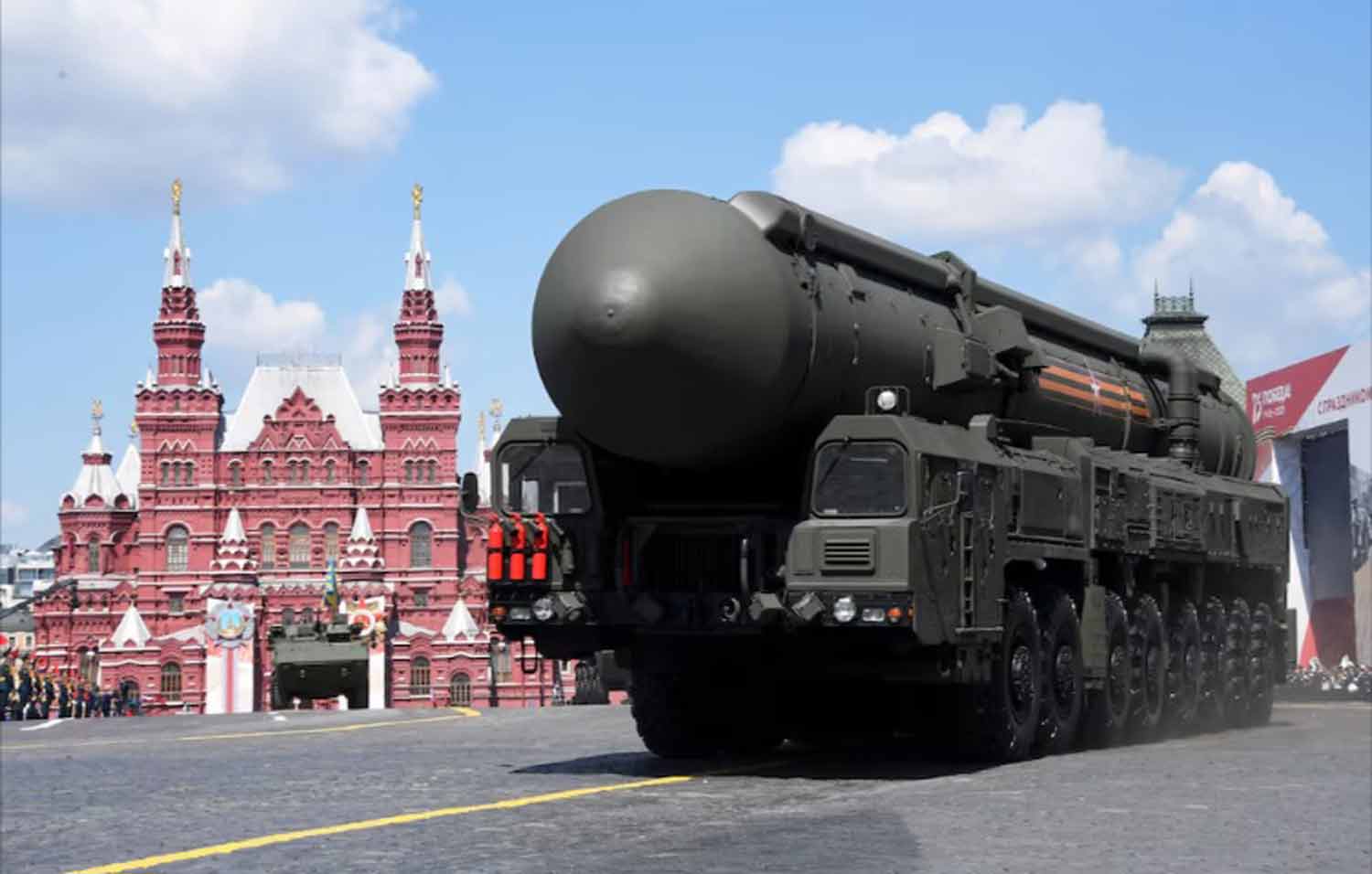
The Kremlin announced on Sunday that revisions to Russia’s nuclear doctrine have been drafted and are set to be formalized, indicating that the documents outlining the conditions under which Moscow may deploy nuclear weapons will be revised.


On Wednesday, President Vladimir Putin cautioned the West that the proposed modifications to the doctrine would permit Russia to utilize nuclear arms in response to conventional missile strikes and would interpret any attack on Russia, backed by a nuclear state, as a coordinated assault.

These adjustments are largely perceived as an effort by Putin to establish a “red line” for the United States and its allies, signaling that Moscow may resort to nuclear retaliation if Ukraine is allowed to launch deep strikes into Russian territory using long-range Western missiles.


Kremlin spokesperson Dmitry Peskov informed state TV reporter Pavel Zarubin on Sunday: “The amendments have been prepared and will now be formalized.”

Peskov referenced the global context, highlighting the increasing tensions along Russia’s borders and the advancing presence of NATO infrastructure in the region. He also pointed to the heightened engagement of Western nuclear powers supporting Ukraine in the conflict as a key factor influencing the revisions to the doctrine.

US is considering increasing its military presence in Middle East, according to NBC

0
US service members

The United States is contemplating an increase in its military presence in the Middle East following the Israeli airstrike that resulted in the death of Hezbollah political leader Hassan Nasrallah, as reported by NBC News on Saturday, citing sources.

Two unnamed US officials indicated that the military has provided Defense Secretary Lloyd Austin with various options for deploying additional forces to the area. Subsequently, the defense secretary reportedly engaged in discussions regarding this potential shift with President Joe Biden and national security advisors. Although no immediate decisions have been reached, Austin possesses the authority to deploy more troops if deemed necessary.

Earlier this month, the Pentagon had already taken steps to bolster its military presence in the Middle East amid escalating tensions between Iran-backed Hezbollah and Israel. Currently, approximately 40,000 US troops are stationed in the region, along with more than a dozen warships.

US officials informed the network that the Pentagon believes these forces are sufficient to address potential challenges, but there may be adjustments to current deployments or enhancements in air defense and other capabilities. Additionally, the US is prepared to facilitate an emergency evacuation of American civilians from the region if required, according to the report.

Tensions in the Middle East intensified on Saturday following an Israeli airstrike on a Hezbollah facility in Beirut, resulting in the death of Nasrallah, the long-standing leader of the Islamist group and a staunch adversary of Israel. Authorities in West Jerusalem assert that they have effectively eliminated nearly all of Hezbollah’s military leadership in recent weeks.

In the wake of Nasrallah’s death, Hezbollah vowed to persist in its “jihad against the enemy, in support of Gaza and Palestine.”

Iran’s Supreme Leader, Ayatollah Ali Khamenei, cautioned that “the blood of the martyr will not go unavenged.”

The Israel Defense Forces (IDF) have stated their readiness to counter any potential retaliation, with military forces placed on “high alert.” Unnamed US officials informed the Washington Post that the Biden administration is also preparing for a possible escalation, noting the unpredictability of the situation in the coming days, particularly concerning Iran’s potential reaction to the assassination.

Additionally, US officials expressed frustration over not receiving prior notice from Israel regarding the operation to eliminate Nasrallah, stating they were taken by surprise by an alleged Israeli initiative that involved detonating pagers and portable radios, which resulted in casualties among Hezbollah members earlier this month.

Russia intercepts 125 Ukrainian drones; a residential apartment in Voronezh is damaged

0
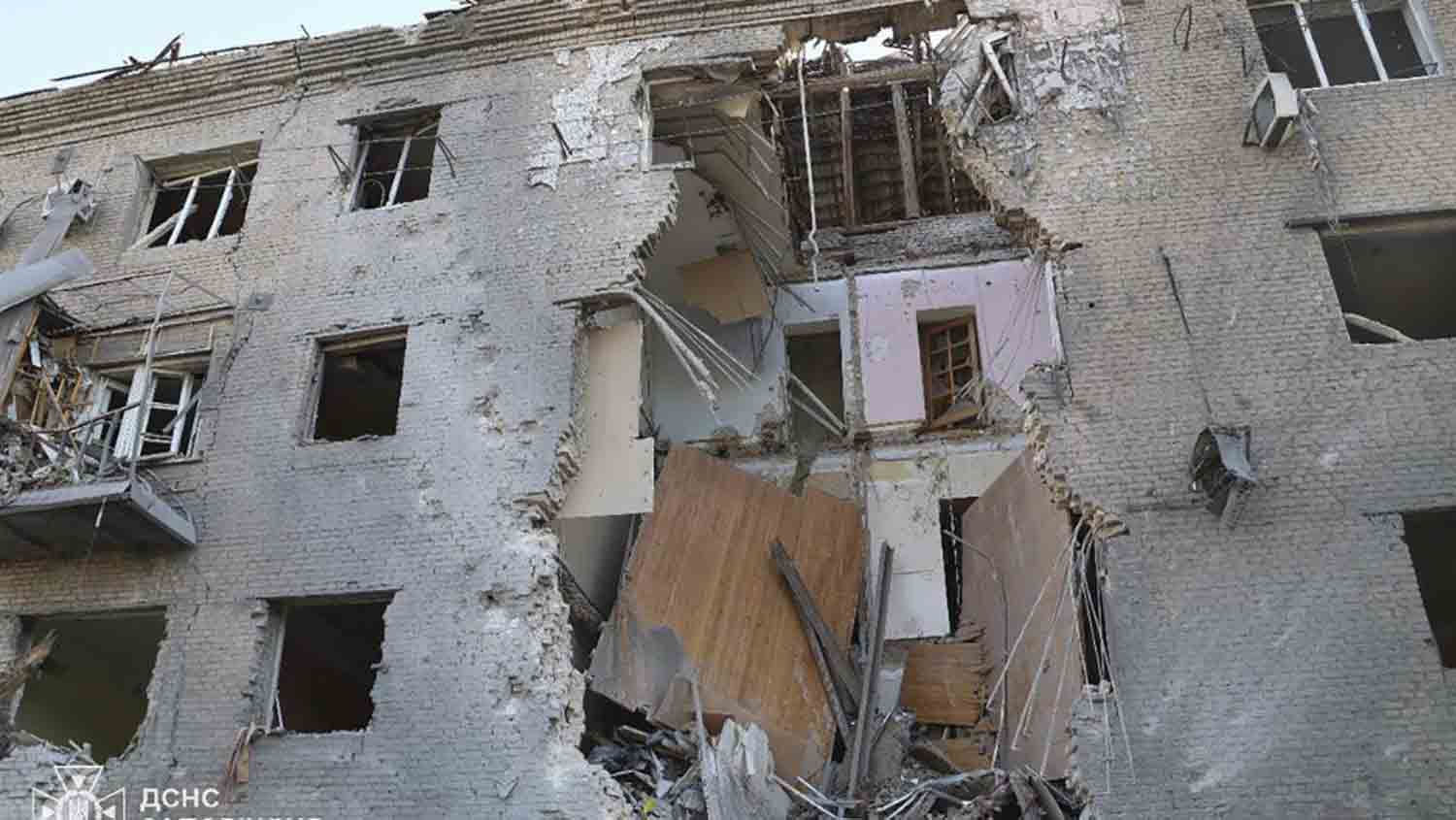
In this photo provided by the Ukrainian Emergency Service, a damaged apartment house is seen after Russia attacked the city with guided bombs overnight in Zaporizhzhia, Ukraine

The Russian defense ministry reported on Sunday that its air defense systems intercepted 125 Ukrainian drones overnight. Additionally, a residential building was struck in the western city of Voronezh, as confirmed by the local governor.

In a separate update, Vyacheslav Gladkov, the governor of Belgorod, detailed the drone and shelling incidents from the past 24 hours, noting that one individual lost his life in the border town of Shebekino, while eight civilians sustained injuries in the surrounding area.

As Russia continues its military operations in eastern Ukraine, Kyiv has escalated its efforts by launching cross-border attacks into Russia’s western Kursk region, which began on August 6, and by executing increasingly extensive drone strikes deep within Russian territory.

The defense ministry indicated that the recent assaults primarily targeted the southern Volgograd region, where 67 drones were neutralized. Furthermore, 17 drones were intercepted over both the Belgorod and Voronezh regions, while 18 were downed in the Rostov region.

Alexander Gusev, the governor of the Voronezh region, reported via the Telegram messaging app that a drone crash resulted in a fire at a residential complex. He indicated that the fire has been brought under control and that there were no reported injuries based on initial assessments.

The Mash Telegram channel shared a video that allegedly depicts flames consuming the upper floor of a high-rise building in Voronezh. However, Reuters has not yet been able to verify the authenticity of the video.

China has expressed its opposition to any infringement on Lebanon’s sovereignty

0
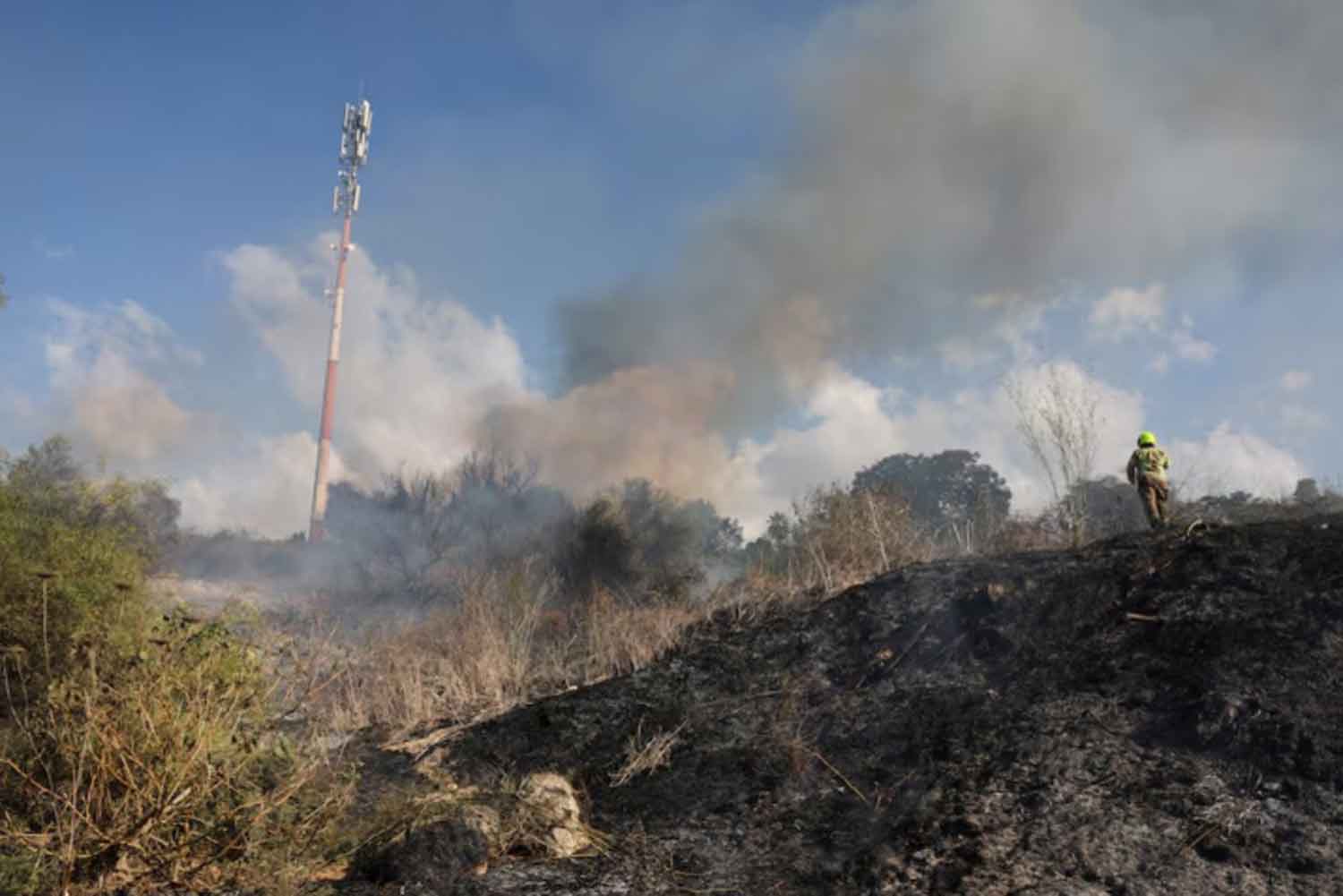
Smoke billows over southern Lebanon, amid ongoing cross-border hostilities between Hezbollah and Israeli forces

China has expressed its opposition to any infringement on Lebanon‘s sovereignty, as stated by the foreign ministry on its website following an Israeli airstrike in Beirut that resulted in the death of Hezbollah leader Hassan Nasrallah.

His death is perceived as a significant setback for the Iran-aligned group, which is currently facing an intensifying series of Israeli assaults.

The Chinese government calls on all parties, particularly Israel, to de-escalate the situation and prevent the conflict from escalating or spiraling out of control, according to the Ministry of Foreign Affairs.

Furthermore, China denounces any actions that endanger innocent civilians and opposes any measures that would worsen the conflict, as highlighted by the foreign ministry.

After death of Hassan Nasrallah, Israel launched airstrikes on Lebanon

0
A man walks on the rubble of damaged buildings in the aftermath of Israeli air strikes on Beirut's southern suburbs, Lebanon

Israel conducted a series of strikes on various targets in Lebanon on Sunday, intensifying its offensive against Iran-backed Hezbollah following the significant elimination of the group’s leader, Sayyed Hassan Nasrallah.

The Israeli military reported that its air force targeted numerous Hezbollah positions in Lebanon, including missile launchers aimed at Israeli territory, weapon storage facilities, and other critical Hezbollah infrastructure.

Additionally, the navy intercepted a projectile that was approaching Israel from the Red Sea, while another eight projectiles launched from Lebanon landed in uninhabited areas, as stated in a morning briefing.

Nasrallah was killed during a substantial Israeli airstrike on Friday that targeted the group’s headquarters in the southern suburbs of Beirut. This event marked a significant setback for Hezbollah and Iran, as it removed a key figure who played a crucial role in establishing Hezbollah as a central component of Tehran’s network of allied factions in the Arab region.

Israel announced the death of a prominent figure on Saturday, which was later confirmed by Hezbollah. In their statement, Hezbollah declared their intention to continue hostilities against Israel, launching rockets, including a barrage on Sunday morning.

The death of Nasrallah marked a tumultuous two weeks for Hezbollah, beginning with the destruction of numerous communication devices utilized by its members. While Israel is widely believed to be responsible for this action, it has neither confirmed nor denied involvement.

This escalation has heightened concerns that the conflict may spiral out of control, potentially involving Iran, Hezbollah’s main supporter, as well as the United States. Since the onset of the conflict on October 7, following an attack by the Iran-backed Palestinian group Hamas, Hezbollah and Israel have been engaged in parallel hostilities alongside Israel’s military operations in Gaza.

According to Lebanon’s health ministry, Israeli airstrikes on Saturday resulted in 33 fatalities in Lebanon, raising the total death toll since the outbreak of hostilities on October 8 to over 1,670, including 104 children.

In Beirut, families who have been displaced found refuge for the night on the benches at Zaitunay Bay, an upscale area known for its restaurants and cafes along the waterfront, where private security typically discourages loitering. However, this was not the situation on Sunday morning. Families, equipped with little more than a duffle bag of clothing, had spread out mats to sleep on and were preparing tea for themselves.

“You cannot break us, no matter what you do, no matter how many bombs you drop or how many people you displace – we will remain here. This is our homeland, and we will not leave,” stated Francoise Azori, a local resident jogging through the area.

On Sunday, the United Nations’ World Food Programme announced the initiation of an emergency operation aimed at providing food assistance to as many as 1 million individuals impacted by the ongoing conflict in Lebanon.

balance of power

Israeli Prime Minister Benjamin Netanyahu stated on Saturday that the elimination of Nasrallah was a crucial move towards “altering the balance of power in the region for years to come.” He characterized Nasrallah not merely as a terrorist but as “the terrorist,” cautioning that difficult days lie ahead. Israel confirmed the deaths of senior Hezbollah figure Ali Karaki and other commanders alongside Nasrallah.

U.S. President Joe Biden referred to Nasrallah’s death as a form of justice for his numerous victims, which included thousands of Americans, Israelis, and Lebanese, affirming the U.S. support for Israel’s right to self-defense. However, when questioned about the inevitability of an Israeli ground invasion into Lebanon, Biden responded, “It’s time for a ceasefire.”

Following Nasrallah’s death, Iranian Supreme Leader Ayatollah Ali Khamenei was relocated to a secure site in Iran, with sources indicating that he vowed to avenge Nasrallah’s death and that his fight against Israel would continue through other militants. Tehran has called for a United Nations Security Council meeting to address Israel’s actions in Lebanon and other areas, cautioning against any assaults on its diplomatic missions and representatives.

Additionally, Iranian media reported that a senior member of Iran’s Revolutionary Guards, deputy commander Abbas Nilforoushan, was also killed in the attacks on Friday. Israeli Defence Minister Yoav Gallant emphasized that Israel’s conflict is not with the Lebanese populace. He engaged in discussions late Saturday regarding the potential expansion of Israel’s military operations on its northern front. Hezbollah has declared that it will only agree to a ceasefire once Israel’s offensive in Gaza concludes, while Hamas and other Hezbollah allies have released statements expressing their condolences over Nasrallah’s death.

The assassination of Nasrallah signifies Israel’s significant infiltration into Hezbollah

0

In the aftermath of Sayyed Hassan Nasrallah‘s assassination, Hezbollah is confronted with the significant task of addressing the infiltration within its ranks that enabled its primary adversary, Israel, to target and dismantle weapon sites, compromise its communication systems, and eliminate the long-protected leader, whose location had been a closely guarded secret for many years.

Nasrallah was killed at a command headquarters on Friday, just a week following Israel’s lethal detonation of numerous booby-trapped communication devices. This event marked the peak of a series of rapid attacks that have resulted in the loss of half of Hezbollah’s leadership council and severely weakened its senior military command.

In the days leading up to and immediately following Nasrallah’s death, Reuters engaged with over a dozen sources from Lebanon, Israel, Iran, and Syria, who provided insights into the extensive damage inflicted by Israel on the influential Shi’ite paramilitary organization, particularly regarding its supply chains and command structure. All sources requested anonymity due to the sensitive nature of the information.

One individual familiar with Israeli strategic thinking informed Reuters that, less than a day before the attack, Israel had dedicated two decades to gathering intelligence on Hezbollah, asserting that it could target Nasrallah at will, including within the headquarters.

The intelligence was described as “brilliant” by an individual, though no specifics were given. Israeli Prime Minister Benjamin Netanyahu, along with his close advisors, approved the attack on Wednesday, as reported by two Israeli officials to Reuters. This operation occurred while Netanyahu was in New York addressing the U.N. General Assembly.

Hezbollah leader Nasrallah had refrained from public appearances since the previous conflict in 2006. He had maintained a high level of caution, with limited movement and a very small circle of associates, according to a source familiar with his security protocols. The assassination indicated that his organization may have been compromised by Israeli informants, the source noted.

Nasrallah had been particularly wary following the pager explosions on September 17, fearing an assassination attempt by Israel, as indicated by a security source familiar with Hezbollah’s concerns. This caution was evident in his absence from a commanders’ funeral and his decision to pre-record a speech that was aired shortly before the attack.

Hezbollah’s media office did not provide a response to inquiries regarding this incident. U.S. President Joe Biden referred to Nasrallah’s death as “a measure of justice” for his numerous victims and affirmed the United States’ full support for Israel’s right to defend itself against Iranian-backed factions.

Israel claims responsibility for the operation against Nasrallah, stating that it involved bombing an underground command center located beneath a residential building in southern Beirut.

“This represents a significant setback and intelligence failure for Hezbollah,” remarked Magnus Ranstorp, a seasoned expert on the group at the Swedish Defence University. “They were aware that he was in meetings with other commanders, yet they proceeded with the attack.”

Including Nasrallah, Israel’s military has reported the elimination of eight out of Hezbollah’s nine top military leaders this year, primarily within the last week. These leaders were responsible for various units, including the rocket division and the elite Radwan force. Approximately 1,500 Hezbollah fighters were injured due to the explosions of pagers and walkie-talkies on September 17 and 18.

On Saturday, Lieutenant Colonel Nadav Shoshani, a spokesperson for the Israeli military, informed reporters during a briefing that they possessed “real-time” intelligence regarding a meeting of Nasrallah and other leaders. While Shoshani did not disclose the source of this information, he indicated that the purpose of the gathering was to strategize attacks against Israel.

Brigadier General Amichai Levin, who commands Israel’s Hatzerim Airbase, stated that numerous munitions struck the target in a matter of seconds. Levin emphasized that the operation was intricate and had been in the planning stages for an extended period.

Hezbollah has demonstrated a remarkable capacity for swiftly replacing its commanders, with Hashem Safieddine, a cleric and cousin of Nasrallah who wears the black turban signifying his lineage from the Prophet Mohammed, frequently mentioned as a potential successor.

A European diplomat remarked on the group’s strategy, stating, “You kill one, they get a new one.” Known as the Party of God, Hezbollah is prepared to continue its operations; U.S. and Israeli assessments indicate that prior to the recent escalation, the group had approximately 40,000 fighters, along with substantial weapon stockpiles and a comprehensive tunnel network adjacent to Israel’s border.

Established in Tehran in 1982, this Shi’ite paramilitary organization is the most powerful component of Iran’s Axis of Resistance, which consists of anti-Israel allied irregular forces, and it plays a significant role in the region. However, it has experienced both material and psychological setbacks over the last ten days.

Hezbollah has benefited from decades of support from Iran, making it one of the most heavily armed non-conventional military forces globally prior to the current conflict. U.S. estimates suggest the group possesses an arsenal of 150,000 rockets, missiles, and drones, which is tenfold the amount it had during its last confrontation with Israel in 2006, according to Israeli assessments.

In the past year, additional weapons and substantial financial assistance have continued to flow into Lebanon from Iran, as noted by a source familiar with Hezbollah’s perspective. There has been limited public analysis regarding the extent of damage inflicted on this arsenal by Israel’s recent military actions, which have targeted Hezbollah positions in the Bekaa Valley, located far from the Israeli border.

A Western diplomat in the Middle East indicated to Reuters before Friday’s attack that Hezbollah may have lost approximately 20%-25% of its missile capabilities due to the ongoing conflict, including hundreds of Israeli airstrikes this week, although no evidence or specifics were provided to support this claim.

An Israeli security official indicated that a significant portion of Hezbollah’s missile inventory has been neutralized, although no further details were provided. In recent days, Israel has conducted strikes on over 1,000 Hezbollah positions.

When questioned about the military’s extensive list of targets, the official noted that Israel has effectively countered Hezbollah’s two-decade armament buildup by implementing measures to prevent the launch of rockets, which complements the Iron Dome air defense system that frequently intercepts missiles aimed at Israel. Israeli authorities assert that Hezbollah’s ability to fire only a few hundred missiles per day in the past week demonstrates a reduction in its operational capabilities.

Prior to the strike on Nasrallah, three Iranian sources informed Reuters that Iran was preparing to send additional missiles to Hezbollah in anticipation of a prolonged conflict. According to the first source, the planned weapons included short-to-medium-range ballistic missiles, such as Iranian Zelzals and an upgraded precision variant known as the Fateh 110. Following the assassination of Nasrallah, Reuters was unable to contact these sources.

While Iran is prepared to offer military assistance, the two Iranian sources indicated that it prefers to avoid direct involvement in any confrontation between Hezbollah and Israel. The recent surge in hostilities comes after a year marked by skirmishes related to the Gaza conflict. Reports from Iranian media on Saturday stated that Abbas Nilforoushan, the deputy commander of the Iranian Revolutionary Guards, was killed in Israeli strikes on Beirut.

A senior Syrian military intelligence source noted that Hezbollah may require specific warheads, missiles, drones, and missile components to replace those lost in recent Israeli attacks across Lebanon. Historically, Iranian supplies have reached Hezbollah via air and sea routes. However, on Saturday, Lebanon’s transport ministry instructed an Iranian aircraft to refrain from entering its airspace after Israel warned Beirut airport’s air traffic control that it would take “forceful” action if the plane attempted to land, according to a ministry source.

The source also mentioned uncertainty regarding the aircraft’s cargo. Currently, land routes through Iraq and Syria, supported by allied armed groups, are considered the most viable means for transporting missiles, parts, and drones. Nevertheless, the Syrian military source indicated that Israeli drone surveillance and strikes targeting truck convoys have jeopardized this route. In June, Reuters reported that Israel had intensified its attacks on weapons depots and supply lines in Syria to undermine Hezbollah in advance of potential conflict.

In August, an Israeli drone targeted weapons hidden within commercial trailers in Syria, according to a source. This week, the Israeli military reported that its aircraft struck unidentified infrastructure utilized for transferring weapons to Hezbollah along the Syria-Lebanon border.

Joseph Votel, a former army general who commanded U.S. forces in the Middle East, indicated that Israel and its allies are likely capable of intercepting any missiles Iran might send to Hezbollah via land routes at this time. “That could be a risk they are prepared to accept, to be honest,” he remarked.

Kim Yo-jong stated that US $8 billion military aid to Ukraine is a significant error

0
Kim Yo Jong, sister of North Korea's leader Kim Jong Un

North Korea, facing allegations of illicitly supplying arms to Russia, declared on Sunday that the U.S. military assistance of $8 billion to Ukraine constitutes “an incredible mistake” and is a dangerous provocation against the nuclear-armed Russia.

President Joe Biden unveiled this new aid package during Ukrainian President Volodymyr Zelenskiy‘s visit to Washington, aimed at enhancing Ukraine’s defense capabilities, including the provision of longer-range weaponry to enable strikes on Russia from greater distances.

Kim Yo Jong, the influential sister of North Korean leader Kim Jong Un, asserted that the United States is exacerbating the conflict in Ukraine and pushing Europe toward the edge of nuclear confrontation.

“The United States and its allies should not overlook or underestimate the serious warnings from Russia,” Kim stated in a release by the state-run news agency KCNA.

“Can the United States and its allies truly manage the repercussions of their reckless actions against Russia, a nuclear superpower?” she questioned.

Russian President Vladimir Putin has issued a warning regarding the potential use of nuclear weapons in response to missile attacks on Russia, stating that any assault against the nation, particularly if supported by a nuclear power, would be regarded as a collective attack.

Kim, a prominent figure in North Korea’s ruling Workers’ Party, criticized the ongoing military support for Ukrainian President Zelenskiy, labeling it a perilous and reckless gamble. She described the recent announcement of $8 billion in military aid as “an incredible mistake and foolish act.”

Kim’s statements are often seen as reflecting the views of North Korea’s supreme leader on political and security issues. Over the past year, North Korea and Russia have significantly strengthened their relationship, with their leaders meeting twice and establishing a “comprehensive strategic partnership” that includes a mutual defense agreement.

According to U.S. reports, North Korea has supplied Russia with at least 16,500 containers of weapons since September of the previous year, and Russia has utilized these shipments to launch missiles against Ukraine. Both nations, however, deny any involvement in illegal arms trading.

China asserts that deployment of US missiles in Philippines threatens regional stability

0

Chinese Foreign Minister Wang Yi stated that the U.S. placement of intermediate-range missiles in the Philippines “undermines regional peace and stability,” according to a report from the foreign ministry on Sunday. During a meeting with South Korean Foreign Minister Cho Tae-yul in New York on Saturday, Wang emphasized the need to prevent “war or chaos on the Korean Peninsula,” as noted in a ministry post on its website.

This year, the U.S. has deployed the Typhon system, which can be armed with cruise missiles capable of targeting Chinese locations. China has called for its removal, and Russia has also condemned the initial deployment of this system in the Indo-Pacific, accusing the U.S. of escalating an arms race. Wang remarked that this deployment “is not in the interests of regional countries.”

The Philippines, located south of Taiwan—which China claims as its territory—plays a crucial role in U.S. strategy in Asia and would serve as a vital base for military support to Taipei in the event of a Chinese offensive. Wang also noted that exchanges and cooperation between China and South Korea have become increasingly active this year.