Sunday, April 12, 2026
Home Blog Page 44

India Successfully Tests Mk II(A) Laser Directed Energy Weapon for Drone and Missile Defense

0
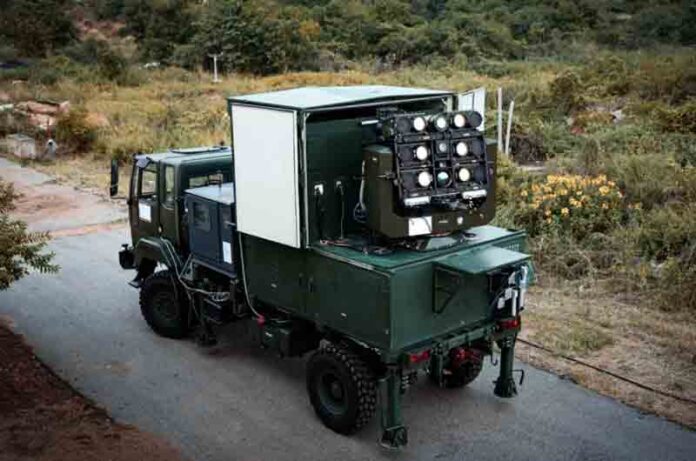
At the core of the Mk-II(A) is a 2-kilowatt laser capable of neutralizing drones within a range of 800 to 1,000 meters.

On April 13, 2025, India‘s Defence Research and Development Organisation (DRDO) announced the successful completion of a full-scale trial for its next-generation laser-directed energy weapon system, known as Mk-II(A), as reported by The Economic Times. This trial marks a significant advancement in the development of high-power laser weapon technologies capable of swiftly neutralizing drones, missiles, and other small projectiles. The testing took place at the National Open Air Range in Kurnool, Andhra Pradesh, with military experts, industry representatives, and engineers involved in the project in attendance.

Official reports indicate that the Mk-II(A) system, which was entirely designed and developed in India, was evaluated for its full operational capabilities. It successfully demonstrated its ability to detect, engage, and destroy fixed-wing drones at extended ranges, counter coordinated swarm attacks, and disable electronic surveillance equipment such as sensors and antennas. DRDO emphasized the system’s rapid engagement speed, high targeting accuracy, and its effectiveness in neutralizing aerial threats within seconds, particularly against lightweight and agile targets like tactical or loitering drones that are increasingly common on contemporary battlefields.

In an era characterized by the rise of unmanned aerial systems (UAS) and the emergence of swarm tactics as asymmetric threats, directed energy weapons (DEWs) are gaining significant attention. DRDO highlighted the cost-effectiveness of these systems, noting that operating the laser for just a few seconds consumes only a small amount of fuel. This positions the technology as a practical long-term solution for addressing low-cost, high-frequency threats. Furthermore, it signifies a shift in defense technology, as traditional kinetic systems often require complex logistics and substantial financial resources, while laser weapons provide near-instantaneous engagement at minimal additional costs.

The Mk-II(A) features a 2-kilowatt laser designed to neutralize drones at distances ranging from 800 to 1,000 meters. Furthermore, a more advanced 30-kilowatt variant has been created to target larger objects, such as light helicopters and long-endurance drones, at ranges of up to 5 kilometers. This system is also equipped with electronic warfare capabilities, including the ability to jam tactical communications and satellite signals, enhancing its operational versatility.

Target acquisition is facilitated through an external radar or the system’s integrated electro-optical suite, which boasts a 360-degree infrared sensor. Upon detecting a threat, the system can project a high-intensity laser beam capable of causing structural failure or outright destruction, particularly if it impacts the payload. According to DRDO, this technology significantly mitigates the risk of collateral damage, addressing a critical concern in contemporary operational contexts where differentiating between military targets and civilian infrastructure is increasingly challenging.

The Mk-II(A) initiative is a product of national collaboration spearheaded by DRDO’s Centre for High Energy Systems and Sciences (CHESS), involving partnerships with academic institutions and Indian industry experts in optics, precision engineering, and artificial intelligence. The system is designed for deployment across various platforms, including ground vehicles and naval ships, and can be swiftly transported by air, rail, road, or sea. This modular design allows for its application in a wide range of operational environments, including urban and coastal areas.

With this significant technological advancement, India has now entered the exclusive circle of nations—alongside the United States, China, Israel, and Russia—that possess a fully operational high-power laser-directed energy weapon. This progress enhances India’s strategic independence and has the potential to alter the regional defense landscape, especially in areas such as close-range air defense and counter-unmanned aerial systems (UAS) operations. As contemporary conflict environments increasingly feature low-cost autonomous systems that are challenging to intercept using traditional methods, the Mk-II(A) presents a practical and flexible solution designed to address 21st-century security challenges.

The integration of directed energy weapons into military forces signifies a wider doctrinal evolution towards immediate neutralization capabilities and comprehensive active defense systems. These technologies, developed by national organizations like DRDO in India, DARPA and the US Navy in the United States, and Rafael in Israel, typically emerge from collaborative efforts among research institutions, academic entities, and specialized industries. The development process usually entails integration on experimental platforms, technical validation in open ranges, and subsequent modifications for land, naval, or aerial applications based on specific mission needs.

The operational deployment of these weapons depends on real-time threat detection through radar or electro-optical sensors, followed by swift engagement using a high-power laser beam aimed at neutralizing or destroying the incoming threat. The implications are complex: they address the challenges posed by drone swarms overwhelming traditional systems, decrease reliance on ammunition reserves, enhance targeting accuracy, and reduce collateral damage. Nonetheless, the implementation of such systems is subject to limitations, including the necessity for a stable and continuous power supply, favorable atmospheric conditions for effective beam transmission, and highly accurate targeting systems.

The successful trial of the Mk-II(A) highlights India’s advancing expertise in emerging defense technologies. Its rapid engagement, modular design, and cost-effectiveness signify a transformation in short-range air defense strategies. Over time, this system may impact the prioritization of anti-aircraft defense planning and offer India an enhanced technological deterrent amid the changing regional and global security environment.

Chinese Missiles Pose a Risk to U.S. Aircraft Carriers in the Upcoming Age of Naval Combat

0

The strategic dynamics in the Pacific Ocean are shifting, not due to the quantity of aircraft carriers or submarines, but rather because of the increasing stockpile of long-range precision missiles developed by the People’s Republic of China. For the United States Navy, which has historically depended on the unparalleled power projection of its aircraft carrier strike groups (CSGs), China’s growing missile capabilities pose a significant and evolving challenge to established beliefs about maritime dominance.

Central to this challenge is China’s anti-access/area denial (A2/AD) strategy, which seeks to deter or impede U.S. military involvement in the Western Pacific, especially in scenarios related to Taiwan. This strategy relies on missile systems that can target valuable naval assets from considerable distances. The DF-21D and DF-26 intermediate-range ballistic missiles (IRBMs), often referred to as “carrier killers,” are fundamental to this strategy.

The DF-21D, boasting an estimated range of over 1,500 kilometers, is engineered to engage moving maritime targets—a capability that has historically been difficult to achieve due to the challenges of real-time targeting across vast oceanic areas. China asserts that it has addressed this targeting issue through a combination of satellites, over-the-horizon radar systems, and unmanned aerial vehicles (UAVs) that work together in a comprehensive kill chain. While there is ongoing debate about the full operational status of these capabilities, the Pentagon’s most recent China Military Power Report recognizes significant progress in China’s reconnaissance-strike capabilities.

On the other hand, the DF-26, which has a range exceeding 4,000 kilometers, allows China to extend its reach deep into the Philippine Sea, posing a threat to U.S. carriers that previously operated from relatively secure distances. Importantly, the DF-26 can be fitted with both conventional and nuclear warheads, which adds complexity to escalation management and crisis stability.

Enhancing these systems are land-attack and anti-ship cruise missile variants like the YJ-18 and YJ-21, which can be launched from various platforms including ships, submarines, and aircraft. The YJ-21, introduced in 2022, is a hypersonic anti-ship missile that reportedly maneuvers at terminal speeds exceeding Mach 10, making it extremely challenging for current shipboard missile defense systems to intercept.

This complex and multi-faceted missile threat has prompted the U.S. Navy to reassess its operational strategies. Historically, aircraft carriers have operated with a protective formation of destroyers, cruisers, and submarines, projecting power through their air wings. However, the range of Chinese missiles now surpasses the operational reach of carrier-based aircraft like the F/A-18E/F Super Hornet, which typically has a strike radius of about 700 kilometers without aerial refueling. Although the introduction of the F-35C, with its stealth capabilities and slightly increased range, helps to address some of this disparity, a significant asymmetry persists: China can launch precision missiles from its coastline, while U.S. carriers must travel thousands of kilometers and operate within striking distance to be effective.

To counter this threat, the United States is hastening the development and deployment of advanced combat systems specifically designed to safeguard high-value naval assets from long-range missile strikes. Leading this effort are sophisticated shipboard missile defense systems, such as the Aegis Combat System, now enhanced with SM-6 missile interceptors. The SM-6, which possesses dual capabilities against both ballistic and cruise missiles, is engineered to intercept threats during the terminal phase of their flight, offering a crucial layer of defense for carrier strike groups. New variants of the SM-6 are being developed to extend engagement ranges and to intercept hypersonic glide vehicles currently in the works.

The U.S. Navy is deploying the Evolved Sea Sparrow Missile Block 2 (ESSM Block 2), a medium-range interceptor featuring active radar homing technology, specifically designed to counter supersonic sea-skimming missiles. Furthermore, enhancements to close-in defense systems are underway, including the SeaRAM and upgraded Phalanx CIWS (Close-In Weapon System), which deliver rapid-response capabilities against threats that breach outer defenses.

In addition to kinetic defenses, the U.S. Navy is making significant investments in electronic warfare (EW) systems, such as the AN/SLQ-32(V)7, as part of the Surface Electronic Warfare Improvement Program (SEWIP). These systems are intended to jam or mislead incoming missile seekers, diverting them from U.S. ships. When combined with decoys like the Nulka active offboard decoy and advanced corner reflector systems, these soft-kill strategies provide essential protection when layered with hard-kill options.

A more revolutionary approach involves the use of directed-energy weapons. The U.S. Navy is currently evaluating the HELIOS (High Energy Laser with Integrated Optical-dazzler and Surveillance) system on Arleigh Burke-class destroyers. This system is engineered to neutralize drones, small boats, and potentially missiles, marking a significant advancement in shipboard defense technology. While its effectiveness can be limited by atmospheric conditions and power availability, it offers an almost limitless ammunition supply, which is a vital advantage in scenarios involving missile saturation.

In the aerial domain, carrier air wings are starting to incorporate new technologies such as the MQ-25 Stingray aerial refueling drone, which will enhance the operational range of manned strike aircraft, enabling carriers to function at greater distances from potential threats. Looking ahead, the development of sixth-generation aircraft is planned under the Next Generation Air Dominance (NGAD) program, which is anticipated to feature stealth capabilities, advanced sensors, and the ability to manage loyal wingman drones designed for both surveillance and strike operations.

At the strategic level, the United States is implementing resilient ground-based systems, including the U.S. Army’s Typhon Mid-Range Capability surface-to-surface missile system, which is designed to launch SM-6 and Tomahawk missiles from land. This initiative enhances maritime defense from advanced positions in the Pacific. The Integrated Air and Missile Defense (IAMD) framework seeks to consolidate these systems across various military branches and domains, ensuring a cohesive multi-layered defense strategy.

However, China’s expanding missile capabilities introduce a deterrent based on punishment. The presence of precise long-range missiles that can target aircraft carriers before they reach the combat zone compels U.S. strategists to either accept increased risks or reassess the effectiveness of carrier-based power projection in high-stakes conflict situations.

For allies like Japan, Australia, and the Philippines, these advancements pose significant challenges regarding the future of regional security and the reliability of U.S. extended deterrence. The deployment of U.S. carrier strike groups has historically symbolized America’s dedication to safeguarding the Indo-Pacific. If these forces are perceived as increasingly vulnerable, it could undermine U.S. influence in the region—not through direct military defeat, but by fostering the belief that the costs of intervention surpass its strategic advantages.

China’s missile capabilities have transformed the dynamics in the Western Pacific. While they do not render the U.S. Navy obsolete, they have made conventional power projection considerably more perilous and costly. The future of naval warfare will depend not only on fleet size and tonnage but also on the ability to withstand long-range precision attacks. The U.S. is responding with investments in missile defense, directed energy, extended-range aviation, and electronic warfare, but the balance of power will increasingly rely on which side can outpace the other in the ongoing competition between offensive and defensive strategies.

U.S. and Indian Naval Forces Enhance Strategic Collaboration with Joint Amphibious Training Exercise

0
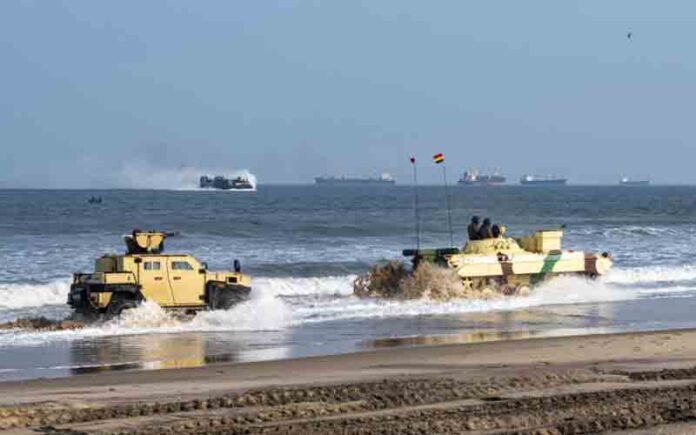
Indian Army soldiers from the 4/8 Gurkha Rifles Infantry Battalion, 91st Infantry Brigade, maneuver in a Mahindra Armored Light Specialist Vehicle alongside a BMP-II Sarath amphibious infantry combat vehicle during a large-scale amphibious landing drill conducted as part of Exercise Tiger Triumph at Kakinada Beach, Andhra Pradesh, India, on April 11, 2025.

From April 4 to April 11, 2025, the United States and India engaged in Exercise Tiger Triumph 2025, a significant bilateral tri-service military exercise aimed at enhancing interoperability, joint operational readiness, and capabilities in humanitarian assistance and disaster response (HADR). This year’s event took place along India’s eastern coastline near Kakinada Beach in the Bay of Bengal, emphasizing the strengthening defense relationship between the countries and their mutual dedication to a free, open, and resilient Indo-Pacific region.

Tiger Triumph is unique as the only tri-service exercise between India and the U.S., featuring coordinated efforts from land, sea, and air forces. In 2025, the exercise involved around 3,000 personnel and more than a dozen military platforms from both nations, highlighting the extensive scale and strategic significance of this defense partnership. This iteration marked the fourth occurrence of the exercise and was the most sophisticated to date, introducing new elements such as innovations in autonomous systems and improved command-and-control frameworks.

A key focus of the exercise was a large-scale amphibious landing operation at Kakinada Beach, spearheaded by the Indian Army’s 4/8 Gurkha Rifles Infantry Battalion, part of the 91st Infantry Brigade. Indian forces landed using Mahindra Armored Light Specialist Vehicles (ALSVs) and BMP-II Sarath amphibious infantry combat vehicles, showcasing the necessary mobility and combat readiness for HADR and coastal operations. Their maneuvers were closely coordinated with the Indian Navy, which included the INS Jalashwa (L41)—the main amphibious command ship. Additional naval assets such as the INS Mumbai (D62), INS Gharial (L23), INS Shakti (A57), and P-8I maritime patrol aircraft further demonstrated India’s strong maritime capabilities, designed for both combat support and humanitarian efforts.

On the U.S. front, the USS Comstock (LSD 45), a Whidbey Island-class dock landing ship, led amphibious operations by deploying Landing Craft Air Cushion (LCAC) vessels to transport U.S. Marines from the 1st Light Armored Reconnaissance Battalion to the beach. The USS Ralph Johnson (DDG 114), an Arleigh Burke-class guided-missile destroyer, offered additional firepower and maritime security throughout the operation. A P-8A Poseidon was tasked with intelligence, surveillance, and reconnaissance (ISR) missions, while both U.S. Air Force C-130J and Indian Air Force C-130J aircraft carried out coordinated airdrop missions to simulate logistical support for disaster-affected areas. Supporting these efforts were a U.S. Army platoon, a medical platoon, a Civil-Military Operations Center, and a Multi-Domain Task Force Combined Information Effects Fusion Cell, underscoring the comprehensive, collaborative approach both nations employed during the exercise.

The maritime aspect of Tiger Triumph 2025 showcased the evolving defense partnership between the Indian and U.S. navies. With a shared commitment to ensuring maritime domain awareness, freedom of navigation, and stability in the Indo-Pacific, the exercise offered a practical framework for operational synergy in amphibious warfare, logistics coordination, and maritime security. The two navies have progressively strengthened their relationship through joint exercises like Malabar and institutional agreements such as the Communications Compatibility and Security Agreement (COMCASA). Tiger Triumph introduces a vital amphibious and humanitarian element to these collaborations, highlighting the increasing significance of naval forces in regional crisis management and disaster relief.

Rear Admiral Greg Newkirk, Commander of Task Force 70 and the principal U.S. officer in the exercise, stated, “Tiger Triumph 2025 represents the culmination of years of trust-building and operational alignment. Our capacity to project power, deliver humanitarian aid, and function under a unified command structure is crucial for maintaining peace and stability in the Indo-Pacific.”

The cooperation was further strengthened by coordinated airdrop missions conducted by U.S. and Indian Air Force C-130J Super Hercules aircraft, which successfully delivered essential supplies to the beachhead. Combined medical and engineering teams swiftly set up field hospitals and logistics points, effectively simulating a rapid response to a regional natural disaster.

A significant advancement in this year’s exercise was the inaugural subject matter exchange focused on autonomous systems, organized by INDOPACOM J85 and the Defense Innovation Unit (DIU). This pioneering session convened U.S. and Indian industry leaders, military strategists, and government representatives to discuss the use of autonomous technologies in addressing real-world challenges faced by warfighters. This exchange initiated the U.S.-India Autonomous Systems Industry Alliance (ASIA), which was announced earlier in February 2025 by President Donald Trump and Prime Minister Narendra Modi. The initiative seeks to enhance industrial defense collaboration and encourage the joint development and integration of next-generation autonomous systems for future military operations, including Tiger Triumph 2026 and beyond.

As climate change, regional instability, and natural disasters increasingly threaten the Indo-Pacific, exercises like Tiger Triumph are crucial for enhancing joint readiness and building trust among strategic partners. The incorporation of advanced technology, alongside the execution of complex amphibious operations and multinational coordination, reinforces the U.S.-India defense partnership as a key component of regional security. With the involvement of the U.S. 7th Fleet—the Navy’s largest forward-deployed fleet—and India’s growing blue-water capabilities, Tiger Triumph 2025 serves as a strong testament to the collaboration of two powerful democracies committed to a secure, rules-based Indo-Pacific.

Trump is initiating tariff discussions with Seoul, Japan, and India, according to Yonhap

0
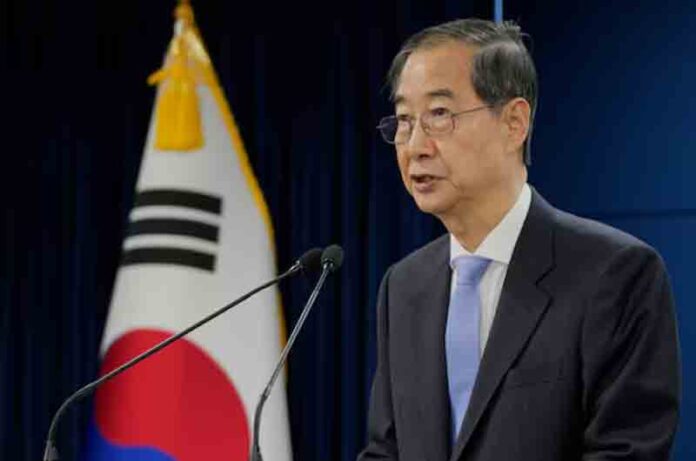
South Korean acting President Han Duck-soo speaks during a briefing at the Government Complex in Seoul, South Korea.

South Korea’s acting President Han Duck-soo announced on Monday that U.S. President Donald Trump seems to have initiated discussions on tariffs with South Korea, Japan, and India, according to Yonhap News Agency.

Han also indicated that a video conference between U.S. and South Korean officials regarding the proposed Alaska LNG project is expected to take place soon, as reported by Yonhap.

During a meeting of the economic security strategy task force, Han elaborated on South Korea’s position regarding tariff negotiations, stating that Trump appeared to be pleased with the explanation.

He expressed his willingness to engage directly with Trump again if needed, aiming to foster collaboration between the two nations in areas such as liquefied natural gas (LNG) and shipbuilding, as noted by Yonhap.

Last week, South Korea’s trade and industry minister highlighted that potential collaboration with the U.S. in the shipbuilding industry is a “very important card” in tariff negotiations. South Korea has shown interest in the Alaska LNG project, which aligns with Trump’s efforts to enhance U.S. gas exports; however, any involvement would depend on discussions with Washington, with the minister cautioning that the project’s profitability may be in question.

On Monday, Kim Hong-kyun, Seoul’s first vice foreign minister, informed parliament that the Trump administration has not yet suggested negotiations regarding defense costs for U.S. troops stationed in South Korea. Nevertheless, he mentioned that South Korea is preparing for various scenarios. Trump indicated that he spoke with Han last week about South Korea’s financial contribution for “big time” U.S. military protection, suggesting that defense costs could be included in a broader agreement encompassing tariffs and trade.

Returning to Russian gas? The EU, cautious of Trump, faces a dilemma regarding energy security

0
A view shows the Gazprom logo installed on the roof of building in Saint Petersburg, Russia.

More than three years following Russia‘s invasion of Ukraine, Europe’s energy security remains precarious. During the 2022-2023 energy crisis, U.S. liquefied natural gas played a crucial role in compensating for the loss of Russian supplies in Europe.

However, with President Donald Trump having disrupted long-standing post-World War Two relationships with Europe and using energy as a tool in trade discussions, businesses are increasingly concerned that dependence on the United States has become a new risk.

In this context, executives from major EU companies are beginning to express thoughts that would have seemed unimaginable just a year ago: the idea that importing some Russian gas, including from the state-owned giant Gazprom, might be beneficial. This would necessitate a significant policy reversal, as the European Union committed to phasing out Russian energy imports by 2027 following the invasion.

Europe’s options are limited. Negotiations with Qatar for additional gas supplies have stalled, and while the transition to renewable energy sources is progressing, it is not occurring swiftly enough to ensure the EU’s energy security. Didier Holleaux, executive vice-president at France’s Engie, mentioned in a Reuters interview that if a reasonable peace is achieved in Ukraine, gas flows could potentially return to 60 to 70 billion cubic meters annually, including LNG.

Engie, partly owned by the French state, was once one of Gazprom’s largest customers. Holleaux noted that Russia could meet about 20-25% of the EU’s energy needs, a decrease from 40% prior to the conflict. Patrick Pouyanne, CEO of French oil giant TotalEnergies, cautioned against Europe becoming overly dependent on U.S. gas. He emphasized the need for diversification, stating, “We need to diversify, many routes, not over-rely on one or two.” Total is a significant exporter of U.S. LNG and also markets Russian LNG from the private company Novatek. Pouyanne concluded, “Europe will never return to importing 150 billion cubic meters from Russia as it did before the war… but I would wager on maybe 70 bcm.”

GERMAN PIVOT

France, a major producer of nuclear energy, boasts one of the most varied energy portfolios in Europe. In contrast, Germany has been heavily dependent on affordable Russian gas to support its manufacturing sector until the onset of the Ukraine conflict, leaving it with limited alternatives.

At Leuna Chemical Park, one of Germany’s largest chemical hubs that includes facilities from Dow Chemical and Shell, some industry leaders are advocating for a swift return of Russian gas. Previously, Russia supplied 60% of the region’s gas needs, primarily through the Nord Stream pipeline, which was destroyed in 2022. “We are facing a significant crisis and cannot afford to wait,” stated Christof Guenther, managing director of InfraLeuna, the park’s operator. He noted that the German chemical sector has experienced job cuts for five consecutive quarters, a trend not seen in decades. “Reopening the pipelines would lower prices more effectively than any existing subsidy programs,” he emphasized. “It’s a sensitive issue,” Guenther remarked, adding that many of his peers share the sentiment of needing to revert to Russian gas. In the recent federal election, nearly a third of German voters supported parties favorable to Russia.

In Mecklenburg-Vorpommern, the eastern German region where the Nord Stream pipeline reaches land after traversing the Baltic Sea from Russia, a Forsa institute poll revealed that 49% of residents favor reinstating Russian gas supplies. “We require Russian gas; we need affordable energy, regardless of its source,” said Klaus Paur, managing director of Leuna-Harze, a mid-sized petrochemical company located in the Leuna Park. “We need Nord Stream 2 to manage our energy costs effectively.” The industry is urging the federal government to secure inexpensive energy, according to Daniel Keller, the economy minister for Brandenburg, which is home to the Schwedt refinery, co-owned by Russian oil company Rosneft but currently under German government oversight. “We could consider resuming the import or transport of Russian oil once peace is restored in Ukraine,” Keller stated.

TRUMP FACTOR

Last year, U.S. natural gas accounted for 16.7% of the European Union’s imports, trailing behind Norway at 33.6% and Russia at 18.8%.

With Ukraine halting pipeline operations, Russia’s share is expected to fall below 10% this year, with the remaining supply primarily coming from LNG produced by Novatek. The EU is gearing up to increase its purchases of U.S. LNG, as Trump advocates for Europe to reduce its trade surplus with the United States. “We will definitely require more LNG,” stated EU trade commissioner Maros Sefcovic last week.

The ongoing tariff conflict has heightened Europe’s apprehension regarding its dependence on U.S. gas, according to Tatiana Mitrova, a research fellow at Columbia University’s Centre on Global Energy Policy. “It is becoming more challenging to view U.S. LNG as a neutral commodity; it could potentially be used as a geopolitical instrument,” Mitrova remarked.

Should the trade tensions intensify, there is a slight possibility that the United States might restrict LNG exports, noted Arne Lohmann Rasmussen, chief analyst at Global Risk Management. A senior EU diplomat, who requested anonymity, concurred, suggesting that the use of such leverage cannot be dismissed.

If domestic gas prices in the U.S. rise due to increasing industrial and AI demands, the country might limit exports to all markets, warned Warren Patterson, head of commodities strategy at ING. In 2022, the EU established a non-binding target to eliminate Russian gas imports by 2027, but it has postponed the release of its plans on how to achieve this goal twice. An EU Commission spokesperson declined to comment on the remarks made by the companies.

ARBITRATION

Numerous companies from the EU have initiated arbitration proceedings against Gazprom due to the failure to deliver gas in the aftermath of the Ukraine conflict. Courts have awarded Germany’s Uniper and Austria’s OMV 14 billion euros and 230 million euros, respectively. Additionally, Germany’s RWE has filed a claim for 2 billion euros, while Engie and other companies have not revealed the amounts of their claims.

Engie’s Holleaux suggested that Ukraine might permit Russia to transport gas through its territory to facilitate arbitration payments, which could serve as a foundation for reestablishing contractual ties with Gazprom.

“You (Gazprom) wish to re-enter the market? That’s fine, but we will not enter into a new contract unless you settle the award,” Holleaux stated.

The prospect of Russian gas returning raises concerns for Maxim Timchenko, the CEO of DTEK, Ukraine’s private gas firm, which aims to import U.S. LNG into Ukraine’s storage facilities for export to Europe.

“As a Ukrainian, it’s difficult to comment, but I hope that European leaders have learned valuable lessons from their dealings with Russia,” Timchenko remarked.

Pakistan’s Prime Minister calls on Kabul to manage militant groups responsible for cross-border attacks

0
Pakistan's Prime Minister Shehbaz Sharif arrives for the United Nations General Assembly

On Sunday, Prime Minister Shehbaz Sharif urged the Taliban leadership in Kabul to take measures to stop militant groups from utilizing Afghan territory to launch attacks on Pakistan, emphasizing that such acts of violence pose a threat to regional stability and will not be accepted.

After completing a two-day official visit to Belarus, Sharif addressed reporters in London, reiterating Pakistan’s consistent calls for the Afghan interim government to honor its obligations under the 2020 Doha Agreement, which stipulates the prevention of armed groups operating within Afghanistan.

“We have always regarded Afghanistan as a neighboring and brotherly nation,” his office reported him stating following the press conference. “As neighbors, we must coexist — the decision lies in whether we choose peace or conflict.”

Sharif mentioned that Pakistan has conveyed multiple messages to Kabul, stressing that Afghan soil should never be used for militant activities.

“Regrettably, however, the TTP [Tehreek-e-Taliban Pakistan], ISKP [Islamic State Khorasan Province], and other terrorist organizations continue to function from there, resulting in the loss of innocent Pakistani lives,” he remarked.

The prime minister affirmed that the sacrifices made by Pakistani civilians and armed forces would not be in vain, urging Afghan authorities to take swift action against these militant groups.

“My earnest advice to Afghanistan is to immediately control these terrorist organizations and ensure that Afghan land is not exploited for such purposes,” he stated.

In recent years, tensions have escalated between Islamabad and Kabul due to an increase in militant attacks in Pakistan’s western provinces adjacent to Afghanistan. Islamabad attributes the cross-border violence to the Tehrik-i-Taliban Pakistan (TTP), a banned group that shares ideological ties with the Afghan Taliban, claiming they operate from secure locations within Afghanistan—an accusation that the Taliban government has consistently rejected.

Amidst this ongoing discord, Pakistan has expelled hundreds of thousands of undocumented Afghan nationals since late 2023, citing security issues, which has drawn criticism from human rights organizations and prompted calls for dialogue from Kabul.

Recent satellite images show North Korea is building its largest and most advanced warship yet

0
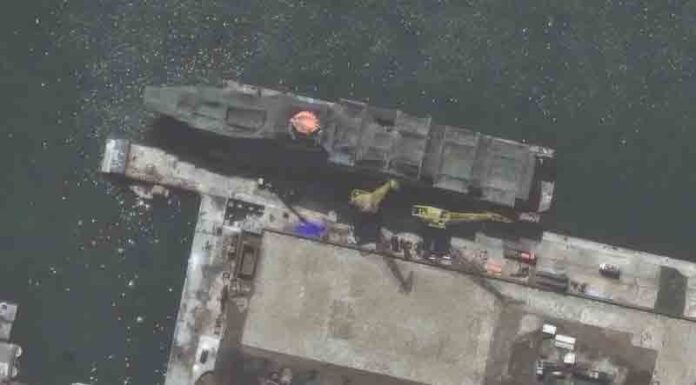
North Korea making what could be its largest, most advanced warship ever, new satellite photos show.

Recent satellite imagery reveals what may be the largest warship ever constructed by North Korea, potentially exceeding the size of any vessel currently in leader Kim Jong Un’s naval fleet by more than twofold.

Images captured by independent satellite firms Maxar Technologies and Planet Labs on April 6 depict the ship being built at the Nampo shipyard, located on North Korea’s western coast, approximately 60 kilometers (37 miles) southwest of Pyongyang.

Experts suggest that the images indicate the ongoing development of the ship’s weaponry and internal systems, which is expected to be a guided-missile frigate (FFG) equipped with vertical launch tubes for missiles targeting both land and maritime objectives.

According to an analysis by Joseph Bermudez Jr. and Jennifer Jun from the Center for Strategic and International Studies, the FFG measures around 140 meters (459 feet) in length, making it the largest warship ever produced in North Korea.

In comparison, the US Navy’s Arleigh Burke-class destroyers are roughly 505 feet long, while the Constellation-class frigates currently under construction will measure 496 feet.

The emergence of this warship is not unexpected.

The Kim regime has been swiftly modernizing its military, creating a variety of new weaponry and testing intercontinental ballistic missiles capable of reaching nearly any location in the United States.

This progress has occurred despite United Nations sanctions that impose stringent restrictions on its access to the necessary materials and technology for weapon development.

However, analysts suggest that strengthened ties with Russia since the onset of the Ukraine conflict may be aiding North Korea in circumventing these sanctions.

Retired South Korean admiral Kim Duk-ki believes that Moscow might be supplying technology for the missile systems on the frigate.

Images of the vessel were featured in a report by the state-run Korean Central Television, which was released at the end of last year during the ruling Workers’ Party’s plenary session. The footage depicted leader Kim inspecting the ship’s construction.

The visuals from the KCTV broadcast indicate that the warship may be equipped with advanced weaponry typical of modern navies, including vertical launch systems capable of firing various missiles.

Analysts also observed that the ship appears to be outfitted with phased-array radar, which can detect threats and targets more swiftly and accurately than previously demonstrated North Korean technologies.

Despite these signs of enhanced military capabilities, experts cautioned against jumping to conclusions.

The complexities of constructing warships

According to Carl Schuster, a former US Navy captain and analyst based in Hawaii, nearly any shipbuilder can successfully create the hull and propulsion systems.

“However, modern warships pose a significant challenge in integrating communications, electronics, weaponry, and both electronic and acoustic sensor technologies, which is not easily accomplished,” he noted.

In a March interview with CNN, South Korean lawmaker Kim Byung-kee, who serves on the National Assembly’s Intelligence Committee, raised doubts about whether North Korea possesses the technical expertise or the necessary infrastructure to construct an advanced warship.

“Operating a large military vessel requires a substantial budget. They must not only build the warship but also assemble a crew to operate it, which incurs additional costs for equipment and fuel. Furthermore, a large warship cannot operate independently. Therefore, the question remains: can North Korea bear these expenses?” he stated.

Kim, a retired South Korean admiral, urged caution in underestimating the potential capabilities of the final product, particularly regarding its lethality.

“If North Korea equips the new frigate with the hypersonic ballistic missile it claims to have successfully tested in January, it could significantly alter the regional security landscape,” the former naval officer warned.

Following an analysis of satellite imagery for CNN, Schuster indicated that it may take a year or more before the new North Korean warship is ready for sea trials.

He noted, “The construction of this ship is being hindered by the absence of the superstructure, as well as the sensor and weapon systems that are meant to be installed.”

North Korea’s aged fleet

North Korea’s aging naval fleet consists of approximately 400 patrol combatants and 70 submarines, according to the latest estimates from the US Defense Intelligence Agency (DIA) in a 2021 report.

While this number of vessels appears substantial, the majority are outdated and relatively small.

In a January blog post, Joseph Dempsey, an analyst at the International Institute for Strategic Studies, pointed out that Pyongyang possesses only two main surface combatants. These Najin-class frigates, weighing 1,600 tons and dating back to the early 1970s, are considered obsolete.

The DIA report suggested that in any conflict with South Korea or the United States, which both have significantly stronger naval capabilities, the North Korean navy would primarily be relegated to coastal defense.

Despite this, North Korean leader Kim is actively seeking to modernize his naval forces, including the development of submarine-launched missiles and the submarines to deploy them.

In September, Kim conducted an inspection of the location designated for a new naval port.

“With the imminent acquisition of large surface warships and submarines that cannot be accommodated at the current mooring facilities, the establishment of a naval base capable of supporting these advanced vessels has become an urgent priority,” he remarked at that time.

South Korean lawmaker Yu Yong-won noted that the ship being built at the Nampo shipyard is just one instance of Kim’s efforts to modernize the navy.

According to Yu, a nuclear-powered submarine is currently under construction at a shipyard in the North Korean port of Sinpo, and plans for another frigate or destroyer are underway in Chongjin.

Pakistan and United States sign MoUs for IT training collaboration

0

On Sunday, Pakistan and the United States (US) formalized their partnership by signing memorandums of understanding (MoUs) aimed at fostering collaboration in information technology (IT) training.

A delegation from the United States Congress, headed by Jack Bergman, along with Thomas Souzzi and Jonathan Jackson, met with General Syed Asim Munir today.

The discussions covered a variety of topics of shared interest, focusing particularly on regional security and defense collaboration. Both parties emphasized the significance of ongoing engagement rooted in mutual respect, common values, and aligned strategic goals.

The visiting U.S. lawmakers praised the Pakistan Armed Forces for their crucial efforts in the fight against terrorism and recognized Pakistan’s significant contributions to maintaining regional peace and stability. They also expressed their admiration for the resilience of the Pakistani people and the strategic potential of the nation.

Reaffirming their respect for Pakistan’s sovereignty, the U.S. Congressional delegation expressed a strong commitment to enhancing comprehensive bilateral cooperation, especially in the areas of security, trade, investment, and economic development.

General Syed Asim Munir thanked the delegation for their visit and reiterated Pakistan’s intention to strengthen and diversify its long-standing partnership with the United States in a way that is mutually advantageous and respects each nation’s interests.

Additionally, during the meeting, memorandums of understanding were signed to facilitate training collaboration in the field of Information Technology.

US Energy Secretary states that Saudi Arabia and the US are progressing towards a civil nuclear agreement

0
U.S. Secretary of Energy, Chris Wright, attends an interview with Reuters, in Abu Dhabi, United Arab Emirates.

The United States and Saudi Arabia are set to sign a preliminary agreement aimed at collaborating on the kingdom’s plans to establish a civil nuclear industry, as announced by U.S. Energy Secretary Chris Wright during a press briefing in Riyadh on Sunday.

Following a meeting with Saudi Energy Minister Prince Abdulaziz bin Salman earlier that day, Wright indicated that both nations are progressing towards an agreement to jointly develop a civil nuclear program in Saudi Arabia.

This visit marks Wright’s first trip to the kingdom as secretary, part of a broader tour of energy-rich Gulf states. He mentioned that additional details regarding a memorandum on energy cooperation between Riyadh and Washington would be revealed later this year.

Wright emphasized that for a U.S. partnership in nuclear development, a 123 agreement would be essential. He noted that there are various ways to structure a deal that aligns with both Saudi and American goals. The term “123 agreement” refers to Section 123 of the U.S. Atomic Energy Act of 1954, which is necessary for the U.S. government and American companies to collaborate with Saudi entities on civil nuclear initiatives.

Wright pointed out that Saudi authorities have yet to meet the requirements outlined in the act, which includes nine non-proliferation criteria designed to prevent the misuse of technology for nuclear weapons development or the transfer of sensitive materials.

Previous discussions have faced challenges, as Saudi Arabia has been reluctant to enter into an agreement that would eliminate the possibility of uranium enrichment or spent fuel reprocessing—both of which could lead to nuclear weapon capabilities. Crown Prince Mohammed bin Salman has consistently stated that if Iran were to develop a nuclear weapon, Saudi Arabia would pursue a similar path, raising significant concerns among arms control advocates and some U.S. lawmakers regarding a potential U.S.-Saudi civil nuclear agreement.

Wright did not refer to a broader agreement with the kingdom, which the former administration of U.S. President Joe Biden had pursued. This included a civil nuclear deal and security assurances aimed at fostering the normalization of relations between Saudi Arabia and Israel.

As the largest oil exporter globally, Saudi Arabia is aiming to significantly increase its renewable energy production and lower emissions as part of the crown prince’s Vision 2030 reform initiative. A portion of this energy transition is anticipated to involve nuclear power.

Syria’s Sharaa makes his second trip to a Gulf nation, this time visiting the UAE as a leader

0

Syria’s Ahmed al-Sharaa is set to visit the United Arab Emirates on Sunday, marking his second trip to a Gulf nation since becoming president, according to the country’s official news agency. This visit comes as Syria’s Islamist leadership aims to reassure international partners of their commitment to establishing an inclusive political framework.

Sharaa will be joined by Foreign Minister Assad al-Shibani, who had previously traveled to the UAE earlier this year.

The discussions are anticipated to cover various topics of shared interest, although specific details have not been disclosed by the SANA state news agency.

Sharaa’s first foreign trip as president was to Saudi Arabia in February, following his assumption of office in January. His upcoming visit to the UAE is part of the new Syrian administration’s efforts to enhance relations with both Arab and Western leaders after the ousting of Bashar al-Assad in December by Sharaa’s Sunni Islamist group, Hayat Tahrir al-Sham.

Abu Dhabi has historically opposed Islamist factions throughout the region, including those in Egypt, Sudan, and Libya, and has previously expressed concerns about extremism and terrorism in Syria after Assad’s downfall.

The West is closely monitoring Syria’s leadership to ensure the establishment of an inclusive government with robust institutions, the maintenance of order in a nation scarred by civil conflict, and the prevention of a resurgence of groups like Islamic State or al-Qaeda.

Syria urgently requires the lifting of sanctions to rejuvenate its economy following 14 years of conflict, during which the United States and Europe implemented extensive sanctions aimed at pressuring Assad.

Ukraine is looking for solutions for the damaged Chernobyl confinement vessel, according to the minister

0
Chornobyl Nuclear Power Plant

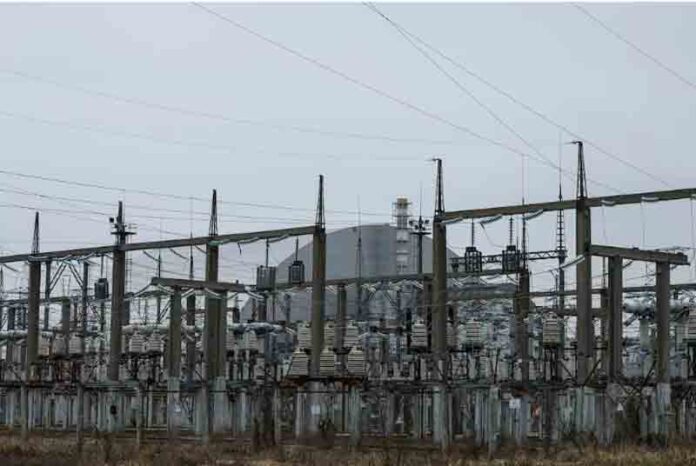
Ukraine is actively pursuing solutions to address the damage inflicted by a Russian drone strike on the containment vessel at the Chornobyl nuclear power plant, as stated by a government minister on Saturday.

Svitlana Hrynchuk, the Minister of Environmental Protection and Natural Resources, made her remarks outside the decommissioned facility during the launch of a 0.8-megawatt solar power project, which precedes two upcoming conferences focused on Chornobyl and other nuclear power-related topics.

She indicated that Ukraine is collaborating with experts to identify the most effective methods for restoring the functionality of the containment vessel, also known as the arch, following the drone attack on February 14. “Regrettably, the arch has partially lost its functionality due to the attack. I anticipate that by May, we will have the results of the ongoing analysis,” Hrynchuk noted.

She mentioned that the analysis involves the European Bank for Reconstruction and Development, along with scientific institutions and companies that were part of the installation of the arch in 2019, which was designed to cover the leaking “sarcophagus” hastily constructed in the aftermath of the 1986 Chornobyl disaster.

“We expect to receive the initial findings of this analysis in a few weeks,” she added. “We are diligently working on this matter… It is imperative that we restore the arch to prevent any leaks, as ensuring nuclear and radiation safety is our top priority.”

Officials at the plant reported that the drone strike created a significant hole in the outer cover of the new containment structure and resulted in an explosion inside. At the time, Russian Foreign Ministry spokeswoman Maria Zakharova described the incident at Chornobyl as “a provocation.” The containment vessel was designed to encase the extensive and deteriorating steel and concrete structure that was erected after the catastrophic explosion of the plant’s fourth reactor, which released radioactivity across much of Europe during the largest nuclear disaster in history.

The facility is located within the 30-kilometer (18-mile) exclusion zone established following the accident, where abandoned high-rise residential buildings and an amusement park remain in the vicinity.

Hrynchuk emphasized that the solar power plant is crucial for sustaining the electricity supply to the inactive station and marks the beginning of efforts to advance renewable energy in the region. “For many years, we have advocated for the transformation of the exclusion zone into a renewal area,” she stated. “This region, more than any other in Ukraine, is ideal for the development of renewable energy initiatives.”

Kremlin says immediate results are impossible after Trump’s call for progress in Ukraine

0
Kremlin spokesman Dmitry Peskov

On Sunday, the Kremlin announced that discussions with U.S. President Donald Trump‘s team were progressing positively, but cautioned that it was premature to anticipate immediate outcomes due to the damage inflicted on relations by Trump’s predecessor, Joe Biden.

Trump, who aims to be recognized as a peacemaker, has consistently expressed his desire to put an end to the ongoing “bloodbath” of the three-year conflict in Ukraine, which his administration now frames as a proxy war between the United States and Russia, aligning with Moscow’s perspective.

Following talks between his special envoy, Steve Witkoff, and President Vladimir Putin, Trump remarked on Saturday that the negotiations to conclude the war seemed to be going well, but emphasized, “there’s a point at which you just have to either put up or shut up.”

Kremlin spokesman Dmitry Peskov conveyed to Pavel Zarubin, a leading reporter for Russian state television, that “everything is going very well” when asked about the contrasting assessments of U.S.-Russia relations. Peskov noted that communications were taking place at multiple levels, including through the foreign ministry, intelligence agencies, and Putin’s investment envoy, Kirill Dmitriev.

“However, it is unrealistic to expect any immediate results,” Peskov added, referencing the damage to bilateral relations during Biden’s administration.

Russia’s invasion of Ukraine in 2022 has led to the most severe confrontation between Moscow and the West since the 1962 Cuban Missile Crisis, a period when the two superpowers were closest to engaging in nuclear conflict. As Witkoff met with Putin in St. Petersburg on Friday to discuss a potential peace agreement for Ukraine, Trump urged Russia to “get moving.”

State television broadcasted footage of Putin welcoming Witkoff, who placed his hand over his heart in a gesture of greeting, at the beginning of their discussions, which state news agencies later reported lasted more than four hours. When inquired about the possibility of a meeting between Putin and Trump, Kremlin spokesperson Peskov indicated that the two nations were “patiently progressing along this path together,” but emphasized that restoring relations necessitates significant and meticulous effort.

His remarks implied that such a meeting “demands additional work and time.” European leaders, along with Ukraine, characterize the 2022 invasion as an imperial-style land grab orchestrated by Putin. They have consistently called for Russia to be defeated on the battlefield, despite Moscow’s forces currently controlling nearly 20% of Ukraine. Putin frames the conflict in Ukraine as part of a struggle against a waning West, which he claims has humiliated Russia since the fall of the Berlin Wall in 1989 by expanding the NATO military alliance and infringing upon what he views as Moscow’s sphere of influence, including Ukraine.

Ukraine reports that a Russian ballistic missile attack on Sumy has resulted in 21 fatalities

0
Firefighters work at the site of a Russian missile strike, amid Russia's attack on Ukraine, in central Sumy, Ukraine.

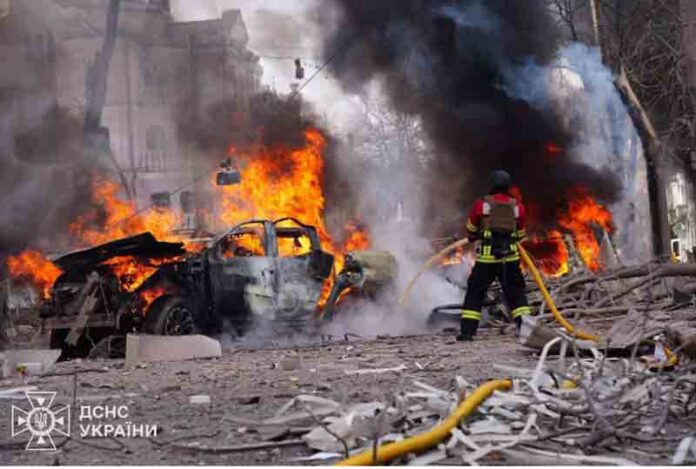
A Russian ballistic missile strike in the center of Sumy, a northern Ukrainian city, resulted in the deaths of at least 21 individuals and left 83 others injured on Sunday morning, according to Ukraine‘s Interior Minister Ihor Klymenko. President Volodymyr Zelenskiy denounced the attack, which ranks among the deadliest this year, and urged for a strong international response against Russia.

“Only the most despicable individuals could commit such acts, taking the lives of innocent people,” he stated on social media, sharing a harrowing video that depicted lifeless bodies, a wrecked bus, and charred vehicles strewn across a city street.

“This tragedy occurred on a day when many attend church: Palm Sunday, commemorating the Lord’s Entry into Jerusalem,” Zelenskiy added. Minister Klymenko reported that the victims were caught in the strike while on the street, in vehicles, using public transport, or inside buildings. “This is a deliberate attack on civilians during a significant religious observance,” he remarked.

Reuters has reached out to Russian officials for their comments. Andriy Kovalenko, a security official overseeing Ukraine’s Centre for Countering Disinformation, pointed out that the missile strike followed a visit to Moscow by U.S. envoy Steve Witkoff. “Russia is framing its so-called diplomacy around attacks on civilians,” he noted on Telegram.

Witkoff, who serves as U.S. President Donald Trump’s special envoy for Ukraine, met with Russian President Vladimir Putin in St. Petersburg on Friday to discuss a potential peace agreement for Ukraine, as Trump urged Russia to “get moving.” In the wake of the missile strike, Zelenskiy called on the U.S. and European nations to adopt a firmer stance against Russia, labeling the attack as an act of terrorism. “Russia seeks to instill this kind of terror and prolong the conflict. Without exerting pressure on the aggressor, peace cannot be achieved. Negotiations have never halted the use of ballistic missiles and aerial bombardments,” he stated.

In February 2022, Russia initiated a comprehensive invasion of Ukraine and presently occupies approximately 20% of the nation’s territory in the eastern and southern regions. Recently, Russian forces have been making gradual progress in the east, although missile and drone attacks have become the predominant tactics in the conflict.

On Saturday, Russia’s defense ministry reported that Ukraine had conducted five assaults on Russian energy infrastructure within the previous day, labeling these actions as a breach of a U.S.-mediated ceasefire agreement regarding such strikes. Last month, Ukraine and Russia had reached an understanding to suspend attacks on each other’s energy facilities; however, both parties have consistently accused one another of violating this agreement.

China’s shift from courting Trump to a firm defiance of tariffs

0
U.S. President Donald Trump and China's President Xi Jinping shake hands before their bilateral meeting during the G20 leaders summit in Osaka, Japan.

China has placed civilian government officials in Beijing on a “wartime footing” and initiated a diplomatic campaign to persuade other nations to resist the tariffs imposed by U.S. President Donald Trump, according to four sources familiar with the situation.

Officials from the Communist Party have been instrumental in shaping China‘s response, with government representatives sharing assertive videos on social media that feature former leader Mao Zedong proclaiming, “we will never yield.”

As part of this “wartime” strategy, which is reported by Reuters for the first time, officials in the foreign affairs and commerce ministries have been instructed to cancel their vacation plans and keep their mobile phones on at all times, according to two of the sources. Additionally, departments focused on U.S. relations have been strengthened, including the addition of officials who previously worked on China’s response during Trump’s first term.

This aggressive, all-encompassing governmental approach following Trump’s “Liberation Day” announcement signifies a significant shift for Beijing, which had previously sought to avoid escalating a trade war. For several months, Chinese diplomats attempted to establish a high-level communication channel with Trump’s administration to advocate for what China’s cabinet has characterized in state media as a “win-win” trading relationship.

Some optimistic Chinese observers even hoped for a comprehensive agreement with Trump regarding trade, TikTok, and potentially Taiwan.

This narrative of China’s transition from pursuing a deal to retaliating with tariffs and openly defying the U.S. is based on interviews with over a dozen individuals, including U.S. and Chinese government officials, as well as other diplomats and scholars informed about bilateral discussions. Four of these individuals also detailed how Beijing’s diplomats have been reaching out to other nations affected by Trump’s tariffs, including sending letters to solicit cooperation from several countries. Longstanding U.S. allies in Europe, Japan, and South Korea have also been engaged.

China’s foreign ministry did not respond to a request for comment. A representative from China’s embassy in Washington stated to Reuters that while Beijing does not wish to engage in trade wars, it is not intimidated by them.

The spokesperson remarked, “If the U.S. prioritizes its own interests over the collective good of the international community and undermines the legitimate interests of other nations for its own dominance, it will undoubtedly face stronger resistance from the global community.”

The embassies of South Korea and Japan in Washington have not yet replied to inquiries regarding discussions between their nations and China.

Following China’s initial response, Trump remarked, “China miscalculated; they panicked – that is the one thing they cannot afford to do!” He also indicated that while Beijing seems eager to reach an agreement, “they just don’t know how to proceed.”

U.S. officials have attributed the stalemate to China, arguing that its trillion-dollar trade surplus stems from what they perceive as exploitation of the global trade system, which has not been effectively resolved despite years of negotiations.

On April 2, Trump shocked the world by announcing significant tariffs aimed at preventing countries like China from “taking advantage” of the U.S. In response, Chinese leader Xi Jinping abandoned his usual restraint and delivered a nationalistic message, questioning whether American voters could endure as much hardship as the Chinese populace.

The “Liberation Day” tariffs have since been suspended for all countries except China for a period of 90 days. With few exceptions, trade in goods between China and the U.S. is now largely stagnant, and Beijing is beginning to impose restrictions on service trade, while advising its citizens against traveling to the U.S. and limiting the import of American films.

POLITE BEGINNING AND A QUICK DETERIORATION

Despite Trump’s election on a platform promising high tariffs, the initial interactions with Beijing were courteous. Trump extended an invitation to Xi for his inauguration, which was ultimately attended by Chinese Vice President Han Zheng.
However, relations began to decline shortly thereafter.
During Trump’s first term, Beijing maintained several high-level communication channels, particularly between then-ambassador Cui Tiankai and Jared Kushner, Trump’s son-in-law.
Currently, there is no similar communication channel, as noted by a Beijing official familiar with Sino-American relations, who mentioned that China is uncertain about who represents Trump in their dealings.
In response to inquiries from Reuters, a Trump administration official stated that the U.S. has “clearly communicated to China our desire for ongoing working-level contact… but we will not engage merely for the sake of engagement or in discussions that do not further American interests.”
Chinese ambassador to the U.S., Xie Feng, made unsuccessful attempts to connect with Trump’s billionaire associate Elon Musk prior to the election, according to a U.S. scholar who recently visited China for informal discussions that Beijing has traditionally used to reach out to Washington policymakers.
Musk did not respond immediately to a request for comment.
Additionally, Chinese Foreign Minister Wang Yi sought a meeting with Secretary of State Marco Rubio, a known critic of China who is under sanctions from Beijing, during a February trip to New York for a United Nations session but was unable to secure a meeting. There has been no publicly reported interaction between the top diplomats of both sides aside from a tense phone call in late January.

Wang was unable to secure a meeting with National Security Adviser Mike Waltz during his recent trip, according to a source familiar with the situation. Previously, Wang had engaged in multiple discussions with Waltz’s predecessor, Jake Sullivan, which included a notable prisoner exchange.

The White House is of the opinion that China should send a senior trade representative in place of Wang to address trade issues, as per insights from an administration insider.

U.S. Commerce Secretary Howard Lutnick has stated that he is “not engaging with China” and noted that Trump prefers to negotiate directly with Xi. This week, Trump expressed his willingness to meet with Xi, whom he referred to as a friend, although he has not provided any specifics regarding a potential agreement.

A Trump administration official mentioned that the U.S. has consistently inquired whether Xi would like to initiate a phone call with Trump, to which the response has always been ‘no.’

Zhao Minghao, an international relations expert at Fudan University in Shanghai, commented that such outreach efforts “do not resonate within the Chinese policymaking framework.” He explained that typically, there is preliminary agreement and collaboration at the working level before a summit can be arranged.

Lynn Song, Chief Economist for Greater China at ING Bank, noted that the treatment of countries attempting to negotiate this year has not been conducive to encouraging China to engage in discussions.

Discussions are currently taking place among lower-level officials from both nations, as reported by one Chinese official and three U.S. officials. However, several working groups established by the Biden administration to address commercial disputes, as well as treasury and military matters, have been put on hold.

LESSONS LEARNED

While numerous countries faced U.S. tariffs for the first time this month, China refined its strategy based on experiences from earlier phases of the Sino-American trade conflict.
Leveraging insights from Trump’s initial term, China developed a comprehensive retaliatory strategy that encompasses tariffs, restrictions on approximately 60 U.S. companies, and limitations on rare earth exports.
This initiative stemmed from weeks of preparation by Chinese government officials assigned to analyze Trump’s policies and propose counteractions that could be implemented progressively, according to two sources familiar with the matter.
Xi chose to respond decisively, imposing widespread tariffs even before Trump’s tariffs took effect. These duties were announced just before the U.S. stock market opened on April 4, coinciding with a public holiday in China, leading to a significant drop in U.S. equities.
One Chinese official involved in the discussions characterized the rapid response as reminiscent of decision-making during the COVID pandemic, which occurred without the usual approvals from all relevant departments.
Some Chinese thought leaders seemed to indicate potential pathways to de-escalate the trade conflict.

Ren Yi, a political blogger with nearly 2 million followers on Weibo, stated in a post on April 8 that countermeasures “do not necessitate a widespread increase in tariffs on American products.” Ren, whose father was a notable reformist leader in the 1980s, proposed specific actions such as halting fentanyl cooperation and imposing additional restrictions on agricultural imports and films.

On Friday, China’s finance ministry announced that with tariffs on U.S. goods currently at 125%, it will cease to match any future increases in duties imposed by Washington, which it referred to as a “joke.”

China’s foreign ministry has called back several heads of its overseas missions to Beijing for a special meeting this week to align their response, according to two diplomats based in the city. Additionally, China has sent formal letters to government officials in other nations that have been pressured by Trump to participate in trade negotiations.

These letters, as described by four individuals familiar with their content, articulated China’s stance and emphasized the importance of multipolarity and solidarity among countries. The communication also included critiques of U.S. policies that mirrored China’s public statements.

China has reached out to some G20 nations with proposed language for a joint declaration supporting the multilateral trading system, according to an EU diplomat. However, the diplomat noted that this messaging did not address concerns shared by non-U.S. governments regarding Chinese overcapacity, its subsidy practices, and allegations of unfair competition. Beijing has dismissed these concerns as exaggerated, asserting that the growth of its high-tech industries stems from its comparative advantages and ultimately benefits the global community.

China is placing significant emphasis on the domestic response to tariffs, as social media users have been actively sharing an editorial from the official People’s Daily dated April 7, which cautions against overreacting.

Recently, the Chinese government has begun to promote increased household spending and has notably altered its messaging regarding domestic consumption. Beijing’s objective is to transition the growth driver from exports to consumer spending, particularly as the economy grapples with challenges stemming from a real estate development crisis.

“The primary focus is on the domestic front, rather than on bilateral discussions,” stated Zhao from Fudan University.

Additionally, Chinese officials shared a video on Musk’s X platform featuring a speech by Chairman Mao from 1953, during the last direct military conflict between the U.S. and China in the Korean War.

In this footage, Mao, whose eldest son perished in the conflict, asserts that the responsibility for peace lies with the Americans. “Regardless of how long this war may endure, we will never surrender,” he declared. “We will continue to fight until we achieve complete victory.”

USAF General Proposes That China’s New J-35A Fighter May Be a Copy of the F-35

0

In a frank evaluation of China’s latest fifth-generation stealth fighter, U.S. Air Force Chief of Staff General David W. Allvin provided a critical analysis of the newly introduced J-35A, which was showcased at Airshow China 2024 in Zhuhai last November.

In an open interview with a prominent American defense magazine, General Allvin highlighted the notable similarities between the Chinese aircraft and the U.S. F-35, implying a significant design influence.

“It’s still relatively new,” General Allvin noted.

“However, it’s evident; if you place the J-35A alongside the F-35, you can clearly identify where we believe they (China) derived their design, so to speak,” he added openly.

The public debut of the J-35A at the Zhuhai airshow attracted considerable attention, with many analysts observing that its aerodynamic design closely resembles that of Lockheed Martin’s F-35, though a significant distinction is that the Chinese fighter features a twin-engine configuration, unlike the single-engine design of its American equivalent.

China’s ongoing reputation for reverse-engineering Western military technologies has once again come under scrutiny, although experts warn that visual similarities do not necessarily indicate equivalent performance, avionics capabilities, or combat effectiveness.

Concerns regarding Chinese cyber espionage were reignited following the release of classified documents by Edward Snowden, the former NSA contractor, in 2015, which suggested Beijing’s involvement in the unauthorized acquisition of sensitive F-35 information.

According to the reports, Chinese cyber operatives are said to have infiltrated secure networks, gaining access to vital information regarding the design and systems of the F-35. Additional breaches are believed to have occurred as early as 2007, targeting subcontractors of Lockheed Martin.

The Chinese government has consistently denied allegations of intellectual property theft, labeling them as politically motivated efforts by the United States to escalate tensions.

The official unveiling of the J-35A at Airshow China 2024 represents a significant advancement in Chinese military aviation, providing a comprehensive view of a fighter that had previously been seen only in low-quality, unofficial photographs.

The strategic ramifications of the J-35A’s introduction are considerable, as this platform is anticipated to greatly enhance the combat airpower of the People’s Liberation Army (PLA) and extend Chinese influence in contested airspaces.

The arrival of the J-35A signifies Beijing’s broader ambition to compete with the United States in the development of fifth-generation fighters, as part of an extensive military modernization initiative aimed at closing the qualitative gap with Western air forces.

Chinese state defense media characterizes the J-35A as a multirole aircraft, capable of performing both air superiority and precision ground strike missions in all weather conditions.

With this advancement, China has joined the United States as the only country to operate two distinct fifth-generation stealth fighters, introducing the J-35A alongside its existing J-20 “Mighty Dragons.” In contrast, the U.S. fleet features the F-22 Raptor and the internationally utilized F-35 Lightning II, both regarded as standards in stealth fighter capabilities.

Recent high-resolution images of the J-35A reveal an Electro-Optical Targeting System (EOTS), similar to that of the F-35, as well as a Radar Reflective Luneburg Lens located beneath the fuselage—elements commonly employed for calibration and enhancing stealth.

China has officially classified the J-35A as its land-based variant, while a naval version designed for aircraft carrier operations will keep the J-35 name, and the export model will be known as the FC-31.

Notable Chinese military analyst Wang Mingzhi describes the J-20 as a heavyweight stealth platform, whereas he places the J-35A in the medium-class stealth fighter category, likely tailored for more agile multirole missions.

A senior expert from the Shenyang Aircraft Design and Research Institute, part of the Aviation Industry Corporation of China (AVIC), has confirmed that the J-35 is designed to develop into a modular fighter family, featuring various configurations for both air force and naval applications.

The emergence of China’s J-35A Stealth Fighter is seen as a strategic shift, raising concerns within U.S. and allied defense circles. The United States has historically maintained unmatched superiority in fifth-generation stealth fighter technology, primarily through its F-22 Raptor and F-35 Lightning II initiatives. The J-35A, with its sophisticated stealth architecture, twin-engine setup, and expanding multirole capabilities, marks China’s most significant effort to contest that supremacy, particularly in the Indo-Pacific region.

Should the J-35A demonstrate itself as a formidable competitor to the F-35, it may jeopardize the United States’ qualitative advantage in aerial combat, prompting the Pentagon to hasten the development and rollout of sixth-generation fighters as part of the NGAD (Next Generation Air Dominance) initiative.

With China deploying both the robust J-20 and the newly introduced medium-weight J-35A, the PLA Air Force (PLAAF) and PLA Naval Air Force (PLANAF) are poised to establish a dual-capable fifth-generation stealth force, enhancing their ability to project power both on land and at sea.

This development could shift the power dynamics in contested regions such as the South China Sea, East China Sea, and Taiwan Strait, increasing the risks faced by U.S. forward-deployed forces in locations like Japan and Guam, while complicating the contingency strategies of allied nations.

The J-35A, especially its carrier-capable versions, may empower China to extend fifth-generation air capabilities over Taiwan and adjacent waters from its expanding fleet of aircraft carriers, including the Fujian. This situation significantly narrows the strategic decision-making timeframe for Taiwan and its allies, compelling U.S. and Japanese military planners to prepare for stealth-enabled saturation assaults from various directions, particularly in scenarios involving a potential cross-strait invasion or blockade.

While detailed technical specifications are not fully available, several key performance metrics have surfaced through open-source intelligence and expert evaluations:

Design and Role:

The J-35A is a twin-engine, all-weather stealth fighter crafted for both air superiority and ground-attack operations, marking China’s second fifth-generation aircraft after the J-20.

Speed:

It is reported that the J-35A can reach speeds of up to Mach 2.0, surpassing the F-35’s maximum speed of Mach 1.6, thus providing improved performance in high-speed interception tasks.

Engines:

Fitted with two high-thrust engines, the J-35A offers enhanced acceleration, redundancy, and superior maneuverability compared to its single-engine counterparts.

Stealth Features:

The fighter jet is equipped with cutting-edge low-observable technologies, such as a minimized radar cross-section design and internal weapon compartments, aimed at reducing the likelihood of detection and tracking by enemy radar systems.

Avionics and Sensors:

This aircraft boasts a sophisticated integrated avionics system along with an extensive array of sensors, all engineered to enhance the pilot’s situational awareness, improve threat detection, and facilitate target acquisition in contested airspace.

Variants:

Currently, there are three reported configurations: a land-based variant for the People’s Liberation Army Air Force (PLAAF), a carrier-capable model for the People’s Liberation Army Naval Air Force (PLANAF) designed for catapult-assisted launches, and a potential export version known as the FC-31.

The introduction of the J-35A marks a significant advancement in China’s stealth aviation capabilities, highlighting Beijing’s ambition to position itself as a formidable competitor to the United States in the evolving landscape of aerial combat.

Russian S-400 or R-37 shoots down US-made F-16 in Ukraine, according to BBC reports

0
F-16 fighters Ukraine

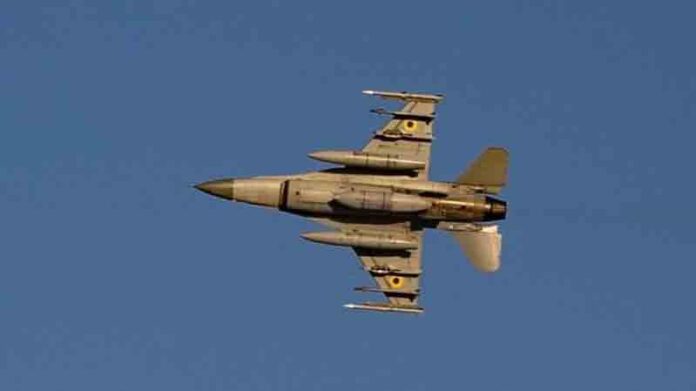
On April 12, 2025, a Ukrainian F-16 fighter jet was downed during a combat operation, with Ukrainian military sources suggesting that a Russian missile—potentially from an S-400 surface-to-air system or an R-37 air-to-air missile—was likely the cause.

This incident, confirmed by Ukraine’s Air Force and reported by the BBC, adds to the ongoing air conflict between Ukraine and Russia. While the downing of the aircraft and its pilot has garnered significant attention, the type of missile used provides deeper insights into the shifting dynamics of this conflict than the event itself.

The selection of the missile, whether a ground-based interceptor or a long-range air-to-air option, highlights Russia’s strategic adjustments and the difficulties Ukraine encounters in incorporating advanced Western technology into a challenging and high-stakes combat environment.

According to the BBC, which cited Ukrainian military sources, three missiles were launched at the F-16, with one—either an S-400 guided missile or an R-37—successfully hitting the aircraft. Ukrainian officials have dismissed the possibility of friendly fire, asserting that no Ukrainian air defense systems were operational in the vicinity at the time of the incident.

In contrast, Russia’s Defense Ministry asserted that the aircraft was struck by a surface-to-air missile but did not provide details on the specific system used. The absence of definitive evidence raises questions about the exact weapon involved, yet the two systems being discussed shed light on the technological and tactical competition taking place in Ukraine’s airspace.

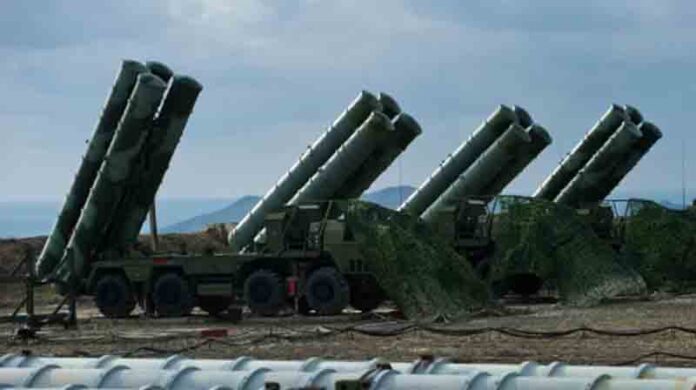
The S-400 Triumf, referred to by NATO as the SA-21 Growler, is a key component of Russia’s air defense strategy. Developed by NPO Almaz in the 1990s as an advancement of the earlier S-300 series, the S-400 was introduced into service in 2007 and has since established itself as one of the most sophisticated surface-to-air missile systems globally.

The system can engage targets at distances of up to 250 miles using its longest-range missile, the 40N6E. However, it more frequently employs shorter-range missiles such as the 48N6E3, which has a range of approximately 150 miles, particularly against fast-moving aircraft.

Equipped with the 92N6E radar, commonly known as “Grave Stone” by NATO, the system can simultaneously track up to 100 targets, providing data to launchers that can fire missiles at speeds greater than Mach 6. Its capability to counter low-flying aircraft, cruise missiles, and even ballistic threats enhances its effectiveness in denying airspace to opponents.

What distinguishes the S-400 is its incorporation into a multi-layered defense network. When combined with shorter-range systems like the Pantsir-S1 and bolstered by electronic warfare units, it forms a robust defensive shield. In Ukraine, Russia has deployed S-400 battalions to safeguard critical areas, including occupied regions and border areas such as Kursk and Belgorod.

If an S-400 was indeed responsible for downing the F-16, it indicates that the Ukrainian aircraft was operating within a heavily fortified area, likely near Sumy Oblast, where hostilities have escalated. The system’s extensive range would have enabled Russian forces to target the F-16 from a secure distance, taking advantage of vulnerabilities in Ukraine’s air defense suppression capabilities.

The R-37M, known as NATO’s AA-13 Arrow, offers a different perspective. This air-to-air missile, created by Vympel in the 1980s and updated in the 2010s, ranks among the longest-range missiles of its type, capable of hitting targets up to 186 miles away. Launched from platforms such as the MiG-31BM interceptor or the Su-35S fighter, the R-37M reaches speeds of Mach 6, utilizing a blend of inertial guidance and active radar homing to track agile targets.

The R-37M missile, equipped with a 132-pound high-explosive warhead, is engineered to eliminate a range of targets, from fighter jets to reconnaissance aircraft, making it a formidable tool against high-priority threats. In Ukraine, Russia has deployed the R-37M selectively yet effectively, often targeting Ukrainian aircraft from distances that exceed their own detection and countermeasure capabilities.

If an R-37M were responsible for downing an F-16, it would suggest that a Russian aircraft, likely a MiG-31, was operating at a high altitude, utilizing its advanced Zaslon-M radar to spot the Ukrainian jet from a significant distance. The missile’s extensive range enables Russian pilots to engage targets without entering contested airspace, thereby safeguarding their own aircraft while compelling Ukrainian pilots to adopt a defensive posture.

This situation raises important questions regarding the F-16’s mission—whether it was engaged in a strike operation, providing air support, or attempting to intercept Russian forces. The deployment of the R-37M would also underscore Russia’s dependence on stand-off weapons to assert air dominance in regions where Ukraine’s Western-supplied aircraft increasingly threaten their operations.

Both the R-37M and the S-400 system exemplify Russia’s overarching strategy to establish a “no-fly” zone over much of Ukraine’s frontline. The S-400 serves as a ground-based anchor for this strategy, projecting power over extensive distances and hindering Ukraine’s ability to maneuver freely.

In contrast, the R-37M extends this control into the aerial domain, enabling Russia to eliminate targets from a safe distance beyond retaliation. Together, these systems create a multi-layered defense that poses challenges even to advanced aircraft like the F-16, which was originally designed by General Dynamics [now Lockheed Martin] in the 1970s for a different type of conflict.

To grasp the challenges posed by these weapons, it is essential to consider the F-16 itself. The Fighting Falcon is a single-engine multirole fighter celebrated for its agility and adaptability. Measuring 49 feet in length with a wingspan of 32 feet, it can achieve speeds of Mach 2 and boasts a combat radius exceeding 340 miles when fully equipped.

The Pratt & Whitney F100 or General Electric F110 engine delivers remarkable thrust, complemented by the AN/APG-68 radar that facilitates all-weather targeting capabilities. This aircraft can carry a diverse range of munitions, including AIM-120 AMRAAM missiles and precision-guided bombs. Its electronic countermeasures, such as the ALQ-131 jamming pod, enhance its ability to avoid threats. For Ukraine, the F-16 represents a substantial advancement over the Soviet-era MiG-29s and Su-27s, providing superior avionics and compatibility with Western weaponry.

However, despite its advantages, the F-16 is not without vulnerabilities. Ukraine is contending with a battlefield environment that differs significantly from those it previously excelled in, such as Operation Desert Storm in 1991, where coalition air forces operated with complete dominance.

During that operation, F-16s conducted thousands of sorties, targeting Iraqi positions without fear due to strong support from AWACS aircraft, refueling tankers, and electronic warfare resources. In contrast, Ukraine’s F-16s function with limited support infrastructure. Secure airfields are few, ground personnel are overextended, and the integration with NATO’s command-and-control systems remains incomplete.

Lacking real-time intelligence from AWACS or similar systems, Ukrainian pilots must depend on their aircraft’s onboard sensors, which may have difficulty detecting threats like the R-37M at long distances or the S-400’s radar from deep within Russian-controlled areas.

This situation also highlights the historical development of air defense systems. The S-400 has its origins in the Soviet S-75, which infamously downed a U-2 spy plane over Cuba in 1962.

Over the years, Soviet and Russian engineers have continuously improved their systems to counter Western air capabilities, focusing on long-range, radar-guided missiles designed to neutralize NATO’s numerical superiority. The R-37M, for its part, evolved from Cold War initiatives aimed at countering American bombers and reconnaissance aircraft, adapting its role to engage modern fighter jets.

Both weapon systems have been utilized in conflicts such as Syria, where Russia deployed S-400s to safeguard its bases and employed air-to-air missiles to maintain control over disputed airspace. Their effectiveness against a Western-designed aircraft like the F-16 represents a significant achievement, demonstrating their capability to counter the technology they were designed to overcome.

When comparing these systems to their Western equivalents, their advantages and drawbacks become evident. The S-400 is frequently compared to the U.S. Patriot system, which also employs long-range missiles and sophisticated radar technology.

However, the Patriot system depends on closer integration with allied aircraft and satellites, a resource that Ukraine does not possess. The R-37M lacks a direct counterpart in NATO’s inventory; the AIM-120 AMRAAM, utilized by F-16s, has a range of approximately 100 miles, which is considerably shorter than the R-37M’s 186 miles.

This difference compels Ukrainian pilots to adopt a defensive strategy, evading threats that they cannot effectively counter. In contrast, Russia’s capability to integrate these weapons with platforms like the Su-35 or MiG-31 creates a synergy that Ukraine finds challenging to replicate without enhanced support.

The air conflict in Ukraine has transformed significantly since Russia’s invasion commenced in 2022. Initially, Ukraine depended on Soviet-era aircraft and basic air defense systems to repel Russian air assaults. The arrival of F-16s, provided by nations such as the Netherlands and Denmark starting in 2024, was intended to alter this dynamic, equipping Ukraine with a platform capable of contesting Russian air superiority.

Russia has adjusted its strategies, honing its tactics to take advantage of the F-16’s weaknesses. For example, the mobility of the S-400 system enables Russian forces to swiftly relocate their launchers, thereby avoiding Ukrainian attacks. The use of the R-37M from high-altitude interceptors such as the MiG-31 adds another layer of complexity to Ukraine’s operational planning, compelling pilots to carefully consider the risks of engaging with a distant and hidden threat.

This situation likely unfolded in an area like Sumy Oblast, where Ukraine has executed cross-border missions into Russia’s Kursk region. In response, Russian forces have launched significant airstrikes and increased troop presence, transforming the region into a critical conflict zone.

An F-16 operating in this context would have been assigned to assist ground forces, intercept Russian drones, or target locations across the border. However, operating near Russia’s multi-layered defenses—comprising S-400 systems on the ground and MiG-31s in the air—poses significant risks even for the most advanced aircraft. Ukrainian pilots, often trained in intensive programs abroad, are under considerable pressure to adapt to these challenging conditions, undertaking complex missions with limited resources.

The implications of this incident reach far beyond the immediate battlefield. The F-16 program is a key element of Western support for Ukraine, representing NATO’s dedication to countering Russian aggression. Each aircraft loss raises concerns about the long-term viability of this support. Ukraine’s air force is functioning at a fraction of its pre-war strength, with losses exceeding the rate of replacements.

Providing additional jets necessitates not only the aircraft themselves but also spare parts, trained personnel, and secure bases—resources that are increasingly strained due to ongoing Russian assaults. This incident may lead NATO to reevaluate its approach to equipping Ukraine, potentially speeding up the provision of advanced countermeasures or longer-range weaponry to help balance the conflict.

Russia’s viewpoint, heavily promoted by state media, portrays the incident as a showcase of its military advancements. However, without independent verification, these assertions remain unsubstantiated. As reported by the BBC, Ukraine is conducting an investigation to determine the incident’s cause, but the complexities of war hinder the pursuit of clear answers.

What is evident is that Russia’s air defense systems, both ground-based and airborne, have evolved to counter the threats posed by Western-supplied aircraft. The S-400’s capability to track and engage fast-moving targets, along with the R-37M’s long-range strike potential, demonstrates a level of sophistication that complicates Ukraine’s military strategy.

Historically, air forces have encountered similar obstacles when integrating new technologies. During the Vietnam War, early U.S. aircraft like the F-4 Phantom faced significant challenges against Soviet-supplied MiGs and surface-to-air missiles, necessitating tactical adjustments by pilots. In Ukraine, the F-16 is undergoing a comparable challenge, as it confronts 21st-century defenses with a design from the 1970s.

The effectiveness of the F-16 in previous conflicts was largely dependent on robust logistical support and air superiority—conditions that Ukraine currently cannot achieve. This situation highlights the challenges of incorporating Western military hardware into a conflict characterized by attrition and the need for improvisation.

Furthermore, the incident underscores the imbalance in the air war. Russia’s superior numbers in aircraft and missiles enable it to exert continuous pressure, utilizing glide bombs and drones that Ukrainian jets must defend against. The F-16’s mission, whether to intercept these threats or to target Russian positions, is crucial yet fraught with danger.

Without strong air defenses to counter S-400 systems or aircraft capable of challenging MiG-31s, Ukrainian pilots find themselves at a persistent disadvantage. Although Western training programs are thorough, they cannot completely equip pilots for an environment where quick decision-making is crucial for survival.

From a technical perspective, the survivability of the F-16 relies heavily on its countermeasures. Jamming pods and chaff dispensers can interfere with radar-guided missiles, but the latest S-400 models employ sophisticated signal processing to counter these strategies. The R-37M’s active homing capability makes it particularly difficult to evade, especially at extended ranges.

Additionally, Ukraine’s F-16s may be missing upgrades such as AESA radars, which improve situational awareness. These deficiencies highlight the broader challenge of modernizing a legacy platform for contemporary warfare, where electronic warfare and precision-guided munitions are prevalent.

Looking forward, this incident could lead Ukraine to adjust its strategy. If the S-400 was indeed responsible, Ukraine may focus on targeting Russian radar installations using drones or missiles like the Storm Shadow.

Conversely, if the R-37M was the cause, Ukraine might seek longer-range air-to-air missiles or enhance coordination with NATO surveillance resources. Regardless of the specifics, this loss emphasizes the necessity for a comprehensive strategy that integrates advanced aircraft with the necessary support infrastructure. For Russia, this event underscores the effectiveness of its layered defense systems, likely prompting further investment in advanced systems like the S-500, which offers even greater range and accuracy.

The downing of a Ukrainian F-16 represents more than just a single loss; it encapsulates a conflict where technology, tactics, and resilience intersect. Russia’s capability to deploy systems like the S-400 and R-37M illustrates its adaptation to emerging challenges, even as it navigates its own limitations.

For Ukraine, this incident serves as a stark reminder that possessing advanced aircraft is insufficient to change the course of the conflict; they also need support, training, and time, all of which are limited resources. This event underscores a harsh reality: in contemporary warfare, no military asset is invulnerable, and every advantage can quickly diminish.

As both parties continue to refine their tactics, the aerial conflict is expected to become increasingly intricate, prompting a crucial question: can Ukraine and its allies swiftly adjust to counter Russia’s advancing defenses, or will setbacks like this dictate the trajectory of the next stage of the conflict?

Expensive U.S. Excalibur shells struggle to perform due to Russian jamming techniques

0
M982 Excalibur, a high-tech American artillery shell

A senior official from Ukraine has raised concerns about the effectiveness of the M982 Excalibur, a high-tech American artillery shell, pointing out its susceptibility to Russian electronic warfare strategies.

Yegor Chernev, the deputy chairman of the Verkhovna Rada’s Committee on Security, recently remarked that the GPS-guided munition, which costs tens of thousands of dollars per round, has faced challenges in maintaining its accuracy due to advanced jamming technologies.

This criticism, stemming from the ongoing conflict in Ukraine, prompts broader discussions regarding the dependability of cutting-edge weaponry in contemporary warfare, where electronic countermeasures are becoming increasingly common.

Although the Excalibur was previously celebrated for its exceptional accuracy, its reported limitations underscore a technological arms race that may influence how militaries globally develop and utilize precision-guided munitions.

The M982 Excalibur is a 155mm extended-range guided artillery shell, created through a partnership between Raytheon Missiles & Defense and BAE Systems Bofors. It was introduced to the U.S. Army in 2007, designed to provide precise strikes in complex combat scenarios.

The shell employs a combination of GPS and inertial navigation systems to hit targets with a circular error probable of less than four meters, allowing it to land within approximately 13 feet of its intended target. This level of accuracy enables engagement of enemy positions, bunkers, or vehicles while reducing collateral damage, which is crucial for operations near civilian populations or allied forces.

With a firing range of about 25 miles from standard howitzers like the M777, and up to 43 miles in tests with advanced systems, the Excalibur equips commanders with the capability to strike distant targets without the need for air support.

Its folding glide fins enhance its range, while its warhead, weighing approximately 22 kilograms, can be adjusted for point detonation, delayed detonation, or height-of-burst, making it adaptable for various targets. The cost of the shell, typically reported to be between $70,000 and $100,000 per round, reflects its advanced engineering and highlights the critical implications of any performance issues.

When Ukraine began receiving Excalibur shells from the United States in 2022, they were hailed as transformative. Footage released by Ukrainian forces demonstrated the rounds effectively destroying Russian equipment with pinpoint accuracy, targeting everything from tanks to artillery.

General Valeriy Zaluzhny, who was Ukraine’s commander-in-chief at the time, commended their precision in strikes along the Dnipro River, where they successfully disrupted Russian artillery targeting the city of Mykolaiv. Initial reports indicated that the shells achieved a success rate of about 70%, a significant enhancement compared to unguided artillery, which can miss targets by hundreds of feet.

The Excalibur’s capability to hit a target with a single shot, rather than needing multiple rounds to bracket it, allowed Ukrainian gunners to conserve ammunition and minimize their risk of counter-battery fire. This efficiency proved crucial for a military contending with a numerically superior adversary.

As the conflict continued, the effectiveness of the Excalibur began to diminish. Russian forces adapted to the threat by deploying sophisticated electronic warfare systems aimed at disrupting GPS signals.

These systems, including the Krasukha-4 and Zhitel, emit strong radio waves that jam satellite navigation, leading GPS-guided munitions to lose their target lock. Without accurate guidance, the Excalibur’s flight path becomes unpredictable, resulting in potential misses of several meters or failures to detonate as intended.

By mid-2023, Ukrainian evaluations indicated a significant drop in the shell’s success rate, with some estimates suggesting it plummeted to as low as 6%. This steep decline led Kyiv to reduce its reliance on the munition, and the U.S. eventually ceased deliveries, citing the high failure rate.

A report from the Washington Post in May 2024 confirmed that Ukraine had communicated these challenges to Washington, emphasizing how Russian jamming had diminished the shell’s effectiveness on the battlefield.

The core issue stems from the Excalibur’s dependence on GPS, a groundbreaking system that is not impervious to interference. GPS signals are relatively weak, traveling vast distances from satellites to ground receivers. Jamming devices take advantage of this vulnerability by emitting noise on the same frequencies, overwhelming the signal and disrupting the munition’s guidance system.

While the Excalibur is equipped with an inertial navigation backup that uses internal sensors to estimate its position based on acceleration and direction, this method is less accurate, particularly over long distances. Over the past decade, Russian forces have refined their electronic warfare capabilities, incorporating systems like the Pole-21, which can disrupt GPS signals over extensive areas.

These developments have impacted not only the Excalibur but also other munitions supplied by the West, including JDAM-ER bombs and HIMARS rockets, which utilize comparable navigation systems.

This is not the first instance where advanced weaponry has been rendered ineffective by countermeasures. In the 1999 NATO operation in Kosovo, Yugoslav forces employed basic jamming techniques to disrupt American cruise missiles, compelling pilots to modify their strategies.

In the early 2000s, insurgents in Iraq and Afghanistan utilized simple radio jammers to incapacitate remote-controlled explosives, leading the U.S. to create frequency-hopping technologies. More recently, Hezbollah has deployed Iranian-supplied jammers to disrupt Israeli drones, thereby restricting their reconnaissance capabilities.

These cases exemplify a recurring cycle in warfare: a new technology achieves dominance until an opponent discovers a method to counter it, prompting a new wave of innovation. The challenges faced by the Excalibur in Ukraine reflect this trend, highlighting that no weapon is immune to adaptation.

For Ukrainian artillery units, the diminishing reliability of the Excalibur has been a significant source of frustration. Gunners who were trained to anticipate nearly flawless strikes have had to revert to older, less accurate techniques, launching volleys of unguided shells to ensure successful hits.

This transition leads to increased ammunition usage and heightens the risk for crews, as they must hold their positions longer to make necessary adjustments. Some units have responded by integrating artillery with drones, utilizing real-time reconnaissance to verify targets prior to firing. However, this solution relies heavily on the availability of drones and effective communication.

The psychological impact is also considerable. Soldiers who previously depended on the Excalibur’s accuracy now confront uncertainty, aware that an expensive round could miss its target, leaving them exposed and their position compromised.

The ramifications of this issue reach well beyond the front lines in Ukraine. The conflict has evolved into a proving ground for contemporary warfare, attracting the attention of nations such as the United States and China, who are keenly analyzing its insights.

The Excalibur’s susceptibility to jamming has ignited discussions within the Pentagon regarding the future of weapons reliant on GPS. Engineers are investigating alternatives, including laser-guided systems that target areas illuminated by a designator, as well as autonomous munitions that leverage artificial intelligence to identify and engage targets without the need for external signals.

The U.S. Army is already channeling resources into initiatives like the Precision Strike Missile, which integrates various guidance methods to enhance resistance to jamming. Meanwhile, adversaries are taking note of these developments. China, which deploys its own GPS-guided artillery such as the BP-12A, is likely enhancing its electronic warfare capabilities to counter Western munitions, mirroring actions taken by Russia.

When comparing the Excalibur to the artillery systems of other nations, both its advantages and drawbacks become apparent. For instance, Russia’s Krasnopol, a laser-guided 152mm shell, provides precision similar to that of the Excalibur but necessitates a spotter to illuminate the target, which restricts its adaptability in contested scenarios.

China’s GP155A, another GPS-guided artillery round, offers a comparable range but does not have the established combat history of the Excalibur. Western alternatives, such as Germany’s Vulcano, which utilizes both GPS and laser guidance, seek to mitigate vulnerabilities to jamming, yet their deployment remains limited.

These options illustrate a significant trade-off: while laser guidance can circumvent GPS jamming, it requires a direct line of sight and human intervention, which may not always be practical. The Excalibur’s design, which integrates range, autonomy, and accuracy, remains unparalleled in theory, but its effectiveness in real-world scenarios now depends on its ability to counter electronic warfare tactics.

Historically, the Excalibur has demonstrated its value in previous conflicts. In Iraq and Afghanistan, it enabled U.S. forces to target insurgent positions in urban settings while minimizing civilian casualties. A 2008 U.S. Army report indicated that 92% of Excalibur rounds fired in Iraq landed within four meters of their intended targets, a level of precision unattainable by unguided artillery.

This success led to its widespread adoption among allies, including Canada, Australia, and India, who incorporated the shell into their M777 howitzers. However, those conflict zones did not experience the same level of electronic warfare capabilities as seen in Ukraine.

Insurgents lacked the ability to jam GPS signals, and U.S. air dominance ensured reliable satellite communication. In contrast, Ukraine’s battlefield, characterized by a dense array of jammers and contested airspace, presents a much more intricate environment, revealing vulnerabilities that were not apparent in earlier conflicts.

The overarching question is how military forces will adjust to this evolving landscape. Electronic warfare capabilities are not exclusive to Russia; the U.S. possesses systems like the AN/ALQ-249, designed to disrupt enemy communications and navigation. However, the rapid and extensive nature of Russia’s jamming operations in Ukraine has taken Western strategists by surprise.

A 2023 article in The Economist highlighted the widespread failure of Excalibur shells early in the year, with weeks elapsing without a successful strike. This situation led to urgent talks between Kyiv and Washington, as Ukraine advocated for software updates to enhance the shells’ precision.

While some improvements have been made to other systems, such as JDAM bombs, the future of the Excalibur remains uncertain. The U.S. decision to halt deliveries indicates a potential shift in focus, possibly towards the development of next-generation munitions that are less dependent on vulnerable technologies.

For the average American, this narrative may seem remote, yet it holds significant implications domestically. Each Excalibur round symbolizes taxpayer investment—hundreds of millions allocated to a weapon now rendered ineffective by an adversary’s cleverness.

According to Pentagon records from 2022, the U.S. has supplied Ukraine with billions in assistance, including over 3,000 Excalibur shells. When these munitions fail to perform, it ignites discussions about defense funding and military strategies. However, the matter extends beyond financial considerations.

The soldiers utilizing these rounds, whether Ukrainian or American in future engagements, rely on their dependability. A missed shot is not merely a statistic; it represents a critical moment where lives are at stake, a bunker remains unscathed, or a tank continues its offensive.

Looking forward, the challenges faced by the Excalibur mark a pivotal moment. The era of unquestioned GPS supremacy may be coming to a close, compelling engineers to reconsider their approaches to achieving precision. The Pentagon’s strategy—whether it involves developing robust GPS receivers, implementing multi-mode guidance, or creating entirely new systems—will influence the landscape of warfare for the next ten years.

Other countries are observing closely, and their advancements are likely to follow suit. For example, China’s expanding electronic warfare capabilities could present similar obstacles in a potential conflict in the Pacific. Additionally, the human toll remains a significant factor. Ukrainian artillery units, adapting to these challenges, exemplify the resilience of those caught in a technological struggle, with their creativity being as vital as the equipment they use.

This moment feels like a turning point. The Excalibur’s potential for precision was genuine, but so is the necessity for adaptation. Warfare evolves more rapidly than the news can report, and what is considered a solution today may become a lesson tomorrow. The lingering question is whether the U.S. and its allies can stay ahead of the jammers, or if the battlefield will require a new form of accuracy that we have yet to conceive.

Turkish S-400 deployment in Syria poses a major threat to Israeli aircraft, escalating regional security tensions

0

Russian analysts have characterized Turkey’s upcoming deployment of the Russian-manufactured S-400 Triumf long-range air defense system in Syria as a strategic “trap” aimed at addressing the increasing Israeli airstrikes on targets within the country. The goal of establishing an air defense “umbrella” that integrates Turkey‘s short, medium, and long-range systems is to provide comprehensive protection for Syrian territory against aerial threats, particularly from Israeli fighter jets.

Igor Subbotin, a Russian defense analyst writing for the reputable news outlet Nezavizimaya Gazeta, disclosed that Turkey is set to move the S-400 battery to a key airbase in Syria’s contested Homs region.

The airbase in question, believed to be either T-4 or Tiyas Airbase, has historically served as the largest operational airbase for the Assad regime’s air force, making it of significant strategic importance. Located north of Tiyas and just west of the ancient city of Palmyra, T-4 Airbase has also been a site for Soviet-era Russian fighter aircraft deployments during the 1970s and 1980s.

In recent years, Iranian forces have frequently used T-4 Airbase to conduct operations against ISIS, highlighting its ongoing strategic relevance in the regional security landscape.

International sources indicate that Turkey plans to develop T-4 into a robust layered air defense center, specifically aimed at strengthening the defense capabilities of Syria’s new administration against persistent Israeli incursions.

At the heart of this defense strategy lies the advanced S-400 Triumf system, which features a range of sophisticated integrated components, including the 91N6E “Big Bird” radar. This radar is capable of detecting airborne targets at distances of up to 600 km.

The system’s targeting accuracy is significantly improved by the 92N6E “Grave Stone” fire-control radar, designed specifically to lock onto and accurately direct interceptor missiles toward identified threats.

Enhancing the multi-layered detection framework, the 96L6E “Cheese Board” radar provides dependable mid-range tracking capabilities, covering an area of about 300 km, which greatly boosts operational precision.

The S-400’s missile inventory includes mobile transporter erector launchers (TEL) equipped with various ready-to-launch missiles, all managed through the fully automated 55K6E command and control center.

Among the missile types utilized are the formidable 40N6 (with a range of 400 km), the 48N6 (250 km), and the adaptable 9M96 (40–120 km), enabling the S-400 to effectively engage multiple aerial threats simultaneously, regardless of weather conditions.

Developed by the esteemed Russian defense company Almaz-Antey, which also created the earlier S-300 and the more recent S-500 Prometey systems, the S-400 Triumf exemplifies state-of-the-art aerospace and air defense technology.

Turkey’s strategic choice to acquire the S-400 system from Russia in December 2017, through a substantial US$2.5 billion (RM11 billion) agreement, represented a significant shift in Ankara’s defense and diplomatic stance. This decision followed unsuccessful efforts to obtain the US-made Patriot missile defense system, highlighting Turkey’s urgent need to enhance its air defense capabilities amid the ongoing Syrian conflict and strained relations with Russia.

The move escalated diplomatic tensions with the United States and NATO, both of which view the integration of Russian air defense technology as incompatible and potentially detrimental to NATO’s operational security. In retaliation, Washington removed Turkey from the advanced F-35 stealth fighter program in July 2019 and imposed economic sanctions under the Countering America’s Adversaries Through Sanctions Act (CAATSA) in December 2020.

CAATSA, which was enacted by the US Congress in 2017, specifically targets countries that engage with the defense sectors of Russia, Iran, and North Korea, aiming to economically isolate Moscow while inadvertently straining relations with key NATO allies like Turkey. Despite facing significant international pressure, Turkey continued with the acquisition, receiving its first S-400 battery delivery in July 2019, thereby reaffirming its commitment to strategic autonomy and a diversified defense policy.

Turkey is concurrently working to enhance its air defense strategy by introducing domestically manufactured HISAR air defense systems, which may include the medium-range HISAR-O or the short-range HISAR-A variants. This initiative aims to strengthen the T-4 Airbase and assert control over the regional airspace.

The HISAR system has been in development since 2011 through a partnership between prominent Turkish defense firms ROKETSAN and ASELSAN, reaching a notable achievement with the successful test of the HISAR-O missile in 2014.

Specifically designed as part of a comprehensive defense architecture that includes HISAR-A (short-range), HISAR-O (medium-range), and HISAR-U (long-range), the HISAR-O features advanced missiles, mobile launch platforms built on Mercedes-Benz 6×6 trucks, and cutting-edge fire control systems, radar, and electro-optical sensors.

The ASELSAN KALKAN phased-array 3D radar integrated into the HISAR-O system provides outstanding tracking capabilities, allowing it to monitor up to 60 targets simultaneously at distances of up to 60 km. It effectively neutralizes aerial threats within a 25 km engagement range and at altitudes of up to 10 km.

Nevertheless, Turkey’s strategic goals faced significant setbacks due to preemptive airstrikes by Israel on the T-4 Airbase, which inflicted considerable damage on critical infrastructure, including runways, control towers, hangars, and assets of the Syrian Air Force. An intelligence official noted, “It was a clear message that Israel would not tolerate an expanding Turkish presence,” while analyzing the extent of the destruction captured in reconnaissance images.

Syrian sources associated with Ankara have informed Reuters that the T-4 Airbase is now entirely incapacitated due to Israeli airstrikes, marking a significant rise in tensions between Turkey and Israel. In response, Turkey’s Foreign Ministry promptly denounced the Israeli actions, labeling Israel as “the greatest threat to regional security.”

Both nations are currently engaged in diplomatic discussions aimed at alleviating military tensions in Syria, with the goal of reducing the risk of conflict between these two important U.S. allies, whose relationship has deteriorated since the onset of the Gaza war in 2023.

On Wednesday, officials from Turkey and Israel convened in Azerbaijan to create frameworks designed to avert confrontations between their military forces operating in Syria, as confirmed by official statements from both governments. The Israeli delegation was headed by Tzachi Hanegbi, Director of the National Security Council, as noted in a release from Israeli Prime Minister Benjamin Netanyahu’s office.

Since the downfall of Syrian President Bashar Assad late last year, Israel and Turkey have been pursuing conflicting strategic objectives within Syria.

The Syrian Foreign Ministry has announced that Israeli fighter jets conducted airstrikes on a Syrian airbase, which Turkey is reportedly aiming to use to enhance its regional power.

Israel is increasingly worried that the new Islamist leadership in Syria may elevate security risks along its borders, prompting the establishment of a buffer zone within Syrian territory. At the same time, Turkey’s rising influence as a key player in Syria has intensified Israeli concerns about a larger Turkish military presence.

On Tuesday, Israeli Prime Minister Benjamin Netanyahu remarked that the creation of Turkish military bases in Syria would represent a “threat to Israel.”

Iran and the U.S. concluded high-level talks in Oman and will continue discussions next week, according to Tehran

0

Iran and the United States engaged in discussions in Oman on Saturday, with plans to reconvene next week, according to Iranian officials. This dialogue aims to address Tehran’s advancing nuclear program amid President Donald Trump‘s warnings of potential military action if an agreement is not reached.

Iranian Foreign Minister Abbas Araqchi shared on his Telegram channel that his team had a brief interaction with the U.S. delegation, led by Trump’s Middle East envoy Steve Witkoff, following their indirect talks facilitated by Oman.

“After more than two and a half hours of indirect discussions, the leaders of the Iranian and American delegations had a short conversation in the presence of the Omani foreign minister as they concluded the talks,” Araqchi stated. He described the discussions—marking the first between Iran and the Trump administration, including his initial term from 2017 to 2021—as taking place in a “productive and positive atmosphere.”

Araqchi noted that both parties agreed to continue their discussions next week, although he did not provide details regarding the location or date. There was no immediate response from the U.S. regarding the talks.

Highlighting the significant divide between the U.S. and Iran, Iranian Foreign Ministry spokesman Esmail Baghaei mentioned on X that each delegation operated from separate rooms and communicated through Oman’s foreign minister.

An Omani source informed Reuters that the primary focus of the discussions would be on reducing regional tensions, facilitating prisoner exchanges, and negotiating limited agreements to ease sanctions on Iran in return for curbing its nuclear program. Baghaei refuted this characterization but did not clarify what aspects were inaccurate.

Oman has historically served as a mediator between Western nations and Iran, successfully negotiating the release of various foreign citizens and dual nationals detained by the Islamic Republic. Tehran approached these talks with caution, doubtful of their potential success and wary of Trump, who has consistently threatened military action if Iran does not cease its rapid uranium enrichment, which the West views as a potential route to nuclear weapons.

While both parties have expressed optimism about the potential for progress, they remain significantly divided over a dispute that has persisted for over twenty years. Iran has consistently denied any intention to pursue nuclear weapons, yet Western nations and Israel suspect that it is secretly working to develop the capability to create an atomic bomb.

The discussions on Saturday were conducted indirectly, as Iran preferred, rather than through direct engagement, which was insisted upon by Trump. “This marks the beginning. It is typical at this stage for both sides to share their core positions via the Omani intermediary,” stated Baghaei.

Any signs of advancement could help alleviate tensions in a region that has been volatile since 2023, marked by conflicts in Gaza and Lebanon, missile exchanges between Iran and Israel, Houthi assaults on shipping in the Red Sea, and the collapse of the Syrian government.

However, a lack of progress could heighten concerns about a broader conflict in a region that is a major oil exporter. Tehran has warned neighboring countries hosting U.S. military bases that they would face “severe consequences” if they participated in any U.S. military action against Iran.

“There is an opportunity for initial understanding on further negotiations if the other party (U.S.) approaches the discussions with an equal footing,” Araqchi conveyed to Iranian television.

Iran’s Supreme Leader Ayatollah Ali Khamenei, who holds the ultimate authority on significant state issues, has granted Araqchi “full authority” to conduct the talks, according to an Iranian official who spoke to Reuters. Iran has firmly excluded discussions regarding its defense capabilities, including its ballistic missile program.

Western countries assert that Iran’s uranium enrichment has significantly exceeded what is necessary for a civilian energy program, resulting in stockpiles with fissile purity levels approaching those needed for nuclear warheads.

Since February, Trump has reinstated a “maximum pressure” strategy against Tehran, having abandoned the 2015 nuclear agreement between Iran and six global powers during his first term in 2018, which led to the reimposition of severe sanctions on the Islamic Republic.

As a result, Iran’s nuclear advancements have accelerated, including the enrichment of uranium to 60% fissile purity, which is a critical step toward the levels required for a nuclear weapon.

Israel, the closest ally of Washington in the Middle East, views Iran’s nuclear program as a fundamental threat to its existence and has consistently warned of potential military action if diplomatic efforts fail to limit Iran’s nuclear goals.

Over the past 18 months, Tehran’s influence in the Middle East has significantly diminished, with its regional allies—collectively referred to as the “Axis of Resistance”—either being dismantled or severely weakened since the onset of the Hamas-Israel conflict in Gaza and the decline of Bashar al-Assad’s regime in Syria in December.

Reasons Behind Trump’s Urgent Search for Allies in His Trade Conflict with China

0

Does America seek to restore its alliances? After three months of insults, tariffs, and even threats to annex some of its closest allies, the Trump administration now finds itself in need of assistance.

The US President has intensified a trade conflict with China that he appears uncertain how to resolve. Consequently, the administration is hurriedly exploring ways to gain leverage over Chinese President Xi Jinping, who is not inclined to yield to Trump’s aggressive tactics.

However, there is a potential strategy that could be effective. This approach would leverage America’s strength and global influence, potentially pressuring Beijing to address ongoing US concerns regarding market access, intellectual property theft, industrial espionage, and other related issues. The challenge lies in the fact that this strategy would contradict Trump’s “America first” philosophy.

Treasury Secretary Scott Bessent noted on Fox Business this week that US allies, including Japan, South Korea, and India, are set to engage in trade discussions with Washington, along with Vietnam.

“Everyone is coming to the table, effectively surrounding China,” he stated. Bessent emphasized that a key focus of these discussions should be a shared objective: “How do we encourage China to rebalance? That is the significant victory here.”

On Friday, White House Press Secretary Karoline Leavitt was questioned about why American allies would assist in countering China, given Trump’s approach of treating both friends and adversaries similarly. She responded, “You’ll need to speak with our allies who are reaching out to us. The phones are ringing off the hooks. They have clearly indicated that they require the United States, our markets, and our consumer base.”

However, since returning to the Oval Office, Trump has taken actions aimed at undermining coalitions of like-minded democracies. Throughout the week, he has criticized the European Union, stating, “I always say it was formed to really do damage to the United States in trade.”

Trump is not alone in his disdain for Europe. Vice President JD Vance expressed his negative views about the continent at the Munich Security Forum and during discussions among officials regarding airstrikes in Yemen.

Trump’s antagonism extends to the Western Hemisphere as well.

The concept of a unified North American trading bloc has long been viewed as a potential defense against China. Yet, Trump has consistently threatened to dominate Canada and has imposed some of his harshest tariffs on Mexico. New Canadian Prime Minister Mark Carney has cautioned that the longstanding relationship with Washington has changed.

Nevertheless, the notion of forming an allied front to address China’s trade practices is so sensible that it raises the question of why it wasn’t proposed earlier.

In fact, it was proposed, but Trump dismissed it.

On his first day in office in 2017, Trump exited the Trans-Pacific Partnership, which comprised 12 nations, including allies such as Mexico, Canada, Japan, and Australia, while notably excluding China. He also terminated the Transatlantic Trade and Investment Partnership, a proposed agreement that aimed to connect the two largest markets globally.

The pressing concern now is whether Trump has distanced the United States from its allies to the extent that they may no longer respond to his outreach.

“The US is currently perceived as an extremely unreliable partner on the global stage, and I am uncertain about how we can restore that reliability,” stated Jason Furman, former chair of the Council of Economic Advisers during the Obama administration, in an interview with CNN on Thursday.