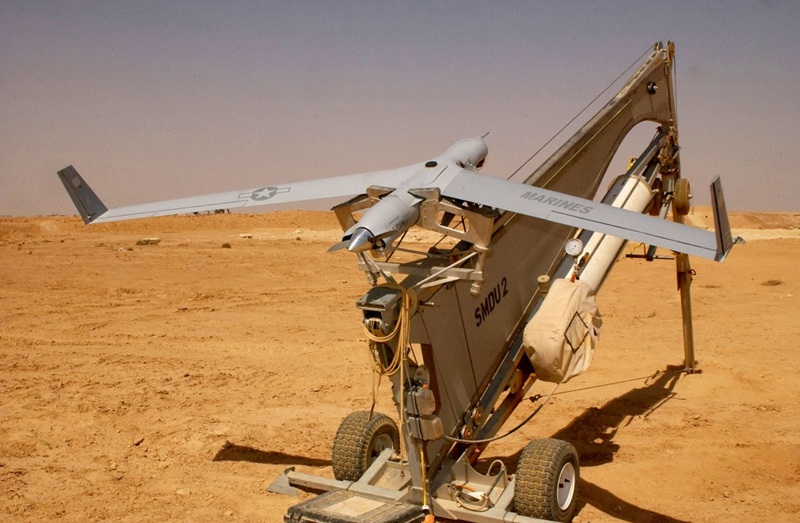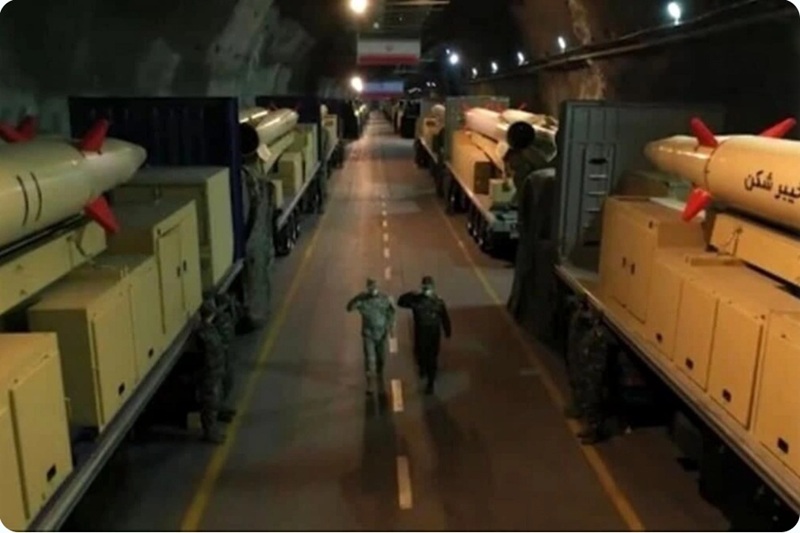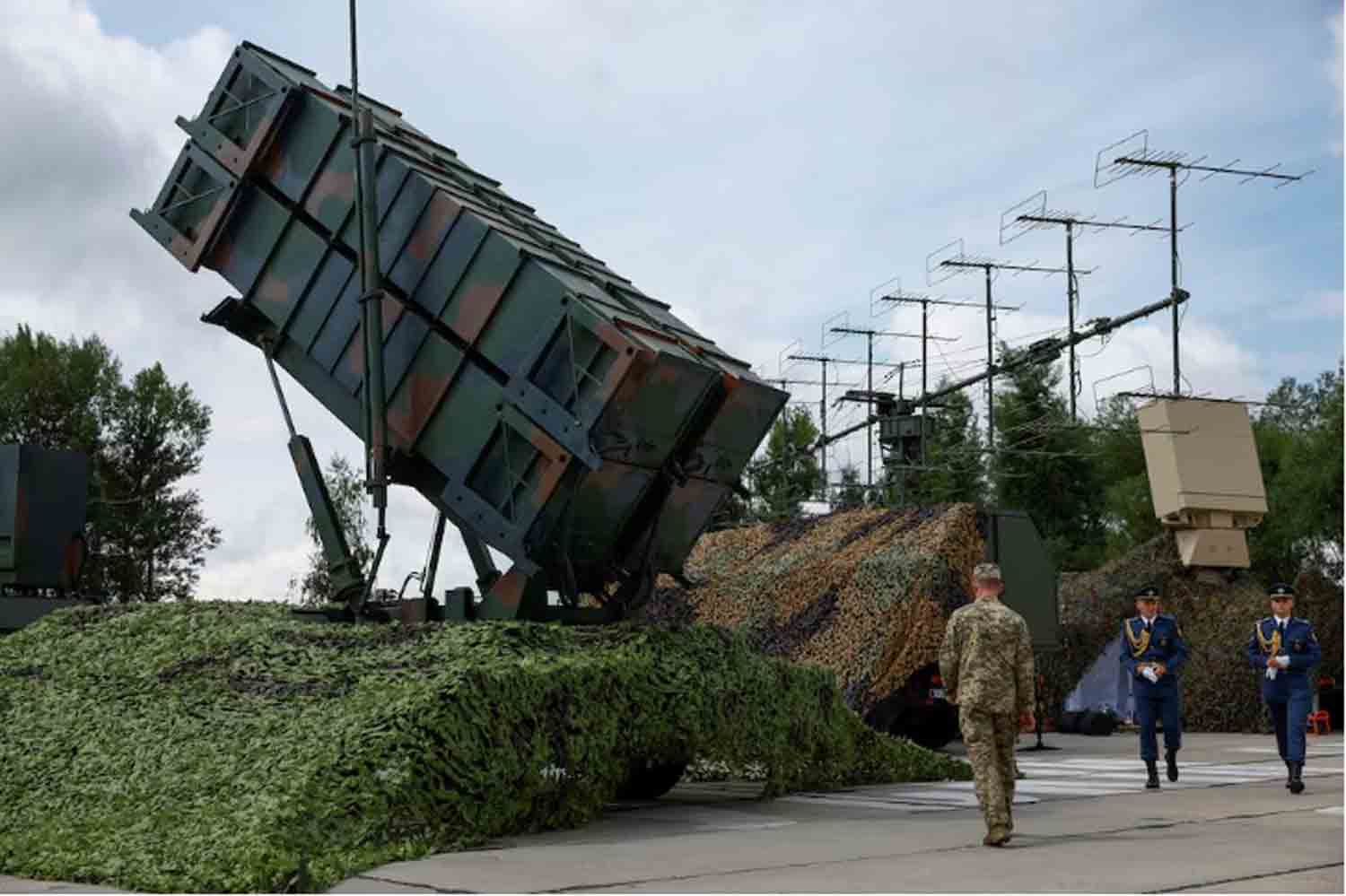
New technical evidence suggests that the U.S. Patriot air-defense system deployed in Qatar may be experiencing significant attrition after days of sustained Iranian missile and drone attacks across the Gulf region.
Images and analysis indicate that American-operated Patriot batteries in Qatar are now firing PAC-2 interceptors manufactured around the year 2000, raising questions about the availability of more advanced PAC-3 interceptors.
The development highlights the intense pressure placed on missile defense systems during prolonged high-tempo conflict.
Evidence Points to Depletion of PAC-3 Interceptors
The Patriot system uses multiple interceptor types depending on the threat environment.
The PAC-3 (Patriot Advanced Capability-3) interceptor is the most modern variant designed primarily to defeat ballistic missiles through hit-to-kill kinetic impact, meaning it destroys incoming missiles by directly colliding with them at high speed.
However, analysts believe that U.S. forces in Qatar have begun firing older PAC-2 interceptors, which rely on a proximity fragmentation warhead rather than direct kinetic impact.
The shift suggests that stocks of PAC-3 interceptors may have been significantly depleted after repeated engagements with Iranian ballistic missiles and drone swarms.
PAC-2 vs PAC-3: Key Technical Differences
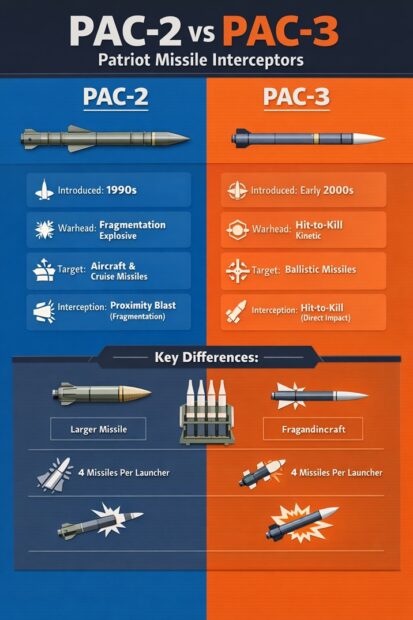
The Patriot system has evolved through multiple upgrades, each designed to counter increasingly sophisticated threats.
PAC-2 Interceptor
-
Introduced in the 1990s
-
Uses a fragmentation warhead to destroy targets
-
Primarily designed to counter aircraft and cruise missiles
-
Effective but less optimized against modern ballistic missiles
PAC-3 Interceptor
-
Introduced in the early 2000s
-
Uses hit-to-kill kinetic interception
-
Specifically designed to defeat ballistic missile threats
-
Smaller missile allowing four interceptors per launcher cell
PAC-3 interceptors are significantly more effective against short-range ballistic missiles, which are widely used in Iran’s arsenal.
Age of the Missiles Raises Operational Questions
The PAC-2 interceptors reportedly used in Qatar carry manufacturing dates around 2000, meaning the missiles are now more than two decades old.
Missile interceptors typically have a service life of 10–15 years, after which major refurbishment or replacement is usually required.
Deploying 26-year-old interceptors suggests that the U.S. military may be drawing from deep reserve stockpiles to sustain operational readiness.
According to defense analysts, this indicates either:
-
PAC-3 interceptors are being conserved for a critical escalation scenario, or
-
PAC-3 stockpiles have already been significantly depleted.
Iranian Missile and Drone Pressure
The heavy use of interceptors comes as Iran has launched large waves of ballistic missiles and drones targeting U.S. bases and regional infrastructure across the Gulf.
Air-defense systems in countries such as Qatar, Saudi Arabia, Kuwait, and the UAE have been forced to engage incoming threats repeatedly.
Missile defense systems are designed for limited engagements, but sustained barrages can rapidly exhaust interceptor stockpiles.
Each Patriot interceptor costs approximately:
-
PAC-2: around $2–3 million per missile
-
PAC-3: around $4–5 million per missile
In contrast, many Iranian drones cost tens of thousands of dollars, creating a severe cost imbalance for defenders.
Strategic Implications for Gulf Air Defense
The possible use of aging PAC-2 missiles illustrates a broader challenge in modern air defense warfare.
Sustained missile and drone attacks can force even technologically advanced militaries to consume expensive interceptors faster than they can be replaced.
If PAC-3 stocks are indeed running low, it could have several implications:
-
Greater reliance on older Patriot interceptors
-
Increased use of THAAD and allied air-defense systems
-
Greater urgency in deploying counter-drone technologies
-
Accelerated production of new interceptor missiles
Defense analysts warn that prolonged high-intensity conflict in the Gulf could place significant strain on Western missile defense inventories.
A Test for U.S. Missile Defense Logistics
The situation highlights the logistical realities of missile defense in a large-scale regional conflict.
Air-defense networks are not only tested by the quality of their technology, but also by the depth of their interceptor stockpiles and supply chains.
As Iranian missile and drone attacks continue, the ability of the United States and its allies to sustain interceptor supplies may become one of the defining factors in the evolving conflict.