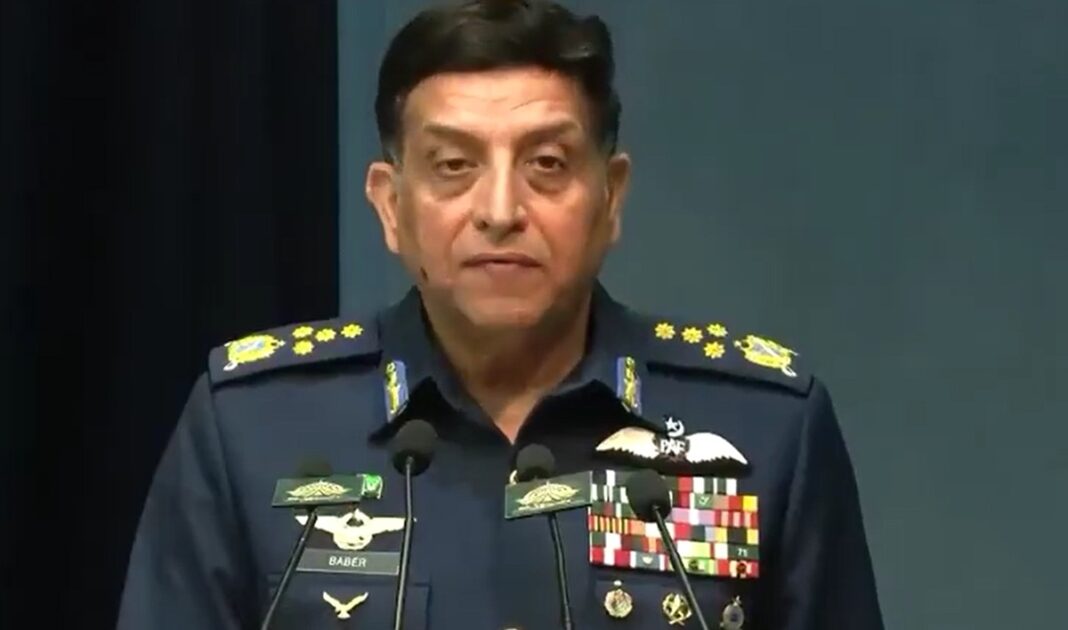
In a significant and rare disclosure, Pakistan Air Force Chief Air Chief Marshal Zaheer Ahmed Babar has revealed previously undisclosed technical details of the high-stakes air war between India and Pakistan fought exactly one year ago.
The revelations provide new insight into how modern air warfare unfolded during the conflict — offering a deeper understanding of tactics, technology, and decision-making on both sides.
🔺🇵🇰🦅🇮🇳:
PAF targeted 16 military installations across India, say PAF Chief Air Marshal Zaheer Ahmed Babar, including:1) A BrahMos storage facility
2) Command and Control node in Barnala
3) Two S-400 systems. pic.twitter.com/05R4piYidd— Tactical Tribune (@TacticalTribun) May 7, 2026
A Turning Point in South Asian Air Warfare
The air battle — widely considered one of the most complex engagements in recent regional history — marked a shift from traditional dogfighting to network-centric, beyond-visual-range (BVR) combat.
According to the newly revealed details:
- Engagements were coordinated across multiple domains
- Real-time data sharing played a decisive role
- Airborne command systems enabled rapid response
The battle demonstrated that modern air superiority depends less on individual aircraft and more on integrated combat systems.
Inside the Battle: Technology, Coordination and Speed
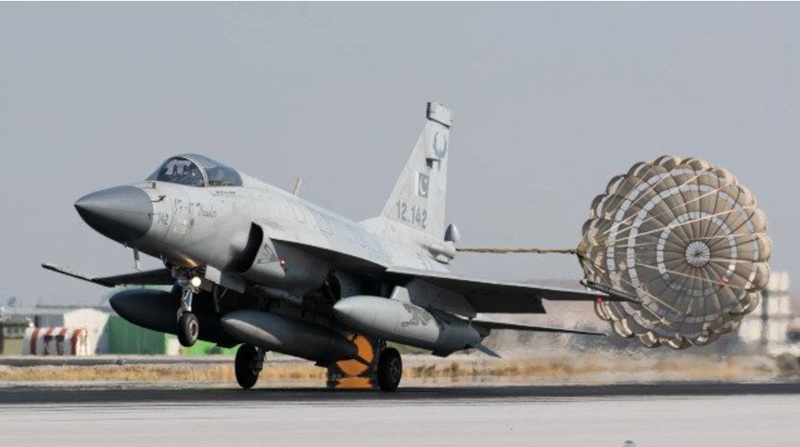
The PAF Chief highlighted several key operational factors that shaped the outcome:
1. Network-Centric Warfare
Pakistan leveraged integrated systems linking:
- Fighter aircraft
- Airborne Early Warning & Control (AEW&C) platforms
- Ground-based radar systems
This allowed for real-time battlespace awareness and faster decision-making.
2. Beyond-Visual-Range (BVR) Dominance
The battle was largely fought beyond visual range, where:
- Radar tracking replaced visual contact
- Missiles were guided using advanced targeting systems
- Engagement decisions were made within seconds
This marked a clear departure from traditional close-range dogfights.
3. Multi-Layered Air Defence
The PAF reportedly employed a layered defence strategy:
- Early detection through airborne sensors
- Rapid interception by fighter jets
- Electronic warfare measures to disrupt adversary systems
This created a denial environment for opposing aircraft.
Command and Control: The Decisive Edge
A major takeaway from the briefing was the importance of airborne command platforms.
Systems such as AEW&C aircraft acted as:
- Central coordination hubs
- Real-time intelligence providers
- Decision-making nodes in combat
This allowed Pakistan to compress the sensor-to-shooter cycle, gaining a critical edge in timing and coordination.
Lessons for Modern Air Warfare
The newly revealed details reinforce several broader trends:
➡️ Air combat is now data-driven, not platform-driven
➡️ Speed of information is as important as firepower
➡️ Integration across systems defines battlefield success
These lessons extend beyond South Asia, reflecting global shifts in military doctrine.
Strategic Implications for India–Pakistan Balance
The disclosure also has implications for regional security dynamics:
- Highlights Pakistan’s focus on technology-driven force multiplication
- Underscores the importance of airborne surveillance and coordination systems
- Signals an evolving competition in electronic and network warfare capabilities
As both countries continue to modernize their air forces, such insights may shape future military planning.
Conclusion: A Glimpse Into the Future of Air Combat
The PAF Chief’s revelations offer a rare and valuable window into one of the most closely watched air battles in recent history.
The key takeaway is clear:
Modern air warfare is no longer about who has more aircraft — it is about who controls the information, speed, and coordination of the battlefield.