The United States and Israel are employing advanced digital technologies and artificial intelligence-enabled systems to detect and strike hundreds of targets inside Iran every day, marking one of the fastest-paced targeting cycles in modern military history.
According to reporting by The Economist, the scale and intensity of U.S.–Israeli firepower now exceeds the operational tempo seen during the early phases of previous Gulf wars. Sophisticated software platforms and data-analysis tools allow analysts to identify targets and authorize strikes far more quickly than was possible in earlier conflicts.
Strike Tempo Surpassing Previous Gulf Wars
During the opening phases of the 1991 Gulf War and the 2003 Iraq War, coalition forces conducted roughly 1,300 air sorties per day. In the current conflict, the pace of strikes has already exceeded those levels within the first few days of combat.
After five days of operations, the U.S. Secretary of Defense stated that the ongoing campaign was employing twice the level of force used during the 2003 “Shock and Awe” campaign, highlighting the dramatic escalation in operational intensity.
AI-Assisted Target Identification
A major factor behind this unprecedented tempo is the rapid improvement in target detection and intelligence processing. Modern military systems can quickly compile vast “target banks” by integrating multiple intelligence streams, including:
- Satellite imagery
- Signals intelligence
- Electronic surveillance
- Open-source data and social media monitoring
Artificial intelligence elements embedded in these systems help analysts process enormous datasets within minutes rather than hours.
CENTCOM’s Role in Coordinating Strikes
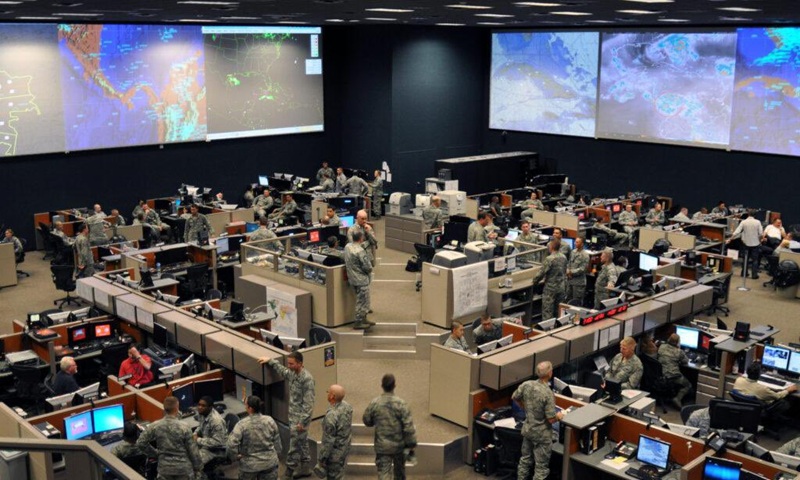
The main coordination hub for U.S. strike operations is located at U.S. Central Command (CENTCOM) headquarters in Tampa, Florida.
Here, analysts compile and evaluate thousands of potential targets using a combination of classified and open-source intelligence. Once a target is confirmed:
- Weapons specialists determine the appropriate munition — such as bunker-penetrating bombs for underground facilities or GPS-guided weapons for buildings.
- Military legal advisers review the strike plan to ensure compliance with the laws of armed conflict.
- Senior commanders approve the final execution order.
This structured approval chain remains critical even as targeting processes become increasingly automated.
Palantir’s Maven Smart System
One of the most influential technologies used in the targeting process is Palantir’s Maven Smart System, an AI-enabled platform designed to integrate diverse intelligence sources.
The system combines:
- Open-source information
- Social media posts
- Satellite imagery
- Signals intelligence
- Classified military databases
For example, if a civilian posts a message on Telegram about a missile launch, Maven can cross-reference that report with satellite imagery and electronic signals to verify the event.
Once confirmed, analysts can quickly:
- Identify the launch location
- Select the appropriate weapon
- Conduct post-strike damage assessments
Tasks that once required dozens of specialists working for hours can now be completed in minutes.
A European general cited in defense discussions noted that modern systems have increased the potential strike capacity from roughly 10 targets per day to around 300, with future capabilities potentially reaching 3,000 targets daily.
Israel’s Expanding Target Database
Israel has developed similar AI-assisted targeting networks, significantly expanding its own target databases over the past decade.
U.S. officers were reportedly surprised when Israeli planners presented thousands of identified targets inside Iran, including:
- Military bases
- Missile launch systems
- Weapons production facilities
- Leadership residences
- Strategic infrastructure
These databases allow commanders to maintain a constant flow of actionable targets during sustained operations.
Origins of Israel’s Targeting System
Israel’s modern targeting doctrine has historical roots stretching back decades.
The system’s foundation emerged after the 1973 Yom Kippur War, when the Israeli Air Force began developing sophisticated methods to locate and destroy enemy air defense systems.
The concept evolved further after the 2006 Lebanon War, when Israeli commanders complained that their available “target bank” had been exhausted after only a few weeks of combat. This led to major investments in intelligence collection and automated target generation systems.
Risks of High-Speed Targeting
Despite the advantages of AI-assisted warfare, the rapid pace of strikes also introduces new risks.
A larger target pool increases the possibility of errors, particularly if intelligence databases contain outdated information. For example, former military sites may have been converted into civilian facilities but could still remain on targeting lists.
Another concern is the declining number of U.S. specialists responsible for civilian risk assessment, which could complicate oversight during high-tempo operations.
As warfare becomes increasingly automated, future conflicts will require not only rapid target generation but also strict mechanisms to ensure that intelligence data remains accurate and current.