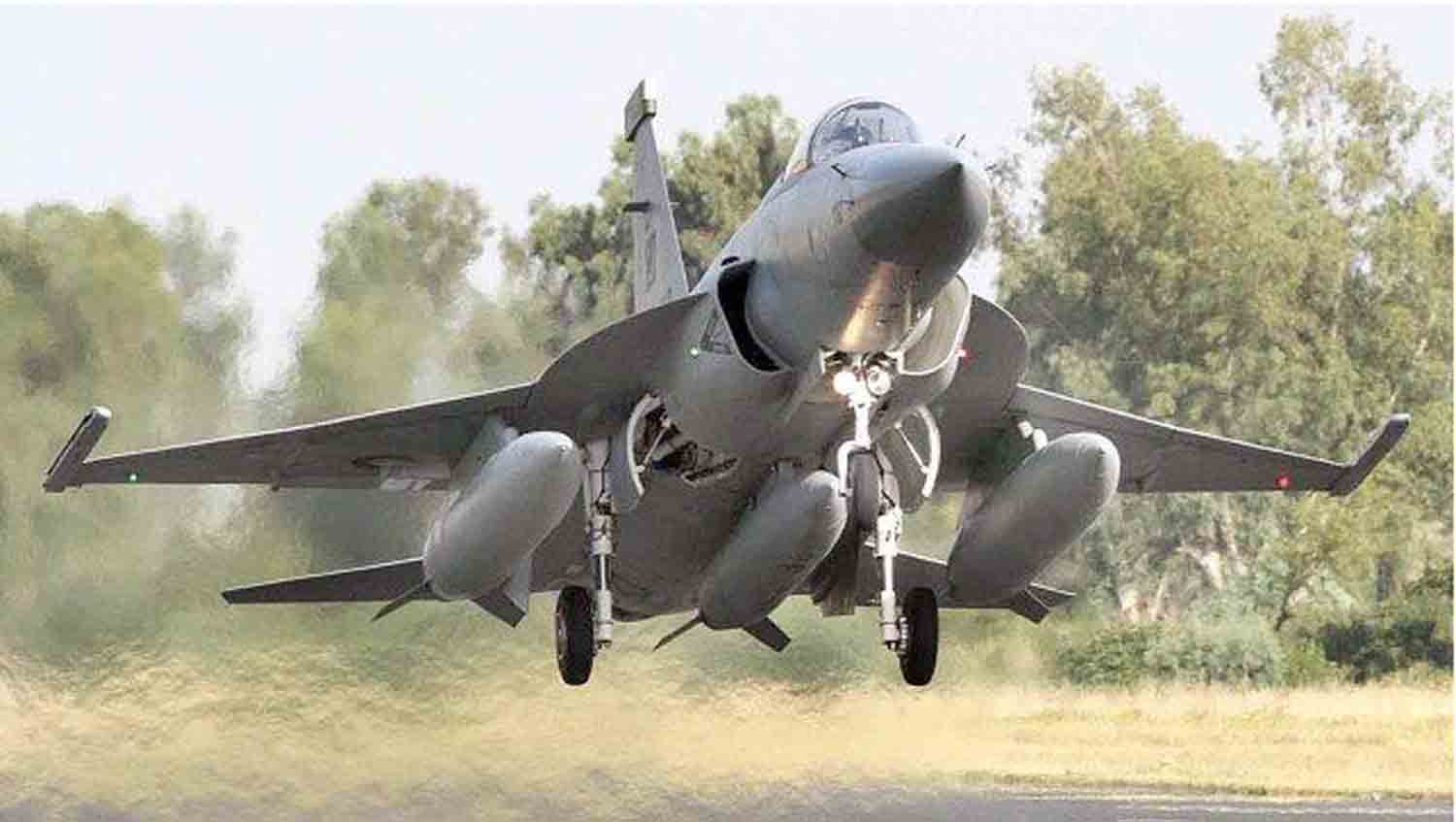
Pakistan’s reported transfer of a combat-capable JF-17 Thunder Block III simulator to Bangladesh is increasingly being interpreted by defence analysts as more than routine military cooperation — potentially signaling the early stages of a broader Pakistan-Bangladesh airpower partnership with regional implications.
The move comes at a time of rapidly evolving defence engagement between Dhaka and Islamabad, with senior military exchanges, advanced training proposals, and growing speculation over a possible future acquisition of JF-17 Block III fighter jets by the Bangladesh Air Force.
🇧🇩🤝🇵🇰Pakistan Air Force delegation in Dhaka has proposed advanced training for BAF pilots at Mushaf Airbase,Sargodha & gifted a JF-17 Block III fighter simulator to the BAF.
Reports suggest discussions on Bangladesh’s procurement of JF-17 fighter is now at the final stage https://t.co/FF4wk32Iql pic.twitter.com/xfYkvbOYeB
— Defence research forum DRF (@Defres360) May 13, 2026
Military planners argue that simulator transfers of this scale are rarely conducted unless procurement discussions have already moved beyond exploratory stages toward operational preparation and institutional readiness.
Why the Simulator Transfer Matters
Unlike simplified procedural simulators often provided for introductory familiarization, Pakistan reportedly transferred a full operational-standard JF-17 Block III simulator configured for combat mission rehearsal and tactical preparation.
The system reportedly enables:
- Combat mission rehearsal
- Tactical scenario simulation
- Beyond-visual-range (BVR) engagement training
- Multi-role strike preparation
- Force integration planning
In modern air forces, simulator ecosystems are increasingly viewed as essential because pilot conversion timelines often represent one of the longest phases in fighter induction.
Early simulator access allows:
- Pilot familiarization before aircraft delivery
- Maintenance crew preparation
- Faster squadron activation timelines
- Reduced institutional adaptation burden
Defence analysts say such preparation often precedes future platform induction.
Bangladesh’s Growing Interest in the JF-17 Block III
Reports suggest Bangladesh’s interest in the JF-17 Thunder Block III accelerated significantly after Pakistan revealed discussions with an unnamed friendly country during the Dubai Airshow. Subsequent speculation increasingly centered on Bangladesh.
According to multiple defence assessments, negotiations may involve:
Up to 48 JF-17 Block III fighters
The reported first package could reportedly include:
- 16 aircraft
- Weapons integration
- Training infrastructure
- Maintenance and support systems
The estimated financial value of the first phase has been reported at approximately $720 million.
No official agreement has yet been publicly announced.
Pakistan-Bangladesh Defence Cooperation Expanding
The simulator transfer coincides with broader military engagement between both countries.
According to reports, Pakistani Prime Minister Shehbaz Sharif and Army Chief Asim Munir are expected to visit Bangladesh for high-level talks focused on expanding bilateral cooperation.
Potential agreements reportedly under discussion include:
- Defence cooperation frameworks
- Modernization of Bangladesh Ordnance Factory (BOF)
- Drone production capability
- Missile-related industrial cooperation
The growing engagement reflects a broader warming of defence relations between the two countries.
Why Bangladesh Needs Fighter Modernization
Bangladesh’s Forces Goal 2030 modernization program requires replacement pathways for aging platforms such as:
- MiG-29 fighters
- Chinese-origin F-7 aircraft
Dhaka increasingly seeks:
- Multi-role combat capability
- Sensor fusion
- Maritime strike flexibility
- Long-range engagement potential
The JF-17 Block III has been positioned as a cost-effective 4.5-generation fighter that aligns with these requirements.
What Makes the JF-17 Block III Attractive?
The latest Block III variant incorporates several advanced features:
Key Capabilities:
- AESA Radar (Active Electronically Scanned Array)
- Advanced electronic warfare suite
- Improved cockpit systems
- Multi-role strike flexibility
- Long-range missile integration
The aircraft is also reportedly compatible with the PL-15 beyond-visual-range missile, one of China’s most advanced long-range air-to-air weapons.
This is strategically important because modern air combat increasingly emphasizes:
Detecting and engaging targets before visual contact occurs.
BVR Training a Major Focus
Pakistan reportedly proposed a training package centered around:
- Mushaf Air Base, Sargodha
- Pakistan Aeronautical Complex (PAC), Kamra
Training discussions reportedly extend beyond basic conversion and include:
- Beyond-visual-range combat doctrine
- Supersonic interception methods
- Electronic warfare survivability
- Maritime strike coordination
- AESA radar operations
This suggests preparation for:
A broader operational ecosystem rather than simple fighter acquisition.
Regional Strategic Implications
The development is drawing attention because it intersects with shifting geopolitical trends across South Asia and the Bay of Bengal.
The regional optics are particularly sensitive because:
- India closely monitors Bangladesh’s defence posture
- Pakistan is expanding defence exports
- China remains deeply involved in regional military modernization
Some analysts interpret the transfer as:
A force-posture signal extending beyond bilateral diplomacy.
Pakistan reportedly also highlighted JF-17 operational performance comparisons involving the Dassault Rafale during post-2025 India-Pakistan military assessments.
Such messaging may serve:
- Export marketing goals
- Strategic signaling
- Regional influence-building
Bay of Bengal Dimension Increasingly Important
Maritime strike capability is reportedly another focus of discussions.
For Bangladesh, this matters because:
The Bay of Bengal is becoming increasingly contested strategically.
Future airpower requirements increasingly involve:
- Maritime surveillance
- Sea denial capability
- Anti-ship strike flexibility
- Air defense over coastal infrastructure
The JF-17’s multirole architecture may align closely with these needs.
No Official Deal Yet — But Signals Are Growing
No formal procurement contract has yet been announced.
However, analysts caution that:
- Simulator transfer
- Pilot familiarization
- Senior-level defence talks
- Structured training proposals
collectively suggest movement beyond ordinary military diplomacy.
Military procurement cycles often begin with:
Training architecture before platform induction.
Conclusion: Early Sign of a New Pakistan-Bangladesh Airpower Partnership?
The transfer of a combat-capable JF-17 Block III simulator to Bangladesh may ultimately prove to be far more significant than a simple training initiative.
If current trends continue, analysts may eventually view this step as:
The first operational building block of a deeper Pakistan-Bangladesh defence partnership.
For Bangladesh, the move aligns with long-term military modernization needs.
For Pakistan, it strengthens:
- Aerospace export credibility
- Defence diplomacy
- Long-term military partnerships
And for South Asia:
It signals that regional airpower competition and strategic alignments are quietly evolving in new directions.