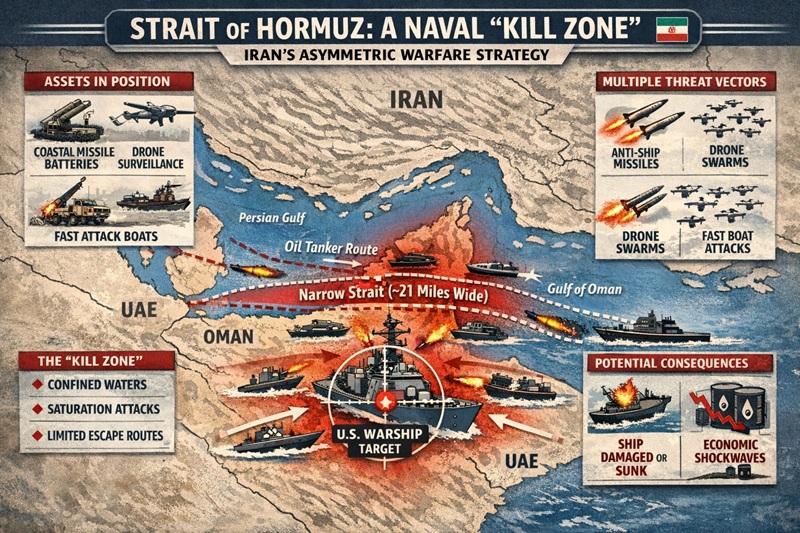
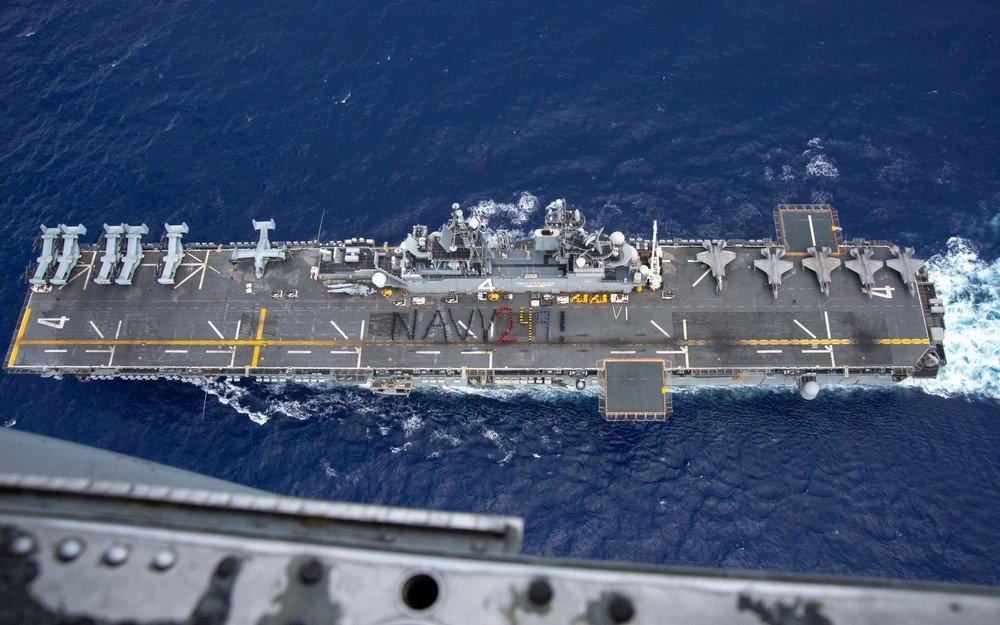
The United States military is rapidly reinforcing its presence in the Middle East, deploying thousands of Marines and sailors as tensions with Iran continue to escalate.
According to multiple officials, the Boxer Amphibious Ready Group (ARG) and the 11th Marine Expeditionary Unit (MEU) have been ordered to deploy ahead of schedule from the US West Coast, signaling a significant expansion of American military posture in the region.
The Boxer Amphibious Ready Group (ARG), comprised of the USS Boxer (LHD-4), USS Comstock (LSD-45), and the USS Portland (LPD-27) with the embarked 11th Marine Expeditionary Group (MEU), is on its way to the Middle East after departing the U.S. west coast for deployment. pic.twitter.com/EjNYNi4BvP
— OSINTdefender (@sentdefender) March 19, 2026
Boxer Strike Group Heads Toward Middle East
The Boxer ARG includes three major amphibious warships:
- USS Boxer (LHD-4) – amphibious assault ship
- USS Portland – amphibious transport dock
- USS Comstock – dock landing ship
Together, the group carries approximately:
- 4,000 total personnel
- 2,500 Marines
The force is equipped with:
- F-35B stealth fighter jets
- Missiles and advanced air الدفاع systems
- Amphibious assault vehicles capable of launching ground operations
Officials say the deployment was accelerated after Marines and sailors cut short their leave following training certification.
Two Amphibious Strike Groups Converging
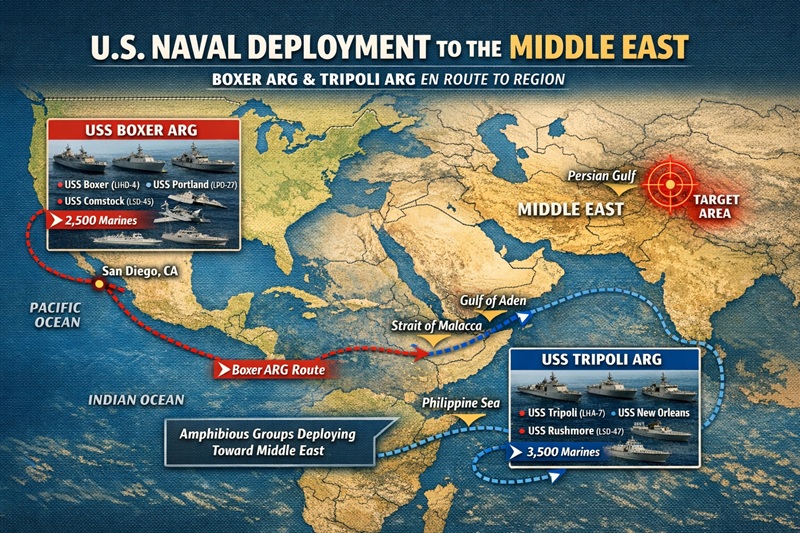
The Boxer ARG will join the USS Tripoli Amphibious Ready Group, which is already en route to the Middle East.
Both groups bring significant firepower, including:
- Rolling Airframe Missiles (RAM)
- Sea Sparrow missile systems
- AV-8B Harrier jets
- MV-22 Osprey tilt-rotor aircraft
- Attack and transport helicopters (Viper, Venom, Seahawk, Stallion)
With two full ARGs deploying, the US will have six amphibious ships in the region, carrying up to:
- 8,000 service members
- 4,000–5,000 Marines
Strategic Shift: From Deterrence to Possible Offensive Operations?
The scale of the deployment is raising questions about potential US military objectives.
Analysts point to speculation that US forces could:
- Target Iranian-controlled islands
- Secure critical maritime routes
- Support operations tied to energy infrastructure
The amphibious capability of these units suggests readiness for rapid ground assaults if required.
USS Ford Withdrawal Adds Urgency
The deployment comes after the USS Gerald R. Ford aircraft carrier was forced to leave the region for repairs following a fire onboard.
The absence of a carrier strike group has increased reliance on amphibious forces and Marine aviation assets to maintain operational pressure.
Indo-Pacific to Middle East: Strategic Transit
Recent imagery confirmed that the USS Boxer departed from near San Diego and is heading west under Operation Epic Fury.
Meanwhile:
- The Tripoli ARG is transiting the Strait of Malacca
- The USS San Diego will remain in the Pacific for maintenance
- Japan-based USS Rushmore is expected to join forces in the Middle East
This coordinated movement reflects a multi-theater military shift, linking Indo-Pacific assets to Middle East operations.
Growing International Involvement
The military buildup is not limited to the United States.
According to officials:
- The United Kingdom has deployed military planners to assist US Central Command
- Discussions are underway about reopening the Strait of Hormuz
- Japan may contribute assets, including mine detection systems
The issue is expected to be a key topic in ongoing high-level US-Japan discussions.
Strait of Hormuz: A Critical Flashpoint
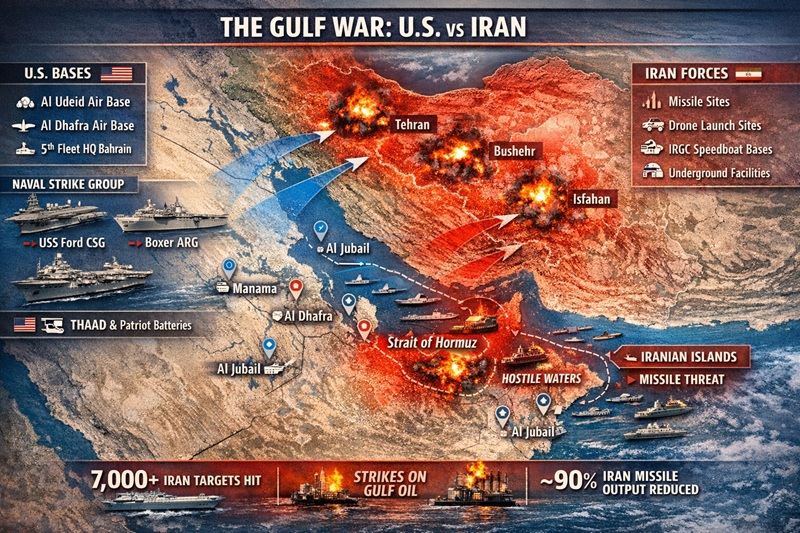
The deployment underscores the importance of the Strait of Hormuz, a vital maritime chokepoint for global energy supplies.
Ensuring safe passage through the strait has become a top priority as:
- Shipping disruptions increase
- Oil market volatility rises
- Regional tensions intensify
Conclusion
The rapid deployment of US amphibious forces marks a significant escalation in the Iran conflict, expanding Washington’s military footprint and signaling readiness for a wider range of operations.
With thousands of Marines, advanced aircraft, and naval assets moving into position, the coming weeks could prove decisive in shaping the trajectory of the conflict.