
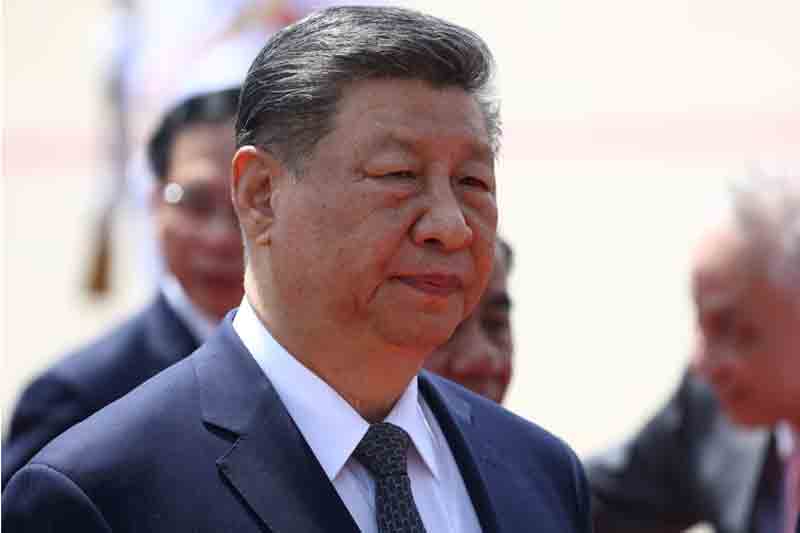
Chinese President Xi Jinping is set to travel to North Korea next week for a rare two-day state visit with North Korean leader Kim Jong Un, marking his first trip to Pyongyang since 2019 and potentially reshaping regional diplomatic dynamics at a moment of growing geopolitical uncertainty.
The announcement, confirmed by both China’s state-run Xinhua news agency and North Korea’s KCNA, comes just weeks after Xi separately hosted US President Donald Trump and Russian President Vladimir Putin in Beijing, placing China at the centre of multiple high-stakes geopolitical conversations.
Top leaders of China and the Democratic People’s Republic of Korea (DPRK) will exchange views on bilateral relations and issues of mutual interest in Pyongyang next week, Chinese foreign ministry spokesperson Mao Ning said on Friday. #XinhuaNews pic.twitter.com/WFQ8ysN1Wp
— China Xinhua News (@XHNews) June 5, 2026
The timing of the visit has already triggered speculation over whether Beijing could attempt to revive diplomacy surrounding North Korea’s nuclear programme or even position itself as a bridge between Trump and Kim after years of stalled negotiations.
Why Xi Jinping’s North Korea Visit Matters
Xi’s visit will be his first overseas trip of the year and his first trip to North Korea in seven years.
That alone makes the visit geopolitically significant.
China and North Korea share a long but often complicated strategic relationship.
Beijing remains Pyongyang’s most important diplomatic partner and economic lifeline, accounting for the overwhelming majority of North Korea’s foreign trade.
Yet relations between the two countries have experienced periods of tension, particularly as North Korea accelerated weapons testing, deepened ties with Russia, and increasingly pursued independent strategic objectives that at times complicated Chinese regional interests.
Xi’s arrival in Pyongyang therefore signals more than symbolic diplomacy.
It may represent Beijing’s attempt to recalibrate relations with a strategically important neighbour at a time of intensifying global competition.
Is Xi Trying to Revive Trump-Kim Diplomacy?
One of the biggest questions surrounding the trip is whether Xi intends to facilitate renewed engagement between Donald Trump and Kim Jong Un.
Trump met Kim three times during his first presidency in an unprecedented diplomatic effort aimed at dismantling North Korea’s nuclear programme.
Although those negotiations ultimately stalled, Trump has repeatedly expressed interest in restarting talks.
The Korean Peninsula was reportedly among the issues discussed during Trump’s recent visit to Beijing, where both leaders reaffirmed what the White House described as a shared goal of denuclearising North Korea.
However, the diplomatic environment today looks dramatically different from Trump’s first term.
Kim Jong Un has since accelerated North Korea’s nuclear weapons development and recently declared plans to expand the country’s nuclear forces at an “exponential rate.”
North Korean officials have also signalled openness to renewed dialogue with Trump — but only if Washington abandons denuclearisation demands.
That condition creates a major obstacle.
Trump’s recent hardline military posture toward nuclear programmes elsewhere, including Iran, raises questions about whether Washington would accept negotiations that leave North Korea’s nuclear arsenal intact.
China’s Balancing Act With North Korea
For Beijing, managing North Korea remains a delicate strategic balancing act.
China benefits from stability on the Korean Peninsula and prefers maintaining North Korea as a geopolitical buffer separating Chinese territory from US-allied South Korea.
At the same time, Beijing has historically been wary of Pyongyang’s nuclear ambitions.
North Korean weapons testing risks regional instability, strengthens American military justification in East Asia, and increases defence cooperation among the United States, South Korea, and Japan — outcomes Beijing generally seeks to avoid.
Relations have also become more complicated following North Korea’s closer alignment with Russia.
Pyongyang has reportedly supplied military assistance to Moscow during the Ukraine conflict, while Russia and North Korea signed a landmark mutual defence pact following Putin’s high-profile visit to Pyongyang in 2024.
Against that backdrop, Xi’s trip could serve as an effort to reassert Chinese influence and remind Pyongyang that Beijing remains its most important strategic partner.
A Symbolic Moment for China-North Korea Relations
Xi’s visit also carries important symbolic significance.
The trip coincides with the 65th anniversary of the 1961 Treaty of Friendship, Cooperation and Mutual Assistance — China’s only formal mutual defence treaty.
The agreement dates back to the aftermath of the Korean War, when Chinese forces fought alongside North Korea.
Observers will likely closely compare Xi’s reception with the lavish welcome Kim Jong Un gave Putin during his visit last year, when the two leaders showcased unusually warm relations and signed a defence pact that significantly elevated Moscow-Pyongyang cooperation.
How Xi is received may offer clues regarding North Korea’s current strategic priorities and the balance of influence between China and Russia in Pyongyang.
Why the Timing Matters
Xi’s visit comes during a period of broader geopolitical flux.
Trump’s return to the White House has reshaped US foreign policy priorities, including renewed focus on states Washington considers security threats.
Meanwhile, China continues monitoring growing defence cooperation among Japan, South Korea, and the United States.
Against this backdrop, Xi may view direct engagement with Kim as necessary not only for managing North Korea itself but also for shaping East Asia’s evolving security environment.
The visit also reinforces Xi’s broader effort to position China as a global diplomatic power broker capable of maintaining dialogue with rivals, partners, and isolated states alike.
What to Watch During Xi’s Visit
Several key indicators will likely determine the broader significance of the trip.
Observers will watch for signs of renewed diplomatic messaging toward Washington, changes in China-North Korea economic cooperation, military coordination signals, or any joint statements regarding nuclear policy.
Equally important will be whether Xi publicly addresses North Korea’s expanding nuclear programme — an issue Beijing has traditionally approached cautiously.
At minimum, the visit demonstrates that China sees North Korea as too strategically important to ignore at a time of increasing regional uncertainty.
Whether Xi’s trip leads to meaningful diplomatic movement or simply reinforces old alliances remains unclear.
But its timing suggests Beijing believes the Korean Peninsula may once again become a central arena of global geopolitical competition.