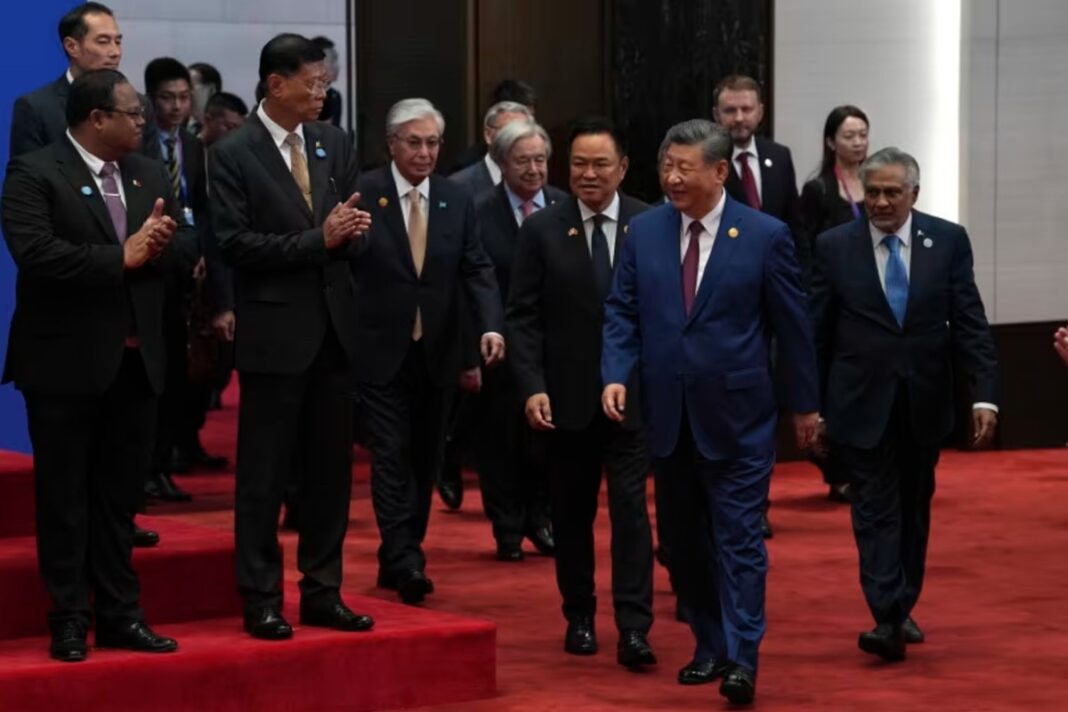
US President Donald Trump has once again accused China of attempting to interfere in American elections, injecting fresh uncertainty into already fragile US-China relations just weeks before a planned summit with Chinese President Xi Jinping.
The renewed allegations, delivered during a nationally televised address from the White House, have drawn a swift rejection from Beijing, which described the claims as “pure fabrication” and warned Washington against making what it called baseless accusations.
The dispute comes at a sensitive moment as both countries attempt to stabilize ties after last year’s trade tensions and prepare for high-level diplomatic meetings.
What Did Trump Say?
During his speech, Trump claimed that China had improperly obtained data belonging to millions of American voters, describing the alleged breach as a major national security concern.
“This data loss presents an unprecedented election security nightmare,” Trump said.
He also suggested that Beijing wanted him to lose future elections because of his tough stance on China.
Trump stated that:
- China preferred a different US president.
- Chinese authorities allegedly viewed his administration as a threat to their strategic interests.
- Weak election security exposed America to foreign influence.
The White House has not announced any immediate policy measures against China following the speech.
China Rejects the Allegations
China’s Foreign Ministry quickly dismissed Trump’s remarks.
Foreign Ministry spokesperson Lin Jian called the accusations:
- “Pure fabrication”
- “A malicious smear campaign”
According to Beijing:
- China has never interfered in US presidential elections.
- Beijing has no intention of influencing America’s domestic political process.
- Washington should stop making unfounded accusations against China.
In response to US President Donald Trump’s claim in a speech that #China had interfered in US #elections, Chinese Foreign Ministry spokesperson Lin Jian said at a regular press conference on July 17 that the allegation was entirely fabricated and a malicious smear that has long… pic.twitter.com/JNMgmaTzFV
— Global Times (@globaltimesnews) July 17, 2026
The Chinese Embassy in Washington also reiterated that China has “never and will never interfere” in US elections.
Could Trump’s Comments Affect the Xi Jinping Summit?
The timing of Trump’s remarks is significant.
The United States and China have spent months rebuilding diplomatic communication after a period of severe tensions that included:
- Escalating tariffs
- Export controls
- Technology restrictions
- Disputes over Taiwan
- Rare earth supply chain concerns
Trump has invited Xi Jinping to visit Washington in late September, while discussions are also underway regarding possible meetings during the Asia-Pacific Economic Cooperation (APEC) summit later this year.
However, Beijing has not officially confirmed Xi’s Washington visit.
According to reports, Chinese officials have privately indicated that future leader-level meetings depend on maintaining stable bilateral relations.
From Trade War to Diplomatic Truce
The latest accusations contrast sharply with Trump’s recent efforts to improve ties with Beijing.
After imposing steep tariffs on Chinese imports in 2025, the Trump administration later eased some pressure amid concerns that China’s restrictions on rare-earth exports could disrupt American manufacturing.
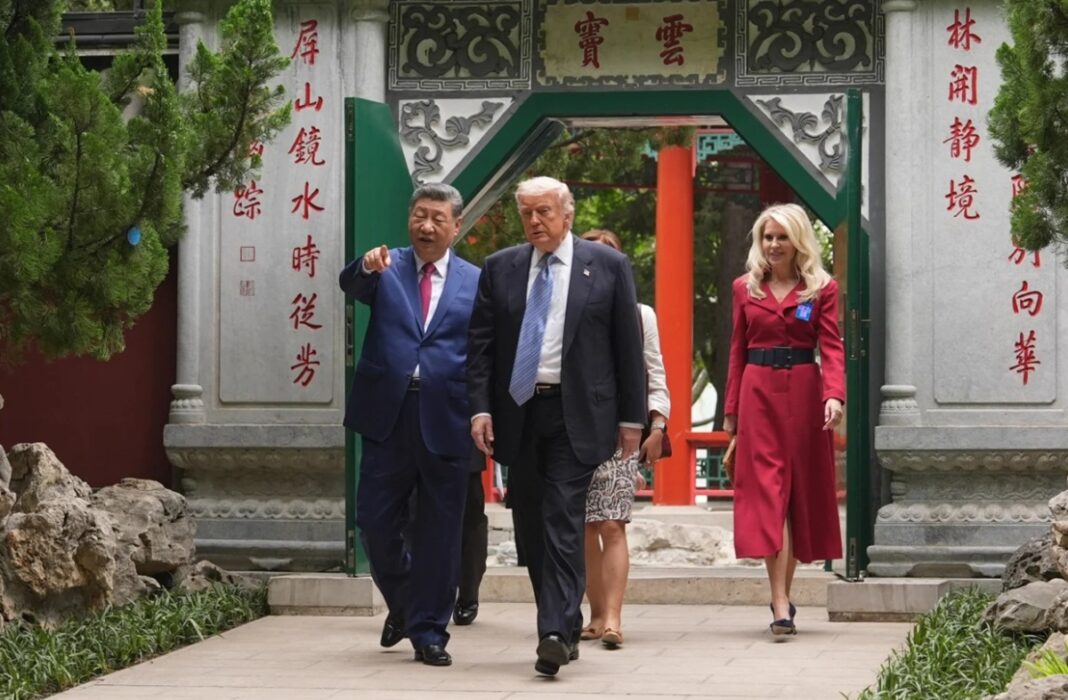
In May, Xi Jinping hosted Trump during a state visit in Beijing.
During that meeting:
- Trump referred to Xi as a “friend.”
- Both sides agreed to continue high-level dialogue.
- Trade tensions temporarily eased.
The renewed election-related accusations now risk complicating that diplomatic momentum.
Is This a Policy Shift or Domestic Politics?
Several analysts believe Trump’s latest comments are aimed primarily at a domestic audience rather than signaling a major change in US foreign policy.
The speech comes as Republicans prepare for important congressional elections later this year.
Notably, despite criticizing China extensively, Trump did not announce:
- New tariffs
- Additional sanctions
- Export restrictions
- Diplomatic retaliation
Instead, he directed law enforcement agencies to investigate potential election-related wrongdoing.
Some observers believe this measured approach could reduce the likelihood of an immediate deterioration in bilateral relations.
Election Interference Claims Remain Controversial
Trump has repeatedly argued that foreign interference affected previous US elections, including the 2020 presidential race.
However, US intelligence assessments have presented a different conclusion.
A 2021 assessment by the US Intelligence Community found no evidence that any foreign government—including China—successfully altered:
- Voter registrations
- Ballots
- Vote counting systems
- Official election results
While cybersecurity agencies have consistently warned about foreign influence campaigns targeting public opinion, they have distinguished those efforts from direct manipulation of election infrastructure.
This distinction remains central to ongoing debates over election security in the United States.
The Broader US-China Strategic Rivalry
Trump’s latest accusations come amid an increasingly competitive relationship between Washington and Beijing across several key areas:
Technology Competition
Both countries continue competing over:
- Artificial intelligence
- Semiconductor manufacturing
- Quantum computing
- Advanced telecommunications
National Security
Ongoing disputes include:
- Cybersecurity
- Military modernization
- Taiwan
- South China Sea
- Critical infrastructure protection
Economic Competition
Trade tensions persist despite recent diplomatic engagement, particularly over:
- Export controls
- Supply chains
- Rare earth minerals
- Advanced manufacturing
Beijing May Avoid Escalation
Despite publicly rejecting Trump’s allegations, analysts believe China may avoid responding aggressively.
Several factors support that assessment:
- Trump announced no immediate punitive measures.
- Both governments remain interested in maintaining leader-level dialogue.
- Economic stability remains a priority for both countries.
- Preparations continue for possible high-level diplomatic meetings later this year.
Chinese officials are likely to distinguish between campaign rhetoric aimed at domestic politics and actual policy decisions.
What Happens Next?
Attention will now focus on whether Trump’s remarks remain campaign messaging or evolve into concrete policy actions.
Key developments to watch include:
- Whether Xi Jinping confirms his Washington visit.
- Possible outcomes of the planned Trump-Xi summit.
- Any new US sanctions or trade restrictions.
- China’s diplomatic response in the coming weeks.
- Progress on broader US-China dialogue over trade, technology, and security.
The direction of these developments could significantly influence bilateral relations during a period of intense strategic competition.
Conclusion
Donald Trump’s renewed accusations of Chinese election interference have added fresh political tension to an already complex US-China relationship.
Although Beijing has firmly denied the allegations, neither side has yet signaled a desire to abandon ongoing diplomatic engagement. With a potential Trump-Xi summit approaching, both governments face the challenge of balancing domestic political pressures with broader strategic interests.
Whether these accusations remain part of election-year political messaging or develop into a new source of confrontation will shape the next phase of US-China relations.
Frequently Asked Questions (FAQs)
Did Trump accuse China of interfering in US elections?
Yes. Trump alleged that China improperly obtained data related to millions of American voters and suggested Beijing sought to influence US elections. China has denied the claims.
How did China respond?
China’s Foreign Ministry rejected the allegations, calling them fabricated and insisting that Beijing has never interfered in US presidential elections.
Will the Trump-Xi summit still take place?
No official cancellation has been announced. However, China has not yet confirmed Xi Jinping’s planned visit to Washington, and the latest dispute could affect diplomatic preparations.
Has the US found evidence of Chinese election interference?
A 2021 US Intelligence Community assessment concluded there was no evidence that any foreign government, including China, altered the technical aspects of the 2020 US presidential election.