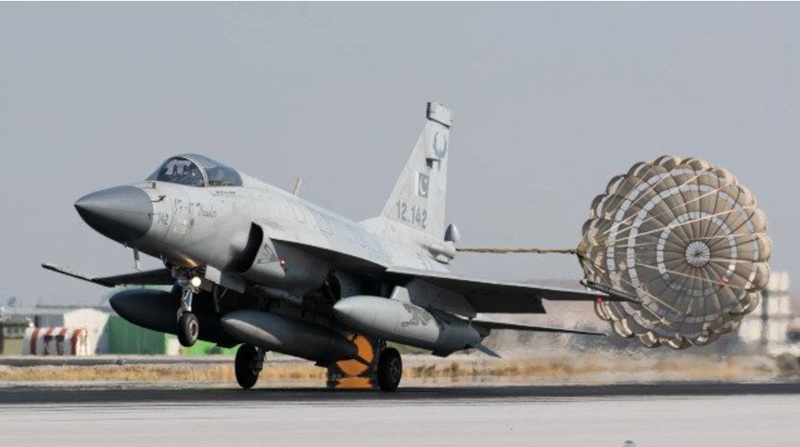
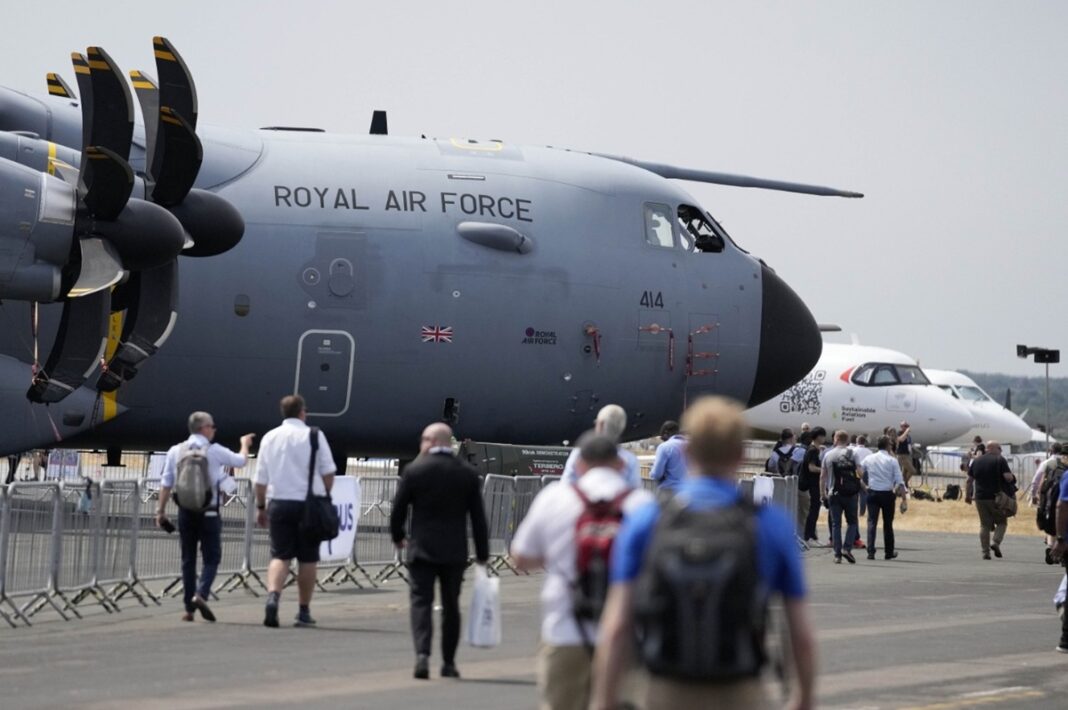
The Farnborough International Airshow 2026 is set to open in the United Kingdom with defence and military technology taking center stage, reflecting a rapidly changing global security environment shaped by the war in Ukraine, instability in the Middle East, and growing geopolitical rivalry.
Traditionally known for billion-dollar aircraft deals between Airbus and Boeing, this year’s airshow is expected to be dominated by discussions on defence spending, artificial intelligence, drones, missile systems, and next-generation warfare.
Industry leaders say the shift illustrates how global defence priorities have evolved as governments increase military budgets and seek faster, more innovative battlefield technologies.
Why Defence Is Dominating Farnborough Airshow 2026
Several ongoing conflicts have transformed the focus of this year’s event:
- The Russia-Ukraine war has entered its fifth year.
- A fragile ceasefire in the Middle East continues to face uncertainty.
- NATO members are significantly increasing defence budgets.
- Countries worldwide are accelerating military modernization programs.
Speaking ahead of the show, Royal Air Force Air Chief Marshal Sir Harv Smyth warned that the global security environment is becoming increasingly volatile.
According to Smyth, modern security threats are evolving faster than at any point in recent decades, requiring armed forces to rapidly adapt new technologies.
Record Defence Industry Participation
Organizers say defence companies will account for around 50% of the event’s record 1,600 exhibitors, compared with roughly 40% at previous Farnborough editions.
The growing defence presence includes companies specializing in:
- Artificial intelligence
- Autonomous drones
- Missile systems
- Cybersecurity
- Deep-tech defence solutions
- Military robotics
- Defence finance and investment
The increase reflects soaring global demand for advanced military capabilities.
Ukraine War Reshapes Defence Priorities
The war in Ukraine continues to influence defence procurement worldwide.
Military planners have learned several key lessons from the conflict:
- Large quantities of affordable drones can significantly impact the battlefield.
- AI-assisted targeting systems improve operational effectiveness.
- Mass production often matters more than small numbers of highly sophisticated platforms.
- Electronic warfare and cyber capabilities are becoming essential.
These lessons are driving major investments in next-generation defence technologies.
AI and Defence Startups Challenge Traditional Arms Manufacturers
One of the biggest themes at Farnborough 2026 is the rapid rise of defence technology startups.
Companies such as:
- Helsing (Germany)
- Anduril Industries (United States)
are developing AI-powered military systems designed to complement or eventually replace some traditional weapons.
Their technologies include:
- Autonomous drones
- AI-assisted battlefield intelligence
- Uncrewed combat aircraft
- Swarming systems
- Advanced surveillance platforms
Former Airbus CEO Tom Enders, now associated with German defence startup Helsing, believes younger companies are transforming the defence sector.
Unlike traditional defence contractors, many startups invest their own capital and develop products more rapidly before seeking government contracts.
Traditional Defence Giants Still Hold Major Advantages
Despite growing excitement around AI startups, established defence manufacturers remain central to military procurement.
Many countries continue investing heavily in proven platforms such as:
- Lockheed Martin F-35 Lightning II
- Eurofighter Typhoon
- Missile defence systems
- Armoured vehicles
- Naval platforms
Analysts note that while startup valuations are rising rapidly, most military budgets still prioritize conventional manned systems.
Boeing and Airbus Face a Different Challenge
Although commercial aviation remains an important part of the Farnborough Airshow, aircraft orders are expected to receive less attention this year.
Both Airbus and Boeing are expected to announce new customer orders.
However, analysts believe total announcements could remain well below earlier expectations.
Several factors are limiting commercial aircraft sales:
- Production backlogs extending into the next decade.
- Limited manufacturing capacity.
- Engine shortages.
- Supply chain constraints.
- Delays affecting aircraft deliveries.
Industry experts estimate total commercial aircraft announcements may exceed 300 aircraft, significantly lower than some early forecasts that suggested as many as 800.
Aircraft Deliveries Matter More Than New Orders
For aircraft manufacturers, deliveries—not new contracts—are becoming the primary measure of success.
While airlines continue placing orders, manufacturers are struggling to increase production quickly enough.
Executives say investors are paying closer attention to:
- Monthly aircraft deliveries
- Manufacturing efficiency
- Supply chain recovery
- Engine availability
- Production targets
Revenue is typically generated when aircraft are delivered rather than when orders are announced.
Supply Chain Problems Continue to Slow Production
The aerospace industry continues recovering from disruptions that began during the COVID-19 pandemic.
Critical shortages remain in:
- Castings
- Forgings
- Precision metal components
- Aircraft engines
- Specialized aerospace materials
These shortages have repeatedly delayed production plans.
Airbus Production Targets
Airbus continues aiming to increase production of its popular single-aisle aircraft to approximately 75 aircraft per month by 2027.
However, industry analysts believe supply chain limitations could delay achieving that target.
Boeing Faces Similar Challenges
Boeing is also working to increase production as it seeks to narrow the gap with Airbus.
However, experts warn that higher production rates may create additional pressure on already stretched suppliers.
Manufacturing analysts believe both companies remain constrained by the same global supply network.
Jet Engine Manufacturers See Gradual Improvement
Aircraft engine availability remains one of aviation’s biggest bottlenecks.
Manufacturers have struggled to meet demand due to shortages of specialized parts and skilled labor.
GE Aerospace CEO Larry Culp recently said supply chain conditions are improving but acknowledged that significant work remains before normal production levels can resume.
Defence Spending Reaches Cold War Levels
European defence spending has risen at its fastest pace since the end of the Cold War.
Governments are increasing investments across multiple sectors, including:
- Air defence systems
- Missile technology
- Fighter aircraft
- Military satellites
- Cybersecurity
- Artificial intelligence
- Space capabilities
However, uncertainty remains over how governments will allocate these growing defence budgets between traditional contractors and emerging technology firms.
What to Watch at Farnborough Airshow 2026
Key developments expected during the five-day exhibition include:
- New defence technology unveilings
- AI-powered military systems
- Drone warfare demonstrations
- Boeing and Airbus commercial aircraft announcements
- Fighter aircraft displays, including the F-35 Lightning II and Eurofighter Typhoon
- Supply chain updates from major aerospace manufacturers
- Defence cooperation agreements
- International military procurement discussions
Why Farnborough Matters
The Farnborough International Airshow remains one of the world’s most influential aerospace and defence exhibitions.
Beyond aircraft sales, it serves as a global platform where governments, defence companies, airlines, manufacturers, and investors assess the future direction of aviation and military technology.
This year’s event reflects a broader shift in global priorities—from commercial aviation growth toward defence preparedness, technological innovation, and strategic competition.
Conclusion
Farnborough Airshow 2026 highlights how geopolitical instability is reshaping the aerospace industry. While commercial aviation continues its gradual recovery from pandemic-era disruptions, defence has become the dominant theme as governments respond to wars, regional conflicts, and evolving security threats.
Artificial intelligence, autonomous systems, drones, and next-generation military technologies are expected to define discussions throughout the event, underscoring a new era in global defence competition. At the same time, Boeing and Airbus continue to face the practical challenge of increasing production amid persistent supply chain constraints, reminding the industry that manufacturing resilience remains as important as innovation.
Frequently Asked Questions (FAQs)
Why is defence the main focus of Farnborough Airshow 2026?
Rising geopolitical tensions, including the Russia-Ukraine war and instability in the Middle East, have driven increased defence spending and demand for advanced military technologies.
Which companies are expected to dominate the event?
Major participants include Airbus, Boeing, Lockheed Martin, GE Aerospace, Eurofighter partners, and defence technology firms such as Helsing and Anduril.
Will Boeing and Airbus announce aircraft orders?
Yes. Both manufacturers are expected to announce new commercial aircraft orders, but analysts believe deliveries and production updates will receive greater attention than headline order totals.
What new technologies are expected at the airshow?
Artificial intelligence, autonomous drones, robotic systems, advanced air defence technologies, and next-generation military aircraft are expected to be among the key highlights.