The United States has introduced a new weapon into its military campaign against Iran, reportedly employing one-way attack sea drones for the first time during a series of strikes carried out by U.S. Central Command (CENTCOM). The operation marks another escalation in the ongoing confrontation around the Strait of Hormuz, one of the world’s most strategically important maritime chokepoints.
According to CENTCOM, American forces launched coordinated strikes on dozens of Iranian military targets on Sunday, combining fighter aircraft, naval assets, aerial drones, and explosive unmanned surface vessels in what officials described as the fourth round of U.S. strikes since Iran resumed attacks on commercial shipping in the Strait of Hormuz on July 7.
— U.S. Central Command (@CENTCOM) July 13, 2026
The latest operation underscores Washington’s growing reliance on autonomous and low-cost unmanned systems as it seeks to counter evolving maritime threats while reducing risks to American personnel.
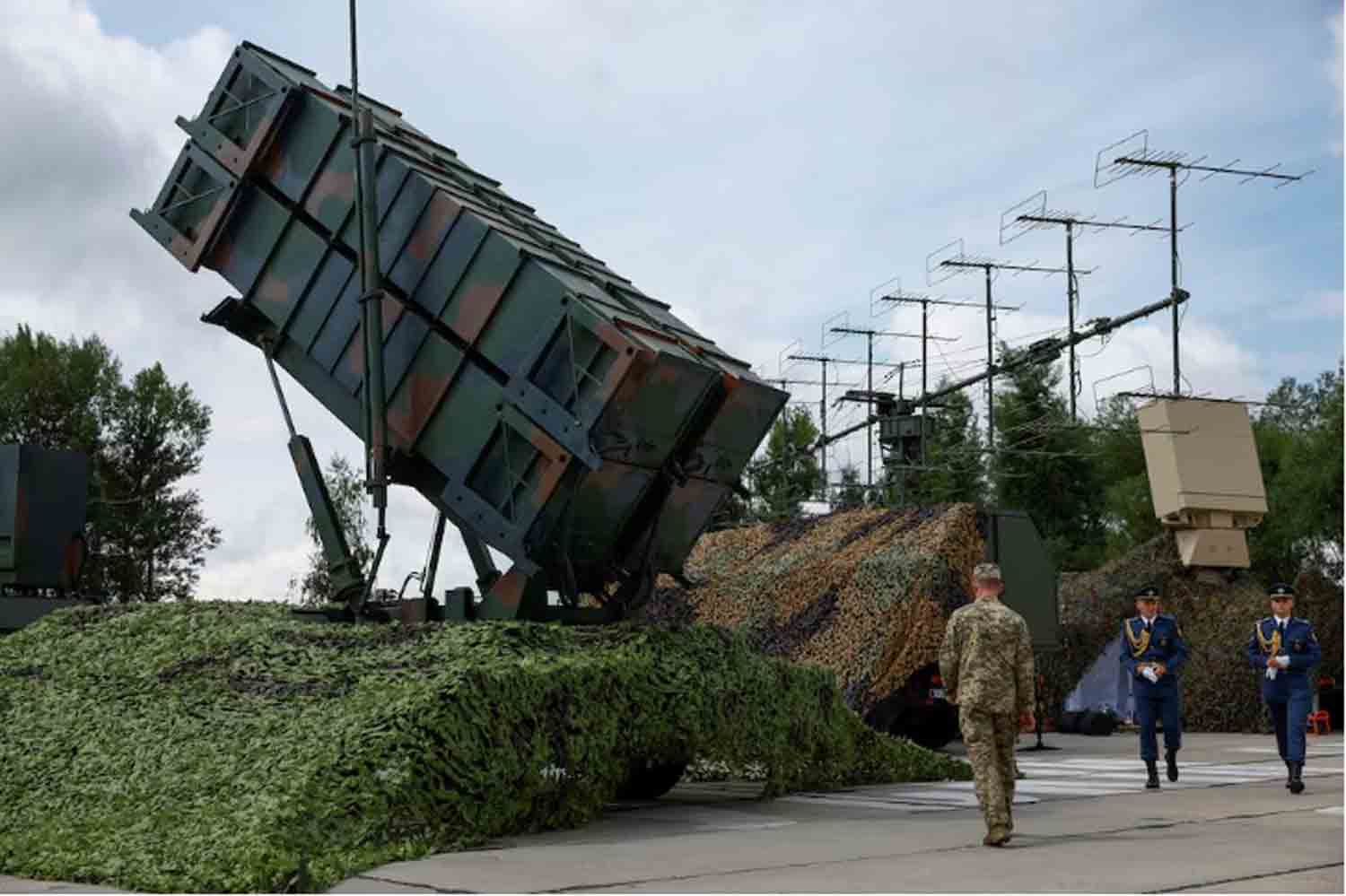
CENTCOM Targets Iranian Air Defenses, Missile Sites, and Naval Assets
In a statement, CENTCOM said its forces struck a broad range of Iranian military infrastructure believed to support attacks on commercial shipping.
The reported targets included:
- Air-defense systems
- Coastal surveillance radar sites
- Missile launch facilities
- Drone infrastructure
- Fast attack craft and small naval boats
- Maritime military installations
U.S. officials said the objective was to reduce Iran’s capability to threaten international shipping transiting the Strait of Hormuz, a route that carries roughly 20% of global seaborne oil exports.
“The Strait of Hormuz is a vital maritime corridor for global trade,” CENTCOM stated, emphasizing the importance of maintaining freedom of navigation.
CENTCOM did not disclose how many sea drones participated in the operation or identify the specific platform used, citing operational security.
What Are One-Way Attack Sea Drones?
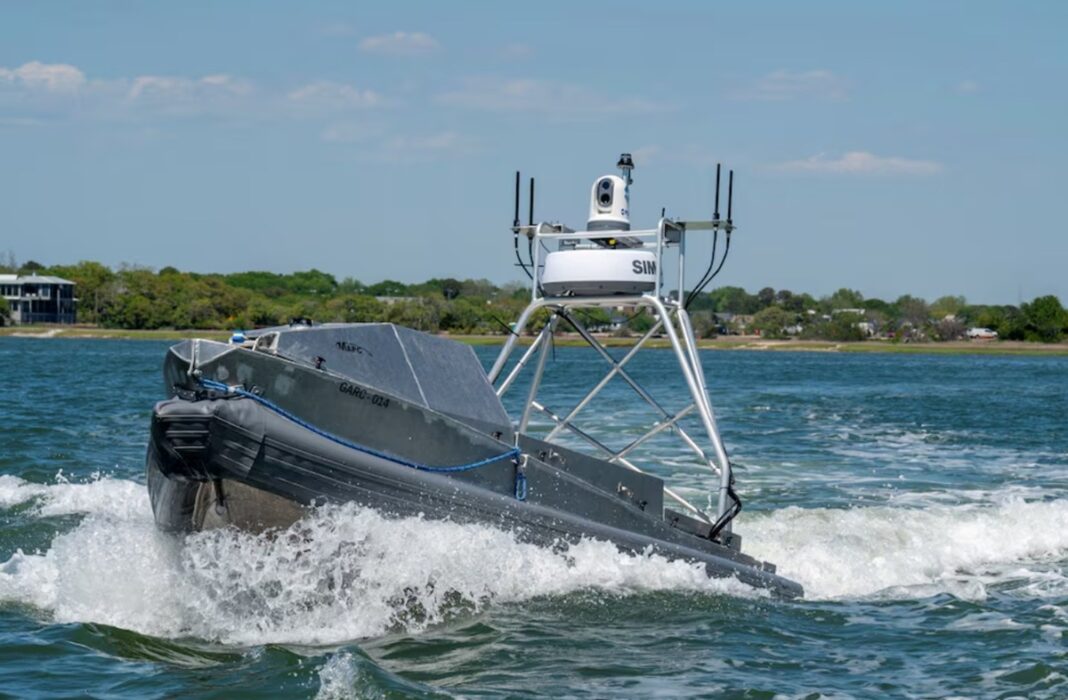
One-way attack sea drones—sometimes described as kamikaze unmanned surface vessels (USVs)—are remotely operated or autonomous boats packed with explosives and designed to destroy themselves upon impact.
Unlike traditional naval vessels, these systems are:
- Relatively inexpensive
- Difficult to detect
- Fast-moving
- Capable of operating without onboard crews
- Suitable for swarm attacks against ships or coastal targets
The concept gained international attention during the Russia-Ukraine war, where Ukrainian naval drones successfully damaged or destroyed several Russian warships in the Black Sea. Those operations demonstrated how low-cost unmanned vessels could threaten much larger and more expensive naval platforms.
Defense analysts have increasingly suggested that similar systems could become a standard feature of future naval warfare, particularly in contested waterways such as the Persian Gulf, the South China Sea, and the Taiwan Strait.
Pentagon Has Accelerated Development of Unmanned Surface Vessels
Although the U.S. Navy has been experimenting with unmanned surface vessels for several years, the Ukraine conflict significantly accelerated interest in one-way attack variants.
According to defense industry reports, the Pentagon has evaluated multiple designs from American manufacturers, including:
- Saronic Technologies
- MARTAC
- Blue Ops
- Sierra Nevada Corporation
- UFORCE
- Additional undisclosed developers
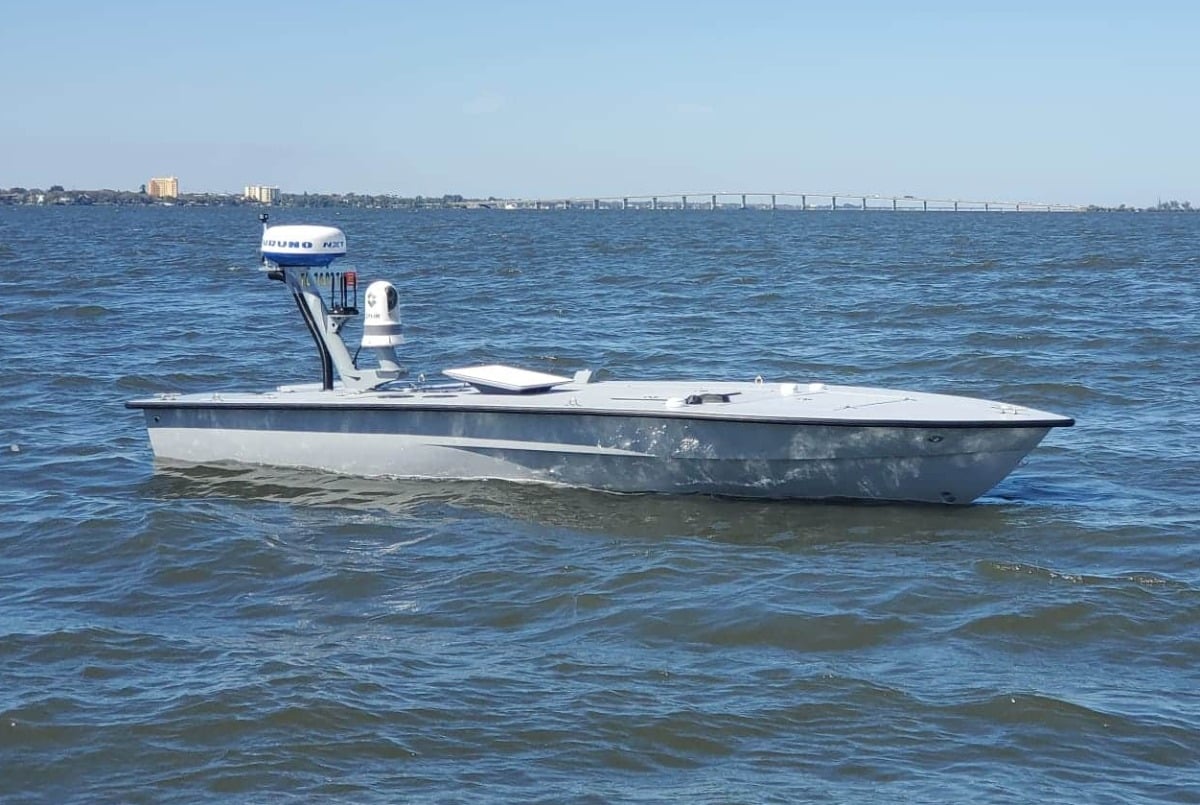
Among the most prominent projects is Saronic Technologies’ Corsair, which secured a reported $392 million U.S. Navy production contract to transition from prototype to operational deployment in less than a year.
Another candidate, MARTAC’s MUSKIE M18, was specifically designed for one-way attack missions. Company specifications indicate the platform can reach speeds exceeding 93 km/h (58 mph), carry payloads of up to 453 kilograms (1,000 pounds), and operate over distances of approximately 926 kilometers (500 nautical miles).
CENTCOM has not confirmed whether either platform participated in Sunday’s strikes.
LUCAS Drone Previously Introduced in the Campaign
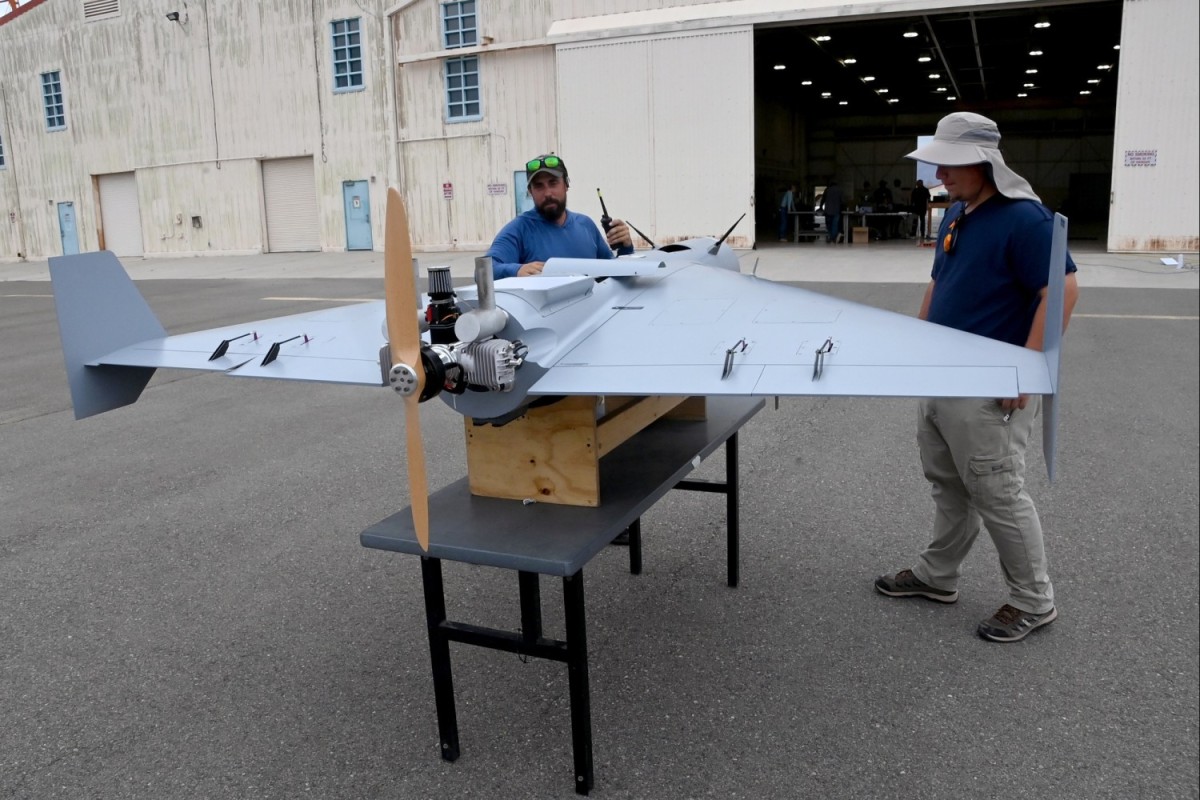
The reported debut of sea drones follows the earlier operational use of the Low-cost Unmanned Combat Attack System (LUCAS) during the same campaign.
According to previous CENTCOM statements, the LUCAS drone was developed as a low-cost loitering munition inspired by Iran’s Shahed-136 drone, which has been widely used by Russia during the war in Ukraine.
CENTCOM previously highlighted the symbolism of employing a system modeled on Iranian drone technology against Iranian military targets, stating that the drones represented “American-made retribution.”
The increasing integration of both aerial and maritime one-way attack systems suggests the U.S. military is expanding its use of expendable autonomous platforms across multiple operational domains.
Why the Strait of Hormuz Matters
The Strait of Hormuz remains one of the world’s most strategically sensitive waterways.
Located between Iran and Oman, the narrow passage connects the Persian Gulf to the Gulf of Oman and the Arabian Sea.
Key facts include:
- Approximately 20% of global oil consumption passes through the strait.
- It serves as the primary export route for crude oil and liquefied natural gas from Gulf producers.
- Any disruption can significantly affect global energy markets and shipping insurance costs.
Because of its strategic importance, military tensions in the area are closely monitored by governments, energy companies, and financial markets.
Iran Responds with Claims of Strikes on US Bases
Following the American operation, Iran’s Islamic Revolutionary Guard Corps (IRGC) announced retaliatory strikes against U.S. military facilities across the Gulf region.
Iranian state media claimed attacks targeted or threatened installations in:
- Bahrain
- Kuwait
- Qatar
- Oman
- Jordan
Among the locations mentioned was Sheikh Isa Air Base in Bahrain. Iranian reports alleged damage to helicopter maintenance facilities, a hangar housing a maritime patrol aircraft, and a drone command center.
At the time of publication, U.S. officials had not publicly confirmed these claims, and independent verification remained unavailable.
Oil Markets React to Escalating Conflict
Energy markets quickly reflected growing concerns over regional stability.
Brent crude oil reportedly rose nearly 4%, approaching $79 per barrel, as traders assessed the possibility of prolonged disruption in the Strait of Hormuz.
Although U.S. officials have maintained that commercial shipping continues to transit the waterway, Iranian officials have argued that military operations have significantly affected maritime traffic.
Commercial ship-tracking services have indicated slower vessel movements in parts of the Gulf, though shipping has not completely ceased.
Analysts warn that any sustained disruption could lead to:
- Higher global oil prices
- Increased shipping insurance premiums
- Delays in energy exports
- Greater volatility in international financial markets
Autonomous Warfare Is Reshaping Modern Naval Operations
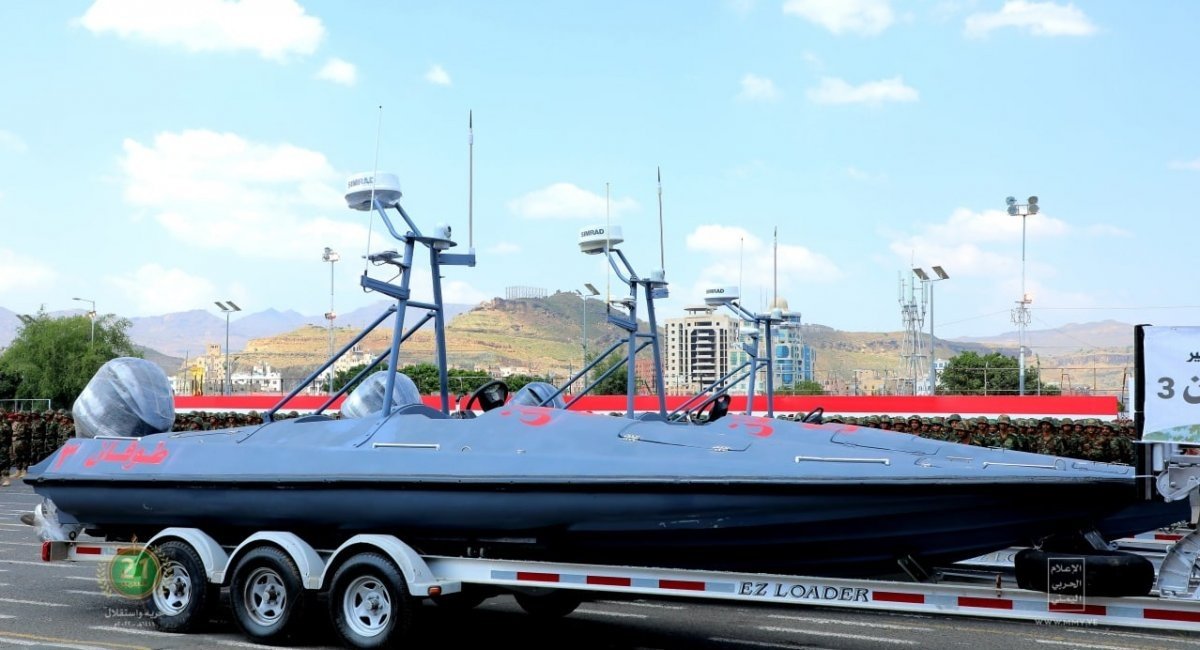
The introduction of one-way attack sea drones reflects a broader transformation in military technology.
Navies worldwide are investing heavily in autonomous systems capable of conducting reconnaissance, electronic warfare, mine countermeasures, and precision strikes with reduced risk to personnel.
The United States, China, Russia, Türkiye, Iran, and several European countries are all expanding development of unmanned naval platforms, suggesting that future maritime conflicts may increasingly feature fleets of autonomous surface and underwater vehicles operating alongside traditional warships.
For military planners, the growing role of unmanned systems is changing doctrines surrounding fleet protection, coastal defense, and freedom of navigation operations.
Strategic Implications
The reported use of one-way attack sea drones by CENTCOM signals a notable evolution in U.S. military operations in the Middle East. If confirmed as an enduring capability, these systems could provide commanders with a lower-cost option for striking coastal targets, disrupting hostile naval operations, and reducing risks to manned platforms.
At the same time, the expanding use of autonomous weapons by both state and non-state actors raises new operational and legal questions about escalation, maritime security, and the future of naval warfare in strategically vital regions such as the Persian Gulf.
Conclusion
The latest U.S. strikes against Iran highlight the rapid evolution of modern warfare, where autonomous systems are increasingly complementing conventional military assets. The reported debut of one-way attack sea drones adds a new dimension to CENTCOM’s campaign and illustrates how lessons learned from recent conflicts—particularly in Ukraine—are influencing American military strategy.
While many operational details remain classified, the use of unmanned surface vessels reflects a broader trend toward integrating cost-effective, expendable technologies into high-intensity combat. As tensions persist in the Strait of Hormuz, these systems could play an increasingly important role in shaping future maritime operations and the balance of power in one of the world’s most strategically significant waterways.
Frequently Asked Questions
What are one-way attack sea drones?
One-way attack sea drones are unmanned explosive boats designed to strike a target and self-destruct upon impact. They are considered a cost-effective method of attacking ships or coastal installations.
Why did the US reportedly use sea drones against Iran?
According to CENTCOM, the operation aimed to degrade Iranian military capabilities used to threaten commercial shipping in the Strait of Hormuz.
Why is the Strait of Hormuz strategically important?
The Strait of Hormuz is one of the world’s busiest energy transit routes, carrying around one-fifth of global seaborne oil exports. Any disruption can affect global energy markets.
What is the LUCAS drone?
The Low-cost Unmanned Combat Attack System (LUCAS) is a U.S. loitering munition reportedly modeled on concepts similar to Iran’s Shahed-136 drone and designed for affordable precision strikes.
Have US officials confirmed all operational details?
No. While CENTCOM confirmed the strikes and stated that one-way attack sea drones were used, it did not identify the specific platforms, quantities, or manufacturers involved. Likewise, Iranian claims regarding strikes on U.S. bases have not been independently verified.