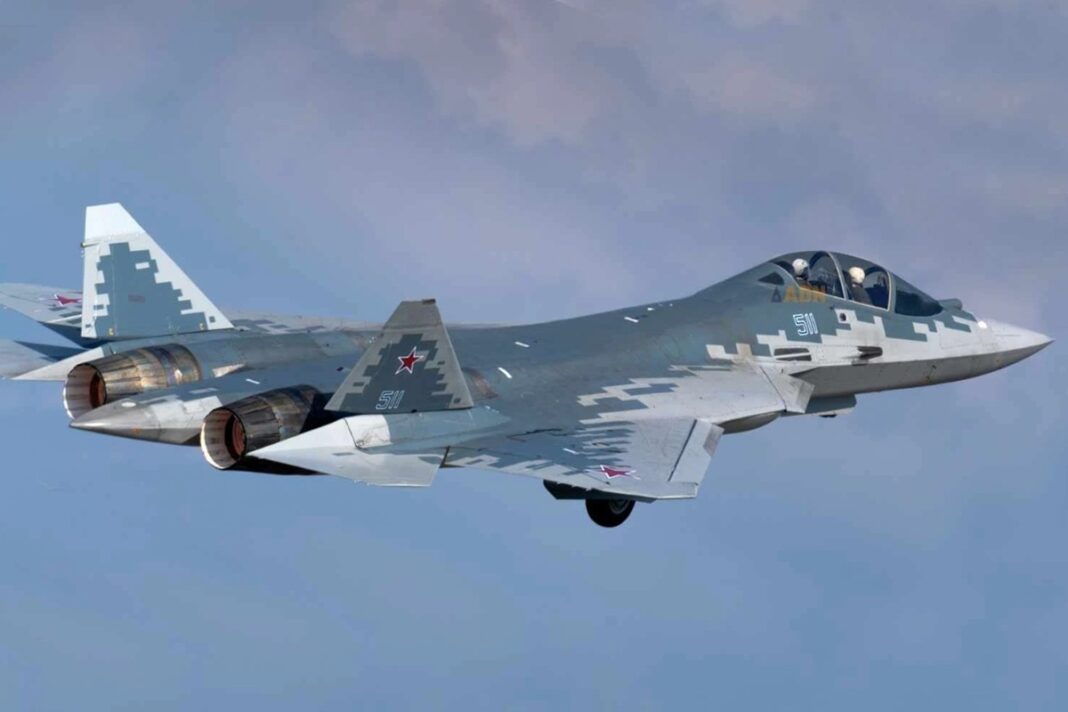
For years, the Russia Su-57 stealth fighter struggled to convince skeptics.
Critics questioned its stealth profile.
Production numbers remained limited.
The war in Ukraine raised concerns over sanctions, industrial bottlenecks, and Russia’s aerospace future.
Now, Moscow appears to be preparing its next move:
A two-seat Su-57 stealth fighter variant that could transform the aircraft from a traditional fighter jet into a battlefield command node for AI-enabled drone warfare.
The emergence of the aircraft — widely discussed across Russian military Telegram channels and defense networks — has immediately triggered global scrutiny.
🇷🇺 𝐍𝐄𝐖: Russia’s Su-57D, a upgraded two seat version of the Sukhoi Su-57, has taken flight featuring enhanced stealth, upgraded avionics, and improved combat capabilities, according to Russian Telegram channels. pic.twitter.com/BPyWBzZhQ8
— Defence Index (@Defence_Index) May 16, 2026
Why?
Because this is no ordinary cockpit modification.
If Russia’s plans materialize, the new aircraft could sit at the center of a radically different model of warfare:
One pilot, one mission commander, multiple autonomous combat drones, and a battlefield increasingly shaped by artificial intelligence.
And the geopolitical implications stretch far beyond aviation.
The aircraft intersects directly with:
- Russia’s export ambitions
- India’s fighter modernization dilemma
- China-Russia defense competition
- NATO airpower calculations
- The future of sixth-generation warfare doctrine.
Did Russia Actually Fly the New Su-57?
The first major question is simple:
Did the aircraft actually fly?
Probably not — at least not yet.
Initial claims spread quickly through Russian military Telegram communities, creating the impression that Moscow had already conducted the maiden flight of the new two-seat stealth fighter.
But later reporting from Russian aviation-linked sources suggested something more limited:
Ground rolling and taxi trials.
That distinction matters enormously.
Taxi testing is an early developmental phase used to validate:
- Aircraft handling
- Braking systems
- Avionics integration
- Structural behavior
- Preliminary aerodynamic performance
In other words:
Important — but far from operational readiness.
Current reporting suggests an actual first flight may not occur until 2026, placing the platform much closer to experimental validation than battlefield deployment.
Still, even early movement inside Russia’s fifth-generation ecosystem matters.
Because in modern geopolitics:
Perception often shapes military planning long before weapons become operational.
What Is Russia Calling the New Fighter? Su-57D, UB or ED?
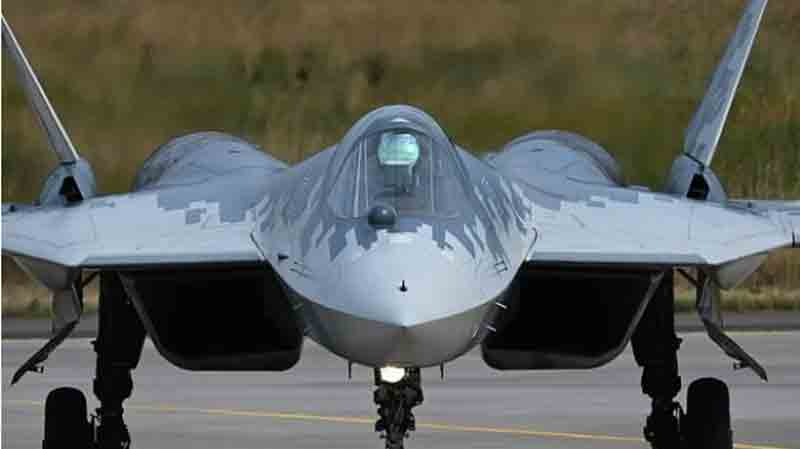
One unusual aspect of the story is naming confusion.
Russian discussions have referenced several possible designations:
- Su-57D
- Su-57UB
- Su-57ED
Each label hints at a different role.
Su-57D
Possibly references Russia’s designation for a two-seat configuration.
Su-57UB
Historically linked to combat training variants in Soviet and Russian aviation.
Su-57ED
Potentially an export-oriented version marketed to foreign buyers such as India.
The ambiguity itself is revealing.
Russia may intentionally be keeping options open between:
Domestic military use
and
Export diplomacy
Why Add a Second Pilot to a Stealth Fighter?
At first glance, the move may seem strange.
Modern fighter programs often emphasize:
Fewer crew, more automation.
So why would Russia go backward?
The answer is simple:
Future war is becoming too complex for one pilot.
The second crew member would likely function as:
A mission commander.
Instead of flying the aircraft, this operator could coordinate:
- Autonomous drones
- Electronic warfare systems
- Reconnaissance assets
- Precision strikes
- Sensor fusion networks
This transforms the aircraft from:
A stealth jet → into a flying command center.
And this may be the most important part of the story.
Russia’s Real Goal: Manned-Unmanned Teaming
The biggest strategic implication involves:
Manned-Unmanned Teaming (MUM-T)
Russia increasingly appears to view the second cockpit as central to:
Collaborative combat ecosystems.
The main candidate for integration:
S-70 Okhotnik
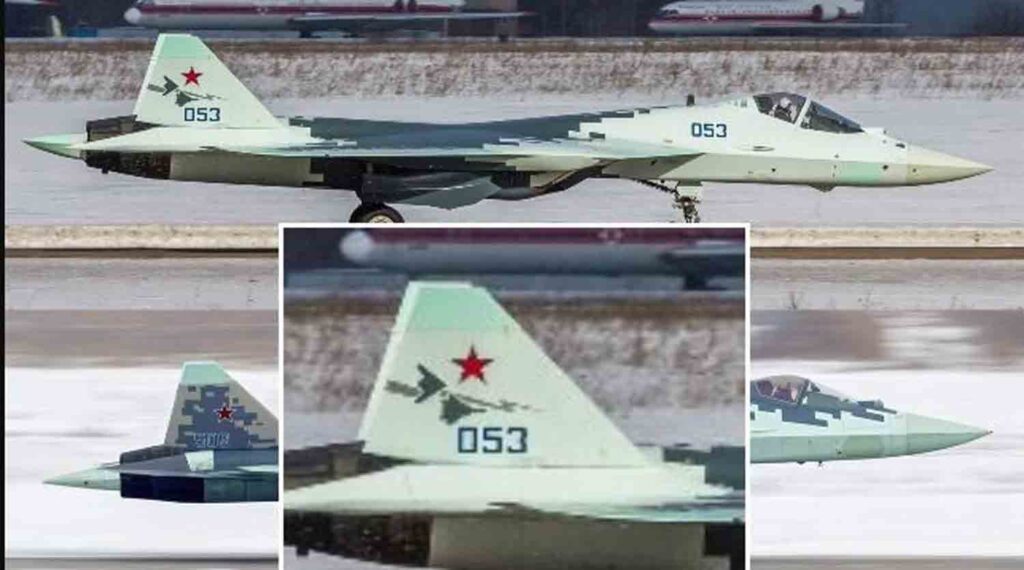
The stealth drone has already been experimentally linked to Su-57 development.
Under this model:
The Su-57 remains relatively safe while autonomous drones move into danger.
Drones could perform:
✔ Radar probing
✔ Electronic warfare
✔ Strike missions
✔ Reconnaissance
✔ Enemy air-defense suppression
Meanwhile:
The crewed aircraft stays outside high-threat zones directing the battle.
This concept increasingly defines:
Sixth-generation warfare
Where the key advantage is no longer:
The aircraft itself.
But:
The network surrounding it.
Why India Matters More Than Russia Here
The biggest geopolitical story may not actually be Russia.
It may be:
India.
For years, India walked away from earlier cooperation on the FGFA (Fifth Generation Fighter Aircraft) program tied to the Su-57.
Indian concerns included:
- Stealth performance
- Engine reliability
- Technology transfer
- Industrial participation
Now Russia appears to be offering something very different.
According to reporting:
Moscow is reportedly proposing:
✔ Localized production
✔ Technology transfer
✔ Source code access
✔ Integration of Indian systems
including:
That matters because India faces:
A fighter shortage problem.
Indian Air Force squadron numbers reportedly remain well below authorized strength.
Meanwhile:
Domestic programs continue facing delays.
The result:
Russia may see the Su-57D as:
Less an aircraft sale — more a geopolitical opportunity.
Can Russia Compete With America’s F-35 Ecosystem?
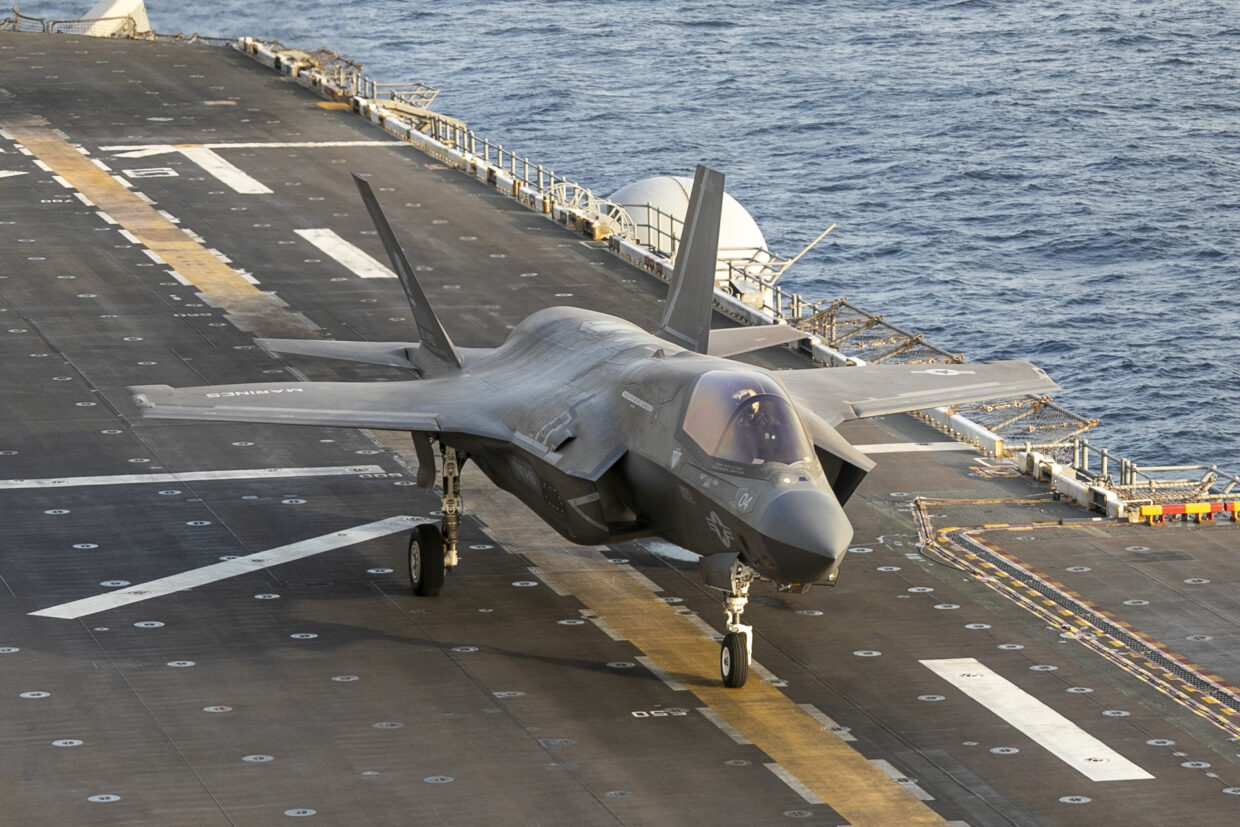
The comparison is unavoidable.
America’s Approach
The F-35 Lightning II emphasizes:
- Sensor fusion
- NATO interoperability
- Massive production scale
- Tight political alignment
Russia’s Pitch
Russia increasingly markets:
Strategic sovereignty
The message to potential buyers:
“You control your aircraft.”
Meaning:
- Fewer political restrictions
- Local weapons integration
- Greater autonomy
That may appeal to:
- Gulf states
- African powers
- Asian middle powers
seeking:
Fifth-generation capability without Western strings attached.
But Russia Still Has a Major Problem: Production
Despite the excitement:
Reality matters.
Russia’s Su-57 fleet remains:
Small.
Estimates suggest:
Only 30–40 operational aircraft may exist by early 2026.
Sanctions continue affecting:
- Engines
- Electronics
- Supply chains
- Production tempo
New propulsion systems such as:
AL-51F1 / Product 177 engines
remain under development.
That limits near-term impact.
China Is Watching Closely
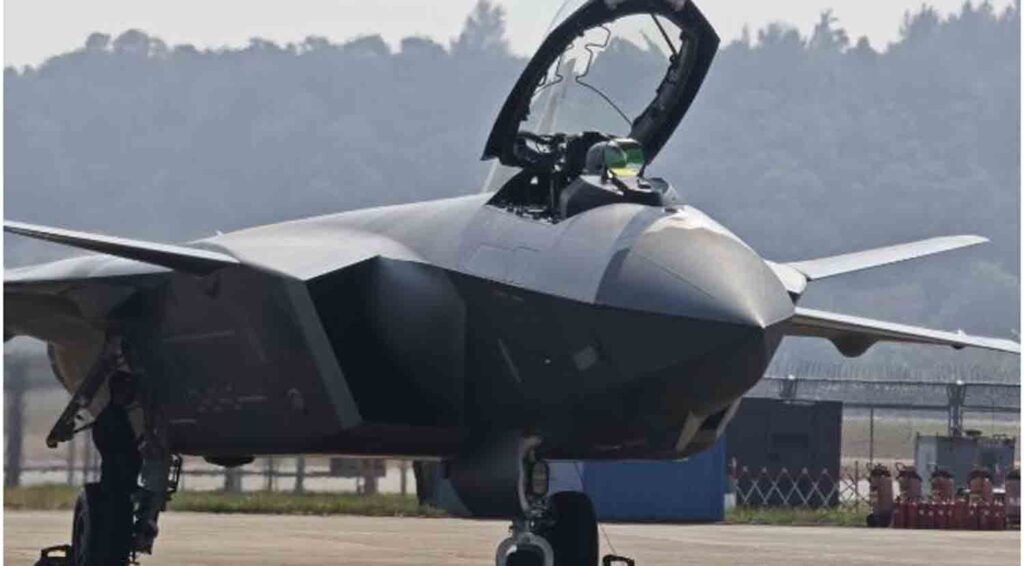
The story also matters for China.
Beijing already fields:
- J-20 stealth fighters
- Expanding drone programs
- AI combat systems
A successful Su-57D could intensify:
China-Russia competition in future air combat doctrine.
The future contest may no longer be:
Who builds the best fighter?
But:
Who builds the smartest network of crewed aircraft and autonomous wingmen.
The Bigger Strategic Reality
The real significance of the two-seat Su-57 may have little to do with stealth performance alone.
This story signals something larger:
A transition in warfare itself.
The next generation of air combat may involve:
- Smaller numbers of crewed fighters
- Larger autonomous ecosystems
- AI-assisted targeting
- Distributed battlefield control
Instead of one aircraft fighting alone:
Future jets may command:
Entire robotic strike formations.
Conclusion: Russia’s Su-57D Is More About the Future Than the Present
The new two-seat Su-57 remains:
A developmental aircraft.
No confirmed maiden flight.
No verified combat readiness.
No proven operational concept.
Yet strategically:
It already matters.
Because perception influences:
- Export markets
- Defense planning
- Alliance decisions
- Procurement choices
The aircraft reflects Russia’s attempt to stay relevant in:
The global race toward sixth-generation warfare.
Whether Moscow succeeds remains uncertain.
But one thing is increasingly clear:
The future of air combat may not belong to the pilot alone.
It may belong to:
Pilots commanding machines.