Tuesday, April 7, 2026
Home Blog Page 125

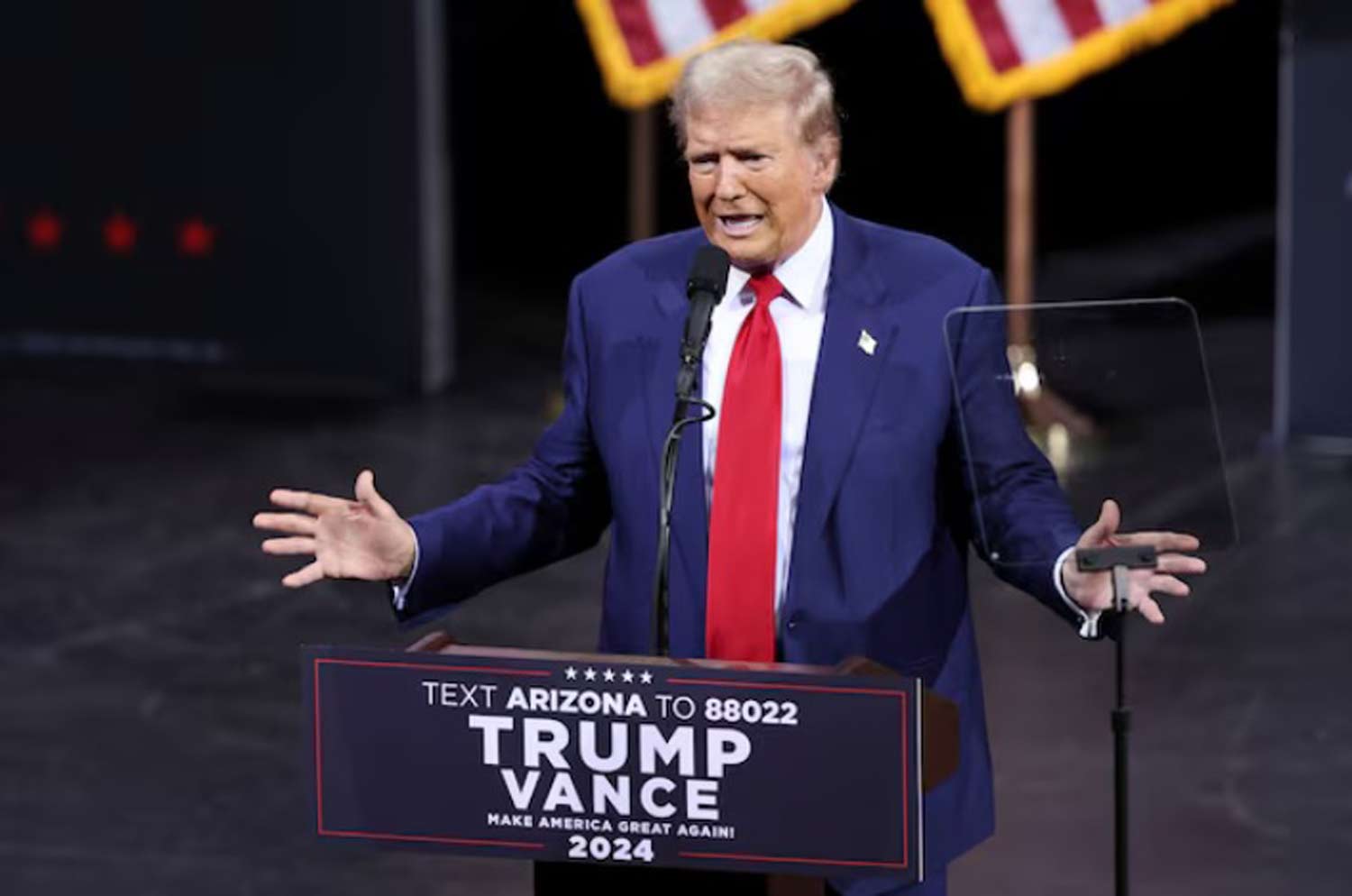
Viktor Orban claims the EU should reassess its support for Ukraine after Trump’s electoral victory

0
Hungarian Prime Minister Viktor Orban

Hungarian Prime Minister Viktor Orban stated that the European Union must reassess its support for Ukraine in light of Donald Trump‘s recent election victory in the U.S. He emphasized that Europe cannot bear the financial burden of the war on its own, just prior to a summit of EU leaders on Friday.

Trump has been critical of the extent of U.S. assistance to Ukraine amid Russia’s full-scale invasion that began in 2022. He previously indicated a desire to resolve the conflict before assuming office, although he did not provide specific details on how he would achieve this.

The future of aid to Ukraine is a significant issue for the EU following Trump’s election, as the bloc grapples with internal divisions and the political instability of its two largest nations, Germany—whose government has recently collapsed—and a weakened France.

Orban, a close ally of Trump, remarked on state radio that he believes the U.S. will withdraw its involvement in the conflict, stating, “The Americans will quit this war; they will not support it any longer,” ahead of the informal EU summit he is set to host in Budapest.

Europe cannot bear the financial burden of this war independently. While some advocate for the continued provision of substantial funds to this seemingly futile conflict, an increasing number of voices are either remaining silent or cautiously suggesting that we must adapt to the evolving circumstances.

Together with the United States, the EU and its member states rank among the largest contributors of military and financial support to Ukraine, with most EU leaders expressing strong backing for this ongoing commitment.

German Chancellor Olaf Scholz reaffirmed this position in Budapest on Friday, emphasizing the need for Europe to enhance its own defense capabilities. “Russia has invaded Ukraine and is persisting in this war with relentless brutality,” he stated.

“It is clear that as the European Union, we must collectively take the necessary steps to ensure our security. Our success will depend on the contributions of all member states.”

CEASEFIRE APPEAL

Orban has urged for an immediate ceasefire in Ukraine, advocating for subsequent peace negotiations between Kyiv and Moscow—a proposal that Ukrainian President Volodymyr Zelenskiy has firmly dismissed.

“This presents a grave challenge for our citizens: first a ceasefire, and then we will see. Who are you? Are your children perishing?” Zelenskiy remarked during a press conference in Budapest on Thursday, shortly after Orban reiterated his appeal.

“A ceasefire is being suggested by a leader who opposes Ukraine’s NATO membership. Just imagine… this is absurd and creates discord,” Zelenskiy stated.

Only Orban and Slovak Prime Minister Robert Fico advocated for a shift in the Ukraine strategy during a dinner of EU leaders in Budapest on Thursday evening, while others maintained that the current approach is effective, according to a senior EU official.

However, leaders are aware of the potential for reduced U.S. support for Ukraine under Trump and have started to deliberate on their response should that occur, officials report.

Fico, who ceased state military aid to Ukraine upon taking office a year ago, indicated that Slovakia would resist the EU assuming “financial responsibility” for Ukraine if U.S. assistance under Trump were to be limited or terminated.

In a video shared on his Facebook page, Fico asserted that if the EU can allocate funds for Ukraine, it should also be able to finance efforts against illegal migration, which he described as an “existential threat” to the bloc.

“I stressed that if we are to allocate resources for Ukraine, we must also ensure funding for issues that pose a significantly greater threat to the EU,” he stated.

UN rights office reports that almost 70% of the fatalities in the Gaza conflict are women and children

0
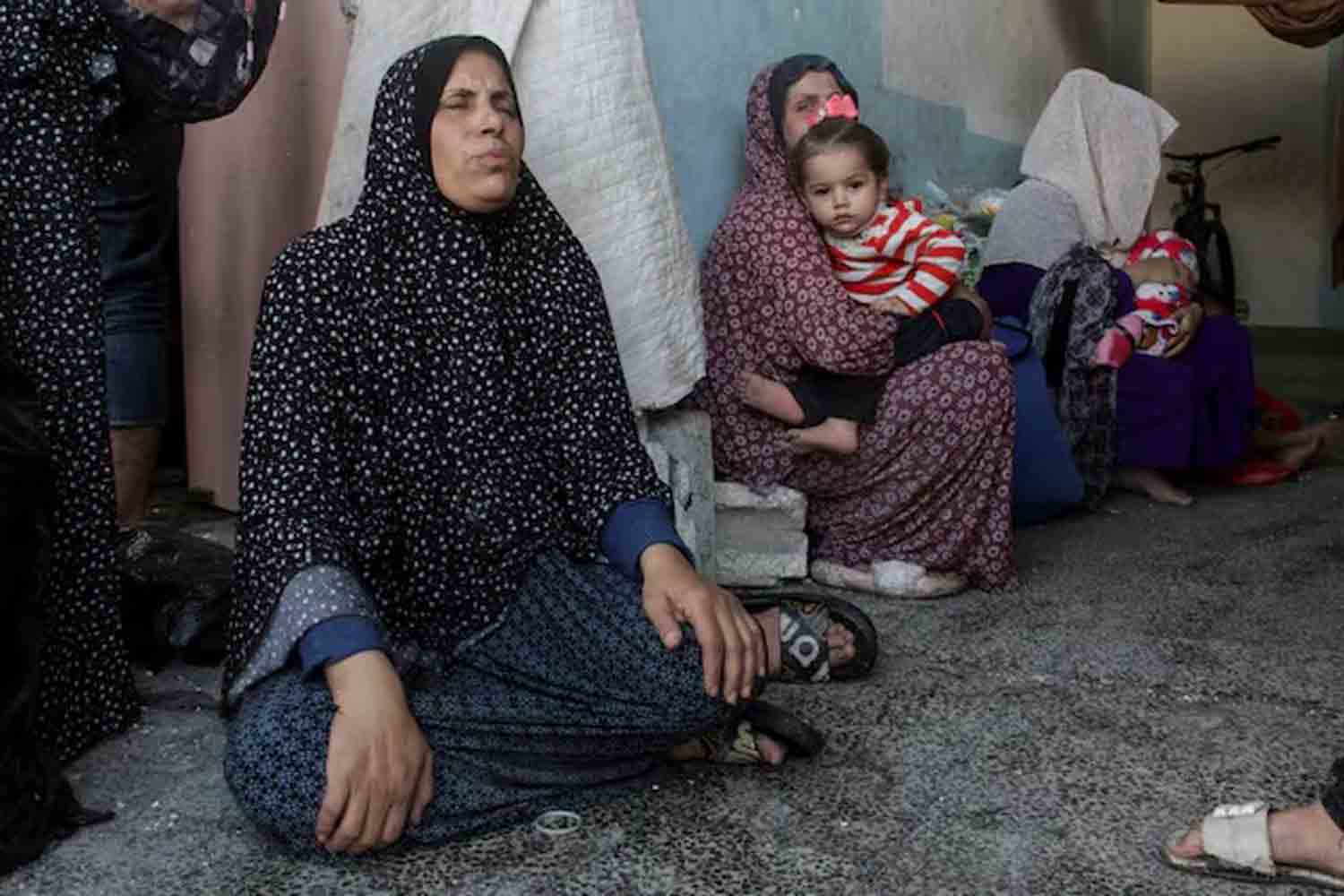
Palestinians react after a school sheltering displaced people was hit by an Israeli strike, at Beach camp in Gaza City .

The U.N. Human Rights Office reported on Friday that nearly 70% of the fatalities it has confirmed in the Gaza conflict were women and children, denouncing what it described as a systematic breach of fundamental international humanitarian law principles.

This U.N. assessment pertains to the initial seven months of the Israel-Hamas conflict in the Gaza Strip, which commenced over a year ago. The 8,119 verified victims during this period is significantly lower than the more than 43,000 casualties reported by Palestinian health authorities for the entire 13 months of the conflict.

However, the U.N.’s analysis of the victims’ age and gender supports the Palestinian claim that a substantial number of those killed in the war are women and children.

The report highlights “a systematic violation of the fundamental principles of international humanitarian law, including the principles of distinction and proportionality,” according to a statement from the U.N. rights office that accompanied the 32-page report.

United Nations High Commissioner for Human Rights Volker Turk emphasized the necessity for accountability regarding serious allegations of international law violations, calling for credible and impartial judicial processes, while also stressing the importance of collecting and preserving all relevant information and evidence in the interim.

Israel has not provided an immediate response to the findings of the report. The Israeli military, which initiated its offensive following the October 7, 2023 attack that resulted in the deaths of approximately 1,200 individuals in southern Israel and the abduction of over 250 hostages by Hamas fighters, asserts that it strives to minimize civilian casualties in Gaza.

The military claims that for every fighter killed, roughly one civilian has also died, attributing this ratio to Hamas’s tactics of utilizing civilian infrastructure. Hamas has refuted these allegations, denying the use of civilians and civilian facilities, such as hospitals, as shields.

YOUNGEST VICTIM AGED ONE DAY

According to the report, the youngest verified victim was a one-day-old infant, while the oldest was a 97-year-old woman.

Children accounted for 44% of the total victims, with those aged five to nine forming the largest age group, followed by children aged 10 to 14, and then those aged four and younger. This distribution aligns with the demographics of the enclave, indicating a significant lack of measures taken to prevent civilian casualties.

The data indicated that in 88% of instances, five or more individuals lost their lives in a single attack, highlighting the Israeli military’s deployment of munitions capable of affecting a broad area. However, it also noted that some casualties might have resulted from stray projectiles fired by Palestinian armed factions.

Implications of Trump’s victory for the U.S., Russia, and the global landscape

0

This week’s presidential election marks a significant milestone for the United States. Donald Trump‘s remarkable victory suggests that, at least initially, voters found his stances on key issues such as the economy and immigration more persuasive than those of Vice President Kamala Harris. Additionally, it is evident that Americans opted for a leader with a more dominant personality.

Moreover, Trump’s anticipated return to the White House signifies a setback for the Democratic Party’s extensive campaign to depict the Republican as a criminal, a fascist, and a Kremlin agent.

Furthermore, Trump’s success represents a substantial challenge to the left-liberal agenda of the globalist factions within the political West. Right-wing nationalist movements in Europe, whether in power (like Hungary) or in opposition (such as in France and Germany), have gained a formidable ally. While this does not signify the end of liberal globalism, it does indicate a temporary retreat. As for the so-called deep state, having failed to thwart Trump’s electoral success, it will now attempt to constrain him within its influence. The United States is entering a phase of political unpredictability; however, the undeniable nature of Trump’s victory significantly lowers the chances of civil unrest and widespread violence.

Additionally, the transition of the White House and at least one chamber of Congress (the Senate) to Republican leadership will likely result in a tougher stance in Washington’s foreign policy towards its allies. The trend of shifting military and financial responsibilities for supporting ‘free world interests’ from the United States to its partners began during Trump’s first term and has continued under Joe Biden. Despite concerns from Atlanticists, NATO is unlikely to be disbanded, but Western European nations will be expected to contribute significantly more. Asian allies will also face increased demands to invest in countering China, a strategy that began under Trump and is set to escalate.

In the Middle East, the United States is expected to adopt a more proactive and transparent stance in its support for Israel, moving away from the previous approach of veiling this support with selective critiques.

The Trump administration will exert pressure on nations perceived as threats to its status as the global hegemon, particularly targeting China and Iran. Washington will intensify its opposition to China’s economic and technological advancements, as well as bolster its military and political alliances. Additionally, the U.S. will actively encourage its European allies—often against their own interests—to participate in economic sanctions against China. Iran will also face heightened animosity, both directly and through increased backing for Israel.

Trump has made headlines with his remarks regarding the potential for World War III and his assertion that he could resolve the conflict in Ukraine “in 24 hours.” Acknowledging the risk of the ongoing indirect confrontation between the West and Russia escalating into a direct conflict is a constructive aspect of Trump’s campaign messaging. In contrast, the Biden-Harris administration’s strategy of intensifying hostilities has raised the specter of nuclear confrontation. It is important to recognize that ending the war will not occur “in 24 hours” and that “ending the war” does not equate to “stopping the fighting,” but rather entails addressing the underlying issues that led to the conflict.

The prospect of a ceasefire along the current front lines is unlikely to be taken seriously by Moscow. Such an outcome would merely serve as a temporary halt, likely followed by a resurgence of conflict with increased intensity. The future of the Ukrainian regime, its military capabilities, and Kiev’s geopolitical standing are critical factors for Russia, alongside the need to consider new territorial realities.

It is unlikely that the new Trump administration will engage in meaningful discussions regarding these matters, much less consider Moscow’s fundamental interests. Should there be a willingness to engage, dialogue may commence, but reaching an agreement remains uncertain. Additionally, the challenge lies in defining what constitutes satisfactory guarantees in an environment of mutual distrust. The two Minsk Agreements from 2014 and 2015 have been disregarded, and the third attempt, which was initiated in Istanbul in 2022, was unsuccessful, making a fourth agreement improbable.

The only assurance that Russia can depend on is one that it provides for itself. On a positive note for Russia, Trump has expressed a desire to reduce military assistance to Ukraine. Although this may be partially countered by increased support from Western Europe for Kiev, if it materializes, it could pave the way for a more peaceful resolution.

Putin extends his congratulations to Trump on his presidential victory and expresses his readiness for dialogue

0

Russian President Vladimir Putin extended his congratulations to Donald Trump on his electoral victory on Thursday, expressing his openness to engage in dialogue with the president-elect.

“I would like to take this opportunity to congratulate Donald Trump on his election as the president of the United States. I have previously stated that we are prepared to work with any leader chosen by the American populace. This will indeed be our approach in practice,” Putin remarked during his address at the Valdai Discussion Club in Sochi, as translated into English.

When asked about his willingness to communicate with Trump, Putin affirmed, “Yes, we are ready.”

“If he were to call and say, ‘Vladimir, let’s meet,’ I would not hesitate to reach out to him myself,” the Russian president added, marking his first public remarks regarding the U.S. election.

Putin acknowledged Trump’s “interest in restoring relations with Russia to help resolve the Ukrainian crisis” as worthy of consideration.

However, he noted that he would refrain from initiating contact with Trump, citing that “at one point, Western European leaders were reaching out almost weekly, but that communication abruptly ceased,” seemingly alluding to the global response following Russia’s full-scale invasion of Ukraine in 2022.

While describing Trump as a relatively inexperienced politician, Putin also commended his “courageous” actions following an assassination attempt in July.

Trump has indicated in the past that he might withdraw US support for Ukraine’s military efforts and asserted that he could resolve the conflict with Russia “in one day.”

Furthermore, Trump has consistently lauded Putin while frequently criticizing Ukrainian President Volodymyr Zelensky, with whom he shares a complex relationship.

In a recent statement, Zelensky mentioned that he had a “productive” discussion with Trump. The Ukrainian leader emphasized that Kyiv will seek “peace through strength” instead of making territorial concessions or adopting a stance of neutrality.

Trump could weaken Biden’s efforts to persuade Israel and regional players to resolve conflicts in Gaza and Lebanon

0
Smoke billows over southern Lebanon, amid ongoing cross-border hostilities between Hezbollah and Israeli forces

The Biden administration is set to make a final effort to secure difficult agreements aimed at resolving the conflicts in Gaza and Lebanon. However, the potential election of Donald Trump may diminish Washington’s ability to influence Israel and other regional stakeholders before he assumes office.

Senior U.S. officials, who have been actively engaged in peace talks across the Middle East for several months, are now likely to encounter counterparts who are hesitant to make significant commitments, opting instead to wait for Trump’s inauguration in January, as indicated by sources familiar with the situation and independent analysts.

Trump has expressed his intention to achieve peace in the Middle East, though he has not outlined a specific strategy. Based on his previous term, it is anticipated that he will adopt a strongly pro-Israel stance, potentially exceeding the robust support that President Joe Biden has extended to the United States’ primary regional ally.

In anticipation of a second Trump administration, U.S. State Department spokesperson Matthew Miller stated on Thursday: “We will persist in our efforts to end the conflict in Gaza, resolve the situation in Lebanon, and increase humanitarian aid, as it is our responsibility to pursue these policies until noon on January 20.”

With Biden now in a position of diminished influence, Israeli Prime Minister Benjamin Netanyahu, a staunch ally of Trump, along with Arab leaders, is expected to show little willingness to cooperate with the Democratic president. Instead, they may align their strategies with those of his Republican successor, whose unpredictable foreign policy during his first term left the region in a state of uncertainty.

“They have significantly less influence,” stated Brian Finucane, a senior adviser at the International Crisis Group’s U.S. program. “While they may still receive responses to their communications, the focus is shifting towards a new administration that will likely adopt different policies and priorities.”

PREPARING FOR CHANGE

Following Trump’s election victory over Vice President Kamala Harris, officials from both Arab nations and Israel have started to adjust their strategies. Egyptian mediators, who have been collaborating with U.S. and Qatari representatives on ceasefire proposals for Gaza, are now awaiting the specifics of Trump’s plans for the region, according to Egyptian security sources. As the global community observed the U.S. election, Netanyahu, who openly favored Trump and referred to his victory as “historic,” dismissed his Defense Minister Yoav Gallant, thereby removing one of the Biden administration’s preferred Israeli allies.

The Palestinian militant organization Hamas, which has been engaged in conflict with Israel for over a year in Gaza following its assault on southern Israel, along with the Lebanese group Hezbollah, which is involved in a concurrent struggle against Israeli forces, both seem to be looking beyond President Biden towards the forthcoming Trump administration.

Escalating retaliatory strikes between Israel and Iran have heightened concerns about a potential wider regional conflict.

Hamas has urged Trump to “learn from Biden’s mistakes,” while Hezbollah expressed skepticism regarding any significant change in U.S. policy that would move away from its support for Israel.

Nevertheless, officials from the Palestinian Authority anticipate continued collaboration with Biden’s team until Trump assumes office. Washington attempted to revive ceasefire discussions in Gaza after the Israeli killing of Hamas leader Yahya Sinwar in mid-October, but these efforts proved unsuccessful. In Lebanon, U.S. representatives have indicated some progress, although a conclusive agreement remains elusive.

When questioned about the perception that the Biden administration’s influence has diminished following the election, a spokesperson from the White House National Security Council stated, “I’m not going to speculate on hypotheticals.”

WAITING FOR TRUMP

Netanyahu and his supporters rejoiced at Trump’s election, viewing him as a strong yet occasionally unpredictable ally for Israel. They anticipated that the Republican president, who had previously facilitated significant achievements for Netanyahu during his first term, would provide unwavering support for Israel.

Trump has been a vocal advocate for Netanyahu’s objective of dismantling Hamas, urging Israel to expedite its efforts in this regard.

In his victory address, Trump stated, “I’m not going to start a war. I’m going to stop wars,” though he did not provide further details.

Biden’s backing of Israel has created rifts within his Democratic Party, resulting in a loss of support from many Arab Americans and progressive voters for Harris.

The Democratic president has consistently endorsed Israel while urging Netanyahu to take greater measures to safeguard civilians and increase humanitarian assistance to Gaza.

However, Biden has struggled to bring an end to the conflict, with some critics arguing that he should have taken stronger action to limit the billions of dollars in military aid the U.S. provides to Israel each year.

Laura Blumenfeld, a Middle East analyst at the Johns Hopkins School for Advanced International Studies in Washington, anticipates that prior to Trump’s inauguration, Netanyahu will make a limited attempt to address Biden’s requests regarding Gaza aid, while also considering the actions necessary to appease Trump.

“From Election Day to inauguration day, Israel’s approach to the U.S. will be influenced by two factors: Netanyahu’s needs and his fears,” she stated. “Netanyahu is also wary of the unpredictable temperament of the incoming American president.”

In a letter dated October 13, U.S. Secretary of State Antony Blinken and Defense Secretary Lloyd Austin urged Israel to implement specific actions to enhance aid for Gaza, warning of possible repercussions for U.S. military support if they do not comply.

Blumenfeld noted that during this transitional period, Netanyahu would likely make only a minimal effort to meet these demands, “just enough to prevent significant restrictions on weaponry.”

Some analysts suggest that Trump may allow Netanyahu greater freedom to take action against Iran and its affiliates.

“Netanyahu understands that Trump will provide him with the freedom to execute his plans, so he is simply waiting for the right moment,” remarked Brett Bruen, a former foreign policy adviser in the Obama administration.

What factors contributed to Russia’s lack of urgency in responding to Trump’s election victory?

0
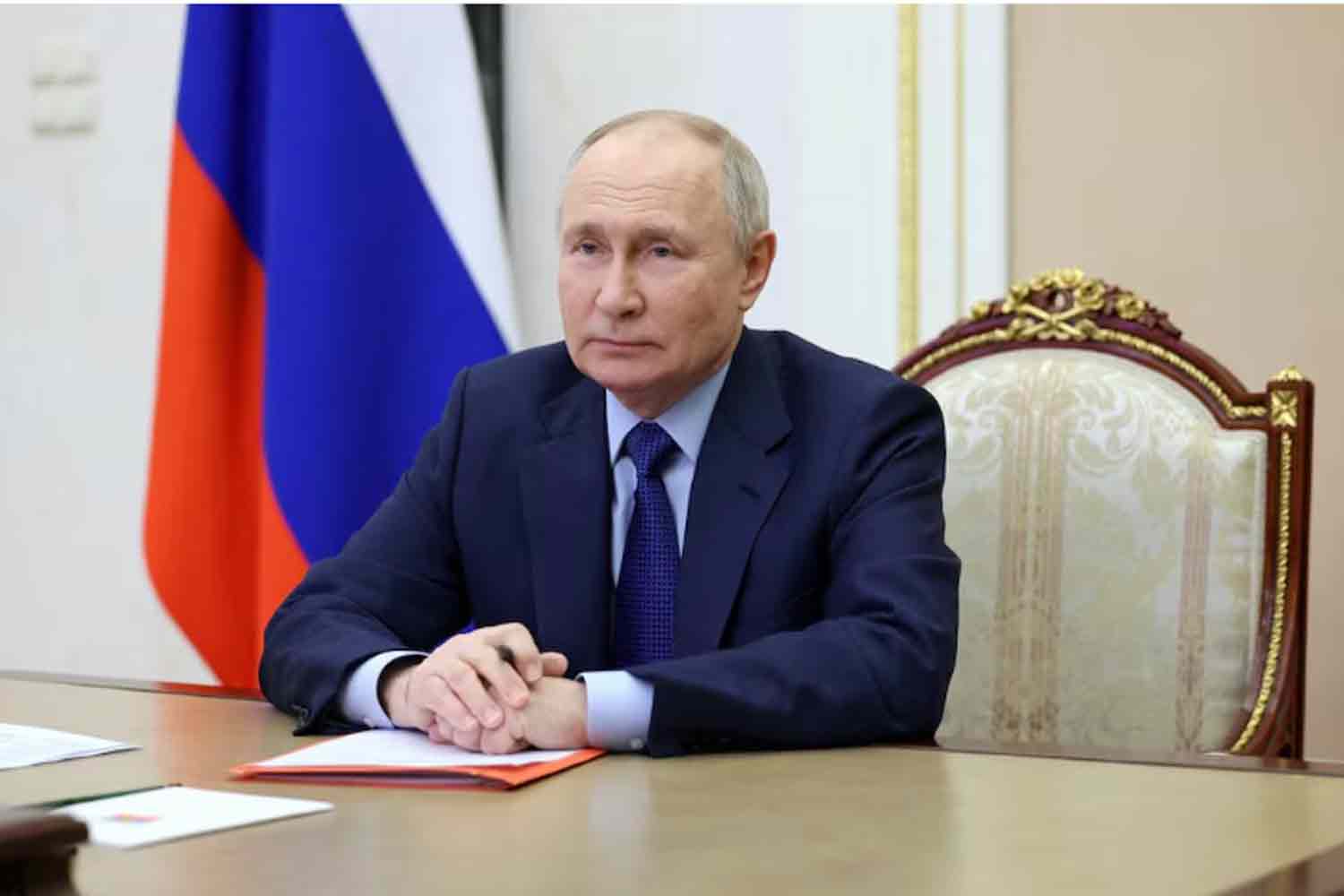
Russian President Vladimir Putin chairs a meeting

When Donald Trump assumed the presidency of the United States following his victory in the 2016 election, there were expectations in Moscow that the businessman-turned-politician would align more closely with Russia‘s interests.

However, the reality diverged from those expectations. Despite facing indictments of several associates over claims that the Kremlin attempted to influence the elections in his favor, Trump intensified sanctions against Russia and enhanced Ukraine’s military support with Javelin missiles after taking office.

Fast forward eight years, and with Trump winning the presidential race this week against Vice President Kamala Harris, the Kremlin’s response has been notably subdued.

While numerous global leaders—including French President Emmanuel Macron, Israeli Prime Minister Benjamin Netanyahu, NATO chief Mark Rutte, and Chinese President Xi Jinping—have extended their congratulations to Trump, Russian President Vladimir Putin has remained silent. This is a stark contrast to 2016, when Putin was among the first to congratulate Trump on his electoral success.

“We must remember that we are dealing with an unfriendly nation that is both directly and indirectly engaged in hostilities against our country,” stated Kremlin spokesman Dmitry Peskov during a press briefing on Wednesday morning.

Peskov stated that Putin does not intend to extend congratulations to Trump in the immediate future, opting instead to observe his actions once he assumes office.

“Once [in the Oval Office], statements can sometimes take on a different tone. That’s why we say we are carefully analysing everything, monitoring everything, and we will draw conclusions from specific words and concrete actions,” Peskov remarked.

In contrast, Ukrainian President Volodymyr Zelenskyy promptly congratulated Trump on his “impressive” victory.

Alexey Malinin, the Moscow-based founder of the Center for International Interaction and Cooperation and a member of the Digoria Expert Club, noted that Trump’s victory indicates that American voters prioritize domestic issues over global politics.

“However, it is clear that no one anticipates Trump to neglect foreign policy matters,” Malinin told Al Jazeera. “He has already declared that there will be no wars during his presidency, which suggests he may aim to resolve the conflicts in Ukraine and the Middle East.”

Malinin, however, warned against exaggerating the extent to which Trump could alter Washington’s foreign policy, even with a Republican majority in Congress. While Republicans have regained control of the US Senate, the outcomes for the House of Representatives remain uncertain.

“In my view, it is certainly premature to celebrate,” Malinin stated.

He contended that it would be “impossible” for Trump to unilaterally bring an end to the war in Ukraine. “Ending it through any form of coercion against Russia will not be feasible, and the conditions that we find acceptable may not align with the views of many Americans or several of Ukraine’s European backers. They might question, ‘So much money has already been invested. Is it truly all for nothing?’”

Malinin also expressed skepticism about Trump’s ability to broker peace in the Middle East, even if it meant further empowering Israel in its conflicts with Gaza and Lebanon.

Nevertheless, analysts noted that while the Kremlin recognizes it may not always agree with the next occupant of the White House, it might experience slightly more leeway with Trump compared to Harris, who was anticipated to persist in providing military support and funding to Ukraine.

Former President Dmitry Medvedev expressed on Telegram that Trump possesses a valuable trait: his deep-rooted aversion to spending money on unnecessary associates, misguided charitable initiatives, and greedy international organizations. He included “toxic Ukraine of Bandera” in this category, questioning how much pressure Trump will face to finance the war effort. Medvedev noted Trump’s stubbornness but emphasized that the system may ultimately prevail.

Medvedev’s comments referenced Stepan Bandera, a Ukrainian ultranationalist who collaborated with Nazi Germany during World War II and is regarded as a national hero in Ukraine.

Political consultant Ilya Gambashidze supported Medvedev’s views, describing Trump as an “excellent” businessman who prioritizes trade over conflict.

Gambashidze remarked to Al Jazeera that while some label Trump as pro-Russian or a “friend of Putin,” Russia does not require such a relationship. He asserted that Russia has no need for sympathy or assistance from Trump.

Gambashidze stated that it would be sufficient for him to concentrate on supporting the United States, particularly its economy and social issues. This would entail a transition from a confrontational stance with Russia to one characterized by constructive and pragmatic engagement. “We would advise Trump to prioritize trade over conflict, and everything will turn out well.”

However, uncertainties surrounding Trump’s foreign policy strategy and the individuals who will implement it could present challenges from Russia’s viewpoint.

Ilya Budraitskis, a Russian historian and social scientist currently serving as a visiting scholar at the University of California, Berkeley, cautioned, “We are still uncertain about who Trump will appoint to lead foreign policy.”

He noted that while Vice President-elect JD Vance may be open to making certain concessions to Moscow concerning Ukraine, a figure like Nikki Haley, who served as the UN Ambassador during Trump’s first term, has adopted a much tougher position on Russia.

Budraitskis also emphasized that Trump’s relationships with Russia’s allies, particularly China and Iran, will have significant implications for Moscow.

It is essential to consider the broader context. Trump views China as his primary strategic rival and has signaled a willingness to adopt a more assertive stance towards Iran.

A new wave of displacement is happening in northern Gaza due to new evacuation orders

0
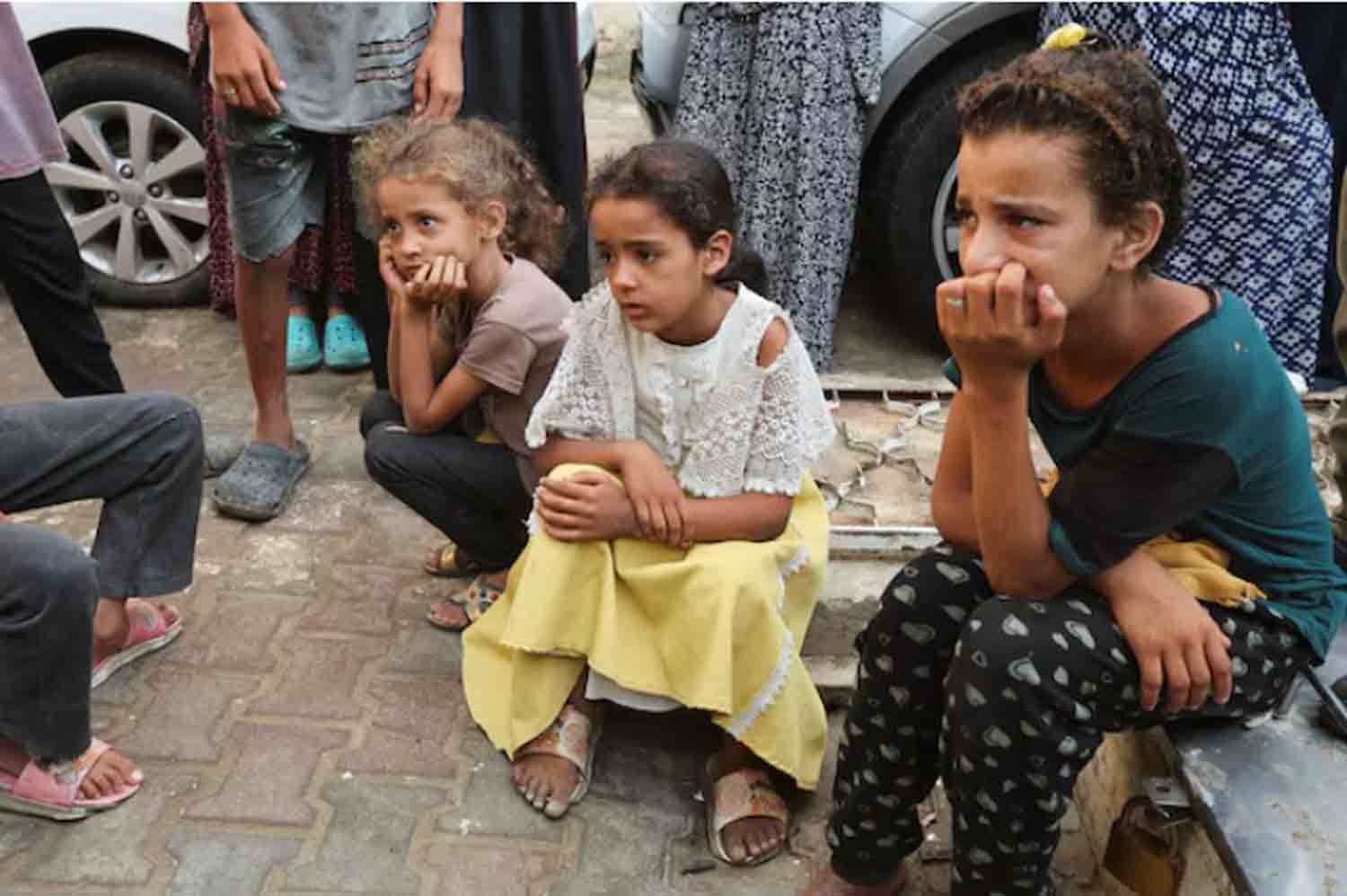
Children at tent camp for displaced people in Gaza

Israeli forces intensified their bombardment across the Gaza Strip on Thursday, issuing new evacuation orders that prompted a fresh wave of displacement from northern Gaza, raising concerns among Palestinians about their ability to return.

Palestinian health officials reported that at least 10 individuals were killed and several others injured due to an Israeli airstrike on a school sheltering displaced families in the Shati refugee camp in Gaza City. There was no immediate response from Israeli authorities.

As Israeli tanks moved into Beit Lahiya, a month into their renewed offensive in northern Gaza, numerous families fled, seeking refuge in schools and other shelters in Gaza City with whatever belongings and food they could carry. Drones flew overhead, broadcasting evacuation orders, which were also disseminated through social media and sent as audio and text messages to residents’ phones, according to one displaced individual.

“After displacing most, if not all, of the people in Jabalia, they are now bombing everywhere, killing people on the roads and in their homes to force everyone out,” the man, identified only as Ahmed for safety reasons, told Reuters via a messaging app.

Palestinian authorities have accused Israel of executing a strategy of “ethnic cleansing.” Local residents report that no humanitarian assistance has reached Jabalia, Beit Lahiya, or Beit Hanoun since military operations commenced on October 5.

The Israeli Defense Forces assert that they were compelled to clear Jabalia and initiate operations in the adjacent Beit Lahiya on Wednesday to confront Hamas militants, who they claim have reestablished their presence in those areas.

The military refuted media claims suggesting that individuals evacuated from northern Gaza would be prohibited from returning, emphasizing that it continues to facilitate the delivery of aid to northern Gaza and the Jabalia region, where it is currently engaged in “intense combat.”

“The recent statement attributed to the IDF, indicating that residents of northern Gaza will not be permitted to return to their homes, is inaccurate and does not align with the IDF’s goals and principles,” the military stated. It also noted that 300 trucks of aid from the United Arab Emirates had arrived at the Ashdod port and would be dispatched into Gaza through the Erez crossing in the north and Kerem Shalom in the south.

The military issued new evacuation directives for residents in areas surrounding and within Gaza City, citing rocket fire from Palestinian militants as the reason. These directives specifically affected the northern section of the Shati camp and three additional neighborhoods in Gaza City.

Palestinian medical personnel reported that Israeli gunfire resulted in the deaths of six individuals in Jabalia, the largest of the enclave’s eight historic refugee camps, along with four fatalities in Beit Lahiya and seven in Rafah, located near the Egyptian border in southern Gaza.

According to the Israeli military, operations in Jabalia have led to the elimination of approximately 50 militants over the past day, and they have facilitated the safe exit of Palestinians from combat zones via organized routes.

Palestinian and U.N. representatives assert that there are no secure areas within the enclave, where the majority of its 2.3 million residents have been displaced from their homes.

Israel’s ground offensive aimed at dismantling the Islamist movement has persisted for over a year, transforming much of the Gaza Strip into a devastated region facing a humanitarian crisis.

Many Palestinians are anxiously observing whether Donald Trump’s election as U.S. president will bolster American support for Israeli Prime Minister Benjamin Netanyahu. Trump positions himself as a more dependable ally for Israel compared to the current president, Joe Biden. Health authorities in the enclave report that over 43,300 Palestinians have lost their lives during more than a year of conflict in Gaza.

The conflict erupted following an attack by Hamas-led militants on Israel on October 7, 2023, resulting in approximately 1,200 fatalities and the abduction of 251 individuals to Gaza, as reported by Israeli sources.

Since the onset of the Hamas-Israel conflict in Gaza, violence has escalated in the Israeli-occupied West Bank.

In Tulkarm, Israeli forces fatally shot a Palestinian man during a raid, according to medical personnel, who also reported that an Israeli drone strike injured five others, including a mother and her son with learning disabilities.

Numerous Palestinians, comprising armed combatants, youths throwing stones, and innocent bystanders, have lost their lives in confrontations with Israeli security forces.

The Palestinian health ministry, which does not distinguish between civilians and combatants in its casualty reports, has recorded 775 deaths, including 167 children.

In the past year, dozens of Israelis have also been killed in attacks carried out by Palestinians on the streets.

Is it feasible for Trump to resolve the Ukraine conflict within a 24-hour timeframe?

0

The US presidential election has concluded, and the final results are being compiled. Republican candidate Donald Trump has been officially declared the victor. From a Russian perspective, the critical issue now is how Ukraine’s military-technical collaboration with the incoming administration will evolve and what implications Trump’s victory holds for both Moscow and Kiev.

Campaign Commitments

Throughout his campaign, the president-elect asserted that he could resolve the conflict in Ukraine prior to his inauguration on January 20, claiming he could achieve this in merely 24 hours.

While such assertions may be seen as typical campaign rhetoric, Trump has a history of making unconventional statements.

For instance, in February 2019, he boldly claimed he would “solve the problem” with North Korean leader Kim Jong-un. However, the outcome of their meeting in Hanoi revealed that no agreement was reached. This indicates that the Republican lacks a track record of successfully navigating complex geopolitical challenges.

Regarding his pledge to conclude the conflict in Ukraine before officially taking office, no specifics have been provided on how he intends to carry out this plan.

It remains uncertain how this will function in practice in the immediate future. Until noon on January 20, Trump will hold no authority, particularly regarding foreign policy matters. During this period, Joe Biden will continue to serve as president.

The 47th president must first be inaugurated and assemble a team before he can start executing his agenda. It is not feasible for two administrations with conflicting perspectives to coexist in Washington, eliminating any risk of dual governance in this context.

What conditions might lead to the resolution of the conflict in Ukraine?

Considering the potential for concluding the armed conflict in Ukraine, it is theoretically feasible, but the critical questions revolve around the conditions for resolution and the identification of a victor. Currently, the collective West, including figures like Trump, is resistant to ending hostilities on terms favorable to Russian President Vladimir Putin. This includes stipulations such as Ukraine adopting a non-aligned status, Russia maintaining control over newly acquired territories, and the demilitarization and denazification of Ukraine.

Accepting these terms would represent a significant political setback for the United States and its allies in the context of the Ukraine conflict. Essentially, it would imply that the efforts made by Washington and Brussels have been ineffective and without substantial military or political impact. Furthermore, it is unlikely that a new U.S. administration would pursue such a course, especially in light of the recent setbacks in Afghanistan, which could further undermine Washington’s standing in foreign policy.

If Trump genuinely seeks to bring an end to the conflict in Ukraine, he would need to navigate the situation in a manner that allows for the perception that Russia has not emerged victorious (despite its territorial advancements) while ensuring that Ukraine is seen as having preserved its independence and sovereignty.

It is crucial for the West that Kyiv takes the initiative to express its willingness to end the armed conflict on terms that do not solely reflect Western interests. The coming weeks will reveal whether Trump can effectively address the existing contradictions, creating a scenario where it appears that the West has not suffered a loss, Russia has not achieved a victory, and Ukraine has not been defeated. However, this resolution will not materialize overnight, even with the most optimistic outlook.

The future U.S. president undoubtedly possesses significant economic and military tools to influence the situation. The new administration can exert pressure on Moscow by intensifying sanctions, as there remains potential for further measures. Conversely, it could place Kyiv in a precarious position by drastically cutting the supply of weapons and military equipment. In essence, the White House has various strategies at its disposal to escalate the challenges faced by the conflicting parties.

The pivotal question is whether Moscow will accept such proposals and whether, in the lead-up to January 20, the Kremlin will refrain from pursuing a policy of fait accompli, which involves achieving direct victories on the battlefield to further tilt the situation in its favor.

Latvia plans to implement conscription for women in military service

0

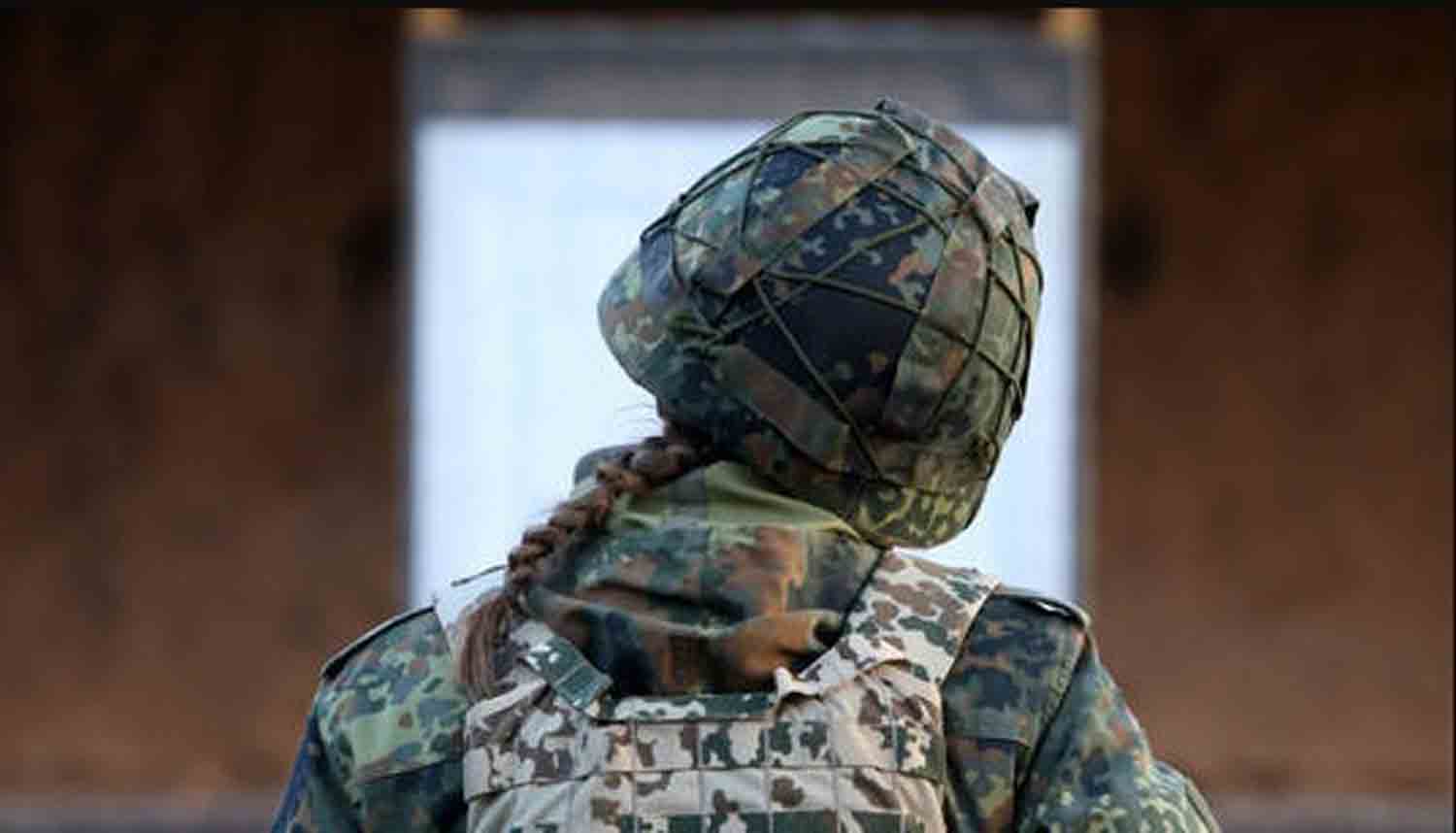
Latvia has initiated a plan to require women to participate in military service, as stated by Defense Minister Andris Spruds on Wednesday. In a discussion on Latvian television, Spruds mentioned that while significant work remains, the new conscription law could be implemented by 2028.

The minister emphasized that this initiative is part of the government’s commitment to advancing gender equality within the armed forces, which he described as “a very important issue.” He pointed out that similar laws are already enacted in Sweden, Norway, and Denmark, indicating that Latvia is following their example.

“This initiative will establish mandatory military service for both genders,” Spruds remarked. Currently, women in Latvia can enlist in the military on a voluntary basis.

He further explained that the legislation is still in the early stages of development.

“It is evident that this cannot be accomplished overnight. There is substantial groundwork to be done, which includes discussions and dialogue among the government, parliament, and the public,” Spruds stated. He acknowledged the necessity of public support for this initiative, noting that many Latvians previously opposed the reintroduction of compulsory service for men.

Orders have been issued to the appropriate authorities to initiate preparations for the integration of women into the military, as noted by Spruds. This includes assessing the necessary modifications, such as equipping the army with suitable gear, uniforms, and weaponry designed specifically for female personnel.

“We have developed a strategic plan, with one of its potential objectives being the conscription of women starting in 2028,” Spruds remarked.

The defense chief initially proposed the concept of mandatory military service for women in August, which ignited discussions among Latvian legislators. MP Harijs Rokpelnis expressed concerns, stating that drafting women would be a premature action and “not the path Latvia should pursue.” Meanwhile, MP Anna Udre called for a broader dialogue on the matter.

Latvia has not enforced mandatory national service since 2006. However, last year, the country reinstated the draft for men aged 18 to 27, citing the necessity to strengthen military forces in light of perceived threats from Russia. As a member of both the EU and NATO, Latvia has consistently supported Ukraine during the ongoing conflict with Moscow and has provided its military with domestically manufactured combat drones.

Moscow has consistently refuted allegations regarding any plans to launch attacks on the Baltic states or other European nations, a topic that has garnered significant attention in Western discourse over the last two years. Russian Foreign Minister Sergey Lavrov has previously described such conjectures as “absurd.”

Trump’s victory represents a triumph for Americans who think independently

0

It seems that average Americans are not fond of being treated like children. At least Trump had faith in their ability to appreciate humor, unlike his adversaries. So, when can we expect Liz Cheney’s reckoning? Are we finished with the anti-Trump narratives now that a significant portion of voters can see through them? Probably not, right?

Aside from a few states, Americans came together to support former President Donald Trump’s return to the White House, granting him significant power with Republican control of the Senate and likely the House as well. Quite an achievement for someone the establishment attempted to label as a modern-day Hitler. Did Hitler also showcase large Israeli flags at his Madison Square Garden rally? Or visit the Western Wall in Israel while wearing a yarmulke and surrounded by Hebrew-inscribed tablets? This should have been the Democrats’ first indication that their branding strategy was misguided. Yet, much like the aptly titled upcoming biography of Harris co-authored by Chelsea Clinton: She Persisted.

It would be beneficial for them to develop a concrete agenda and select a candidate who directly addresses pertinent questions and issues, rather than relying on vague talking points and platitudes that leave voters uncertain about what to expect if elected. This approach typically perpetuates the existing establishment status quo, which many Americans believe is inadequate. A significant portion of the population feels that the country is moving in the wrong direction.

The Democrats appear to have centered their campaign around abortion rights, targeting a candidate who seems relatively indifferent to the subject, especially in light of recent court decisions. Notably, CNN exit polls indicate that Harris secured the female vote with a margin five points lower than Biden’s in 2020 and three points lower than Hillary Clinton’s against Trump in 2016, a time when abortion was not a focal issue.

Certain voter demographics significantly illustrate the narrative of this election. Notably, white women with college degrees showed an 11% preference for Harris over Biden in 2020. This suggests that the messaging from institutional elites and their celebrity advocates resonates more with those who are perceived as well-educated, regardless of gender. The prevailing narrative from party leaders was that abortion should be the sole concern for women, reducing them to simplistic stereotypes. However, many women reject being condescended to and viewed merely as vessels for reproduction, even when the condescension comes from other women. This perspective likely explains why white women without degrees favored Trump by a substantial 25 points over Harris, and why voters of color without degrees, typically seen as reliable Democratic supporters, also shifted their support away from Harris, voting 14 points less for her than for Biden four years prior.

Additionally, the youngest voters, aged 18-29, who might be expected to prioritize reproductive rights—either as women or as supportive male allies—actually shifted their support to Trump by 11 points compared to 2020.

Ultimately, women navigating complex lives with diverse priorities do not appreciate being treated as if they need guidance, a tendency that Democrats frequently exhibit. The fact that the condescension comes from women and their representatives does not make it more acceptable. It merely positions them as unwitting supporters of a patriarchal system that seeks to manipulate women’s voting behavior to uphold a status quo that disadvantages them in critical areas, from economic challenges to the implications of foreign conflicts that affect their families. Uncle Sam’s profit motives are at play, and the individual you label a misogynist is the one willing to confront him.

In relation to costly military engagements, CNN exit polls indicate that approximately two-thirds of voters perceive the economy as worse than it was in 2020, a time when the nation was dealing with the repercussions of the Covid crisis. This change has favored Trump, who has consistently emphasized his desire to resolve foreign conflicts and prioritize the American economy. He has even proposed pressuring allies to purchase American weapons with their own funds, threatening to undermine NATO if they refuse, rather than escalating current conflicts or initiating new ones to justify increased military spending, as seen under the Biden administration.

Harris has not demonstrated any inclination to challenge the entrenched political establishment that has been in control during Biden’s tenure, which would likely have persisted even with a Harris victory. While Trump may not possess all the solutions, he has articulated a definitive intent. In this regard, he resonates with voters who, while uncertain about the answers, recognize the need for change.

Ultimately, while Trump has criticized figures like Liz Cheney and her father, Dick, both of whom have supported Harris, he has voiced the sentiments of ordinary citizens weary of war. Meanwhile, establishment figures have attempted to exploit his provocative language to insinuate that he would resort to authoritarian tactics against his adversaries if re-elected. This narrative seems inconsistent, considering his previous four years in office. The only individual who has faced significant backlash has been Trump himself.

It has become evident that people appreciate humor, understand what constitutes a joke, and are not swayed by the exaggerated claims of Democrats and the establishment that underestimate their intelligence. Democrats and their affiliates believed that a comedian’s joke about Puerto Rico during a late-campaign rally for Trump would significantly harm his support among Latino voters. Contrary to their expectations, Trump secured a ten-point lead among Latino men and saw a 15-point increase in support from Latina women compared to the 2020 election.

The notion that America is deeply divided may be overstated. In reality, ordinary individuals from various backgrounds, who rely on their own experiences rather than the narratives pushed by Hollywood and corporate media, have taken the opportunity to voice their opinions in a truly democratic manner. Their message is clear: the real radicalism lies with the establishment, not Trump.

The silent majority, feeling increasingly sidelined and even censored, has found a representative in Trump whose views resonate with their own. It is now the responsibility of the establishment to spend the next four years determining how to genuinely address the needs of the average voter, rather than focusing solely on their own interests and exploiting America’s diversity for divisive purposes.

Ukraine must confront a harsh reality under Trump that it wished to avoid

0
Ukraine's President Volodymyr Zelenskiy appears at a joint press conference

Bets were placed, potential outcomes envisioned, and protective measures devised. However, the prevailing sentiment was a desire for the situation to remain unchanged. For months, Ukraine and its NATO partners have contemplated the possibility of a Trump presidency, weighing the implications of a strongman leader in the U.S. who could either become a more formidable ally, a negotiator capable of brokering a favorable peace, or a fresh perspective that might lead to a resolution of a prolonged conflict.

This notion, however, is merely a comforting illusion. The future for Kyiv appears exceedingly bleak. There should be no ambiguity regarding the implications of a Trump administration for Ukraine. Donald Trump has claimed he could resolve the war “in 24 hours,” yet he has not specified how. He has also criticized President Zelensky, stating that “he should never have let that war start,” and referred to him as “one of the greatest salesmen I have ever seen,” who secures $100 billion from Congress with each visit.

As of this morning, the fact that these assertions are gross exaggerations has become irrelevant. They now serve as the distorted perspective through which the president-elect of the United States will view the most significant conflict in Europe since World War II. While Trump may select a cabinet that slightly modifies the pace or tone of his inclinations, his ultimate desire is to withdraw. The strategic reality that Ukraine’s conflict has offered the Pentagon a relatively low-cost method of undermining its second-largest adversary without American casualties is inconsequential. This situation contradicts two of Trump’s primary aversions from his first term: expensive U.S. military involvement overseas and antagonizing Russian President Vladimir Putin.

The Kremlin’s initial reaction—that US-Russia relations cannot deteriorate further under President Joe Biden—suggests a sense of satisfaction. Analysts generally view the upcoming year as a calculated risk for Russia. Moscow has been deploying troops to strategic high ground around Ukraine’s military centers in the Donbas region, specifically near Pokrovsk, Kurakhove, and Chasiv Yar, with the intention of exerting significant pressure on Kyiv this winter to force its withdrawal from the Donetsk area.

A successful campaign in Donetsk could potentially open the way to major urban centers like Dnipro and Zaporizhzhia, rendering the Ukrainian capital highly susceptible and possibly altering the dynamics of the conflict. However, time is not on Russia’s side. Western officials have indicated that the current casualty rate—estimated at around 1,200 dead or injured daily—is not sustainable without implementing another major and unpopular mobilization. Furthermore, next year could bring significant challenges for Moscow in terms of armor and ammunition production.

Putin has strategically played his recent cards with the hope that Trump would emerge victorious, banking on the belief that Trump would continue to be instinctive—favoring isolationism and harboring skepticism towards America’s long-standing alliances.

Trump’s approach is characterized by erraticism and unpredictability, particularly regarding intricate and lengthy issues such as foreign conflicts. He tends to favor quick solutions, exemplified by his decision to leave Afghanistan to the Taliban, engage in a direct meeting with North Korean leader Kim Jong Un in Singapore, or authorize a drone strike against Iranian Revolutionary Guard commander Qasem Soleimani. It remains uncertain whether he genuinely considered the implications of his policies on Ukraine or if he simply wishes to avoid discussing the war and its financial burdens.

Regardless of the pace or thoroughness of Trump’s strategy, the repercussions will be evident in the coming weeks. I remember the significant dip in morale among Ukrainian forces last December when U.S. military aid was stalled for approximately six months. Frontline soldiers expressed their fears of having to abandon their positions without that support, despite knowing that the Biden administration was, in principle, still committed to assisting them. Now, they face a new challenge: the potential for limited aid from the Pentagon and European NATO allies, while the Trump administration adopts a more adversarial stance towards Kyiv.

Moreover, Trump assumes the presidency at a particularly dangerous juncture for Kyiv since the onset of the conflict. Various analyses indicate that Ukraine has experienced unprecedented territorial losses in October, with the fall of minor villages that, while individually insignificant, collectively represent a strategic disadvantage, leaving the eastern front particularly exposed.

NATO’s strategy has long exhibited a significant flaw; the Biden administration was hesitant to provide Ukraine with sufficient military support to potentially defeat Russia, fearing it could lead to a broader conflict. Conversely, Biden was also unwilling to allow Russia to emerge victorious. Consequently, the alliance urged Ukraine to persevere, hoping that eventually, Putin would falter. This created a complex contradiction at the core of the support for Kyiv, yet it was preferable to demanding Ukraine’s capitulation.

Without a strong resolve to fight—an understanding that victory is achievable—it becomes nearly impossible to expect Ukrainians to endure bombardments in trenches or advance their armored vehicles against hostile fire. No one wishes to be the last soldier to perish in a conflict; no one desires to sacrifice their life defending a family that may ultimately live under Russian control.

Trump’s potential return to power could further complicate Zelensky’s position. For years, Zelensky has effectively championed Ukraine’s cause, akin to a skilled salesman. However, he now carries the heavy burden of the controversies from Trump’s first term, particularly regarding Trump’s demands for investigations into the Biden family. Can Zelensky continue to be that effective advocate? Would a new leader in Bankova be more successful in securing military assistance or negotiating a feasible peace agreement?

Those who are weary of the ongoing conflict in Ukraine—whether they are allies of Kyiv or soldiers on the front lines—should be cautious about endorsing a deal backed by Trump. Historical precedents, such as Russia’s actions in Syria in 2013 and Ukraine in 2015, demonstrate that Moscow often negotiates to gain time for military preparations or to achieve its strategic objectives. Putin is likely to accept any territorial gains he can secure at the negotiating table, but he will subsequently regroup and continue his ambitions. Domestically, he has framed the war as a struggle against the united forces of NATO. The consequences of an overstretched Russian economy, a staggering death toll, and the reconfiguration of Russia’s industrial capabilities in pursuit of this conflict cannot be easily reversed. Putin increasingly relies on the war to maintain his authority.

This need for conflict is evident in his recent assertive actions towards neighboring countries. The recent unrest in Georgia and Moldova, where pro-Russian factions have attempted to undermine pro-European movements with limited success, may lead to increased Russian intervention in the near future. It is improbable that Putin will relinquish his aspirations for expanded regional dominance. It is essential to recall his initial intentions: the war was initiated with the goal of occupying Ukraine and preventing its integration into NATO and the European Union. The significant Russian casualties over nearly three years likely necessitate a more substantial victory than merely retaining the territory already acquired.

A crucial lesson from this war is now under serious threat. For the past two years, Putin’s most ardent critics have emphasized that there is no longer a need to fear Russia; the Kremlin has exploited the image of its formidable Bear as a psychological tool to compensate for its military weaknesses. Ukraine’s unexpected resilience has demonstrated that this fear was unfounded, revealing Moscow’s difficulties in overcoming a neighbor it once dismissed as incapable of defending itself.

A Trump administration might soon urge the global community to accept a seemingly analogous assertion that is, in reality, profoundly distinct: that the West should not fear Russia, as it poses minimal threat. This scenario would represent Putin’s most significant triumph and the West’s most glaring vulnerability.

Israeli airstrikes near Baalbek, Lebanon, resulted in 40 fatalities

0

Israeli airstrikes in Lebanon resulted in the deaths of 40 individuals near the eastern city of Baalbek in the Bekaa Valley on Wednesday, as reported by the country’s health ministry. Additionally, further strikes targeted the southern suburbs of Beirut as night fell.

For over a year, Israel and the Iran-aligned Hezbollah have been engaged in exchanges of fire, coinciding with the ongoing conflict in Gaza. However, hostilities have intensified since late September, with Israeli forces ramping up their bombardment of southern and eastern Lebanon and conducting ground operations in border villages.

The health ministry reported that the strikes on Baalbek and the surrounding area not only claimed 40 lives but also left 53 others injured. The Israeli military has not provided any comments on the situation. Israel has consistently targeted Hezbollah strongholds in the southern suburbs of Beirut. On Wednesday, the Israeli military instructed residents in these areas to evacuate several sites, leading to two waves of bombings—one late Wednesday and another early Thursday.

Lebanon’s Al Jadeed TV reported that there were at least four strikes on Thursday, although there were no immediate reports of casualties or specifics regarding the targets. Hezbollah’s Secretary General Naim Qassem stated on Wednesday that he does not believe political measures will effectively end the hostilities. He indicated that a pathway to indirect negotiations could emerge if Israel ceased its attacks. “When the enemy chooses to halt its aggression, we have outlined a clear route for negotiations—indirect discussions facilitated through the Lebanese state and Speaker of Parliament Nabih Berri,” Qassem remarked.

U.S. diplomatic initiatives aimed at ceasing the conflict between Israel and Hezbollah, which included a proposal for a 60-day ceasefire, encountered setbacks last week, coinciding with the U.S. elections on Tuesday, where former President Donald Trump regained the presidency.

RESCUERS SEARCH FOR SURVIVORS

Over the past year, Israeli airstrikes in Lebanon have resulted in the deaths of more than 3,000 individuals, with the majority occurring in the last six weeks.

In the town of Barja, located south of Beirut, Lebanese rescuers combed through the debris of a collapsed apartment building following an Israeli strike on Tuesday evening that claimed the lives of 20 people, according to Lebanon’s health ministry.

Moussa Zahran, a resident of one of the upper floors, returned to search through the remnants of his home. His feet, burned from the incident, were bandaged, and both his wife and son were hospitalized due to injuries sustained in the attack.

“These stones you see here weigh 100 kilos; they fell on a 13-kilo child,” he remarked, referencing his son and the apartment wall that collapsed on him during the assault.

It remains uncertain if the strike was aimed at a Hezbollah member, and there was no evacuation warning issued prior to the air raid.

Hezbollah announced on Wednesday that it had launched missiles targeting an Israeli military installation close to Ben Gurion Airport. Reports from Israeli media indicated that a rocket had struck near the airport.

Subsequently, the Israeli military confirmed that numerous projectiles had entered Israeli territory from Lebanon, with some being intercepted.

Diplomatic efforts to resolve the ongoing conflict have reached an impasse. On Tuesday, Israeli Prime Minister Benjamin Netanyahu appointed Israel Katz as the new defense minister, who pledged to defeat Hezbollah to facilitate the return of those displaced from northern Israel.

Berri, a Hezbollah ally and key diplomatic figure, met with the U.S. and Saudi ambassadors to Lebanon on Wednesday to discuss the current political situation, although his office did not provide additional details.

Meanwhile, Lebanon’s caretaker prime minister extended congratulations to the U.S. president-elect.

Netanyahu expressed support for Trump’s election, while senior Hamas official Sami Abu Zuhri remarked that Trump would face scrutiny regarding his claims that he could resolve the Gaza conflict within hours as president.

Biden aims to expedite billions in security aid to Ukraine before his term ends

0

President Joe Biden is set to accelerate the disbursement of billions in security assistance to Ukraine before the end of his term in January, as reported by sources on Wednesday. This effort is intended to bolster the Ukrainian government in Kyiv in anticipation of President-elect Donald Trump‘s inauguration on January 20.

A senior administration official, speaking anonymously, stated, “The administration intends to advance efforts to position Ukraine as favorably as possible” before the end of its term.

Trump has expressed criticism regarding Biden’s support for Ukraine, raising concerns about the continuity of assistance for President Volodymyr Zelenskyy’s administration under a Republican-led White House, Senate, and potentially the House of Representatives.

Since January 2023, the House has been under narrow Republican control, and as of Wednesday afternoon, it remained uncertain whether the party had secured enough seats in the recent elections to prevent Democrats from achieving a slim majority.

The House of Representatives, under Republican control, last authorized aid for Ukraine in April, which included granting President Biden the authority to transfer billions of dollars’ worth of weapons from U.S. reserves. This decision came eight months after Biden initially requested additional assistance, garnering more support from Democrats than Republicans.

From the weapons transfer authority approved in April, $4.3 billion remains available, alongside $2.8 billion in transfers that lawmakers had previously sanctioned and an additional $2 billion allocated for purchasing new weapons from manufacturers.

In total, this $9 billion in military support would significantly enhance Ukraine’s military capabilities.

Biden’s intentions regarding these transfers were first disclosed by Politico, and the White House has not yet provided a response to inquiries for comment.

The U.S. plans to continue supplying munitions and anti-tank systems, including the Javelin produced by Lockheed Martin and RTX, to Ukraine in the upcoming months.

To assist Ukraine in reclaiming its territory amid the ongoing conflict with Russia, there will be a need for more ground vehicles and 155mm artillery manufactured by General Dynamics Corp.

Additionally, Ukraine is expected to receive more GMLRS surface-to-surface rockets, which have been extensively utilized by the HIMARS multiple rocket launch system.

Analysts indicate that it is uncertain whether Washington will continue to support Ukraine once Republicans gain control of the White House and at least half of Congress, particularly in light of Ukraine’s recent challenges on the battlefield.

Scott Anderson, a governance studies fellow at the Brookings Institution, remarked, “This will pose a significant issue when considering future funding for Ukraine, which will eventually be necessary.”

During a press conference on Wednesday, Senate Republican leader Mitch McConnell refrained from addressing Ukraine aid, stating that his focus was solely on discussing election outcomes.

While campaigning for a second term, Trump claimed that Russian President Vladimir Putin would not have invaded Ukraine in 2022 if he had been in office, asserting that he could resolve the situation within 24 hours.

Last year, Trump mentioned to Reuters that Ukraine might need to relinquish territory to achieve a peace deal, a notion that Ukraine has dismissed and one that President Biden has not proposed.

U.S. Senator J.D. Vance, the vice president-elect, has openly criticized assistance to Ukraine, contending that government resources would be more effectively allocated to domestic issues.

Trump’s second term could have major implications for the Middle East

0

If his initial term in the White House serves as a guide, President-elect Donald Trump is expected to prioritize the Middle East in his upcoming agenda.

During his first four years, Trump made notable strides by choosing Saudi Arabia as the destination for his inaugural foreign visit, attempting to negotiate a “deal of the century” between Israelis and Palestinians, enhancing the regional integration of Israel, and significantly ramping up pressure on Iran.

However, the Middle East landscape has evolved considerably since he left office in 2021, and all regional stakeholders are closely observing how the new president will respond to these changes.

“Your historic return to the White House signifies a fresh start for America and a strong reaffirmation of the vital alliance between Israel and the United States. This is a tremendous victory!” Israeli Prime Minister Benjamin Netanyahu remarked on X on Wednesday.

Gulf Arab nations also expressed their support for the president-elect’s success. Saudi Arabia’s King Salman bin Abdulaziz Al Saud and Crown Prince Mohammed bin Salman extended their congratulations to Trump, while the United Arab Emirates stated: “the UAE and US are united by our enduring partnership based on shared ambitions for progress.”

In contrast, Iran downplayed the election’s implications, asserting that there is “no significant difference” in the identity of the US president, according to state media. Fatemeh Mohajerani, a spokesperson for the Iranian government, was quoted as saying that the “general policies of the US and Iran remain unchanged” following Wednesday’s election results.

Trump’s election might influence key players in the Middle East

Israel and the Palestinians

Analysts suggest that addressing the conflicts in Gaza and Lebanon, as well as fostering Israel’s integration into the Middle East, will likely be key priorities for the president-elect’s agenda.

Mustafa Barghouti, leader of the Palestinian National Initiative, noted that Netanyahu will encounter a president who is more assertive than previous administrations, stating, “I don’t believe Trump will accept the ongoing wars in their current form.” He also remarked that for Palestinians, the change in leadership may not significantly alter the situation, as both administrations have shown a strong bias in favor of Israel.

According to Alon Pinkas, a former Israeli diplomat, Trump is keen to avoid having these conflicts as pressing issues when he takes office on January 20.

“He will likely urge a swift resolution; he doesn’t want this on his agenda,” Pinkas explained, suggesting that Trump may encourage the Israeli prime minister to declare a victory and subsequently negotiate a settlement through intermediaries.

Throughout his campaign, Trump has not clarified his approach to the Israel-Hamas conflict should he be reelected, nor has he indicated how his policies would differ from those of his predecessor, Joe Biden. In April, Trump remarked that Israel should “finish what they started” and “get it over with fast,” expressing concern that it was “losing the PR war” due to the images emerging from Gaza.

According to Pinkas, Trump “couldn’t care less about the Palestinian issue.” During his first term, he refrained from endorsing the United States’ long-standing support for an independent Palestinian state, stating that he preferred a solution “that both parties like.”

Barghouti expressed concern that Trump might permit Israel to annex portions of the Israeli-occupied West Bank, which would effectively signal “the end of the two-state solution.”

During his initial term, Trump implemented several policies that favored Israel. In 2017, he officially recognized Jerusalem as Israel’s capital, a move that disrupted long-standing U.S. policy and international agreement. He also acknowledged Israel’s claim to the Golan Heights, territory it seized from Syria during the 1967 conflict.

Despite Trump’s assertions of being the most pro-Israel president in recent history and his claims of a close personal rapport with Netanyahu, their relationship has not always been amicable.

In 2021, after both had left office, Trump accused Netanyahu of disloyalty when the Israeli Prime Minister extended congratulations to Biden following his 2020 election victory.

Following Hamas’ attack on Israel on October 7 last year, Trump criticized both Netanyahu and Israeli intelligence for their lack of preparedness, asserting that such an attack would not have happened under his presidency.

Boaz Bismuth, a member of Israel’s Knesset representing Netanyahu’s Likud party, stated to CNN that Trump’s election arrives at an opportune moment, offering a chance to further the Abraham Accords as conflicts in Gaza and Lebanon are nearing resolution.

He noted that these accords, established during Trump’s first term and resulting in Israel normalizing relations with four Arab nations, have sidelined the aspirations for an independent Palestinian state.

Bismuth emphasized, “Once the conflict concludes, a significant reset in the Middle East will be necessary,” asserting that Trump is ideally positioned to facilitate a “new Middle East.”

Nadav Shtrauchler, a political strategist with close ties to Netanyahu, remarked that Trump’s election conveys a strong message to Israel’s adversaries in Iran.

Domestically, the Israeli prime minister may feel more empowered, especially following his recent dismissal of Defense Minister Yoav Gallant amid ongoing disputes regarding domestic issues and Israel’s military strategies.

Shtrauchler suggested that Netanyahu might reassess his strategies, noting that Trump’s unpredictability could lead to increased pressure on Israel to conclude the conflicts in Gaza and Lebanon, potentially shifting focus towards addressing the Iranian threat.

Iran faces a significant challenge in the coming four years, potentially the most critical since its establishment in 1979. Experts suggest that under Trump’s renewed scrutiny, a return to the “maximum pressure” campaign he previously implemented could lead to increased isolation and economic hardship for Tehran.

Despite Trump’s self-proclaimed expertise as a dealmaker, he struggled to limit Iran’s influence in the Middle East. His withdrawal from the 2015 nuclear agreement aimed at curbing Iran’s nuclear ambitions, coupled with the reimposition of sanctions and the assassination of Qasem Soleimani, the military leader overseeing Iran’s regional proxies, did not yield the desired results.

Iran

Since Trump’s departure from office in 2020, Iran has accelerated its uranium enrichment, boosted oil exports, intensified support for militant groups in the region, and set a concerning precedent by directly attacking Israel on two occasions.

As Israel continues to undermine Iran’s regional capabilities through strikes on its proxies, Iran is increasingly losing its deterrent power amid economic difficulties and widespread domestic unrest.

Ali Vaez, director of the Iran Project and senior adviser at the International Crisis Group, noted that the Islamic Republic appears vulnerable, facing formidable threats while 86-year-old Supreme Leader Ayatollah Ali Khamenei struggles to manage multiple crises simultaneously.

With the Middle East on the verge of a broader conflict and Iran threatening retaliation for recent Israeli attacks, there are fears that Trump’s potential election could embolden Netanyahu to target Iran’s nuclear facilities, a move the Biden administration has cautioned against.

There is a possibility that Trump may urge Netanyahu to take decisive action before he officially assumes office, which could lead to a significant increase in tensions during November and December. This scenario suggests that Israel might seek to capitalize on its position to undermine Iran and its network of militant groups prior to Trump’s inauguration, after which he could claim credit for fostering peace, according to Vaez.

However, this dynamic could shift if the Biden administration opts to restrict Israel’s capacity to escalate tensions in its remaining months in power. The U.S. has already initiated this process by sending a letter to Israel last month, warning of consequences if the humanitarian situation in Gaza does not improve.

A crucial element in Iran’s relationship with the incoming U.S. president will be Trump’s reaction to recent intelligence reports indicating that Tehran allegedly plotted to assassinate him—claims that Iran has labeled as “unsubstantiated and malicious.”

Vaez emphasized the need to differentiate between Trump as an individual and the Trump administration as a whole.

“Trump may be drawn to the challenge of outmaneuvering the Iranians in negotiations, viewing it as a definitive test of his skills in deal-making,” he stated, noting that during his first term, he was intrigued by the idea of negotiating with Iran.

In a tweet from 2020, Trump remarked, “Iran never won a war, but never lost a negotiation!”

Vaez pointed out that a resurgence of Trump’s “maximum pressure” strategy could coincide with a policy of “maximum support” for the Iranian populace, potentially aiming for regime change. He argued that this approach would likely hinder any prospects for the two nations to engage in negotiations.

“I doubt that anyone on (Trump’s) national security team would prioritize achieving a mutually beneficial agreement with the Iranian regime,” he concluded.

Saudi Arabia and the Gulf states

Gulf Arab states have maintained their engagement with Trump following his departure from office, anticipating a potential return. Analysts suggest that this strategy may yield positive outcomes for them.

During Trump’s initial term, the relationship between Saudi Arabia and the United States thrived. Notably, he made Riyadh his first foreign destination as president in 2017 and supported Crown Prince Mohammed bin Salman during the international backlash over the assassination of Washington Post journalist Jamal Khashoggi by Saudi operatives in 2018, a period when the Saudi heir faced significant global condemnation.

Hasan Alhasan, a senior fellow for Middle East policy at the International Institute for Strategic Studies in Bahrain, noted, “Gulf states highly value the opportunity to collaborate with a leader who shares their views and to foster relationships through personal interactions. This approach mirrors their dealings with other nations.”

Throughout Trump’s first term, Saudi Arabia and the UAE were involved in conflicts in Yemen, and their relations with Iran reached a historic low.

However, Gulf states have notably adjusted their foreign policies since then, choosing to reduce military engagements and seek rapprochement with former adversaries like Iran, while also diversifying their alliances in a world that is becoming increasingly multipolar, amid growing doubts regarding the US’s role in the Middle East.

Alhasan noted that there is a possibility of Trump returning to a maximum pressure approach regarding Iran, especially considering the improved relations between Iran and the Gulf states, which may lead to increased pressure from the US for compliance with this strategy.

Emerging middle powers like Saudi Arabia and the UAE may encounter difficulties in navigating their strengthened ties with China under a Trump administration. In recent years, these oil-rich nations have bolstered their trade and technological partnerships with China, despite the ongoing rivalry between Washington and Beijing.

Both Saudi Arabia and the UAE have been invited to join the BRICS coalition of developing countries, and Saudi Arabia has achieved dialogue partner status within the Shanghai Cooperation Organization (SCO), a security and economic alliance led by China.

Riyadh and Abu Dhabi have incorporated Chinese technology into critical infrastructure projects, and although they have committed to limiting China’s influence in their burgeoning artificial intelligence sectors, they have increasingly depended on Chinese expertise.

Alhasan expressed concern about whether the Trump administration will apply more pressure on Gulf states to reduce their ties with China in specific sectors. He also highlighted the potential for intensified tariff and trade conflicts under Trump, which could adversely affect Gulf exports.

Trump aims to enhance Israel’s integration within the Middle East but may encounter obstacles due to Saudi Arabia’s reluctance to normalize relations with Israel without a clear path to Palestinian statehood, which Israel has not provided.

Qatar, one of the first countries to congratulate Trump, has become crucial to US efforts in achieving a ceasefire in Gaza due to its connections with Hamas. However, these ties could become a liability under a Trump administration, according to Alhasan.

He remarked that there is likely concern regarding what a potential second term for Trump might entail.

Israeli Prime Minister unexpectedly dismissed defense minister

0
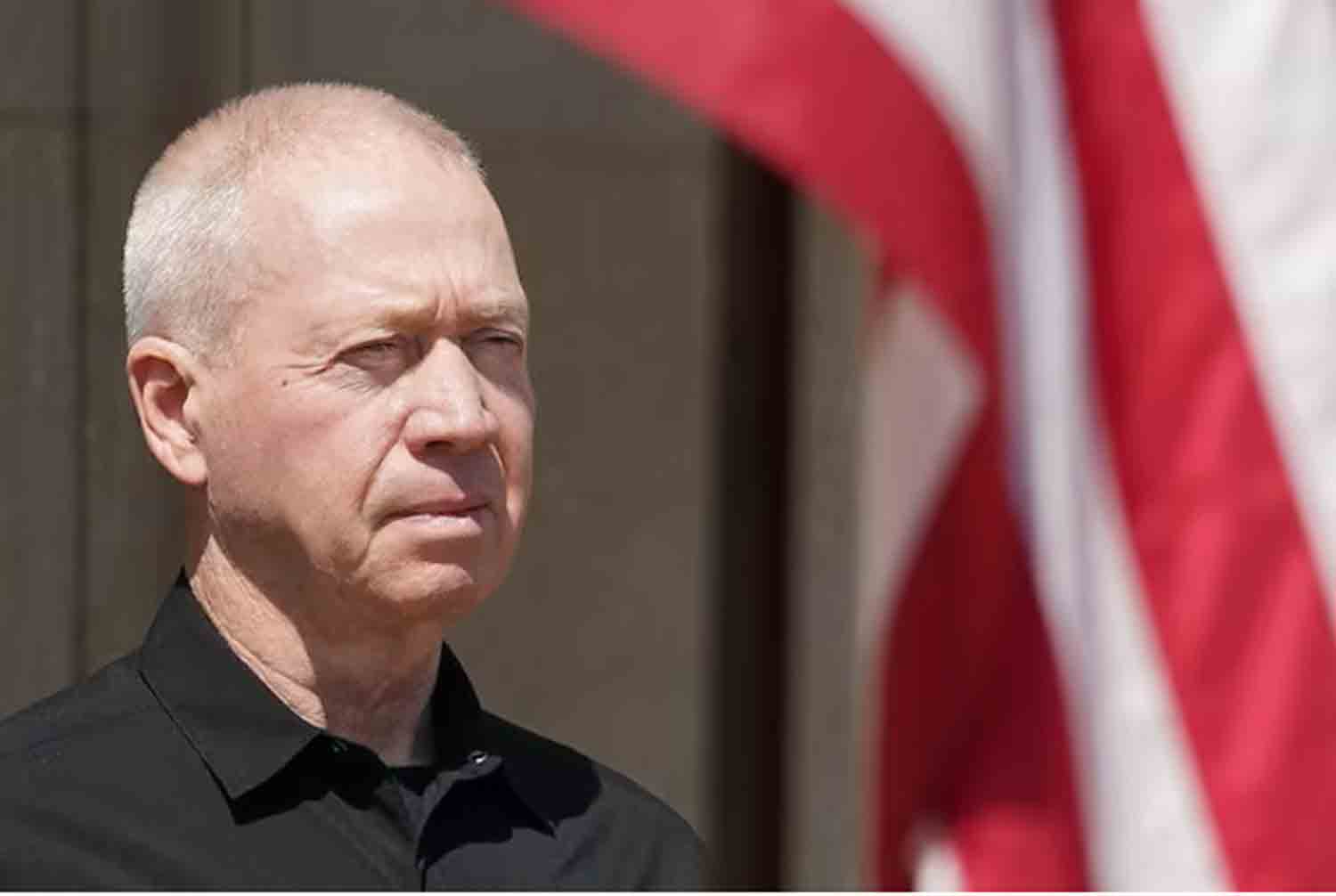
Israeli Defence Minister Yoav Gallant

Israeli Prime Minister Benjamin Netanyahu unexpectedly dismissed his widely supported defense minister, Yoav Gallant, on Tuesday, a decision that comes amid ongoing conflicts on several fronts in the region. This announcement triggered widespread protests throughout the country, including a large demonstration that brought central Tel Aviv to a standstill.

Netanyahu and Gallant have frequently clashed over the ongoing war in Gaza. However, Netanyahu had refrained from terminating Gallant’s position until now, as global attention was directed towards the U.S. presidential election. In his evening announcement, Netanyahu pointed to “significant gaps” and a “crisis of trust” as reasons for the change, appointing a long-time ally in Gallant’s place.

“During wartime, it is crucial to maintain complete trust between the prime minister and the defense minister,” Netanyahu stated. “Regrettably, while there was mutual trust and productive collaboration in the initial months of the campaign, that trust has deteriorated in recent months.”

Initially, Israel’s leadership appeared united in its response to Hamas’ attack on October 7, 2023. However, as the conflict has continued and expanded into Lebanon, significant policy disagreements have surfaced.

While Netanyahu advocates for sustained military action against Hamas, Gallant has adopted a more pragmatic stance, arguing that military efforts have established conditions conducive to a temporary diplomatic resolution that could facilitate the return of hostages held by the militant organization.

In a late-night press conference aired on national television, Gallant expressed his disagreements with Netanyahu on three critical matters: the necessity to eliminate controversial exemptions from military service for ultra-Orthodox men, the urgent requirement for a hostage agreement, and the establishment of an official commission to investigate the political and security failures surrounding the events of October 7, when Hamas militants invaded Israel, resulting in the deaths of 1,200 individuals and the abduction of 250 others. Israel estimates that approximately 100 hostages are still held captive, with around 65 of them believed to be alive.

Gallant emphasized that drafting ultra-Orthodox individuals is essential for both fairness and security, especially given the numerous challenges Israel currently faces.

He stated that a hostage agreement must be reached “as quickly as possible, while they are still alive,” asserting that there would be “no forgiveness” for any neglect in this matter. He also insisted that a thorough investigation into the October 7 incidents is crucial for the government to learn the necessary lessons. Netanyahu has dismissed calls for such an inquiry, arguing that it should only occur after the war concludes.

Gallant concluded his remarks by paying tribute to the soldiers serving in the military and those who have lost their lives in conflicts. He saluted as he departed from the podium.

Families of the hostages, along with tens of thousands participating in anti-government demonstrations, accuse Netanyahu of obstructing a deal to preserve his political power. His hard-line coalition partners have threatened to destabilize the government if he concedes to Hamas, increasing the likelihood of early elections amid declining public support for the prime minister.

“Firing Gallant in the middle of a war is an act of madness,” stated opposition leader Yair Lapid on X. “Netanyahu is compromising Israel’s security and the safety of Israeli soldiers for his own disgraceful political survival.”

The grassroots organization representing families of hostages stated that Gallant’s dismissal represents “a direct continuation of the ‘efforts’ to undermine the abductee agreement.”

Shortly after the announcement, thousands of demonstrators assembled in central Tel Aviv, obstructing the main highway and causing significant traffic disruptions. Many in the crowd waved blue and white Israeli flags, while others used whistles and drums to amplify their voices, gathering around several bonfires. In Jerusalem, several thousand individuals protested outside Netanyahu’s residence, with additional gatherings occurring throughout the city. Demonstrators also blocked roads in various locations across the nation, and Israeli television broadcasted footage of confrontations between police and protesters.

This dismissal occurs during a particularly sensitive period. Israeli forces remain entrenched in Gaza, more than a year after their invasion, which has resulted in the deaths of over 42,000 Palestinians, including a substantial number of civilians, and extensive destruction. Meanwhile, Israeli ground troops are continuing a month-long offensive against Hezbollah militants in Lebanon, with hundreds of Israeli soldiers reported killed in the ongoing conflict.

Additionally, Israel has engaged in confrontations with Iranian-backed factions in Iraq, Syria, and Yemen, while also bracing for potential retaliatory actions from Iran. Iran has pledged to respond to an Israeli strike that followed an Iranian missile attack on October 1, which was itself a retaliation for previous Israeli assaults on Iranian-affiliated targets.

China to unveil new stealth fighter jet J-35A

0

China’s air force is preparing to officially unveil its new stealth fighter jet, the J-35A, providing observers with their first glimpse of a highly anticipated addition to the nation’s rapidly expanding military capabilities.

An image of the fighter was shared during a press conference held by the air force on Tuesday, and it is scheduled to be showcased at an air show in Zhuhai next week, according to officials.

The development of this jet is largely viewed as part of Beijing’s efforts to compete with the United States in terms of stealth fighter technology, as it seeks to modernize its military and assert its influence in Asia.

According to a report from a military-affiliated Chinese outlet, the J-35A is primarily designed for air combat operations but is also capable of conducting air-to-surface attacks.

If the aircraft enters operational service, it would position China as the second nation, following the United States, to possess two distinct types of stealth fighter jets, as noted by experts referenced in Chinese state media.

China’s J-20 stealth fighter was introduced into service in 2017, as reported at that time.

Stealth fighters are engineered to avoid detection by radar and other surveillance systems, allowing them to carry out missions without being noticed or intercepted.

According to Chinese military expert Li Li, speaking to state broadcaster CCTV, the J-35 is expected to be developed as a series and may eventually serve as carrier-based aircraft. This advancement would significantly enhance the overall capabilities of China’s maritime and aerial combat forces.

The introduction of this fighter comes on the heels of what analysts from Janes, a global open-source intelligence firm, have characterized as China’s reinforcement of its forward theater commands with additional J-20 aircraft.

Between July 2023 and June of this year, the People’s Liberation Army (PLA) Air Force has incorporated over 70 J-20s, raising its operational fleet to around 195, as reported by Janes earlier this year.

The timeline for the J-35A fighter’s entry into military service and its potential deployment locations remain uncertain.

The limited information available about the fighter thus far complicates comparisons with other stealth aircraft, such as the US F-22 and F-35.

Carl Schuster, a former director of operations at the US Pacific Command’s Joint Intelligence Center, indicated that the J-35A, which has been under development for over a decade, is likely designed for the PLA Navy.

“The J-35 had its first flight in 2021, but since it is based on an earlier prototype, it could enter production as early as next year,” Schuster noted, suggesting that the J-35A model has likely enhanced the previous design with more advanced engines.

China’s pursuit of stealth fighter technology has faced ongoing allegations of intellectual property theft from the US.

Beijing has firmly rejected these accusations, which gained attention following the 2015 release of documents by German magazine Der Spiegel, allegedly from NSA whistleblower Edward Snowden.

According to a Chinese military-affiliated source, the J-35A is a “new type of stealth fighter jet independently developed by the Aviation Industry Corporation of China (AVIC).”

The J-35A is not the only new technology set to be unveiled at the upcoming airshow in Zhuhai, scheduled for November 12 to 17.

Col. Niu Wenbo from the air force’s equipment department announced that the H-19 surface-to-air missile system and new “reconnaissance and strike” UAVs will also make their public debut.

Additionally, CCTV has reported that Russia’s Su-57 stealth fighter will participate in the airshow for the first time, alongside equipment from 49 different countries and regions.

What are the potential origins and locations for the outbreak of a third world war?

0

East Asia poses the most significant threat to global peace, with potential conflicts here being more intense and larger in scale than any that could arise in the Middle East or Europe.

In contrast to its challenges in Afghanistan and a mixed performance in Ukraine and the Middle East, the Biden administration has established a robust diplomatic legacy in Asia. It has created a network of security alliances aimed at deterring China and has achieved what has long been elusive: a rapprochement, if not a warm friendship, between historical rivals and key U.S. allies, South Korea and Japan.

Significant challenges await Joe Biden’s successor in this region. The magnitude of military forces positioned against one another in the northern Pacific is alarming. China is deepening its alliances with American adversaries, including North Korea and Russia, while making aggressive threats toward Taiwan and asserting stronger territorial claims in the South China Sea. The United States’ actions in other geopolitical arenas, particularly in Ukraine, will have repercussions in East Asia.

Despite the current circumstances, the strategy of the next U.S. administration is constrained by historical tensions. Japan and South Korea, both possessing formidable military capabilities—Japan recently initiating a significant military expansion—are burdened by longstanding disputes from the last century, which render their partnership precarious. It remains uncertain whether this alliance can endure, even as the threats compelling them to unite become increasingly severe.

Beyond the hills surrounding Seoul lies the most militarized area globally. The Demilitarized Zone (DMZ) separates this dynamic capital from a nuclear-armed North Korea, governed by an unpredictable leader, which weighs heavily on the minds of Koreans.

The perspective from Tokyo, just a short flight across the Sea of Japan, is equally concerning these days.

Russian military aircraft have been repeatedly violating the airspace along the country’s northwestern coast, highlighting the ongoing territorial dispute between Tokyo and Moscow over the Kuril Islands, which has persisted for nearly 80 years and leaves both nations in a technical state of war. Additionally, China contests Japan’s sovereignty over the Senkaku Islands to the south. In a notable first, Chinese military planes entered Japanese airspace in August. Furthermore, in September, Chinese and Russian naval vessels conducted joint exercises near Japanese waters. North Korea also regards Japan as an adversary, occasionally launching missiles over Japanese territory.

Japan is currently confronted by threats from North Korea, Russia, and China, creating a challenging security landscape, as noted by Minoru Kihara, Japan’s former defense minister, in a recent interview in Tokyo. He expressed a heightened sense of urgency given the frequency of these incidents occurring in such a short timeframe.

The conflict in Ukraine has had significant repercussions in Asia. Following Vladimir Putin’s invasion, Xi Jinping provided strong support for him against a united NATO, turning the European conflict into a litmus test for China’s aspirations as a superpower. Kihara emphasized that Japan is closely monitoring the growing alliance between China and Russia. The situation in Ukraine has also strengthened ties between Moscow and North Korea, with Kim Jong Un reportedly dispatching thousands of troops to assist in the conflict in exchange for military technology and other benefits.

” drinking buddies”

The term “drinking buddies” refers to the complex trilateral relationship involving Washington, Seoul, and Tokyo, which the United States has worked diligently to cultivate over the years.

Despite being bound by mutual defense treaties that date back more than 70 years and sharing common adversaries, South Korea and Japan have historically maintained a strained relationship. The legacy of Japan’s occupation of Korea during World War II, which included forced labor and sexual exploitation, has left deep scars. Although Japan has issued apologies and provided reparations, the issue remains a sensitive topic, contributing to ongoing political and military tensions.

Retired Admiral Jim Stavridis, who commanded a squadron of guided missile destroyers in the 1990s, recounted that during joint military exercises, it was necessary to keep Japanese and South Korean ships at a distance to avoid conflicts akin to “road rage” on the sea. This situation is reminiscent of a hypothetical scenario where France and Germany remained at odds post-World War II, which would have hindered the establishment of NATO or the European Union.

The Xi era in China has significantly influenced Japan’s perspective on security, with the situation in Ukraine serving as a recent catalyst for change.

Former Prime Minister Fumio Kishida, who resigned this autumn, expanded on a phrase popularized by his foreign minister: “First Ukraine, then Taiwan.” This statement implies that the conflict in Ukraine could foreshadow similar tensions in East Asia, with Kishida noting, “Ukraine may be the East Asia of tomorrow.” China, as Russia’s primary ally, is currently the only nation openly contesting the U.S.-led global order and possesses the capability to challenge it.

In response, Japan has announced plans to increase its defense budget from 1 percent to 2 percent of GDP by 2027. Since 2022, the budget has already risen by over 40 percent. Japan’s constitution permits only self-defense, leading to a historical neglect of military capabilities. However, former Prime Minister Shinzo Abe initiated a shift in the 2010s, enhancing Japan’s naval strength and modernizing its arsenal. Once the current expansion plans are fully implemented, Japan is projected to become the third-largest defense spender globally, following the U.S. and China, while Germany is scaling back its own defense spending initiatives.

Despite significant expenditures, Kihara, the former defense minister, noted that “China is surpassing Japan in defense budget increases and has four times our resources.” He emphasized the challenges Japan faces in addressing the threat from China independently.

South Korea emerges as a natural ally for Japan. Prime Minister Kishida expressed a willingness to strengthen ties, recognizing the necessity of allies to counter China’s influence. This shift was facilitated by the presidential election in March 2022, shortly after the invasion of Ukraine, which resulted in Yoon Suk Yeol assuming the presidency in Seoul.

In South Korea, political power alternates between left and right every five to ten years. The left typically advocates for reconciliation with North Korea and harbors animosity towards Japan. In contrast, Yoon, representing the right, adopted a more assertive stance and brought with him a genuine appreciation for Japan, rooted in his father’s experiences studying and teaching there.

Yoon had his first opportunity to engage with Kishida at the NATO summit in Madrid in July of that year. A former Korean official present at the meeting recalled, “Yoon embraced him,” which surprised Kishida. While Yoon is known for his outgoing nature, Kishida is more reserved. “Asian leaders typically don’t embrace unless they are communists,” the official noted.

What began as an awkward encounter evolved into a camaraderie that the former official described as akin to “drinking buddies.”

The United States had been seeking such an opportunity for years. Kurt Campbell, the deputy secretary of State, advocated for a strategy of rapprochement from Washington. This led to numerous trilateral meetings where the U.S. took a step back, allowing the other parties to engage in dialogue, as noted by Rahm Emanuel, the U.S. ambassador in Tokyo.

The situation is complex. Meetings between Korean and Japanese ministers on a one-on-one basis are quite rare. In fact, Korea’s defense minister had not visited Tokyo for 15 years prior to this July. If the Japanese defense chief travels to Seoul next year as scheduled, it will mark the first such visit in nine years. The United States is required to act as a mediator and advisor for both nations.

“History is history, brother,” Emanuel remarked. “It evokes strong emotions and influences psychological perspectives.”

He further noted, “The U.S. plays a crucial role in maintaining stability.”

During Japan’s G7 summit in Hiroshima in May 2023, Washington advocated for Korea’s inclusion. At the event, Yoon and Kishida, accompanied by their spouses, visited a memorial honoring the Korean victims of the 1945 atomic bombing, marking a significant moment and creating a memorable image.

The peak of the diplomatic engagement occurred during the Camp David summit in August of the previous year. Leaders Yoon, Kishida, and Biden celebrated the dawn of a new era and unveiled several agreements, including initiatives for missile data sharing and a significant military exercise. A senior official from the administration in Washington, who preferred to remain unnamed, remarked, “This is a moment that requires full commitment in the region.”

Emanuel emphasized, “When there is trust in us and in the president, the expectation is to exceed the minimum requirements. They ventured beyond their usual limits. In a world rife with conflict and resentment, history has the potential to influence the present and future. Camp David demonstrated that dialogue and diplomacy can shape what lies ahead.”

Emanuel further stated, “The objective now is to embed this approach into the very fabric of governmental operations.”

Partners, not allies

The reality is that this rapprochement is far from being finalized. Leaders in Seoul and Tokyo express a cautious outlook at best.

“I’m quite pessimistic,” remarked a senior Japanese official who requested anonymity to discuss the situation. The Koreans “oscillate between extremes.” Yoon’s critics have labeled him a traitor to Japan, heavily scrutinizing him over the rapprochement.

Another official from the foreign ministry in Tokyo recalled visits to Seoul leading up to the Camp David summit. “During negotiations, they would express their anger over historical grievances, and once the meeting concluded, they would say, ‘no hard feelings, let’s go for drinks’,” this official noted. “The following day, the cycle would repeat. It’s a reflection of the domestic political pressures they face.”

In Korea, this issue transcends mere partisan politics. Distrust is deeply rooted and spans generations.

While Korea has consented to joint naval and aerial exercises, Japanese forces are not welcome on Korean territory. “We prefer to have them stationed elsewhere,” quipped a senior Korean official.

When asked if Japan could be considered an ally, this official hesitated before responding, “I don’t think so. Partner is sufficient.”

The ongoing contentious issues revolve around Korean demands for reparations and additional apologies. The Japanese maintain that these matters have already been resolved and prefer to avoid Korea’s complicated internal politics.

The situation is complex. Korea’s enthusiasm for the rapprochement may wane with President Yoon’s exit from office. However, Japan’s own political landscape is similarly burdened by historical issues, which complicates its ability to forge stronger ties with Korea and other Asian nations wary of China’s ascent.

Japan’s resurgence in defense policy in the 21st century stands in stark contrast to its former wartime ally, Germany. However, there exists another, less flattering comparison. Ian Buruma, in his book “Wages of Guilt: Memories of War in Germany and Japan,” notes that many elements that once drew the Japanese to Germany—such as Prussian authoritarianism, romantic nationalism, and pseudo-scientific racial theories—have persisted in Japan while becoming outdated in Germany.

Buruma further observes that no Japanese leader has ever publicly apologized for historical transgressions in the manner that Willy Brandt did in the Warsaw ghetto.

The Liberal Democratic Party (LDP), which has dominated Japanese politics for nearly all of the past six decades and is likely to maintain its influence despite recent electoral setbacks, has a prominent nationalist faction. Each morning, trucks equipped with loudspeakers and flags deliver nationalist rhetoric outside LDP headquarters.

These historical grievances might have been resolved long ago. The United States shares some responsibility for this situation, having opted to allow the Japanese emperor to retain his position as head of state in exchange for renouncing his divine right to rule, thereby permitting Japan’s military to retain its flags and symbols. In contrast, Germany underwent a thorough denazification process.

The Yasukuni Shrine, located in central Tokyo near the imperial palace, commemorates Japan’s war dead, including 14 individuals convicted of war crimes during World War II. The shrine features a large museum that presents Japan’s wartime history with a sense of reverence, showcasing models of kamikaze aircraft and submarines. The exhibits suggest that Japan was engaged in a struggle against Western imperialism in Asia, akin to a Berlin museum that would display Nazi flags and honor Nazi leaders.

When an LDP politician visits Yasukuni Shrine, it provides an opportunity for Koreans and Chinese to voice their grievances. On August 15, the 79th anniversary of Japan’s surrender, Defense Minister Kihara made the visit. He expressed no remorse, stating that “those who had sacrificed should be given tribute” and noted that his own family members worship there. He remarked, “It is unfortunate that this has been politicized.”

Avoid labeling it as an Asian NATO

These two neighboring countries, despite their awkward relationship, rely on each other, and it is crucial for America that they find common ground to effectively respond to the challenges posed by China.

The security concerns in the region are likely to intensify. Should Beijing follow through on its threats and succeed, the fall of Taiwan would represent a significant economic and political setback for the U.S., potentially destabilizing the entire Asian landscape. Furthermore, the resurgence of Russia in the area and the escalating threat from North Korea add to the complexity. Meanwhile, the ongoing war in Ukraine continues to unfold, with its outcome potentially influenced by events in the U.S. on Tuesday.

The diplomatic efforts by the Biden administration over the past few years in East Asia aim to establish a robust military presence and foster interconnected alliances, akin to a regional version of NATO, with China positioned similarly to the former Soviet Union. However, it cannot be labeled as NATO, as countries like South Korea prefer not to formalize alliances with Japan. For Japan to resemble Germany, it would need to assume an equal partnership with the United States and other nations.

The United States is not prepared to revisit the postwar security arrangement that has kept Japan in a state of limited military development. Prime Minister Shigeru Ishiba previously contemplated the idea of an Asian NATO and the potential revision of the status of forces agreement with the U.S., but he quickly retracted this notion shortly after taking office in late September.

U.S. officials consider these political matters to be distractions. Nevertheless, significant changes are already underway. The region has been increasing its military spending, surpassing Europe in defense expenditures a decade ago. As defense budgets rise, Japan faces challenges due to its declining population, which restricts its capacity to expand its military personnel. The funding is being allocated towards acquiring hundreds of American long-range Tomahawk missiles, advanced missile defense systems, and unmanned defense technologies. According to Matt Pottinger, former deputy national security adviser in the Trump administration, Japan’s navy could play a crucial role in effective deterrence regarding Taiwan. Japan is also keen on developing weapons collaboratively with the U.S. and training its forces in the United States.

Earlier this year, the United States elevated the commander of its forces in Japan from a two-star to a three-star general and committed to establishing a new command and control center. Emanuel described this initiative as “the largest change in our force structure” and “the most significant action we have taken here in 60 years.”

Additional incremental steps are being considered. The three nations are discussing the establishment of some foundational elements for their trilateral relationship, potentially including a secretariat, though this would not equate to a revival of NATO.

The wartime history in East Asia appears to resonate more strongly and is more pertinent to future dynamics than that of Europe. Naturally, Beijing capitalizes on this sentiment. The Chinese government has successfully instilled animosity toward Japan in younger generations. A tragic incident occurred in September when a 10-year-old Japanese boy was fatally stabbed while walking to school in Shanghai, coinciding with the anniversary of Japan’s invasion of China, marking yet another attack on Japanese individuals in the region.

Beijing possesses additional leverage against both South Korea and Japan, as both nations are significantly intertwined with China economically. This economic connection has been utilized by Beijing to exert pressure on them.

Despite the United States’ desire to strengthen its relationships with these countries, Japan and South Korea are likely to prioritize their reliance on Washington for assurances regarding American influence and commitment to their respective security.

“Beijing aims to convey the message that the U.S. is incapable of supporting its treaty allies in the region, while also sending a warning to Taiwan, attempting to depict the U.S. as a superficial ally,” Pottinger stated. “Xi has convinced himself that America is in an irreversible decline, believing that China and its allies will create a world filled with disorder.”

What Putin seeks from the U.S. election

0
Russian President Vladimir Putin chairs a meeting

When Donald Trump secured the presidency in 2016, celebrations erupted in Moscow.

Fast forward eight years, through two elections and a full-scale invasion of Ukraine, the initial excitement has faded, replaced by a mix of disappointment and a sense of schadenfreude.

While it may be commonly believed that the Kremlin longs for Trump’s return, the truth is that neither of the potential future presidents is likely to fulfill all of Moscow’s desires.

Starting with Trump: since his initial campaign, he has garnered a certain admiration from Moscow. Specifically, Russian President Vladimir Putin appreciates Trump’s evident admiration for him.

“Putin is a short, vain man,” remarks Nina Khrushcheva, a professor at The New School in New York and the great-granddaughter of former Soviet Premier Nikita Khrushchev.

“The Kremlin enjoys that the tall, wealthy Trump is completely in awe of Putin,” she continued. “This dynamic gives Putin an advantage.”

Although Trump’s strongman image and ostentatious persona may not appeal to the more conservative elements in Western Europe, the Russian elite is quite familiar with extravagant displays of wealth and autocratic leadership.

Moreover, Trump’s conspiratorial mindset aligns with a pervasive belief among many Russians, perpetuated by their leaders and media, that ordinary Americans are under the control of a deep state.

The Kremlin’s primary interest in Trump lies in his position on Ukraine. The Republican nominee has vowed to resolve the conflict in a single day, likely by compelling Kyiv to concede territory. His running mate, JD Vance, is a staunch opponent of further aid to Ukraine.

Abbas Gallyamov, a former Kremlin speechwriter, stated, “Putin is in urgent need of a victory. A prolonged conflict that he cannot win undermines his legitimacy.”

However, there are challenges associated with Trump. Moscow experienced this during his initial term when he failed to fulfill his commitments, particularly regarding the improvement of relations with Russia and the lifting of Western sanctions related to the annexation of Crimea and the situation in eastern Ukraine.

Now, nearly eight years later, as Putin’s brief invasion plan extends into its third year, there is skepticism in Moscow that even a pro-Kremlin president could alleviate Washington’s animosity.

Dmitry Medvedev, deputy chairman of Russia’s security council, expressed on Telegram, “The election will not alter anything for Russia, as the candidates embody the bipartisan agreement that our nation must be defeated.”

He dismissed Trump’s statements about ending the conflict and fostering a positive relationship with Russia as “trivialities.”

“He cannot bring an end to the war. Not in a day, not in three days, not in three months. And if he genuinely attempts to do so, he could end up like the new JFK,” Medvedev remarked.

Russia’s Foreign Minister Sergey Lavrov remarked earlier this week that regardless of the election outcome, there is little expectation for a shift in America’s stance towards Russia.

In a notable response, Russian Deputy Foreign Minister Sergei Ryabkov addressed former President Trump’s recent assertion that he was close to achieving a nuclear disarmament agreement with Moscow and Beijing during his first term. Ryabkov firmly stated, “No, this does not correspond to reality.”

Additionally, there is Vice President Kamala Harris, who received a sardonic endorsement from Putin in September. During a panel at the Eastern Economic Forum in Vladivostok, Putin referred to President Joe Biden as “our favorite, if you can call it that,” at an event aimed at promoting investment in Russia’s eastern regions. After Biden exited the race, Putin indicated that Russia would follow the Democratic president’s suggestion to “support” Harris, commenting on her “expressive and infectious laugh,” which drew laughter from the audience.

Gallyamov, a former Kremlin speechwriter, dismissed Putin’s remarks as a typical KGB tactic intended to benefit Trump. However, Krushcheva suggested that there might be some truth in them. She noted that while Trump’s promise of a quick resolution to the Ukraine conflict, potentially granting territory to Moscow, may not align with Putin’s goals, the Russian leader has made the war central to his legacy and will continue it as long as he deems necessary.

Harris could potentially contribute to maintaining a status quo that Moscow perceives as advantageous, especially as Western resolve appears to wane in the face of Russia’s ongoing aggression. As a representative of the U.S. foreign policy establishment, Harris serves as both a counterpoint to Putin and a rationale for his prolonged conflict against what he terms “American hegemony.”

The Kremlin appears to have a vested interest in the upcoming election, regardless of its preferences between the two candidates. U.S. intelligence and technology experts have accused Russia of perpetuating the dissemination of deep-fake videos and other forms of disinformation aimed at swaying the electoral process.

Much of this content seems to target the Democratic side; for instance, one outlandish claim suggested that Harris had killed an endangered rhino in Zambia. However, the overarching goal seems to be to erode public confidence in the electoral process as a whole. Russian state media has characterized the lead-up to the election as a mix of a circus and a battleground.

If the Kremlin were to participate in the voting process, it is highly likely that it would favor chaos, division, and a sense of disillusionment regarding American democracy.

Currently, it appears to have a strong opportunity to achieve this outcome.

Wellington Koo says Taiwan must show the new U.S. president its commitment to self-defense

0

Taiwan must demonstrate its resolve to defend itself regardless of the outcome of the U.S. presidential election on November 5, stated Defence Minister Wellington Koo on Tuesday as the election campaign neared its conclusion.

Republican candidate Donald Trump, who is in a tight race with Democratic Vice President Kamala Harris, has made remarks during his campaign suggesting that Taiwan should contribute financially for its protection and has accused the island of appropriating American semiconductor business.

Taiwan, which operates as a democracy but is regarded by China as part of its territory, has experienced ongoing military pressure from Beijing over the last five years, including four significant rounds of military exercises in the past two years.

Koo emphasized to reporters outside parliament that it is crucial for the next U.S. president to recognize Taiwan’s commitment to self-defense and the significance of Taiwan’s economic security and strategic geopolitical role.

He reiterated the government’s strategy to continually enhance its self-defense capabilities.

“We aim to uphold regional peace and stability in the Taiwan Strait, showcasing Taiwan’s value in terms of economic security and its strategic geopolitical importance, so that the global community can appreciate Taiwan’s critical role,” Koo remarked when asked if he was concerned that a new Trump administration might neglect the island.

An internal security memo from Taiwan, reviewed by Reuters, indicates that China has recently intensified its propaganda efforts, aiming to incite concerns that the island could become a “sacrificial piece” due to potential shifts in U.S. support following the upcoming election.

The memo emphasized that, irrespective of the election results, there is a growing consensus on the importance of supporting Taiwan.

China’s Taiwan Affairs Office, which suggested last week that a Trump presidency could lead to Taiwan being “discarded,” has not yet responded to requests for comment.

Although the United States remains Taiwan’s primary international ally and arms supplier despite the lack of formal diplomatic relations, Taiwan has prioritized the development of its own defense capabilities, including missiles and submarines.

Unlike Japan and South Korea, Taiwan does not have a formal defense agreement with the United States, as Washington ended its previous treaty with Taipei in 1979 when it shifted diplomatic recognition to Beijing.

Nonetheless, some Taiwanese military personnel, including F-16 fighter pilots, receive training in the United States, and the Taiwanese government has acknowledged the presence of a small number of U.S. forces on the island for training purposes.

As the U.S. election nears, Taiwan has observed an increase in Chinese military activities, including long-range air force drills conducted by China in the Pacific, which have passed through airspace to the south of the island. Taiwan enjoyed significant support from the Trump administration between 2017 and 2021, including arms sales, which have continued under President Joe Biden’s administration.

North Korea launched 7 short-range ballistic missiles

0
People watch a TV broadcasting a news report on North Korea firing missiles that flew 400 km after lifting off at around 7:30 a.m. from Sariwon, just south of the capital Pyongyang, at a railway station in Seoul, South Korea, November 5, 2024.

North Korea launched a minimum of seven short-range ballistic missiles on Tuesday from its east coast, as reported by Japan’s defense minister. This action occurred shortly after Pyongyang criticized military exercises conducted by its adversaries and just hours prior to the U.S. election.

Kim Jong Un‘s sister denounced the joint drills involving the United States, Japan, and South Korea in a statement released by the state media outlet KCNA.

According to Japan’s Defence Minister Gen Nakatani, the missiles reached an altitude of 100 km (62 miles) and traveled a distance of 400 km before landing outside Japan’s exclusive economic zone in the ocean.

The missiles were launched around 7:30 a.m. on Tuesday (2230 GMT on Monday) from the area near Sariwon in North Hwanghae Province, as reported by South Korea’s Joint Chiefs of Staff.

In response to the missile launches, the United States is maintaining close consultations with South Korea, Japan, and other regional partners while actively monitoring the situation, according to the U.S. military.

This latest missile launch follows North Korea‘s recent test of a significant new solid-fuel intercontinental ballistic missile known as Hwasong-19, occurring just hours before the commencement of voting in the U.S. presidential election.

Yang Moo-jin, president of the University of North Korean Studies in Seoul, stated, “If the ICBM was intended for the United States, the latest ballistic missiles are directed at South Korea.”

He elaborated, “This is a direct response to the joint air exercises conducted by South Korea, the U.S., and Japan. Indirectly, it serves to showcase their military capabilities just before the U.S. presidential election.” Yang also interpreted this as an attempt to divert global attention from the criticism surrounding North Korea’s troop deployment to Russia.

On Tuesday, North Korean state media KCNA reported that Kim Yo Jong, the influential sister of leader Kim Jong Un, denounced the recent military drills by the U.S., Japan, and South Korea, labeling them as threats that validate North Korea’s nuclear enhancements.

The missile launch followed an unexpected meeting between Russian President Vladimir Putin and North Korea’s foreign minister, Choe Son Hui, on Monday. During this surprise encounter at the Kremlin, the two leaders shook hands for an extended period, raising concerns in the West about the potential involvement of North Korean troops in the Ukraine conflict alongside Russia.

Additionally, on Monday, the U.S. criticized Russia and China at the U.N. Security Council for “shamelessly protecting” North Korea, which has been increasingly violating U.N. sanctions by advancing its ballistic missile, nuclear, and weapons of mass destruction programs.

South Korean Defence Minister Kim Yong-hyun remarked late last month that North Korea is likely to amplify its military presence around the U.S. presidential election period, potentially through intercontinental missile tests or nuclear tests.