Tuesday, April 7, 2026
Home Blog Page 130

Israel presented the United States with its conditions for a diplomatic resolution in Lebanon

0
A machinery clears rubble at a site of an Israeli strike, amid ongoing hostilities between Hezbollah and Israeli forces, in Beirut, Lebanon.

Israel presented a document to the United States last week outlining its conditions for a diplomatic resolution to the ongoing conflict in Lebanon, as reported by Axios on Sunday, referencing two officials from both the US and Israel.

According to an Israeli official, Israel has insisted that its military be permitted to conduct “active enforcement” measures to prevent Hezbollah from rearming and reconstructing its military capabilities near the border. The report also indicated that Israel seeks unrestricted operational freedom for its air force within Lebanese airspace.

A US official expressed skepticism, stating that it is highly improbable that Lebanon and the international community would accept Israel’s stipulations. The White House was unavailable for comment outside of regular business hours, and the US State Department did not respond promptly to inquiries.

Additionally, the embassies of Israel and Lebanon in Washington did not provide immediate comments. White House special envoy Amos Hochstein is scheduled to visit Beirut on Monday to engage in discussions regarding a diplomatic resolution to the conflict.

South Korea summons the Russian ambassador to protest the deployment of North Korean troops

0
South Korean Foreign Ministry shows South Korean Vice Foreign Minister Kim Hong-kyun (R) speaking to Russian ambassador to South Korea Georgy Zinoviev (L) at the Foreign Ministry in Seoul.

On Monday, South Korea‘s foreign ministry summoned the Russian ambassador in Seoul to express its concerns regarding the reported deployment of North Korean troops to Russia for use in Ukraine, emphasizing the need for a coordinated international response.

First Vice Foreign Minister Kim Hong-kyun met with Georgy Zinoviev, the Russian ambassador, and called for the immediate withdrawal of North Korean forces from Russian territory, as stated by the ministry.

Kim highlighted that the involvement of North Korean troops in the conflict in Ukraine contravenes U.N. resolutions and the U.N. charter, posing significant risks to South Korea’s security and that of the wider region.

The ministry quoted Kim as stating, “We strongly condemn North Korea’s unlawful military collaboration, including the sending of troops to Russia.” He further asserted, “We will collaborate with the international community to utilize all available measures against actions that jeopardize our fundamental security interests.”

Calls to the Russian embassy went unanswered. The ministry indicated that Zinoviev informed Kim he would pass the message to Moscow.

Last week, South Korea’s intelligence agency reported that North Korea had dispatched 1,500 special forces troops to Russia’s Far East for training and acclimatization at local military installations, with the expectation that they would soon be deployed in combat in Ukraine.

Ukrainian President Volodymyr Zelenskiy has accused North Korea of preparing to send 10,000 soldiers to Russia and, on Sunday, urged a strong response from nations that have recognized North Korea’s growing involvement in the conflict in Ukraine.

A spokesperson for the White House National Security Council stated on Friday that they could not verify reports of North Korean troops fighting for Russia, but noted that if accurate, it would represent a significant escalation in Russia’s war against Ukraine. U.S. Defense Secretary Lloyd Austin and NATO chief Mark Rutte also mentioned last week that there was currently no evidence of North Korean forces being present.

On Monday, South Korea’s defense ministry announced that Seoul had consulted with Washington prior to the intelligence agency’s report, condemning what it termed North Korea’s unlawful involvement in Ukraine and calling for an immediate cessation of such actions.

Russia and North Korea have refuted claims of arms transfers while committing to enhance their military cooperation, having signed a mutual defense agreement during a summit in June. Additionally, the Kremlin has rejected South Korean allegations suggesting that North Korea might have dispatched military personnel to assist Russia in its conflict with Ukraine.

U.S. envoy to meet with Lebanese officials to discuss the ceasefire

0

U.S. envoy Amos Hochstein is scheduled to meet with Lebanese officials in Beirut on Monday to discuss the conditions necessary for a ceasefire between Israel and Hezbollah, which is backed by Iran, according to two sources who spoke to Reuters. This meeting comes as Israel has intensified its airstrikes on Hezbollah assets overnight.

Hochstein is expected to advocate for de-escalation following a year of conflict that has seen Israel eliminate key figures from both Hezbollah in Lebanon and Hamas in Gaza. The U.S. has reiterated its steadfast support for Israel, even as the death toll continues to rise.

During a visit to Kyiv, U.S. Defense Secretary Lloyd Austin announced that the advanced anti-missile system has been deployed to Israel and is now “in place.” While he did not confirm whether the Terminal High Altitude Area Defense system, known as THAAD, is currently operational, he stated, “We have the ability to put it into operation very quickly and we’re on pace with our expectations.”

In the meantime, Israel conducted airstrikes on locations in Beirut, southern Lebanon, and the Bekaa Valley, which it claims are utilized by Hezbollah for funding its operations. In anticipation of the strikes, hundreds of families evacuated their homes near the targeted areas, with no casualties reported.

Israel has reportedly provided the United States with a document outlining its conditions for a diplomatic resolution to the ongoing conflict in Lebanon, according to Axios, which cited two U.S. officials and two Israeli officials.

The Israeli government has insisted that its military be permitted to conduct “active enforcement” operations to prevent Hezbollah from rearming and reconstructing its military capabilities near the border, as stated by an Israeli official. Additionally, Israel seeks unrestricted access for its air force to operate within Lebanese airspace. A U.S. official expressed skepticism to Axios, indicating that it is improbable that Lebanon and the international community would accept Israel’s stipulations.

U.S. envoy Hochstein is scheduled to meet with Lebanon’s caretaker Prime Minister Najib Mikati and Parliament Speaker Nabih Berri on Monday. Berri mentioned to Al-Arabiya over the weekend that Hochstein’s visit represents “the last chance before the U.S. elections” to establish a ceasefire, asserting that he would oppose any modifications to United Nations resolution 1701, which concluded the previous conflict between Hezbollah and Israel in 2006.

The cross-border hostilities between Israel and Hezbollah reignited a year ago when the group began firing rockets in support of Hamas in Gaza. In early October, Israel initiated a ground offensive in Lebanon to secure the border area for its citizens who had evacuated due to rocket fire in northern Israel. The Israeli military has also targeted and killed prominent Hezbollah leaders, including the group’s long-time chief, Hassan Nasrallah, who was eliminated in an airstrike in the southern suburbs of Beirut.

The United States and regional authorities have spent the past year attempting to establish a ceasefire in Gaza, but these initiatives have not yielded results. This has led Lebanese officials and numerous diplomats to express doubts regarding the likelihood of achieving a truce in Lebanon.

FINANCIAL SITE AIR STRIKES

During the night, Reuters reporters observed thick black smoke rising into the sky following at least ten explosions in the suburbs of Beirut. Witnesses reported that panicked crowds filled the streets, leading to significant traffic congestion as people attempted to reach areas perceived as safer.\

Eyewitness accounts indicated that a building in the Chiyah neighborhood of southern Beirut was completely destroyed, but those in the vicinity had evacuated prior to the blast, resulting in no reported injuries.

An Israeli military spokesperson announced on the social media platform X that the military “will begin targeting infrastructure associated with the Hezbollah Al-Qard Al-Hassan Association – evacuate the area immediately.”
The Al-Qard al-Hassan organization, identified by the U.S. as a financial management entity for the Iran-backed Hezbollah, operates over 30 branches throughout Lebanon, including 15 in heavily populated regions of central Beirut and its suburbs.

There has been no immediate response from Hezbollah, the organization itself, or the Lebanese government.
When questioned by reporters about whether these branches could be classified as military targets, a senior Israeli intelligence official stated, “The aim of this strike is to undermine Hezbollah’s economic capabilities both during the conflict and in the aftermath, hindering their ability to rebuild and rearm.”

Israel has escalated its military operations in both Gaza and Lebanon following the assassination of Hamas leader Yahya Sinwar, which had raised hopes for potential ceasefire discussions to conclude over a year of ongoing conflict.
As U.S. elections draw near, officials, diplomats, and various sources in the region suggest that Israel is conducting military actions to secure its borders and prevent its adversaries from regrouping.

Additionally, Israel is preparing to respond to an Iranian missile attack that occurred earlier this month, although Washington has urged restraint regarding strikes on Iranian energy facilities or nuclear sites.

U.S. intelligence regarding Israel’s intended response to Iran leaked

0

The United States is currently investigating a breach involving highly classified intelligence regarding Israel‘s intended response to Iran, as reported by three sources with knowledge of the situation. One source has verified the authenticity of the documents.

A US official expressed to CNN that the leak is “deeply concerning.”

The documents, dated October 15 and 16, started to circulate online on Friday after being shared on Telegram by an account named “Middle East Spectator.”

These documents are labeled as top secret and contain markings that restrict their viewing to the United States and its “Five Eyes” partners: Australia, Canada, New Zealand, and the United Kingdom.

Preparations that Israel seems to be undertaking for a potential strike against Iran are detailed in various documents. One document, attributed to the National Geospatial-Intelligence Agency, indicates that Israel is repositioning munitions as part of its plans.

Another document, sourced from the National Security Agency, describes exercises conducted by the Israeli air force involving air-to-surface missiles, which are also believed to be preparations for an attack on Iran. CNN has not provided direct quotes or images from these documents.

A US official mentioned that the investigation is focused on identifying who had access to the purported Pentagon document. Any leak of this nature would prompt an automatic investigation by the FBI, in conjunction with the Pentagon and US intelligence agencies. The FBI has chosen not to comment on the matter.

This leak occurs at a particularly delicate time in US-Israeli relations and is likely to provoke frustration among Israeli officials, especially as they have been gearing up to respond to Iran’s missile attacks on October 1. One document also hints at a sensitive issue that Israel has consistently refrained from publicly acknowledging: the existence of nuclear weapons in the country. It states that the US has not observed any signs indicating that Israel intends to deploy a nuclear weapon against Iran.

Mick Mulroy, a former deputy assistant secretary of defense for the Middle East and a retired CIA officer, remarked, “If it is true that Israeli tactical plans to respond to Iran’s attack on October 1 have been leaked, it is a serious breach.” He further noted that “future coordination between the US and Israel could be jeopardized. Trust is essential in this relationship, and depending on the circumstances of the leak, that trust could be compromised.”

The National Security Council directed CNN to seek comments from the Office of the Director of National Intelligence and the Pentagon. Both the Pentagon and the National Geospatial-Intelligence Agency opted not to provide any comments. CNN has also contacted the National Security Agency for their input.

One US official commented that while “these two documents are concerning, they are not catastrophic. The real worry lies in the possibility of additional documents being involved.”

It remains uncertain how the documents were made public, and whether they were the result of a hack or a deliberate leak. The US is currently on heightened alert regarding Iranian hacking activities; US intelligence agencies reported in August that Iran had accessed documents from Donald Trump’s campaign.

Axios was the first to report on the leaked documents this past Saturday.

A significant leak of US intelligence last year had already put a strain on relationships with allies and partners, including South Korea and Ukraine, after a 21-year-old Air National Guardsman shared highly classified information on the social media platform Discord.

Israeli airstrikes targeted northern Gaza, resulting in at least 73 fatalities

0

Israel conducted airstrikes on what it identified as Hezbollah weapon facilities in southern Beirut on Saturday, following rocket fire from the Lebanese group into northern Israel. A spokesperson also reported that a drone was launched towards Prime Minister Benjamin Netanyahu’s vacation residence.

Netanyahu was not present at the location during the incident, and it remains uncertain whether the building sustained any damage. He characterized the drone attack as an assassination attempt orchestrated by “Iran’s proxy Hezbollah” and labeled it a “serious error,” as Israel gears up to respond to a recent missile assault from Iran.

These strikes occurred amid reports from medics and Hamas media in Gaza, where Israel has been engaged in efforts to dismantle the Palestinian militant organization for over a year. They indicated that Israeli airstrikes had resulted in over 100 fatalities across the coastal territory, with a tightening siege affecting three hospitals.

The ongoing commitments from Israel, Hamas, and Hezbollah to continue their confrontations have dampened hopes that the recent death of Hamas leader Yahya Sinwar on Wednesday could pave the way for ceasefires in Gaza and Lebanon, thereby averting further escalation in the region.

Officials, diplomats, and various sources indicate that as the U.S. elections draw near, Israel is intensifying its military operations to fortify its borders and prevent its adversaries from regrouping.

On Saturday, Israeli aircraft dropped leaflets over southern Gaza featuring an image of Sinwar with the declaration: “Hamas will no longer govern Gaza.”

Later that day, Israeli airstrikes targeted a multi-story building in Beit Lahiya, northern Gaza, resulting in at least 73 fatalities and numerous injuries, according to medical personnel and Hamas media reports.

The Israeli military is currently investigating reports of casualties from an airstrike in northern Gaza. An Israeli official noted that initial assessments indicated the casualty figures may have been inflated and did not align with the information they had received.

In the southern suburbs of Beirut, Israel conducted extensive strikes on multiple sites, creating thick smoke that lingered over the city into the evening. The military stated that these strikes aimed at “several Hezbollah weapons storage facilities and a Hezbollah intelligence command center.”

Israel had issued evacuation orders for four neighborhoods within the suburbs, advising residents to move at least 500 meters away; however, strikes occurred in other areas as well, according to eyewitness accounts.

Since Israel began regular bombardments in the southern suburbs approximately three weeks ago, tens of thousands of residents have fled the area, which was previously densely populated and housed Hezbollah offices and underground facilities.

An Israeli airstrike on September 27 resulted in the death of Hezbollah’s secretary general, Hassan Nasrallah, with subsequent strikes eliminating other high-ranking members of the Iran-backed group.

U.S. Defense Secretary Lloyd Austin expressed that the United States hopes Israel will reduce some of its military actions in and around Beirut.

A NEW AREA IMPACTED

On Saturday, an Israeli airstrike resulted in the deaths of two individuals traveling along Lebanon’s primary highway close to the predominantly Christian town of Jounieh. The Israeli military has stated that it is investigating the incident.

Additionally, another strike in Lebanon’s Bekaa Valley claimed the lives of at least four people, according to health officials. Among the deceased was the mayor of a nearby town, marking the second mayoral death this week.

In response, Hezbollah launched a series of rocket attacks into Israel, resulting in one fatality and at least nine injuries, as reported by the Israeli ambulance service.

There has been no immediate response from Hezbollah regarding a drone strike aimed at Prime Minister Netanyahu’s residence in the northern town of Caesarea, which he claimed was intended to assassinate him and his wife.

The ongoing conflict over the past year has led to direct confrontations between Iran and Israel, including missile strikes on Israel in April and again on October 1. Netanyahu has pledged to retaliate against the October missile attack, stating, “I warn Iran and its proxies in their axis of evil: Anyone who attempts to harm Israel’s citizens will face severe consequences,” following the attack in Caesarea.

Iran’s mission to the United Nations responded, asserting, “We have already taken action against the Israeli regime, and the recent incident was executed by Hezbollah in Lebanon.”

STALLED TALKS

Since the onset of the conflict between Israel and Hamas, which is backed by Iran, Hezbollah has engaged in exchanges of fire with Israel. On Saturday alone, the Israeli military reported that Hezbollah launched approximately 200 projectiles.
Nearly three weeks prior, Israel initiated a ground offensive in Lebanon aimed at securing the border area for its citizens who had evacuated due to the ongoing violence.
On Saturday, the Israeli military announced that it had successfully destroyed tunnel shafts and other underground facilities in southern Lebanon. Additionally, they reported the death of Hezbollah’s deputy commander in the Bint Jbeil region on Friday.
Israeli media has indicated that the military is investigating the circumstances surrounding the death of a Hezbollah detainee in Lebanon.
Since October 2023, Lebanon’s health ministry reports that over 2,400 individuals have lost their lives, with the majority occurring in the past month. In northern Israel and the occupied Golan Heights, Israeli authorities have confirmed 59 fatalities.
According to Israeli figures, Hamas-led militants were responsible for approximately 1,200 deaths and the abduction of 250 hostages in the initial attack that sparked the conflict. Palestinian officials claim that Israel’s military actions have resulted in more than 42,500 deaths.

The Israeli military operation has rendered the majority of Gaza’s 2.3 million residents homeless, leading to widespread food shortages and the destruction of healthcare facilities and educational institutions. COGAT, the Israeli military body responsible for administration in the Palestinian Territories, has increased the flow of humanitarian aid into Gaza in response to global calls for assistance. On Saturday, Israel and the United Arab Emirates conducted an air drop of supplies in southern Gaza.

Western leaders, including U.S. President Joe Biden, have indicated that the death of Sinwar presents an opportunity for negotiating a ceasefire in Gaza and securing the release of the remaining hostages. However, discussions regarding such an agreement have been at a standstill for several weeks. U.S. Secretary of State Antony Blinken, who has been spearheading diplomatic initiatives, is anticipated to visit Israel on Tuesday as part of a broader regional diplomatic mission, according to reports on the social media platform X.

Admiral Naveed Ashraf met with senior military officials in Netherlands

0
Admiral Naveed Ashraf with Vice Admiral René Tas

The Chief of the Naval Staff of Pakistan, Admiral Naveed Ashraf, recently traveled to the Netherlands, where he engaged with senior military officials. During his official visit, the Admiral met with both military and naval leaders to discuss various professional matters of shared interest, particularly focusing on bilateral defense collaboration.

Admiral Ashraf underscored the significance of strengthening the relationship between the armed forces of Pakistan and the Netherlands through joint exercises and training initiatives. Vice Admiral Boudewijin Boots, the Deputy Chief of Defense of the Netherlands, acknowledged the importance of enhancing military cooperation and advocated for further collaboration in defense-related areas.

Additionally, Admiral Ashraf visited the Royal Netherlands Navy headquarters and held discussions with Vice Admiral René Tas, the Commander of the Royal Netherlands Navy. Their conversation centered on mutual defense relations, maritime cooperation, and regional maritime security.

The Admiral also highlighted the Pakistan Navy’s commitment to promoting regional maritime peace and stability, particularly through initiatives like the Regional Maritime Security Patrols (RMSP) and participation in Combined Maritime Forces. His visit included a tour of the Daemon Shipyard and the Royal Netherlands Navy’s Zeven De Provincién Class Frigate, where he received an in-depth briefing on ship repair and construction operations.

This visit is expected to significantly bolster defense relations between Pakistan and the Netherlands, especially within the naval domain.

Former Indian official charged in the United States for alleged murder plot, has a criminal record

0
A U.S. Federal Bureau of Investigation (FBI) handout image shows former Indian intelligence officer Vikash Yadav who has been charged by the U.S. for allegedly directing a foiled plot to murder a Sikh separatist and Indian critic in New York City.

A former Indian government official was charged in the United States this week for allegedly orchestrating a thwarted murder scheme. He had previously been arrested in New Delhi in December in connection with an attempted murder case, as indicated by court documents and a police source.

The U.S. Justice Department revealed the indictment of Vikash Yadav, 39, on Thursday, claiming he was the mastermind behind a plan to assassinate a Sikh separatist in New York. According to the indictment, which dates back to May 2023, Yadav, who was identified as an Indian government employee at that time, collaborated with others both in India and internationally to execute the plot against Gurpatwant Singh Pannun, a dual citizen of the U.S. and Canada.

On December 18, Delhi Police apprehended Yadav in the Indian capital, as confirmed by the police officer who spoke to Reuters on the condition of anonymity. Yadav and an accomplice faced charges of attempted murder and other offenses, as per a filing in a Delhi district court. Yadav’s attorney, R.K. Handoo, dismissed the Indian charges as “fallacious,” asserting that there was “an international conspiracy to tarnish the reputation of the Indian government and my client.”

Handoo chose not to provide any additional comments. Neither he nor the police addressed inquiries regarding Yadav’s location. According to a report by The Washington Post, referencing American officials, Yadav remains in India, and the U.S. is anticipated to pursue his extradition.

Yadav’s arrest stemmed from a complaint filed by an Indian businessman, who accused Yadav and an accomplice of kidnapping him in December, as well as assaulting and robbing him, as outlined in a Delhi district court order dated February 23.

The court order stated, “The accused persons tortured and manhandled the complainant and demanded money in the name of gangster Lawrence Bishnoi,” summarizing the allegations. Bishnoi, currently incarcerated in Gujarat, India, is identified as a leader of an organized crime syndicate by the National Investigation Agency of India. His attorney claims that Bishnoi is facing over 40 legal cases, including charges of murder and extortion, with many trials yet to commence.

This week, Canada accused Indian government agents of having connections to Bishnoi’s gang and orchestrating a campaign against Indian dissidents residing in Canada. The Indian government has refuted these claims.

In the case involving Yadav in Delhi, the court order referencing the complaint stated: “The accused individuals obtained a bank cheque book from the complainant’s café, secured his signature on blank cheques, and subsequently left him near his vehicle while threatening him to keep quiet.”

After the killing of Yahya Sinwar Israeli officials are focused on securing strategic advantages

0
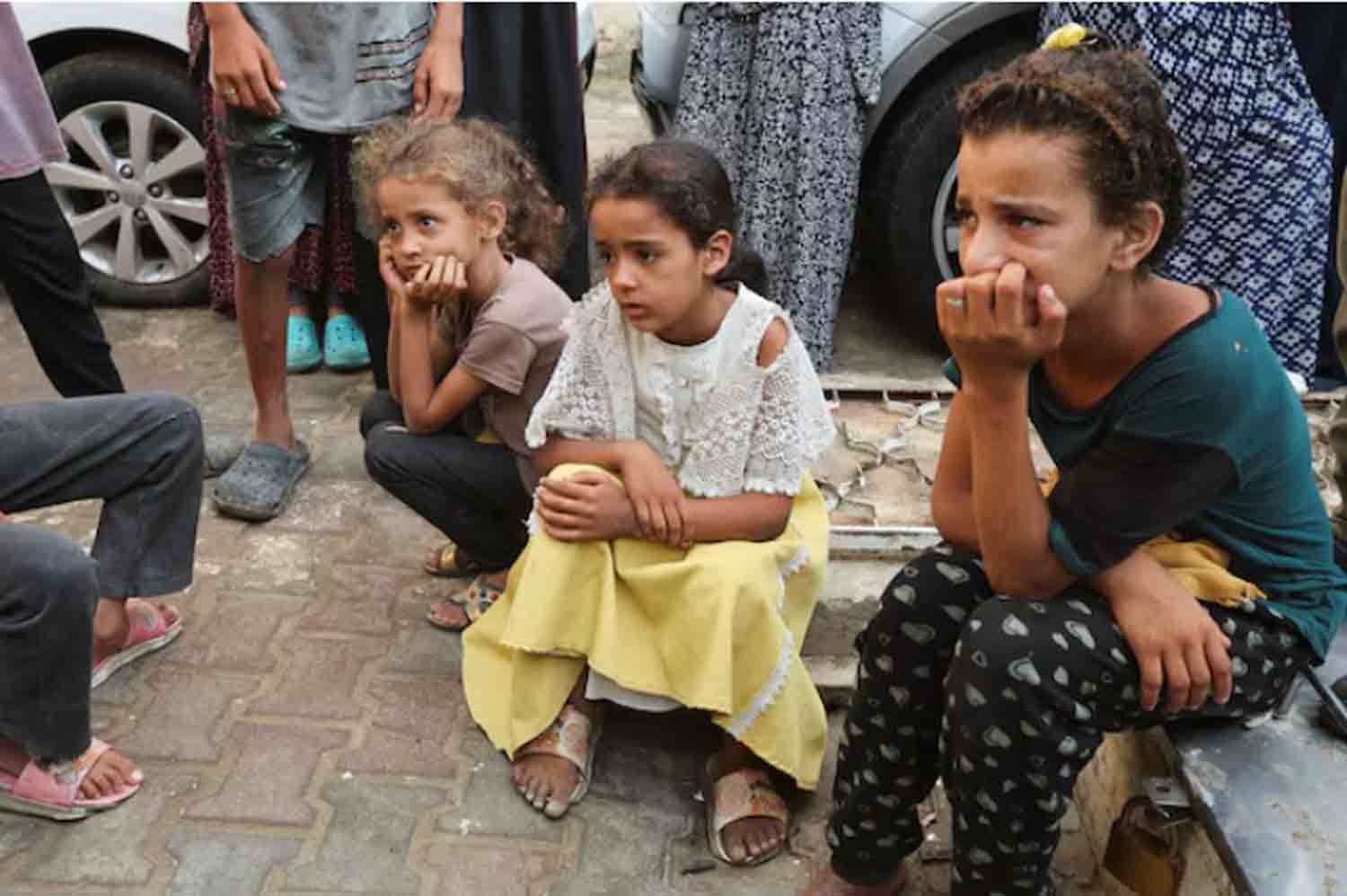
Children at tent camp for displaced people in Gaza

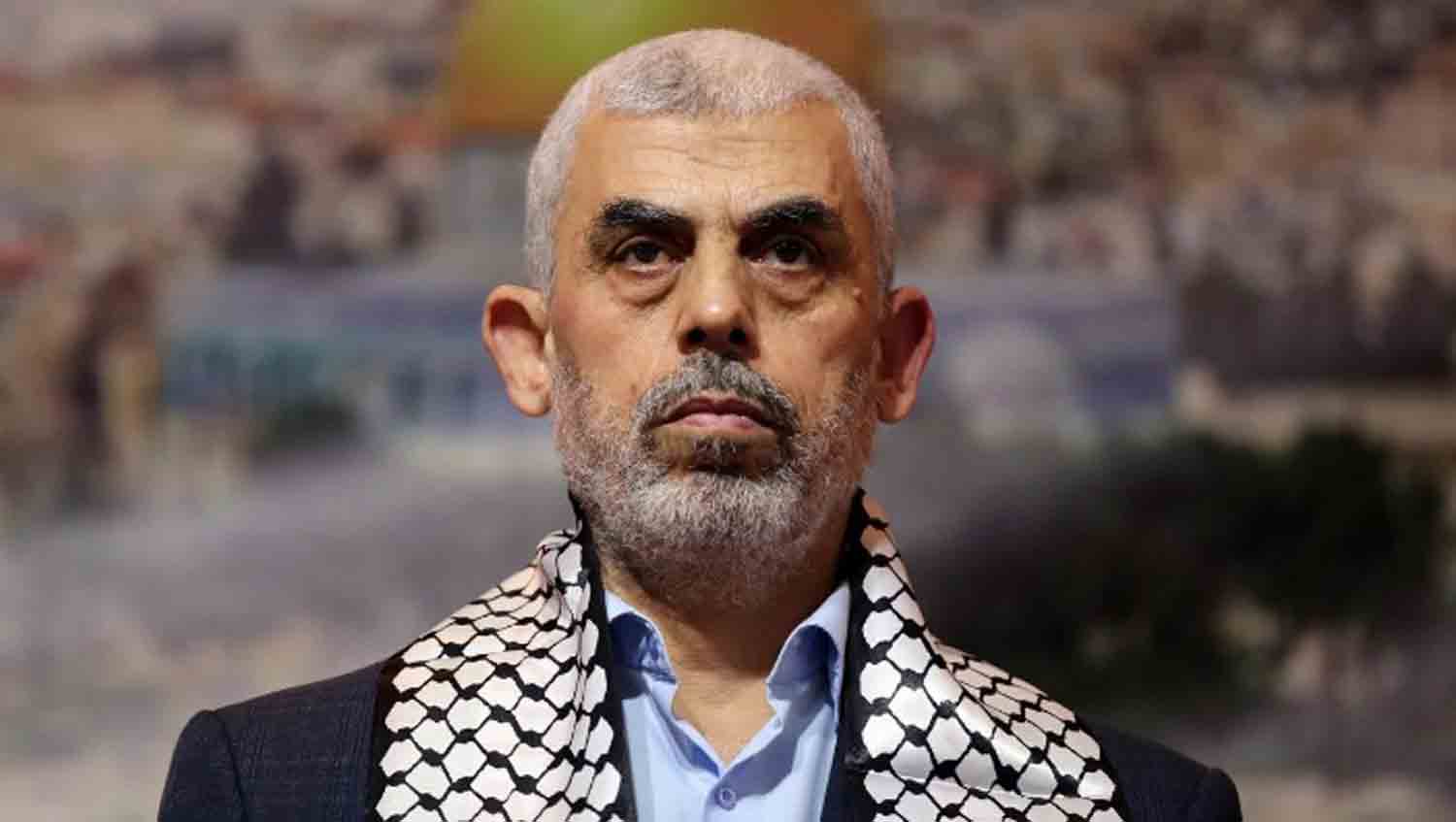
The assassination of Hamas leader Yahya Sinwar, who played a pivotal role in orchestrating the attack that triggered the conflict in the Gaza Strip, represents a significant victory for Israel. However, Israeli officials are also focused on securing strategic advantages that extend beyond mere military success. Their aim is to alter the regional dynamics in favor of Israel and fortify its borders against potential future assaults, according to sources familiar with their strategy.

As the U.S. elections draw near, Israel is accelerating its efforts to deliver substantial blows to both Hamas in Gaza and Hezbollah in Lebanon. This urgency is driven by a desire to establish de facto buffer zones, creating a lasting reality before a new president assumes office in January, as reported by eight sources to Reuters.

By ramping up military actions against Hezbollah and Hamas, Israel seeks to prevent its adversaries and their primary supporter, Iran, from regrouping and posing further threats to Israeli citizens, according to insights from Western diplomats, Lebanese and Israeli officials, and other regional observers.

U.S. President Joe Biden is anticipated to leverage Sinwar’s death to urge Israeli Prime Minister Benjamin Netanyahu to de-escalate the conflict in Gaza. Nevertheless, Netanyahu may opt to wait until Biden’s term concludes, potentially favoring a more favorable relationship with the next president, whether it be Democratic candidate Vice President Kamala Harris or Republican contender Donald Trump, with whom he has historically maintained strong ties.

Israel is intensifying its military operations before any potential ceasefire agreements, aiming to drive Hezbollah away from its northern border while advancing into the densely populated Jabalia refugee camp in Gaza. This move raises concerns among Palestinians and U.N. agencies that it may be an effort to isolate northern Gaza from the rest of the territory. Additionally, Israel is preparing a response to a ballistic missile attack launched by Iran on October 1, marking the second direct assault on Israel in six months.

David Schenker, a former U.S. assistant secretary of state for Near Eastern affairs and now a senior fellow at the Washington Institute, noted, “There is a new landscape, a new geopolitical change in the region.” Prior to Hamas’ attack on October 7, 2023, Israel was “willing to tolerate a high-level threat,” responding to rocket fire from Hamas and other adversaries with limited military actions. “That is no longer the case.”

Schenker emphasized that Israel is now engaged on multiple fronts, facing challenges from Hamas, Hezbollah, and the looming threat from Iran. Following the assault by Hamas, which resulted in approximately 1,200 fatalities and over 250 hostages taken in southern Israel, Israel’s retaliatory actions have led to the deaths of more than 42,000 Palestinians in Gaza, according to local health authorities.

In a statement on Thursday, Prime Minister Netanyahu remarked that the death of Sinwar “settled the score,” but he cautioned that the conflict in Gaza would persist with full intensity until the return of Israel’s hostages. His office indicated that there would be no further comments on the matter.

Israeli military spokesperson Rear Admiral Daniel Hagari stated that the elimination of Sinwar represents a significant milestone in the campaign to dismantle Hamas’ military structure, while noting that other commanders remain active in Gaza. On Friday, Khalil al-Hayya, Hamas’ deputy leader in Gaza, acknowledged Sinwar’s death and asserted that Israeli hostages would not be released until Israeli “aggression” ceased and its forces retreated.

Israeli forces have dealt substantial blows to their adversaries, executing a series of targeted strikes that resulted in the deaths of prominent figures, including Hamas political leader Ismail Haniyeh, military chief Mohammed Deif, Hezbollah leader Sayyed Hassan Nasrallah, and top military commander Fuad Shukr. Additionally, Israel claims to have neutralized thousands of fighters from these groups, seized extensive tunnel networks, and significantly reduced their weapon stockpiles.

In September, Israel reportedly detonated numerous booby-trapped communication devices utilized by Hezbollah operatives, although it has neither confirmed nor denied involvement in this operation. Nevertheless, sources speaking to Reuters indicate that Israel’s objectives extend beyond immediate military successes, regardless of their significance.

WIDER OBJECTIVE

In the past month, a ground offensive initiated in Lebanon seeks to push Hezbollah back approximately 30 kilometers (20 miles) from its northern border, relocating them behind the Litani River, while ensuring the complete disarmament of the Shi’ite militant group following three decades of military backing from Iran.

Israeli officials contend that this action is a means of enforcing a United Nations resolution designed to maintain peace in the region and safeguard local residents from cross-border assaults.

Security Council Resolution 1701, which was adopted after Israel’s previous conflict with Hezbollah in 2006 and has been repeatedly breached by both parties, sanctioned a peacekeeping operation known as UNIFIL to assist the Lebanese army in keeping the area south of the river free from weapons and armed groups, except for those affiliated with the Lebanese state.

Israel has expressed dissatisfaction that neither the Lebanese army nor UNIFIL has successfully regained control of the territory from Hezbollah, which is widely considered Lebanon’s most formidable military entity.
Hezbollah has resisted disarmament, arguing that it is essential to protect Lebanon from Israeli aggression. Since last year, its fighters have utilized the border area as a platform for frequent exchanges of fire with Israel, demonstrating solidarity with Hamas in Gaza.

Israeli officials assert that the only effective means to uphold Resolution 1701 and facilitate the safe return of approximately 60,000 residents who were evacuated from northern Israel is through military intervention.
“At this time, diplomatic efforts are insufficient,” an Israeli diplomatic source informed Reuters.
Lebanese authorities report that the offensive against Hezbollah has resulted in the displacement of over 1.2 million individuals in Lebanon, primarily from the Shi’ite community that supports Hezbollah.

Israel has encountered significant international backlash due to incidents where its military targeted U.N. peacekeeper positions, resulting in injuries to several personnel. A Lebanese security official, along with a diplomat knowledgeable about the circumstances in southern Lebanon, indicated that Israel seems intent on expelling UNIFIL from the region alongside Hezbollah. The security official noted that Israeli forces are striving for control over key vantage points, which coincide with the locations of UNIFIL bases. “Their objective is to clear this buffer zone,” the diplomat remarked.

If Israel’s intention is to eliminate Hezbollah’s presence and infrastructure from a narrow strip of Lebanese territory along the border, this process could extend over several weeks. However, any efforts to penetrate deeper would require significantly more time at the current operational tempo. On Monday, Prime Minister Netanyahu dismissed claims that Israeli forces were intentionally targeting UNIFIL peacekeepers, asserting that the most effective way to ensure their safety is to comply with requests for a temporary withdrawal from combat zones. The Israeli military has maintained that Hezbollah has been utilizing sites within and near UNIFIL posts for an extended period.

The U.N. has affirmed that its peacekeepers will remain in their positions in southern Lebanon. “We must resist any implication that the failure to implement resolution 1701 is due to UNIFIL’s lack of action, which was never part of its mandate,” U.N. peacekeeping chief Jean-Pierre Lacroix stated to reporters on Monday, emphasizing that UNIFIL’s role is supportive.

U.N., U.S., and various diplomatic representatives concur that revitalizing the resolution could serve as a foundation for halting hostilities; however, enhanced implementation and enforcement mechanisms are essential. Israel’s U.N. Ambassador, Danny Danon, expressed to Reuters on Monday his desire for “a more robust mandate for UNIFIL to deter Hezbollah.” Any modifications to the mandate would require approval from the 15-member Security Council, and diplomats indicated that such discussions are currently absent.

Lebanon’s caretaker Prime Minister, Najib Mikati, stated that the government is ready to deploy troops to uphold resolution 1701 once a ceasefire is established. The United States and France have emphasized that bolstering Lebanon’s military is vital for this initiative.

Additionally, support from Iran will be necessary, according to a diplomat knowledgeable about the circumstances in southern Lebanon. However, they noted that Israel does not seem inclined to initiate negotiations for any ceasefires. “They aim to leverage their advantage to secure a stronger position for future negotiations,” the diplomat remarked.

BORDER STRATEGIES

Last year, Israel communicated to several Arab nations its intention to establish a buffer zone on the Palestinian side of the Gaza border. However, the specifics regarding the depth of this zone and its enforcement post-conflict remain uncertain.

The ongoing military operations in Jabalia, an area that faced significant bombardment at the onset of the conflict, have sparked fears among Palestinians and U.N. agencies that Israel aims to displace residents from northern Gaza. The Israeli military refutes these claims, asserting that its objective is to prevent Hamas fighters from reorganizing for further assaults.

In May, Israeli forces advanced into the Philadelphi corridor, a narrow strip along Gaza’s southern border with Egypt, thereby gaining effective control over all land borders of the Palestinian territory.

Israel has stated that it will not consent to a permanent ceasefire unless there are assurances that the governing authority in postwar Gaza can prevent the corridor from being utilized for smuggling weapons and supplies to Hamas.

Additionally, Iran has become a focal point for Israel following a recent missile attack, which was a response to Israeli strikes against Iran and its allied groups.

The situation in the Middle East remains tense as concerns mount over Israel’s potential military response, which could destabilize oil markets and escalate into a full-blown conflict between longstanding adversaries. Israel’s Defense Minister, Yoav Gallant, indicated last week that the forthcoming response would be “lethal, precise, and, above all, unexpected,” while also clarifying that Israel does not intend to open new fronts. Iran has consistently warned that it will not hesitate to take military action if Israel retaliates.

The United States, Israel’s primary arms supplier, has backed operations against Iran-aligned groups such as Hezbollah and Hamas, which it classifies as foreign terrorist organizations. However, tensions have increased as U.S. officials urge Israel to improve humanitarian conditions in Gaza, limit airstrikes on civilian areas, and pursue ceasefire negotiations.

President Biden’s efforts to engage Iran through indirect discussions aimed at reviving the 2015 nuclear agreement, along with his opposition to strikes on Iran’s nuclear sites, have also contributed to rising tensions. Israel perceives Iran’s nuclear ambitions as an existential threat.

Some diplomats speculate that Prime Minister Netanyahu is weighing the implications of a ceasefire on the upcoming elections. A successful resolution could bolster support for Biden, while Netanyahu may prefer to align with Trump, whose hardline stance on Israel, the Palestinians, and Iran resonates more with his own views.

“There is no reason for Netanyahu to halt his military actions before the American elections,” stated Marwan al-Muasher, former foreign minister of Jordan and current vice president for studies at the Carnegie Endowment for International Peace. “He is unlikely to offer Biden any advantages before the polls.”

At this juncture, Netanyahu seems resolute in his objective to reshape Israel’s geopolitical landscape by eliminating threats from its borders.

China and Britain made progress towards reconciliation

0

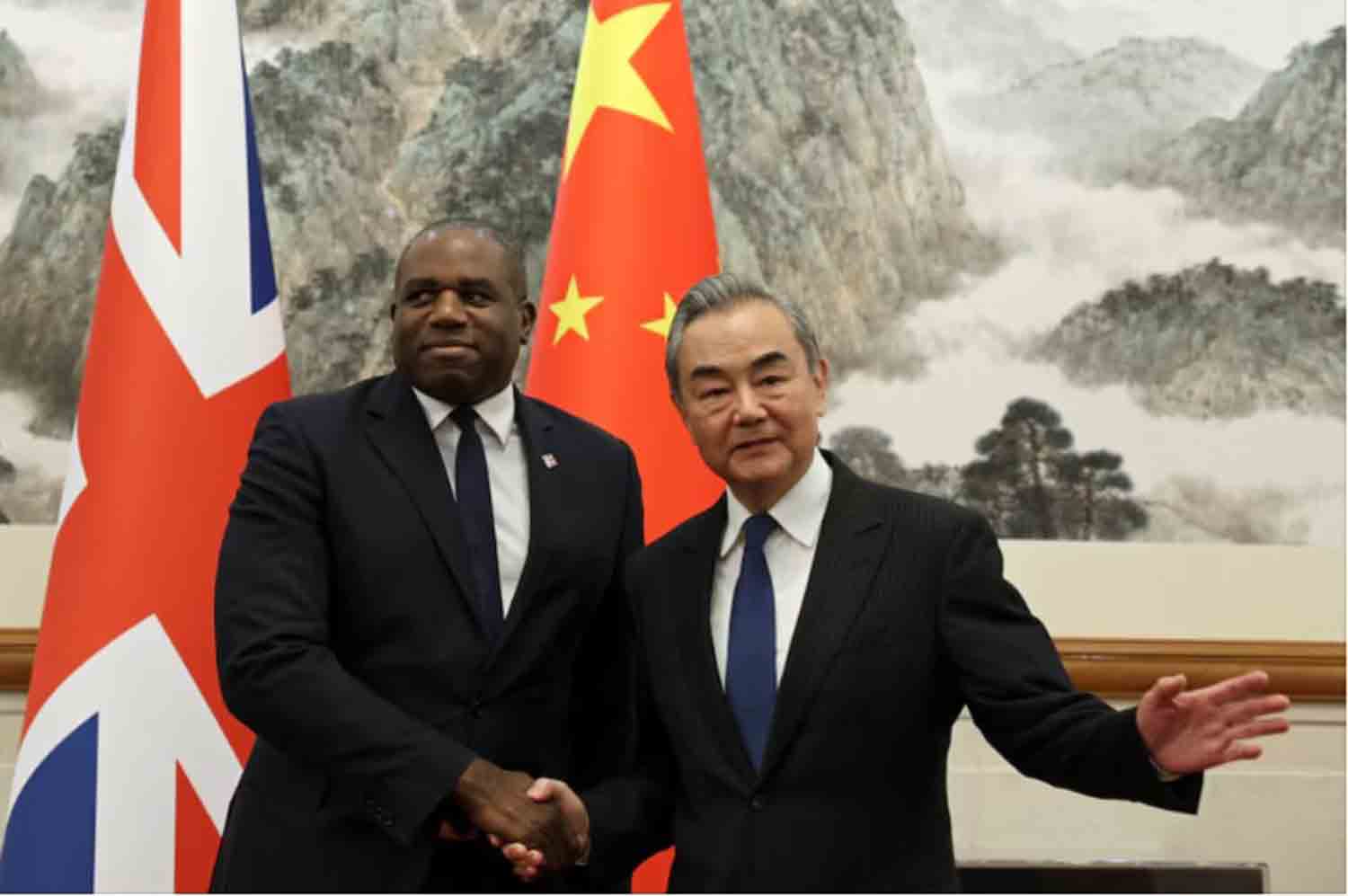
China and Britain made progress towards reconciliation on Friday, with Beijing welcoming the new Labour government’s initiative to foster “pragmatic” bilateral relations as a “new starting point.”

British Foreign Secretary David Lammy is the second senior U.K. diplomat to visit China in the past six years, and his visit aims to illustrate Britain’s strategic commitment to enhancing ties with Beijing, despite existing significant disagreements.

“China-Britain relations … have now reached a new starting point,” stated Chinese Foreign Minister Wang Yi during discussions with his British counterpart at the Diaoyutai State Guesthouse in Beijing. He emphasized that “competition among major powers should not define this era.”

Lammy highlighted the potential for “mutually beneficial cooperation” in sectors such as climate change, energy, science, trade, and technology, while also noting that Britain will prioritize its national interests and security.

Beijing and London must demonstrate that nations with diverse histories and perspectives can still arrive at practical solutions to intricate challenges, he stated.

The Labour government, which took office in July, aims to convey its commitment to engaging with China, seeking a balance between cooperation on economic and global issues while addressing concerns regarding Beijing’s support for Russia’s actions in Ukraine.

Wang remarked that Beijing views Labour’s new approach to fostering relations as “positive” since it aligns with the current requirements of the bilateral relationship.

Lammy is scheduled to meet with his Chinese counterpart Wang and Vice Premier Ding Xuexiang, who oversees science and technology, in Beijing on Friday, followed by a trip to Shanghai to engage with British businesses operating in China on Saturday.

Prior to the visit, Lammy emphasized that engagement with China is “essential to support UK and global interests,” expressing his intention to discuss Russia’s invasion of Ukraine and the global green transition with his counterpart.

Lammy’s visit is not anticipated to result in significant diplomatic agreements. Mao Ning, a spokesperson for the Chinese foreign ministry, indicated that the discussions will concentrate on enhancing cooperation across multiple sectors.

The previous British administration experienced strained relations with China due to disputes over human rights, issues in Hong Kong, and accusations of Chinese espionage. Earlier this year, Britain expressed serious concerns following a Reuters report that Russia had initiated a weapons program in China aimed at developing long-range attack drones for deployment in the conflict in Ukraine.

Over the past decade, Britain has undergone substantial changes in its stance towards China, transitioning from aspirations to be its strongest supporter in Europe to becoming one of its most vocal critics, and now, under the new Labour government, is attempting to mend ties.

The Labour government has initiated a comprehensive review of the U.K.-China relationship and has pledged to adopt a “clear-eyed” perspective regarding China, particularly in light of allegations surrounding Chinese cyberhacking and espionage activities within the U.K.

Simultaneously, China is grappling with deteriorating relations with the European Union due to various trade defense measures, as well as contentious interactions with the United States. According to British government statistics, China ranks as Britain’s sixth-largest trading partner, representing 5% of the nation’s total trade.

South Africa requested Taiwan to move its de facto embassy from Pretoria, Taipei claims Chinese pressure

0

South Africa’s government announced on Friday that it has requested Taiwan to move its de facto embassy from Pretoria, the capital, a decision that Taiwan claims is a result of Chinese pressure. In response, South Africa dismissed this assertion, stating that the action aligns with standard diplomatic protocol, particularly since it cut political and diplomatic relations with Taiwan in 1997.

The Taipei Liaison Office in Pretoria will be transformed into a Trade Office and relocated to Johannesburg, South Africa’s commercial hub, according to the Department of International Relations and Cooperation.

The statement emphasized that the rebranding of the offices in both Taipei and Johannesburg as Trade Offices will accurately represent the non-political and non-diplomatic nature of the relationship between South Africa and Taiwan. The government has provided a six-month timeframe for the relocation. Notably, China is South Africa’s largest global trading partner, and the country aims to enhance collaboration in sectors such as renewable energy.

Taiwan’s Foreign Ministry has expressed concerns that the strengthening of ties between South Africa and China is creating difficulties for its own amicable relationship with South Africa.

“The South African government must reconsider its alignment with China and the potential alteration of the current situation. The Ministry of Foreign Affairs will evaluate and develop various strategies to protect our nation’s sovereignty and dignity,” the statement indicated.

Taiwan, which China asserts is part of its territory and lacks the right to engage in state-to-state relations, maintains formal diplomatic relations with only a limited number of countries, primarily smaller and less developed nations. The Taiwanese government disputes China’s claims of sovereignty and asserts that Beijing cannot represent or advocate for the island in international matters.

China has welcomed this development. “We commend South Africa for its decision to move the Taipei Liaison Office from Pretoria, the administrative capital,” stated Mao Ning, spokesperson for China’s Foreign Ministry.

German President hope US will not let go its allies

0
President Joe Biden speaks during the United Nations General Assembly

Germany’s President Frank-Walter Steinmeier expressed his hope that the United States would recognize the essential role of its allies as he presented President Joe Biden with Germany‘s highest order of merit on Friday, acknowledging his contributions to transatlantic relations.

Biden’s visit to Berlin, which addresses issues ranging from the war in Ukraine to the escalating conflict in the Middle East, occurs just two and a half weeks before elections in the United States.

The possibility of former President Donald Trump’s re-election raises concerns among several European nations, including Germany, which experienced a decline in relations during his first term from 2017 to 2021. Trump, the Republican candidate, is currently in a tight race with Vice President Kamala Harris, the Democratic nominee.

“Just a few years ago, the gap between us had widened to the point where we nearly lost our connection,” Steinmeier remarked in a speech following Biden’s arrival in Berlin, where he was greeted with military honors outside the presidential palace.

Upon your election as president, you revitalized Europe’s faith in the transatlantic alliance almost instantaneously.

Trump has indicated a greater hesitance than Biden to maintain support for Ukraine in the face of Russia’s aggression. He has also suggested that U.S. assistance to NATO allies may come with stipulations.

“NATO is an essential alliance,” stated Steinmeier. “In the coming months, I hope Europeans will remember that America is vital to us, and I hope Americans will recognize that your allies are crucial to you.”

Biden emphasized that the West must not abandon Ukraine, which is bracing for a challenging winter, and expressed gratitude to Germany for its backing. The United States and Germany stand as Ukraine’s primary military and financial supporters.

“We cannot afford to relent. We must continue our support. In my opinion, we should persevere until Ukraine achieves a just and lasting peace in line with the UN Charter,” he remarked.

Biden is scheduled to engage in private discussions with Chancellor Olaf Scholz over lunch, focusing on security, trade, and various economic matters.

British Prime Minister Keir Starmer and French President Emmanuel Macron are set to arrive in Berlin to participate in discussions primarily aimed at finding a resolution to the ongoing conflict in Ukraine, particularly as Russian troops make gains in the eastern region and a harsh winter with power outages approaches. “The central issue is the type of security guarantees, and that will be the focus of our conversation tomorrow,” Macron informed the press on Thursday.

US ELECTION ON THE HORIZON

Biden’s potential final visit to Europe as president, particularly to Berlin, underscores the strong collaborative relationship he has developed with Chancellor Scholz. At the beginning of his presidency, Biden established trust with Germany, temporarily overlooking the Nord Stream 2 project, which aims to increase the direct flow of Russian gas to Germany, according to Sudha David-Wilp from the German Marshall Fund of the United States.

This strengthened partnership allowed the U.S. to coordinate effectively with Germany following Russia’s invasion of Ukraine, leading to a significant increase in German defense spending to meet NATO’s 2% GDP target, while drastically reducing Russian gas imports.

“The decision on November 5th rests solely with the American people,” stated Steinmeier. “As Europeans, we also have a responsibility. We must remain steadfast in our support for Ukraine, invest in our collective security, and commit to our shared future, just as you have, sir, by upholding the transatlantic alliance regardless of the circumstances.”

Berlin was instrumental in facilitating a significant prisoner exchange in August between Russia and the West, resulting in the release of U.S. journalist Evan Gershkovich and former U.S. Marine Paul Whelan from Russian custody.

“This visit serves as both a gesture of gratitude and a reminder to maintain our commitment to Ukraine, irrespective of the challenges ahead,” remarked David-Wilp.

Trump blames Zelenskiy for war with Russia

0

Donald Trump, during a Thursday appearance, attributed the initiation of the war in Ukraine to President Volodymyr Zelenskiy, indicating a potential shift in U.S. policy towards Russia should he win the upcoming election on November 5. The former Republican president has consistently criticized Zelenskiy throughout his campaign, labeling him “the greatest salesman on Earth” for securing substantial U.S. military assistance since the onset of the conflict in 2022.

Additionally, Trump has reproached the Ukrainian president for not pursuing peace negotiations with Moscow, suggesting that Ukraine might need to relinquish some territory to achieve a settlement, a notion that Kyiv firmly rejects. On the PBD Podcast with Patrick Bet-David, Trump’s remarks escalated beyond his earlier critiques, asserting that Zelenskiy was not only responsible for the ongoing war but also for its inception, despite the fact that the conflict began with Russia’s invasion of Ukraine.

Trump expressed his willingness to assist, stating, “I feel a deep sympathy for those affected. However, he should never have allowed that war to commence. The war is a failure.” This remark followed a meeting in New York in September, where Zelenskiy shared his “victory plan” to conclude the conflict, a meeting both leaders characterized as amicable.

Nevertheless, Trump’s statements indicate that he may consider reducing aid to Ukraine if he wins against Vice President Kamala Harris, the Democratic candidate, on November 5. He has claimed he could resolve the conflict before assuming office in January, though he has not specified how he would achieve this.

In contrast, Harris has committed to maintaining support for Ukraine, framing its success as crucial to U.S. national security. She has consistently criticized Trump for his reluctance to confront Russian President Vladimir Putin.

Netanyahu’s commitment to war in Gaza and Lebanon has extinguished hopes for ceasefire

0
Children at tent camp for displaced people in Gaza

Prime Minister Benjamin Netanyahu‘s commitment to continue Israel’s military operations in Gaza and Lebanon has extinguished hopes that the death of Hamas leader Yahya Sinwar could lead to a resolution of the ongoing conflict in the Middle East, which has been escalating for over a year.

In response, the Lebanese militant group Hezbollah pledged to intensify its confrontations with Israel, while Iran asserted that the death of its Palestinian ally Sinwar would bolster “the spirit of resistance.”

Sinwar, who played a crucial role in orchestrating the October 7, 2023, attack that ignited the Gaza war, was killed by Israeli forces during an operation in the Palestinian territory on Wednesday, marking a significant moment in the protracted conflict. Netanyahu described Sinwar’s death as a pivotal achievement late Thursday but reiterated his intention to persist with military actions, which have recently expanded from targeting Hamas in Gaza to include an incursion into southern Lebanon and extensive bombardments across the region.

“The war, my dear ones, is not yet over,” Netanyahu stated to the Israeli public, emphasizing that hostages held by Hamas must be released before any cessation of hostilities. He remarked on the potential to dismantle what he termed the “axis of evil” and to forge a new future, alluding to Iran and its militant affiliates in Gaza, Lebanon, Syria, Iraq, and Yemen. This stance diverges sharply from that of Western leaders, including U.S. President Joe Biden, who suggested that Sinwar’s death could provide an opportunity to conclude the conflict.

The United States aims to initiate ceasefire discussions and facilitate the release of hostages, as stated by U.S. State Department spokesperson Matthew Miller, who noted that Sinwar had been unwilling to engage in negotiations.

He remarked, “That barrier has clearly been lifted. While it is uncertain whether Sinwar’s successor will agree to a ceasefire, it does eliminate what has been the primary hindrance to achieving one in recent months.”

A senior diplomat based in Lebanon expressed to Reuters that the expectation that Sinwar’s death would lead to an end to the conflict may have been overly optimistic.

“We had genuinely believed that removing Sinwar would mark a pivotal moment leading to the cessation of hostilities… that all parties would be inclined to disarm. Unfortunately, it seems we were mistaken once again,” the diplomat commented.

Despite months of attempts by the United States, Israel’s main ally, to negotiate ceasefires with Hamas and Hezbollah, these efforts have been unsuccessful as Israel continues its military operations. Meanwhile, Iran has appeared largely unable to counter Israel’s military strength, which includes U.S. weaponry.

The ongoing conflict has resulted in direct confrontations between Iran and Israel, including missile strikes on Israel in April and on October 1. Netanyahu has pledged to retaliate against the October attack, which resulted in minimal damage. Washington has urged Israel to be cautious in its targeting, specifically advising against strikes on Iranian energy facilities or nuclear sites.

TRACKED AND ELIMINATED

Following the assassination of political chief Ismail Haniyeh in Tehran in July, Sinwar emerged as the overall leader of Hamas. He was believed to be hiding within the extensive network of tunnels that Hamas has constructed beneath Gaza over the last twenty years.

Israeli troops, initially unaware they had engaged their primary adversary, killed him during a gunfight on Wednesday, according to Israeli officials. The military released drone footage purportedly showing Sinwar, seated in an armchair and covered in dust inside a devastated building. The drone tracked him as he lay dying, with the footage capturing him throwing a stick at the drone in a moment of apparent desperation.

While Hamas has not officially commented, sources within the organization have indicated that evidence suggests Sinwar was indeed killed. He was the architect of the October 7, 2023, attacks in southern Israel, which resulted in approximately 1,200 fatalities, according to Israeli authorities. In retaliation, Israel launched an invasion of Gaza, leading to the deaths of over 42,000 individuals, as reported by Palestinian officials.

Hezbollah, which began launching rockets at Israel in solidarity with Hamas on October 8, has become the focus of Israel’s escalating military operations in Lebanon, resulting in more than 2,000 deaths and the displacement of 1.2 million people.

Israel has successfully targeted several high-ranking Hamas leaders and has significantly weakened Hezbollah’s leadership through airstrikes in a matter of weeks.

These actions have struck a significant blow to what anti-Israeli factions refer to as the Axis of Resistance, a coalition of proxy militant groups that Iran has supported for decades throughout the region.

Despite Sinwar’s death, Iran has shown no indication that its support will wane. “The spirit of resistance will be strengthened,” stated its mission to the United Nations. Hezbollah also expressed defiance, declaring a “transition to a new and escalating phase in the confrontation with Israel.”

The Israeli military announced on Friday that it had eliminated Muhammad Hassin Ramal, the commander of Hezbollah in the Tayibe region of southern Lebanon.

Families of Israeli hostages expressed that although the death of Sinwar is a significant milestone, their sense of closure remains unfulfilled as long as captives are held in Gaza.

Avi Marciano, the father of Noa Marciano, who lost her life while in Hamas captivity, stated to Israeli broadcaster KAN, “The monster who took her from me, who bears the blood of all our daughters, has finally faced his reckoning.”

Who will be the successor of Yahya Sinwar and what will be the outcome of the Gaza conflict?

0

US intelligence agencies were actively working on Thursday morning to revise their evaluations regarding the potential successor to Hamas leader Yahya Sinwar, who may have been killed in an Israeli operation overnight.

US officials have long anticipated that eliminating Sinwar could provide Israel with the political leverage necessary to pursue a ceasefire. However, the identity of his successor could significantly influence Hamas’s willingness to engage in substantial negotiations with Israel aimed at halting the conflict and securing the release of hostages.

Current and former US officials have identified several potential candidates to succeed the elusive Sinwar, who has been the dominant figure within the organization for over a year.

If Mohammed Sinwar, Yahya’s brother, takes over, one US official remarked, “negotiations are totally screwed.” According to a former official, Mohammed shares his brother’s hardline stance and has been known to prioritize his vision over the welfare of Palestinian civilians. He has also been responsible for overseeing Hamas’s tunnel construction efforts.

However, given the exhaustion within the group, there may be a preference for an outsider who could be more amenable to negotiations, as noted by one source. In July, CNN reported that Sinwar faced pressure from his own commanders to cease the ongoing violence.

Another potential successor is Khalil Al Hayya, who has played a key role as a negotiator for Hamas during ceasefire discussions in Doha. Due to his experience, he is “probably who the US would want,” according to a former official. Al Hayya became the main negotiator following the July assassination of Ismael Haniyeh in Tehran, an act widely attributed to Israel.

A third possibility is Khaled Meshaal, a clear candidate for Hamas; however, his previous backing of a Sunni revolt against Syrian President Bashar al Assad makes this choice improbable. This incident created a divide between Hamas and its supporter, Shia-led Iran, and also hindered Meshaal’s aspirations for leadership.

Hamas sources say Yahya Sinwar may have been killed in Israeli operation

0

Hamas sources indicate that Yahya Sinwar may have been killed in an Israeli operation in Gaza.

Israeli police have stated that they are conducting DNA tests to verify whether Sinwar has indeed been killed.

A joint statement from the Israel Police Spokesperson’s Unit and the IDF Spokesperson’s Unit reads:

“In light of recent reports regarding the potential identification of Yahya Sinwar’s death, the Israel Police, IDF, and Shin Bet are diligently working to confirm his identity.”
“Currently, one of the several required evaluations has been completed for conclusive identification. Dental records have been sent to the police forensics lab, and DNA analysis is underway.”
“Once these procedures are finalized, we will be able to confirm the death. Additional information will be provided as it becomes available.”

Members of Israel’s security cabinet have been informed that Hamas leader Yahya Sinwar, who played a key role in the October 7, 2023 attack that initiated the Gaza conflict, is likely deceased, according to two officials familiar with the situation. The Israeli military is investigating the possibility that Sinwar, considered Israel’s most wanted adversary, was among three militants killed during an operation in the Gaza Strip.

Two Israeli broadcasters, KAN and N12 News, reported that Israeli officials indicated Sinwar has been killed. The Palestinian militant group Hamas has not yet issued a statement regarding this claim. Should this information be verified, Sinwar’s death would significantly bolster the Israeli military and Prime Minister Benjamin Netanyahu amid the ongoing conflict in the Palestinian territories, which has now extended into its second year. Israel has been conducting continuous airstrikes and ground operations aimed at achieving Netanyahu’s objective of dismantling Hamas.

On Thursday, Israeli airstrikes in northern Gaza resulted in the deaths of 19 Palestinians, including children at a school in the Jabalia camp, which is currently housing displaced individuals, according to a Gaza health ministry official who spoke to Reuters. Sinwar, who assumed leadership of Hamas after the assassination of political chief Ismail Haniyeh in Tehran last July, was thought to be hiding within the extensive network of tunnels constructed by Hamas over the last twenty years.

If confirmed, his death could escalate tensions in the Middle East, where the likelihood of a broader conflict has increased. Over the past month, Israel has initiated a ground campaign in Lebanon and is preparing a response to a missile attack on October 1, attributed to Iran, a supporter of both Hamas and Hezbollah in Lebanon. However, the elimination of the individual responsible for last year’s attack, which resulted in the deaths of 1,200 people in Israel and the capture of over 250 hostages, might also facilitate progress in stalled negotiations aimed at resolving the war he instigated, which has claimed the lives of more than 42,000 Palestinians.

Israel’s Army Radio reported that the incident took place during a ground operation in Rafah, located in the southern Gaza Strip, where Israeli forces killed three militants and retrieved their bodies. The report indicated that visual evidence pointed to the possibility that one of the deceased was Sinwar, and DNA testing is currently underway.

Israel possesses DNA samples from Sinwar from his previous incarceration in an Israeli prison. The statement noted, “At this stage, the identity of the terrorists cannot be confirmed.” Sinwar, known for his brutal enforcement actions against Palestinians suspected of collaborating with Israel, gained notoriety as a leader within the prison system.

After serving 22 years for orchestrating the abduction and murder of two Israeli soldiers and four Palestinians, he emerged as a figure of local admiration and quickly ascended within the ranks of Hamas, committing himself to the goal of eliminating Israel.

FALL BY THE SWORD

Amid speculation regarding Sinwar’s potential demise, Israeli Defence Minister Yoav Gallant shared a message on the social media platform X, featuring a biblical reference.
“‘You will pursue your enemies, and they will fall before you by the sword.’ – Leviticus 26. Our adversaries cannot evade us. We will track them down and eliminate them.”
The post included images of Hezbollah leader Hassan Nasrallah, who was assassinated in Beirut last month, and Hamas military chief Mohammed Deif, killed in August, with a vacant space for a third image positioned between them. All three figures were marked out in red.
Al-Majd, a Hamas-affiliated website that typically covers security matters, advised Palestinians to await updates regarding Sinwar directly from the group rather than relying on Israeli media, which it claimed sought to undermine their morale.
Israel has successfully targeted multiple Hamas commanders in Gaza, as well as high-ranking Hezbollah officials in Lebanon, including Nasrallah, inflicting significant damage on its primary adversaries.

MULTI-FRONT CONFLICT

On Thursday, Israeli airstrikes in northern Gaza resulted in the deaths of 19 Palestinians, including children, at a school located in the Jabalia camp, which is currently housing displaced individuals, as reported by a Gaza health ministry official to Reuters. The Israeli military stated that the strike targeted a gathering of militants from Hamas and the Islamic Jihad group within the compound, asserting that the operation was precise. Hamas, however, refuted claims that the school was being used for military purposes.

Additionally, Israel initiated a ground and air offensive in Lebanon earlier this month aimed at neutralizing Hezbollah, following a year in which the Iran-backed group launched attacks across the border in support of Hamas in Gaza. “War has become a part of our reality. We understand that Lebanon is rebuilt every decade, only to face destruction again,” remarked Abdelnaser, a resident displaced from the southern suburbs of Beirut, a stronghold of Hezbollah that has faced repeated Israeli bombardments.

According to the health ministry, Israeli actions in Lebanon have resulted in at least 2,350 fatalities over the past year, with more than 1.2 million individuals displaced. In contrast, approximately 50 Israelis, including both soldiers and civilians, have lost their lives during the same timeframe in northern Israel.

What key issues are on the agenda for the EU summit?

0

Migration will be a central focus at the EU summit on Thursday, with Poland advocating for a unified EU response to the use of migrants as a tool by Russia and Belarus against the EU and other nations. Polish officials are pressing for stricter regulations regarding the repatriation of irregular arrivals, according to diplomats.

Additional agenda items include reaffirming leaders’ steadfast support for Ukraine in its fight against Russia’s aggression, as well as calls for a ceasefire and a reduction of hostilities in the Middle East, as reported by EU diplomats.

However, the most intense discussions are expected to revolve around the management of irregular migrants entering the 27-member bloc, both overland from the east and by sea from the south. Many EU governments perceive this influx as a political and security challenge that is contributing to the rise of populist and far-right movements and impacting electoral outcomes. “Migration will … be a major point of discussion,” stated Charles Michel, the meeting’s chairman, in his invitation to EU leaders.

We will concentrate on specific actions aimed at curbing irregular migration, which include enhanced control of our external borders, improved partnerships, and strengthened return policies, he stated.

Last year, the number of irregular migrants entering Europe was less than one-third of the 1 million recorded during the 2015 migration crisis. According to data from the EU’s Frontex border agency, this figure further decreased to 166,000 in the first nine months of this year.

However, there was a significant increase in the number of individuals arriving at the EU’s border with Belarus, which rose by 192% year-on-year from January to September, totaling 13,195. Additionally, arrivals in the Spanish Canary Islands off the western coast of Africa doubled to 30,616, as reported by Frontex.

Diplomats have observed that despite the decline in irregular arrivals, public sentiment remains influenced by incidents such as the Solingen knife attack carried out by an Islamic State member in Germany last August.

MIGRATION PRIMARY POLITICAL CONCERN IN EU nation

Migration has emerged as a leading political issue across many EU nations, according to a senior EU diplomat, who noted that right-wing politicians have characterized incidents like Solingen as indicative of a failed immigration discourse. “Populist parties are exploiting fear to manipulate this topic for their advantage, necessitating action to counter this narrative,” the diplomat remarked.

In anticipation of potential public backlash against irregular migration ahead of elections next September, Germany has implemented border controls with all neighboring countries, effectively suspending the passport-free Schengen agreement. Other nations, including France, Denmark, Sweden, Austria, Italy, and Slovenia, have also enacted border checks.

Poland, facing presidential elections in May, is seeking to temporarily suspend asylum rights for migrants entering from Belarus, a move many view as contrary to the EU’s fundamental rights charter. Warsaw cites Finland’s recent suspension of asylum rights in response to migrants crossing from Russia as a precedent.

In May, the EU reached an agreement on a new framework for managing migration, known as the Migration Pact, but its full implementation is not expected until mid-2026, leaving the bloc in a challenging transitional phase. Complicating the situation further, the Migration Pact lacks mechanisms to address the “weaponization” of migration by nations such as Russia and does not resolve the contentious issue of repatriating migrants whose asylum claims have been denied.

In a significant shift from previous policies, the European Commission announced this week that it would propose the establishment of “return hubs” in non-EU countries for migrants lacking the right to remain in the EU, contingent upon agreements with those nations.

North Korea has officially classified South Korea as a “hostile state”

0

North Korea has officially classified South Korea as a “hostile state,” according to a report from its state media on Thursday. This announcement follows the national assembly’s constitutional amendment, which aligns with the leader’s commitment to abandon unification as a national objective.

The KCNA news agency from the North indicated that military forces had destroyed segments of road and rail connections with South Korea on Tuesday, describing this as a justified response to a state deemed hostile under the new constitutional framework.

As a result, 60-meter (66-yard) sections of both road and railway on the northern side of the border have been entirely obstructed, marking a step towards a “phased complete separation of its territory” from the South. KCNA stated, “This is an unavoidable and legitimate action in accordance with the DPRK Constitution, which explicitly identifies the ROK as a hostile state,” referring to North Korea as the Democratic People’s Republic of Korea and South Korea as the Republic of Korea.

KCNA reported a spokesperson from the defense ministry stating that the nation would implement additional measures to “permanently strengthen the sealed southern border,” although no further constitutional amendments ordered by leader Kim Jong Un were mentioned. A satellite image released by BlackSky, captured on Wednesday, revealed significant damage to the road leading to the city of Kaesong, marked by a large crack in the pavement and the surrounding area.

South Korea has “strongly condemned” the proposed constitutional changes and the designation of a hostile state, affirming its commitment to peaceful reunification, as stated by its Unification Ministry, which oversees relations with the North. In January, Kim called for a constitutional revision to remove unification as a goal in relations with the South, accusing Seoul of collaborating with the United States to undermine his communist regime and to clearly define its territorial boundaries.

Last week, North Korea’s Supreme People’s Assembly convened for two days, where it was anticipated that the constitution would be amended to officially recognize South Korea as a separate nation and a primary adversary. However, state media did not report on such an amendment, leading to speculation about a possible postponement of the constitutional changes.

North Korea has previously issued summaries of amendments after several days of delay; however, it was unusual for only one of the anticipated significant changes to be disclosed almost casually, according to Yang Moo-jin, President of the University of North Korean Studies.

As part of the constitutional revisions, it was anticipated that North Korea would redefine its territorial boundaries in a way that contradicts the Northern Limit Line, which has served as the de facto maritime border since the conclusion of the Korean War in 1953.

Yang noted, “They are likely aware of the extreme sensitivity surrounding the west coast border issue,” referencing the waters that have witnessed deadly confrontations in the past.

Tensions between the two Koreas have been rising since last year, with both parties declaring the 2018 agreement aimed at reducing military tensions as no longer in effect.

Recently, North Korea has escalated its hostile rhetoric, accusing South Korea of violating its airspace with drone flights and promising retaliation.

The South Korean government has refrained from confirming whether military or civilian drones were involved in the alleged incursions.

In response to North Korea’s detonations on roads and railways, South Korea’s military fired warning shots south of the border on Tuesday.

Last week, Pyongyang announced its intention to completely sever inter-Korean roads and railways and to further strengthen its positions along the border, marking a shift towards a “two-state” system that abandons its long-standing aspiration for unification.

Trudeau says India committed “a horrific mistake” by interfering in Canada’s sovereignty

0

Canadian Prime Minister Justin Trudeau stated on Wednesday that India committed “a horrific mistake” by believing it could interfere as aggressively as it allegedly did in Canada’s sovereignty. This statement came two days after Canada expelled six Indian diplomats, linking them to the assassination of a Sikh separatist leader in Canada and suggesting a wider campaign to target Indian dissidents within the country.

Trudeau’s remarks represent the most forceful stance he has taken in a year-long dispute that has severely strained bilateral relations. He emphasized, “The Indian government made a horrific mistake in thinking that they could interfere as aggressively as they did in the safety and sovereignty of Canada,” during an independent investigation into foreign interference in Canadian politics.

India’s foreign ministry released a brief two-line statement asserting that Trudeau’s remarks validated New Delhi’s position that Canada has not presented any evidence to back its claims against Indian diplomats.

“The blame for the harm caused to India-Canada relations rests solely with Prime Minister Trudeau,” the statement from the foreign ministry indicated. Trudeau mentioned that Ottawa might implement additional measures to safeguard Canadians but refrained from providing specifics. India has rejected the allegations of interference and has expelled six Canadian diplomats in a reciprocal action.

Taiwan believe China is enhancing its ability to transition from military exercises to a full-scale offensive

0

A senior security official from Taiwan has indicated that China is enhancing its ability to swiftly transition from military exercises to a full-scale offensive. This assessment reflects the Taipei government’s interpretation of Beijing’s recent military maneuvers surrounding the island. China, which considers Taiwan—governed democratically—as part of its territory, conducted extensive drills on Monday, asserting that these were intended as a warning against “separatist actions” in response to Taiwan President Lai Ching-te’s national day address last week.

For the past five years, Taiwan has reported nearly daily incursions by Chinese military forces in its vicinity, which include at least four significant rounds of military exercises and ongoing “joint combat readiness patrols.” The official, who spoke on the condition of anonymity to provide a more candid perspective, stated, “They are enhancing their capability to escalate military drills into actual conflict.”

Taiwan announced that a record number of 153 Chinese aircraft participated in recent military exercises, with an additional 25 Chinese navy and coast guard vessels coming unusually close to Taiwan’s 24-mile (39-km) contiguous zone. An official remarked, “Their proximity to Taiwan has intensified pressure on the island and reduced its response time.” The official further stated, “This exercise posed a greater threat to Taiwan than we have seen previously.”

During the exercise, an official reported that China launched two missiles toward an undisclosed inland region, without elaborating on the specifics. “While they did not target Taiwan with missiles this time, they did conduct missile launch drills,” the official noted.

China’s defense ministry has not yet responded to a request for comment. On Monday, it pledged to take necessary measures against Taiwan, and on Wednesday, the Taiwan Affairs Office stated that Beijing would never rule out the use of force regarding Taiwan.

A Taiwan official indicated that their intelligence had anticipated China’s drills and had positioned assets, including mobile missile launchers, in strategic locations prior to Beijing’s announcement of the military exercises early Monday morning. Lai and his administration dispute Beijing’s claims of sovereignty, asserting that only the people of Taiwan have the authority to determine their future. Lai has consistently proposed discussions, but China has dismissed these overtures.

REGULAR PATROLS

In a report presented to parliament on Thursday, Taiwan’s defense ministry indicated that China is currently conducting three to four “joint combat readiness patrols” each month in the vicinity of Taiwan. The ministry characterized this activity as a “provocation” that heightens the threat to Taiwan’s military. When questioned about the timing of China’s next military exercises, Taiwan’s Defense Minister Wellington Koo informed reporters that such drills could occur at any moment and under various pretexts.

“This clearly illustrates their hegemonic tendencies, which are evident to all,” Koo remarked. The military has incorporated strategies into its annual Han Kuang war games to address the need for a rapid response should China escalate its drills into an actual offensive, he noted.

A Taipei-based diplomat with knowledge of regional security matters expressed that Beijing’s military exercises pose a significant threat, as they enable China to swiftly enhance its mobilization and combat readiness. “The constant state of preparedness is escalating—transitioning from routine activities to drills and potentially to conflict can happen in an instant,” the diplomat, who wished to remain anonymous due to the sensitive nature of the topic, stated.

Since the Republic of China government retreated to Taiwan in 1949 following its defeat in the civil war against Mao Zedong’s communists, the island has remained under the looming threat of invasion by China’s People’s Liberation Army. However, the recent military exercises by China have not raised significant concern among most Taiwanese citizens, nor have they affected the island’s financial markets. In response to a lawmaker’s inquiry during a different parliamentary session on Thursday regarding the likelihood of war with China, Taiwan’s central bank governor Yang Chin-long assured that they have made “appropriate preparations,” though he did not provide further details.


Zelenskiy is set to present his “victory plan” to the European Union and NATO

0
Ukraine's President Volodymyr Zelenskiy appears at a joint press conference

Ukrainian President Volodymyr Zelenskiy is set to present his “victory plan” to the European Union and NATO on Thursday, advocating for an invitation to join NATO and a significant boost in military assistance for Ukraine’s efforts against Russia’s invasion.

The plan includes requests that have not yet been met by Ukraine’s allies, such as an invitation to the U.S.-led NATO military alliance and authorization to utilize Western weaponry for strikes deep within Russian territory.

Zelenskiy shared the plan with Ukraine’s parliament on Wednesday during a crucial period, as Russian forces make gains in the east, a harsh winter with power outages approaches, and the uncertainty surrounding the upcoming U.S. presidential election raises concerns about the continuity of Western support. On Thursday, he will take this plan, which he believes could lead to the end of the war “no later than next year,” to a summit of European Union leaders and a meeting of NATO defense ministers in Brussels.

He has already shared the five-point blueprint, which Zelenskiy indicated includes three confidential annexes, with prominent Western leaders, including U.S. President Joe Biden. While expressing strong support for Kyiv, none have fully endorsed the plan.

NATO Secretary General Mark Rutte remarked on Wednesday that the plan sends “a strong signal” from Zelenskiy, but he cautioned, “That doesn’t mean I can fully endorse the entire plan. That would be somewhat challenging, as there are numerous issues to consider.”

Rutte emphasized that NATO’s 32 member states would need to engage in detailed discussions about the plan to gain a clearer understanding. “There may be differing opinions on specific elements of the plan, but that does not imply a lack of support for Ukraine,” he stated.

NATO MEMBERSHIP CALL

NATO has announced that Ukraine will eventually become a member, although no specific timeline has been provided. However, Ukraine cannot join while engaged in active conflict, as this would involve the alliance directly in hostilities with Russia.

Russian President Vladimir Putin has pointed to Ukraine’s potential NATO membership as a justification for the invasion. In response, President Zelenskiy suggested that NATO could extend an invitation now, even if full membership is a future consideration.

“We recognize that NATO membership is a future issue, not an immediate one,” he stated to the Ukrainian parliament. “However, it is crucial for Putin to understand that his geopolitical strategies are failing. The Russian populace must realize that their leader has lost in the global arena.”

The Kremlin responded by stating it was premature to provide detailed commentary on the situation, but emphasized that Kyiv needed to “come to its senses” and acknowledge the futility of its current policies.

Zelenskiy also outlined a plan that includes the establishment of a “comprehensive non-nuclear strategic deterrence package” within Ukraine to safeguard against Russian threats and to diminish its military capabilities, though he did not provide further details. Additionally, the plan suggests that Western nations could assist in the development of Ukraine’s natural mineral resources and proposes that Ukrainian forces could take over some roles currently held by U.S. troops in Europe.