Saturday, June 6, 2026
Home Blog Page 129

The impact of Russia’s invasion on Ukraine as the conflict approaches its 1000th day

0

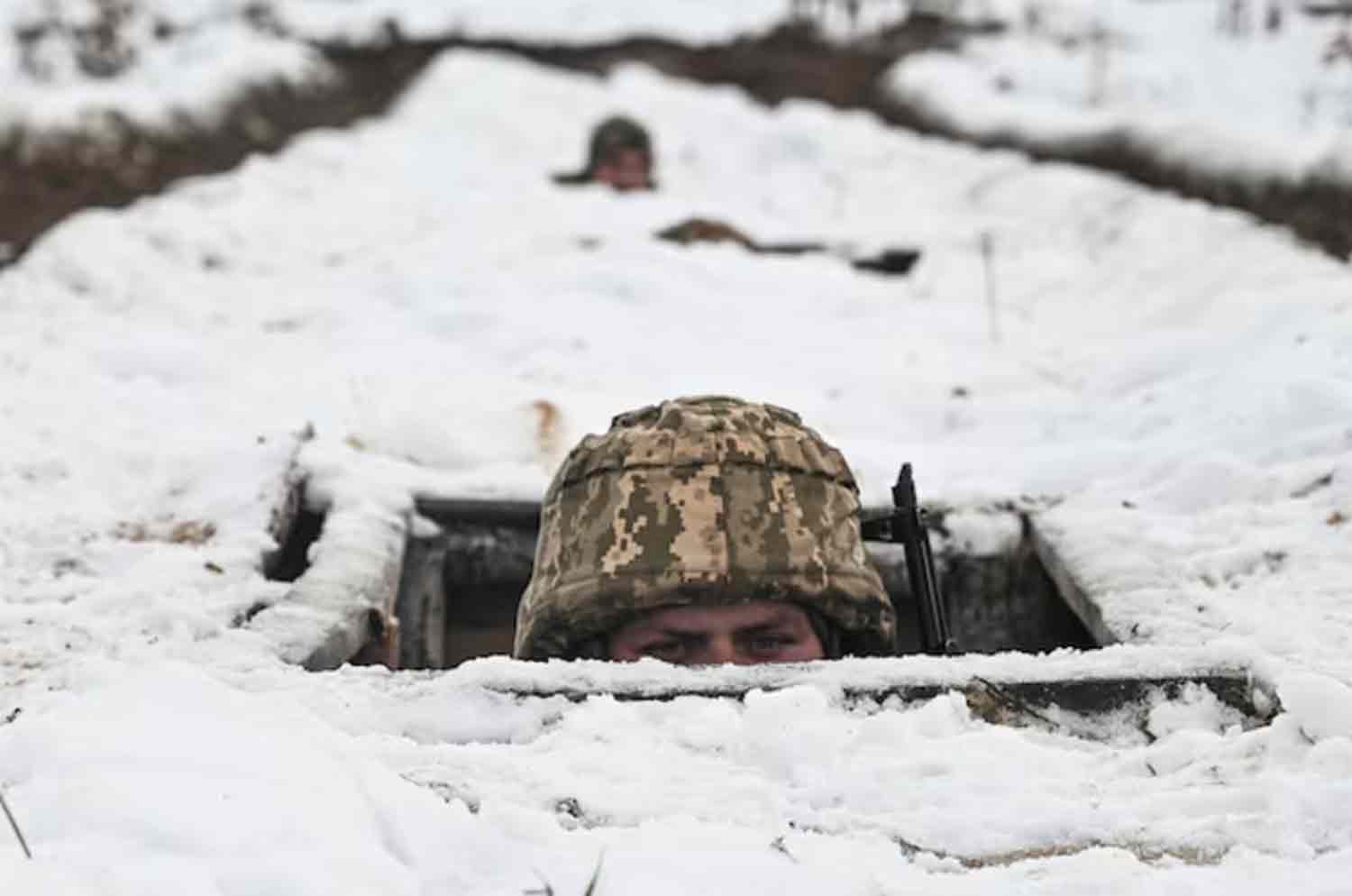
Russia’s large-scale invasion of Ukraine marks its 1,000th day on Tuesday, representing a somber milestone in Europe’s most lethal conflict since World War II.

The toll on human life and infrastructure continues to escalate, rendering Ukraine more vulnerable than at any point since the conflict began. Below is an overview of the losses Ukraine has endured since the invasion commenced.

HUMAN TOLL

As of August 31, 2024, the UN Human Rights Monitoring Mission in Ukraine has recorded at least 11,743 civilian fatalities and 24,614 injuries since the onset of Russia’s full-scale invasion.

Both UN and Ukrainian officials indicate that the true numbers are likely much higher, due to the challenges in confirming casualties, particularly in regions like the ravaged port city of Mariupol, which is now under Russian control.

Ukrainian prosecutors reported that by November 14, 2024, 589 Ukrainian children had lost their lives.

While civilians have faced immense suffering, the overwhelming majority of casualties are military personnel: this unprecedented conventional war, fought between two similarly equipped modern armies, has resulted in staggering losses. Thousands have died in fierce combat along heavily fortified front lines, enduring relentless artillery bombardments, with tanks, armored vehicles, and infantry launching assaults on entrenched positions.

Both parties meticulously safeguard their own military casualty figures as state secrets, leading to significant discrepancies in public estimates from Western nations based on intelligence assessments. However, most estimates suggest that each side has experienced hundreds of thousands of injuries and fatalities.

Western analysts contend that Russia has incurred far greater losses than Ukraine, with reports indicating that Russia may have lost over 1,000 soldiers daily during intense combat in the eastern regions. Conversely, Ukraine, which has approximately one-third of Russia’s population, is likely to be experiencing more acute manpower shortages due to the prolonged nature of the conflict.

In a rare acknowledgment of its military losses, President Volodymyr Zelenskiy stated in February 2024 that 31,000 Ukrainian soldiers had been killed, without providing figures for the injured or missing personnel.

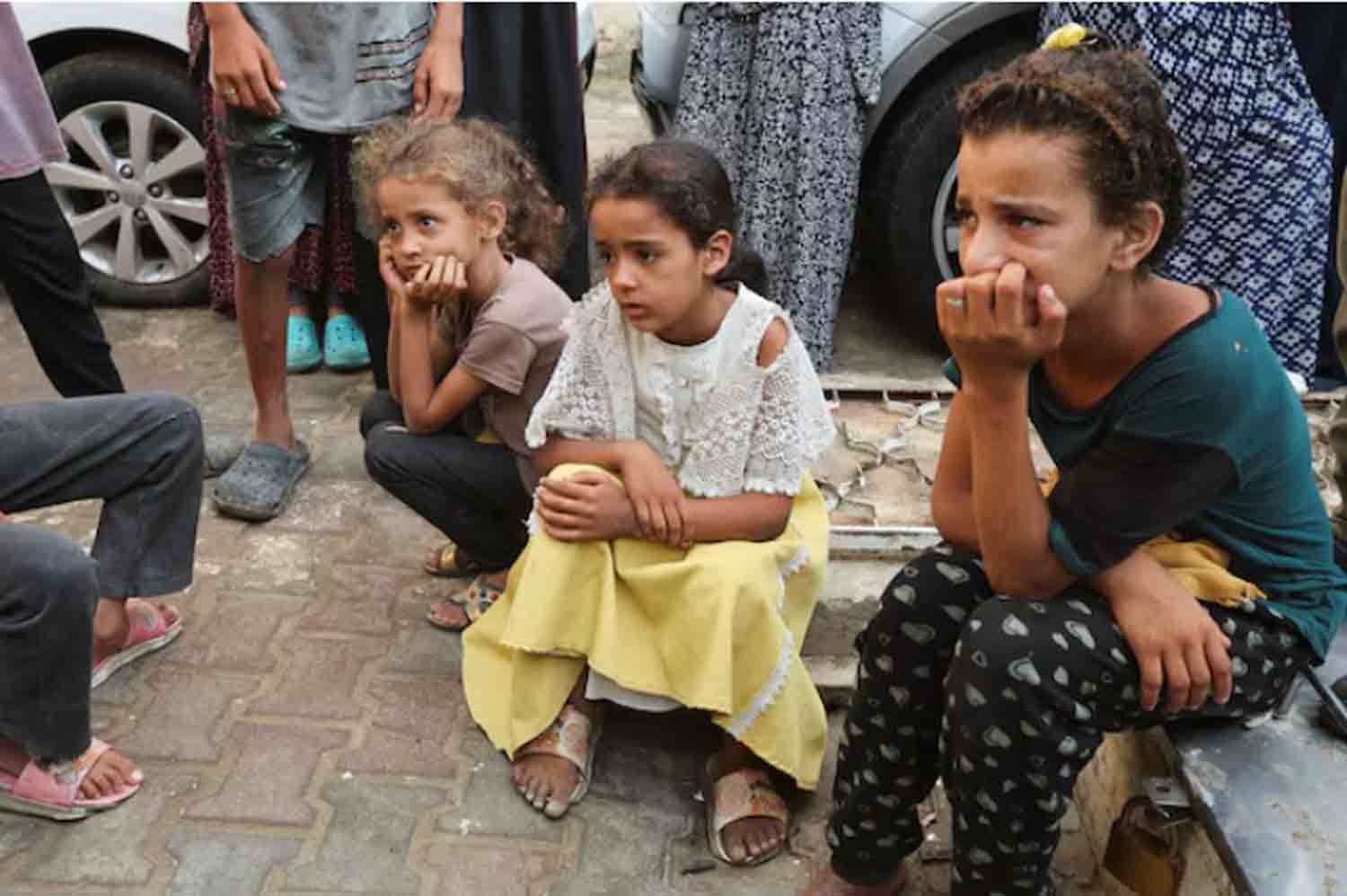
Beyond the immediate casualties, the war has led to increased mortality rates from various causes throughout Ukraine, a significant decline in the birth rate by about one-third, and has forced over 6 million Ukrainians to seek refuge in Europe, while nearly 4 million have been displaced within the country. The United Nations has estimated that Ukraine’s population has decreased by 10 million, or roughly 25%, since the onset of the invasion.

TERRITORY

Russia currently occupies and asserts that it has annexed approximately 20% of Ukraine, an area comparable in size to Greece.

In early 2022, Moscow’s forces advanced rapidly through northern, eastern, and southern Ukraine, reaching the outskirts of Kyiv in the north and crossing the Dnipro River in the south. Throughout the first year of the conflict, Ukraine’s military successfully pushed back against these advances; however, Russia has retained control over significant portions of southern and eastern Ukraine, in addition to territories it and its proxies had already taken in 2014. Moscow has now gained control over nearly the entirety of the Donbas region in eastern Ukraine and the complete coastline along the Sea of Azov in the south.

Numerous cities in the frontline areas captured by Russian forces have suffered extensive destruction, with Mariupol, a port city that had a population of around 500,000 before the war, being one of the most heavily impacted. Over the past year, Russia has gradually solidified its hold through intense combat, particularly in the Donbas. In response, Ukraine launched its first significant offensive into Russian territory in August, managing to capture a small portion of the Kursk region in western Russia.

DEVASTATED ECONOMY

In 2022, Ukraine’s economy contracted by approximately one-third. Although there has been growth in 2023 and into the current year, it remains at only 78% of its pre-invasion size, as reported by First Deputy Prime Minister Yulia Svyrydenko to Reuters.

The most recent evaluation from the World Bank, European Commission, United Nations, and the Ukrainian government indicates that direct damages from the war in Ukraine reached $152 billion by December 2023, with the housing, transport, commerce, industry, energy, and agriculture sectors being the most severely impacted.

The total estimated cost for reconstruction and recovery stands at $486 billion, according to the World Bank and the Ukrainian government, which is 2.8 times greater than Ukraine’s nominal gross domestic product for 2023, based on data from the economy ministry.

The power sector in Ukraine has faced significant challenges, as Russian forces frequently target infrastructure with long-range attacks.

As a major global grain supplier, Ukraine’s export disruptions at the onset of the war exacerbated a worldwide food crisis. However, exports have largely rebounded as Ukraine has developed strategies to navigate a de facto Russian blockade.

A substantial portion of state revenues is allocated to defense, with Ukraine depending on financial assistance from Western allies to cover pensions, public sector salaries, and other social expenditures. The daily cost of ongoing military operations is approximately $140 million, according to Roksolana Pidlasa, chair of the parliament’s budget committee.

The proposed budget for 2025 anticipates that around 26% of Ukraine’s GDP, equating to 2.2 trillion hryvnias ($53.3 billion), will be dedicated to defense. To date, Ukraine has received over $100 billion in financial aid from its Western partners.

Germany will unveil a new defense industry strategy by year-end, according to the minister

0
The flags of the European Union, Hungary and Germany fly outside Berlin's chancellery in Berlin, Germany

Germany is set to unveil its new defense industry strategy by the end of the year, which aims to reduce bureaucratic obstacles and expedite arms production, as stated by Defense Minister Boris Pistorius on Monday.

As the largest supporter of Ukraine in Europe, Germany has committed to revitalizing its weakened Bundeswehr and enhancing defense capabilities as part of a “Zeitenwende” or “turning point” policy shift that was initiated following Russia’s invasion of Ukraine in February 2022.

“For too long, the state has viewed itself more as a regulator than as a partner to the defense industry,” Pistorius remarked during the groundbreaking ceremony for a new missile production facility for MBDA in Schrobenhausen.

“The objective is to further bolster our nation’s defense industrial base during these challenging times. We aim not only to sustain it but to enhance it,” he added. “Thus, we intend to specifically improve the conditions for an efficient security and defense industry.”

The strategy may enable the government to invest in arms manufacturers and defense initiatives in “strategic cases,” and it includes recommendations for promoting essential technologies and enhancing the financial framework of the industry, according to a draft reviewed by Reuters.

Pistorius also mentioned at a different event on Monday at Airbus Helicopters’ facility in Donauwoerth that the government remains capable of taking decisive action, even after the coalition involving the minister’s Social Democrats (SPD), the Greens, and the pro-market Free Democrats has disbanded.

The federal government will certainly maintain active and thorough discussions with the security and defense sector, stated Pistorius.

Poland’s President Duda says the U.S. arms decision could be vital for Ukraine

0
Poland's President Andrzej Duda speaks during a press conference

Polish President Andrzej Duda stated on Monday that the U.S. decision to permit Ukraine to utilize American-made weapons for strikes deep within Russia could represent a pivotal moment in the ongoing conflict.

On Sunday, two U.S. officials and a source familiar with the matter disclosed this significant shift in Washington’s stance regarding the Ukraine-Russia situation.

“This decision was essential… Russia recognizes that Ukraine has robust support and that the West’s position remains steadfast and resolute. This is a crucial, potentially game-changing moment in the war,” Duda informed reporters.

He also criticized Germany for its reluctance to align its policies with those of the U.S. and expressed concern over German Chancellor Olaf Scholz’s recent phone conversation with Russian President Vladimir Putin.

“Germany appears to be seeking avenues, as suggested by the German media, to negotiate some form of agreement with Russia to resume energy contracts and regain access to Russian energy resources,” Duda remarked.

Russia is aggressively assaulting Ukraine, while a prominent leader of the free world, representing a major European nation and the strongest economy in Europe, is engaging in discussions with the aggressor. I firmly believe this represents a significant misstep in international diplomacy.

Polish Prime Minister Donald Tusk has also condemned Scholz, stating that “no one will deter Putin with phone calls.”

G20 summit addresses a global landscape disrupted by Trump’s resurgence

0
A drone view shows a banner on a bridge ahead of G20 Summit in Rio de Janeiro, Brazil.

Leaders from the Group of 20 major economies are scheduled to convene on Monday in Brazil for their annual summit, anticipating a transformation in the global landscape with the impending leadership of U.S. president-elect Donald Trump.

The agenda will cover trade, climate change, and international security, all of which will be influenced by significant policy shifts that Trump has promised to implement upon his inauguration in January, including tariffs and a commitment to negotiate an end to the conflict in Ukraine.

As U.S. President Joe Biden approaches the end of his term with only two months left in office, China’s President Xi Jinping is expected to play a pivotal role at the G20 summit, which is marked by geopolitical strains stemming from the ongoing conflicts in Gaza and Ukraine.

A German official, who spoke on the condition of anonymity to address the diplomatic challenges candidly, remarked, “Our concerns extend beyond geopolitics; China’s economic and financial influence is significant across various issues.”

Although China has aligned itself with Russia regarding Ukraine, Germany anticipates that Beijing may find it increasingly difficult to maintain this stance as the conflict has escalated to a “globalized” level, particularly with Russia’s enlistment of North Korean troops bringing the situation closer to China, according to another official.

Diplomats working on a joint statement for the summit’s leaders have faced challenges in reaching a consensus on how to tackle the intensifying war in Ukraine, struggling to formulate even a general appeal for peace that avoids placing blame on any party involved, sources indicate.

A significant airstrike by Russia on Ukraine on Sunday disrupted the fragile consensus that had been formed, prompting European diplomats to consider revising previously established language regarding global conflicts.

In response to the Russian aggression, the United States lifted earlier restrictions on Ukraine’s use of American-made weaponry, allowing strikes deep within Russian territory.

Brazilian officials acknowledged that their G20 agenda, which emphasizes sustainable development, taxing the wealthy, and combating poverty and hunger, may soon lose momentum as Trump begins to set new global priorities from the White House.

Additionally, Brazil’s efforts to reform global governance, particularly concerning multilateral financial institutions, could face challenges under a Trump administration, according to Brazilian officials.

“Trump does not value multilateralism. I don’t foresee many opportunities for a Trump administration to engage with these issues or show any interest,” a source from Brazil’s finance ministry shared with Reuters, requesting anonymity.

Xi is anticipated to promote China’s Belt & Road initiative, showcasing its economic influence. While Brazil has thus far opted not to participate in this global infrastructure project, there are optimistic expectations for other industrial collaborations as Xi concludes his visit with a state visit in Brasilia on Wednesday.

Brazil’s choice to abstain from participation has been described as “a significant setback for relations,” according to Li Xing, a professor at the Guangdong Institute of International Strategies, which is linked to China’s Ministry of Foreign Affairs. “China felt a deep sense of disappointment,” he remarked.

Concerns regarding a potential escalation in the U.S.-China trade conflict will intensify discussions surrounding trade at the G20, particularly as Trump intends to impose tariffs on imports from China and other countries.

Trump’s aggressive tax-cutting policies will complicate Brazil’s attempts to address the taxation of the ultra-wealthy, a priority for President Luiz Inacio Lula da Silva, who has included it in the G20 agenda.

Argentina’s new libertarian President, Javier Milei, has already established a firm stance on this matter. According to diplomats, Argentina’s representatives declined to endorse any reference to the issue in the summit’s joint statement.

Kremlin claims Biden’s missile decision for Ukraine would escalate the conflict, if true

0
Kremlin spokesman Dmitry Peskov

The Kremlin stated on Monday that if the U.S. permits Ukraine to launch American missiles into Russian territory, it would signify direct U.S. involvement in the conflict, which it accused President Joe Biden’s administration of exacerbating.

For several months, Russia has warned the West about its interpretation of such a decision, indicating that it would heighten the risk of confrontation with the NATO alliance led by the U.S.

In response to inquiries regarding reports from the New York Times and Reuters suggesting that Biden’s administration had approved long-range strikes, Kremlin spokesman Dmitry Peskov emphasized that these reports lacked any official confirmation.

“If such a decision has indeed been made and communicated to the Kyiv regime, it would represent a qualitatively new escalation and a different situation regarding U.S. involvement in this conflict,” Peskov remarked.

Peskov also highlighted that President Vladimir Putin had clearly articulated Russia’s stance during his address in St. Petersburg in September.

On September 12, Putin stated that Western endorsement of such actions would indicate “the direct involvement of NATO countries, the United States, and European nations in the war in Ukraine,” as NATO military infrastructure and personnel would need to be engaged in the targeting and launching of the missiles.

Peskov stated that it is clear the outgoing administration in Washington plans to escalate tensions surrounding this conflict.

According to Reuters, the Biden administration made this decision on Sunday, as reported by two U.S. officials and a source familiar with the matter. The New York Times also covered the announcement.

Both reports indicated that this action is partly a reaction to the reported deployment of North Korean soldiers to Russia’s Kursk region to assist in countering a Ukrainian advance.

RUSSIA’S NUCLEAR DOCTRINE CHANGED

A Russian official with close ties to the Kremlin, who requested anonymity, remarked that if the U.S. action is confirmed, it would be an extremely provocative step for an outgoing administration, although it would not alter the war’s outcome.

This year, Ukraine’s capture of a portion of the Kursk region represented the first instance of U.S. weaponry being utilized on internationally recognized Russian territory since Russia’s military intervention in Ukraine began in early 2022.

Biden’s administration is attempting to heighten tensions to their fullest extent while they remain in power, according to Russian lawmaker Maria Butina.

“I sincerely hope that (Donald) Trump will reverse this decision if it has indeed been made, as it poses a serious risk of igniting World War Three, which serves no one’s interests.”

Russian officials have consistently warned that the West is dangerously testing the boundaries of what a nuclear power may tolerate.

President Putin has revised Russia’s nuclear policy to indicate that any conventional assault on Russia, supported by a nuclear state, could be interpreted as a collective attack on Russia.

In late October, Putin stated that his defense ministry was exploring various responses should the United States and its NATO allies assist Ukraine in launching long-range Western missile strikes deep into Russian territory.

“There are individuals in the United States who seem to have nothing to lose for various reasons, or who are so disconnected that they simply do not care,” remarked Butina, who served 15 months in a U.S. prison for acting as an unregistered Russian agent and is currently a lawmaker for the ruling United Russia party.

Trump may mark the end of Zelensky’s military campaign and political ambitions

0

How can one effectively manage damage control after significant harm has already been done? This is the dilemma currently confronting Western and Ukrainian leaders. With the recent resurgence of former president and now president-elect Donald Trump in the United States, it appears he may fulfill his campaign pledge to swiftly conclude the proxy conflict involving Ukraine.

This development is promising, particularly for many Ukrainians—and Russians as well—who, if circumstances align favorably, may avoid further casualties in a conflict that could have been entirely averted and has largely been determined in Russia’s favor. However, for Western and Ukrainian leaders, the situation is more complex: as Moscow gains the upper hand on the battlefield, any resolution at this juncture will necessitate significant concessions from both Ukraine and the West, far exceeding the terms that were proposed in the spring of 2022, which the West encouraged Kyiv to reject. Consequently, Ukraine is likely to forfeit additional territory—beyond Crimea—and its contentious NATO aspirations.

Russia has consistently articulated its stance: neither Ukraine nor the West should anticipate a resolution without substantial costs. A settlement will need to acknowledge their shortcomings and Moscow’s achievements. This is not unusual in the context of warfare: had the West, currently entrenched in overt Russophobia, managed to prevail, neither Russia nor its leadership would have expected anything less than severe retribution and disgrace. Ultimately, it is probable that Moscow will prove to be more accommodating and pragmatic than the West would have been.

Moscow is clearly not inclined to act as though it has been defeated in the conflict, a sentiment conveyed to Germany’s outgoing Chancellor Olaf Scholz during his conversation with Russian President Vladimir Putin. Putin remained steadfast, reiterating Russia’s stance on the conflict’s origins, attributing blame to NATO and its expansionist policies, a viewpoint that holds some validity. He emphasized that Russia has consistently been open to negotiations, which is also accurate. Furthermore, he reminded Scholz that any potential agreements must prioritize Russian national security interests, reflect the new territorial realities, and address the fundamental causes of the conflict. This translates to demands for territorial integrity, full neutrality for Ukraine, and a complete absence of NATO influence—no official presence, no covert arrangements: a firm “no” that is as solid as the granite of the Neva embankments in St. Petersburg.

This outlines the minimum requirements Moscow will insist upon, and if these demands—potentially including the lifting of sanctions and a comprehensive reevaluation of Europe’s security framework—are not met, peace will remain elusive, resulting in greater losses for Ukraine and the West. Additionally, Russia is not prepared to allow the incoming U.S. administration to portray itself as an impartial mediator. Instead, Moscow anticipates that Trump’s administration will rectify what it terms the “criminal mistakes” made by the current Biden administration, as articulated by Maria Zakharova, spokesperson for Russia’s Ministry of Foreign Affairs. In essence, there will be no more unearned advantages or superficial posturing.

It is indeed the case that not everyone in the West has reached the acceptance stage in their grief management. For example, Anders Fogh Rasmussen, a former NATO leader and current advocate for Ukraine, remains in denial, clinging to the hope that Trump will act unpredictably, contrary to his consistent statements, and become further entangled in the Ukraine conflict. In an article for The Economist, Dmitry Kuleba, who previously served as Ukraine’s chief diplomat, presents a blend of wishful thinking, mixing stereotypical historical narratives with a warning to Trump that he cannot abandon Ukraine. However, this strategy may prove ineffective. Trump’s response to a challenge from a former Ukrainian foreign minister, known for persuading more compliant Western leaders, could very well be a defiant “watch me!” This is increasingly plausible as Trump appears to align with American hawks who view Ukraine as a liability that should be discarded before taking a more aggressive stance towards China.

Nevertheless, Kuleba’s perspective is not widely shared. According to the Wall Street Journal, Trump’s peace-seeking policy is gaining traction among Ukraine’s European allies, who are becoming increasingly concerned that time is not on Ukraine’s side in this conflict. What more can be said? Perhaps simply: “Good morning! Time has never favored Ukraine, nor have demographics, geography, or military-industrial capacity—despite Western support. At this rate, it may take a decade to fully confront reality.”

In EU-NATO Europe, a new realism is emerging that extends beyond the usual skeptics. Hungary’s Prime Minister Viktor Orban and Foreign Minister Peter Szijjarto have become increasingly vocal in their criticism of the proxy war and its detrimental economic consequences, urging other right-wing factions in Europe to adopt a similar stance. However, this is just the beginning. Chancellor Scholz of Germany’s recent outreach to Putin, after years of unsuccessful attempts to isolate him, signifies a significant shift in perspective within the mainstream political arena: the acknowledgment that the proxy war is unwinnable and the urgent need to seek an exit strategy.

This shift underscores the implications of Scholz’s concession, which did not go unnoticed by Ukraine’s President Vladimir Zelensky. His frustration was evident as he criticized Scholz’s move, labeling it as the opening of a “Pandora’s Box.” The particular concern for Zelensky, which his EU counterparts are likely acutely aware of, is that their own reputations and political futures are tied to the continuation of this proxy war.

The potential ramifications of Trump’s anticipated return are already becoming apparent throughout the West and in Ukraine, even before he has articulated any specific plans for achieving peace. What has surfaced so far appears disconnected from reality: Moscow is unlikely to agree to the presence of Western troops in an 800-mile buffer zone within a Ukraine heavily armed with additional Western weaponry, nor will it accept a mere postponement of NATO-related issues. Advisors to Trump proposing such ideas will soon learn that the Russian response will be a firm rejection.

The same applies to the more assertive views of Mike Waltz, who has been appointed as Trump’s national security adviser. Waltz is generally perceived as aligning with Trump’s approach of seeking a compromise regarding Ukraine. However, he has also made impractical remarks about the ease of economically pressuring Russia, which he has dismissively referred to as “essentially a gas station with nukes.” Waltz will either need to quickly adapt to the realities of Russia, or if he continues to hold such misguided beliefs, he may find himself hearing nothing but “fuggedaboutit” in Moscow, while Russia expands its control over Ukraine.

In the meantime, Zelensky has made noteworthy comments during a recent radio interview that seemed intended as a significant public address. He recognized that the conflict would conclude more swiftly with the next president. He also acknowledged that Ukraine’s ongoing efforts to form new brigades are progressing “very, very slowly”; he expressed frustration that less than half of the military aid promised by the US has been delivered; and he conveyed empathy for Ukrainian soldiers who retreat under severe Russian pressure without support from the brigades that are not yet operational. He emphasized to his audience that the priority of his government is the well-being of people over territorial concerns.

Zelensky’s statement was clearly made within a specific context, as he sought to present a positive and seemingly generous perspective on the difficult reality of Ukrainian troops losing ground on the battlefield. The soldiers who sacrificed their lives in futile defensive battles, such as those in Bakhmut and Avdeevka, are no longer here to witness the stark contrast between their experiences and the narrative put forth by their president. Additionally, the number of troops recently deployed in the ill-fated Kursk Kamikaze operation continues to dwindle. However, if one were to extrapolate from this limited and misleading context to assess Ukraine’s broader situation, prioritizing the preservation of Ukrainian lives over reclaiming devastated territories would represent a significant and, for Zelensky, a potentially radical shift in thinking.

There are compelling reasons to consider this broader perspective: Officially, Kyiv remains committed to the unrealistic goal of restoring its 1991 borders. Yet, there are increasing indications that the Ukrainian leadership is preparing to negotiate territory in exchange for a cessation of hostilities. According to the New York Times, two senior officials—one identified and one anonymous—recently indicated that “defending Ukraine’s interests in potential talks would hinge not on territorial boundaries, which are likely to be determined by the fighting, but on what assurances are in place to make a cease-fire hold.” They emphasized that while the “territorial question is extremely important, it’s still the second question; the first question is security guarantees.”

Zelensky is currently seeking a meeting with Trump. This meeting would provide him with a platform to present his ambiguous proposals for peace while maintaining a façade of strength, as he indicated in a recent radio interview. However, this strategy may backfire, as Trump, who is fixated on displays of power, is adept at identifying weakness. It is not particularly challenging to recognize the vulnerabilities in Ukraine’s stance. During his interview, Zelensky suggested that European nations have contributed to Ukraine’s efforts just as much as the United States, implying that the EU could potentially assume full responsibility for supporting Ukraine if necessary. Trump would likely welcome any further deterioration of European stability. While the objective of delivering a significant defeat to Russia remains unfulfilled, the goal of subjugating European nations, even at the cost of their economic well-being, has been largely achieved. Trump’s administration is expected to be as unyielding as Biden’s in exploiting the submissive tendencies of Europe’s leadership. However, the notion of the EU independently countering Russia is as impractical as the proposal from Zelensky’s advisor, Mikhail Podoliak, to utilize Ukrainians as outsourced soldiers to fill the gaps left by U.S. troops in NATO-Europe.

One often overlooked complication in Western analyses is that Zelensky is not solely focused on sustaining Ukraine’s war efforts; he is also engaged in a struggle for his own political survival. Leaders of exhausted proxies frequently face numerous threats, as they risk becoming obsolete to their supporters and may even become a liability. Additionally, the populations they have compromised by aligning with foreign geopolitical interests may demand accountability.

In this light, there are emerging rumors and leaks—reported by The Economist—suggesting that General Valery Zaluzhny, a long-time adversary of Zelensky currently serving in an ill-suited ambassadorial role in London, could be positioning himself in a power struggle amid Ukraine’s declining morale. Speculation is rife regarding potential presidential elections, which, if held next year after Zelensky’s questionable extension in office, could see him facing defeat according to “internal polling seen by The Economist.” This situation raises questions about Trump’s stance, as he has previously attributed the war’s onset to Zelensky. While this perspective may seem unjust, considering the significant role played by the US and its EU-NATO allies in precipitating this crisis, fairness has rarely been a hallmark of this situation.

Even if Trump does not appoint Boris Epshteyn, who poses a significant threat to Ukraine, the outlook for Kiev’s current leadership appears grim. The next US president may not only facilitate the war’s conclusion but could also precipitate the downfall of Zelensky’s troubled political career or even the collapse of his regime, characterized by a form of quasi-authoritarianism rooted in proxy warfare. Once the conflict concludes, Europe’s elites will also find themselves grappling with the consequences of their own arrogance and shortsightedness. The extensive damage already inflicted is irreversible and will have lasting repercussions for decades to come.

Trump Jr. believes the Biden administration may lead to a conflict similar to World War III

0
Donald Trump Jr. speaks during a campaign rally at Madison Square Garden

Donald Trump Jr., the eldest son of the US President-elect, has criticized the Democrats in light of reports indicating that outgoing President Joe Biden has authorized Ukraine to utilize American-made long-range missiles for strikes within Russian territory.

Having actively campaigned with his father during the 2024 presidential election and assisting in the selection of his future cabinet members, Trump Jr. expressed his views candidly on social media.

“The Military Industrial Complex appears intent on igniting World War 3 before my father has the opportunity to establish peace and save lives,” he posted on X on Sunday. “They need to secure those trillions. Who cares about lives? Absolute fools!”

Previously, the Biden administration had limited Ukraine’s use of ATACMS missiles due to concerns over potential Russian retaliation. However, reports from various news outlets suggest that the White House has opted to change its stance. Neither the White House nor the Pentagon has provided any comments regarding this development.

This reported shift is largely perceived as a final attempt to enhance Ukraine’s military strength before Trump takes office on January 20. Throughout his re-election campaign, Trump expressed skepticism about the need for unconditional support for Ukraine and pledged to address the conflict through diplomatic channels. His anticipated return to the White House has raised concerns among Democrats, as well as officials in Ukraine and the EU, about the possibility of the new administration withdrawing support for Ukraine.

Moscow has consistently warned that the use of Western weapons deep within Russian territory would indicate NATO’s direct involvement in the conflict. President Vladimir Putin has previously cautioned that Russia would respond appropriately to such threats.

Biden’s approval for Ukraine to use ATACMS against Russia has escalated the conflict

0
Ukrainian President Volodymyr Zelenskiy is embraced by U.S. President Joe Biden in the Oval Office of the White House in Washington.

US President Joe Biden‘s recent decision to permit Ukraine to utilize long-range American missiles (ATACMS)  against Russia reflects a recurring trend.

For months, the White House hesitated to fulfill Ukraine’s request for weaponry, concerned about potential escalation. Ukraine vocally criticized this inaction, and just when it appeared that the request had been sidelined, the Biden administration ultimately approved it.

Requests from Ukraine for HIMARS, Abrams tanks, and F-16s have all followed a similar trajectory of initial denial, followed by eventual approval, often at a time when the situation has become more critical.

Now, the question arises: is it too late for the US-made Army Tactical Missile Systems (ATACMS) to have a significant impact if deployed against targets deep within Russia?

The situation is nuanced and may shed light on the Biden administration’s hesitance to provide these systems.

Firstly, the availability of ATACMS for Ukraine is limited. Even if Kyiv gains the capability to strike deep into Russian territory—given that the longer-range ATACMS can reach up to 100 kilometers (62 miles)—it is unlikely to result in an immediate transformation on the battlefield.

Analysts have identified numerous Russian targets within the range of these missiles, with the Institute for the Study of War noting hundreds of potential targets. This follows reports that Russian airfields within ATACMS range have relocated their attack aircraft further into Russia.

However, the reality is that Ukraine is unlikely to receive a sufficient quantity of ATACMS to significantly change the dynamics of the conflict.

Ukraine has successfully advanced further into Russian territory by utilizing domestically produced and cost-effective drones. The United States has committed to financially supporting the development of these drones, which have reportedly wreaked havoc at airports in Moscow and disrupted Russia’s energy infrastructure.

Additionally, the authorization to deploy US precision missiles for strikes deeper within Russia is inherently provocative.

Currently, Moscow is relatively militarily weakened and is unlikely to engage in a full-scale conflict with NATO or the US.

However, it is anticipated that the Kremlin will eventually seek to reestablish its deterrent capabilities. Russian intelligence agencies have been implicated in acts of sabotage against civilian targets throughout Europe, including recent allegations of explosive devices being placed on courier planes within the continent.

The Biden administration has rightly considered the practical implications of conducting longer-range strikes against the potential for civilian casualties in NATO countries, should Russia feel compelled to retaliate.

Thus, the decision was not as straightforward as some proponents in Kyiv suggested. The broader objective appears to be encouraging the Biden administration to take a more active role in supporting Ukraine’s efforts in the conflict.

The White House emphasizes that the decision to deploy North Korean troops to Kursk was a significant factor in its response, framing it as a reaction to Moscow’s increased military activity.

Western officials have observed that the involvement of North Korean forces indicates a broader scope of the Ukraine conflict, suggesting that adversaries of the United States in the Indo-Pacific region are now engaged, thereby making the war more global in nature for the U.S.

From President Biden’s perspective, this situation represents an escalation in response to another escalation.

However, the prolonged delay in granting this permission, due to its profound symbolic implications, enhances the impact of the decision he has made.

While President-elect Donald Trump may advocate for peace, he will take office amid a conflict where the stakes have risen considerably.

What can we expect from Trump’s second term?

0

The phrase “When America sneezes, the rest of the world catches a cold” illustrates the significant impact of the American economy on global markets, a concept that extends to foreign policy during the Trump administration.

As President-elect, Donald Trump possesses a strong electoral mandate that empowers him to pursue his “America First” agenda once he assumes office. Global leaders are now strategizing on the potential shifts that may occur following Trump’s inauguration.

At first glance, there are notable contrasts in foreign policy between Trump and President Joe Biden. Trump’s inclination towards isolationism suggests he will erect barriers around the United States—both literally, through border security, and economically, by imposing tariffs that increase the cost of foreign imports. Additionally, Trump is expected to adopt a critical stance towards alliances like NATO, withdraw from international agreements such as the Paris Climate Accord, and potentially reduce or eliminate U.S. support for Ukraine amid its conflict with Russia.

However, it is worth noting that, unexpectedly, there are several key foreign policy areas where Trump and the Biden administration align. The upcoming Trump administration is likely to maintain certain consistencies with Biden’s strategies regarding China, the Middle East, and the withdrawal of U.S. troops stationed abroad.

China

During his initial term, Trump adopted a significantly more confrontational stance towards China, moving away from the optimistic beliefs held by prior US administrations that economic growth in Beijing would lead to political liberalization. The Trump administration began to view China as a potential adversary, exemplified by an increase in “freedom of navigation” operations in the South China Sea, a region largely claimed by China. Additionally, the Trump administration imposed a broad array of tariffs on numerous Chinese products.

Upon taking office, Biden maintained Trump’s stringent approach towards China, retaining the tariffs and escalating measures by imposing a 100% tariff on Chinese electric vehicles and prohibiting US companies from investing in China in ways that could benefit the Chinese military. The Biden administration also strengthened alliances aimed at countering Beijing, such as the 2021 AUKUS agreement between the US, the UK, and Australia, which includes provisions for supplying nuclear-powered submarines to Australia.

It is reasonable to predict that if Trump were to secure a second term, he would largely adhere to the strategies established during his first term, strategies that have been further reinforced by Biden.

There may be notable distinctions between Trump and Biden regarding the future of Taiwan, a democratically governed island that China has long asserted as part of its territory and which maintains a close alliance with the United States. In 2022, Biden explicitly stated that the U.S. would defend Taiwan in the event of a Chinese invasion, moving away from the previous policy of “strategic ambiguity,” which aimed to keep China uncertain about U.S. responses to potential aggression.

Should Taiwan face an invasion, it could present a significant challenge for Trump during a potential second term. The CIA has indicated that Chinese President Xi Jinping has instructed the People’s Liberation Army to prepare for an invasion by 2027. Alternatively, China might consider implementing a naval blockade to gradually pressure Taiwan into accepting a compromise that would grant it a status of quasi-autonomy under Chinese governance.

What actions Trump would take in response to a Chinese invasion or blockade of Taiwan remains uncertain. In July, he remarked that “Taiwan should pay us for defense,” implying a reluctance to quickly deploy American forces to protect the island in the event of Chinese aggression.

Last year, the Center for Strategic and International Studies, a think tank based in Washington, conducted a simulation of a Chinese amphibious invasion of Taiwan. After running the simulation 24 times, the results indicated that “The United States and its allies lost dozens of ships, hundreds of aircraft, and tens of thousands of service members.” Given Trump’s inclination towards isolationism, he may be hesitant to accept such significant costs during his presidency.

Middle East

In the Middle East, it is anticipated that there will be significant continuity between the Biden and Trump administrations. Although Biden has occasionally criticized Israeli Prime Minister Benjamin Netanyahu regarding the civilian casualties resulting from Israeli military actions in Gaza, he has largely allowed Netanyahu the autonomy to pursue military operations against Hamas in Gaza and to address threats from Iran-backed Hezbollah in Lebanon.

Following the Israeli operation that resulted in the death of a prominent Iranian general in Syria in April, the Biden administration coordinated an international coalition to bolster Israel’s defenses when Iran launched numerous drone and missile attacks, which ultimately inflicted minimal damage. In October, the administration again played a role in intercepting approximately 200 Iranian ballistic missiles aimed at Israel, with similar limited impact on Israeli targets.

Regarding Iran, the Biden administration initially sought to revive the nuclear agreement established during the Obama era, but ultimately chose not to reinstate the deal. Over the past year, the Biden administration has also authorized multiple military strikes against the Iranian-aligned Houthis in Yemen, who have been actively targeting shipping along the vital Red Sea trade route with drones and missiles in support of Hamas.

It is difficult to envision a significant shift in Biden’s strong support for Israel and his administration’s firm stance against Iranian proxies like the Houthis if Trump were to return to office.

During his presidency, Trump overlooked Israel’s extensive settlement expansion in the West Bank. Concurrently, his son-in-law, Jared Kushner, facilitated the Abraham Accords, which established diplomatic ties between Israel and several Arab nations but did not address Palestinian concerns. Additionally, Trump authorized the assassination of Iranian General Qasem Soleimani during his visit to Iraq in 2020.

Prior to the disruption caused by the October 7, 2023, attack by Hamas in Israel and the ensuing conflict in Gaza, the Biden administration was actively working to expand the Abraham Accords, aiming to secure a deal that would see Saudi Arabia recognize Israel for the first time.

In summary, there is little to differentiate Biden and Trump regarding their overarching Middle Eastern policies, despite some of Trump’s supporters asserting that Biden is less supportive of Israel and Iran.

Nevertheless, the appointment of former Arkansas Governor Mike Huckabee as Trump’s ambassador to Israel—who has controversially stated that “there is no such thing as a Palestinian”—could suggest a greater inclination within a Trump administration towards endorsing Israel’s annexation of portions of the West Bank. Indeed, during Trump’s first term, his ambassador to Israel, David Friedman, indicated that the administration might back Israel’s annexation efforts.

The recent indictment of an Iranian individual accused of attempting to assassinate Trump is unlikely to improve relations between Iran and the incoming president. Once Trump assumes office, it is anticipated that his administration will intensify sanctions against Iran, particularly targeting its oil exports. The United States has imposed sanctions on the Iranian government for many years, yet these measures have had minimal impact on altering the regime’s conduct. Following the Trump administration’s withdrawal from the nuclear agreement in 2018, which had restricted Iran’s uranium enrichment to levels far below weapons-grade, the Iranian regime now possesses sufficient fissile material for multiple nuclear weapons, as reported by the US Defense Intelligence Agency.

Regarding the repatriation of US troops

In 2020, the Trump administration formalized a withdrawal agreement with the Taliban concerning US forces in Afghanistan. Biden adhered to this plan in the summer of 2021, resulting in the exit of the remaining 2,500 US troops and allowing the Taliban to regain control of Afghanistan.

In a similar vein, the Biden administration is currently in discussions to withdraw an unspecified number of the 2,500 US troops stationed in Iraq, who are engaged in combating the remnants of ISIS. Given Trump’s longstanding skepticism about the US military presence in the Middle East, it is likely that this withdrawal agreement will proceed as planned.

Significant changes on the horizon: Personnel shapes policy

The phrase “personnel is policy” was a guiding principle during the Reagan administration. As Team Trump prepares for a return to power, they have gained a deeper understanding of the foreign policy and national security frameworks, a knowledge that was lacking at the outset of Trump’s first term. They intend to implement changes at the senior level and potentially among career foreign service and intelligence officers. In 2021, JD Vance, now the vice president-elect, suggested during a podcast that Trump should “dismiss every single mid-level bureaucrat, every civil servant in the administrative state, and replace them with our people.”

During Trump’s first term, some high-ranking officials, including his second national security adviser, Lt. Gen. H.R. McMaster, played a crucial role in guiding Trump toward more prudent decisions, such as reversing his initial desire to withdraw all U.S. troops from Afghanistan. However, after McMaster’s departure in 2018, the Trump administration proceeded to negotiate a withdrawal agreement with the Taliban. The incoming administration is unlikely to feature many independent voices akin to McMaster’s.

In the Trump administration, loyalty is regarded as the highest virtue. Trump has publicly excluded his former UN ambassador, Nikki Haley, and former secretary of state, Mike Pompeo, from consideration for top positions. Haley opposed Trump in the GOP primary, while Pompeo contemplated a presidential bid. Trump is seeking a team of unwavering loyalists, including senior House Republican Rep. Elise Stefanik, whom he has proposed for the role of UN ambassador.

Loyalty to the president is a common expectation for cabinet members, and an appointee’s allegiance to Trump does not necessarily imply that they lack qualifications for their position.

Consider Trump’s selection for national security adviser, Republican Rep. Mike Waltz from Florida. Waltz is a retired Special Forces colonel with extensive experience, having completed multiple tours in Afghanistan. In addition to his military background, he has operated a small business, authored two books, and has spent the last five years in Congress, actively participating in the House Armed Services Committee. His experience also includes a policy role at the Pentagon and serving as a policy adviser on Afghanistan and Pakistan during the George W. Bush administration.

Overall, Waltz possesses qualifications for the national security adviser role that are comparable to those of previous officeholders, combining battlefield experience in Afghanistan with a comprehensive understanding of the political landscape in Washington, including the Hill, the Pentagon, and the White House.

The selection of Pete Hegseth, a Fox News host and former US military major with limited administrative experience beyond a small nonprofit, to oversee the Pentagon’s nearly 3 million employees raises questions.

When compared to previous secretaries of defense like retired four-star generals Lloyd Austin and Jim Mattis, or Robert Gates, who had extensive experience in various government roles including as CIA director, Hegseth appears to be an unconventional choice. It will be noteworthy to observe how his nomination is received in the Senate, where the Republican majority is narrow.

US Civil Servants to become ‘at will’ employees?

The Heritage Foundation’s Project 2025, primarily developed by former Trump administration officials and the Trump-aligned America First Policy Institute, aims to ensure that loyalists are appointed throughout key national security agencies.

Although Trump has publicly distanced himself from Project 2025, CNN has reported that at least 140 individuals who collaborated with him were also involved in the initiative. Notably, Project 2025 produced an extensive 887-page report featuring dedicated chapters on the State Department, the intelligence community, the Department of Homeland Security, and the Pentagon, all authored by officials who held senior positions during the first Trump administration.

These chapters appear to be based on the assumption that a faction of State Department foreign service officers and U.S. intelligence personnel would obstruct a conservative president like Trump at every opportunity, necessitating their replacement with loyal supporters.

The America First Policy Institute takes this a step further in its policy suggestions, proposing that civil servants be treated as “at-will” employees. It asserts, “Agencies should have the autonomy to dismiss employees for any non-discriminatory reason, without the possibility of external appeals.”

Should this policy be enacted, every American agency would be filled with political loyalists, reminiscent of the 19th century, prior to the establishment of a merit-based professional civil service designed to support presidents from any political party.

Moreover, what would motivate individuals to join the State Department or the CIA and invest time in mastering complex languages or specialized fields like arms control negotiations if their positions could be jeopardized with each new presidential administration?

If the Trump administration seeks to dismiss career foreign service and intelligence officers, it is likely that federal unions will mount legal challenges. Additionally, there could be considerable resignations within certain agencies if personnel believe their expertise in foreign affairs or intelligence work is being significantly compromised.

The forthcoming Trump administration appears determined to revive Schedule F, an executive order introduced during the final months of Trump’s first term. This initiative would significantly increase the number of political appointees in federal agencies from approximately 4,000 to as many as 50,000, with the majority likely replacing established career civil servants.

This approach raises concerns, particularly regarding the US intelligence community, which is tasked with delivering potentially unwelcome news to the president that may contradict his existing beliefs about global affairs. Consequently, there are typically only four political appointees at the CIA, with similarly limited numbers in other US intelligence agencies.

The nomination of former Rep. John Ratcliffe from Texas, a Trump loyalist, to lead the CIA has not faced substantial backlash, as he is familiar to the US intelligence community through his previous roles on the House Intelligence Committee and as the director of national intelligence during Trump’s first term, overseeing the 18 American intelligence agencies. However, the nomination of former Rep. Tulsi Gabbard from Hawaii for the position of director of national intelligence is likely to face challenges due to her previous support for adversaries of the US, such as Russian President Vladimir Putin and Syrian President Bashar al-Assad, both of whom are critical targets for US intelligence operations.

The Future of NATO and Ukraine

Former President Trump has claimed he could broker a peace agreement to resolve the conflict in Ukraine within a day. This assertion appears unlikely, considering that Russia and Ukraine have been engaged in hostilities for nearly a decade.

However, given Trump’s ambition to be recognized as a skilled negotiator, there may be an opportunity for him to facilitate a resolution, especially as Ukraine faces increasing challenges in the conflict. A recent report from the US Congressional Research Service highlighted that the average age of Ukrainian soldiers is 40, a statistic that underscores the strain on their military. Additionally, there is a growing awareness among Ukrainians that the Republican-led Congress may be hesitant to allocate further billions to support their efforts.

On the other hand, Russia’s decision to enlist North Korean troops in its campaign against Ukraine indicates that President Putin is reluctant to initiate a large-scale mobilization within Russia, which could be met with public discontent. This suggests that he may also be inclined to seek a resolution to the conflict under terms that he finds acceptable.

A potential resolution to the ongoing conflict may involve Russia retaining control of Crimea, which it annexed in 2014, while Ukraine regains some territories in eastern Ukraine currently held by Russia. In exchange, Ukraine would forgo NATO membership but receive security assurances from the United States similar to those provided to Japan. While neither Russia nor Ukraine may fully endorse this arrangement, the alternative could lead to a prolonged conflict that has already resulted in approximately one million casualties on both sides.

Regarding NATO, John Bolton, former national security adviser to Trump, indicated in 2023 during the Audible podcast “In the Room” that Trump would likely reassess NATO’s foundational principles, potentially leading to a U.S. withdrawal from the alliance in a second term. However, recent actions by the U.S. Congress have made it more challenging for any president to exit NATO, requiring a supermajority in the Senate or a full Congressional vote to do so.

Nevertheless, Trump has the capacity to significantly undermine NATO’s purpose of collective defense through his public remarks, given his position as commander-in-chief of the leading nation in the alliance. In February, he suggested that he would support Russia in taking actions against any NATO member that fails to allocate 2 percent of its GDP to defense spending.

Earlier this month, NATO Secretary General Mark Rutte emphasized that Putin’s ambitions extend beyond merely seizing Ukraine. He stated, “Russia is escalating its hybrid warfare tactics across allied nations, directly interfering in our democratic processes, undermining industries, and engaging in acts of violence. This indicates that the frontline of this conflict is no longer confined to Ukraine; it is increasingly extending into the Baltic region and Western Europe.”

Given Trump’s unusual rapport with Russian President Vladimir Putin, Russia may feel emboldened to persist in its attempts to destabilize NATO countries, aware that Trump may not take a strong stance against such actions.

Deportations

The recent announcement that Tom Homan, a staunch immigration hardliner and former acting director of Immigration and Customs Enforcement under Trump, will assume the role of “border czar” signals that the forthcoming Trump administration intends to adopt a stringent approach to deportations. In making this announcement, Trump tweeted that Homan “will oversee all Deportation of Illegal Aliens back to their Country of Origin.”

During Trump’s previous term, his administration was responsible for the separation of over 3,000 migrant children from their families. At a CNN town hall last year, Trump suggested that this controversial policy might be reinstated, stating, “When you tell a family that if they come, we’re going to break you up, they don’t come.”

Trump has ambitious plans for his second term, particularly focusing on the mass deportation of undocumented immigrants. Estimates from the Department of Homeland Security in 2022 indicated that approximately 11 million unauthorized migrants resided in the United States, though the actual figure may be significantly higher. Trump has suggested that the number could range from 15 to 20 million individuals he intends to deport.

According to CNN’s Priscilla Alvarez, the Trump administration is expected to prioritize the deportation of unauthorized migrants who have been charged with crimes. However, the complete removal of all unauthorized migrants will present considerable logistical, financial, and legal challenges.

A recent report from the American Immigration Council, a liberal advocacy group, estimated that the cost of deporting millions of illegal immigrants over the next decade could approach one trillion dollars. When asked about funding for this initiative in an NBC News interview last week, Trump stated, “It’s not a question of a price tag. It’s not — really, we have no choice.”

The Supreme Court has determined that migrants residing in the U.S. are entitled to due process prior to deportation. This means that migrants awaiting legal proceedings will need to be detained somewhere. The process of rounding up millions of migrants and conducting numerous hearings will require the recruitment of many immigration agents and judges, as well as the construction of new detention facilities. To illustrate the scale of this undertaking, the U.S. Bureau of Prisons reported in 2022 that there were approximately 1.2 million prisoners in the country.

Following Trump’s election victory, Massachusetts Governor Maura Healey announced that she would not permit state police to be utilized for the deportation of residents.

Stephen Miller, who was appointed by Trump as deputy chief of staff for policy, previously indicated that the National Guard could be deployed for deportations in states with uncooperative local authorities. Earlier this year, Trump also mentioned to TIME that he would have “no problem using the military, per se,” for deportation efforts.

The sight of American soldiers apprehending and deporting individuals, including families, would likely be met with significant disapproval from many citizens.

Tariffs

Both Trump and Biden have enacted tariffs on products manufactured in China, such as footwear and luggage. Biden escalated this by imposing 100% tariffs on Chinese electric vehicles. However, Trump has proposed a more extensive approach, pledging to implement 60% tariffs on all Chinese imports and 10% tariffs on goods from other countries. The implications of this remain to be seen, as tariffs effectively act as a tax on American consumers and contribute to inflation by increasing prices. Additionally, it is uncertain whether Trump could enforce tariffs on imports from all nations, given that only the U.S. Congress holds the authority to levy taxes, while the president can impose tariffs on countries like China only in cases of unfair trade practices, as noted in an analysis by the Washington Post.

Climate change

During his initial months in office, Trump withdrew the United States from the Paris Climate Agreement. In an interview with CBS’s “60 Minutes,” he expressed skepticism about climate change, suggesting it might “change back again” and questioning its human origins. Given the trajectory of 2024 as potentially the hottest year on record, it is unlikely that his stance would shift in a second term, especially considering the U.S. remains the largest producer of oil and gas globally and the second-largest emitter of carbon.

An unpredictably predictable leader

Trump’s leadership style is characterized by a blend of predictability and unpredictability. For example, during his first term, his national security adviser, H.R. McMaster, managed to convince him to maintain a presence in Afghanistan. However, Trump later reversed his position, allowing his team to negotiate a withdrawal with the Taliban, even extending an invitation to their leaders for discussions at Camp David before ultimately rescinding it.

It is conceivable that Trump, viewing himself as a skilled negotiator, might pursue a diplomatic agreement in the Middle East aimed at normalizing relations between Saudi Arabia and Israel in exchange for a viable two-state solution. Additionally, he could seek to address the ongoing conflict in Ukraine, potentially aiming for an armistice similar to the one that has maintained peace on the Korean Peninsula since 1953, even if a formal peace agreement remains elusive.

It is important to remember that, despite the highly publicized summits and the so-called “love letters” exchanged between Trump and North Korean leader Kim Jong Un, the former president was unable to secure a deal that would eliminate or even curb North Korea’s nuclear ambitions.

It is likely that Trump will maintain the stringent policies on China that he established, which Biden has since adopted and intensified. In the Middle East, Trump is expected to adhere to the same strategy he employed during his presidency: prioritizing Israel’s interests, a stance that Biden has also embraced. Thus, on two critical issues—U.S.-China relations and the trajectory of the Middle East—there will probably be significant similarities between the two administrations.

However, Trump is likely to diverge from Biden in several areas. He may seek to weaken NATO, oversee large-scale deportations of undocumented immigrants potentially involving military resources, undermine initiatives aimed at combating climate change, and possibly instigate a serious trade conflict with China, which could have widespread repercussions for the global economy. In essence, Trump’s approach will reflect an isolationist “America First” policy, enforced by loyalists across his administration.

Trump is reportedly set to file ‘treason’ charges against the US military over Afghanistan, per NBC

0

Trump’s team is reportedly assembling a list of military personnel who may face court-martial due to their involvement in the chaotic withdrawal from Afghanistan in 2021, according to NBC News. Sources indicate that charges as severe as treason are under consideration.

This initiative is being led by Matt Flynn, a former deputy assistant secretary of defense for counternarcotics, as reported by the network on Sunday, referencing a US official and an anonymous individual familiar with the situation. Flynn is expected to head a commission that will investigate the origins of the two-decade conflict and the execution of the withdrawal.

“They are approaching this matter with utmost seriousness,” stated the second source, emphasizing their intention to establish a precedent.

The first source mentioned that some commanders might be recalled to active duty to confront potential charges.

In 2020, Trump negotiated an agreement with the Taliban to withdraw approximately 13,000 US troops from Afghanistan within a year, contingent upon the Taliban’s commitment to cease hostilities and allow for a peaceful exit. However, after President Joe Biden postponed the withdrawal by three months, the Taliban deemed the agreement void and swiftly reclaimed control of Afghanistan.

As militants advanced towards Kabul, President Biden expedited the withdrawal of U.S. forces, resulting in some civilian personnel being left behind and significant military assets, valued at tens of billions of dollars, falling into Taliban control. This withdrawal was marked by a suicide bombing at Hamid Karzai International Airport, which claimed the lives of 13 American service members and 170 civilians.

Former President Trump has consistently labeled the withdrawal as a “humiliation” and “the most embarrassing day in the history of our country.” His defense secretary nominee, Pete Hegseth, has echoed similar sentiments, criticizing the military leadership responsible for the operation.

“These generals deceived us. They mismanaged the situation. They breached their oath. They failed and brought disgrace upon our troops and our nation. Their actions led to unnecessary loss of life,” he stated in his book, ‘The War on Warriors’. “Yet, they remain in their positions. Even worse, they continue to undermine our military and its core values.”

In contrast, Flynn has refuted any connection to the alleged plan. “Matt Flynn has no association with the Trump transition team, let alone leading any review related to military justice issues,” his attorney informed NBC, emphasizing that “no one has sought Mr. Flynn’s opinion on this hypothetical legal matter.”

“A source close to Trump’s campaign remarked that the individuals promoting this narrative seem to be typical self-serving insiders from Washington, D.C., looking to enhance their own prospects for administration roles.”

Nigeria and India have agreed to enhance collaboration in maritime security and counter-terrorism

0
Indian Prime Minister Narendra Modi attends the narrow format meeting of the BRICS summit in Kazan.

Nigeria and India have reached an agreement to enhance their cooperation in maritime security, intelligence sharing, and counter-terrorism efforts during Indian Prime Minister Narendra Modi‘s state visit to Nigeria. This marks the first visit by an Indian Prime Minister to Nigeria in 17 years, following an invitation from President Bola Tinubu, who is actively seeking investments from major global economies.

Modi arrived in Abuja on Saturday evening and held discussions with Tinubu at the presidential villa on Sunday. Their talks encompassed various topics, including economic development, defense, healthcare, and food security, as outlined in a joint statement.

In light of increasing threats in the Gulf of Guinea and the Indian Ocean, both nations have committed to coordinated measures to protect maritime trade routes and address piracy.

As Africa’s most populous country, Nigeria is eager to attract more Indian investments and secure more affordable credit options to stimulate its economy and generate employment opportunities.

During the G20 summit last year, Nigeria announced that it had garnered nearly $14 billion in investment pledges from Indian investors, including a commitment of $3 billion from Jindal Steel and Power for Nigeria’s steel industry.

Over 200 Indian firms are currently active in Nigeria. Following his visit to Nigeria, Modi is scheduled to head to Brazil for this year’s G20 summit.

Israeli airstrike in Beirut kills Hezbollah’s media chief, say security sources

0
The head of Hezbollah's media office, Mohammad Afif

An Israeli airstrike on a building in a crowded area of Beirut on Sunday resulted in the death of Hezbollah‘s media relations chief, Mohammad Afif, according to two Lebanese security sources who spoke to Reuters. However, Hezbollah has not yet confirmed this information.

The Israeli military refrained from commenting when approached by Reuters for clarification. Prior to the strike, there was no evacuation order issued for the area on the Israeli military spokesperson’s social media account.

The attack targeted the Ras al-Nabaa neighborhood, where many individuals displaced from Beirut’s southern suburbs due to Israeli airstrikes had sought shelter.

According to the security sources, the strike impacted a building housing the offices of the Ba’ath Party. Ali Hijazi, the head of the party in Lebanon, informed Lebanese broadcaster Al-Jadeed that Afif was present in the building at the time of the strike.

The broadcaster later reported Afif’s death and displayed footage of the building, which had suffered significant damage, with its upper floors collapsed onto the ground level, as civil defense personnel worked at the site.

Afif served as a media advisor for many years to Hezbollah’s former secretary general, Hassan Nasrallah, who lost his life in an Israeli airstrike on the southern suburbs of Beirut on September 27.

He oversaw Hezbollah’s Al-Manar television station for several years before assuming control of the media relations office for the Iran-supported organization. Since October 8, 2023, Hezbollah and Israel have been engaged in ongoing hostilities, initiated when Hezbollah began targeting Israeli military installations with rocket fire, following a lethal assault by its Palestinian ally, Hamas, on southern Israel.

In late September, Israel significantly intensified its military operations in Lebanon, conducting extensive bombings in the southern region, the east, and the southern suburbs of Beirut, along with ground incursions near the border.

Afif organized multiple press conferences for journalists amidst the devastation in the southern suburbs of the capital. In his latest remarks to the media on November 11, he asserted that Israeli forces had failed to seize any territory in Lebanon and that Hezbollah possessed sufficient arms and resources to sustain a “prolonged conflict.”

According to the Lebanese health ministry, a recent strike resulted in one fatality and three injuries.

The sound of ambulances rushing to the site was audible, accompanied by gunfire intended to deter crowds from approaching the area.

Germany’s Scholz defends his talks with Putin ahead of snap elections

0
German Chancellor Olaf Scholz

German Chancellor Olaf Scholz stated that his recent discussion with Vladimir Putin did not reveal any change in the Russian President’s stance regarding the war in Ukraine. However, he defended his controversial choice to reach out to the Kremlin.

The hour-long conversation, which marked their first direct interaction in nearly two years, took place just three months ahead of snap elections. Scholz faces significant challenges from populist factions on both the left and right, who are advocating for a revival of diplomatic efforts.

Critics, including Ukrainian President Volodymyr Zelenskiy, have argued that the call undermined Western unity for the sake of Scholz’s domestic political interests.

“It was crucial to convey to him (Putin) that he should not expect diminishing support from Germany, Europe, and many others globally,” Scholz remarked to the press.

He added, “The discussion was comprehensive but underscored that there has been little evolution in the Russian President’s perspective on the conflict, which is concerning.”

The call occurs against a backdrop of increasing interactions between leaders aligned with the West and the Kremlin, even as Russia continues to achieve modest yet consistent advances on the battlefield in eastern Ukraine.

U.N. Secretary-General Antonio Guterres, who previously served as Prime Minister of NATO member Portugal, participated in a BRICS summit in Russia. Meanwhile, Russian Foreign Minister Sergei Lavrov is anticipated to join a security summit in Malta, an EU member, this December.

Donald Trump, having been re-elected as President of the United States, has expressed confidence in his ability to swiftly conclude the conflict and has appointed several security officials to his cabinet who are perceived to have a more favorable view of Moscow compared to their predecessors.

Chancellor Scholz noted the implications for Europe, stating, “In my opinion, it would not be advisable for discussions to take place between the American and Russian presidents without the involvement of a key European leader.”


What have Trump administration nominees said about Israel and its conflicts?

0
Mike Huckabee speaks as Republican presidential nominee and former U.S. President Donald Trump looks at him during a campaign event at the Drexelbrook Catering and Event Center, in Drexel Hill, Pennsylvania, U.S.

In the closing weeks of the 2024 United States presidential campaign, former President Donald Trump reached out to Arab American and Muslim voters who were upset by the nation’s backing of Israel‘s military actions in Gaza and Lebanon.

Trump made a stop in Dearborn, Michigan, often referred to as the “capital” of Arab America, where he addressed Lebanese Americans concerned about their relatives abroad.

“During my Administration, we experienced peace in the Middle East, and I assure you, we will achieve peace again very soon!” Trump stated on social media.

“I will address the issues created by [Vice President] Kamala Harris and [President] Joe Biden and put an end to the suffering and devastation in Lebanon. My goal is to restore genuine, lasting peace in the Middle East.”

However, after a significant electoral victory, Trump is set to return to the White House accompanied by some of the Republican Party’s most staunchly pro-Israel members.

While some observers speculated that Trump might adopt a less aggressive foreign policy, his selections for key administration and cabinet roles indicate that, regardless of any potential changes during his second term, a departure from Israel is unlikely.

Several of Trump’s nominees advocate for ongoing U.S. military and diplomatic support for Israel, aligning themselves with the perspectives and objectives of Israeli ultranationalists who favor the expansion of illegal settlements into Palestinian territories.

At the same time, the conflict in Gaza persists, resulting in significant civilian casualties, with reports indicating at least 43,799 fatalities since the onset of hostilities in October 2023. A recent assessment by a United Nations special committee characterized Israel’s actions in the Palestinian enclave as “consistent with genocide.”

What insights have Trump’s high-profile nominees shared regarding the current situation in the Middle East? Below are statements from a few of his selected candidates.

Marco Rubio, nominee for Secretary of State

Senator Marco Rubio from Florida, a seasoned advocate for foreign policy, has consistently supported Israel throughout his political journey. He is poised to become the Secretary of State, the highest diplomatic position in the U.S.

On February 26, 2016, during his presidential campaign, Rubio participated in a Republican primary debate in Houston, Texas, where he asserted his unwavering support for Israel, positioning himself in contrast to Trump.

Rubio expressed uncertainty about whether Donald is aware of the implications of his stance, suggesting it may not be his intention. He stated that the position taken is fundamentally anti-Israel, explaining that one cannot act as an impartial mediator in a conflict where one party consistently engages in bad faith actions.

He elaborated on the situation by highlighting that Palestinian education promotes violence against Jews from a young age, and noted that Hamas perpetuates ongoing attacks against Israel. Rubio concluded that, given the current dynamics among the Palestinians, a resolution between Israel and the Palestinians is unattainable.

In response to the attacks on October 7, 2023, Rubio called for a decisive military action against Hamas, asserting that Israel must aim for the complete dismantling of the group in Gaza, as no diplomatic or measured response would suffice. He acknowledged the severe consequences of such actions but emphasized that the cost of failing to eradicate Hamas would be even more devastating.

When confronted by antiwar activists from Code Pink in November 2024, Rubio firmly stated his position against a ceasefire in Gaza, urging for the total destruction of Hamas, which he described as brutal and responsible for heinous acts.

In August 2024, Rubio criticized the Biden administration’s decision to impose sanctions on Israeli settlers involved in violence against Palestinians in the West Bank. He argued that Israel has consistently pursued peace, lamenting that such efforts have been rebuffed by both the Palestinian Authority and groups like Hamas.

Israelis, who are justly residing in their ancestral homeland, are not the barrier to peace; rather, it is the Palestinians who pose that challenge.

Pete Hegseth, nominee for secretary of defense

A veteran of the US Army with deployments in Iraq and Afghanistan, Pete Hegseth has been selected to lead the Department of Defense, one of the nation’s most significant military roles. If confirmed, he would hold a position of authority second only to the president regarding the armed forces.

September 14, 2016: In an interview with the Jewish Press, Hegseth shared that he was raised as a Baptist and did not meet a Jewish individual until he reached college. He criticized higher education for fostering what he termed the “seeds of anti-Semitism.”

“We must be more open to discussing Israel publicly among those who view it as an abstraction and do not fully grasp the existential threats it faces,” Hegseth stated. “This is not merely a mystical land that can be overlooked. It represents the narrative of God’s chosen people.”
February 2018: While speaking at the Arutz Sheva Conference in Jerusalem, Hegseth committed to combating the misinformation surrounding the Arab-Israeli conflict.

He also seemed to support the idea of demolishing the Al-Aqsa Mosque, a site of great significance in Islam, to pave the way for a “Third Temple,” a long-held aspiration of certain Israeli ultranationalists and evangelical Christians.

“If you visit the area today, it becomes clear that the concept of a two-state solution is unfeasible. There is only one state,” Hegseth asserted. He went on to recount his experience at the Al-Aqsa site, also known as the Temple Mount: “Standing there, one cannot help but witness the miracle before them. It led me to reflect on another miracle that I hope is not too distant. The years 1917, 1948, and 1967 were all miraculous. The year 2017, with the declaration of Jerusalem as the capital, was also a miracle. There is no reason to believe that the miracle of re-establishing the temple on the Temple Mount is unattainable.”

In May 2018, during a discussion on the television show Fox & Friends, Hegseth seemed to dismiss the Palestinian casualties resulting from the Great March of Return protests. When asked about the possibility that Israeli snipers targeted “innocent people,” including children, Hegseth nonchalantly responded with a shrug and a “Meh.”

He stated, “The innocent blood is on the hands of the terrorist who put the kid out to charge a fence with no prospect of crossing that border.”

Mike Huckabee, nominated as the US ambassador to Israel

Mike Huckabee, who has been nominated as the US ambassador to Israel, is a former governor of Arkansas and has previously run for president in 2008 and 2016 without success. As an evangelical Christian, he is a staunch advocate for the concept of “Greater Israel,” which often refers to the proposed annexation of Palestinian territories by Israel.

In early 2008, while campaigning for the presidency, Huckabee claimed that the identity of Palestinians was fabricated. He remarked, “I have to be careful saying this because people will really get offended. There is really no such thing as a Palestinian. You have Arabs and Persians, and within that, there’s a lot of complexity. There’s really no such thing. That’s been a political tool to try to force land away from Israel.”

On May 31, 2015, at an Israel Day concert, Huckabee reminisced about his inaugural visit to Israel in 1973. He asserted that he was Israel’s most steadfast ally in the United States and dismissed Palestinian claims regarding Jerusalem.

“There are those who believe that the key to achieving peace in the Middle East lies in partitioning Jerusalem and relinquishing more land. I propose that the only path to peace is to firmly establish that Jerusalem will remain undivided and under Israeli control.”
“We can never accept the idea of dividing Israel or splitting Jerusalem. Let us be unequivocal: The borders of Israel are determined not by the United Nations, but by divine authority.”

On August 18, 2015, during a press conference at the unauthorized Israeli settlement of Shiloh, Huckabee expressed support for a vision of Israel that encompassed the occupied West Bank, referring to it by its biblical names, “Judea and Samaria.” He also criticized an agreement aimed at curbing Iran’s nuclear ambitions.

“I aim to express solidarity with a nation that embodies the American spirit and to stand with the Israeli people in their strong opposition to any agreement with Iran.”
“I believe that if one is to visit Israel, it is essential to experience all of Israel, which must include Judea and Samaria.”

On February 29, 2024, Huckabee expressed his deep emotional response to the October 7 attacks on southern Israel during a speech to the International Fellowship of Christians and Jews. He characterized Israel’s settlements in the West Bank as a realization of biblical prophecy.

“This is pure evil. The most profound evil present in our world today was witnessed on October 7. For anyone to demonstrate support for such uncivilized and brutal actions, whether in America or Europe, signifies a troubling darkness in our society.”

“When the term ‘occupy’ is mentioned, I acknowledge that Israel occupies the land. However, it is an occupation of territory that God bestowed upon them 3,500 years ago. It is their rightful land, with the title deed granted by God to Abraham and his descendants. Therefore, when discussing occupation, I refrain from using the term West Bank, as I find it offensive. We are referring to Judea and Samaria.”

“While the Nazis committed horrific acts, they did not broadcast their atrocities on social media or seek to glorify their actions to the world, which, in my view, makes the heinous acts perpetrated by Hamas even more reprehensible.”

Elise Stefanik, nominee for ambassador to the UN

Elise Stefanik, nominated for the position of ambassador to the United Nations, is a congresswoman representing New York. She gained significant attention last year during congressional hearings focused on anti-Semitism in higher education, where her direct questioning of university officials led to multiple resignations.

Critics argue that her actions also resulted in severe crackdowns on pro-Palestine student protests, as she equated protest phrases such as “From the River to the Sea” with incitements to anti-Semitic violence.

On May 19, 2024, Stefanik addressed the Israeli Knesset, characterizing Israel’s military actions in Gaza as a moral imperative. She advocated for the cessation of U.S. funding to UNRWA, the United Nations agency for Palestinian refugees.

“What we are witnessing today is a narrative of good versus evil, civilization against barbarism, humanity against depravity,” she stated. “For years, I have been a staunch advocate and ally to President Trump in his groundbreaking support for Israeli sovereignty and security, including his astute decision to expose UNRWA as a center of anti-Semitism and to cut off all U.S. financial support.”

On September 23, 2024, in response to a UN General Assembly resolution urging Israel to end its occupation of Palestinian territories, Stefanik issued a statement denouncing the vote.

“Last week, the United Nations passed an appalling antisemitic resolution demanding that Israel capitulate to terrorists who aim to annihilate both Israel and America.”

Mike Waltz, nominated for the position of national security adviser

Representative Mike Waltz from Florida, a member of the House of Representatives and a former Green Beret, has shown unwavering support for Israel. He is currently a member of the House Armed Services Committee and has previously criticized the Biden administration for not providing adequate support to Israel.

On August 16, 2019, during an appearance on Fox News, Waltz backed Israel’s decision to deny entry to his congressional colleagues Rashida Tlaib and Ilhan Omar due to their backing of the pro-Palestinian Boycott, Divestment, Sanctions (BDS) movement.

Tlaib, who is of Palestinian descent, was later offered a “humanitarian” visit, which she declined.

Waltz stated, “If they want to do a separate trip, then still hear all sides. Hear the Israeli government. Hear from the Israeli settlers. Hear from farmers, like I said, who are under rocket attack. And also go to the Palestinian Authority. But that wasn’t their agenda. Their agenda was only to hear one side.” Regarding the BDS movement, he remarked, “It’s directed directly at Jerusalem. It’s directed directly because they’re Jews. And it’s anti-Semitic. And I think that is completely reasonable for the Israeli government to say, ‘Hey, you don’t want to hear our point of view. Access denied.’”

On August 17, 2024, in another Fox News interview, Waltz noted that during Trump’s presidency, the Iranian economy was “broke” and “in shambles” due to severe sanctions.

He also praised Israeli Prime Minister Benjamin Netanyahu’s decisive actions in managing the threat posed by Iran and its Islamic Revolutionary Guard Corps (IRGC).

“I think it’s Bibi that is deterring Iran right now, because just a few weeks ago, they had a house in the middle of Tehran, under the protective umbrella of the IRGC during a presidential inauguration, go boom and take out Hamas’s political leader [Ismail] Haniyeh.”

On October 25, 2024, in response to Israeli airstrikes on Iran, Waltz remarked on social media that Israel had refrained from attacking oil fields and nuclear sites.

“This could be Israel’s final opportunity to weaken Iran’s nuclear ambitions and disrupt their funding. Did Biden and Harris once again urge Israel to take a less aggressive approach?”

Israeli airstrikes in Gaza have resulted in numerous fatalities, according to medical sources and Hamas media

0

A significant number of Palestinians were either killed or injured during an Israeli airstrike on a multi-storey residential building in Beit Lahiya, located in northern Gaza, on Sunday, according to reports from medical personnel to Reuters.

The exact number of fatalities has not been confirmed. The Palestinian Civil Emergency reported that approximately 70 individuals resided in the building.

The media office of the Hamas-led Gaza government stated that 72 individuals lost their lives in the incident. Medics and local residents indicated that the building was home to at least six families.

Israel has not yet issued a statement regarding the incident. The country has frequently accused the Hamas media office of inflating casualty figures.

Footage from the strike site, obtained by Reuters, depicted locals retrieving bodies from a large mound of debris, with several nearby homes also suffering significant damage.

Last month, the Israeli army deployed tanks into Beit Lahiya and the adjacent towns of Beit Hanoun and Jabalia, which is the largest of the eight historic refugee camps in the Gaza Strip, claiming it was part of an operation to combat Hamas militants and prevent their reorganization.

Israeli forces reported the elimination of hundreds of militants in three regions that local residents indicated had been cut off from Gaza City.

On Sunday, the armed faction of Islamic Jihad, a partner of Hamas, announced that its fighters had detonated an Israeli military vehicle during clashes in Beit Lahiya. Israel has not yet responded to this assertion.

Earlier, an Israeli airstrike resulted in the deaths of at least 10 individuals in the Bureij camp located in the central Gaza Strip, following a missile strike on a residential building, according to medical sources. Additionally, four more fatalities were reported in the adjacent Nuseirat camp.

Qatar has informed both Hamas and Israel that it will pause its mediation efforts for a ceasefire and hostage release agreement until both parties demonstrate “willingness and seriousness” to re-engage in negotiations.

The two conflicting parties continue to exchange accusations. Hamas seeks a resolution that would conclude the conflict, while Israeli Prime Minister Benjamin Netanyahu maintains that hostilities can only cease with the complete dismantling of Hamas.

According to the Gaza health ministry, the death toll has reached 43,800 since October 7, 2023. On that day, Hamas militants killed approximately 1,200 Israelis and are still holding dozens of the 250 hostages taken back to Gaza, as reported by Israeli sources.

Israel issues draft orders to an increasing number of ultra-Orthodox individuals

0
Ultra-Orthodox Jewish men protest over the draft, Bnei Brak, July 16, 2024.

The Israeli military announced on Sunday that it would issue call-up notices to additional members of the ultra-Orthodox community to strengthen its forces amid ongoing conflicts on both the southern and northern borders. This decision is likely to exacerbate existing tensions between religious and secular segments of Israeli society.

In June, the Supreme Court determined that the defense ministry could no longer provide blanket exemptions for Jewish seminary students from military service, a policy that has been in effect since shortly after Israel’s founding in 1948, when the ultra-Orthodox population was relatively small.

As Israel engages in military operations against Hamas in Gaza and Hezbollah in Lebanon, the defense ministry revealed on Friday that it would begin notifying 7,000 members of the ultra-Orthodox community, starting Sunday.

The defense ministry stated that it would collaborate with community leaders to ensure that ultra-Orthodox soldiers can maintain their religious practices while fulfilling their military duties.

In July, the military had previously called up 1,000 ultra-Orthodox men. This recent policy change has faced opposition from the two religious parties within Prime Minister Benjamin Netanyahu’s coalition government, creating significant tensions within the right-wing alliance.

Leaders within the swiftly expanding ultra-Orthodox community assert that mandating seminary students to serve alongside secular Israelis, including women, threatens to undermine their identity as religious Jews.

The government is experiencing mounting pressure from Israeli reservists, many of whom have been active for most of the past year, to include ultra-Orthodox individuals in the draft.

According to a report from Israel’s public broadcaster Kan on Sunday, certain rabbis are encouraging those who have received draft notices to refuse service.

Russia targets Ukraine’s power infrastructure in a significant airstrike

0
Russian missile strike, Kyiv, November 17, 2024.

Russia executed its most extensive airstrike campaign against Ukraine in nearly three months on Sunday, deploying 120 missiles and 90 drones in a comprehensive assault that resulted in at least seven fatalities and inflicted “severe damage” to the power infrastructure, according to officials.

Ukrainians have been preparing for weeks for an assault on their already weakened energy system, apprehensive about the potential for devastating damage that could lead to prolonged blackouts as winter approaches, thereby increasing psychological strain during this critical phase of the conflict initiated by Russia in February 2022.

The attacks, which necessitated emergency power reductions in various regions, followed the recent U.S. presidential election victory of Donald Trump, whose commitment to ending the war—without detailing a strategy—has raised concerns about an impending push for negotiations.

“Russia has initiated one of the largest aerial assaults: drones and missiles targeting peaceful cities, unsuspecting civilians, and vital infrastructure,” stated Foreign Minister Andrii Sybiha on X.

Throughout the night, air defense systems were activated to intercept drones over the capital, and a series of powerful explosions reverberated through the city center as the missile strikes unfolded in the morning.

Kyiv’s air force reported that military forces successfully intercepted 104 of the 120 missiles and 42 of the 90 drones launched by Russia.

Russia’s defense ministry claimed responsibility for a significant strike aimed at energy facilities that support Ukraine’s military-industrial complex.

Severe damage has been inflicted on Ukraine’s energy infrastructure, particularly affecting DTEK power stations. “These assaults underscore the urgent need for enhanced air defense systems from our allies,” stated Maxim Timchenko, CEO of DTEK, the largest private energy provider in Ukraine.

Following a series of Russian strikes on the power grid, officials have been reticent about the condition of the energy infrastructure and rarely provide comprehensive updates on the impacts of these attacks.

Authorities have acknowledged damage to “critical infrastructure” and reported power outages across various regions, including Volyn, Rivne, and Lviv in the west, extending to the southeastern areas of Dnipropetrovsk and Zaporizhzhia. In response, DTEK has implemented emergency power cuts in the southern Odesa region as directed by energy officials.

President Volodymyr Zelenskiy remarked that the “massive combined attack targeted all regions of Ukraine.”

In Mykolaiv, two fatalities were reported following an overnight drone strike, according to the governor. Additionally, two individuals lost their lives and three were injured in a strike on a rail depot in the Dnipropetrovsk region, as confirmed by rail authorities.

In the Lviv region, bordering Poland, a woman was killed while in her vehicle, as reported by the governor. Another two fatalities occurred in the Odesa region.

In Kyiv, debris from the attacks caused a fire on the roof of a residential building, resulting in injuries to at least two individuals, as stated by city officials via the Telegram messaging app.

A significant wave of strikes occurred as the conflict nears the 1,000th day since Russia’s full-scale invasion.

The last major missile assault on Kyiv took place on August 26, when officials reported that Russia launched a barrage of over 200 drones and missiles across the nation, resulting in seven fatalities.

INCREASING TENSION

Poland, a NATO member sharing a border with Ukraine to the west, announced that it had deployed its air force within its airspace as a precautionary measure during the attack, which involved cruise missiles, ballistic missiles, and drones.

The ongoing Russian offensive intensifies pressure on Ukraine, as Moscow’s forces achieve their quickest territorial gains in the eastern region since 2022, aiming to capture the entire industrial Donbas area despite suffering significant losses, according to reports from Kyiv and Western sources.

Meanwhile, Ukrainian forces are striving to maintain control over a territory they captured in Russia’s Kursk region in August, which Kyiv believes could be leveraged as a bargaining tool in future negotiations.

Sybiha indicated that the strike seemed to be Moscow’s “true response” to leaders engaging with President Vladimir Putin, seemingly targeting German Chancellor Olaf Scholz, who spoke with the Russian leader for the first time since late 2022.

While Scholz urged Putin to withdraw his troops from Ukraine, where they occupy approximately one-fifth of the territory, Kyiv expressed discontent over the call, arguing that it diminished the isolation of the Kremlin leader.

Xi told Biden that despite fluctuations, China-U.S. relations have remained stable

0

LIMA (Xinhua) — Chinese President Xi Jinping on Saturday met with U.S. President Joe Biden on the sidelines of the 31st APEC Economic Leaders’ Meeting in Lima, Peru.
Xi told Biden that over the past four years, China-U.S. relations have gone through ups and downs, but the two sides have also been engaged in dialogue and cooperation, adding the relationship has remained stable on the whole.
Under the stewardship of the two presidents, the two teams have worked out through consultations a number of guiding principles for China-U.S. relations, and the two presidents have jointly brought China-U.S. dialogue and cooperation back on track, Xi said.
More than 20 communication mechanisms have been restarted or established, and positive achievements have been made in such areas as diplomacy, security, economy, trade, fiscal affairs, finance, military, counternarcotics, law enforcement, agriculture, climate change, and people-to-people exchange, he said.
Xi stressed that it is worthwhile to review the experiences of the past four years and draw inspirations from them. He listed the following:
First, it is important to have a correct strategic perception. The Thucydides Trap is not a historical inevitability. A new Cold War should not be fought and cannot be won. Containing China is unwise, unacceptable and bound to fail.
Second, it is important to match words with actions. A man cannot establish himself without credibility. China has always honored its words. If the U.S. side always says one thing but does another, it will be detrimental to its own image, and undermine trust between China and the United States.
Third, it is important to treat each other as equals. As two major countries, neither China nor the United States should seek to remodel the other according to one’s own will, suppress the other from the so-called “position of strength,” or deprive the other of the legitimate right to development so as to maintain its leading status.
Fourth, it is important not to challenge red lines and paramount principles. Contradictions and differences between two major countries like China and the United States are unavoidable. But one side should not undermine the core interests of the other, let alone seek conflict or confrontation. The one-China principle and the three China-U.S. joint communiques are the political foundation of China-U.S. relations. They must be observed. The Taiwan question, democracy and human rights, China’s path and system, and China’s development right are four red lines for China. They must not be challenged. These are the most important guardrails and safety nets for China-U.S. relations.
Fifth, it is important to conduct more dialogue and cooperation. Under the current circumstances, common interests between China and the United States are expanding rather than shrinking. Their cooperation is crucial not only for the economy, trade, agriculture, counternarcotics, law enforcement and public health, but also for handling global challenges of climate change and artificial intelligence (AI) as well as addressing international hotspot issues. The two sides should expand the list of cooperation and make a bigger pie of cooperation to achieve a win-win result.
Sixth, it is important to respond to the expectations of the people. China-U.S. relations should always advance the well-being of the two peoples and bring them closer together. To facilitate personnel and cultural exchange, the two sides need to build bridges and roads, remove distractions and obstacles, and refrain from making any moves that have a chilling effect.
Seventh, it is important to step forward to shoulder the responsibilities of major countries. China and the United States should always keep in mind humanity’s future and their responsibilities for world peace, provide public good for the world, and act in a way conducive to global unity, including carrying out constructive interactions, refraining from mutual attrition, and not coercing other countries into taking sides.
Noting that the trajectory of China-U.S. relations has proved the validity of these experiences and inspirations from the past 45 years of diplomatic ties, Xi said when the two countries treat each other as partners and seek common ground while shelving differences, their relationship will make considerable progress.
But if they regard each other as rivals and pursue vicious competition, they will roil the relationship or even set it back, Xi warned.
Noting that humanity is faced with unprecedented challenges in this turbulent world suffering from frequent conflicts, Xi said major-country competition should not be the underlying logic of the times; only solidarity and cooperation can help humanity overcome current difficulties.
He said neither decoupling nor supply-chain disruption is the solution; common development can only be achieved through mutually beneficial cooperation.
He also said “small yard, high fences” is not what a major country should do; only openness and sharing can advance the well-being of humanity.
A stable China-U.S. relationship is critical not only to the interests of the two peoples, but also to the future and destiny of the entire humanity, Xi said, adding China and the United States should keep exploring the right way for two major countries to get along well with each other, realize long-term, peaceful coexistence on this planet, and inject more certainty and positive energy into the world.
Xi stressed that China’s goal of a stable, healthy and sustainable China-U.S. relationship remains unchanged; its commitment to mutual respect, peaceful coexistence and win-win cooperation as principles for handling China-U.S. relations remains unchanged; its position of resolutely safeguarding China’s sovereignty, security and development interests remains unchanged; and its desire to carry forward the traditional friendship between the Chinese and American peoples remains unchanged.
China is ready to engage in dialogue, expand cooperation, and manage differences with the United States so as to sustain the hard-won momentum toward stability in China-U.S. relations, he said.
Xi also stated China’s positions on such issues as Taiwan, economic and trade ties, science and technology, cybersecurity, the South China Sea, the Ukraine crisis, and the Korean Peninsula.
He stressed that cross-Strait peace and stability and “Taiwan independence” separatist activities are as irreconcilable as water and fire. If the U.S. side cares about maintaining peace across the Taiwan Strait, it is crucial that it sees clearly the true nature of Lai Ching-te and the Democratic Progressive Party authorities in seeking “Taiwan independence,” handles the Taiwan question with extra prudence, unequivocally opposes “Taiwan independence,” and supports China’s peaceful reunification, said Xi.
The Chinese people’s right to development is not to be deprived of or ignored, Xi noted, saying that while all countries need to safeguard their national security, they should not overstretch the national security concept, still less use it as a pretext for malicious moves to constrain and contain other countries.
There is no evidence that supports the irrational claim of the so-called “cyberattacks from China,” said Xi, stressing that China itself is a target of international cyberattacks, and consistently opposes and combats all forms of cyberattacks.
China firmly upholds its territory, sovereignty, and maritime rights and interests in the South China Sea, said Xi. Dialogue and consultation between the states concerned is always the best way to manage differences in the South China Sea, and the United States should not get involved in bilateral disputes over the relevant islands and reefs of Nansha Qundao, nor should it aid or abet the impulsion to make provocations, he added.
Xi stressed that China’s position and actions on the Ukraine issue have always been fair and square. China conducts shuttle diplomacy and mediation to promote peace talks, makes every effort for peace, and strives for de-escalation.
China does not allow conflict and turmoil to happen on the Korean Peninsula, he said, noting the country will not sit idly by when its strategic security and core interests are under threat.
For his part, Biden stated that the U.S.-China relationship is the most important bilateral relationship in the world, not just for the two peoples, but also for the future of the world. The two governments have a responsibility to the two peoples and the world to see that competition does not veer into conflict.
In the past four years, the two sides worked together to rebuild or establish channels of communication, as the two diplomatic and security teams have often had strategic communications and candid and in-depth dialogue, which helped the two sides to better understand each other, he said.
Particularly since his meeting with Xi in San Francisco a year ago, the two sides have made tangible progress on mil-to-mil relations, counternarcotics, law enforcement, AI, climate change and people-to-people exchange, said Biden.
The two sides support each other’s bid for hosting the APEC and G20 meetings respectively in 2026, demonstrating what we can do for the two peoples when we work together, he said.
The United States does not seek a new Cold War, does not seek to change China’s system, does not seek to revitalize its alliances against China, does not support “Taiwan independence,” has no intention to have a conflict with China, and does not see its Taiwan policy as a way to compete with China, said Biden, noting that the U.S. side will stay committed to the one-China policy.
The United States is prepared to enhance communication and dialogue with China during the transition period to have a better perception of each other and responsibly manage the differences, said Biden.
The two presidents reiterated the seven-point common understandings on the guiding principles for China-U.S. relations, namely treating each other with respect, finding a way to live alongside each other peacefully, maintaining open lines of communication, preventing conflict, upholding the United Nations Charter, cooperating in areas of shared interest, and responsibly managing competitive aspects of the relationship.
The two sides expressed readiness to uphold these principles, continue to stabilize China-U.S. relations, and ensure a smooth transition of the relationship.
The two heads of state spoke positively about the important role of China-U.S. strategic communication, regular contact between the diplomatic and security teams, and dialogue mechanisms on mil-to-mil relations, economic and trade ties, and financial issues. They agreed to maintain the momentum in communication and strengthen macroeconomic policy coordination.
The two presidents reviewed the important progress in dialogue and cooperation on counternarcotics, climate change, AI, and people-to-people exchanges since their San Francisco meeting.
The two presidents believed that the two sides have had candid and constructive dialogue on AI. The two sides co-sponsored each other’s resolutions at the UN General Assembly on AI. They also affirmed the need to enhance international cooperation and promote AI for good and for all. They stressed the need to maintain human control over the decision to use nuclear weapons.
The two heads of state agreed that their meeting had been candid, profound, and constructive, expressing their willingness to stay in contact. ■

Will Trump escalate military conflict in the Middle East?

0

The election of Donald Trump as President of the United States marks a pivotal moment in the nation’s history, underscoring a profound internal struggle within American society.

This election cycle proved to be particularly arduous, exposing profound societal rifts and a populace fatigued by conventional political frameworks. It was a defining moment where not only national leadership was in question, but also the country’s diminishing global stature.

The interest surrounding the American election extended well beyond its borders. Observers, ranging from allies to adversaries and from political analysts to everyday citizens, monitored the developments with great attention. Although Washington’s dominance may be on the decline, its influence continues to resonate across various global regions. The United States’ involvement is evident in numerous international conflicts, including those in Ukraine and Gaza. The global community was acutely aware that the election’s outcome would have significant implications for strategic decisions worldwide.

On the home front, Trump’s policies during his initial term became representative of a movement towards reinforcing traditional American values and implementing considerable reforms. He took office with commitments to rejuvenate the nation’s economy and strengthen its borders, leading to a significant tightening of immigration regulations and an emphasis on bolstering domestic industries. Trump ardently championed the principle of ‘America First’, underscoring the necessity of prioritizing American interests.

On the global front, the Trump administration aimed to bolster US influence, albeit under revised conditions. He adopted a stringent stance towards international organizations, reassessing membership criteria and openly criticizing established alliances like NATO. Trump consistently showcased his willingness to engage in negotiations with determination and vigor, prioritizing US interests even when it strained relationships with traditional allies.

What can we anticipate from Trump this time, particularly concerning Middle East policy? Was his resurgence expected in the region, or has his return to the American political landscape raised concerns and unease?

Reactions to Trump’s return have been mixed

Israeli Prime Minister Benjamin Netanyahu welcomed Trump’s reentry into the White House with enthusiasm. Given the escalating internal pressures and complex border issues with Gaza and Lebanon, strong collaboration with the US is crucial for Israel’s strategic position. Domestic protests and an ongoing conflict with Palestine have led to growing dissatisfaction among Israelis, while the international community is increasingly critical of Israeli policies.

During Trump’s previous administration, Israel secured significant diplomatic achievements: the recognition of Jerusalem as its capital, the relocation of the US Embassy, acknowledgment of sovereignty over the Golan Heights, and the Abraham Accords with the United Arab Emirates and Bahrain. These actions greatly enhanced Israel’s status, creating new economic and political avenues and allowing Netanyahu to strengthen his domestic support.

With Trump’s reemergence, Israel perceives a renewed opportunity for substantial support, which is crucial for regional stability and countering Iran’s influence. The Israeli administration expects consistent collaboration and is prepared to enhance its strategic partnership with the United States to fulfill long-term goals.

Trump’s return has elicited notable enthusiasm among prominent Middle Eastern leaders. Saudi Crown Prince Mohammed bin Salman, UAE President Mohammed bin Zayed, and Turkish President Recep Tayyip Erdogan have all welcomed the development. Erdogan, in particular, highlighted his admiration for Trump, referring to him as a “dear friend” and extending an invitation for an official visit to Türkiye, indicating a strong bond and a promising outlook for increased bilateral cooperation.

For leaders in the Middle East, the Biden administration has presented several challenges. The focus on human rights and social reforms often conflicted with the priorities and values of these nations. Biden’s perceived critical and interventionist stance heightened scrutiny on issues like women’s rights, freedom of expression, and political transparency, complicating matters for the governments of Saudi Arabia, the UAE, and Türkiye.

Trump’s return provides regional leaders with the prospect of a more pragmatic U.S. policy that prioritizes shared economic and strategic interests. They anticipate an approach that is less constrained by rigid expectations and moralistic rhetoric, allowing for a concentrated effort on essential areas of collaboration, including security, economic development, and common regional challenges.

However, not all Middle Eastern nations are pleased with Trump’s return. Alongside supporters of the Democratic Party, there is disappointment in Iran, where there were hopes that Democratic candidate Kamala Harris would win and facilitate a thaw in relations with Washington. With Trump’s comeback, Iranian authorities recognize that the likelihood of renewed diplomacy is slim.

During Trump’s initial term from 2016 to 2020, he established himself as one of Iran’s most formidable opponents. In 2018, he exited the Joint Comprehensive Plan of Action (JCPOA), commonly referred to as the Iran nuclear deal, which had placed restrictions on Iran’s nuclear activities in exchange for relief from sanctions. Labeling the agreement as “inadequate,” Trump enacted stringent economic sanctions that severely impacted the Iranian economy, crippling its oil sector and financial institutions. This action plunged Iran into a significant economic crisis and led Tehran to gradually forsake its commitments under the JCPOA, further deteriorating diplomatic relations. With Trump’s potential return, Iran is acutely aware that hopes of reviving the deal are unrealistic and anticipates an escalation in sanctions.

However, the challenges facing Tehran extend beyond economic concerns. Israel, Iran’s primary regional rival, stands to gain a renewed strategic advantage with Trump’s reemergence, enhancing its security posture against Iran. Throughout his first term, Trump strengthened relations with Israel, backing its efforts to counter Iranian influence through intelligence sharing, security collaboration, and strategic support, which empowered Israel to adopt a more aggressive approach. With Trump’s return, Israel secures a formidable ally, potentially leading its authorities to intensify confrontations with Iran, confident that their actions will likely receive backing from Washington.

For Tehran, Israel’s bolstered position poses a significant threat. With the prospect of increased U.S. support, Israel may escalate its military actions against Iranian assets in Syria or broaden its operations against Iranian infrastructure in the region to diminish Iran’s influence. Iranian leaders are acutely aware that a new Trump administration could herald another phase of confrontation and heightened conflict, with Israel, supported by the U.S., taking an even more assertive and aggressive approach.

In Qatar, the prospect of Trump’s return to the presidency raises significant concerns, particularly in light of previous events during his administration. In June 2017, Saudi Arabia, the UAE, Bahrain, and Egypt cut diplomatic ties with Qatar, accusing it of terrorism support and enforcing an economic blockade. These measures had profound economic and political repercussions for Qatar, leading to its regional isolation.

The involvement of the Trump administration in this crisis has been scrutinized. Trump openly backed Saudi Arabia and its allies, alleging that Qatar was a major financier of terrorism. In June 2017, he remarked that “Qatar, unfortunately, has historically been a funder of terrorism at a very high level.” This position from the US intensified pressure on Doha and complicated diplomatic efforts aimed at resolving the situation.

Given this context, Qatar approaches Trump’s potential return to power with caution. The government is concerned about the possibility of a repeat of previous policies that could result in renewed isolation and increased regional tensions. Qatar aspires for a more balanced US approach that fosters stability and cooperation in the Persian Gulf.

What might Trump’s new policy towards the Middle East entail?

During his previous term, Trump exhibited a distinctive and assertive strategy in the Middle East, characterized by bold initiatives and a significant shift from conventional US diplomatic norms in the region. While his new administration is still taking shape, his past actions, public statements, and campaign rhetoric offer insights into how he may influence Middle Eastern policy in a possible second term.

One fundamental aspect of Trump’s policy has been his steadfast support for Israel. Throughout his first term, he officially recognized Jerusalem as the capital of Israel, relocated the US embassy there, and affirmed Israeli sovereignty over the Golan Heights. These actions reinforced his commitment to enhancing US-Israeli relations and strengthening Israel’s standing in the region. In light of the persistent tensions in Gaza and the potential for escalations in Lebanon, it is likely that Trump would maintain his diplomatic and military backing for Israel, portraying Israeli operations against Hamas and Hezbollah as vital for self-defense. Nevertheless, his pragmatic approach might prompt him to advocate for restraint if conflicts threaten US interests, particularly if civilian casualties attract international criticism.

Another significant component of Trump’s strategy in the Middle East could involve a renewed ‘maximum pressure’ campaign targeting Iran. This strategy would likely focus on intensifying sanctions to further limit Iran’s regional influence and economic capabilities. Trump views Iran as a primary destabilizing force in the area, and a second term could see an increase in military and intelligence support for US allies, including Israel and Gulf states, to counteract Iranian influence. Furthermore, Trump may pursue new diplomatic agreements with Arab nations, akin to the Abraham Accords, aimed at forming a more robust regional coalition to diplomatically and economically isolate Iran. This strategy could be complemented by a sustained military presence in the Persian Gulf, serving as a deterrent against Iranian aggression.

During his initial term, Trump placed a strong emphasis on fostering relationships with pivotal Arab allies, notably Saudi Arabia and the United Arab Emirates. These countries valued Trump’s transactional diplomatic style, which prioritized strategic and economic interests over issues related to human rights and social reforms. Trump regarded Saudi Arabia and the UAE as crucial allies in the effort to counter Iran and enhance regional stability. This alignment led to substantial arms agreements and economic collaborations, including Saudi Arabia’s acquisition of billions in U.S. military equipment, which strengthened its defense capabilities amid escalating regional tensions.

In a potential second term, Trump is expected to maintain and further develop these alliances, focusing on defense collaboration, counterterrorism efforts, and economic partnerships. Saudi Crown Prince Mohammed bin Salman and UAE President Mohammed bin Zayed cultivated a strong rapport with Trump, perceiving him as a supporter of their security objectives without imposing demands for internal changes. Trump’s emphasis on economic relations is likely to result in further agreements in sectors such as energy, defense, and infrastructure, which would be advantageous for both parties and reflect his pragmatic, interest-driven approach to foreign policy.

However, these alliances could complicate relations with Iran, as both Saudi Arabia and the UAE are dedicated to curbing Iranian influence in the region. Trump’s close ties with these Gulf nations may encourage them to adopt more assertive positions against Iranian activities in Yemen, Syria, and Iraq. His backing could also empower them to confront Iranian-supported groups, like the Houthis in Yemen. Nevertheless, Trump might also promote a level of restraint, particularly if escalating conflicts threaten the stability of oil markets, which are crucial to the global economy.

Turkey’s relationship with Trump during his initial term was characterized by a nuanced blend of collaboration and friction. Erdogan fostered a personal connection with Trump, despite the diplomatic strains arising from issues like U.S. support for Kurdish groups in Syria and Turkey’s acquisition of Russian S-400 missile systems, which resulted in Turkey’s exclusion from the F-35 fighter jet program. Nevertheless, the personal rapport between Trump and Erdogan enabled them to address several contentious matters, with Trump frequently adopting a pragmatic stance that helped to de-escalate tensions.

In a potential second term, Trump may maintain this delicate equilibrium with Turkey. Erdogan regards Trump as an ally and has expressed optimism that his return will enhance U.S.-Turkey cooperation, particularly in counterterrorism and economic matters. Trump’s strategy may include ongoing economic engagement, which Erdogan appreciates, along with a more lenient approach to human rights issues that Erdogan perceives as intrusive. However, Trump’s close ties with Saudi Arabia and the UAE could create friction, as Turkey has often found itself at odds with Gulf policies, especially in contexts like Libya and Qatar, where Turkish interests conflict with those of the Saudi-UAE coalition.

1. Considering Türkiye’s strategic position and its membership in NATO, Trump may aim to keep the country aligned with US interests by emphasizing collaboration rather than conflict. Nevertheless, his perspective on Kurdish forces in Syria could pose a challenge, as Erdogan perceives these militias as a security risk, while Trump might regard them as crucial allies in the fight against ISIS. Addressing these complexities will necessitate a careful balancing act between US objectives in Syria and Iraq and fostering a constructive relationship with Erdogan. Additionally, Trump may look into opportunities for economic collaboration, recognizing Türkiye’s significance in regional energy initiatives and as a potential economic partner.

In summary, Trump’s Middle East strategy is likely to focus on strengthening alliances that align with US economic and security goals while maintaining a firm stance against Iran. His partnerships with Israel, Saudi Arabia, and the UAE could form a coalition aimed at countering Iranian influence throughout the region. Trump’s inclination towards economic cooperation may facilitate deeper integration among Gulf states and lead to new agreements similar to the Abraham Accords, which seek to enhance economic relations and diplomatic normalization.

Conversely, Trump’s strategy could also escalate regional tensions. Iran might respond aggressively to heightened sanctions and the strengthening of US ties with Gulf states and Israel, potentially leading to increased instability in areas like Yemen and Syria. Türkiye’s regional aspirations may also conflict with those of other US allies, posing challenges in achieving a cohesive regional strategy. However, Trump’s pragmatic approach and emphasis on transactional diplomacy could open pathways for negotiation and de-escalation, especially if his administration remains adaptable on tactical matters.

Trump’s potential second term may focus on a Middle Eastern policy that strengthens alliances with Israel, Saudi Arabia, the UAE, and possibly new regional partners, all designed to counter Iran’s influence while safeguarding economic and security interests. His connections with prominent leaders like Netanyahu, Mohammed bin Salman, and Erdogan could influence a strategy that prioritizes regional collaborations and transactional diplomacy rather than conventional alliances, emphasizing stability, economic development, and U.S. strategic objectives.

Israel targeted and destroyed an Iranian nuclear facility in October, according to Axios

0

Israel reportedly targeted a clandestine nuclear weapons facility during missile strikes on Iran in October, according to Axios, which cited sources familiar with the situation.

The Israel Defense Forces (IDF) hit the Taleghan 2 site located within the Parchin military complex, approximately 20 miles southeast of Tehran, as reported by Axios, referencing three unnamed US officials along with one current and one former Israeli official.

A former Israeli official indicated to the outlet that the attack resulted in the destruction of “advanced equipment” utilized in the production of explosives for nuclear device detonation.

While the Islamic Republic ceased its nuclear weapons program in 2003, it has continued to pursue related research and expertise, as indicated by previous US intelligence evaluations. During his first term, US President-elect Donald Trump withdrew from the 2015 Iran nuclear agreement, prompting Tehran to reduce its compliance with the deal and increase uranium enrichment activities.

Iran maintains that its nuclear research is solely for peaceful purposes. “We have consistently stated that we do not pursue nuclear weapons,” President Masoud Pezeshkian declared in September. “Our objective is to fulfill our technical and scientific requirements.”

On October 1, Iran launched nearly 200 ballistic missiles at Israel in retaliation for the ongoing conflict in Gaza and the targeted killings of prominent Hamas and Hezbollah leaders. The Israeli military reported that the majority of these missiles were intercepted in mid-air. The only reported casualty from the missile strikes was a Palestinian man who died from debris in the West Bank.

In response, Israel conducted airstrikes on Iranian military installations on October 25, resulting in the deaths of four soldiers and one security guard, according to Iranian sources.