Monday, April 20, 2026
Home Blog Page 83

Taiwan will implement its new NASAMS Missile Systems to boost Taipei’s security

0

Taiwan has revealed plans to deploy its recently acquired, state-of-the-art National Advanced Surface-to-Air (NASAMS) in Northern Taiwan to safeguard the capital city, Taipei.

According to Taiwan’s Ministry of National Defense (MND), the new surface-to-air missile systems, procured from the United States, will be stationed in the Songshan District of Taipei and the Tamsui District of New Taipei to defend against potential aerial threats, as reported by Taiwan News.

The recent arms agreement with the United States, valued at approximately NT$10.31 billion (around US$312.9 million), includes the acquisition of NASAMS and is set to extend until 2034. This initiative aims to bolster Taiwan’s air defense capabilities in light of escalating threats from China. The agreement also includes the installation of a radar system at key locations in Kaohsiung, Hualien, Miaoli, and New Taipei.

These military acquisitions are designed to enhance Taiwan’s operational readiness and strengthen its defensive posture. Beijing views Taiwan as part of its territory and has pledged to take control by force if necessary. Consequently, China regularly conducts military exercises and live-fire drills to assess Taiwan’s defensive measures.

The sale of NASAMS to Taiwan was approved by the United States Defense Security Cooperation Agency in October of the previous year. Taiwan is anticipated to receive three NASAMS units along with the necessary supporting equipment.

The Defense Security Cooperation Agency (DSCA) stated last year, while endorsing the sale of NASAMS to Taiwan, that the transaction would enhance Taiwan’s ability to address both current and future threats. This enhancement will bolster Taiwan’s airspace defense capabilities, contribute to regional security, and improve interoperability with the United States through the NASAMS program.

The NASAMS will strengthen Taiwan’s existing air defense systems, which include the land-based Tien Chien II (Sky Sword II), Tien Kung (Sky Bow) missile families, and Patriot (PAC-3) missiles, by providing medium-altitude interception capabilities. This system will add a vital layer of air defense for the capital, which is the island’s most fortified area and the location of the Presidential Office.

As a key point defense asset, the NASAMS is also utilized by the United States to safeguard the sensitive airspace surrounding the White House and the U.S. Capitol in Washington, D.C.

Taiwan’s choice to acquire the NASAMS was notably influenced by the system’s effectiveness demonstrated in Ukraine. The island perceives this air defense system as a viable countermeasure against Chinese fighter bombers, drones, and land-attack cruise and ballistic missiles.

U.S. officials report that the system, developed by Norway’s Kongsberg and Raytheon in the United States, boasts a 100% success rate in intercepting Russian missiles.

Russia regularly targets civilian and military sites in Kyiv with waves of cruise missiles, ballistic missiles, and drones, including the Kh-101, Iskander, Kalibr, and Geranium-2 kamikaze drones. The NASAMS platform employs the AIM-120 Advanced Medium Range Air-to-Air Missile (AMRAAM) in a surface-to-air missile role.

Taipei has been actively pursuing the same military equipment that the West provided to Kyiv, amid concerns that Taiwan could face a situation similar to Ukraine. This includes acquiring advanced systems such as the Patriot Surface-to-Air Missile (SAM) systems, High Mobility Artillery Rocket System (HIMARS), Stinger missiles, and Abrams tanks.

Enhancing Taiwan’s Air Defense with NASAMS

The NASAMS is designed as a point defense system aimed at countering threats from drones, helicopters, cruise missiles, and aircraft targeting critical assets. It is capable of engaging threats at distances of up to 20 miles and altitudes ranging from 1,000 to 50,000 feet when utilizing standard AMRAAMs.

This self-sufficient system integrates radar, launchers, and a fire control center, enabling effective operation by company-sized units.

Featuring advanced capabilities such as a net-centric architecture, the ability to engage multiple targets simultaneously, and beyond-visual-range (BVR) operations, the NASAMS is a versatile addition to air defense strategies.

Moreover, it can be integrated into a larger integrated air defense system (IADS) that includes various sensors and weaponry, making it particularly valuable for Taiwan in addressing the challenges posed by China.

The NASAMS can deploy modern air defense missiles, including the short-range AIM-9X Sidewinder, the long-range AMRAAM-ER, and the US AIM-120 medium-range air-to-air missile.

The AMRAAM-ER boasts an impressive range exceeding 50 kilometers, allowing it to intercept and neutralize hostile aircraft or cruise missiles at supersonic speeds before they approach their targets. Additionally, it is compatible with European IRIS-T SLS short-range missiles.

The primary armament of NASAMS includes the AIM-120 AMRAAMs, which are also utilized by Taiwan’s F-16s. These missiles can be launched from a NASAMS battery without requiring specific variants or modifications.

The F-16 fighters of the Republic of China Air Force (Taiwan’s Air Force) can directly supply NASAMS with their existing missile inventory, enhancing the system’s capabilities.

In the event of a Chinese invasion of Taiwan, NASAMS could be outfitted with a substantial global supply of AMRAAMs, ensuring readiness for high-intensity conflict.

NASAMS is also capable of defending against land-attack cruise missiles launched from various platforms, including ground-based systems, bombers, submarines, and surface vessels. These threats could target Taiwanese air bases and other critical military sites across the island, and NASAMS is specifically designed to counter such assaults.

Central to the system is its X-Band, 360-degree phased array radar, which can identify targets at a range of 75 kilometers (approximately 47 miles). This sophisticated radar enables NASAMS to engage up to 72 targets simultaneously in both active and passive modes. By utilizing active seeker missiles, it can intercept targets beyond visual range, demonstrating its versatility in diverse combat situations.

Depending on the specific model, NASAMS features a modular design that allows for the integration of various radars, sensors, and launchers within a single battery, all coordinated through a central fire distribution center.

Orbán announces a campaign to ‘take over Brussels’ as Trump begins his presidency

0
Hungarian Prime Minister Viktor Orban

Hungarian Prime Minister Viktor Orbán stated in a speech in Budapest that the leaders of the European Union are steering the bloc towards isolation. He also expressed his belief that the new US president and the right-wing faction within the EU will shape future political dynamics.

Orbán remarked that Europe has distanced itself from key global players in the emerging world order, which includes the new US administration, Russia, China, and Africa.

In light of the election of US President Donald Trump and the emergence of the Patriots for Europe, a right-wing group in the European Parliament, Orbán anticipates a collaboration among these forces to initiate a “reconstruction of the Western world.”

These comments were made during a conference titled “Successful Hungarian Presidency 2024 – A Chance for the European Union,” organized by the 21st Century Institute and the Mathias Corvinus Collegium in Budapest.

Highlighting Hungary’s EU presidency in the latter half of the previous year as a pivotal moment, Orbán criticized EU leaders for leading the bloc into isolation. He warned that “if the current situation persists, the EU risks becoming a significant loser in the new world order… we do not wish to be among the losers, thank you.”

Expressing his support for the incoming US President Donald Trump, he noted that “the Western world now has a patriotic, pro-peace, pro-family, anti-migration president” in Washington, adding that “in just a few hours, a new light will shine over Brussels.”

Viktor Orbán addressed the situation by highlighting the emergence of “a new president in America, a significant patriotic movement in Brussels, and a wave of enthusiasm among dedicated patriots who cherish their homeland.” He remarked that “the European Union is currently the ailing entity in Europe.”

He pointed out familiar issues, stating, “The EU fails to ensure peace and security for Europe and its surrounding regions, cannot effectively manage illegal migration, lacks a viable future for agriculture, and the potential accession of Ukraine would jeopardize EU farmers.”

The Hungarian Prime Minister emphasized that “the bureaucrats in Brussels” remain unconvinced of these realities, noting that “as the EU continues to face one failure after another, the institutions in Brussels are only gaining strength and seeking to expand their authority.”

According to him, “In Brussels, there is a belief that the EU is functioning properly. They perceive the goal of European integration as the establishment of a bureaucracy that governs over nation-states.”

Orbán asserted that a transformation is essential to “restore” the European Union, which could be pursued “through political avenues, from external sources, and in opposition to Brussels,” or even by utilizing mechanisms within the EU. “Hungary stands as a challenger to the Brussels framework.”

He described Brussels as being “dominated by an oligarchy aligned with the left-liberal and trans-Atlantic elite,” which operates on a federal basis rather than respecting the sovereignty of individual nation-states.

Orbán ultimately accused George Soros, the American billionaire investor born in Budapest, of funding a “united liberal front” that targets sovereigntists and patriots. He argued that this opposition arises from their commitment to ensuring that the rule of law and anti-corruption measures are upheld in Brussels.

“They will resort to any means necessary; they will offer positions, scholarships, recognition, publicity, power, and financial incentives; and if required, they will resort to threats of fines, financial penalties, or the revocation of your voting rights.”

Discussing Hungary specifically, he asserted that the country’s economic neutrality represents an alternative approach to the expectations set by the EU. He maintained that Hungary’s economy is “performing well” and described its state administration and national identity as a bold and innovative experiment on a global scale.

Trump claims that obtaining Greenland is crucial for the United States’ global security

0
The Greenland Flag is pictured in Nuuk, Greenland.

U.S. President Donald Trump stated on Monday that it is essential for the United States to exert control over Greenland to maintain international security. These remarks were made during the signing of executive orders in the Oval Office on the first day of his second presidential term. Since his reelection in November, Trump has shown interest in incorporating Greenland, an autonomous territory of Denmark, into the U.S. He has not dismissed the possibility of utilizing military or economic means to encourage Denmark to relinquish control.

Prime Minister Mute Egede of Greenland, who has intensified efforts for the island’s independence, has consistently asserted that Greenland is not for sale and that the decision regarding its future lies with its inhabitants.

Trump encounters significant obstacles in fulfilling his commitment to a ‘Golden Age’

0
U.S. President Donald Trump gestures beside U.S. first lady Melania Trump as they leave the U.S. Capitol building on the inauguration day of Donald Trump's second presidential term in Washington, U.S.

President Donald Trump is confronted with a significant challenge in fulfilling his Inauguration Day commitment to usher in a “Golden Age of America,” particularly given the divided Congress, anticipated legal battles, and resistant global leaders.

Upon taking the oath of office, Trump presented a series of ambitious executive orders, marking the initial steps toward a comprehensive agenda aimed at expanding U.S. territory, restricting immigration, increasing fossil fuel production, and reversing environmental protections.

For months, Trump’s allies and advisors have been preparing executive orders and agency regulations. They assert, both privately and publicly, that they are in a stronger position to implement their vision compared to Trump’s previous term from 2017 to 2021, which was marred by internal Republican conflicts and unforeseen challenges that resulted in legal and legislative setbacks.

This time, Trump is poised to benefit from a conservative Supreme Court that has previously ruled in his favor during the campaign. Notably, a third of the justices are his appointees.

However, having already completed one term, he will exit office in four years, and many of his proposals are so unprecedented that they are likely to provoke extensive legal challenges that will test constitutional limits. Advocacy organizations, ranging from the Sierra Club to the American Civil Liberties Union, are strategizing to counter these initiatives. Representatives for Trump did not provide a response to requests for comment.

IMMIGRATION

The area of immigration is expected to encounter significant resistance from Democrats and civil rights groups. On Monday, Trump’s administration announced its intention to challenge birthright citizenship, a longstanding constitutional principle that grants automatic citizenship to most individuals born in the United States. Legal experts predict that those denied citizenship benefits will pursue lawsuits, resulting in a lengthy legal battle. Many scholars assert that birthright citizenship is protected under the 14th Amendment of the U.S. Constitution, which they argue empowers Congress to regulate citizenship.

No previous president has sought to alter citizenship regulations through executive orders. Additionally, another aspect of Trump’s proposed immigration strategy involves invoking the Alien Enemies Act of 1798, which is likely to face legal challenges. This rarely utilized act permits the deportation of specific foreigners during wartime and has been enacted only three times in history.

George Fishman, a former official at Homeland Security during Trump’s tenure, indicated to Reuters last year that the administration would need to demonstrate that the immigrants were dispatched by a foreign government. “I have concerns about setting expectations too high,” Fishman remarked. Furthermore, Trump stated in his inaugural address that his administration would remove “millions and millions of criminal aliens,” but such a large-scale deportation initiative could incur costs in the tens of billions and take several years to implement.

UKRAINE, PANAMA, MARS

During the 2024 election campaign, Trump frequently asserted his intention to resolve the conflict in Ukraine before assuming office. However, he did not meet that timeline, and his advisors now acknowledge that achieving a peace agreement will require several months.

In his inaugural address, Trump reiterated his goal of reclaiming the Panama Canal, despite it being the sovereign territory of an ally, leaving the feasibility of such an action in question.

The president also announced plans to rename the Gulf of Mexico as the “Gulf of America.” While he has the authority to instruct the U.S. Geological Survey to implement this change, it is unlikely to gain international recognition.

Additionally, he committed to sending an astronaut to Mars during his presidency, which concludes in January 2029. This ambitious goal presents significant challenges, as the moon is approximately 239,000 miles from Earth, while Mars averages about 140 million miles away. NASA recently reported further delays in returning U.S. astronauts to the moon.

‘DRILL, BABY, DRILL’

On Monday, Trump declared his intention to announce a national energy emergency to boost domestic fossil fuel production. Although legal experts indicate that presidents possess considerable authority to declare national emergencies, Biden has implemented certain restrictions that could hinder Trump’s proposed actions.

For example, earlier this month, Biden invoked the Outer Continental Shelf Land Act to prohibit oil and gas drilling in all federal waters along the East and West coasts, the eastern Gulf of Mexico, and parts of the Bering Sea in Alaska. Trump has expressed his intention to lift this ban, but legal experts question whether presidents have the authority to do so.

During his first term, Trump attempted to reverse a federal ban on drilling near Alaska through an executive order, but a federal judge ruled that his order was unlawful.

Federal law does grant Trump the power to declare an energy emergency, which could enable him to temporarily suspend emissions regulations for power plants and bypass environmental reviews for energy projects.

Trump reverses Biden’s decision to remove Cuba from the list of state sponsors of terrorism

0
A view of Cuban and U.S. flags beside the U.S. Embassy in Havana, Cuba.

Newly inaugurated President Donald Trump on Monday overturned the Biden administration’s recent decision to take Cuba off the U.S. list of state sponsors of terrorism, according to the White House.

Just hours after beginning his second term, Trump signed a “rescission” of then-President Joe Biden’s January 14 action, which aimed to remove the Communist-led island’s designation as a nation that sponsors terrorism.

This move is part of a broader effort by the new administration to reverse what it considers “harmful” policies and actions from the previous Democratic administration. It effectively maintains Cuba’s status on a list that Trump himself established at the conclusion of his first term in 2021.

Biden’s announcement last week, which included Cuba’s commitment to release over 500 prisoners, seemed designed to roll back many of the sanctions imposed by Trump during his earlier presidency.

In response, Cuban President Miguel Diaz-Canel took to social media late Monday, labeling Trump’s revocation of Biden’s measures as an “act of mockery and abuse.” Although Cuba has consistently denied any involvement in terrorism, it had started to release a limited number of prisoners as part of a broader agreement negotiated with the Vatican. However, following Trump’s decision, the future of these releases remains uncertain.

The removal of Cuba from the terrorism list would have alleviated some sanctions on an island already grappling with a severe economic crisis.

Biden has also annulled a 2017 directive from Trump that limited financial dealings with certain Cuban entities linked to the military and government, as stated by a senior administration official. Furthermore, last week, Biden aimed to block individuals from initiating lawsuits against both Cuban entities and foreign firms under the Helms-Burton Act concerning properties confiscated after Fidel Castro’s 1959 revolution, according to the official.

It remains uncertain whether Trump, known for his strong criticism of Cuba and efforts to undo the Obama-era rapprochement during his first term, would permit these lawsuits to proceed. Following Biden’s announcement, Cuba’s government described it as a move in the “right direction,” while also accusing the U.S. of ongoing “economic warfare,” given that the Cold War-era trade embargo against Cuba is still in effect.

Most, if not all, of the individuals released last week were detained in connection with the unprecedented anti-government protests that erupted in July 2021, marking the largest demonstrations since Fidel Castro’s revolution. The U.S., European Union, and various human rights organizations have condemned Cuba’s reaction to these protests as oppressive and excessively forceful.

Trump inaugurated for a second term, pledging to usher in a ‘golden age for America’

0
Donald Trump is sworn in as the 47th US President in the US Capitol Rotunda in Washington, DC, on January 20, 2025.

Donald Trump pledged to initiate a new chapter of American excellence shortly after being sworn in as president for a second term, marking a remarkable political resurgence following two assassination attempts, a felony conviction, and an indictment related to his efforts to overturn the 2020 election results. “The golden age of America begins right now,” he declared.

At 12:01 p.m. ET (1701 GMT), Trump took the oath to “preserve, protect and defend” the U.S. Constitution, administered by Chief Justice John Roberts within the U.S. Capitol. His vice president, JD Vance, was sworn in just prior to him.

According to incoming White House officials, Trump plans to sign a series of executive orders in his initial hours as president, with ten of them concentrating on border security and immigration, which he has identified as his primary focus.

The president is set to declare a national emergency at the southern border, deploy armed troops there, and reinstate a policy requiring asylum seekers to remain in Mexico while awaiting their U.S. court hearings, as reported by officials.

Additionally, he aims to eliminate birthright citizenship for children born in the U.S. to parents without legal status, a proposal that some legal experts have argued may be unconstitutional.

This inauguration signifies a remarkable return for a political figure who has endured two impeachment trials, a felony conviction, two assassination attempts, and an indictment concerning his efforts to challenge the 2020 election outcome.

The ceremony was relocated indoors due to severe cold weather, four years after a mob of Trump supporters stormed the Capitol, a symbol of American democracy, in a failed attempt to prevent Trump’s defeat by Joe Biden. Biden and outgoing Vice President Kamala Harris, who lost to Trump in November, were present in the Capitol’s Rotunda, alongside former presidents Barack Obama, George W. Bush, and Bill Clinton. Hillary Clinton, who lost to Trump in 2016, attended with her husband Bill, while Michelle Obama opted not to participate.

Several technology leaders, including the world’s wealthiest individuals—Elon Musk, CEO of Tesla and SpaceX; Jeff Bezos, CEO of Amazon; and Mark Zuckerberg, CEO of Meta—sought to align themselves with the incoming administration. They occupied prominent positions on stage alongside cabinet nominees and members of Trump’s family.

Trump, who became the first U.S. president since the 19th century to secure a second term after losing the presidency, has announced plans to grant pardons “on Day One” to many of the over 1,500 individuals charged in relation to the January 6, 2021, insurrection. He did not attend Biden’s inauguration and continues to falsely assert that the 2020 election was rigged.

In one of his final acts in office, Biden pardoned several individuals targeted by Trump for retribution, including former White House chief medical adviser Anthony Fauci, former Republican Representative Liz Cheney, and former Chairman of the Joint Chiefs of Staff Mark Milley.

Trump intends to reinstate the federal death penalty, which Biden had previously suspended, and mandate that official U.S. documents, such as passports, reflect individuals’ gender as assigned at birth, according to incoming administration officials.

They also indicated that he would sign an executive order on Monday, coinciding with Martin Luther King Jr. Day, to terminate diversity, equity, and inclusion initiatives within the federal government.

However, Trump will not impose new tariffs immediately on Monday. Instead, he will instruct federal agencies to assess trade relations with Canada, China, and Mexico, as confirmed by a Trump official. This unexpected move led to a significant decline in the U.S. dollar and a surge in global stock markets, even as U.S. financial markets remained closed. Some of the executive orders are anticipated to encounter legal challenges.

As he prepared to assume office once again, Trump continued to broaden his business interests, generating billions in market value by introducing a “meme coin” cryptocurrency over the weekend, which raised ethical and regulatory concerns. Shortly before 10 a.m. ET (1500 GMT), Trump and incoming First Lady Melania Trump arrived at the White House, where they were welcomed by President Biden and outgoing First Lady Jill Biden with handshakes.

“Welcome home,” Biden remarked.

DISRUPTIVE FORCE

Similar to his entry in 2017, Trump returns to office as a tumultuous and disruptive figure, pledging to overhaul the federal government while expressing significant skepticism towards U.S.-led alliances that have defined global politics since World War II. The former president comes back to Washington with renewed confidence after winning the national popular vote over Harris by more than 2 million votes, driven by widespread voter dissatisfaction with ongoing inflation, although he still fell short of achieving a 50% majority. In 2016, Trump secured the presidency through the Electoral College, despite receiving nearly 3 million fewer votes than Hillary Clinton.

Having surpassed Biden as the oldest president to be inaugurated, Trump will benefit from Republican majorities in both houses of Congress, which have largely eliminated any dissent within the party. His advisors have proposed plans to replace nonpartisan bureaucrats with loyalists chosen by him. Even prior to taking office, Trump established a competing power base in the weeks following his election victory, engaging with world leaders and raising eyebrows with comments about potentially seizing the Panama Canal, claiming territory in Greenland from NATO ally Denmark, and imposing tariffs on major U.S. trading partners. His influence was already evident in the recent Israel-Hamas ceasefire announcement, as Trump’s envoy participated in negotiations in Qatar, where he had warned of severe consequences if Hamas did not release hostages before the inauguration.

In contrast to 2017, when he appointed numerous institutionalists to key positions, Trump has now emphasized loyalty over expertise in selecting a range of contentious cabinet members, some of whom have been vocal critics of the very agencies they are set to lead.

The inauguration occurred under tight security following a campaign marked by a rise in political violence, which included two assassination attempts on Trump, one of which resulted in a bullet grazing his ear.

‘AMERICAN CARNAGE’

Eight years prior, Trump delivered a grim inaugural address, pledging to put an end to the “American carnage” he associated with crime-ridden cities and lax border policies, a stark contrast to the optimistic tone typically adopted by newly elected presidents.

Foreign governments will be closely analyzing the tone of Trump’s speech on Monday, especially after a campaign characterized by provocative language. The customary parade along Pennsylvania Avenue past the White House will now be held indoors at the Capital One Arena, where Trump celebrated his victory on Sunday. He is also scheduled to attend three inaugural balls later in the evening.

Some of Trump’s most devoted supporters braved freezing temperatures, sleeping on the streets to ensure they secured a spot in the arena.

On stage, a desk and chair were set up for Trump, who was anticipated to sign some of his initial executive orders in front of his supporters before proceeding to the White House.

Trump will be the first individual with a felony conviction to assume the presidency, following a New York jury’s verdict that found him guilty of falsifying business records to conceal payments made to a porn star. Winning the election also shielded Trump from two federal indictments related to efforts to overturn the 2020 election and the retention of classified documents, due to a Justice Department policy that prevents the prosecution of sitting presidents.

In a report released last week, Special Counsel Jack Smith indicated that he possessed sufficient evidence to secure a conviction against Trump in the election case if it were to go to trial.

Trump’s foreign policy strategy encompasses the acquisition of Greenland and addressing the conflict in Ukraine

0
President-elect Donald Trump and Ukrainian President Volodymyr Zelenskiy shake hands inside the Notre-Dame de Paris Cathedral ahead of a ceremony to mark its re-opening following the 2019 fire, in Paris, France.

Republican President-elect Donald Trump has announced his intentions to acquire Greenland, end the conflict in Ukraine, and significantly reshape the U.S. relationship with NATO during his upcoming four-year term. Recently, he has also threatened to take control of the Panama Canal and impose 25% tariffs on Canada and Mexico if they fail to address the influx of drugs and migrants into the United States. Below is an overview of the foreign policy initiatives Trump aims to pursue once he assumes office on Monday:

NATO, UKRAINE, AND EUROPEAN ALLIES

Trump has stated that his administration will undertake a comprehensive reassessment of “NATO’s purpose and mission.” He has committed to requesting that European nations reimburse the United States for nearly $200 billion in military aid provided to Ukraine, and he has not guaranteed any additional support for the Eastern European country. During the latter part of his first term, Trump reduced defense funding to NATO and has consistently argued that the U.S. contributes more than its fair share. Recently, he has suggested that NATO allies should allocate 5% of their gross domestic product to defense, significantly higher than the current 2% benchmark.

Regarding the war in Ukraine, Trump claimed during the 2024 election campaign that he would resolve the conflict prior to his inauguration. However, since his election, he has refrained from reiterating that promise, and his advisors now acknowledge that achieving a peace agreement may take several months. Trump has suggested that Ukraine might need to relinquish some territory to facilitate a peace deal, a stance supported by his senior advisors. While there is no detailed peace plan from Trump, most of his key aides advocate for excluding NATO membership for Ukraine from any potential agreement, at least in the near term, and they generally support maintaining the current front lines.

In early April, Trump indicated a willingness to provide additional financial support to Ukraine through a loan, yet he largely refrained from commenting during the heated congressional discussions surrounding a $61 billion aid package later that month.

TERRITORIAL EXPANSION

In mid-December, Trump announced his intention to acquire Greenland, a notion he had previously suggested during his term from 2017 to 2021. His earlier attempts were thwarted when Denmark declared that its overseas territory was not for sale.

Nevertheless, Trump’s interest in Greenland remains strong. At a January press conference, he did not dismiss the possibility of invading the island, framing it as vital to U.S. national security interests. Recently, he has also threatened to take control of the Panama Canal, accusing Panama of overcharging ships that navigate this essential trade route. Additionally, Trump has speculated about the possibility of making Canada a U.S. state, although his advisers have characterized these remarks as mere provocations rather than genuine geopolitical aspirations.

CHINA, TRADE, AND TAIWAN

Trump consistently threatens to implement significant new tariffs or trade restrictions on China and several allied nations. His proposed Trump Reciprocal Trade Act would grant him extensive authority to increase retaliatory tariffs on countries deemed to have established their own trade barriers. He has suggested a universal 10% tariff that could disrupt global markets, alongside a potential 60% tariff specifically targeting China. Trump has advocated for the revocation of China’s most favored nation status, which typically reduces trade barriers between countries. He has pledged to impose “aggressive new restrictions on Chinese ownership of any critical infrastructure in the United States,” and the official Republican Party platform supports prohibiting Chinese ownership of American real estate.

On Taiwan, Trump has asserted that the island should compensate the United States for its defense, claiming that it provides no benefits to the U.S. and has taken “about 100% of our chip business,” in reference to semiconductors. He has consistently stated that China would not dare to invade Taiwan during his presidency.

MEXICO, CANADA, AND NARCOTICS

Trump has threatened to impose broad 25% tariffs on Mexico and Canada if they fail to curb the influx of drugs and migrants into the United States. Leaders from both countries have attempted to demonstrate their commitment to addressing illegal immigration and the drug trade, although Trump’s specific plans for tariffs on these neighboring countries remain unclear. He has proposed designating Mexican drug cartels as foreign terrorist organizations and has suggested that the Pentagon should “make appropriate use of special forces” to target cartel leadership and infrastructure, a move likely to face opposition from the Mexican government. Additionally, he has indicated plans to deploy the U.S. Navy to enforce a blockade against the cartels and to invoke the Alien Enemies Act to deport drug dealers and gang members residing in the United States.

Civil rights organizations and Democratic senators have advocated for the repeal of the Alien Enemies Act, enacted in 1798, which grants the president certain powers to deport foreign nationals during wartime. The Republican Party platform also supports relocating thousands of troops stationed abroad to the U.S.-Mexico border to combat illegal immigration.

CONFLICT IN ISRAEL

Trump’s designated Middle East envoy, Steve Witkoff, collaborated closely with officials from President Joe Biden’s administration to negotiate the peace agreement announced earlier in January between Israel and the Palestinian militant group Hamas. Sources familiar with the discussions indicated that he exerted considerable pressure on both parties to reach a swift agreement, although the full extent of his involvement is still being revealed in the media.

Trump stated that there would be significant consequences if Israel and Hamas failed to establish a ceasefire agreement that would facilitate the return of hostages held by the Palestinian militant group in Gaza prior to his inauguration.

IRAN

Advisers to Trump have suggested a revival of the maximum pressure campaign initiated during his first term against Iran. This campaign aimed to impose stringent sanctions to cripple Iran’s economy and compel the nation to negotiate a deal that would restrict its nuclear and ballistic missile programs. While the Biden administration did not significantly ease the sanctions imposed by Trump, there is ongoing discussion regarding the intensity of their enforcement.

CLIMATE

Trump has consistently vowed to withdraw from the Paris Agreement, an international treaty designed to curb greenhouse gas emissions. He officially exited the agreement during his presidency, but the United States re-entered the accord under Biden in 2021.

MISSILE DEFENSE

Trump has committed to establishing a cutting-edge missile defense “force field” around the United States. He has not provided extensive details, other than indicating that the Space Force, a military branch created during his first administration, would play a central role in this initiative. Within the Republican Party platform, this force field is referred to as an “Iron Dome,” echoing the name of Israel’s missile defense system.

Putin congratulates Trump before his inauguration, expressing a desire to discuss Ukraine and nuclear weapons

0
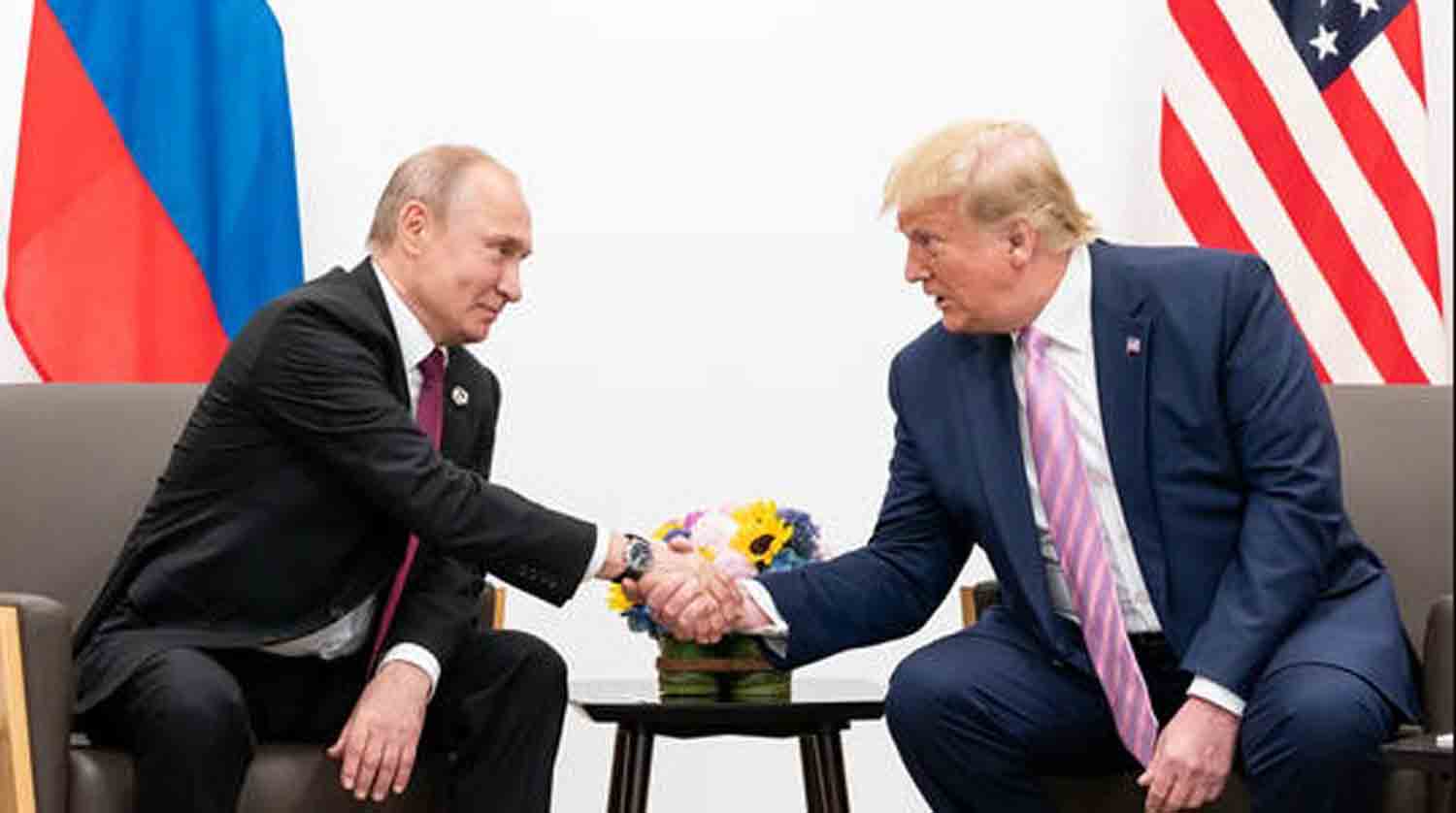
Russian President Vladimir Putin and then-US President Donald Trump on the sidelines of the G20 Summit in Osaka, Japan, June 28, 2019.

Russian President Vladimir Putin extended his congratulations to U.S. President-elect Donald Trump just hours before Trump’s inauguration in Washington, expressing his willingness to engage in discussions with the incoming U.S. administration regarding Ukraine and nuclear arms.

During a televised meeting of Russia’s Security Council, Putin emphasized his desire for a sustainable peace in Ukraine rather than a temporary ceasefire. He remarked, “We acknowledge the statements from the newly elected president of the United States and his team regarding their intention to re-establish direct communication with Russia.” He also noted Trump’s commitment to taking measures to avert a potential World War Three, stating, “We certainly appreciate this perspective and congratulate the newly elected president of the United States on assuming office.”

Putin’s remarks indicate a cautious optimism in Russia that Trump might initiate efforts to mend the strained relations between Washington and Moscow, which have deteriorated to their lowest point since the 1962 Cuban missile crisis due to the ongoing conflict in Ukraine. However, many Russian officials publicly acknowledge that such optimism may be unfounded.

Typically holding Security Council meetings on Fridays, Putin mentioned that Russia is prepared to discuss a variety of critical international issues with the new administration, including nuclear arms, security, and the situation in Ukraine. While Trump has vowed to quickly resolve the conflict in Ukraine, he has not provided specific details on how he intends to achieve this. Putin has previously indicated his readiness for negotiations, but he insists that Russia’s territorial acquisitions and claims must be recognized, a condition that the Ukrainian leadership has firmly rejected as an unacceptable concession.

In addressing the situation in Ukraine, I want to stress that the objective should not be merely a temporary ceasefire or a pause that permits forces to regroup and rearm. Instead, we must aim for a sustainable peace that honors the legitimate interests of all individuals and communities in the region, as stated by Putin on Monday.

He also expressed Moscow’s willingness to engage in discussions regarding nuclear arms control and broader security matters.

The New Strategic Arms Reduction Treaty, known as New START, which limits the number of strategic nuclear warheads that the United States and Russia can maintain, along with the deployment of land- and submarine-based missiles and bombers, is set to expire on February 5, 2026. This treaty represents the last significant framework for nuclear arms control between the two largest nuclear powers in the world.

Ukraine has arrested two generals for alleged negligence in defending against the Russian offensive

0
Ukrainian service personnel use searchlights as they search for drones in the sky over the city during a Russian drone strike, amid Russia's attack on Ukraine, in Kyiv, Ukraine.

Ukraine’s State Investigation Bureau (DBR) announced on Monday the detention of two generals and a colonel who are suspected of negligence in their failure to adequately defend against a Russian offensive in the Kharkiv region last year.

In a statement released on Telegram, the DBR identified the detained individuals as the former chief commander of the Kharkiv frontline, a former brigade commander, and a former infantry battalion commander, although their names were not disclosed.

In May 2024, Russia initiated an incursion into Ukraine’s northern Kharkiv region, making significant territorial gains within the first few days of the assault. This aggressive move prompted a swift response from Ukraine, leading President Volodymyr Zelenskiy to cancel planned international trips and dismiss several military leaders as he addressed the escalating situation. Ultimately, Ukraine’s forces managed to halt the Russian advance approximately 25 kilometers from Kharkiv, the country’s second-largest city, which had previously been targeted by Russia at the onset of its invasion in 2022 before retreating.

The DBR indicated that it had collaborated with Ukraine’s domestic intelligence agency on this matter, receiving support from the defense ministry and military command.

Trump team preparing early talks with Putin – CNN

0
Russian President Vladimir Putin attends a press conference

Donald Trump’s team is organizing a phone call with Russian President Vladimir Putin, which may take place shortly after the president-elect’s inauguration, according to a report by CNN on Sunday, citing sources.

Individuals familiar with the situation told the network that the main purpose of the call would be to discuss the possibility of an in-person meeting in the upcoming months, aimed at finding solutions to the Ukraine conflict.

Reports indicate that officials within Trump’s national security team began preparations for the call several weeks ago, although it remains uncertain whether a specific date has been set. CNN highlighted that this phone call would represent a notable departure from President Joe Biden’s strategy, as he has not engaged in direct communication with Putin for nearly three years.

Earlier this month, Trump expressed his desire to speak with Putin, mentioning that the Russian leader is eager to meet and that arrangements are being made. The president-elect, who has criticized US support for Ukraine, has consistently promised to work towards a swift resolution of the conflict.

Kremlin spokesperson Dmitry Peskov stated that Putin is willing to engage in negotiations with the US president without any preconditions. However, he emphasized that no significant preparations for talks have been made, suggesting that it would be prudent to wait until Trump is officially in office.

Yury Ushakov, a foreign policy aide to Putin, commented on the possibility of negotiations regarding Ukraine, indicating that the new US president would likely be the one to start discussions. He stated, “We are calmly waiting for Trump’s team to take over. After that, let’s see what happens.”

Recent reports from US media have suggested that Trump’s team is considering a peace initiative for Ukraine, which may involve a ceasefire along existing front lines and the establishment of a 1,300-km (800-mile) demilitarized zone monitored by European forces. Furthermore, Ukraine would agree to postpone its NATO membership aspirations for a minimum of 20 years.

Russian Foreign Minister Sergey Lavrov has expressed dissatisfaction with certain aspects of the proposed plan, particularly regarding the delay of Ukraine’s NATO ambitions and the introduction of a Western peacekeeping force in the region.

Moscow has firmly rejected the idea of freezing the conflict, asserting that it must fulfill all objectives of its military operation, which include ensuring Ukraine’s permanent neutrality, demilitarization, and denazification. Russia has also indicated that it would promptly declare a ceasefire if Kiev commences the withdrawal from territories it claims, including Donetsk, Lugansk, Kherson, and Zaporozhye.

US is considering a Korean-style armistice for Ukraine

0
Soldiers walk among debris as civilians evacuate Pokrovsk in eastern Ukraine.

US officials have privately indicated that Russia is likely to retain approximately 20% of the territory currently claimed by Ukraine in any potential peace agreement, as reported by the New York Times on Saturday. This perspective is shared by both the administration of outgoing President Joe Biden and the team of President-elect Donald Trump.

The potential ceasefire could mirror the armistice established at the conclusion of the Korean War in 1953, which effectively halted hostilities without resulting in a formal peace treaty, according to the NYT. Additionally, any agreement would need to incorporate some form of security assurances.

The proposal being evaluated reportedly includes a ceasefire overseen by European peacekeeping forces, with British, German, and French troops expected to take a leading role.

However, two senior officials from the Biden administration expressed to the outlet that a critical factor will be whether the Trump administration continues to supply intelligence and military support to Ukraine while permitting Kiev to conduct operations within Russia.

This report follows comments from Michael Waltz, Trump’s national security adviser, who earlier this month acknowledged that the conflict should be resolved through diplomatic means, stating it is unrealistic to expect the complete expulsion of Russian forces from all Ukrainian territory, including Crimea. He noted that Trump has recognized this reality, calling it a significant advancement in global acknowledgment of the situation.

Russian Foreign Minister Sergey Lavrov has expressed his approval of the change in tone from the incoming U.S. administration. “We appreciate that the new administration has begun to acknowledge the realities on the ground more frequently,” he stated last week.

Lavrov’s remarks resonate with those made by Ukrainian President Vladimir Zelensky in December, who acknowledged that Ukraine lacks the military capability to reclaim all the territories it claims. Nevertheless, he dismissed the possibility of any formal territorial concessions, emphasizing that Kyiv must pursue diplomatic solutions to achieve its objectives.

Zelensky has also maintained that Ukraine should ultimately seek NATO membership to guarantee its security, a position that is unacceptable to Russia, which perceives the eastward expansion of the U.S.-led alliance as a significant threat to its national security.

Moscow has firmly rejected any notion of freezing the conflict, asserting that all objectives of its military campaign in Ukraine—including the country’s neutrality, demilitarization, and denazification—must be realized. Kremlin spokesperson Dmitry Peskov has reiterated that Russia will not relinquish any of the territories it has recently claimed, specifically referring to the regions of Donetsk, Lugansk, Kherson, and Zaporozhye.

Myanmar military and a minority armed group have agreed to a ceasefire, as stated by China

0
Myanmar's junta chief Senior General Min Aung Hlaing presides over an army parade on Armed Forces Day in Naypyitaw, Myanmar.

The Myanmar military and the Myanmar National Democratic Alliance Army (MNDAA) have reached a formal ceasefire agreement that commenced on Saturday, as announced by China’s foreign ministry, effectively halting hostilities along the border of the two nations.

Discussions took place in Kunming, a city in southwestern China, where both parties expressed gratitude to Beijing for its role in facilitating peace, according to ministry spokesperson Mao Ning during a regular press briefing on Monday.

Mao emphasized that de-escalating tensions in northern Myanmar serves the mutual interests of all stakeholders within Myanmar and neighboring countries, contributing to the security, stability, and development of the border regions between China and Myanmar. She affirmed that China will persist in its efforts to foster peace and dialogue while offering support to the peace process in northern Myanmar.

The MNDAA is among several ethnic minority armed groups engaged in efforts to resist military control over what they regard as their territories. It is part of the Three Brotherhood Alliance, which includes the Ta’ang National Liberation Army and the Arakan Army, and has been actively opposing the military junta since late October 2023, capturing significant areas near the Chinese border.

Comprising ethnic Chinese members, the MNDAA reported last July that it had gained control of a key military base close to the border with China. Analysts indicate that China is concerned about the progress of anti-junta forces, which have driven the military out of crucial border regions and are advancing toward the central city of Mandalay.

In February 2021, the military took control from Myanmar’s civilian government, leading the nation into a state of crisis. China is concerned that instability along its extensive 2,000-kilometer border with Myanmar could threaten its investments and trade interests. Earlier, in January 2024, Beijing facilitated a ceasefire agreement in the northern border regions; however, this agreement collapsed a few months thereafter.

French Prime Minister Bayrou asserts that France and Europe need to confront Trump

0
French Prime Minister Francois Bayrou leaves following the weekly cabinet meeting at the Elysee Palace in Paris, France.

French Prime Minister Francois Bayrou cautioned on Monday that France and Europe must confront U.S. President-elect Donald Trump and his policies, or risk being “overwhelmed.”

“The United States has chosen to pursue a highly aggressive form of politics, utilizing the dollar, its industrial strategy, and its ability to attract global investments and research,” Bayrou stated during a New Year’s address in Pau.

“If we remain passive, our outcome is clear—we will be dominated, overwhelmed, and marginalized,” he emphasized. “The manner in which we respond is a choice that rests entirely with the French populace and Europe, as it is evident that we cannot act effectively without Europe,” Bayrou concluded.

Pope Francis has extended his prayers to Donald Trump, wishing him wisdom and strength

0
Pope Francis, with a large bruise on his chin, speaks during the Immaculate Conception celebration prayer near the Spanish Steps in Rome, Italy.

Pope Francis extended his best wishes to U.S. President-elect Donald Trump on Monday through a customary message ahead of the presidential inauguration ceremony in Washington. Despite having previously voiced strong opposition to Trump’s anti-immigrant stance, the pontiff expressed his hope that God would bestow upon Trump “wisdom, strength, and protection” as he resumes the presidency.

“It is my aspiration that under your guidance, the American populace will thrive and continually work towards establishing a more equitable society, free from hatred, discrimination, and exclusion,” the pope remarked.

Since becoming the leader of the 1.4 billion-member Catholic Church in 2013, Francis has employed notably strong rhetoric in his critiques of Trump. His congratulatory message followed a day after he labeled Trump’s anticipated plan to significantly ramp up immigration enforcement across the U.S. as a “disgrace.” In an interview with Italian television on Sunday, the pontiff stated that the plan would unjustly burden migrants who are already vulnerable.

Officials from the incoming Trump administration indicated on Saturday that the president-elect was reconsidering his plans for immigration raids in Chicago, in light of recent reports. During the 2016 election campaign, Francis had previously remarked that Trump was “not Christian” due to his immigration policies.

Russian disinformation is aimed at influencing the German election campaign, according to a think tank

0
An election campaign poster depicting Olaf Scholz, the top candidate of Social Democratic Party of Germany (SPD) for the upcoming 2025 general election, is pictured in Berlin, Germany.

A Russian disinformation initiative is aiming to bolster the far-right Alternative for Germany (AfD), weaken mainstream German political parties, and instill economic fears as the country approaches its election on February 23, according to findings from a think tank.

CeMAS, a German think tank, reported that it has identified hundreds of German-language posts on the social media platform X over the past month, which exhibit characteristics typical of Russia‘s Doppelgaenger disinformation strategy aimed at the West, a tactic previously condemned by German, U.S., and French authorities.

This campaign emerged following Russia’s invasion of Ukraine in 2022, with the goal of eroding Western support for Ukraine. It disseminates links to fabricated Western news sources that propagate false information, as highlighted in a German foreign ministry report released last June.

Russia has consistently refuted any involvement in disinformation efforts targeting the West. In recent weeks, the posts identified on X have attributed Germany’s economic challenges to the Greens party, criticized Chancellor Olaf Scholz for his backing of Ukraine, portrayed conservative parties as unreliable, and expressed support for the AfD, according to CeMAS.

The tracked posts have linked to fake German news websites or to articles on legitimate sites that align with their narrative, as well as sharing images. These posts, amplified by networks of fake accounts, have garnered over 2.8 million views, as reported by CeMAS.

This report emerges just a month before an election where Germany’s main opposition conservatives are anticipated to secure a victory. However, the AfD’s strong polling in second place could complicate coalition-building and governance if it manages to achieve a blocking minority.

MUSK FACTOR

In December, the anti-immigration party AfD received the backing of X owner Elon Musk, who also conducted a live discussion with the party’s chancellor candidate, Alice Weidel, on his platform this month. A recent survey by pollster INSA indicated that the conservatives are at 29%, while the AfD has surged to 21%, doubling its performance from the 2021 election. The Social Democrats, led by Scholz, are in third place with 16%, followed by the Greens at 13%.

In November, Germany’s domestic intelligence agency (BfV) announced the formation of a task force aimed at preventing any foreign state interference in the federal election. Germany stands as Ukraine’s second-largest financial and military supporter, working to assist the nation in resisting Russia’s extensive invasion that commenced nearly three years ago. According to the BfV, this support has led to a notable increase in “aggressive behavior” from Moscow towards Germany and its allies in Ukraine.

China is experiencing a mix of optimism and anxiety with Trump’s return to the White House

0

Chinese officials and the general public are feeling a mix of hope and apprehension as Donald Trump prepares to take office again, with a strong desire to prevent a recurrence of the contentious trade war that strained relations between the two economic giants during his previous administration.

In discussions with Tesla CEO Elon Musk and other representatives from the U.S. business sector in Washington prior to Trump’s inauguration, Chinese Vice President Han Zheng expressed his aspiration for American companies to “establish a presence” in China and contribute to the stabilization of bilateral ties, as reported by the official Xinhua news agency.

During Trump’s last presidency, he imposed tariffs on over $300 billion worth of Chinese imports. Recently, he has indicated plans to introduce additional tariffs of at least 10% on top of existing ones on Chinese products, a strategy that could further impact China as it grapples with economic challenges.

Simultaneously, the president-elect made a seemingly diplomatic gesture by inviting Chinese President Xi Jinping to his inauguration on Monday. Xi opted to send Han as his representative, a sign of goodwill considering that China was only represented by its ambassador at the last two U.S. presidential inaugurations.

In their meeting on Sunday, Han conveyed to Musk, who has been appointed by Trump to lead an initiative aimed at enhancing U.S. government efficiency, that he “welcomed Tesla and other American companies” to partake in the advantages of China’s growth and to foster China-U.S. relations.

The vice president’s engagement with U.S. business leaders was led by FedEx CEO Rajesh Subramaniam and included executives from eight different American firms across various sectors such as technology, finance, and logistics. An American executive present noted that the meeting exceeded its scheduled time and was characterized by a friendly atmosphere.

Michael Hart, president of the American Chamber of Commerce in China, stated to Reuters in Beijing that Han Zheng, due to his experience in Shanghai, is perceived as someone who comprehends the concerns of the foreign business sector and has a solid grasp of the economy. He described this understanding as a beneficial aspect of Han’s profile.

Following a phone conversation on Friday, both Xi and Trump expressed optimism, with Trump labeling the discussion as “very good” and Xi indicating that they both anticipated a positive beginning for U.S.-China relations.

During a regular press briefing on Monday, Chinese foreign ministry spokesperson Mao Ning mentioned a “new starting point” in the relationship between China and the U.S. On the same day, stock prices in mainland China and Hong Kong experienced an increase.

A NEW TRADE WAR

However, despite the apparent camaraderie between the two nations, a sense of familiarity with past tensions remains among those who recall how swiftly relations soured during Trump’s initial term.

Dominic Desmarais, chief solutions officer at Lira Solutions, a company based in Suzhou that links Chinese manufacturers with international buyers of various products, remarked, “Until the situation clarifies, all our U.S. clients will need to pay in advance.”

He expressed concern about the potential for significant tariffs, stating, “If Donald Trump imposes a 40% duty on Chinese imports, I want to avoid being left with custom-made items for clients that may no longer be viable.” He noted that similar issues arose seven to eight years ago when Trump enacted a 25% tariff on a large portion of goods from China.

A new trade war would leave China in a more precarious position than it was when Trump initially imposed tariffs in 2018, as the country faces a severe property crisis, substantial local government debt, and a youth unemployment rate of 16%, among other pressing issues.

The gravity of China’s economic challenges is evident in the capital. A 36-year-old Beijing resident, who preferred to be identified by his surname Wang, remarked, “From what I observe, China’s economy is struggling right now, largely due to the pandemic’s effects, and the unpredictable nature of Trump certainly complicates our situation.” He added, “The pressure on us remains significant.”

The repercussions of the previous trade war are still impacting the world’s second-largest economy, with foreign companies hesitating to invest and opting to diversify their supply chains by channeling funds into alternative markets like Vietnam. Christopher Yeo, a finance director at a Singapore-based digital infrastructure firm in Beijing, anticipates that Trump’s tariff threats will continue to hinder cross-border investment and financing from the U.S. and other Western-aligned countries.

His company currently relies on funding from non-U.S. investors, so he does not foresee Trump’s potential return to the presidency affecting his operations in China. “However, I believe U.S. institutional investors will likely keep reducing their exposure to Chinese markets,” he noted. “There used to be several U.S. firms involved in Chinese infrastructure, but that presence has vanished.”

Hamas has released hostages, while Israel has freed Palestinian prisoners on the first day of the ceasefire

0
A freed Palestinian prisoner reacts from inside a bus that arrived with them after their release from an Israeli jail as part of a hostages-prisoners swap and a ceasefire deal in Gaza between Hamas and Israel, in Ramallah, in the Israeli-occupied West Bank.

Hamas released three Israeli hostages while Israel freed 90 Palestinian prisoners on Sunday, marking the first day of a ceasefire that has paused a 15-month conflict severely impacting the Gaza Strip and escalating tensions in the Middle East.

The ceasefire enabled Palestinians to return to their devastated neighborhoods to start the rebuilding process, as relief trucks brought essential supplies. In other areas of Gaza, crowds celebrated the return of Hamas fighters who had been in hiding.

Fireworks lit up the sky as buses carrying the released Palestinian prisoners arrived in Ramallah on the West Bank, where thousands gathered to greet them. Among those released were 69 women and 21 teenage boys from the West Bank and Jerusalem, as reported by Hamas.

In Tel Aviv, hundreds of Israelis expressed their emotions in a square outside the defense headquarters, watching a live broadcast from Gaza that showed three female hostages entering a Red Cross vehicle, escorted by Hamas fighters.

The Israeli military confirmed that Romi Gonen, Doron Steinbrecher, and Emily Damari had been reunited with their mothers, releasing a video that indicated they were in good health. Damari, who lost two fingers during her abduction, smiled as she embraced her mother while displaying her bandaged hand.

“I would like you to convey this message: Romi, Doron, and Emily – an entire nation welcomes you back. Welcome home,” Prime Minister Benjamin Netanyahu told a commander via phone.

The ceasefire agreement stipulates a halt to hostilities, the delivery of aid to Gaza, and the release of 33 of the nearly 100 remaining Israeli and foreign hostages over the first six weeks, in exchange for nearly 2,000 Palestinian prisoners held in Israeli facilities. Many of the hostages are feared to be deceased. In northern Gaza, Palestinians navigated through a landscape of destruction, marked by rubble and twisted metal from the war’s most intense clashes.

The recent last-minute offensive resulted in the deaths of 13 individuals, according to Palestinian health officials. Israel attributed the delay in receiving the names of hostages to be released to Hamas, asserting that it targeted terrorists in response. Hamas, on the other hand, claimed that the delay was due to technical issues.

“Today, the guns in Gaza have fallen silent,” stated U.S. President Joe Biden on his final full day in office, expressing relief over a ceasefire that had been elusive for U.S. diplomacy for over a year. “This moment has been achieved due to the pressure Israel exerted on Hamas, with support from the United States.”

For Hamas, the ceasefire presented a chance to step back into the public eye after 15 months of seclusion. Hamas police, clad in blue uniforms, quickly took to the streets in certain areas, while armed militants paraded through the southern city of Khan Younis, where onlookers shouted, “Greetings to Al-Qassam Brigades,” referring to the group’s military wing.

“All resistance factions remain steadfast despite Netanyahu,” one fighter remarked to Reuters.

TRUMP AIDE: ‘HAMAS WILL NEVER GOVERN GAZA’

Currently, there is no comprehensive strategy for governing Gaza post-conflict, let alone for its reconstruction. The potential return of Hamas would challenge Israel’s resolve, as the nation has indicated it will resume military action unless the militant organization is entirely dismantled.

Hardline National Security Minister Itamar Ben-Gvir resigned from the cabinet in protest of the ceasefire, although his party has stated it will not attempt to topple Netanyahu’s administration. Meanwhile, another prominent hardliner, Finance Minister Bezalel Smotrich, remains in the government but has indicated he will resign if the conflict concludes without the complete destruction of Hamas.

The ceasefire came into effect just before the inauguration of U.S. President-elect Donald Trump on Monday. Mike Waltz, who is set to be Trump’s national security adviser, stated that should Hamas violate the agreement, the United States would back Israel “in taking necessary actions.” He emphasized, “Hamas will never govern Gaza. That is completely unacceptable.”

In the devastated streets of Gaza City, crowds were already gathering, waving Palestinian flags and capturing the moment on their mobile devices. Numerous carts filled with personal belongings moved along a road littered with rubble and debris.

Ahmed Abu Ayham, a 40-year-old resident of Gaza City, expressed that although the ceasefire might have saved lives, the extensive losses and destruction left little room for celebration. “We are in pain, deep pain, and it is time to embrace one another and weep,” he remarked.

Victorious Trump back to the White House, ushering in a new period of turmoil

0
U.S. President-elect Donald Trump attends a wreath laying ceremony at Arlington National Cemetery ahead of the presidential inauguration in Arlington, Virginia, U.S.

Donald Trump is set to be inaugurated as the President of the United States on Monday, marking the beginning of another tumultuous four-year term characterized by his commitment to expand executive authority, deport millions of immigrants, seek revenge against political adversaries, and redefine America’s role on the global stage.

This inauguration signifies a remarkable resurgence for a political maverick who has weathered two impeachment trials, a felony conviction, two assassination attempts, and an indictment related to his efforts to overturn the results of the 2020 election.

The ceremony will occur at noon (1700 GMT) within the Rotunda of the U.S. Capitol, four years after a violent breach by Trump supporters aimed at reversing the Republican’s defeat to Democrat Joe Biden. For the first time in four decades, the swearing-in will be held indoors due to severe cold weather.

Trump, the first U.S. president since the 19th century to secure a second term after losing the presidency, has pledged to grant pardons “on Day One” to many of the over 1,500 individuals charged in connection with the January 6, 2021, insurrection.

This commitment is part of a series of executive actions related to immigration, energy, and tariffs that Trump plans to implement immediately after taking the oath of office. During a rally in Washington on Sunday, he promised to enforce stringent immigration policies on his first day.

As he did in 2017, Trump returns to office as a disruptive and chaotic force, determined to overhaul the federal government while expressing significant skepticism towards the U.S.-led alliances that have defined global politics since World War II.

The former president comes back to Washington with renewed confidence after winning the national popular vote against Vice President Kamala Harris by over 2 million votes, driven by widespread voter dissatisfaction with ongoing inflation, although he still fell short of achieving a 50% majority. In 2016, Trump won the presidency through the Electoral College despite receiving nearly 3 million fewer votes than Hillary Clinton.

Jeremi Suri, a presidential historian at the University of Texas at Austin, draws parallels between the current period and the late 19th century, when Grover Cleveland became the only other president to serve non-consecutive terms. He notes that, similar to today, that era was marked by significant upheaval, characterized by industrial advancements that reshaped the economy, a surge in wealth inequality, and a peak in the proportion of immigrant Americans.

“We are witnessing a fundamentally transformed economy and a country that is different in terms of its racial, gender, and social composition, and we are grappling with the implications of these changes,” he remarked. “This is an existential moment.”

Trump will benefit from Republican majorities in both houses of Congress, which have largely eliminated any dissent within the party. His advisors have proposed plans to replace nonpartisan bureaucrats with loyalists chosen for their allegiance.

Even prior to his inauguration, Trump established a competing power base shortly after his election victory, engaging with world leaders and raising eyebrows by suggesting the possibility of seizing the Panama Canal, claiming Greenland from NATO ally Denmark, and imposing tariffs on major U.S. trading partners.

His impact was evident in the recent announcement of a ceasefire deal between Israel and Hamas. Trump, whose envoy participated in the negotiations in Qatar, had warned of severe consequences if Hamas failed to release hostages before his inauguration.

During his campaign, Trump asserted he would resolve the Russia-Ukraine conflict on his first day in office, although his advisors have conceded that any peace agreement will require several months to achieve. Unlike in 2017, when he appointed many traditionalists to key positions, Trump has now prioritized loyalty over experience in selecting a range of controversial cabinet nominees, some of whom have been vocal critics of the very agencies they are set to lead.

The support of Elon Musk, the world’s wealthiest individual, is notable, as he invested over $250 million to assist in Trump’s election efforts. Other prominent tech billionaires, including Jeff Bezos of Amazon, Mark Zuckerberg of Meta, Sundar Pichai of Alphabet, and Tim Cook of Apple, are also expected to attend Monday’s ceremony alongside Musk, as reported by Reuters and various media outlets.

On Sunday, Trump announced plans to visit Los Angeles County on Friday, which has been severely affected by wildfires.

‘AMERICAN CARNAGE’

The inauguration will take place under stringent security measures, following a campaign marked by a rise in political violence, including two assassination attempts against Trump, one of which involved a bullet narrowly missing him. Federal authorities remain vigilant after a New Year’s Day incident in New Orleans, where a U.S. Army veteran, allegedly motivated by the Islamic State, drove a truck into a crowd, resulting in 14 fatalities. The FBI has issued warnings regarding the possibility of similar attacks.

Eight years prior, Trump’s inaugural address was characterized by a grim outlook, as he pledged to eradicate the “American carnage” associated with crime-ridden urban areas and lax border security, contrasting sharply with the optimistic tone typically adopted by newly elected presidents. Foreign governments will be closely analyzing the tone of Trump’s speech on Monday, given the inflammatory rhetoric that characterized his campaign.

The traditional parade along Pennsylvania Avenue, which typically passes by the White House, will now be held indoors at the Capital One Arena, the same venue where Trump hosted his victory rally on Sunday. In the evening, Trump is scheduled to attend three inaugural balls.

As part of the day’s festivities, Trump will commence the signing of what could be numerous executive orders. Some of these actions are expected to tighten immigration policies by designating drug cartels as “foreign terrorist organizations” and declaring a state of emergency at the U.S.-Mexico border, according to a source familiar with the preparations. Additional orders may focus on dismantling Biden’s environmental regulations and withdrawing the U.S. from the Paris climate agreement, as reported by various sources.

Many of these executive orders are anticipated to encounter legal challenges. Notably, Trump will be the first individual with felony convictions to assume the presidency, following a New York jury’s verdict that found him guilty of falsifying business records related to hush money payments made to an adult film actress. He avoided penalties at sentencing, partly due to the judge’s recognition of the challenges in imposing sanctions on an incoming president.

Winning the election also effectively shielded Trump from two federal indictments concerning efforts to overturn the 2020 election and the retention of classified documents, in line with a Justice Department policy that prohibits prosecuting presidents while they are in office. A report released last week by Special Counsel Jack Smith indicated that sufficient evidence had been collected to secure a conviction against Trump in the election-related case had it proceeded to trial.

Which international leaders will be present at Trump’s inauguration, and which ones will not be attending?

0
President Donald Trump waves after taking the oath of office for his first term on January 27, 2017.

United States President-elect Donald Trump is scheduled to be inaugurated for a second term on Monday, January 20, marking his position as the 47th president of the United States.

Both Trump and Vice President-elect JD Vance will take the oath of office, commencing a new administration that will feature a day filled with celebrations, including musical performances and a parade.

In a departure from traditional inaugurations, this event will see the attendance of numerous foreign leaders, including both Trump’s allies and some of his political opponents. Invitations have been extended to at least seven current heads of state and two former leaders, with an estimated 500,000 guests anticipated, according to Reuters.

Here’s an overview of the guest list, highlighting who is included, who is absent, and the reasons behind this unconventional selection:

What distinguishes this inauguration?

President-elect Trump is deviating from established US traditions for this occasion. Typically, presidential inaugurations are primarily domestic events, where the president and vice president take their oaths in the presence of US officials, former heads of state, and other American dignitaries on the steps of the US Capitol. The public is permitted to observe from the surrounding areas.

In contrast, this inauguration will feature an inaugural address, a parade, musical performances, and balls, while also embracing an international dimension. Nearly a dozen world leaders, predominantly conservative and right-leaning, have been invited. It is uncommon for foreign leaders to attend US presidential inaugurations; typically, representatives such as ambassadors or foreign ministers fulfill this role.

Who has received invitations?

Several heads of state, particularly right-wing or populist leaders aligned with Trump, have been invited, alongside some of his political rivals. Notably, the following leaders are confirmed:

Argentina’s President Javier Milei: Milei has announced his attendance. Trump has previously praised the far-right leader, stating he can “make Argentina great again,” and welcomed him at his Mar-a-Lago estate in Florida last December.

Chinese President Xi Jinping: Trump extended an invitation to Xi for the December ceremony, which his representatives interpret as a sign of his willingness to engage with the Chinese leader, despite the ongoing trade tensions. However, Xi will not be present; instead, Vice President Han Zheng will attend.

Italy’s Prime Minister Giorgia Meloni: Meloni, representing the far-right Brothers of Italy party, visited Mar-a-Lago in January. Her office has indicated that she is likely to attend the ceremony if her schedule allows.

Hungary’s Prime Minister Viktor Orban: The populist leader and close ally of Trump has expressed confidence that the president-elect will bring an end to Russia’s conflict in Ukraine. However, he will be unable to attend due to a scheduled state address, as reported by local media.

Indian Prime Minister Narendra Modi: Modi and Trump have maintained a strong rapport since Trump’s first term. Following Trump’s election win in December, Modi was among the first to reach out and congratulate him. Although Modi will not be attending, Foreign Minister Subrahmanyam Jaishankar will represent India at the event.

Ecuador’s President Daniel Noboa: Noboa celebrated Trump’s victory in December as a win for Latin America as well. His office has confirmed that he will temporarily suspend his re-election campaign to attend the inauguration in Washington.

El Salvador’s President Nayib Bukele has yet to confirm his attendance. Notably, Donald Trump Jr., a friend of Bukele, attended his inauguration in San Salvador in July 2024.

Former Brazilian President Jair Bolsonaro, often referred to as the “Trump of the Tropics,” has received an invitation but will not be present due to a travel ban. His passport was seized by Brazil’s Supreme Court amid ongoing investigations, including alleged efforts to contest the results of the 2022 general election, which he lost.

Former Polish Prime Minister Mateusz Morawiecki, who has recently taken the helm of the right-wing European Conservatives and Reformists party in the EU Parliament, is confirmed to attend.

Who has not received an invitation?

UK Prime Minister Keir Starmer‘s office confirmed on Thursday that he has not been invited. In contrast, Nigel Farage, the far-right politician from the Reform UK party, is invited and will be in attendance.

Ursula von der Leyen, the head of the European Commission, along with many members of the European Union and NATO, which predominantly feature centrist governments, have not been invited. Additionally, Germany’s President Olaf Scholz, who oversees the EU’s largest economy, has also been overlooked. However, an invitation has been sent to Alice Weidel, the leader of the far-right Alternative for Germany party (AfD), who will be represented by co-leader Tino Chrupalla.

Santiago Abascal, the leader of Spain’s right-wing Vox Party, and Andre Ventura from Portugal’s populist Chega party are set to attend the event.

French President Emmanuel Macron will not be in attendance, despite his amicable relationship with Trump. Instead, Eric Zemmour, a prominent figure in the French far-right and leader of the Reconquest party, will represent France.

Which other nations hold similarly grand swearing-in ceremonies?

While each country has its own customs, inaugurations are generally considered domestic events, often featuring leaders from neighboring nations.

In India, swearing-in ceremonies are increasingly elaborate. For instance, during President Narendra Modi’s third inauguration last July, the guest list included 9,000 attendees, featuring several heads of state from nearby Indian Ocean countries, such as Sri Lanka’s Ranil Wickremesinghe and the recently ousted Bangladeshi president, Sheikh Hasina.

Likewise, Turkey’s President Recep Tayyip Erdogan, who was sworn in for a third consecutive term in June 2023, welcomed 34 world leaders to his opulent celebrations. Notable attendees included South African President Cyril Ramaphosa, Venezuelan President Nicolas Maduro, and Hungary’s Prime Minister Viktor Orban.

Gaza ceasefire agreement comes into effect, bringing an end to hostilities following a postponement

0
Smoke rises after an explosion in northern Gaza, before a ceasefire deal between Israel and Hamas goes into effect, as seen from Israel.

A ceasefire agreement between Israel and Hamas in the Gaza Strip came into effect on Sunday following a nearly three-hour delay, temporarily halting a 15-month conflict that has caused widespread destruction and significant political shifts in the Middle East.

Residents and a medical worker in Gaza reported no new hostilities or military actions since approximately half an hour before the ceasefire was officially enacted. According to Palestinian medics, Israeli airstrikes and artillery fire resulted in the deaths of 13 Palestinians between 0630 GMT, when the ceasefire was scheduled to start, and 0915 GMT, when it was ultimately implemented.

Israel attributed the delay to Hamas’s failure to provide a list of the first three hostages to be released under the agreement. In contrast, Hamas cited “technical” reasons for the postponement, without elaborating further. A Palestinian official, who requested anonymity, indicated that the delay was due to mediators requesting 48 hours of “calm” prior to the ceasefire’s initiation, but ongoing Israeli strikes up to the deadline complicated the process of sending the list.

Two hours after the deadline, Hamas announced that it had submitted the list of names, which Israeli officials confirmed receiving. The hostages identified for release on Sunday were Romi Gonen, Doron Steinbrecher, and Emily Damari, although Israel did not immediately verify these names.

This long-awaited ceasefire agreement has the potential to bring an end to the Gaza conflict, which erupted after Hamas launched an attack on Israel on October 7, 2023, resulting in approximately 1,200 fatalities, according to Israeli sources.

Israel’s military actions have devastated much of Gaza, resulting in nearly 47,000 Palestinian fatalities, as reported by health authorities in the region. The conflict has also escalated tensions across the Middle East, particularly between Israel and Iran, which supports Hamas and various anti-Israeli and anti-American militant groups.

HOSTAGE LIST, LAST-MINUTE ATTACKS

Prior to the scheduled ceasefire at 0630 GMT, Israeli Prime Minister Benjamin Netanyahu stated that the ceasefire could not commence until Hamas provided the names of the hostages to be released on Sunday.

Israeli military representatives indicated that their aircraft and artillery targeted “terror sites” in northern and central Gaza, asserting that operations would persist as long as Hamas failed to fulfill its ceasefire commitments. The Palestinian Civil Emergency Service reported that at least 13 individuals were killed in the Israeli strikes, with many others injured. Medical personnel noted that tanks were firing in the Zeitoun area of Gaza City, and both airstrikes and tank fire affected the northern town of Beit Hanoun, causing residents who had returned in anticipation of the ceasefire to flee once again.

The Israeli military clarified that an air raid siren in the Sderot area of southern Israel was a false alarm. Reports from pro-Hamas media indicated that Israeli forces had begun withdrawing from parts of Gaza’s Rafah towards the Philadelphi corridor along the Egypt-Gaza border.

The three-phase ceasefire agreement, which followed extensive negotiations facilitated by Egypt, Qatar, and the United States, was established just before the inauguration of U.S. President-elect Donald Trump on January 20. The initial phase will span six weeks, during which 33 of the remaining 98 hostages—comprising women, children, men over 50, and the ill and injured—will be released in exchange for nearly 2,000 Palestinian prisoners and detainees.

The group consists of 737 prisoners, including males, females, and teenagers, some of whom are affiliated with militant organizations and have been convicted for attacks resulting in the deaths of numerous Israelis, as well as hundreds of Palestinians from Gaza who have been detained since the onset of the conflict.

The first three individuals to be released are female hostages, with their release facilitated by the Red Cross on Sunday. In exchange for each hostage, 30 Palestinian prisoners currently held in Israeli facilities will be freed.

According to the agreement, Hamas will notify the International Committee of the Red Cross (ICRC) regarding the designated meeting point within Gaza, and the ICRC is anticipated to proceed to that location to retrieve the hostages, as reported by an official involved in the negotiations to Reuters.

IS THE WAR COMING TO AN END?

President Joe Biden’s administration collaborated closely with former President Trump’s Middle East envoy, Steve Witkoff, to finalize the agreement. As Trump’s inauguration neared, he consistently urged for a swift resolution, cautioning that there would be severe consequences if the hostages were not released.

However, the future of Gaza remains uncertain without a comprehensive plan addressing the postwar reconstruction of the region, which will necessitate substantial financial resources and years of effort. While the declared purpose of the ceasefire is to bring the conflict to a close, there is a risk it could easily fall apart.

Hamas, which has governed Gaza for nearly twenty years, has managed to endure despite the loss of its senior leadership and thousands of its fighters. Israel has pledged not to permit Hamas to regain control and has cleared significant areas within Gaza, a move widely interpreted as an effort to establish a buffer zone that would enable its forces to operate more freely against potential threats in the region.

In Israel, the potential return of hostages could alleviate some public discontent directed at Prime Minister Benjamin Netanyahu and his right-wing administration, stemming from the security lapses on October 7 that resulted in the deadliest day in the nation’s history.

MIDEAST SHOCKWAVES

The ongoing conflict has reverberated throughout the region, igniting tensions with the Iran-aligned Lebanese Hezbollah and marking Israel’s first direct confrontation with its longstanding adversary, Iran. This situation has also reshaped the dynamics of the Middle East. Iran, which invested heavily in establishing a network of militant factions surrounding Israel, has seen its “Axis of Resistance” significantly weakened, managing to inflict only minimal damage on Israel during two substantial missile strikes.

Hezbollah, once perceived as the greatest threat to Israel due to its extensive missile stockpile, has suffered the loss of key leadership figures and the destruction of much of its missile capabilities and military infrastructure.

On the diplomatic stage, Israel has encountered widespread condemnation and isolation due to the casualties and destruction in Gaza. Netanyahu is currently facing an arrest warrant from the International Criminal Court for alleged war crimes, along with separate genocide accusations at the International Court of Justice.

Israel has responded vehemently to these allegations, dismissing them as politically driven and accusing South Africa, which initiated the ICJ case, along with the supporting nations, of antisemitism.