Friday, June 5, 2026
Home Blog Page 151

Biden to meet with Vietnam’s President To Lam on Wednesday

0

U.S. President Joe Biden is set to meet with Vietnam’s President and General Secretary of the Communist Party, To Lam, on Wednesday, as announced by the White House on Sunday. This meeting, initially reported by Reuters, is anticipated to occur during the United Nations General Assembly in New York. Biden aims to strengthen ties with Vietnam, a key Southeast Asian nation and manufacturing center, as part of efforts to counterbalance the influence of Russia and China, with whom Vietnam also maintains relationships. During his visit to Vietnam last September, Biden secured agreements related to semiconductors and minerals, as well as an elevation of Hanoi’s diplomatic status to match that of China and Russia. Lam, who recently assumed the party’s leadership in early August, will be making his first trip to the U.S., where he is scheduled to address the U.N. assembly and engage with representatives from major U.S. companies, including Google and Meta, the parent company of Facebook, as previously reported by Reuters.

Prior to To Lam’s visit to the United States, Vietnamese authorities, under communist rule, reportedly released several notable activists from incarceration before their sentences were completed, according to sources cited by Reuters. Among those released is Tran Huynh Duy Thuc, who received a 16-year prison sentence in January 2010 for subversion, and environmental activist Hoang Thi Minh Hong, who was sentenced to three years for tax fraud in September of the previous year. Lam’s itinerary also features a visit to Cuba, a longstanding Communist ally of Vietnam.

Zelenskiy will present a “victory plan” during his visit to US this week

1
Ukraine's President Volodymyr Zelenskiy visits the Scranton Army Ammunition Plant in Scranton, Pennsylvania, U.S.

Ukrainian President Volodymyr Zelenskiy is set to visit the United States this week to present a “victory plan” aimed at influencing U.S. policy regarding the ongoing conflict with Russia, regardless of the outcome of the upcoming elections in November. During his trip, Zelenskiy intends to share this plan with President Joe Biden, as well as potential successors Kamala Harris and Donald Trump, while also addressing the U.N. General Assembly on Tuesday.

Zelenskiy has expressed that Western support for the plan could significantly affect Moscow, potentially creating a psychological impact that might encourage Russian President Vladimir Putin to seek a diplomatic resolution to the war. “The Victory Plan outlines immediate and tangible actions for our strategic partners to take from now until the end of December,” Zelenskiy stated to the press on Friday. He further noted that the plan would serve as a “bridge” to a second peace summit led by Ukraine, which Kyiv hopes to organize and extend an invitation to Russia later this year.

Zelenskiy has emphasized that there is no substitute for peace, stating that “no freezing of the war or any other manipulations would merely delay Russian aggression to a later stage.” However, significant differences persist between the two parties.

Zelenskiy seeks Ukraine’s membership in NATO and the European Union, as well as the complete withdrawal of Russian forces from Ukrainian territory, although he believes the latter goal can be pursued through diplomatic means. In contrast, Putin insists that peace negotiations can only commence if Ukraine relinquishes control of large areas in the east and south to Russia and abandons its NATO aspirations.

critical moment

Zelenskiy’s visit occurs at a critical moment for Ukraine. A potential victory for Trump in the upcoming presidential election on November 5 could lead to a shift in U.S. policy towards Ukraine, which heavily depends on American military and financial assistance.

During a televised debate, Trump did not clarify whether he supports Ukraine in its fight against Russia, stating that he would aim to end the conflict before assuming office if he wins. Harris accused Trump of advocating for Ukraine’s rapid and unconditional surrender.

As the election approaches, Kyiv has demonstrated its military capabilities, swiftly capturing territory during a high-risk incursion into Russia’s Kursk region on August 6, showcasing new weaponry, including a “drone missile” and ballistic systems, and executing significant drone strikes. One such strike resulted in a substantial explosion at an ammunition depot in Russia’s Tver region last Wednesday.

In response, Russia has intensified its drone and missile assaults, reportedly received Iranian ballistic missiles, increased its military personnel, sought to revise its nuclear strategy, and escalated its offensive in the east.

U.S. National Security Adviser Jake Sullivan has indicated that President Biden is keen to engage in discussions regarding President Zelenskiy’s “comprehensive strategy for success in this war” against Russia. Zelenskiy has outlined that his plan is concise and emphasizes that “all these points depend on Biden’s decision, not Putin’s.”

On Friday, he elaborated on the steps involved, which include defining Ukraine’s role within the global “security architecture,” making battlefield decisions such as the Kursk operation, enhancing Ukraine’s military capabilities, and supporting the national economy.

Ukrainian military analyst Oleksandr Kovalenko noted that Zelenskiy may advocate for long-term assurances of assistance extending into 2025 and seek a declaration ensuring continued support beyond Biden’s presidency. “This will be a very important moment. Perhaps in some ways, in a political and military-political sense, it will be a pivotal moment,” he remarked.

Zelenskiy is likely to reiterate his request for Biden to authorize long-range strikes into Russia, a move that Moscow has warned would implicate NATO members directly in the conflict and provoke a response. Ukraine aims to target military facilities up to 300 km (186 miles) within Russian territory, including airfields that host attack helicopters and warplanes responsible for launching glide bombs. However, Washington has stated that it does not view the relaxation of these restrictions as a significant shift on the battlefield.

Currently, Russia occupies 18% of Ukrainian territory and has been on the offensive since last October, achieving its most rapid advances in August. Ukraine’s foothold in Russia’s Kursk region could potentially serve as leverage in negotiations or as a safeguard against any external attempts to freeze the conflict at its current state. Nevertheless, Kyiv must maintain control of the territory while facing significant manpower challenges against a much larger adversary.

In the meantime, Russia is making strides toward the transport hub of Pokrovsk, and its capture could severely disrupt Ukrainian logistics and create new avenues for attack.

Kovalenko indicated that Russia is likely aiming to seize Pokrovsk by the end of the year. “This would enable them to intensify their influence on the information front, potentially prompting discussions about peace negotiations, albeit on their own terms,” he remarked.

Ukraine is looking to present a peace framework at a second international summit later this year, with Russia expected to be invited at the behest of other attendees. The initial summit held in Switzerland notably excluded Moscow in June, and both China and several nations from the Global South chose not to participate.

Zelenskiy asserts that his summit initiative represents the only feasible path to peace and criticized a Chinese-Brazilian proposal this month as “destructive,” as it advocates for “de-escalating the situation” and resuming direct dialogue without necessitating a Russian withdrawal.

As Ukraine braces for its most challenging winter in the ongoing 2.5-year conflict, Russian strikes have severely impacted its energy production capabilities. The government is also grappling with increasing economic difficulties and is planning its first wartime tax increases to address a funding shortfall of approximately $12.2 billion for its military this year.

Public opinion surveys present a varied landscape. As of May 2024, around 32% of Ukrainians expressed willingness to consider certain territorial concessions to conclude the war, a rise from 10% in May 2022, according to Anton Hrushetskyi, executive director of the Kyiv-based polling organization KIIS. However, most envision a scenario that would delay the return of territory rather than relinquish it permanently.

A critical requirement for any peace agreement is the assurance of robust security guarantees, such as NATO membership, he noted. “Despite the prevailing negative trends, Ukrainians remain sufficiently optimistic and aspire for a brighter future—one that they hope will be within the European Union and accompanied by adequate security assurances.”

After the attacks on Hezbollah, Iran’s Revolutionary Guards stopped using all types of communication devices

0

Iran’s elite Revolutionary Guards Corps (IRGC) has instructed all personnel to refrain from using any communication devices following a series of deadly attacks last week that resulted in the explosion of thousands of pagers and walkie-talkies utilized by its Hezbollah allies in Lebanon, according to two senior Iranian security officials who spoke to Reuters.

One official indicated that the IRGC is conducting a comprehensive operation to inspect all types of devices, extending beyond just communication tools. He noted that many of these devices were either locally manufactured or sourced from China and Russia.

Concerns regarding potential infiltration by Israeli agents, including individuals on Israel’s payroll, have prompted Iran to initiate a thorough investigation of its personnel, particularly focusing on mid and high-ranking IRGC members. This official, who requested anonymity due to the sensitive nature of the issue, stated that the investigation includes a detailed examination of their bank accounts both domestically and internationally, as well as their travel histories and those of their families.

Iran’s Foreign, Defence, and Interior Ministries were not immediately available for comment regarding the statements made by the security officials to Reuters.

In a coordinated series of attacks, pager devices detonated on Tuesday in Hezbollah’s strongholds, followed by the explosion of hundreds of walkie-talkies on Wednesday. These incidents resulted in 39 fatalities and over 3,000 injuries. Both Lebanon and Hezbollah have attributed the attacks to Israel, which has neither confirmed nor denied its involvement.

The security official refrained from disclosing specifics regarding the communication methods employed by the IRGC, which consists of 190,000 personnel. “Currently, we are utilizing end-to-end encryption in our messaging systems,” he stated.

The same official noted that there is considerable apprehension within Iran’s ruling elite. IRGC representatives have contacted Hezbollah for technical evaluations, and several instances of detonated devices have been forwarded to Tehran for analysis by Iranian specialists.

Another Iranian official indicated that the primary concern of the Islamic Republic is safeguarding the nation’s nuclear and missile facilities, especially those located underground. “However, since last year, security protocols at these sites have been significantly enhanced,” he remarked, referring to the increased measures implemented following what Iranian authorities described as Israel’s attempts to undermine Iran’s missile program in 2023, a claim that Israel has not addressed.

“There has never been such stringent security and extreme precautions in place as there are now,” he continued, implying that security has been markedly intensified beyond previous standards following the pager explosions in Lebanon.

The IRGC serves as a formidable political, military, and economic entity in Iran, closely aligned with Supreme Leader Ayatollah Ali Khamenei. Established after the 1979 Islamic Revolution to safeguard the clerical regime, it possesses its own ground forces, navy, and air force, which oversee Iran’s strategic weaponry.

Its influence extends throughout the Middle East via its overseas operations division, the Al Quds Force, which provides financial support, weaponry, technology, and training to allied factions, including Hezbollah in Lebanon, Hamas in Gaza, the Houthis in Yemen, and various militias in Iraq.

According to the first Iranian source, Iran’s military employs a variety of encrypted communication devices, such as walkie-talkies, to ensure secure communication. While the specific models and brands may differ, the military’s communication equipment is often developed domestically or obtained from a mix of local and international suppliers.

Iran’s armed forces have not utilized pagers for more than twenty years. According to reports, Tehran has established its own military-grade radio communication systems through its defense industry to reduce dependence on foreign imports, particularly in light of Western sanctions related to its nuclear program. Historically, Iran has sourced communication equipment from nations such as China, Russia, and even Japan.

For decades, Iran and Israel have been engaged in a covert conflict characterized by mutual accusations of sabotage and assassination attempts. This tension has escalated over the past year, particularly in the context of the Gaza war, which began following an attack by the Palestinian Hamas group on southern Israeli communities on October 7.

Iran and Hezbollah have accused Israel of being responsible for the assassination of Hamas leader Ismail Haniyeh in Tehran, as well as the killing of Hezbollah’s top military commander, Fuad Shukr, in Beirut just hours earlier in July. While Israel has acknowledged the killing of Shukr, it has not confirmed its involvement in Haniyeh’s death.

Iran does not acknowledge Israel’s legitimacy, with Khamenei previously describing Israel as a “cancerous tumor” that “will undoubtedly be uprooted and destroyed.” Israel perceives Iran as an existential threat and accuses it of covertly pursuing the development of nuclear weapons, a claim that Iran vehemently denies.

Ukraine’s air defense intercepted and destroyed 71 Russian drones

0

Ukraine’s air defense forces successfully intercepted 71 of the 80 attack drones launched by Russia overnight, according to a statement from Ukraine’s air force on Sunday.

Additionally, six more Russian drones were neutralized through Ukraine’s electronic warfare capabilities, as reported on the Telegram messaging platform.

The air force also noted that Russia fired two guided missiles from the occupied areas of Ukraine’s Luhansk region, although details regarding the fate of these missiles were not provided.

Israel struck Hezbollah positions in retaliation for rocket attacks originating from northern Israel

0

Israel has announced that it targeted Hezbollah positions in Lebanon in response to the militant group’s launch of numerous rockets towards northern Israel overnight.

Reports indicate that there has been damage to residential areas in Israel, with Hezbollah rockets landing deeper into Israeli territory than previously observed, reaching near the port city of Haifa. Hezbollah claimed that its actions were aimed at military installations.

The Israeli Defense Forces have stated that their operations against Hezbollah “will persist and escalate.”

This recent surge in hostilities follows last week’s assaults on Hezbollah communication devices, and on Friday, Israel reported that an airstrike in Beirut resulted in the deaths of several high-ranking Hezbollah leaders. Lebanon has reported a total of 45 fatalities, including three children.

On Sunday morning, sirens were activated in many areas of northern Israel. The Israel Defense Forces (IDF) reported that over 100 rockets were launched from across the border during the night.

Later in the morning, the IDF indicated that an additional 85 rockets were fired.

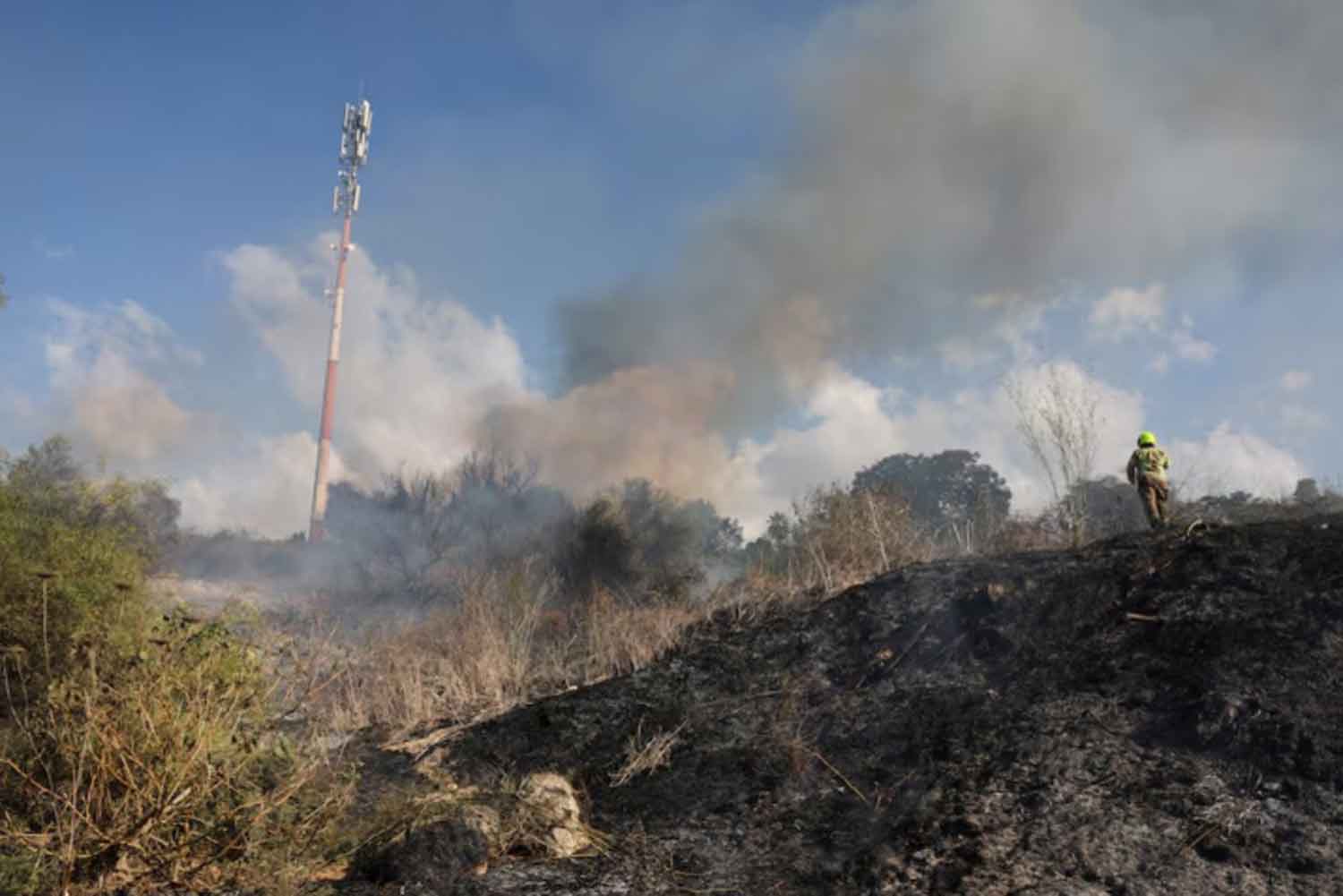
Unverified video footage circulating online appears to depict a fire in a residential neighborhood near Haifa.

On Saturday, a significant operation involving dozens of Israeli fighter jets commenced, targeting southern Lebanon after the IDF detected preparations by Hezbollah to launch attacks on Israeli territory, as stated by IDF spokesman Rear Adm Daniel Hagari.

Prior to the evening airstrikes, the IDF announced that it had successfully targeted “approximately 180 sites and thousands of [rocket] launcher barrels.”

Details regarding Israel’s actions on Sunday have not yet been disclosed.

Earlier in the week, 39 individuals lost their lives, and thousands were injured due to explosions from pagers and walkie-talkies utilized by Hezbollah, the Iran-backed group with considerable political influence, which occurred over two days in Lebanon.

Hezbollah leader Hassan Nasrallah accused Israel of instigating the attacks, asserting that it had breached “all red lines” and promised “appropriate retribution.”

Israel has not acknowledged any involvement in these incidents.

UN human rights chief Volker Türk stated that the explosions involving pagers and walkie-talkies constituted a violation of international humanitarian law.

On Sunday morning, the IDF announced an extension of restrictions affecting communities in northern Israel and certain areas of the Israeli-occupied Golan Heights, which took effect at 20:30 local time (17:30 GMT) the previous evening.

The IDF’s Home Front Command has limited gatherings to a maximum of 10 individuals in open spaces and 100 in enclosed areas. Educational activities are permitted to continue, and individuals may attend work provided there are designated protected spaces.

These restrictions are applicable to the Haifa region and areas to the north.

As concerns grow that the conflict could escalate into a full-scale war, the U.S. State Department has issued updated travel advisories for citizens currently in Lebanon.

The U.S. embassy in Beirut has urged individuals to “leave Lebanon while commercial options are still available.”

The embassy also noted that it “may not be able to assist U.S. citizens who decide to stay.”

Similarly, Jordan’s foreign ministry has advised its citizens in Lebanon to exit the country as soon as possible.

Cross-border hostilities between Israel and Hezbollah intensified on October 8, 2023, following the attack on Israel by Hamas militants from Gaza, when Hezbollah targeted Israeli positions.

Israel has recently included the repatriation of individuals displaced from northern regions due to the ongoing cross-border conflict in its war objectives.

Defence Minister Yoav Gallant stated on Thursday that Israel is entering a “new phase of the war,” focusing its efforts more intensively in the northern region.

Quad group enhances collaboration on maritime security during Biden’s farewell summit

0

Leaders from Australia, India, Japan, and the United States have intensified collaborative security measures in the economically significant waters of Asia, as outgoing U.S. President Joe Biden convened with his counterparts from the Quad alliance, formed in response to mutual apprehensions regarding China.

During a meeting with Japanese Prime Minister Fumio Kishida, Indian Prime Minister Narendra Modi, and Australian Prime Minister Anthony Albanese near his hometown in Delaware on Saturday, Biden underscored the significance of sustaining the Quad, which he regards as a hallmark of his foreign policy. He is set to conclude his presidency following the U.S. presidential election on November 5.

The leaders announced plans for joint coast guard operations in the coming year, which will involve personnel from Australia, Japan, and India collaborating aboard a U.S. coast guard vessel. Additionally, they indicated intentions to enhance military logistics cooperation, although specifics regarding the location of these coast guard activities were not disclosed.

Furthermore, the leaders expressed their commitment to expanding the Indo-Pacific Partnership for Maritime Domain Awareness, which was initiated two years prior.

While the White House asserted that the Quad summit was not aimed at any specific nation and that Beijing should not perceive the initiative as a threat, Biden commenced the summit’s group discussions with a briefing focused on China.

In a joint statement that refrained from explicitly naming the Chinese government, the leaders denounced “coercive and intimidating maneuvers in the South China Sea.” Analysts noted that these new maritime security initiatives would convey a clear message to Beijing and signify a further pivot of the Quad’s focus towards security matters, reflecting escalating concerns regarding China’s strategic intentions.

Chinese President Xi Jinping has expressed opposition to the Quad alliance, perceiving it as a strategy to encircle Beijing and escalate tensions. President Biden characterized Beijing’s approach as a change in tactics rather than a shift in overall strategy, noting that China continues to challenge the United States in the South and East China Seas, as well as in the Taiwan Strait.

Biden remarked, “We believe Xi Jinping is prioritizing domestic economic issues and seeking to stabilize China’s diplomatic relations, while also attempting to create diplomatic leeway to assertively advance China’s interests.” These comments were made during an official event broadcast.

China asserts sovereignty over nearly the entire South China Sea, which includes areas claimed by the Philippines, Brunei, Malaysia, and Vietnam. Additionally, it lays claim to territories in the East China Sea that are disputed by Japan and Taiwan. China also regards the democratically governed Taiwan as part of its territory.

The joint statement from the leaders contained strong language regarding North Korea, denouncing its ballistic missile tests and “malicious cyber activities.” A U.S. official indicated that the leaders expressed shared concerns about Russian military support for North Korea.

The Quad is intensifying efforts to deliver critical and security technologies, including a new open radio access network, to the Pacific Islands and Southeast Asia, regions experiencing significant competition with China.

Additionally, the leaders have launched a health initiative aimed at addressing cervical cancer. Lisa Curtis, an Asia policy expert at the Center for a New American Security and a former administration official, noted that India, which is not aligned with any military alliance, has been apprehensive about the perception that the Quad may be militarizing the Indo-Pacific.

“However, I believe that China’s recent maritime assertiveness may be altering India’s perspective and encouraging it to be more receptive to the concept of Quad security collaboration,” she stated.

Analysts and officials indicate that President Biden’s hosting of the Quad is part of a strategy to solidify the group’s institutional framework prior to his own departure from office, as well as that of Prime Minister Kishida, who is set to resign following a leadership contest next week, alongside upcoming elections in Australia next year.

When questioned about the group’s longevity, Biden placed his hand on Modi’s shoulder and affirmed that the Quad is here to remain. Prime Minister Albanese emphasized the significance of the Quad’s coast guard initiative, stating that the collaboration among the four nations would involve personnel potentially operating from a single vessel, thereby enhancing interoperability and cooperation, as noted in a transcript from a press conference he conducted in Philadelphia.

Prior to the summit, Albanese engaged in discussions with Biden at his residence, focusing on bilateral cooperation between the two nations in areas of defense and security, particularly concerning the Indo-Pacific region.

The Quad previously convened at the foreign minister level during Donald Trump’s administration, which is notable as he is currently campaigning against Vice President Kamala Harris in the upcoming November elections.

The initiative has received bipartisan backing, evidenced by the establishment of a congressional Quad Caucus prior to the summit, and Biden elevated the Quad to a leaders’ level in 2021.


EU’s von der Leyen has announced a loan of 35 billion euros

0

European Commission President Ursula von der Leyen announced a loan of up to 35 billion euros (approximately $39 billion) for Ukraine during her visit to Kyiv on Friday. She emphasized that this financial support is essential for the country to defend itself against Russian aggression and to endure the winter months.

At a joint press conference, Ukrainian President Zelenskiy stated that the funds would be allocated for energy, air defense systems, and military procurement, while also calling on allies to endorse a “victory plan” he has proposed by the end of the year.

During her visit, which marks the beginning of her second term leading the European Union’s executive body, von der Leyen reiterated the necessity of ongoing support from the 27-member bloc in light of the persistent Russian threats.

This loan is part of a broader initiative among the Group of Seven industrialized nations to generate funds through the utilization of frozen Russian assets, which were seized as part of sanctions imposed following the invasion of Ukraine.

Zelenskiy stated, “We will allocate the 35 billion primarily towards energy, defense, and constructing bomb shelters for children in schools, nurseries, and universities—this represents a significant shortfall for us,” while standing before the Ukrainian and EU flags. “Additionally, we will invest in weapons, focusing on those manufactured domestically, including drones and missiles. Our long-range drones are currently striking the enemy effectively and are more cost-efficient than those produced by our partners.”

Following Russia’s full-scale invasion of Ukraine in 2022, the G7 froze approximately $300 billion in Russian financial assets, committing to utilize these funds to support Ukraine, although discussions on the implementation of this mechanism took several months.

Von der Leyen remarked, “Russia continues to target your civilian energy infrastructure in a blatant and malicious manner, attempting to plunge your nation into darkness. I am here to assure you that the European Union stands ready to assist you in this challenge to maintain power.”

She announced that 160 million euros from the frozen Russian assets would be directed towards addressing Ukraine’s urgent humanitarian needs this winter.

Von der Leyen noted that Russia has incapacitated around 9 gigawatts (GW) of Ukraine’s energy infrastructure, which she described as the “power equivalent of the three Baltic states.”

She indicated that the European Union intends to restore 2.5 GW of power generation capacity and plans to boost exports to provide 2 GW of electricity to Ukraine.

Zelenskiy, who is scheduled to visit the United States next week, mentioned that he would discuss his victory strategy with U.S. President Joe Biden during their upcoming meeting. “The majority of the decisions outlined in the plan rely specifically on him (Biden). While other allies are also involved, certain aspects hinge on the goodwill and support of the United States,” he stated.

Zelenskiy has been consistently updating on the plan’s development but has revealed little about its specifics, only noting that it seeks to establish terms that are acceptable to Kyiv.

“The entire strategy is based on prompt decisions from our partners. It relies on actions that need to occur between October and December, without any delays in these processes,” he remarked.

Russian President Vladimir Putin has asserted that peace negotiations can only commence if Kyiv relinquishes significant territories in eastern and southern Ukraine to Russia and abandons its aspirations for NATO membership.

Zelenskiy has persistently called for the withdrawal of all Russian forces and the restoration of Ukraine’s post-Soviet borders.

On Friday, Russia’s foreign ministry claimed that the EU had “lost its mind” and was heading towards disaster by allocating more military aid to Ukraine.

Germany is poised to approve nearly 400 million euros in additional military assistance to Ukraine, as indicated in a finance ministry letter reviewed by Reuters.

This funding is supplementary to the approximately 8 billion euros allocated for Ukraine in the 2024 budget.

Serbia is taking steps to reinstate mandatory military service

0

On Friday, Serbia’s government ministers reached a consensus to reinstate mandatory military service, a policy that had been discontinued 14 years prior. President Aleksandar Vucic commended this decision as a significant advancement in enhancing the nation’s defense preparedness.

The government announced it would establish a working group to initiate the implementation process. According to the proposed plan, Serbian men will be required to complete 60 days of training followed by 15 days of exercises, while military service will remain optional for women.

However, some military analysts have expressed concerns regarding the initiative, arguing that it may incur high costs and that the brief duration of service will have minimal impact on the country’s defense capabilities.

Since becoming an independent nation following the tumultuous disintegration of Yugoslavia in the 1990s, Serbia’s armed forces transitioned to a fully professional model in 2011, yet they continue to face challenges related to low pay and inadequate equipment.

As a candidate for European Union membership, the Balkan nation has maintained a system of voluntary service and reserve units.

“Our goal is not to provoke anyone; rather, we aim to deter those who pose a threat to us,” Vucic stated following the signing of an agreement to reinstate conscription last week.

This decision by Serbia aligns with a similar action taken by neighboring NATO member Croatia, where the defense minister announced earlier this month that mandatory conscription, which had been suspended since 2008, will be reinstated starting January 1, 2025.

Serbia, which upholds a policy of military neutrality, became a participant in NATO’s Partnership for Peace program in 2006 and signed the Individual Partnership Action Plan in 2015, representing the highest level of cooperation for nations not seeking NATO membership. Additionally, last month, Serbia finalized a significant agreement with France’s Dassault Aviation to acquire 12 new Rafale fighter jets, indicating a shift away from its traditional ally and arms supplier, Russia.

Croatia has acquired 12 Rafale fighter jets, with six of them already arriving in the European Union member state. The two neighboring nations, which have had strained relations since the disintegration of the former Yugoslav federation in the 1990s, are currently engaged in the procurement of advanced helicopters and armaments. Some analysts interpret this as a potential arms race.

Israel kills a senior Hezbollah leader in a targeted strike in Beirut

0

On Friday, Israel conducted an airstrike in the southern suburbs of Beirut, resulting in the death of a prominent Hezbollah commander, according to security sources in Lebanon.

This incident significantly heightens the ongoing conflict between Israel and the Iran-supported group. The targeted individual was Ibrahim Aqil, Hezbollah’s operations commander and a member of its senior military leadership, as reported by both Lebanese security sources and Israeli Army Radio. Aqil was killed during a meeting with members of Hezbollah’s elite Radwan Unit, as stated by one of the security sources.

The attack resulted in eight fatalities and left 59 others injured, according to preliminary figures from Lebanon’s health ministry. This strike represents another setback for Hezbollah, which had already faced a severe blow earlier in the week when an explosion involving pagers and walkie-talkies used by its members led to 37 deaths and thousands of injuries.

This earlier incident is widely attributed to Israeli actions, although Israel has not confirmed or denied its involvement. Civil defense teams are currently engaged in rescue operations, searching for individuals trapped under the debris of two buildings affected by Friday’s airstrike.

The Israeli military confirmed that it executed a “targeted strike” in Beirut but did not provide additional details. This marks the second instance in under two months where Israel has targeted a senior Hezbollah military figure in Beirut, following the airstrike that killed Fuad Shukr, the group’s top military commander, in July.

Aqil is subject to a $7 million bounty placed by the United States due to his involvement in the fatal bombing of Marines in Lebanon in 1983, as stated on the U.S. State Department’s website.

Following the strike in Beirut, the Israeli military reported that warning sirens were activated in northern Israel, with local media indicating significant rocket fire in the region.

Hezbollah announced that it had launched Katyusha rockets targeting what it identified as the primary intelligence headquarters in northern Israel, which it claims is responsible for orchestrating assassinations.

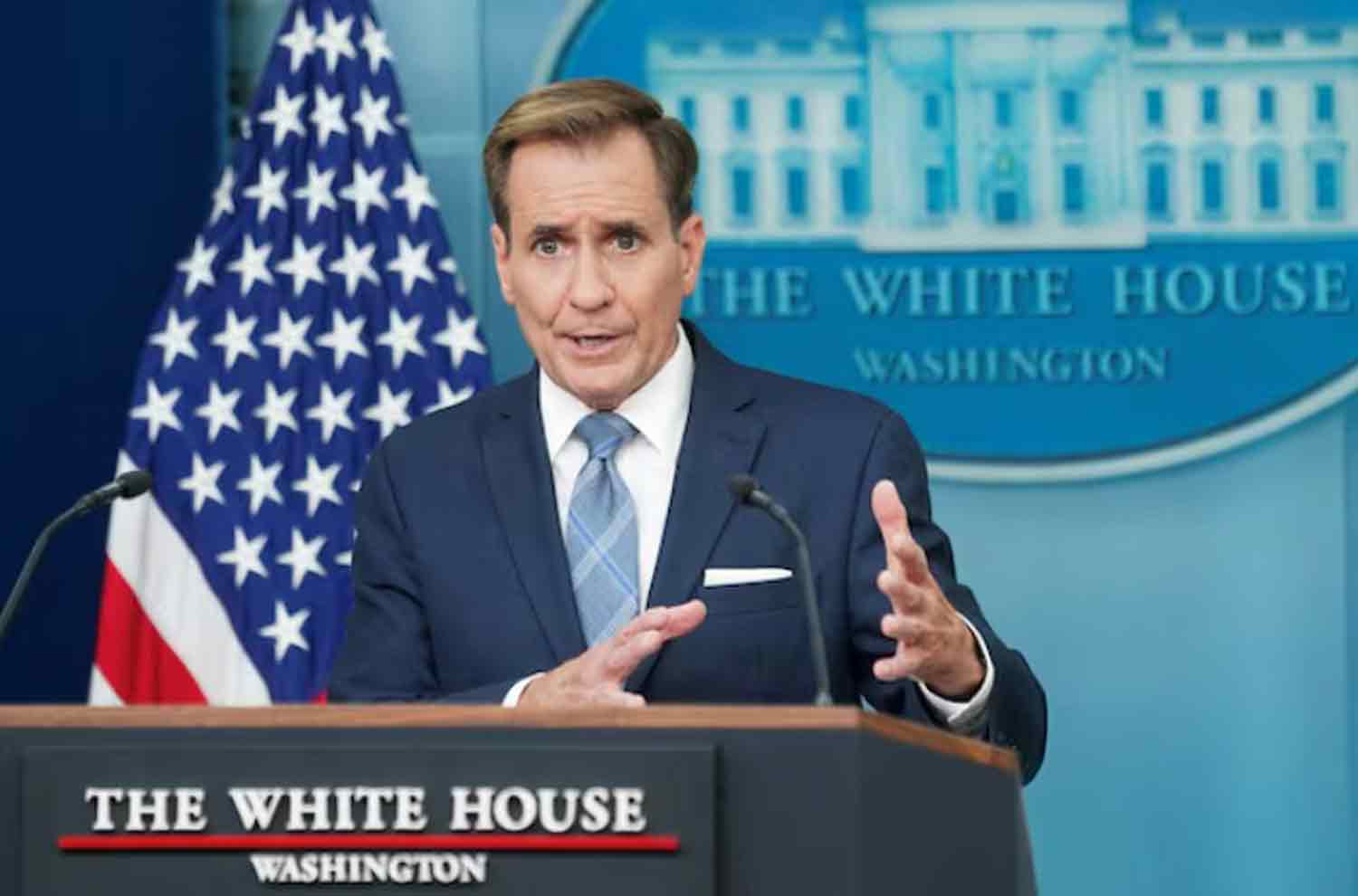
John Kirby, the White House national security spokesman, mentioned that he was not informed of any Israeli alert to the United States prior to the Beirut attack, and he strongly advised Americans against traveling to Lebanon or to leave if they are currently there. Kirby emphasized, “War is not inevitable up there at the Blue Line, and we’re going to continue to do everything we can to try to prevent it,” referring to the border area between Lebanon and Israel.

Witnesses reported hearing jet sounds over Beirut coinciding with the timing of the attack, and a plume of smoke was visible rising from the strike zone. The Israeli military announced, “The IDF (Israel Defence Forces) executed a targeted strike in Beirut. Currently, there are no alterations to the Home Front Command’s defensive protocols.”

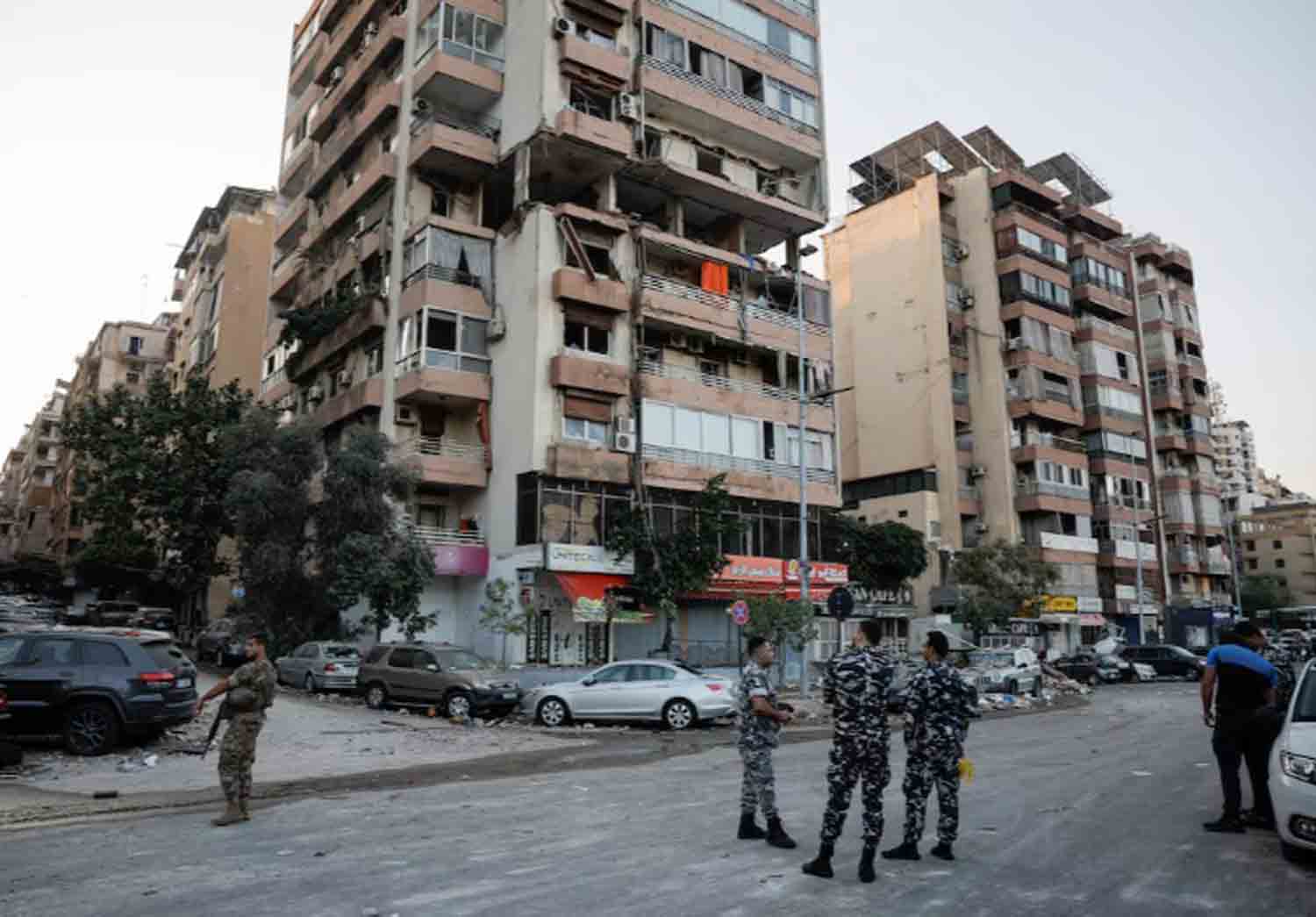
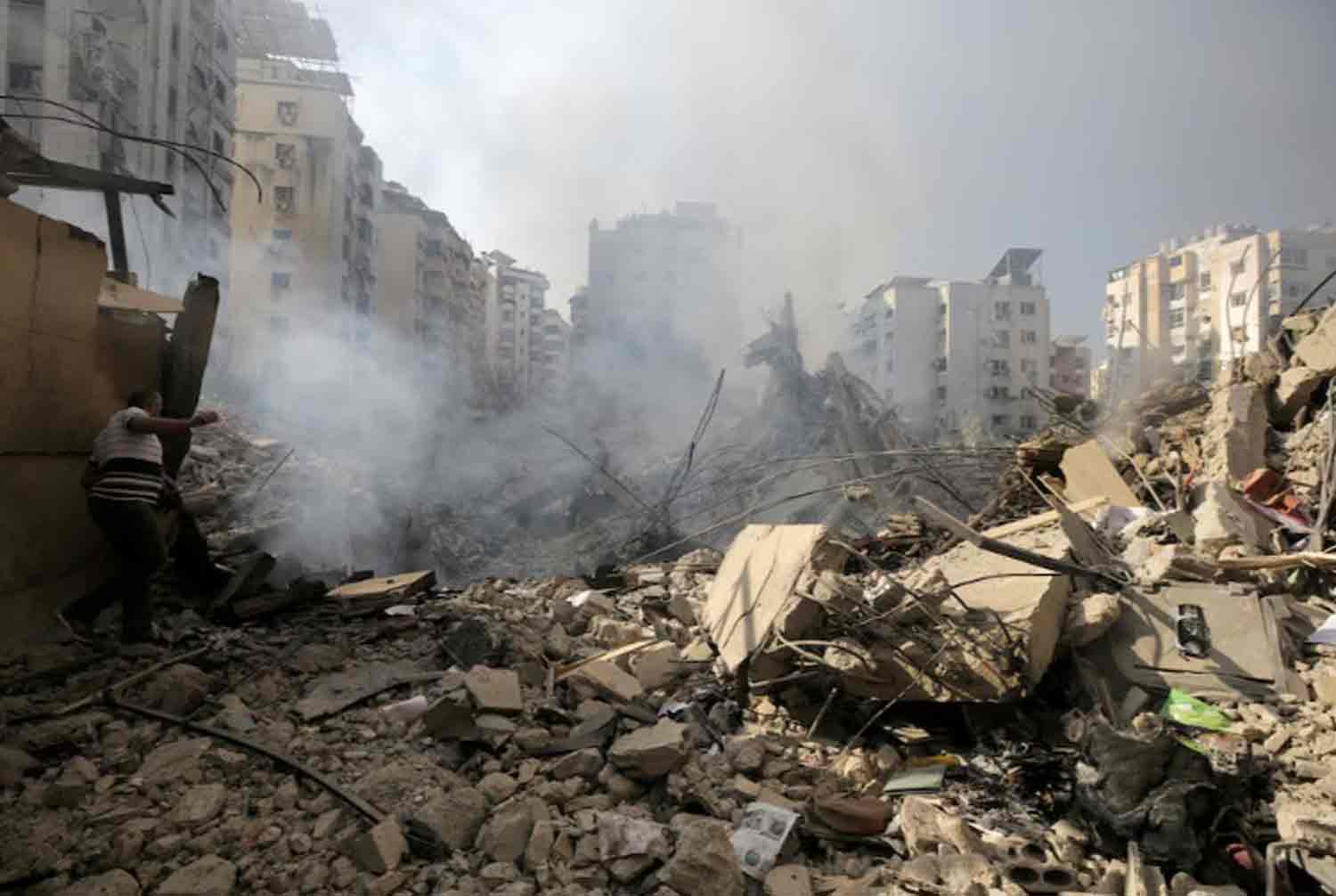
Visuals depicted a severely damaged structure and streets littered with debris and charred vehicles. The ongoing Gaza conflict has escalated notably this week.

On Thursday night, the Israeli military conducted its most extensive airstrikes in southern Lebanon since the onset of the conflict nearly a year ago. The year-long hostilities between Israel and Hezbollah represent the most severe clashes since their war in 2006, displacing tens of thousands on both sides of the border.

Although the fighting has primarily been confined to areas along the frontier, the recent escalation has raised fears of a broader and more intense conflict. The Israeli military reported that army chief General Herzi Halevi convened with the head of the Northern Command and other division leaders on Friday morning.

Israeli media indicated that Prime Minister Benjamin Netanyahu postponed his trip to New York for the upcoming United Nations General Assembly by one day due to the current situation, now scheduled to arrive on Wednesday.

On Friday, Britain’s Foreign Minister David Lammy led a meeting of the government’s emergency committee, known as COBR, to address the latest developments in Lebanon. The Foreign Office stated, “The Foreign Secretary chaired a COBR meeting this morning regarding the latest situation in Lebanon and to review ongoing preparedness efforts, as the risk of escalation remains elevated.”

Hezbollah distributed pagers just hours prior to the explosions

0

Hezbollah in Lebanon continued to distribute new Gold Apollo branded pagers to its members just hours before a series of explosions occurred this week, according to two security sources. This suggests that the group maintained a level of confidence in the safety of the devices, despite an ongoing effort to sweep for electronic threats.

One source reported that a member of the Iranian-backed militia received a new pager on Monday, which exploded the following day while still in its packaging. Additionally, a pager provided to a senior member just days prior injured a subordinate when it detonated, as noted by the second source.

In what appeared to be a coordinated attack, the Gold Apollo devices exploded on Tuesday in Hezbollah’s strongholds, including southern Lebanon, the suburbs of Beirut, and the eastern Bekaa Valley.

The following day, numerous Hezbollah walkie-talkies also detonated. These successive attacks resulted in the deaths of 37 individuals, including at least two children, and left over 3,000 others injured.

Lebanon and Hezbollah have accused Israel of orchestrating the attacks. A Western security source informed Reuters this week that Israel’s covert military intelligence Unit 8200 played a role in the planning. In response to the situation, Israel has intensified its airstrikes on Lebanon but has neither confirmed nor denied its involvement.

According to another Lebanese source familiar with the device’s components, the batteries of the walkie-talkies contained a highly explosive substance known as PETN. Reports indicate that up to three grams of explosives concealed within the pagers had remained undetected by Hezbollah for several months.

One security source noted the difficulty in detecting the explosives using any device or scanner, although the specific types of scanners used by Hezbollah to examine the pagers were not disclosed.

Following their delivery to Lebanon in 2022, Hezbollah scrutinized the pagers, including transporting them through airports to avoid triggering security alarms, as confirmed by two additional sources who spoke to Reuters. In total, six sources provided insights into the details surrounding the explosive devices for this report.

The sources did not disclose the names of the airports where the tests were carried out. Instead of focusing on a specific concern regarding the pagers, the inspections were part of a standard “sweep” of equipment, including communication devices, aimed at detecting any signs of explosives or surveillance tools, according to one security source.

The recent attacks and the distribution of these devices, despite the routine inspections for security breaches, have undermined Hezbollah’s standing as the most powerful faction within Iran’s ‘Axis of Resistance’ coalition of anti-Israel forces in the Middle East.

In a televised address on Thursday, Hezbollah Secretary-General Hassan Nasrallah described the attacks as “unprecedented in the history” of the organization. Hezbollah’s media office and the Israeli military did not promptly respond to inquiries regarding this matter.

Gold Apollo, based in Taiwan, stated that it did not produce the devices involved in the attack, clarifying that they were manufactured by a European company authorized to use its brand.

Earlier this year, a shipment of 5,000 pagers was brought into Lebanon. Previous reports indicated that Hezbollah resorted to using pagers to avoid Israeli monitoring of its mobile communications, particularly following the targeted killings of senior commanders in airstrikes over the past year.

The longstanding conflict between Hezbollah and Israel has escalated in the past year, coinciding with the Gaza war, raising concerns about the potential for a broader regional conflict.

Following the detonation of the pagers on Tuesday, Hezbollah expressed concerns that additional devices may have been compromised, according to two security sources and an intelligence source who spoke to Reuters. In response, the organization escalated its review of communication systems, conducting thorough inspections of all devices. They also initiated an investigation into the supply chains responsible for bringing in the pagers, as reported by the two security sources. However, the assessment was still ongoing by Wednesday afternoon when the hand-held radios exploded. Hezbollah suspects that Israel chose to detonate the group’s hand-held radios out of fear that Hezbollah would soon discover the walkie-talkies were also rigged with explosives.

The explosions from the walkie-talkies resulted in 25 fatalities and at least 650 injuries, according to Lebanon’s health ministry, marking a significantly higher death toll compared to the previous day’s pager blasts, which resulted in 12 deaths and nearly 3,000 injuries.

This increase in casualties is attributed to the higher explosive payload of the walkie-talkies, as noted by one security source and the intelligence source. The investigation into the specifics of how and when the devices were equipped with explosives is still underway, as confirmed by three sources.

Nasrallah echoed this sentiment in a speech on Thursday. One security source mentioned that Hezbollah had previously thwarted Israeli operations aimed at devices imported by the group, ranging from private landline telephones to ventilation systems in their offices, including suspected breaches over the past year. “We identified several electronic vulnerabilities, but not the pagers,” the source stated. “They outsmarted us; credit to the enemy.”

What kind of explosives were hidden in Hezbollah’s communication devices?

0

A Lebanese source knowledgeable about the components of the devices informed Reuters that the batteries of the walkie-talkies utilized by the Lebanese armed group Hezbollah, which exploded this week, contained a highly explosive substance known as PETN. The integration of this explosive material within the battery pack rendered it exceptionally challenging to detect, according to the source.

On Wednesday, hundreds of walkie-talkies employed by the group detonated, following the explosion of thousands of Hezbollah’s pagers in their strongholds the previous day. Images of the detonated walkie-talkies displayed labels indicating “ICOM” and “made in Japan.”

Icom has stated that it ceased production of the identified radio models a decade ago, asserting that most currently available units are counterfeit. Yoshiki Enomoto, the general manager of Icom’s security and trade division, mentioned to Reuters that it is conceivable an older Icom device was modified to function as a bomb.

Enomoto informed the Japanese broadcaster Fuji TV that placing an explosive device within the main compartment of the walkie-talkie would be challenging due to the compact arrangement of its electronics. Therefore, it is more plausible that the explosives were located in the detachable battery pack.

A Lebanese source indicated that explosions had occurred even when the battery pack was removed from the device. Additionally, a Lebanese security source previously reported to Reuters that the pagers had been equipped with explosives that were hard to detect.

Another security source mentioned to Reuters that as much as three grams (0.11 ounce) of explosives had been concealed within the new pagers, seemingly months prior to the explosions.

Breach of Hezbollah’s devices reveals the hidden vulnerabilities within Asia’s supply chains

0

The recent lethal hacking incident involving Hezbollah’s Asian-branded pagers and walkie-talkies has initiated a thorough investigation into the distribution of these devices, uncovering a shadowy market for outdated technologies where consumers may lack reliable information about their purchases.

Unlike the tightly controlled supply chains and distribution networks for newer, high-margin products, older electronics from Asia often face challenges such as counterfeiting, excess inventory, and intricate contract manufacturing arrangements, making it difficult to trace the origins of these items, according to industry analysts and consultants.

The companies implicated in the booby-trapped devices, which resulted in 37 fatalities and approximately 3,000 injuries in Lebanon this week, have highlighted the complexities involved in determining how and when these products were weaponized. Gold Apollo, a Taiwan-based firm, has pointed fingers at a European licensee of its pager, leading to investigations in Hungary, Bulgaria, Norway, and Romania regarding the source of the lethal device. Meanwhile, Japan’s Icom has expressed uncertainty about the authenticity of the walkie-talkies that carry its brand, amidst a marketplace flooded with counterfeit goods.

David Fincher, a technologist and consultant based in China, remarked, “The engineering required to insert explosives into the supply chain is remarkable. However, compromising the supply chain itself is relatively straightforward. In fact, the supply chain compromise is likely the simplest aspect of the entire operation.”

He noted that counterfeit products are widespread, particularly in major manufacturing hubs like China, where fake components can be easily fabricated. He emphasized that transitioning from counterfeit components to a compromised supply chain is not a significant leap. “As a technologist, I can assure you that integrating a small explosive into a radio is not particularly challenging.”

According to a security source, Hezbollah obtained the devices approximately five months ago, believing they were purchasing pagers from Gold Apollo. The hand-held radios, reportedly acquired around the same time as the pagers, were labeled with the name of Icom, a company based in Osaka, and included the phrase “Made in Japan,” as shown in images of one of the exploded devices. Both companies have denied that any of the lethal components originated from their factories.

Taiwan’s Economy Minister Kuo Jyh-huei has also stated that the components used in the pagers that detonated in Lebanon were not manufactured in Taiwan. A preliminary investigation by Lebanese authorities indicated that the explosives were inserted before the devices arrived in the country, as detailed in a letter from Lebanon’s mission to the United Nations to the U.N. Security Council.

Currently, the only certainty is the lack of clarity surrounding the weaponization of pagers and walkie-talkies for remote detonation. Joe Simone, a partner at the Chinese intellectual property firm East IP, highlighted that smaller brands often allocate fewer resources to combat counterfeiting, primarily due to the financial implications that could affect their bottom line.

“While authorities are willing to address low-tech counterfeits, it falls on IP owners to actively monitor, investigate, and file complaints, which is not always as prevalent for smaller brands compared to larger, high-tech companies,” he noted.

For Icom, a significant challenge arises from the fact that the IC-V82 model was discontinued a decade ago, coinciding with the introduction of holographic stickers intended to combat counterfeit products. The company has consistently raised concerns about imitation products, particularly those related to its older models.

According to the latest report from the Japan Patent Office, over 7% of businesses in Japan experienced losses due to counterfeit goods in 2020, with approximately one-third of these cases linked to China. Icom has advised customers to purchase exclusively through its official distributor network to guarantee the authenticity of their products.

However, numerous shops in China are offering Icom-branded walkie-talkies on e-commerce platforms like Alibaba.com, Taobao, JD.com, and Pinduoduo, including instances of the IC-V82 model, as verified by Reuters. Among three vendors of Icom products on Alibaba.com, none were recognized as official suppliers on Icom’s website. Guangzhou Minxing Communications Equipment Co and Chengdu Bingxin Technology Co Ltd both claimed to sell genuine products, while Quanzhou Yitian Trading Co admitted to offering “Chinese made imitations” alongside original items.

Icom maintains that all its products are manufactured in its Japanese factories and has not yet responded to inquiries regarding Icom-branded products available on Chinese online platforms.

ISPR says 12 terrorists eliminated in North and South Waziristan

0

On the night of September 19, Pakistan’s security forces eliminated 12 khawarij during two intense confrontations in the North and South Waziristan Districts.

According to a press release from the Inter-Services Public Relations (ISPR), security forces identified a group of seven terrorists attempting to cross the Pakistan-Afghanistan border in the Spinwam area of North Waziristan.

The ISPR reported, “The infiltrators were encircled and engaged effectively, resulting in the demise of all seven khawarij following a fierce exchange of gunfire.” A significant cache of weapons, ammunition, and explosives was also seized during the operation.

The army’s media wing further detailed that the second confrontation occurred in the Ladha area of South Waziristan, where a group of khawarij launched an attack on a security forces’ post. The troops responded valiantly, thwarting the intrusion and killing five khawarij in the process.

The statement noted that six soldiers were martyred during the intense firefight.

“Sanitization operations are currently underway to eliminate any remaining khawarij in the vicinity, as Pakistan’s security forces remain resolute in their commitment to eradicate terrorism from the nation. The sacrifices of our courageous soldiers only serve to reinforce our determination,” the statement concluded.

In August, four soldiers lost their lives in a terrorist attack in South Waziristan. The ISPR reported that on August 13, a firefight resulted in the death of six khawarij due to the effective response of security forces.

“Sanitization operations are being conducted to remove any remaining khawarij in the area, as Pakistan’s security forces are steadfast in their mission to eliminate the threat of terrorism, and the sacrifices of our brave soldiers further bolster our resolve,” the ISPR stated.

Was explosion of communication devices insider job? Hezbollah conducting inquiry

0
Hezbollah leader Sayyed Hassan Nasrallah gives a televised address, Lebanon

On Thursday, Hassan Nasrallah, the leader of Hezbollah, announced that the organization has initiated an internal investigation into the recent explosion of numerous communication devices utilized by its members throughout Lebanon.

Nasrallah admitted that the group has experienced a significant setback due to Israeli assaults, stating that Israel has “crossed all red lines.”

Over a span of two days, a series of coordinated explosions targeted thousands of Hezbollah’s pagers and walkie-talkies across the country, resulting in 37 fatalities, including two children, and approximately 3,000 injuries.

“There is no doubt that we have faced an unprecedented security and military setback, both in the context of the resistance and in Lebanon’s history,” Nasrallah remarked during a televised address.

A source familiar with the investigation informed Middle East Eye that the inquiry is being conducted at the highest levels, with suspicions of a security breach facilitated by infiltrators.

The pagers and walkie-talkies procured by Hezbollah were reportedly rigged with explosive materials weighing between one to two ounces and equipped with a remotely activated switch before entering Lebanon.

The source indicated that the group is scrutinizing its inability to detect the explosives, despite standard security checks performed upon receipt of the shipment.

This oversight suggests “negligence” on Hezbollah’s part, but more critically, it implies that Mossad, Israel’s intelligence agency, had access to internal information regarding the technology the group would utilize for equipment inspections.

“The Mossad likely possessed intelligence that allowed it to bypass Hezbollah’s security protocols, as the explosives embedded in the devices went unnoticed during the group’s testing procedures,” the source stated.

While Israel has not confirmed or denied its involvement in the attacks, defense and intelligence officials who spoke to The New York Times on the condition of anonymity indicated that Israeli forces were responsible for the incidents.

Hezbollah has recognized a breach within its secure network, according to a source, and is currently assessing the severity of this security lapse.

“This indicates that high-ranking operatives have been recruited by Mossad to infiltrate the organization’s internal communications,” the source noted.

“Hezbollah is concerned that the infiltration level within its ranks, including its inner leadership circle, is likely substantial; otherwise, this incident would not have occurred,” the source added.

Military analyst Johnny Khalaf, a retired brigadier general from the Lebanese army, stated that the establishment of a field investigation committee by Hezbollah suggests that the breach of its critical internal communication system involves both technical and human factors.

“There are two possibilities: either the devices were inadequately inspected because they were sourced from a trusted individual, or infiltrators managed to bypass security measures unnoticed,” Khalaf explained.

A source affiliated with Hezbollah informed MEE that the order for the communication devices was initially made by a businessman closely connected to the group, who obtained them at a “very favorable price.”

Local reports indicate that Hezbollah has detained an unspecified number of individuals on suspicion of collaborating with Israel.

“The initial interrogation of suspects is typically conducted by Hezbollah. The organization investigates them before transferring them to Lebanese military intelligence for further inquiry and subsequent referral to the judiciary,” a military source shared with MEE.

During Nasrallah’s address, Israeli warplanes flew at a low altitude over Beirut, producing loud sonic booms, while intense Israeli bombardment struck various locations in southern Lebanon.

Nasrallah adopted a resolute stance, warning Israel of “severe consequences and rightful retribution, both where it anticipates it and where it does not.”

The Hezbollah leader asserted that no amount of military escalation, killings, assassinations, or full-scale war would compel Israeli residents to return to the border region, which he identified as a primary objective of the Israeli government’s war strategy.

He stated that the “only solution” for the displaced to return to the north is to “cease the assault on Gaza.”

Nasrallah accused Israel of intending to “kill no fewer than 5,000 individuals in two minutes” over the course of two days.

While he recognized Israel’s technological advantages, he downplayed the effects of the attacks on Hezbollah, asserting that the group’s organizational structure remained intact.

“I believe that the recent events did not incapacitate Hezbollah’s military capabilities, but rather affected the technical resources that Hezbollah depends on for its military operations,” Khalaf noted.

The analyst further remarked that had the attack occurred while Hezbollah was actively engaged in combat, the repercussions of targeting the group’s communication network would have been considerably more severe.

Hossein Salami, the commander of Iran’s Revolutionary Guard Corps, informed Nasrallah that Israel will encounter “a devastating response from the axis of resistance,” as reported by state media.

Since Wednesday, Hezbollah has targeted multiple locations in Israel, including artillery positions, using rockets.

On Thursday, the Israeli military reported the deaths of two soldiers in northern Israel—one due to a drone strike and the other from an anti-tank missile launched by Hezbollah from across the Lebanese border.

In response to Nasrallah’s remarks, Israeli Defence Minister Yoav Gallant stated that Israel would persist with its military operations against Hezbollah, acknowledging that the new phase of the conflict carries “significant risks.”

Despite the recent developments, a spokesperson for the UN peacekeeping mission in southern Lebanon (Unifil) indicated that the situation along the border had “not changed much in terms of exchanges of fire between the parties.”

Lebanese Prime Minister Najib Mikati urged the United Nations Security Council to take decisive action to halt what he described as Israel’s “aggression” and “technological war” against Lebanon.

Additionally, Jordan’s foreign minister, Ayman Safadi, accused Israel of escalating tensions in the Middle East, pushing the region toward the brink of war through dangerous maneuvers on multiple fronts.

France and the United States have called for restraint, with US Secretary of State Antony Blinken emphasizing the need to avoid “escalatory actions by any party” in the region and advocating for “restraint and de-escalation.”

US says no change in military posture in Middle East

0

The Pentagon confirmed on Thursday that there are no alterations to the U.S. military presence in the Middle East, despite inquiries regarding recent lethal assaults in Lebanon linked to Israel, which targeted Hezbollah’s communication systems.

The attacks have resulted in 37 fatalities and approximately 3,000 injuries, placing significant strain on Lebanese medical facilities and causing severe disruption to the militant organization.

Pentagon spokesperson Sabrina Singh stated during a press briefing, “I am not aware of any changes in force posture in the Eastern Mediterranean or within the Central Command’s area of responsibility.” The Pentagon emphasized that any actions that heighten tensions in the Middle East are counterproductive. Singh noted, “In nearly every conversation, the secretary consistently emphasizes the importance of reducing regional tensions,” in reference to Pentagon chief Lloyd Austin’s recent discussion with his Israeli counterpart. “We have never sought to see a broader regional conflict.”

Israel has refrained from making direct comments regarding the recent attacks, which security sources suggest were likely executed by its Mossad intelligence agency. The Pentagon faced inquiries concerning the possibility of a ceasefire agreement in Gaza amidst rising regional tensions, asserting that Washington does not perceive the deal as disintegrating.

The spokesperson indicated that, at present, the U.S. believes the conflict remains confined to Gaza. On May 31, President Joe Biden proposed a three-phase ceasefire plan for Gaza, which has encountered several challenges since its introduction.

Critics have called on Washington to leverage its military support for Israel as a means of influence; however, the U.S. has continued to uphold its alliance with Israel.

The recent attacks in Lebanon have heightened fears regarding the expansion of Israel’s conflict in Gaza, which has resulted in tens of thousands of casualties, a humanitarian crisis, and allegations of genocide at the World Court, which Israel refutes۔

Ceasefire agreement in Gaza unlikely during Biden’s term, WSJ reports

0

U.S. officials now assess that a ceasefire agreement between Israel and the Palestinian militant group Hamas in Gaza is improbable before President Joe Biden’s term concludes in January, as reported by the Wall Street Journal on Thursday.

The publication referenced unnamed senior officials from the White House, State Department, and Pentagon. These agencies did not provide immediate comments when approached. Pentagon spokesperson Sabrina Singh stated to reporters on Thursday, prior to the report’s release, “I can assure you that we do not think the deal is disintegrating.”

Two weeks ago, U.S. Secretary of State Antony Blinken indicated that 90% of a ceasefire agreement had been reached. For several months, the United States, along with mediators from Qatar and Egypt, has been striving to establish a ceasefire, yet has not succeeded in finalizing an agreement between Israel and Hamas.

Two significant hurdles remain: Israel’s insistence on maintaining military presence in the Philadelphi corridor, which lies between Gaza and Egypt, and the details surrounding the exchange of Israeli hostages for Palestinian prisoners detained by Israel.

United States has indicated that a ceasefire agreement in Gaza could help alleviate tensions throughout the Middle East, amid concerns that the conflict may escalate further. On May 31, President Biden proposed a three-phase ceasefire plan, which he stated had received Israel’s agreement.

However, as negotiations faced challenges, officials have been suggesting for several weeks that a revised proposal would be forthcoming. The recent escalation in the long-standing Israeli-Palestinian conflict began on October 7, when Hamas launched an attack on Israel, resulting in the deaths of 1,200 individuals and the abduction of approximately 250 hostages, according to Israeli sources.

In response, Israel’s military operations against the Hamas-controlled territory have reportedly resulted in over 41,000 Palestinian fatalities, as per the local health ministry, displacing nearly the entire population of 2.3 million and triggering a humanitarian crisis, alongside allegations of genocide at the International Court, which Israel refutes.

UN peacekeeping mission in Lebanon urge immediate de-escalation

0

The United Nations peacekeeping mission in southern Lebanon called for a reduction in tensions on Friday following a significant rise in hostilities along the Lebanese-Israeli border, where exchanges of fire between Israel and the Iran-aligned Hezbollah have persisted for nearly a year.

UNIFIL spokesperson Andrea Tenenti informed Reuters that there has been “a substantial escalation of hostilities across the Blue Line” and within its operational area. “We are alarmed by the heightened tensions along the Blue Line and urge all parties to take immediate steps to de-escalate,” he stated.

The Blue Line marks the boundary between Lebanon and Israel. On Thursday evening, Israeli aircraft conducted their most extensive airstrikes in southern Lebanon during the ongoing conflict.

This action followed earlier assaults this week that destroyed thousands of communication devices used by Hezbollah, resulting in at least 37 fatalities and numerous injuries.

Sergei Ryabkov says US must heed Moscow’s warnings

0
Deputy Foreign Minister of Russia Sergei Ryabkov

The United States must heed Moscow’s warnings regarding the potential risks of further escalation in the Ukraine conflict, as reported by Russia’s state-run news agency RIA Novosti, citing Deputy Foreign Minister Sergei Ryabkov on Friday.

Regarding the potential for a meeting between Russian Foreign Minister Sergei Lavrov and U.S. Secretary of State Antony Blinken during the United Nations General Assembly in New York, Ryabkov stated that no meeting would occur, as there is “nothing to discuss.”

Additionally, Foreign Ministry spokeswoman Maria Zakharova emphasized that granting Kyiv the freedom to conduct long-range strikes deep within Russia would fundamentally alter the nature of the conflict in Ukraine.

“We wish to remind the hardliners on both sides of the Atlantic… They are playing with fire and have lost all sense of reality,” she remarked during a briefing. “The scale of the conflict, which originated due to Western actions, risks transforming entirely, potentially leading to perilous consequences for the entire world.”

Italy sending another anti-missile system to Ukraine

0

Italy is preparing to deliver an additional Samp-T anti-missile system to Ukraine, as stated by Foreign Minister Antonio Tajani on Thursday.

He emphasized the importance of steering clear of direct conflict with Russia. “We are dispatching a new Samp-T system to safeguard hospitals, schools, and universities in a nation that has been assaulted by Russia,” Tajani remarked during an interview with Radio 24. He further noted, “Supporting Ukraine does not equate to igniting a global war… Our aim is to assist Ukraine while striving for a just peace.”

European Commission President in Kyiv to discuss Europe’s support

0

European Commission President Ursula von der Leyen announced on Friday her arrival in Kyiv, Ukraine’s capital, to engage in discussions regarding Europe’s support, winter readiness, defense strategies, and advancements related to G7 loans. “This marks my eighth visit to Kyiv as the heating season approaches and Russia continues to target energy infrastructure,” von der Leyen stated on the X social media platform.

On Thursday, she revealed that 160 million euros from frozen Russian assets would be directed towards addressing Ukraine’s pressing humanitarian needs this winter.

Russia has incapacitated approximately 9 gigawatts (GW) of Ukraine’s energy infrastructure, which von der Leyen noted is equivalent to the total power capacity of the three Baltic states.

Additionally, she mentioned that the EU aims to restore 2.5 GW of power generation capacity and plans to increase electricity exports to provide 2 GW to Ukraine. Von der Leyen is scheduled to meet with Ukraine’s President Volodymyr Zelenskiy and other officials.