U.S. President-elect Donald Trump stated on Friday that he had a conversation with Chinese President Xi Jinping regarding trade, fentanyl, and TikTok, describing the call as “very beneficial for both China and the United States.”
Russian oil tankers that are still being constructed have been included in the U.S. sanctions
Six oil tankers currently under construction at Russia‘s Zvezda shipyard have been included in the U.S. sanctions announced last week. This marks the first instance where Washington has imposed sanctions on tankers prior to their launch or the transportation of any sanctioned cargo.
The recent sanctions led to an increase in oil prices and a rise in tanker shipping costs, as the outgoing Biden administration aimed to undermine Russia’s oil exports and obstruct Moscow’s efforts to develop its own shipping fleet.
A review by Reuters indicated that the six tankers at Zvezda are part of a broader list of 183 vessels affected by the sanctions. The tankers include the Nursultan Nazarbayev, the Alexander Beggrov, the Alexey Bogolyubov, and three unnamed vessels: Zvezda 131080, Zvezda 131060, and Zvezda 131040.
According to the sanctions documentation, Russia’s Sovcomflot is the purchaser of the Alexander Beggrov and the Alexey Bogolyubov, while Rosneft’s shipping subsidiary, Rosnefteflot, is acquiring the remaining four tankers. Both entities are also subject to U.S. sanctions.
Requests for comments from Rosneft and the shipyard’s representative went unanswered. The ministry of transport and Sovcomflot also declined to provide comments. The U.S. Treasury Department’s Office of Foreign Assets Control did not respond immediately to inquiries for comment.
These sanctions are aimed at disrupting the so-called “shadow fleet” that Russia has utilized to circumvent a price cap established by the G7 nations in late 2022, which prohibits insurance and shipping services from Western providers for Russian oil sold at prices exceeding $60 per barrel.
Imposing sanctions on ships that are still under construction could complicate Russia’s ability to justify the expenses associated with their completion, according to an industry insider involved in Russian oil trading.
Following the sanctions, Russia is anticipated to experience a tanker shortage for its oil exports, as over 60% of the oil tankers recorded have recently docked at Russian ports, according to shipping data analyzed by Reuters.
This deficit in available vessels for Russian oil has already resulted in a significant increase in global freight rates. Zvezda, founded in 2015, stands as a prominent Russian shipyard and is the sole facility in the country capable of constructing large-capacity oil and gas vessels. This shipyard was also impacted by the U.S. sanctions imposed last week.
France’s Macron calls on Israel to expedite its withdrawal from Lebanon
French President Emmanuel Macron urged Israel on Friday to expedite its troop withdrawal from southern Lebanon, as the deadline for this pullout approaches in accordance with the ceasefire agreement that concluded last year’s conflict with Hezbollah.
During his visit to Beirut, Macron emphasized the necessity for Lebanon’s military to maintain a complete monopoly on arms and expressed France’s commitment to enhancing the deployment of the Lebanese army in the southern region.
“We require a full withdrawal of the Israeli forces,” Macron stated, standing alongside Lebanon’s newly elected president, Joseph Aoun, who previously served as the commander of the Lebanese military. “We advocate for the strengthening of the Lebanese armed forces and their presence in the southern part of the country,” he added. “The Lebanese armed forces are essential to Lebanon’s sovereignty.”
a
Macron is the first foreign leader to visit Beirut following Aoun’s election by the Lebanese parliament on January 9, marking a significant shift in the nation’s power dynamics after the war that considerably weakened Iran-backed Hezbollah. The ceasefire, effective from November 27 and facilitated by the United States and France, mandates the withdrawal of Israeli troops from southern Lebanon within 60 days, alongside the removal of all Hezbollah fighters and weapons from the area.
Lithuania plans to raise its defence budget to 5-6% of GDP due to security threats from Russia
Lithuania has declared its intention to raise defence spending to between 5% and 6% of GDP starting in 2026, a move prompted by concerns over potential Russian aggression in the region, as stated by President Gitanas Nausėda on Friday.
The decision, described as “historic,” was made by the State Defence Council and aims to achieve this spending level from 2026 to 2030.
Nausėda emphasized the ongoing risk of Russian military action, noting that while it is not immediate, there is a need for enhanced defence and deterrence efforts. He highlighted the importance of allocating more resources to these initiatives during a press conference in Vilnius, the capital of Lithuania.
Currently, Lithuania, a member of both NATO and the EU, allocates just over 3% of its GDP to defence. Achieving the 5% target would position Lithuania as the NATO member with the highest defence spending relative to GDP, surpassing Poland, which currently spends over 4% and is expected to near 5% by year-end.
This announcement follows remarks from US President-elect Donald Trump, who recently urged NATO allies to increase their defence expenditures to 5% of GDP, a target that no member currently meets, up from the existing 2% guideline.
Nigerians express outrage over yet another fatal airstrike targeting civilians
In Tungar Kara, a town in northwestern Nigeria, residents expressed their support and offered prayers for local vigilantes preparing to confront an armed gang in a nearby forest last Saturday. However, before the vigilantes could embark on their mission, an airstrike conducted by the Nigerian Air Force (NAF) struck the town. While the NAF claimed the strike was aimed at the armed group, local residents reported that 15 civilians, including members of the vigilante group and innocent bystanders, lost their lives.
The military has increasingly resorted to aerial attacks in response to the escalating threat posed by armed criminal gangs, referred to as bandits, in Nigeria’s northwest and central regions. These gangs are notorious for killing villagers and executing mass kidnappings. However, this military campaign is reportedly inflicting significant harm on Nigerian civilians and diminishing their support for the armed forces, according to residents and analysts.
Salihu Usman, a vigilante responsible for safeguarding the town, recounted his experience during the airstrike. He was praying when he heard a jet overhead, followed by a deafening explosion that left him injured on the ground.
“Now, whenever I see a military aircraft flying during the day, I perceive it as a threat to my life,” Usman stated, describing severe injuries, including a partially ripped open stomach and various lacerations. “Bandits kill us, and the military bombed us from the sky.” The NAF has not responded to inquiries from Reuters but issued a statement on Monday denying any intention to target civilians and promising to investigate the airstrike on Tungar Kara, located in the remote Zamfara state.
Haliru Attahiru, a 30-year-old farmer, expressed skepticism regarding the airstrike, asserting that it could not have been an accident. “How is it possible to bomb a town while ignoring the forest where the bandits are located?” he remarked during a phone interview with Reuters.
In December, an airstrike in the neighboring Sokoto state resulted in the deaths of 10 individuals, an incident the state governor described as a tragic error targeting civilians. This event is part of a troubling trend of lethal aerial assaults by the military, which have led to civilian casualties, a topic highlighted in a special report by Reuters in June 2023.
Oluwole Ojewale, a researcher at the Institute for Security Studies, noted, “If the community realizes that they are not being protected from the bandits and are instead becoming collateral damage due to the air force’s operations, their support for the military will likely diminish.”
Usman, who narrowly escaped a similar situation, has decided not to return to his vigilante group. He now harbors distrust towards the military and questions the legitimacy of the airstrike, stating, “I even suspect they may have colluded to harm us,” as he conveyed to Reuters.
Germany’s Scholz expects U.S. support for Ukraine to continue under Trump
German Chancellor Olaf Scholz stated on Friday that he does not anticipate the United States will cease military assistance to Ukraine following the inauguration of President-elect Donald Trump on January 20. During a press conference in Berlin, Scholz mentioned that he has had two conversations with Trump since the election and emphasized the ongoing “intensive” diplomatic discussions between the two parties.
“We can therefore be optimistic that the collaboration between Europe and the United States will continue to thrive in the future, particularly regarding support for Ukraine,” he remarked.
“As such, I do not foresee the U.S. halting its support for Ukraine’s defense.”
Hamas is expected to release its first group of hostages under the Gaza ceasefire agreement, according to Israel
Hamas is anticipated to release the first hostages as part of a ceasefire agreement in Gaza on Sunday, according to a statement from Prime Minister Benjamin Netanyahu‘s office on Friday. If the ceasefire is successfully implemented, it would bring an end to the ongoing conflict that has devastated much of densely populated Gaza, resulting in over 46,000 fatalities and displacing the majority of the enclave’s pre-war population of 2.3 million, as reported by local authorities.
The Israeli cabinet is scheduled to convene to provide final approval for the ceasefire agreement with Hamas and the subsequent release of hostages, following concerns that the implementation of the accord might face delays.
Meanwhile, in Gaza, Israeli airstrikes continued unabated, with the Civil Emergency Service reporting on Friday that at least 101 individuals, including 58 women and children, have lost their lives since the announcement of the deal.
Amid visible divisions among ministers, Israel postponed meetings that were anticipated on Thursday, during which the cabinet was expected to vote on the agreement, attributing the delay to Hamas. Hamas has expressed its commitment to the deal.
However, in the early hours of Friday, Netanyahu’s office indicated that approval was imminent, with the restricted security cabinet set to meet before a full cabinet session later to ratify the agreement. “Prime Minister Benjamin Netanyahu was informed by the negotiating team that agreements have been reached on a deal to release the hostages,” his office stated.
Russia is alarmed by the potential involvement of British military forces in Ukraine under a new century-long agreement
Russia expressed concern on Friday regarding the potential deployment of British military assets in Ukraine as part of a new century-long partnership agreement between Kyiv and London. Kremlin spokesman Dmitry Peskov addressed inquiries about the possibility of the UK establishing military bases in Ukraine, following the announcement made by Ukrainian President Volodymyr Zelenskiy and British Prime Minister Keir Starmer.
Peskov remarked, “As Britain is a NATO member, the expansion of its military infrastructure towards our borders is certainly a significant concern. We will need to further assess the implications of this development.” During discussions in Kyiv on Thursday, Zelenskiy mentioned his conversation with Starmer about Ukraine’s interest in having Western peacekeeping forces deployed in the country if the conflict with Russia were to conclude.
When asked about the UK’s potential contribution of troops, Starmer indicated in an interview with Sky News that he had engaged in discussions with Zelenskiy and other allies, affirming that Britain would “play our full part.” Peskov also conveyed Moscow’s unfavorable stance regarding British collaboration with Ukraine in the Sea of Azov, which he referred to as Russia’s “internal sea.” The Azov Sea is bordered by southwestern Russia, regions of southern Ukraine currently under Russian control, and the Crimean peninsula, which was annexed by Moscow from Ukraine in 2014.
Ukraine’s air force intercepted and destroyed 33 Russian drones overnight
Ukrainian air defense forces successfully intercepted 33 out of 50 drones launched by Russia overnight, according to a statement from the air force on Friday. The report indicated that 9 drones were “lost,” referring to Ukraine‘s electronic warfare tactics that redirected some Russian drones, while one drone veered off towards Romania.
The military noted that hostile attack drones struck facilities in the Odesa region, and the debris from downed enemy drones caused damage to buildings belonging to institutions, private businesses, and residences in the Kharkiv, Cherkasy, and Kyiv regions, as communicated via the Telegram messaging platform.
Additionally, port infrastructure in the Danube region was targeted during the assault. A regional official from Kyiv reported that a child sustained injuries due to falling debris from the intercepted drones during the incident.
Russia claims to have regained 63.2% of the territory previously seized by Ukraine in the Kursk region
Russian military forces have reclaimed 63.2% of the territory that was previously taken by Ukraine in the Kursk region of western Russia, according to a statement from the Russian defense ministry released on Friday.
The ministry reported that Russia successfully regained control of four settlements during the initial two weeks of January. Ukrainian forces launched an unexpected incursion across the border on August 6 of the previous year, capturing a significant area that provides Kyiv with a strategic advantage in any future negotiations aimed at resolving the conflict.
Philippine Navy conducts drills close to contested shoal during ongoing tensions with China
The Philippine Navy announced on Friday that its vessels were conducting exercises near a disputed shoal in the South China Sea, following an agreement between Manila and Beijing to explore avenues for cooperation despite ongoing tensions.
The drills, centered around the Scarborough Shoal—one of the most contentious regions in Asia—aimed to bolster the navy’s ability to protect what it identifies as Philippine waters and maintain the nation’s territorial integrity, according to a navy statement.
Characterized as a “routine unilateral exercise,” the operation involved the Antonio Luna frigate along with two additional patrol ships within the Philippines’ exclusive economic zone. The exercises are scheduled to occur from January 17 to 19.
These drills coincide with ongoing radio challenges from the Philippine Coast Guard regarding the presence of China’s largest coast guard vessel at the shoal, which the Philippines claims is conducting illegal patrols within its EEZ.
The coast guard emphasized in a statement late Thursday that if China is genuinely interested in reducing tensions and building mutual trust and cooperation, it must acknowledge the Philippines’ sovereign rights within its exclusive economic zone.
As of Friday, China’s embassy in Manila had not provided a response to requests for comment. China’s extensive territorial claims in this vital maritime trade route overlap with the exclusive economic zones of Brunei, Indonesia, Malaysia, the Philippines, and Vietnam.
A ruling from an international arbitral tribunal in 2016 determined that Beijing’s claims, which rely on historical maps, lack legal foundation under international law, a verdict that China rejects.
In the 10th round of discussions held on Thursday as part of a bilateral framework aimed at addressing South China Sea concerns, both China and the Philippines agreed to enhance communication and strengthen dialogue, while also addressing recent confrontations between them.
Additionally, they committed to promoting cooperation between their coast guards and in marine scientific research, while emphasizing the importance of resolving disputes through peaceful means.
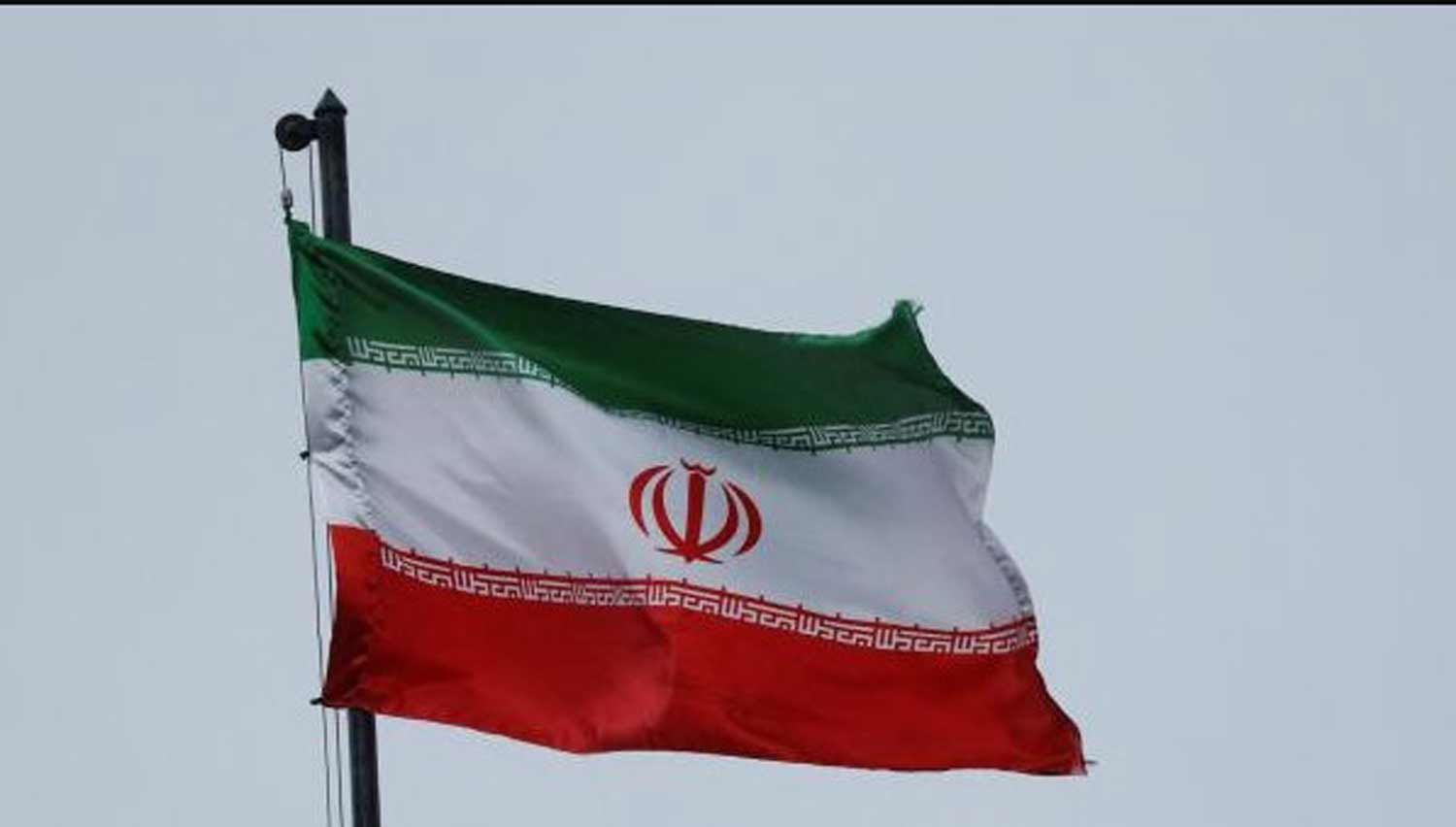
Iranian president has arrived in Moscow to sign a treaty with Putin, according to TASS
Iranian President Masoud Pezeshkian arrived in Moscow on Friday to engage in discussions with Russian President Vladimir Putin and to finalize a strategic partnership treaty between the two nations, as reported by Russia’s TASS state news agency.
This marks Pezeshkian’s inaugural visit to the Kremlin since he assumed the presidency last July, following the tragic death of his predecessor in a helicopter accident. During his meeting with Putin, the agenda will center on enhancing bilateral relations and addressing international matters prior to the treaty’s signing.
In the wake of the Ukraine conflict, Russia has strengthened its relationships with Iran and other nations perceived as adversarial to the U.S., including North Korea. It has established strategic agreements with Pyongyang, its close ally Belarus, and has a partnership with China.
The 20-year agreement between Russia and Iran, which encompasses provisions for enhanced defense collaboration, is likely to raise concerns in the West, which views both nations as negative forces on the global stage.
Both Moscow and Tehran assert that their deepening relationship is not aimed at opposing other countries. Russia has extensively utilized Iranian drones in the Ukraine conflict, and the U.S. accused Tehran in September of supplying short-range ballistic missiles to Russia for deployment against Ukraine, a claim that Tehran refutes. While the Kremlin has not confirmed the receipt of Iranian missiles, it has acknowledged that its collaboration with Iran spans “the most sensitive areas.”
Putin engaged with Pezeshkian during a BRICS summit held in Kazan, Russia, in October, as well as at a cultural forum in Turkmenistan later that month. Pezeshkian is in Moscow with his oil minister, and discussions are expected to focus on the impact of Western sanctions on the oil sector.
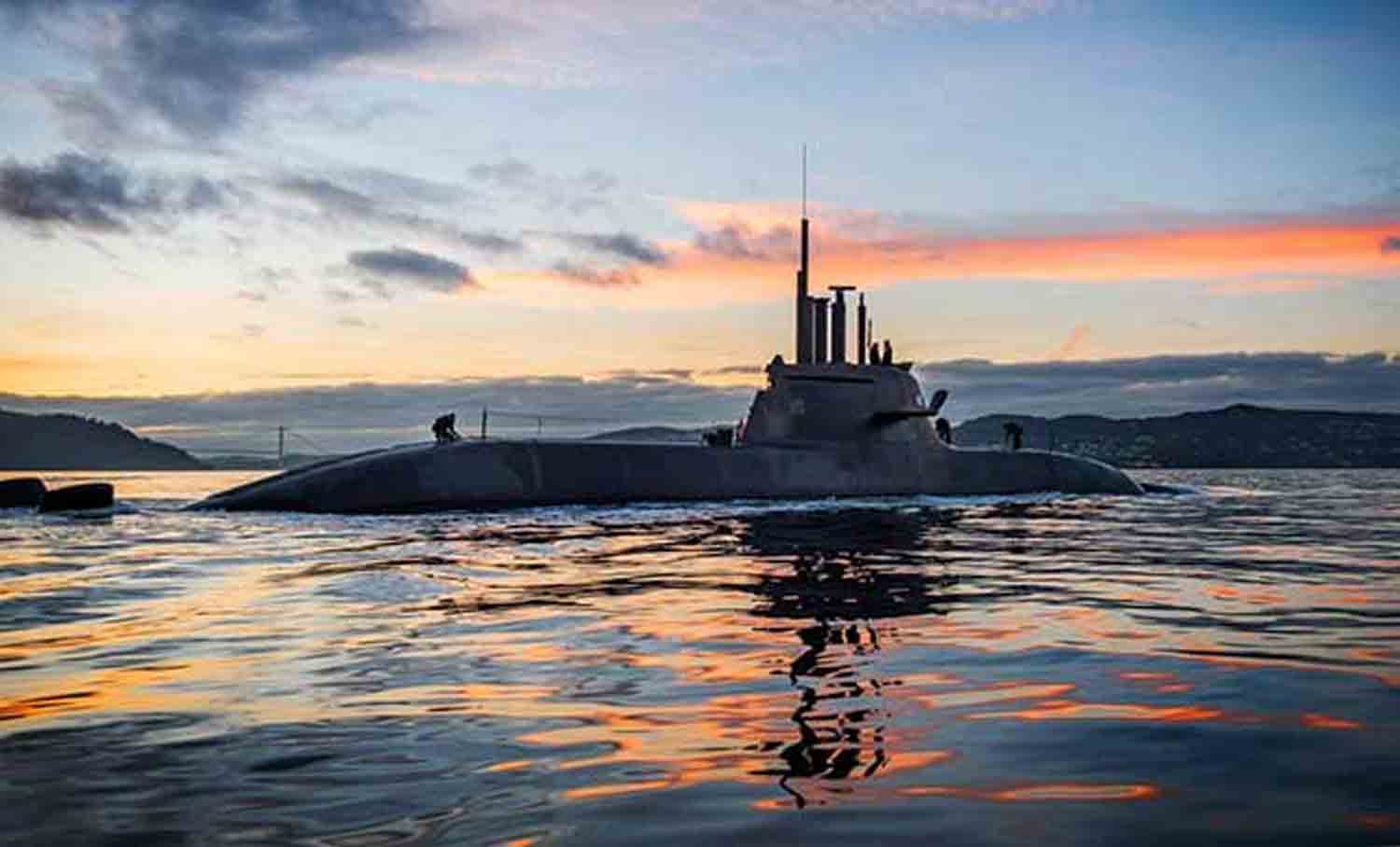
Pakistan Surpasses Indian Navy in AIP-Submarine Technology
The Indian Navy has deployed the sixth and final submarine of the P-75 Scorpene Project, alongside a stealth frigate and a guided missile destroyer. While this marks a significant achievement, the Indian Navy’s submarine fleet still lacks the Air Independent Propulsion (AIP) technology. In contrast, the Chinese-manufactured Hangor class submarine is on track to be integrated into the Pakistan Navy as planned.
Currently, the Indian Navy does not possess any AIP-equipped submarines, whereas the Pakistan Navy operates three French Agosta-90B submarines (PNS Khalid, Saad, and Hamza) that utilize AIP technology.
According to the latest developments, the Hangor submarines are anticipated to be commissioned into the Pakistan Navy by the late 2020s to early 2030s. Once operational, these submarines will enhance the Pakistan Navy’s capabilities, bringing its total of AIP-equipped vessels to 11.
Despite financial constraints, Pakistan is striving to keep pace with the Indian Navy’s capabilities, ship for ship. As the Indian Navy’s sole operational port in the region is being developed into the largest naval base east of the Suez Canal, Pakistan is also intensifying its efforts to establish one of Asia’s largest naval fleets. This includes expanding its surface fleet to 50 warships and a subsurface fleet of 11 submarines. Among the 50 surface vessels, 20 are projected to be significant assets such as frigates and corvettes.
Admiral Naveed Ashraf, the Chief of the Naval Staff of the Pakistan Navy, informed Chinese state media that the development of four submarines is on track according to the established schedule.
He emphasized that the Hangor-class submarines will greatly bolster Pakistan’s naval capabilities through enhanced stealth, maneuverability, and firepower, enabling the Navy to conduct a diverse array of operations effectively.
“The project is advancing as planned. We anticipate that these submarines will soon be integrated into the Pakistan Navy fleet,” Ashraf stated.
In December 2021, the steel cutting ceremony for the fifth Hangor-class conventional submarine took place, marking the first such submarine to be constructed in Pakistan. This initiative will provide Pakistan with critical experience in the production of advanced modern submarines.
The Hangor submarines are variants of the S-26, which are based on the Chinese Yuan class but modified for export purposes. Several design alterations have been implemented compared to the standard S-26 model.
The Hangor class submarine has a larger displacement of 2,800 tons, compared to the S-26’s 2,550 tons, although it features a slightly shorter hull (76 m versus the S-26’s 77.7 m). Both classes share the same payload capacity of six torpedo tubes and utilize a Stirling-based Air-Independent Propulsion (AIP) system.
Initially, the S-26 submarines were equipped with the German MTU 12V 396 SE84 diesel engine; however, the German government reportedly restricted export licenses for this engine. Consequently, the Pakistan Navy opted for the Chinese CHD-620 diesel engine, which resulted in delays to the program.
These submarines feature cutting-edge sensors and contemporary weaponry, which marginally shifts the tactical advantage towards Pakistan. The diesel attack submarines are in line with the Pakistan Navy’s strategy of offensive sea denial, emphasizing the use of submarines and missile-equipped maritime patrol aircraft in naval engagements.
AIP-equipped conventional diesel-electric submarines (SSK) represent a middle ground between nuclear-powered vessels and non-AIP SSKs. This technology enables an SSK to remain submerged for 10 to 14 days without surfacing to recharge its batteries, thereby minimizing the risk of detection. In contrast, other SSKs typically can operate underwater for about 48 hours. The fuel-cell-based AIP system is distinctive as it produces its hydrogen supply onboard.
The AIP significantly extends a submarine’s underwater endurance between battery charges by three to four times, thereby decreasing its chances of being detected.
Slow Advancement of Indian Submarine Fleets Towards AIP
With the addition of INS Vaghsheer, the Indian submarine fleet now comprises 17 conventional submarines. The Scorpene Class submarines are set to be upgraded with a domestically developed AIP system during the major refit of the first submarine in this class, INS Kalvari.
This retrofitting process will involve splitting the operational submarine in half to incorporate a new AIP section, which will increase both its length and weight. The French shipbuilder Naval Group will provide support for this intricate operation.
The technology will undergo additional testing before being integrated into the remaining Scorpene-class submarines. Experts have indicated that incorporating new technology into a weapons platform may hinder operational readiness, as repairs are expected to take a minimum of one year.
In addition to the six newly constructed submarines, the others are over 30 years old and nearing their decommissioning timeline. India’s older Shishumar (HDW) class and Sindughosh (Kilo) class submarines are experiencing challenges with spare parts due to the ongoing conflict in Ukraine.
The Indian Navy is actively seeking a foreign partner to develop AIP-equipped submarines under Project-75I. Field evaluations have already been conducted on systems proposed by Germany and Spain, but a final decision on the contract has yet to be made.
Given that it took 11 years for the first Scorpene-class submarine to join the Indian Navy after the agreement was signed, the submarines under Project-75I are projected to take at least a decade before they become operational.
Pakistan-China Cooperation
Encouraged by China, Pakistan has recognized the significance of the Western Indian Ocean, leading to an emphasis on naval modernization.
In addition to the Hangor-class submarine, Admiral highlighted the acquisition of four Type 054A/P frigates from China, which have significantly enhanced the country’s combat capabilities.
“The addition of Type 054A/P frigates to the Pakistan Navy has strengthened our combat capabilities and improved operational flexibility, ensuring these vessels will be central to the Pakistan Navy’s fleet in the years ahead.”
The final two frigates were handed over in May 2023. The Type 054A/P represents one of the most advanced multi-role frigates from China, featuring cutting-edge weaponry and sensors, including CM-302 surface-to-surface missiles and LY-80 surface-to-air missiles. Additionally, it is equipped with an Advanced Anti-Submarine Warfare suite and a Combat Management System, allowing vessels of this class to function effectively in multi-threat environments. The Pakistan Navy is the inaugural customer for these frigates.
According to the Chief of the Pakistan Navy, the Type 054A/P vessels are designed to operate in complex threat scenarios and have been seamlessly integrated into the operations of the Pakistan Navy. The F-22P guided missile frigate, constructed in China and renamed PNS Zulfiquar by the Pakistan Navy, executed Operation Himalayan Spirit in the North Arabian Sea in October 2024, resulting in the seizure of 1.3 tons of narcotics.
Japan establishes a mission to NATO amid escalating tensions with Russia and North Korea
NATO has strengthened its relationships with Japan and three other partners in the Indo-Pacific region: Australia, New Zealand, and South Korea, although these connections do not constitute formal membership in the military alliance.
Japan has officially launched an independent mission to NATO as both Tokyo and the alliance aim to enhance collaboration in response to rising tensions from Russia, China, and North Korea.
Previously, the Japanese embassy in Belgium managed NATO-related affairs.
The new mission is headed by Osamu Izawa, who succeeds Masahiro Mikami, the current ambassador to Belgium.
On Thursday, high-level discussions were held in Tokyo between Japan and NATO to address regional security challenges in East Asia and Europe, as reported by the Foreign Ministry.
In light of Russia’s invasion of Ukraine in 2022 and the strengthening of ties between Moscow and Beijing, NATO has intensified its partnerships with Japan and the three other Indo-Pacific nations, while still not forming a military alliance.
Prime Minister Shigeru Ishiba of Japan has proposed a security framework in Asia similar to NATO, although specifics have not been disclosed.
Nations sharing security interests are increasingly forging closer ties amid intensifying competition between the United States and China.
Beijing has expressed concerns regarding NATO’s expanding relationships with Indo-Pacific partners, fearing that the U.S. may attempt to establish a NATO-like alliance in the region.
UK and France are engaged in confidential discussions regarding the deployment of troops to Ukraine
British Prime Minister Keir Starmer and French President Emmanuel Macron have reportedly discussed the potential deployment of soldiers to Ukraine as a peacekeeping force, according to claims made by the Telegraph, which cites unnamed sources.
The idea was initially brought up by Ukraine’s President Volodymyr Zelensky last week, who indicated he would address the matter with Starmer during his visit to Kiev. However, the Telegraph reports that Starmer has not yet fully committed to the proposal.
A source from Whitehall commented on Wednesday evening, stating, “There are challenges regarding what we could support, what we would want to support, and the broader issue of the potential threats to those troops and whether their presence could escalate tensions.”
Representatives from both 10 Downing Street and the Elysee Palace did not refute the claim that Starmer and Macron discussed the possibility of peacekeepers during their meeting at the Chequers estate in the UK last week, but they did not provide any specifics about the discussion.
During his visit to Kiev on Thursday, Starmer pledged to establish a “100-year partnership” agreement with Ukraine.
Additionally, there are speculations that US President-elect Donald Trump may propose the deployment of Western troops as peacekeepers along the demilitarized zone between Russia and Ukraine, which would align with the current conflict line. Reports suggest that these would be “European” soldiers not operating under NATO command, with no involvement from US forces, although these claims remain unverified.
Macron is said to have discussed the concept of “European” peacekeepers with Polish Prime Minister Donald Tusk last month; however, Warsaw indicated that it had no plans to pursue such initiatives.
Earlier this week, Zelensky shared on social media that he had engaged in talks with “key allies” regarding the “practical steps” necessary for advancing the peacekeeper proposal.
A British official commented to the Telegraph, “We are getting slightly ahead of ourselves. We are not there yet.”
The idea of deploying troops in Ukraine has received support from former Prime Minister Boris Johnson, former Foreign Minister Jeremy Hunt, and ex-defense ministers Grant Shapps and Gavin Williamson.
Since the escalation of the conflict between Russia and Ukraine in February 2022, the UK has provided £12.8 billion ($16 billion) in military and civilian assistance to Kiev and has reportedly trained 50,000 Ukrainian soldiers on British territory.
Maria Zakharova, spokeswoman for the Russian Foreign Ministry, recently stated that the UK’s ongoing support for Kiev indicates that London “clearly does not seek to resolve the conflict,” accusing the UK of “doing everything possible to make it drag on, thus prolonging the suffering of the Ukrainian people.”
Norwegian F-35s were dispatched following the approach of Russian aircraft near Polish airspace
Norwegian F-35s, stationed in Poland, were deployed on Wednesday to address a significant influx of Russian aircraft approaching Polish airspace, as reported by NATO’s air command on Thursday. This marked the inaugural deployment of Norway’s F-35s in Polish airspace since their arrival last December.
Europe’s Recruitment Dilemma: NATO Faces Troop Shortages
Throughout much of its existence, NATO has faced a significant challenge: a shortage of troops.
This concern was particularly pronounced during the Cold War, as NATO observed the Warsaw Pact’s 6 million troops stationed in East Germany, compared to their own 5 million, along with a greater number of divisions, tanks, combat aircraft, and submarines.
Since that time, the situation has only deteriorated. In the 1990s and 2000s, NATO member states reduced their troop numbers and adapted their military equipment for two decades of operations in the Middle East. By 2014, when Russia deployed forces to the Crimean Peninsula, the U.S. presence in Europe had dwindled to approximately 30,000 troops. Pentagon officials were compelled to devise strategies to project a force that appeared tenfold larger to deter Russian aggression.
“NATO essentially neglected its military capabilities,” remarked a senior diplomat from a NATO country, who requested anonymity to discuss military strategies. “It was completely inadequate for a major crisis.”
As NATO formulates its new defense strategies to counter a potential Russian offensive from three directions—north, central, and south—it is mobilizing tanks, artillery, and ammunition. However, it is encountering difficulties in securing sufficient troop numbers and is compelled to reevaluate its approach to troop deployment from allied nations.
NATO, primarily under the leadership of the United States, has been relying on all-volunteer forces for the last fifty years. However, in the U.S., all eligible males are required to register with the selective service in case Congress or the President decides to implement a draft.
The recent decline in unemployment rates in the U.S. and Europe has complicated recruitment efforts. Since the onset of the coronavirus pandemic, U.S. employers have consistently added jobs, resulting in an unemployment rate around 4 percent. Similarly, the Netherlands and Germany report low unemployment rates of approximately 3 percent, indicating that those without jobs are either transitioning between positions or entering the job market for the first time. Additionally, there are other contributing factors; in the U.S., a growing number of individuals are failing to meet military recruitment standards due to issues related to fitness, mental health, or prior criminal records, which has led to a diminishing pool of potential recruits.
Experts believe that the primary reason for the decline in recruitment is the absence of a significant national security threat to the U.S. “We’re victims of our own success,” stated Kate Kuzminski, director of the military, veterans, and society program at the Center for a New American Security (CNAS), a think tank based in Washington. “The perception of an existential threat is not as pronounced as it once was, which is positive, but it presents challenges for recruitment efforts.”
The U.S. military fell short of its recruitment goal by over 41,000 individuals last year, resulting in the smallest active-duty force in more than 80 years. Similarly, the British Army has not met its recruitment targets annually since 2010. In Germany, the Bundeswehr saw a reduction of 1,500 personnel last year, despite an extensive recruitment campaign. Even Ukraine, which is not a NATO member, has lowered its conscription age from 27 to 25 to secure enough soldiers to defend against the Russian invasion.
In Russia, the conscription age has been modified, increasing the upper limit from 27 to 30. Additionally, the Kremlin has implemented measures to re-enlist former soldiers, including those who have been out of service for decades. “This means that retired generals, who may have been inactive for 30 years, are being called back into duty,” noted Kuzminski.
Within the U.S. Army, the challenges of attrition and fatigue are particularly pronounced in combat arms units, with a notably high suicide rate among tank crews from 2019 to 2021. Air defense personnel are also experiencing significant stress due to their extensive global responsibilities.
Consequently, both the U.S. and European nations are actively seeking new recruits. Several countries, including Estonia, Finland, Lithuania, and Norway, already implement conscription for varying durations. Latvia is reinstating conscription, while Sweden, which previously conscripted a significant portion of its population, is reviving its mobilization strategy and aims to double its conscript numbers by 2030. Poland is striving to expand its military, aiming for a 250,000-strong active-duty force and an additional 50,000 territorial defenders, all while maintaining a low unemployment rate of around 2 percent.
For many years, European military strategies have been predicated on the belief that conflicts would occur outside their borders, emphasizing the need for technologically advanced and agile forces. Discussions surrounding the potential reinstatement of mandatory military service have largely centered on its perceived benefits as a means of fostering unity, instilling civic responsibility, and enhancing the relationship between the military and the general populace.
Currently, the ongoing and severe territorial conflict between Ukraine and Russia has resulted in significant casualties. While advanced technology plays a crucial role in modern warfare, it cannot compensate for the sheer scale of the conflict, as both nations face challenges in mobilizing sufficient troops. Leaders from frontline European nations—including the prime ministers of Estonia and Sweden, the defense ministers of Denmark and Norway, and Poland’s chief of intelligence—have recently cautioned that NATO may soon be drawn into a conflict with Russia.
During last year’s NATO summit in Vilnius, Lithuania, member states agreed to a new force structure that aims to expand the alliance’s high-readiness forces to 300,000 troops, a substantial increase from the previous 40,000. Achieving this goal is already ambitious, but to enhance NATO’s capacity to respond swiftly to territorial threats and engage in a sustained conflict with Russian forces, member countries will need to significantly bolster their military reserves.
European nations that have eliminated or paused conscription often face challenges in both recruiting and retaining adequate military personnel. A case in point is Germany, where Chancellor Olaf Scholz’s initiative for a military “Zeitenwende,” or a shift in defense strategy, aims to increase the Bundeswehr to 203,000 service members by 2031. However, despite ongoing recruitment efforts, the size of the German armed forces decreased to approximately 181,500 in 2023, down from 183,050 in 2022.
Similarly, the British Army, which has engaged a private company for recruitment, continues to fall short of its recruitment goals. In candid public statements, U.S. Navy Secretary Carlos Del Toro recently encouraged the United Kingdom to reconsider the scale of its military forces. The United States is also experiencing recruitment difficulties across all branches of the military, raising concerns that the reliance on an all-volunteer force is widening the gap between the military and civilian populations.
A significant challenge facing military organizations is the retention of soldiers long enough to maintain a force that is both experienced and combat-ready. France is currently experiencing difficulties in retaining its personnel, with uniformed members now serving an average of one year less than in previous years.
In 2022, the rate of early contract terminations reached 32 percent, while the military’s goal is to keep this figure around 25 percent. The French director of human resources for the Ministry of Armed Forces informed parliament in 2023 that, although some turnover is expected, the scale of this issue is unprecedented. In Poland, the government has introduced a voluntary one-year basic military service to bolster recruitment and enhance its reserve forces.
The aim is to establish NATO’s largest land army, increasing the number of professional soldiers in the Armed Forces to 250,000 by 2030 and eventually to 300,000, including reserves, by 2035. However, critics argue that these ambitions are unrealistic, citing retention issues and a record number of experienced personnel leaving the military. Despite acquiring new tanks for heavy divisions, Poland is facing a shortage of troops to operate them. While the number of recruits in 2022 increased, nearly 9,000 seasoned soldiers exited the armed forces, leading to a significant loss of expertise.
The transition from conscripted to all-volunteer forces has rendered many European militaries vulnerable, as they struggle to meet recruitment goals and lack the necessary manpower to defend against a more aggressive Russia. In response, these nations are exploring various strategies to bolster their diminishing forces, including the potential reintroduction of conscription. They are observing neighboring countries to the north and east, which have either maintained or recently reinstated conscription systems, each with its own distinct characteristics.