Tuesday, April 21, 2026
Home Blog Page 94

Trump has not ruled out military action to acquire the Panama Canal and Greenland

0
Donald Trump makes remarks at Mar-a-Lago in Palm Beach, Florida.

U.S. President-elect Donald Trump indicated on Tuesday that he would not dismiss the possibility of employing military or economic measures to secure the Panama Canal and Greenland, aligning with his broader expansionist vision following his victory in the November 5 election.

As he prepares to assume office on January 20, Trump has also proposed the idea of transforming Canada into a U.S. state, called for significantly increased defense contributions from NATO allies, and expressed intentions to rename the Gulf of Mexico to the Gulf of America.

With just two weeks remaining before his inauguration, Trump is outlining a bold foreign policy approach that appears to overlook diplomatic norms and the apprehensions of U.S. allies. When questioned during a press conference at his Florida resort about whether he could guarantee that he would refrain from military or economic pressure in his pursuit of the Panama Canal and Greenland, Trump responded, “No, I can’t assure you on either of those two. But I can say this, we need them for economic security.”

He criticized U.S. expenditures on Canadian imports and military assistance to Canada, arguing that the U.S. gains little from such arrangements, and referred to the border between the two nations as an “artificially drawn line.” Trump also suggested that he might impose tariffs on Denmark if it opposes his proposal to acquire Greenland, which he deems crucial for U.S. national security. This statement came shortly before his son, Don Jr., arrived in Greenland for a private visit.

Denmark has asserted that Greenland, which operates with a degree of self-governance within its kingdom, is not available for purchase. In response to comments made by Trump, Danish Prime Minister Mette Frederiksen stated late Tuesday, “I believe it is unwise to engage in financial disputes when we are close allies and partners.”

CANADA RESPONDS: ‘WE WILL NEVER BACK DOWN’

Canada’s Foreign Affairs Minister, Melanie Joly, expressed on X, “President-elect Trump’s remarks reflect a profound misunderstanding of the strengths that define Canada. Our economy is robust, our citizens are resilient, and we will not yield to intimidation.”

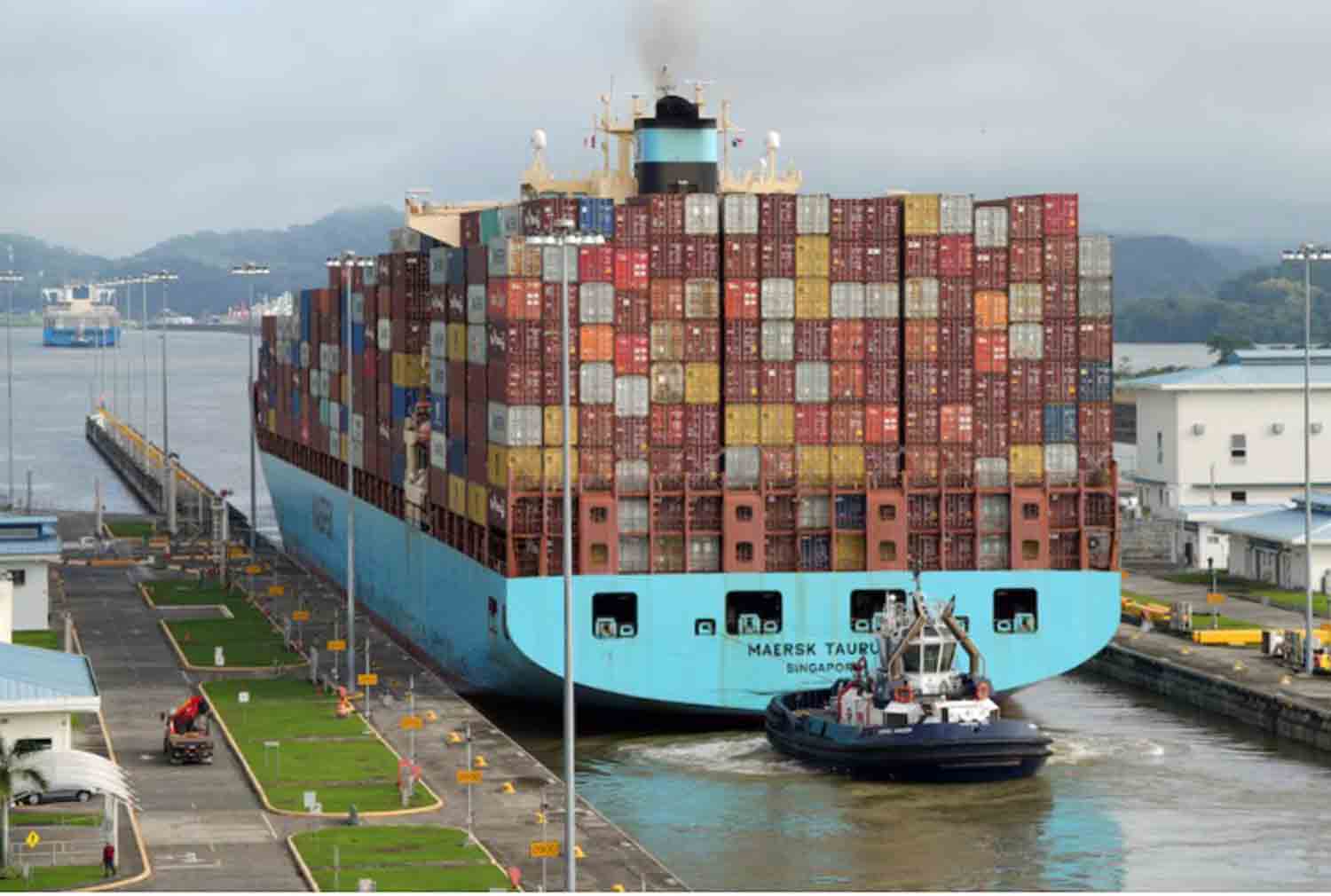
Panama’s Foreign Minister, Javier Martinez-Acha, also countered the incoming U.S. leader’s assertion regarding the potential reclamation of the vital waterway, which the U.S. constructed and controlled before transferring authority to Panama in 1999. “The canal is firmly under Panamanian control, and that will remain unchanged,” he stated to reporters on Tuesday.

Ambassador Daniel Fried, a former U.S. diplomat now affiliated with the Atlantic Council, remarked that Trump’s statements suggest a view of national strength rooted in territorial expansion, likening him to a “19th-century imperialist.”

Fried remarked that acquiring Greenland would undermine NATO, stating it would equate the U.S. to Vladimir Putin, the president of Russia. Trump’s intention to rename the Gulf of Mexico parallels his earlier commitment to change the name of Denali, North America’s tallest mountain, back to Mount McKinley. This name change was made by former President Barack Obama to honor Native American heritage.

Mexican Economy Minister Marcelo Ebrard, who is anticipated to be instrumental in upcoming U.S.-Mexico trade discussions, seemed to dismiss Trump’s suggestion to rename the Gulf of Mexico on Tuesday. He stated, “If we were to meet in 30 years, the Gulf of Mexico will still be known as the Gulf of Mexico,” emphasizing that the Mexican government would not engage in the controversy.

Typically, the U.S. Board of Geographic Names is responsible for designating geographic names, although presidents have the authority to rename features through executive orders.

NATO SPENDING

Regarding NATO funding, Trump proposed that member countries should allocate 5% of their gross domestic product to defense, a notable increase from the current 2% benchmark. He asserted, “I believe NATO should aim for 5%. They can all manage it, but they should be contributing 5%, not just 2%.” Trump has often criticized NATO allies for not contributing their fair share and suggested raising defense spending during his campaign.

NATO projects that by 2024, 23 out of its 32 members will achieve the 2% GDP spending target. Currently, no NATO member, including the U.S., allocates 5% of GDP to defense, according to NATO statistics. Poland leads in defense spending at 4.12% of GDP, followed by Estonia at 3.43% and the United States at 3.38%.

Trump reiterated his warning that “all hell will break out in the Middle East” if Palestinian Hamas militants do not release the hostages they took from Israel on October 7, 2023, by the time he assumes office. He emphasized that the situation would not bode well for Hamas or anyone else involved. His Middle East envoy, Steve Witkoff, expressed optimism about having positive updates regarding negotiations between Israel and Hamas by the time Trump is inaugurated.

During a freewheeling, hour-long press conference—his second since winning the election—Trump revisited a number of familiar grievances related to his criminal indictments. He specifically criticized Justice Juan Merchan, the New York judge set to sentence him on Friday for falsifying business records linked to hush money payments made to a porn star. Shortly after the press conference concluded, a New York appeals court rejected his latest attempt to delay the sentencing.

A U.S. judge has temporarily prevented Special Counsel Jack Smith from publishing a report regarding his investigations into Donald Trump’s alleged mishandling of classified documents and efforts to overturn the 2020 presidential election. Judge Aileen Cannon had previously dismissed the case against Trump concerning the illegal retention of classified materials after his presidency.

The event occurred in the lavish living room of Mar-a-Lago, Trump’s resort in Palm Beach, where several of his senior advisers observed the proceedings, while guests dined on the terrace outside. Trump was also questioned about the appropriateness of Elon Musk’s public comments on international matters. Recently, Musk, a billionaire and ally of Trump, has utilized his X platform to discuss European politics, including his support for Germany’s far-right Alternative for Germany party.

In response, Trump remarked, “I can say Elon is doing a good job, very smart guy. I don’t know the people you’re talking about.”

Lebanon will extradite the son of late cleric al-Qaradawi to the UAE, says the Prime Minister’s office

0
Abdul Rahman al-Qaradawi, an Egyptian opposition activist

Lebanon is preparing to extradite the son of the late prominent Muslim cleric Youssef al-Qaradawi to the United Arab Emirates, as announced by the Lebanese prime minister’s office on Tuesday.

On Sunday, family members of al-Qaradawi released a statement indicating that they had reached out to Lebanese Prime Minister Najib Mikati, requesting his intervention regarding the case of the Egyptian poet and writer, who also holds Turkish citizenship and resides in Istanbul with his family.

“We, as a family, place our trust in the wisdom of the Lebanese leadership and the honorable people of Lebanon,” the statement read. “Lebanon has long stood as a beacon for the defense of freedoms, and we urge the Lebanese prime minister, in the name of justice and humanity, to take immediate action to secure his release and facilitate his safe return to his family and three daughters awaiting him in Istanbul.”

Al-Qaradawi, the son of the late spiritual leader of the Muslim Brotherhood, Yusuf al-Qaradawi, was apprehended on December 28 following an Egyptian arrest warrant, according to a Lebanese judicial official cited by the AFP news agency and confirmed by the family. He was detained at the Masnaa border crossing after entering Lebanon from Syria.

An Egyptian court had sentenced al-Qaradawi in absentia to five years in prison on charges of “opposing the state and inciting terrorism,” the official stated.

The family noted that this ruling stemmed from an article written by al-Qaradawi in 2012 and cautioned that extraditing him to Egypt would put his life at risk.

Ukraine reports that its forces are undertaking ‘new offensive operations’ in the Kursk region of Russia

0
Investigators work in the courtyard of a damaged multi-story residential building following an alleged Ukrainian drone attack in the course of Russia-Ukraine conflict, in Ramenskoye in the Moscow region, Russia

On Tuesday, Ukraine announced that its military was “initiating new offensive actions” in the western Kursk region of Russia, marking its first significant comments following reports of a renewed Ukrainian advance in the area two days prior. Ukraine initially captured a portion of the Kursk region during a surprise operation last August and has maintained control over that territory for five months, despite some losses. The Russian defense ministry reported on Sunday that Kyiv had initiated a new counter-offensive.

Ukraine’s general staff, which typically restricts information for operational security, stated that Ukrainian forces had targeted a Russian command post near the settlement of Belaya in the Kursk region. The military indicated that this strike, along with other recent operations, was coordinated with ground forces that are “currently initiating new offensive operations” against Russian troops.

Subsequently, the military revised its Telegram statement, removing any reference to a new attack and substituting it with the more ambiguous term “combat operations,” without providing further clarification. The Russian defense ministry, which has described the Ukrainian counter-offensive as poorly executed in recent days, claimed that its forces had conducted strikes against Ukrainian units in the Kursk region. It detailed six locations where it asserted its troops had successfully engaged Ukrainian brigades, as well as seven additional sites, including one on the Ukrainian side of the border, where strikes on Ukrainian personnel and equipment were reported.

The noticeable increase in hostilities in the Kursk region occurs at a pivotal moment for Ukraine, whose forces, outnumbered and outgunned, are finding it challenging to fend off Russian advances in the east. Securing and maintaining a portion of Russian territory in the Kursk area has provided Ukraine with leverage in potential peace negotiations, as both parties aim to enhance their positions on the battlefield ahead of Donald Trump’s anticipated return to the White House.

The president-elect, set to take office on January 20, has consistently stated his intention to swiftly conclude the nearly three-year conflict, though he has not specified how he plans to achieve this. The U.S.-based Institute for the Study of War reported that geolocated footage released over the weekend indicated recent Ukrainian progress in three locations northeast of Sudzha. Meanwhile, Russian forces are attempting to launch attacks in other parts of the region, with military bloggers from Russia noting clashes in Malaya Loknya, located northwest of Sudzha.

Ukraine’s offensive in the Kursk region has not come without significant costs. By late 2024, Russian forces had advanced in eastern Ukraine at their fastest rate since 2022, currently controlling approximately 20% of Ukrainian territory. Both Western and Ukrainian sources estimate that around 11,000 troops from North Korea, an ally of Russia, are engaged alongside Russian forces in the area, although Russia has not confirmed their involvement.

Ukraine and the United States report substantial casualties, with U.S. Secretary of State Antony Blinken stating on Monday that over 1,000 North Koreans have been killed or wounded. On Tuesday, Ukraine’s special forces claimed to have killed 13 North Korean soldiers, sharing images on Telegram that they asserted depicted the soldiers’ bodies and identification documents. In a routine update, Kyiv’s general staff reported that there had been 27 Russian attacks in the Kursk region by Tuesday afternoon.

U.S. has determined that Sudan’s Rapid Support Forces committed genocide and imposed sanctions on their leader

0
Deputy head of Sudan's sovereign council General Mohamed Hamdan Dagalo speaks during a press conference at Rapid Support Forces head quarter in Khartoum, Sudan.

The United States announced on Tuesday that it has determined that members of Sudan‘s Rapid Support Forces (RSF) and their allied militias have committed acts of genocide in Sudan. In response, the U.S. imposed sanctions on the leader of the RSF due to a conflict that has resulted in the deaths of tens of thousands and displaced millions from their homes.

U.S. Secretary of State Antony Blinken stated that the RSF and associated militias have persistently targeted civilians, systematically executing men and boys based on their ethnicity, and have intentionally assaulted women and girls from specific ethnic groups through rape and other forms of sexual violence.

Blinken further noted that these militias have also attacked civilians attempting to flee the violence, resulting in the deaths of innocent individuals seeking safety. “The United States is dedicated to ensuring accountability for those responsible for these heinous acts,” he remarked.

The U.S. has imposed sanctions on RSF leader Mohamed Hamdan Dagalo, prohibiting him from entering the United States and freezing any U.S. assets he may possess. The Treasury Department highlighted that for nearly two years, Dagalo’s RSF has been engaged in a violent conflict with the Sudanese Armed Forces over control of the country, leading to tens of thousands of deaths, the displacement of 12 million Sudanese, and widespread famine.

The conflict between Sudan’s army and the paramilitary RSF has persisted for over 18 months, resulting in a humanitarian crisis that has hindered U.N. agencies from providing necessary relief. The violence escalated in April 2023 amid a power struggle between the Sudanese Armed Forces and the RSF, coinciding with efforts to transition to civilian governance.

Russia, Trump, and the West: Is there a solution to the Ukraine conflict?

0
Russian President Vladimir Putin and then-US President Donald Trump on the sidelines of the G20 Summit in Osaka, Japan, June 28, 2019.

Discussions regarding peace negotiations for Ukraine began last summer, and preparations now seem to be taking on a more formal character. Many are placing their hopes on Donald Trump, yet there is limited evidence to suggest that the incoming American president can ensure a successful outcome.

The suggested approach—initiating a ceasefire followed by peace talks—mirrors numerous regional conflicts from the 20th century, where external parties pressured combatants into ceasefires. These often resulted in unresolved tensions, leading to intermittent escalations and sometimes the involvement of peacekeeping forces.

In the case of Ukraine, this strategy would only be effective if the costs of the ongoing conflict for Moscow surpassed those of agreeing to a ceasefire. Currently, this is not the situation. It is likely that negotiations will unfold amid ongoing or even heightened hostilities.

The primary challenge remains the West’s lack of commitment. This uncertainty renders a comprehensive peace agreement involving Russia, the US, and Western Europe improbable in the near future. Nevertheless, a relatively stable peace in Ukraine could still be achievable—without the need for Western assurances.

Kiev: A Victim of Western Ambivalence

The Ukrainian conflict has been escalating for decades and has reached a military confrontation largely due to the West’s failure to provide clear commitments—both to Kiev and Moscow.

In the spring of 2022, Kiev was keen to engage in negotiations in Istanbul to halt the invasion, hoping for Western security guarantees. Meanwhile, Putin sought a significant agreement with the West to delineate spheres of influence. Ultimately, neither party achieved its objectives. The West, hesitant to propose meaningful solutions, chose instead to supply arms to Ukraine, effectively using it as a proxy in its struggle against Russia.

Initially, this approach appeared effective for NATO. Ukraine’s military achievements instilled optimism that a few additional tanks, aircraft, and sanctions could dismantle Russia’s economy and military capabilities, as well as President Vladimir Putin’s administration. However, by late 2022, the situation had transformed into a war of attrition, with Ukraine, due to its limited size and resources, depleting its strength much more rapidly than Russia.

Currently, as Ukraine confronts escalating difficulties on the battlefield and growing instability domestically, the circumstances are beginning to mirror those of spring 2022. Once again, Kyiv is seeking assurances from the West. President Zelensky has been actively requesting commitments from leaders such as Macron, NATO officials, and even Trump. Yet, similar to the discussions in Istanbul, the West is unable to provide substantial guarantees. Unlike in 2022, there are no alternative solutions on the table.

At that time, former UK Prime Minister Boris Johnson’s exhortation to “just fight” and Russia’s withdrawal from Kyiv galvanized both Ukraine and its Western allies. Today, however, the rhetoric lacks the same persuasive power. US National Security Advisor Jake Sullivan’s suggestion to deploy 18-year-olds to the front lines generates feelings of shame rather than hope, even among Ukraine’s most fervent supporters.

The Trump Factor: No Miracle Solutions

Many are now questioning whether Trump’s presidency could lead to peace in Ukraine. Although his rhetoric has softened and aligned more closely with Biden’s, his commitments remain ambiguous. The earlier claim of achieving peace in “24 hours” has shifted to “if I can.” He advocates for a robust Ukraine and NATO, showing little inclination to disrupt the West’s existing policies.

Trump’s reluctance to engage in military conflict may be sincere, but it is unlikely to produce meaningful outcomes. Achieving peace is not a matter of mere command; it necessitates confronting the underlying issues that fuel the conflict. Trump does not provide any viable solutions in this regard and may be incapable of doing so.

In contrast to Biden, Trump seems more inclined to transfer the responsibility of the conflict to Western Europe while redirecting his focus toward China. Although this strategy might offer Russia some advantages, it does not facilitate a resolution to the conflict or address the distribution of influence among nations. Neither the globalist West nor Trump appears prepared to engage in serious negotiations with Moscow.

Moscow’s Strategy: Forcing Kiev to the Brink

With little hope for support from the West or Trump, Moscow is intensifying its military efforts. By maintaining a consistent operational tempo, Russia aims to exhaust Ukraine to the point of failure. Ukraine’s urgent quest for peace, met only with demands for continued hostilities, may lead its leadership to recognize that direct negotiations with Moscow are essential for survival.

From a military standpoint, Russia’s strategy is evident. Although its forces have not yet achieved significant breakthroughs, they have adapted to systematically breach defenses. Observers and analysts have noted that since spring 2023, Russian progress has been gradual yet unyielding, resembling the relentless advance of a steamroller.

The Kremlin aims to establish circumstances that would compel Kiev to accept peace on terms favorable to Russia, specifically by relinquishing its status as a military and political threat to Moscow. To achieve this, the Kremlin is leveraging the psychological effects of unmet Western assurances alongside the ongoing devastation of Ukraine’s economy and society.

Alternative Scenarios

Although Russia currently appears to have the advantage, several other outcomes remain feasible:

A Ceasefire Without Commitment:

Russia may consider a ceasefire if it begins to deplete its resources—be it economically, militarily, or politically. Given that the West cannot provide guarantees to either party, such a ceasefire would likely only serve to delay the conflict for an extended period.

A Prolonged Low-Intensity Conflict:

Should Ukraine bolster its defenses and support systems, Russia might adopt a strategy focused on resource conservation, thereby scaling back its offensive actions. This scenario could lead to Ukraine becoming a “Palestinianized” state, characterized by fragmentation and a militarized environment rife with instability.

Escalation:

Should Trump or NATO choose to pursue direct military action, there is a significant risk that Russia may respond with an escalation, potentially involving nuclear capabilities. While Western leaders may believe that Putin would retreat, the Kremlin is more likely to retaliate, which could quickly intensify the situation.

Conclusion: Waiting Out the Clock

Moscow seems assured of its capacity to prolong the conflict for at least another year, if not more. It is banking on Ukraine ultimately succumbing to the pressures of military and economic strain. The Kremlin perceives no necessity to engage meaningfully with the globalist West or Trump. Instead, its objective is to establish peace on its own terms, compelling Ukraine to abandon its anti-Russian position and ensuring its long-term security.

Although there are alternative paths available, they hinge on elements beyond Russia’s influence. For the time being, Moscow remains determined to advance its agenda, believing that time favors its position.

US and Taliban are in talks for a detainee exchange, reports the Wall Street Journal

0
Chain link fence and concertina wire surrounds a deserted guard tower within Joint Task Force Guantanamo's Camp Delta at the U.S. Naval Base in Guantanamo Bay, Cuba.

The Biden administration is currently in discussions with Afghanistan regarding the potential exchange of Americans held in the country for at least one prominent prisoner incarcerated at Guantanamo Bay, who is believed to have connections to former al Qaeda leader Osama bin Laden, as reported by the Wall Street Journal on Tuesday.

Neither the White House nor the U.S. State Department provided immediate comments on the report, and representatives from the Afghan Taliban also did not respond right away.

According to the WSJ, President Joe Biden’s administration is aiming to secure the release of three Americans—Ryan Corbett, George Glezmann, and Mahmood Habibi—who were captured in 2022, in return for Muhammad Rahim al-Afghani. Corbett and Habibi were taken in separate incidents in August 2022, following the Taliban’s takeover of Kabul during a tumultuous U.S. withdrawal, while Glezmann was detained later that year while traveling as a tourist.

Al-Afghani is identified as a high-ranking al Qaeda operative who was moved to Guantanamo in 2008 after being held by the CIA. The negotiations have reportedly been ongoing since July, as noted by the WSJ, which referenced sources who participated in a classified briefing with White House national security adviser Jake Sullivan last month. This report follows the Biden administration’s recent transfer of 11 Guantanamo detainees to Oman, significantly reducing the prison population at the facility in Cuba as part of efforts to close it before the president’s term ends on January 20.

Trump Jr. has landed in Greenland following his father’s renewed interest in the territory

0
Donald Trump Jr. speaks during a campaign rally at Madison Square Garden

Donald Trump Jr. arrived in Nuuk, the capital of Greenland, on Tuesday, fueling speculation regarding American interest in the resource-abundant Arctic territory. This visit follows his father, President-elect Donald Trump, expressing renewed enthusiasm for the region.

Trump Jr. landed via private jet around 1250 GMT, as reported by a livestream from Nuuk airport, and characterized the trip as a personal visit.

“I am not purchasing Greenland. Interestingly, I am actually embarking on a lengthy personal day trip to Greenland,” Trump Jr. stated in his podcast on Monday, emphasizing that he was there as a tourist.

President-elect Trump, set to assume office on January 20, had previously lauded the island on his social media platform, Truth Social, vowing to “MAKE GREENLAND GREAT AGAIN!” He remarked, “Greenland is an incredible place, and the people will benefit tremendously if, and when, it becomes part of our Nation.”

In response, Greenland’s Prime Minister Mute Egede has reiterated that the island is not for sale, while also intensifying calls for independence from Denmark in his New Year address.

Spain asserts that social media platforms, including Musk’s X, must remain neutral and avoid interference

0
'X' logo is seen on the top of the headquarters of the messaging platform X, formerly known as Twitter, in downtown San Francisco, California, U.S.

Spain’s government spokesperson stated on Tuesday that social media platforms ought to maintain neutrality and refrain from engaging in the political matters of other nations. Pilar Alegria addressed inquiries regarding the notable conflict involving billionaire Elon Musk, the owner of the social messaging platform X, and prominent European leaders, including Britain’s Keir Starmer and France’s Emmanuel Macron.

“We hold the view that these platforms should operate with complete impartiality and, most importantly, without interference,” she remarked during a press conference.

Additionally, a spokesperson for the European Commission noted on Monday that while Musk is entitled to share his opinions on European politics, X is required to comply with the regulations set forth in the EU’s Digital Services Act. This legislation mandates that large online platforms assess and mitigate potential risks associated with electoral processes and public discourse.

China called U.S. concerns about security risks from Chinese drones “irresponsible”

0
A drone is seen in the sky as Chinese drone maker DJI holds a demonstration to display an app that tracks a drone's registration and owner in Montreal, Canada.

China criticized the United States as “extremely irresponsible” for what it described as “groundless suspicions” regarding information security risks associated with its drone systems, according to a statement from its commerce ministry on Tuesday.

The Chinese government expressed strong dissatisfaction and firm opposition to the U.S. investigation into its drone technology, indicating that it would closely monitor developments in this matter. Furthermore, China called on the U.S. to acknowledge the facts and to cease what it termed “erroneous practices.”

On Thursday, the U.S. Commerce Department announced that it was contemplating new regulations that could impose restrictions or a ban on Chinese drones within the United States, citing concerns related to national security.

Jordan and Syria have agreed to form a joint security committee to enhance border security

0
Syrian Foreign Minister Asaad Hassan al-Shibani and Jordanian Foreign Minister Ayman Safadi shake hands during a press conference as they meet in Amman, Jordan.

Jordan and Syria have reached an agreement to establish a joint security committee aimed at securing their shared border, addressing arms and drug trafficking, and preventing the resurgence of Islamic State militants, as stated by the Jordanian foreign minister on Tuesday.

Western anti-narcotics officials have reported that captagon, a highly addictive amphetamine-type stimulant, has been mass-produced in Syria for years, with Jordan serving as a transit route to the oil-rich Gulf states.

Since 2023, the Jordanian military has carried out several pre-emptive airstrikes in Syria, targeting militias believed to be involved in the drug trade and their associated facilities, according to Jordanian officials.

During a joint press conference with Syrian Foreign Minister Asaad Hassan al-Shibani, Jordanian Foreign Minister Ayman Safadi emphasized the importance of border security, particularly concerning the threats of arms and drug smuggling, as well as the resurgence of Islamic State. “Our security is interconnected, and we will work together to tackle these shared challenges,” he stated.

Shibani, who visited Amman after trips to Qatar and the United Arab Emirates following the December 8 fall of President Bashar al-Assad, assured Safadi that drug smuggling would no longer threaten Jordan under Syria’s new Islamist leadership. “The new circumstances in Syria have eliminated the threats to Jordan’s security,” Shibani remarked. “Regarding captagon and drug trafficking, we assure you that this issue is resolved and will not return. We are prepared to cooperate extensively on this matter.”

In response to an inquiry regarding U.S. sanctions on Syria, Shibani stated that the recent decision by Washington to relax restrictions on humanitarian assistance for Syria should be viewed as a preliminary step toward completely lifting the sanctions. These sanctions were originally enacted to isolate the Assad administration due to its violent repression of dissent. He emphasized that the current sanctions significantly hinder Syria’s recovery from over a decade of brutal civil conflict.

Safadi mentioned that Jordan is prepared to supply electricity to post-Assad Syria without delay and is also making efforts to provide gas to the country.

Russia has reported that its military conducted substantial attacks on Ukrainian forces in the Kursk region

0

Russia’s defense ministry announced on Tuesday that its forces had delivered significant strikes against Ukrainian units in the western Kursk region, where Ukraine’s military reported an increase in hostilities over the past 24 hours. Ukraine, which took control of part of the Kursk region in early August and has maintained that hold for five months, initiated a new offensive in the area on Sunday but has not disclosed specific details or objectives of the operation.

On Tuesday, Ukraine’s general staff reported 94 clashes in the Kursk region over the previous day, a notable rise from 47 the day before. The U.S.-based Institute for the Study of War noted that geolocated footage released on Sunday and Monday suggested recent Ukrainian progress in three areas northeast of Sudzha. Meanwhile, Russian forces were reportedly attempting to launch attacks in other parts of the region, with military bloggers from Russia indicating ongoing fighting in Malaya Loknya, located northwest of Sudzha.

A statement from the Russian defense ministry identified six locations where it claimed to have defeated Ukrainian brigades, along with seven additional sites—one of which is on the Ukrainian side of the border—where it asserted strikes had been conducted against Ukrainian troops and equipment. Reuters has not been able to independently verify the battlefield accounts from either side. Securing and holding a portion of Russian territory in the Kursk region has provided Ukraine with leverage in potential peace negotiations, as both parties seek to enhance their positions ahead of Donald Trump’s anticipated return to the White House.

The president-elect of the United States, set to take office on January 20, has consistently stated his intention to swiftly conclude the nearly three-year conflict, although he has not specified the methods to achieve this.

Since last August, Ukraine’s military operations in Kursk have incurred significant costs, as Russia has made rapid advances in eastern Ukraine, marking the fastest progress since 2022. Currently, Russia occupies approximately 20% of Ukraine’s territory.

According to assessments from Western and Ukrainian sources, around 11,000 troops from North Korea, an ally of Russia, are engaged alongside Russian forces in Kursk. Russia has not confirmed or denied their involvement. Both Ukraine and the United States report substantial casualties, with U.S. Secretary of State Antony Blinken stating on Monday that over 1,000 North Korean soldiers have been killed or injured.

On Tuesday, Ukraine’s special forces reported the elimination of 13 North Korean soldiers, sharing images on Telegram that they claimed depicted the soldiers’ bodies and identification documents.

Trump’s Ukraine aide postpones trip to Kiev

0
Keith Kellogg during a Senate armed services committee hearing on the conflict in Ukraine.

The Ukraine aide to the US president-elect, Keith Kellogg, has delayed his scheduled visit to Kiev until after Donald Trump‘s inauguration, as reported by Reuters on Tuesday. The retired lieutenant general had originally intended to meet with Ukrainian leaders in early January.

The reasons for this postponement remain unclear, and no new date for the visit has been established, according to the news agency.

Bloomberg noted last month that Kellogg was also receptive to the idea of meetings in Moscow if an invitation were extended. This trip would primarily aim to gather information rather than pursue specific policy objectives, as reported by the outlet. However, Reuters did not mention any plans regarding Moscow in its report on Monday.

Kellogg has previously voiced concerns regarding the ongoing Ukraine conflict, remarking that “this has become a war of attrition that’s going to kill a whole generation of young men.”

Trump has consistently asserted that he could resolve the conflict within 24 hours of taking office. He has also criticized outgoing President Joe Biden’s choice to allow Kiev to use US-supplied missiles to strike deep into Russia, labeling it a perilous escalation.

Furthermore, Trump has indicated that he might withdraw aid to Ukraine if the country does not seek a peace agreement. He suggested last month that he anticipates Vladimir Zelensky might need to consider certain territorial concessions as part of a potential peace settlement.

Moscow has consistently expressed its willingness to engage in dialogue regarding Ukraine without any preconditions, referencing the preliminary agreements established in Istanbul in 2022 and the current circumstances on the ground. President Vladimir Putin has identified several prerequisites for a peaceful resolution, including the withdrawal of Ukrainian forces from the Donbass region, as well as from Kherson and Zaporozhye, in addition to Ukraine renouncing its aspirations to join NATO.

A peace proposal co-authored by Keith Kellogg and presented to former President Trump earlier this year suggests freezing the conflict along the existing front lines and imposing a ten-year moratorium on Ukraine’s NATO membership. Russian Foreign Minister Sergey Lavrov has remarked that Kellogg should take a more in-depth look at the complexities surrounding the Ukrainian situation.

Israel has entered into agreements with defense contractor Elbit to produce bombs locally

0
Logo of Israeli defence electronics firm Elbit Systems is seen at their offices in Haifa, Israel.

Israel’s Defence Ministry announced on Tuesday that it has finalized agreements totaling approximately $275 million with Elbit, the nation’s largest private arms manufacturer, to produce heavy bombs and essential raw materials for defense, thereby decreasing reliance on foreign imports.

These strategic contracts are deemed vital for bolstering the operational endurance and force development capabilities of the Israel Defence Forces (IDF). The ministry emphasized that minimizing import dependence is a key takeaway from the recent conflict in Gaza.

One of the agreements entails Elbit providing the military with thousands of heavy aerial munitions, while the other will facilitate the establishment of a facility to manufacture raw materials that have primarily been imported. Although the ministry did not disclose the specific raw materials, it indicated that they are integral to munitions production.

Eyal Zamir, the director general of the defence ministry, stated, “Today, we are establishing the groundwork for enhancing manufacturing autonomy in two essential domains for the IDF’s operational sustainability: the domestic production of heavy aerial munitions and the creation of a national raw materials facility.”

He further noted that these agreements will guarantee Israel’s capability to produce various types of bombs and munitions independently.

Some Western nations have voiced concerns regarding arms supplies to Israel amid the ongoing conflict in Gaza, with U.S. President Joe Biden having previously halted shipments of certain munitions due to worries about their use in densely populated areas. Zamir clarified that the initiative for domestic production began prior to the Hamas attack on Israel on October 7, 2023, but the subsequent war has expedited these plans.

Elbit’s CEO, Bezhalel Machlis, stated that the company is dedicated to significantly enhancing the munitions independence of the Israel Defence Forces.

UAE is in talks with the US and Israel about forming a provisional government for Gaza after the conflict

0
Buildings lie in ruin in Beit Hanoun in the Gaza Strip, amid the ongoing conflict between Israel and Hamas, as seen from southern Israel.

The United Arab Emirates has engaged in discussions with Israel and the United States regarding the potential establishment of a temporary administration for post-war Gaza. This arrangement would remain in place until a reformed Palestinian Authority is ready to assume control, as reported by sources familiar with the negotiations.

According to initial reports by Reuters, these confidential discussions have explored the possibility of the UAE, the United States, and other nations overseeing the governance, security, and reconstruction efforts in Gaza following the withdrawal of Israeli military forces. This interim governance would last until a Palestinian administration is prepared to take over, as indicated by multiple foreign diplomats and Western officials.

The UAE maintains a close security partnership with the United States and, unlike many other Arab nations, has established diplomatic relations with Israel. This unique position grants the Gulf state a degree of influence over the Israeli government led by Prime Minister Benjamin Netanyahu. Despite over a year of conflict, Israel has been hesitant to articulate its vision for Gaza, while the international community has faced challenges in developing a feasible plan, according to the sources who requested anonymity due to the sensitive nature of the discussions.

The diplomats and officials emphasized that the concepts arising from the UAE’s discussions are still in a preliminary stage, lacking detailed formulation or formal endorsement by any government. In these private talks, Abu Dhabi has been advocating for a reformed Palestinian Authority to govern Gaza, the West Bank, and East Jerusalem as part of an independent Palestinian state, a proposal that has faced public opposition from Israel.

The UAE has stated it will not engage in any initiatives that do not prioritize substantial reforms of the Palestinian Authority, its empowerment, and the creation of a viable roadmap towards a Palestinian state, according to a UAE official’s comments to Reuters regarding ongoing discussions. “These critical components, which are currently absent, are vital for the success of any plan following the situation in Gaza.”

The Palestinian Authority was formed three decades ago as part of the Oslo Accords signed between Israel and the Palestinians, granting it limited governance over the West Bank and Gaza. While it still maintains some authority in the Israeli-occupied West Bank, it was ousted from Gaza in 2007 by Hamas following a brief civil conflict.

A spokesperson from the U.S. State Department informed Reuters that discussions have taken place with various partners, including the UAE, regarding governance, security, and reconstruction options, with multiple draft proposals and ideas being presented. “These discussions are ongoing as we explore the most effective path forward,” the spokesperson noted, refraining from elaborating on “private diplomatic conversations.”

The Israeli prime minister’s office chose not to comment on this matter, and the Palestinian Authority did not respond to inquiries from Reuters. Furthermore, in addition to the proposed reforms for the PA, four diplomats and Western officials indicated that Emirati representatives had proposed the potential involvement of private military contractors as part of a peacekeeping force in Gaza post-conflict. Other sources corroborated that they were briefed on what they characterized as Emirati proposals for the post-war scenario, which included the consideration of such forces.

Diplomats and Western officials have indicated that the deployment of private military contractors would raise significant concerns among Western nations. These contractors, employed by the United States and other governments, have been accused of various serious offenses, including torture, human rights violations, and excessive use of force, particularly in conflict zones like Iraq and Afghanistan. The official from the UAE did not address inquiries regarding the utilization of military contractors.

RECONSTRUCTION WILL TAKE YEARS

The process of rebuilding Gaza, along with its political institutions, is anticipated to span several years and require an investment of tens of billions of dollars, necessitating considerable international assistance after 15 months of Israel’s extensive military operations.

Although the UAE has publicly criticized the actions of Israel’s military and Prime Minister Netanyahu, Israel still seeks the involvement of the oil-rich nation in the post-war reconstruction of Gaza, as noted by two former Israeli officials who requested anonymity. Like Israel, the Gulf state is opposed to Hamas, which is recognized as a terrorist organization by the U.S. and was responsible for the October 7, 2023, attack on Israel that ignited the conflict.

Abu Dhabi perceives Hamas and similar Islamist groups as threats to stability. UAE officials have also voiced concerns about the war’s repercussions on regional stability and the progress towards enhanced regional integration and economic development.

Basem Naim, a senior official of Hamas, responded to inquiries about the UAE’s proposals by stating to Reuters that Gaza must emerge from the conflict as “distinctly Palestinian” and free from “foreign interventions.” Meanwhile, the United States, in collaboration with Egypt and Qatar, is advocating for a ceasefire between Israel and Hamas in Gaza. In late December, both parties exchanged accusations regarding the delays in achieving a ceasefire, which had seemed imminent the previous month. On Monday, U.S. Secretary of State Antony Blinken expressed the desire for a ceasefire agreement to be finalized within the next two weeks.

Regarding Gaza’s future, Brian Hughes, a spokesperson for Donald Trump’s transition team, indicated that the president-elect, set to take office on January 20, intends to collaborate closely with Arab and Israeli partners to facilitate Gaza’s potential prosperity.

REFORM OF PALESTINIAN AUTHORITY

In terms of reforming the Palestinian Authority, the UAE has stated it would only deploy troops to a post-war multinational mission if invited by the Palestinian Authority and with U.S. involvement. However, Israeli Prime Minister Netanyahu has expressed opposition to the current governance of Gaza by the Palestinian Authority, citing longstanding concerns over its educational curriculum, which he claims incites animosity towards Israel, as well as its practice of providing salaries to families of Palestinians incarcerated in Israel. Emirati officials have called for a new prime minister to lead the Palestinian Authority, frequently criticizing its perceived corruption and ineffectiveness during private discussions, although specific details were not disclosed.

Palestinian Prime Minister Mohammad Mustafa, who assumed office in March, has committed to enacting reforms within the Palestinian Authority, which has faced financial instability for years due to reduced funding from donor nations until issues of corruption and mismanagement are addressed.

Emirati officials have identified former prime minister Salam Fayyad, a U.S.-educated ex-World Bank official, as a credible candidate to lead a reformed Palestinian Authority, according to various diplomats and officials. Fayyad held the position of prime minister from 2007 until his resignation in 2013 following a disagreement with President Mahmoud Abbas, who continues to serve in his role. Reuters has been unable to obtain a comment from Fayyad.

China’s Shandong Port Group has placed U.S.-sanctioned oil vessels on a blacklist, according to traders

0
The fully automated container terminal at Qingdao Port of Shandong Port Group is the first of its kind in Asia.

China’s Shandong Port Group announced on Monday a prohibition against U.S.-sanctioned oil vessels accessing its port network, as reported by three traders. This move could limit the entry of blacklisted vessels into significant energy terminals along China’s eastern coastline.

The notice, which was shared with Reuters by two traders and corroborated by a third, explicitly prohibits ports from allowing docking, unloading, or providing services to vessels listed by the Office of Foreign Assets Control under the U.S. Department of Treasury.

Shandong Port Group manages key ports on the eastern coast of China, including Qingdao, Rizhao, and Yantai, which serve as crucial terminals for the importation of sanctioned oil. Shandong Port Group has not provided any comments on this matter.

Musk raises concerns about the possibility of US taxpayer funds being allocated to the Taliban

0

Elon Musk, the billionaire entrepreneur and owner of X, sparked a significant discussion regarding U.S. foreign aid after expressing worries that American taxpayer funds could be indirectly supporting the Taliban. This conversation gained traction following a letter from Congressman Tim Burchett to President-elect Donald Trump, in which he called for an end to aid programs that he claims are financing the Taliban.

Musk, a prominent supporter of Trump, took to X to question, “Are we really sending U.S. taxpayer money to the Taliban?” Shortly thereafter, Burchett replied emphatically, stating, “We are. The next terrorist attack will be 100% fully funded by the American taxpayer.”


The issue also caught the attention of investigative journalist Lara Logan, who described the alleged aid as “madness.” In her post on X, she shared Burchett’s letter and remarked, “Imagine sending $40 million a week of your taxes to these terrorists (the Taliban). It sounds insane because it is pure madness.”

Concerns raised in the Congressman’s letter

In his correspondence to Trump, Burchett claimed that U.S. foreign aid during the Biden administration had inadvertently channeled funds to the Taliban. He referenced testimony from Secretary of State Antony Blinken during the 118th Congress, where Blinken reportedly acknowledged that non-governmental organizations had paid nearly $10 million in taxes to the Taliban.

Burchett highlighted the significant cash transfers made to Afghanistan’s central bank, indicating that these transactions are challenging to monitor and susceptible to misuse by the Taliban. He stated, “These cash shipments are auctioned off, making them nearly impossible to trace afterward. This is how the Taliban secures funding and intends to finance terrorism globally.”

Legislative initiatives

The congressman mentioned a bill he introduced in 2023, designed to deter foreign governments from aiding the Taliban and to enforce stricter reporting requirements on aid programs associated with Afghanistan’s central bank. This legislation received unanimous approval in the House of Representatives but was stalled in the Senate by then-Majority Leader Chuck Schumer.

“I intend to reintroduce this legislation in the 119th Congress and would greatly appreciate your support,” Burchett communicated to Trump, urging him to focus on eliminating what he termed “wasteful foreign aid expenditures.”

This conversation highlights broader issues regarding the accountability of U.S. foreign aid and its potential for misuse. Critics contend that funds meant for humanitarian assistance in Afghanistan could inadvertently strengthen the Taliban, which regained control of the nation in August 2021.

China values Trump’s comments regarding discussions with Xi

0
U.S. President Donald Trump and China's President Xi Jinping shake hands before their bilateral meeting during the G20 leaders summit in Osaka, Japan.

China places significant emphasis on the statements made by Donald Trump, as indicated by the foreign ministry’s response to the U.S. President-elect’s comments on Monday regarding discussions with Chinese President Xi Jinping via their representatives.

Trump expressed confidence in his ability to establish a positive relationship with Xi, emphasizing the need for mutual respect and cooperation, while reiterating his view that China has been economically exploiting the United States.

The spokesperson for the ministry did not verify the existence of communications between the leaders’ aides but noted that China and the U.S. have continued to engage in dialogue through multiple channels.

Trump has said he and Xi have been communicating through their aides

0
Donald Trump meets with Chinese President Xi Jinping

U.S. President-elect Donald Trump stated on Monday that he and Chinese President Xi Jinping have been communicating through their representatives, expressing optimism about their future relationship. In an interview with conservative talk show host Hugh Hewitt, Trump mentioned, “We’ve already been in discussions through their representatives.”

Taking office on January 20, Trump characterized Xi as a strong and influential figure, highly regarded in China. He expressed confidence, saying, “I believe we will likely get along very well. However, it must be a reciprocal relationship,” reiterating his claim that China has been economically “ripping off” the United States.

In response, China’s foreign ministry emphasized the significance of Trump’s comments during a regular briefing on Tuesday. Spokesperson Guo Jiakun stated, “China is committed to fostering stable, healthy, and sustainable development in Sino-U.S. economic and trade relations,” highlighting the importance of mutual respect and “win-win” cooperation.

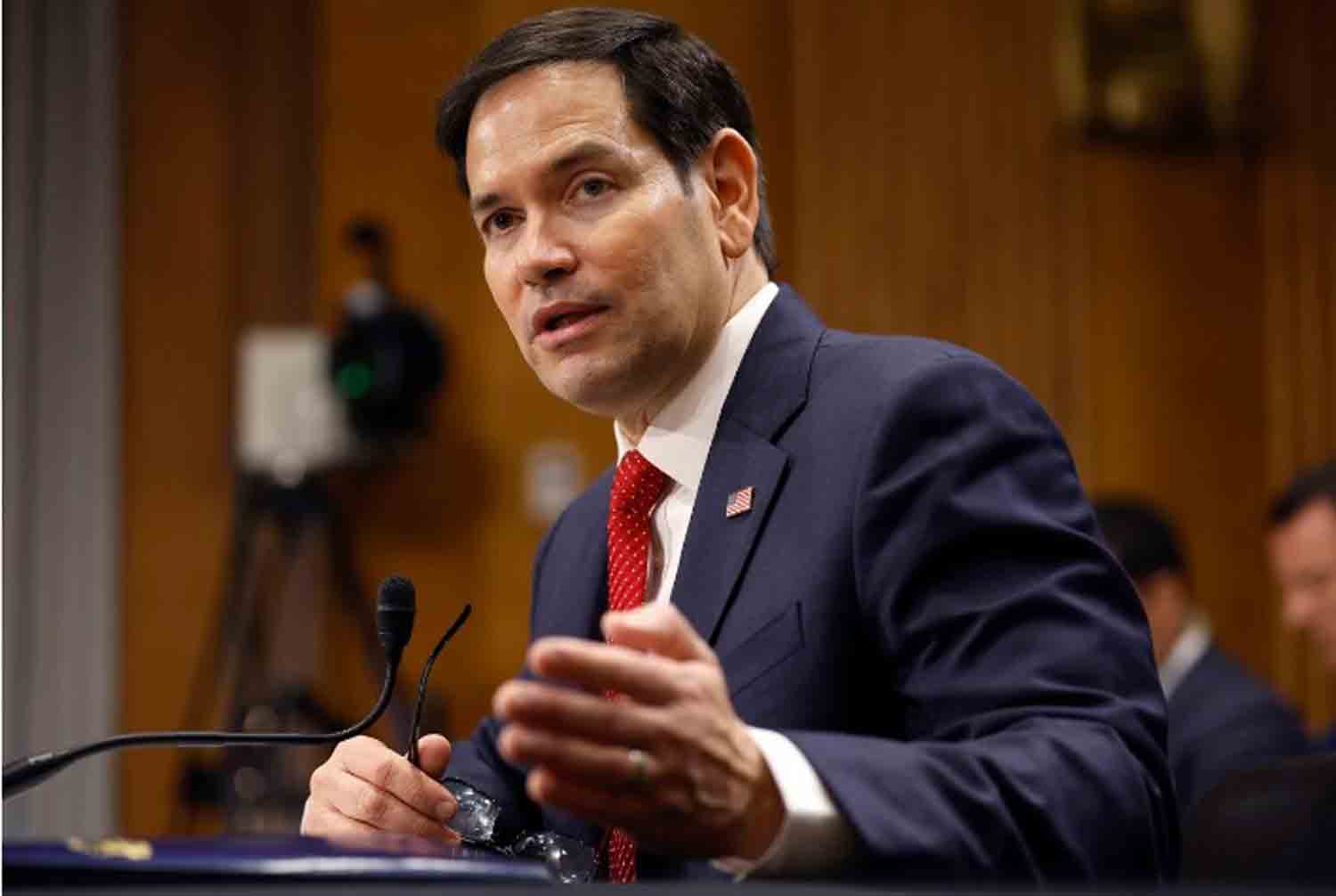
While Guo did not confirm any direct exchanges between the leaders’ aides, he noted that communication between China and the U.S. continues through various channels. Trump has extended invitations to Xi and other foreign leaders for his inauguration in Washington later this month, although experts suggest that Xi is unlikely to attend. Additionally, Trump has appointed several individuals known for their tough stance on China to key positions in his administration, including Senator Marco Rubio as secretary of state.

Trump has indicated that he will implement an extra 10% tariff on Chinese imports unless China takes further action to curb the trafficking of the highly addictive drug fentanyl. During his campaign, he also threatened to impose tariffs exceeding 60% on Chinese products.

U.S. alleges that Russia is financially supporting both factions in the Sudan conflict

0
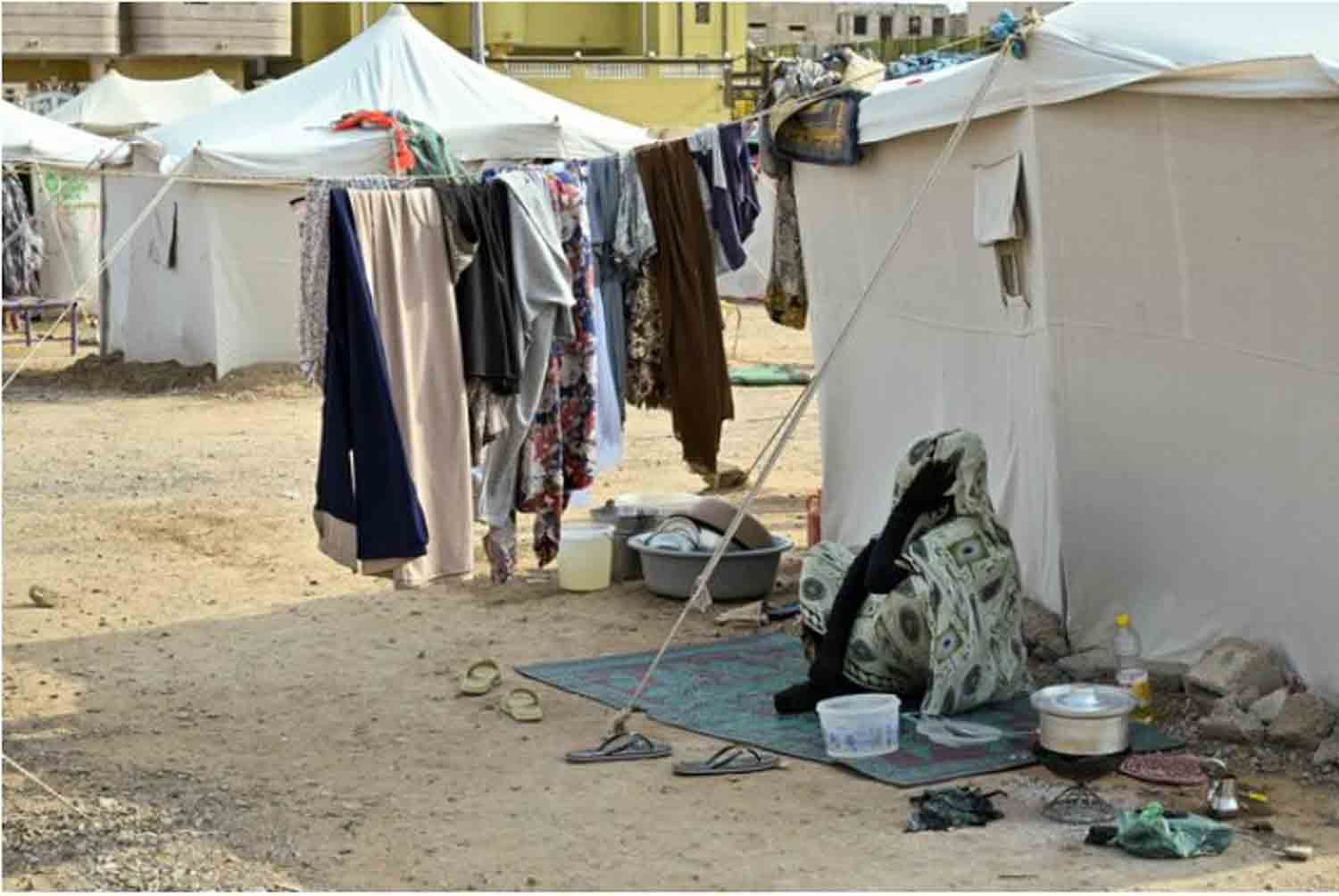
A displaced woman sits outside at a school turned into a shelter, in Port Sudan, Sudan.

The United States accused Russia at the United Nations on Monday of providing financial support to both factions involved in the conflict in Sudan. This marks a notable escalation from Washington’s earlier claims that Moscow was manipulating both sides to further its political aims.

The conflict began in April 2023, stemming from a power struggle between the Sudanese Armed Forces and the paramilitary Rapid Support Forces (RSF) as the country was preparing for a transition to civilian governance. This has resulted in the largest displacement and hunger crisis in the world.

In November, Russia vetoed a U.N. Security Council resolution that urged an immediate halt to hostilities and the facilitation of humanitarian aid. The other 14 members of the council supported the resolution.

“Russia opted for obstruction: standing isolated as it voted to jeopardize civilian lives while financing both sides of the conflict – yes, both sides,” stated U.S. Ambassador to the U.N., Linda Thomas-Greenfield, during the council meeting, without providing additional specifics.

When pressed for more information, a spokesperson for the U.S. mission to the U.N. indicated that Washington is aware of Russia’s “ongoing interest in Sudan’s gold trade” and denounces any material assistance to the conflicting parties, whether through illegal gold transactions or military supplies.

“We believe that the cooperation between Sudanese authorities and sanctioned Russian entities in gold mining could be detrimental to Sudan’s long-term interests and the aspirations of the Sudanese people for peace,” the spokesperson added.

Russia’s Deputy U.N. Ambassador Dmitry Polyanskiy expressed regret over the United States’ tendency to evaluate other global powers through its own standards. He stated, “It is clear that in the Pax Americana, which our American colleagues strive to maintain at any cost, relationships with other nations are established solely through their exploitation and illicit schemes designed for U.S. profit.”

In December, Russia’s U.N. Ambassador Vassily Nebenzia dismissed what he termed “falsehoods propagated by Western nations and their media,” asserting that Moscow was attempting to navigate both sides of the conflict for its own benefit.

During what she indicated might be her final council meeting, Thomas-Greenfield became visibly emotional while discussing the situation in Sudan, a crisis that has been a significant focus during her four-year tenure at the U.N. “Despite my disappointment in not being able to achieve more, and that we – all of us – could have done more, I remain hopeful,” she remarked. “I am hopeful that the representatives gathered here – colleagues who have become friends – will carry on this vital mission and ultimate responsibility.”

Thomas-Greenfield was appointed by President Joe Biden, and Donald Trump is set to take over on January 20.

Taiwan’s coast guard reports that bad weather has hindered the investigation into the damaged undersea cable

0

Taiwan’s coast guard has reported suspicions that a vessel may have damaged an undersea communications cable over the weekend, but adverse weather conditions hindered their personnel from boarding the ship for an investigation.

On Saturday, the coast guard indicated that a ship registered in both Cameroon and Tanzania was believed to be responsible for the damage to the cable located northeast of the island. By late Monday, they announced that poor weather had prevented them from boarding the vessel, which had since proceeded to Busan, South Korea. They confirmed that all seven crew members were Chinese nationals and that the unnamed owner was based in Hong Kong.

The coast guard noted that, referencing previous incidents of undersea cable damage in the Baltic Sea last year, it is challenging to ascertain the vessel’s true intentions based on its historical routes. This statement alludes to concerns raised by Baltic Sea nations following Russia’s invasion of Ukraine in 2022.

China’s Taiwan Affairs Office has not provided a response to inquiries regarding the situation.

Taiwan, which China claims as its territory, has expressed concerns over ongoing Chinese military activities in the region, including balloon overflights and sand dredging operations. These actions, characterized as “grey zone” tactics, aim to exert pressure on Taiwan without engaging in direct conflict. A senior security official from Taiwan informed Reuters that Taipei has sought assistance from Seoul regarding the ship, but South Korea’s coast guard has not yet responded to requests for comment.

Taiwan’s Ministry of Digital Affairs announced late Monday that the damage to the undersea cable had not impacted communications, with repairs anticipated to be completed by February 3. In 2023, two undersea cables linking the Taiwan-controlled Matsu islands, located near the Chinese coast, were severed, isolating the 14,000 residents from internet access. Authorities initially reported that a Chinese fishing vessel and a freighter were responsible for the incident, although they found no evidence suggesting that Beijing intentionally interfered with the cables.

In recent years, Taiwan has focused on enhancing its emergency response capabilities, preparing for various crises, including natural disasters and military conflicts, by developing alternative communication methods such as satellite systems in the event that its international sea cables are compromised.