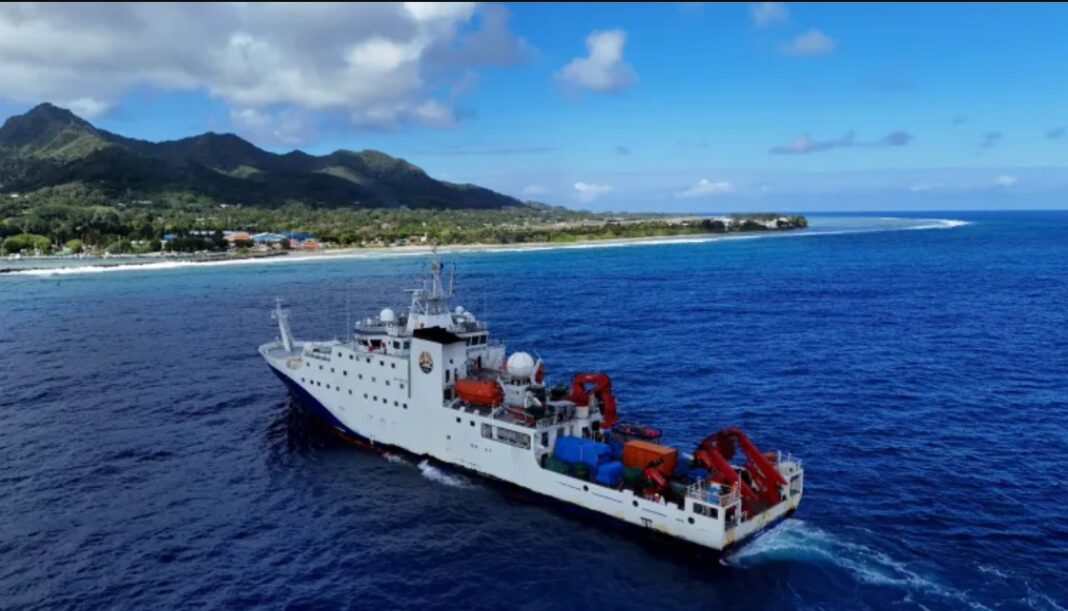
The appearance of a Chinese oceanographic research vessel near India’s Agni-5 missile test corridor has triggered fresh concerns about the Indian Ocean evolving into a frontline intelligence battlefield.
The vessel — identified as Da Yang Hao — was observed loitering near India’s declared missile testing zone between May 6 and May 9, coinciding precisely with New Delhi’s advanced Agni-5 MIRV test.
The timing has raised serious questions about whether China is institutionalizing persistent surveillance of India’s strategic weapons programs.
Agni-5 MIRV Test: A Major Strategic Milestone
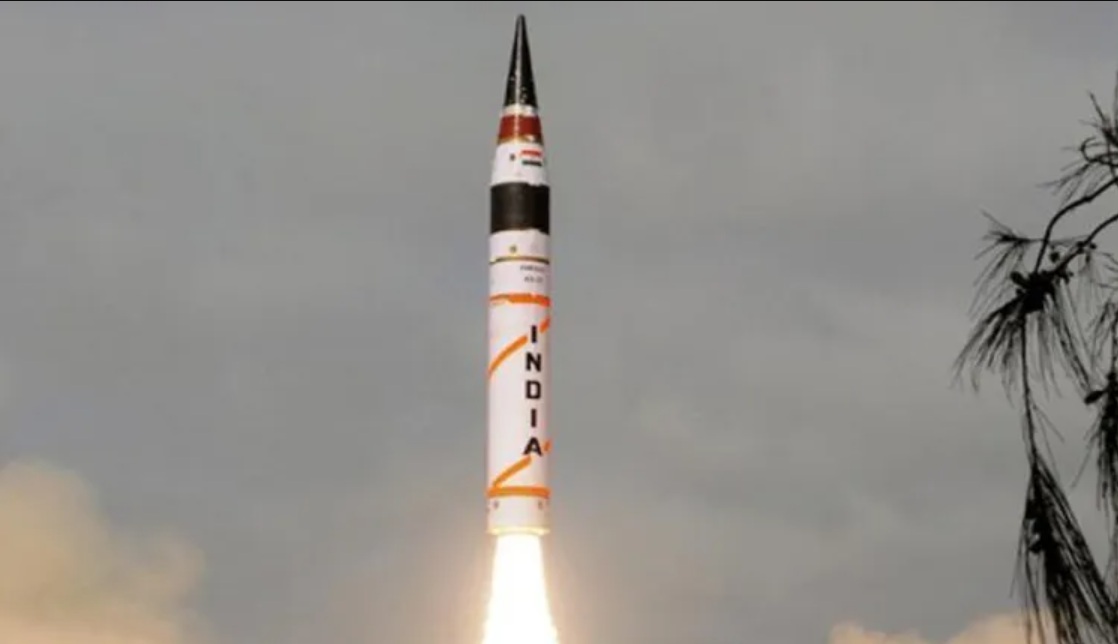
India’s Agni-5 test — conducted from Dr. APJ Abdul Kalam Island — marked a significant leap in its nuclear deterrence capability.
Key Highlights:
- Range exceeding 5,000 km
- MIRV capability (Multiple Independently Targetable Re-entry Vehicles)
- Ability to strike multiple targets from a single missile
This places India among a select group of nuclear powers with operational MIRV technology.
The system enhances:
- Warhead survivability
- Penetration against missile defenses
- Strategic second-strike capability
Why the Chinese Vessel Matters
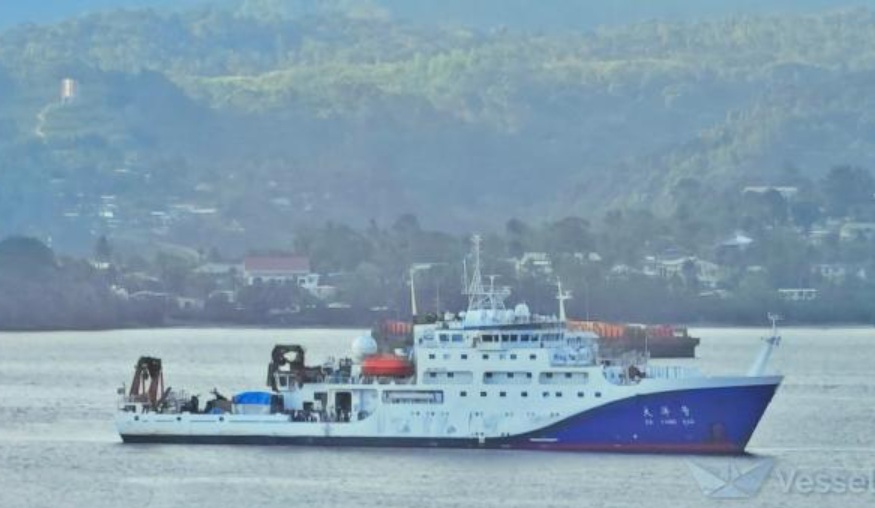
Although officially classified as a civilian research platform, the Da Yang Hao possesses advanced capabilities:
- Hydrographic and seabed mapping systems
- Sonar arrays and acoustic sensors
- Satellite communication systems
- Autonomous underwater vehicle deployment
These systems can potentially enable:
Collection of missile telemetry, electronic signals, and trajectory data
Even without being a dedicated spy ship, analysts believe it could gather valuable intelligence on India’s missile performance.
A Pattern of ‘Dual-Use’ Surveillance
The incident is not isolated.
Chinese survey vessels have repeatedly appeared near Indian missile test zones over the past several years.
This reflects a broader strategy:
Using civilian platforms for strategic intelligence gathering
Beijing maintains that such missions are scientific in nature.
However, analysts note that:
- Oceanographic data supports submarine warfare
- Acoustic mapping aids naval operations
- Surveillance patterns align with strategic events
India Responds With Enhanced Maritime Monitoring

India tracked the vessel continuously using its maritime surveillance network, including:
- Information Management and Analysis Centre (IMAC)
- Satellite tracking systems
- Naval patrol assets
The episode is expected to accelerate India’s investments in:
- Satellite-based maritime surveillance
- Long-endurance UAVs
- Over-the-horizon radar systems
- P-8I maritime patrol aircraft operations
The goal: Maintain real-time awareness of strategic maritime activity
Strategic Signaling: Intelligence Over Kinetics
Importantly, the incident did not disrupt the missile test.
India’s Agni-5 launch was declared fully successful.
However, the real significance lies elsewhere:
This is a contest for information dominance — not direct confrontation
The presence of the vessel sends a message:
- China can monitor India’s strategic activities
- The Indian Ocean is no longer a secure testing space
- Strategic transparency is being challenged
Why China Is Interested in MIRV Technology
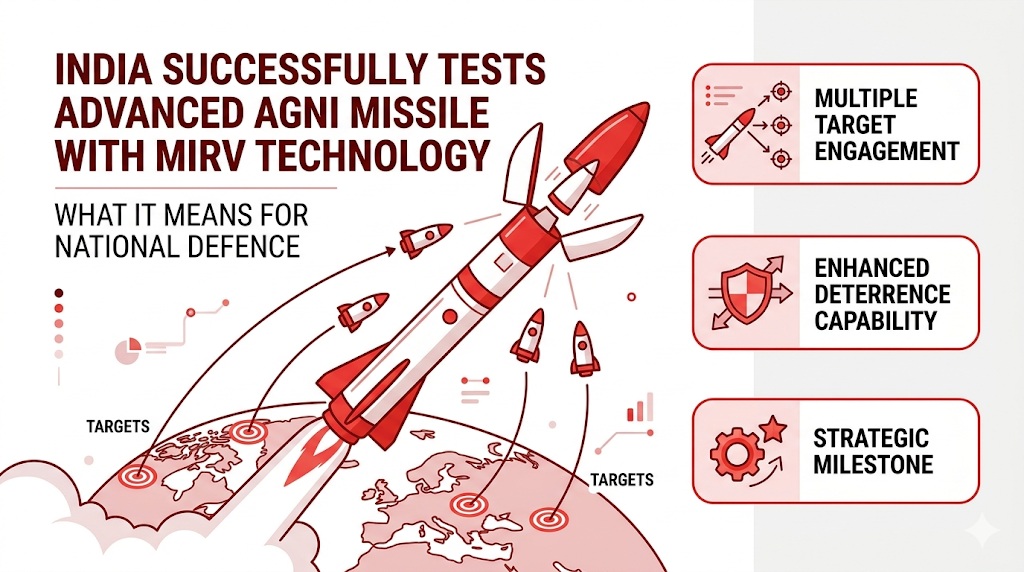
India’s MIRV capability presents a significant challenge for adversaries:
- Multiple warheads complicate interception
- Decoys increase defensive uncertainty
- Targeting flexibility expands strike options
For China, monitoring such systems could provide insights into:
- Warhead separation patterns
- Re-entry behavior
- Target dispersion
Even partial data can improve missile defense modeling and countermeasures.
Indian Ocean: The New Intelligence Battleground
The incident highlights a broader transformation:
The Indian Ocean is becoming a contested surveillance domain
Key trends include:
- Increased presence of Chinese research vessels
- Expansion of maritime intelligence networks
- Growing overlap between civilian and military assets
This aligns with China’s broader strategy often described as:
“Grey-zone operations” — activities below the threshold of open conflict
Regional Implications: Expanding Strategic Competition
The incident could have wider implications:
- Increased India-China rivalry in the Indian Ocean
- Greater coordination between India and Quad partners
- Heightened surveillance competition
India may also deepen cooperation with:
- The United States
- France
- Indo-Pacific allies
The goal: counterbalance China’s growing maritime presence.
Conclusion: A Shadow War Beneath the Surface
The presence of the Da Yang Hao during India’s Agni-5 MIRV test underscores a critical shift in modern geopolitics.
This is no longer just about missiles or ships.
It is about:
- Information dominance
- Surveillance capability
- Strategic visibility
Every missile test now unfolds under observation.
Every deployment is tracked.
The Indian Ocean is no longer just a maritime space —
it is a battlefield for intelligence, data, and strategic awareness.