
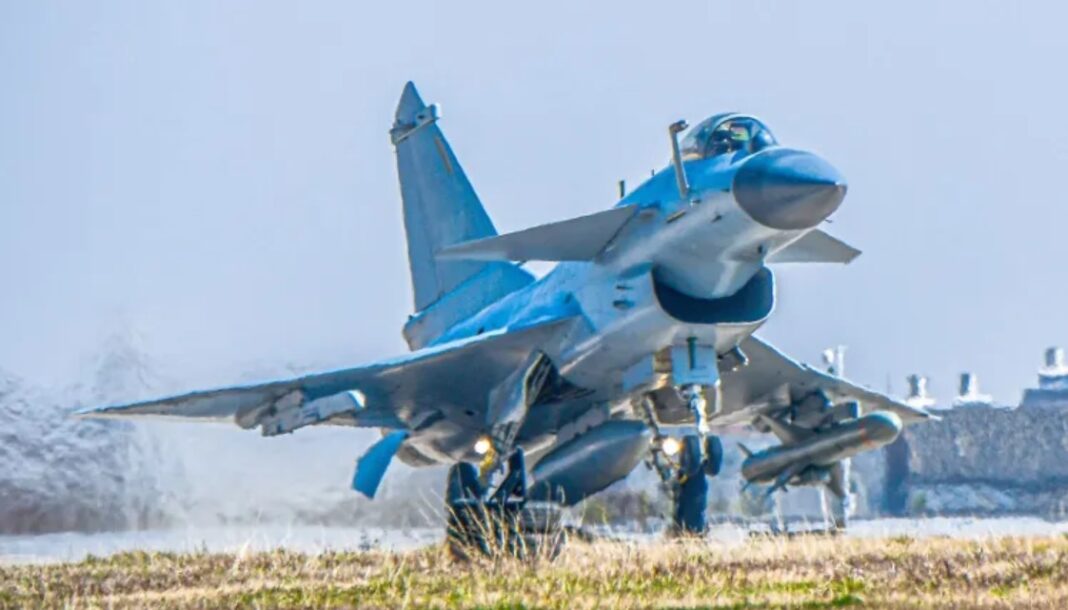
China’s development of the ultra-long-range PL-17 missile — and its reported integration on J-10C fighters — is drawing significant attention in South Asia, particularly regarding its potential implications for the Pakistan Air Force (PAF).
While no official confirmation exists regarding export of the PL-17, the possibility alone is enough to reshape strategic thinking.
If integrated into Pakistan’s J-10CE fleet, the missile could mark a major leap in long-range air combat capability.
🇨🇳 JUST IN: China just turned the J-10C into a 400 km AWACS killer
China has started equipping the J-10C with the ultra long range , a missile designed to target AWACS, tanker, and surveillance aircraft from extreme distances.
With a reported range of up to 400 km, this upgrade… pic.twitter.com/GqTjuRXyuW
— Defence Index (@Defence_Index) May 12, 2026
Current PAF Capability: Strong but Range-Limited
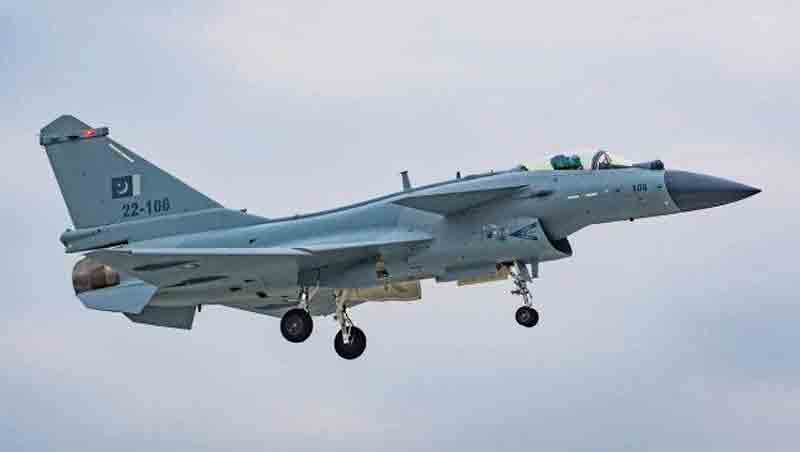
At present, Pakistan’s beyond-visual-range (BVR) capability is anchored by:
- PL-15 missiles (on J-10CE and JF-17 Block III)
- Modern AESA radar integration
- Networked operations supported by airborne early warning platforms
This provides credible deterrence — but within limited engagement ranges compared to emerging systems like PL-17.
What PL-17 Would Change: Targeting the Backbone, Not Just Fighters
The PL-17 is not designed for dogfights.
It is designed to destroy:
- AWACS (Airborne Early Warning & Control aircraft)
- Aerial refueling tankers
- ISR (Intelligence, Surveillance, Reconnaissance) platforms
These assets are the “eyes and fuel” of modern air forces.
If Pakistan acquires such a capability:
- Indian airborne command systems could be threatened at long distances
- Tanker-supported deep strike missions would become riskier
- Air operations could be disrupted before fighters even engage
Extending the Engagement Envelope
The most critical advantage of PL-17 is range.
- PL-15: ~200–300 km (estimated)
- PL-17: up to 300–500 km (estimated)
This would allow PAF to:
- Engage targets deep inside enemy-controlled airspace
- Expand its defensive perimeter without crossing borders
- Create denial zones for high-value aircraft
Impact on India’s Air Doctrine
For the Indian Air Force (IAF), the implications would be significant:
Key Challenges:
- AWACS aircraft forced to operate farther from conflict zones
- Reduced radar coverage and coordination efficiency
- Increased vulnerability of tanker aircraft
This would directly affect:
- Long-range strike missions
- Air dominance operations
- Real-time battlefield awareness
Network-Centric Warfare: Amplifying the Effect
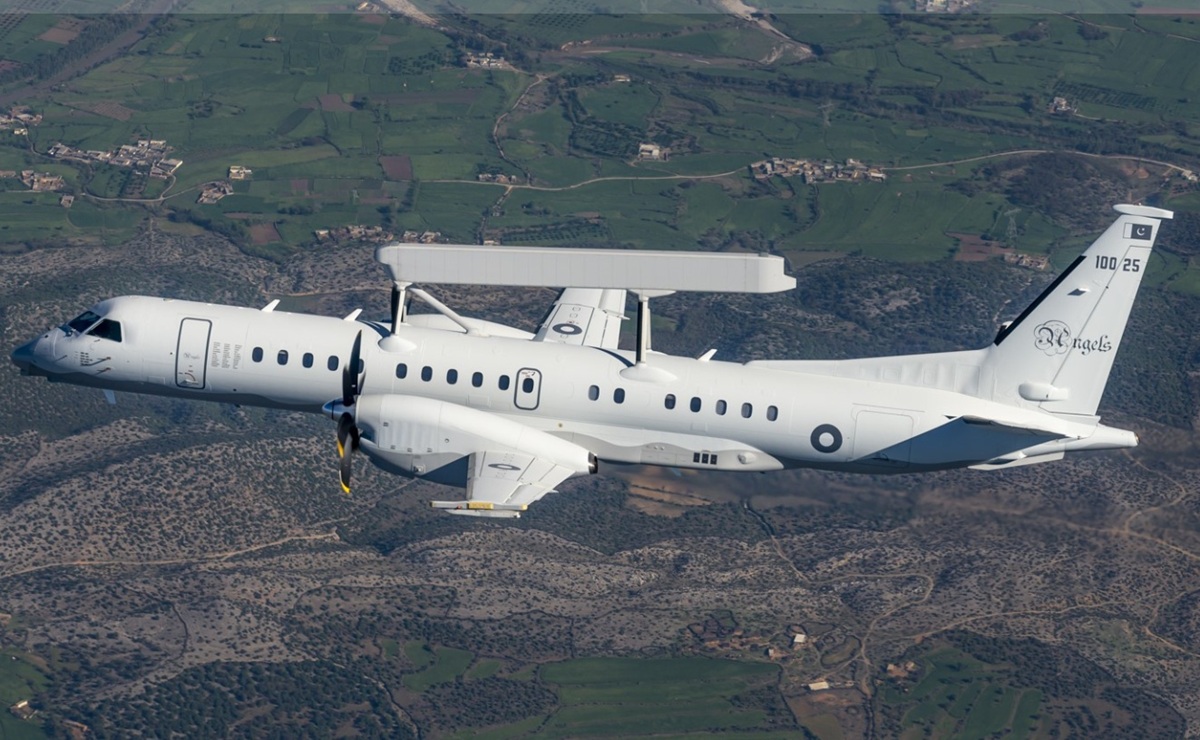
The PL-17’s effectiveness depends heavily on networked warfare systems.
Pakistan already operates:
- Erieye AWACS platforms
- Data-linked fighter networks
- Ground-based radar integration
With further upgrades, this could enable:
- Mid-course missile guidance
- Real-time target updates
- Coordinated long-range interception
The result: multiplying the missile’s effectiveness beyond raw range.
China-Pakistan Defense Ecosystem: A Strategic Multiplier
Pakistan’s growing integration with China’s defense ecosystem is a key factor.
This includes:
- Fighter aircraft (J-10CE, JF-17 upgrades)
- Missile systems (PL-series)
- Radar and electronic warfare technologies
Over time, this alignment could allow:
- Faster adoption of new technologies
- Shared doctrine and operational concepts
- Greater interoperability in future systems
Limitations and Realities
Despite its potential, several constraints remain:
- No confirmed export of PL-17
- High dependency on targeting data quality
- Electronic warfare countermeasures may reduce effectiveness
- Limited missile load per aircraft
It is not a “silver bullet” —
but a strategic force multiplier.
Deterrence Shift: From Symmetry to Asymmetry
The introduction of PL-17 into South Asia would represent a shift:
- From fighter-vs-fighter parity
- To asymmetric targeting of critical assets
This changes deterrence dynamics:
- Increases uncertainty for adversaries
- Raises cost of offensive operations
- Strengthens defensive posture without escalation
Future Outlook: A Watching Brief
For now, the situation remains speculative.
But key indicators to watch include:
- Confirmation of PL-17 operational deployment on J-10C
- Any export variant announcements
- Upgrades in PAF data-link and ISR capabilities
Even without immediate acquisition, the trend is clear:
Long-range interception is becoming the next frontier of air warfare.
Conclusion: A Strategic Opportunity — If Realized
If Pakistan acquires or develops similar ultra-long-range capabilities:
- Its air defense doctrine would evolve significantly
- Regional airpower balance would shift
- Deterrence would become more layered and complex
The real impact of PL-17 is not just its range —
it is how it reshapes the rules of engagement in modern air warfare.