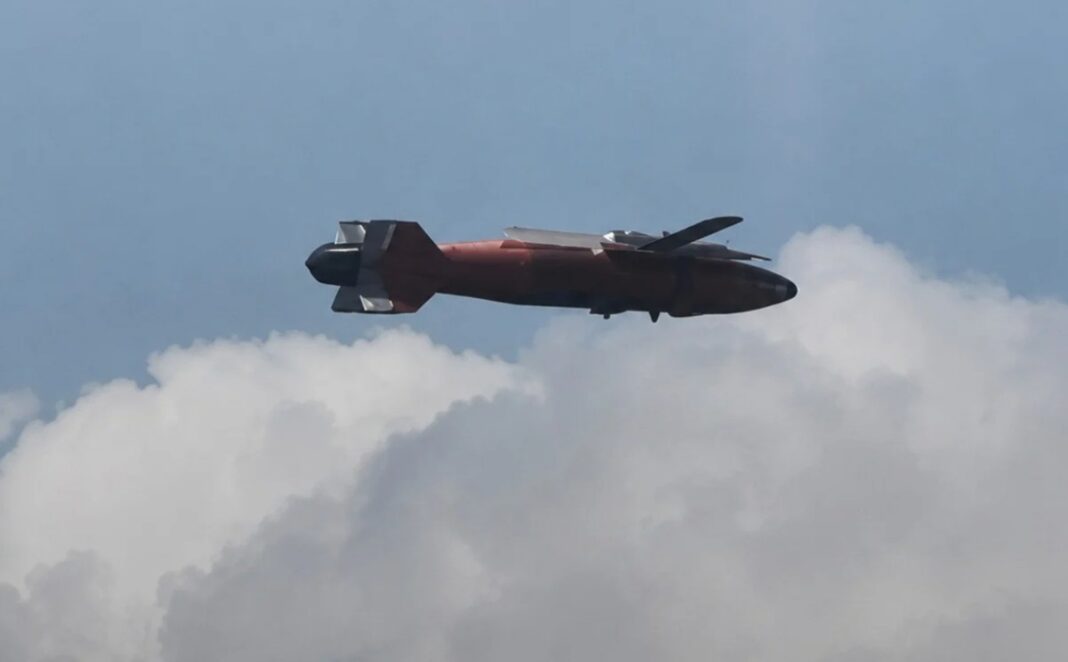
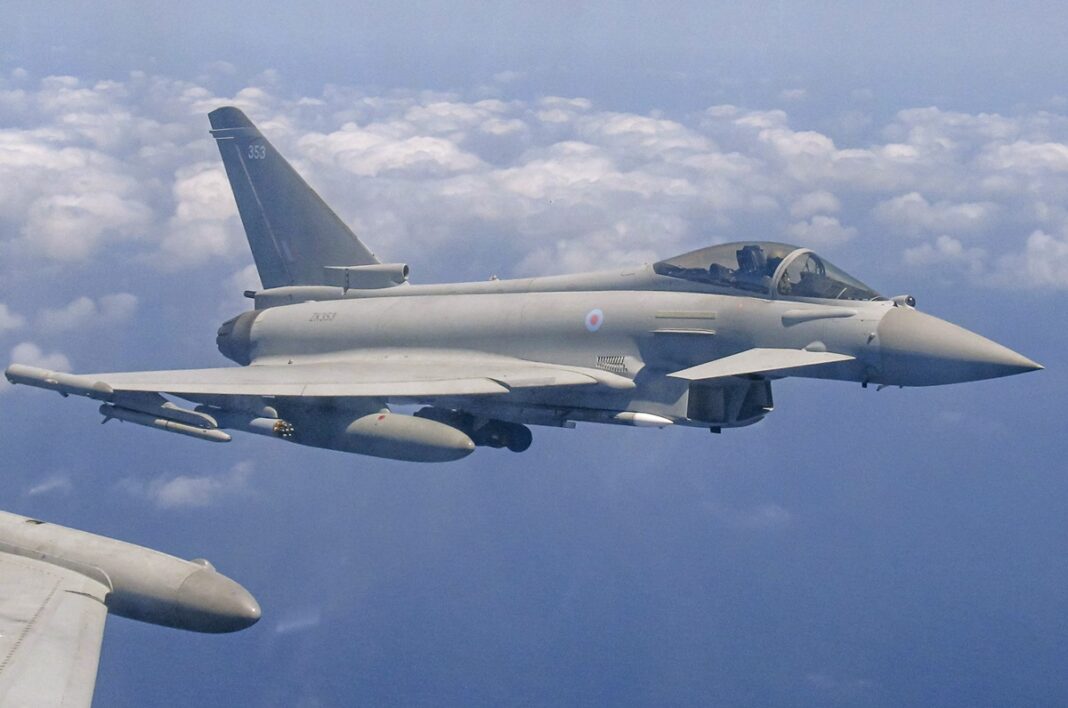
The United Kingdom has deployed a new low-cost precision missile system to the Middle East, equipping RAF Typhoon fighter jets with an affordable way to intercept drones amid growing regional security threats.
The move marks a significant shift in Britain’s air-defense strategy as the Royal Air Force (RAF) increasingly confronts the challenge of cheap drones threatening expensive military assets.
Britain’s Ministry of Defence (MOD) announced that RAF Typhoons are now carrying the:
Advanced Precision Kill Weapon System (APKWS)
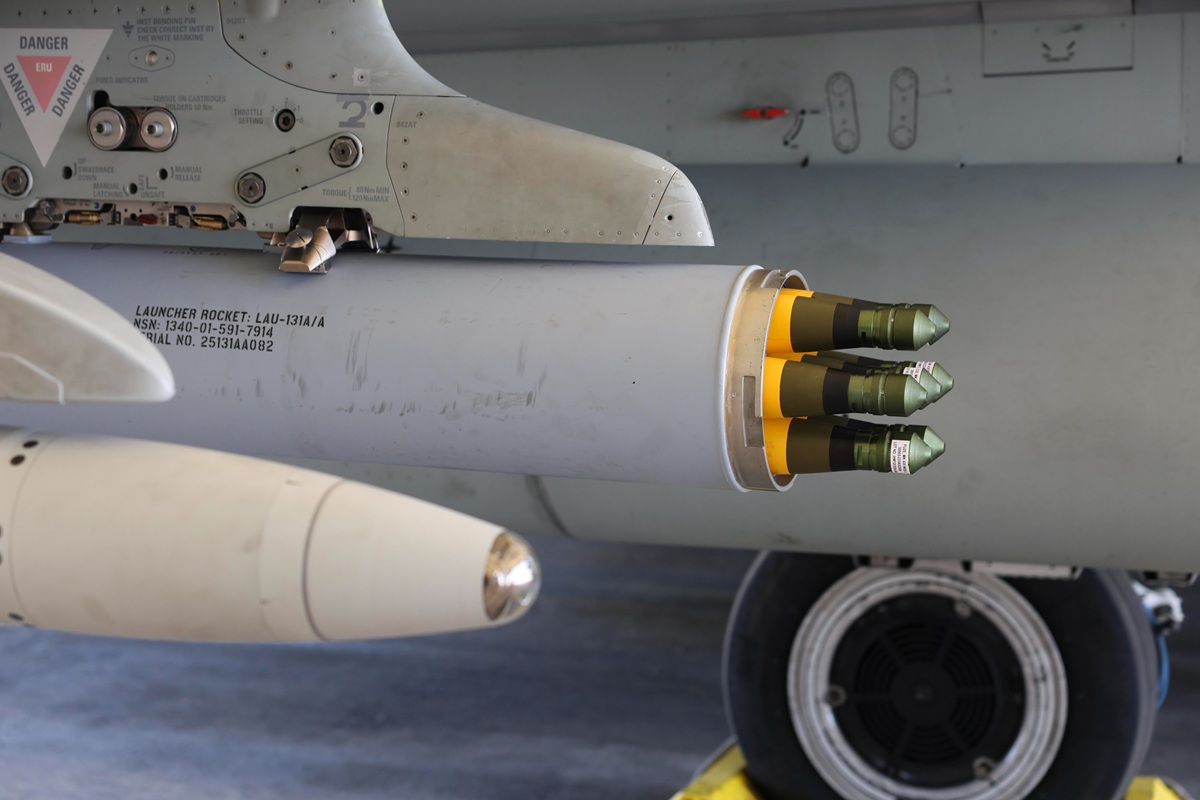
during active operational missions in the Middle East, where British aircraft continue to protect UK personnel, allies, and regional partners against escalating drone threats.
The deployment comes after a rapid development cycle that moved the system:
From testing to frontline operational deployment in less than two months.
For defense planners, the speed itself may be just as significant as the weapon.
It reflects how Western militaries are adapting to a battlefield increasingly shaped by:
Cheap drones, asymmetric threats, and the economics of modern air defense.
What Is APKWS?
The Advanced Precision Kill Weapon System (APKWS) is a laser-guided precision weapon that converts traditional unguided rockets into:
Low-cost precision strike missiles
Unlike expensive air-to-air missiles often costing hundreds of thousands — or even millions — of dollars, APKWS offers a dramatically cheaper way to destroy:
- Drones
- Small aerial threats
- Light ground targets
The logic is increasingly compelling.
Using costly high-end missiles against low-cost drones has become:
Financially unsustainable.
The wars in:
- Ukraine
- The Red Sea
- The Middle East
have repeatedly exposed the growing problem of:
Cost asymmetry
where defenders spend enormous sums intercepting relatively cheap unmanned threats.
Britain’s answer:
Cheaper precision.
Rapid Development: From Test to Combat in Weeks
One of the most striking aspects of the announcement is speed.
According to the MOD, Britain worked with defense firms:
- BAE Systems
- QinetiQ
to move the capability from testing to deployment in:
Less than two months
The timeline included:
March 2026
A successful strike test against a ground-based target.
April 2026
RAF Typhoon pilots from 41 Test and Evaluation Squadron conducted successful:
Air-to-air firings
demonstrating the weapon’s ability to intercept drones.
Now:
May 2026
The missile system is already operational in the Middle East.
The rapid rollout signals a growing sense of urgency inside the British defense establishment.
RAF Typhoons Now Flying Counter-Drone Missions
The system has now been integrated into operational sorties conducted by:
9 Squadron RAF Typhoon fighters
currently deployed in the Middle East.
According to the Ministry of Defence:
The mission focuses on protecting:
✔ British citizens
✔ UK military personnel
✔ Regional allies
✔ Critical strategic interests
from emerging threats.
The RAF says British pilots and crews have already accumulated:
More than 2,500 flying hours
since regional tensions intensified —
equivalent to:
Over three months of continuous flying.
This underlines Britain’s growing operational footprint across the region.
Why Drone Warfare Is Forcing Militaries to Adapt
The deployment reflects a much broader military lesson.
Drone warfare has fundamentally changed military economics.
Systems such as:
Shahed drone
have demonstrated how:
Relatively inexpensive drones can pressure even advanced militaries.
The problem is simple:
Using a high-cost missile to shoot down a low-cost drone quickly becomes unsustainable during prolonged conflict.
That challenge has become especially clear in:
- The Red Sea
- Gulf security operations
- Ukraine’s air war
Britain appears increasingly focused on solving this problem through:
Affordable precision interception
rather than relying solely on expensive missile systems.
Typhoon Still Remains Britain’s Combat Air Backbone
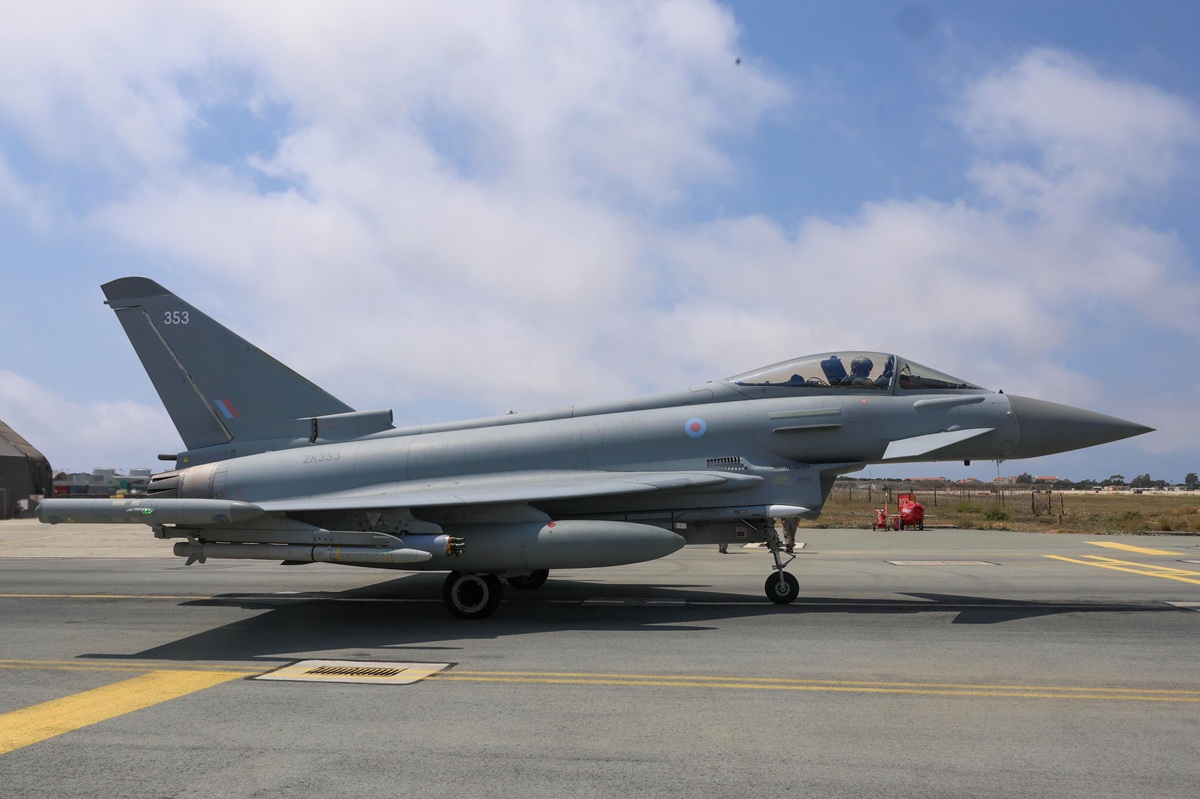
The APKWS deployment also reinforces another reality:
The RAF Typhoon remains central to British combat airpower.
According to Defence Minister Luke Pollard, Typhoons continue protecting:
- NATO’s eastern flank
- European airspace
- Middle Eastern partners
against growing aerial threats.
Britain recently committed:
£650 million
to upgrade the Typhoon fleet —
helping extend operational service:
Into the 2040s
while supporting more than:
1,500 British jobs
across the UK defense sector.
The upgrades reflect Britain’s long-term calculation:
Even as sixth-generation aircraft emerge,
Typhoon remains indispensable.
Britain Is Building a Layered Gulf Air Defense Network
The Typhoon deployment forms part of a wider British defensive posture across the Gulf.
The UK currently maintains:
Sky Sabre
in Saudi Arabia
Lightweight Multirole Missile (LMM)
in Bahrain
Rapid Sentry and ORCUS Systems
in Kuwait
These assets remain at:
Very high readiness
to support regional partners against drone and missile threats.
Just weeks ago, Britain also signed a major contract for:
Skyhammer interceptor missiles
designed specifically to counter:
Shahed-style drones.
The trend is unmistakable:
Britain is rapidly adapting for:
The drone age.
Why This Matters Beyond the Middle East
The significance extends far beyond one deployment.
The UK’s fast-tracked rollout demonstrates:
A new procurement mindset
inside Western militaries.
Instead of waiting years for perfect systems:
Britain increasingly wants:
Fast, affordable battlefield solutions
that can evolve rapidly.
That lesson comes directly from:
Ukraine.
Where speed of adaptation increasingly determines battlefield survival.
Conclusion: Britain Is Learning the Economics of Modern War
The deployment of APKWS on RAF Typhoons may appear like a small technical upgrade.
In reality:
It represents something larger.
👉 A recognition that modern war is increasingly shaped by affordability.
The future challenge is not simply destroying drones.
It is doing so:
Without bankrupting your missile stockpile.
Britain’s answer appears clear:
Cheaper missiles, faster deployment, and adaptable combat aircraft.
And for the RAF:
The Typhoon’s role as the backbone of British combat airpower just became even more important.