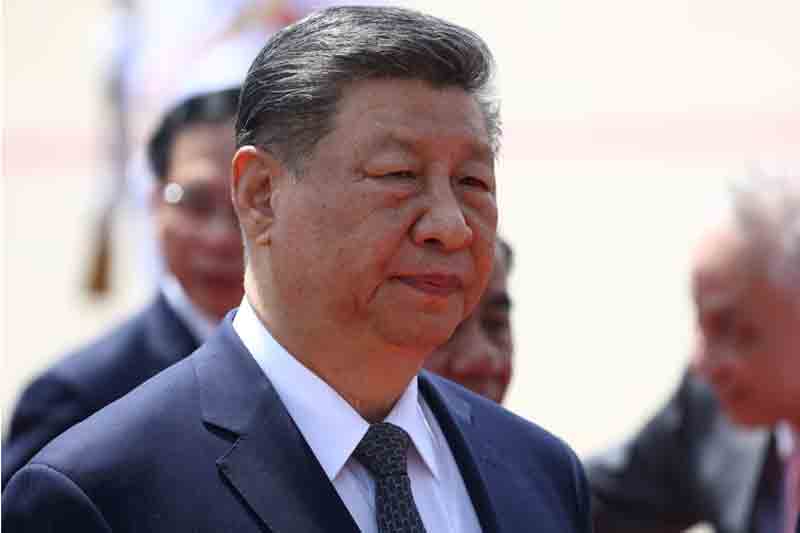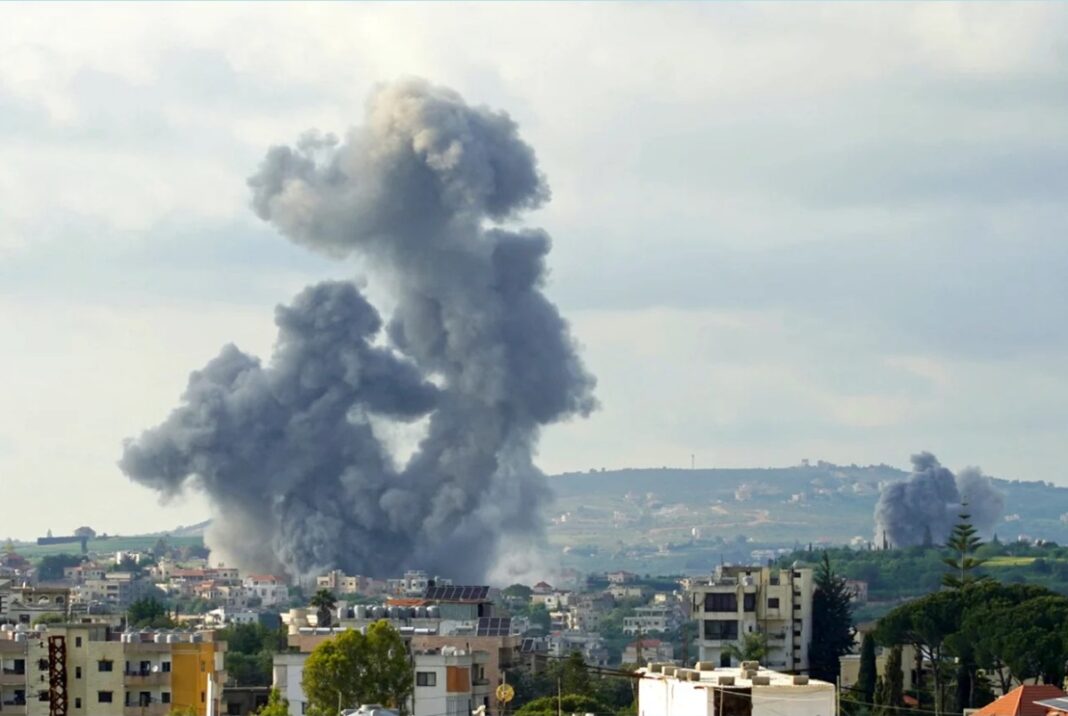
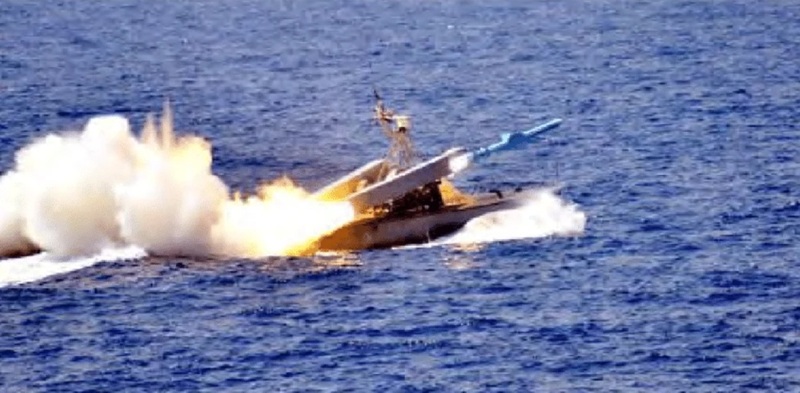
Tensions in the Middle East are rising sharply after Iran’s parliament speaker and chief negotiator Mohammad Bagher Ghalibaf warned that American and Israeli military assets in the region could become “legitimate targets” following Israeli strikes on Beirut’s southern suburbs.
The warning came after Israel launched retaliatory strikes on southern Beirut on Sunday in response to what Israeli officials described as a Hezbollah missile attack on northern Israel — a development that risks pushing the region back toward wider confrontation.
More significantly, the escalation threatens to derail already fragile diplomacy between Washington and Tehran at a moment when prospects for a negotiated settlement remain uncertain.
Iran Warns US and Israeli Assets Could Become Targets
Speaking amid rising tensions, Ghalibaf accused Washington of enabling Israeli military action and warned that continued pressure on Iran could trigger a broader regional response.
“The naval blockade against the Iranian nation and today’s U.S. green light to the Zionist regime turn American and regime bases and assets in the region into legitimate targets. Our armed forces are ready as always,” Ghalibaf said.
The statement reflects growing Iranian frustration over Israeli military operations in Lebanon and reinforces earlier warnings from Tehran that attacks on Beirut could provoke a more direct response.
Last week, Iranian officials reportedly signalled that military action against Lebanon’s capital could trigger retaliatory missile strikes against Israel — a scenario that could rapidly escalate into a wider regional crisis.
Why the Beirut Strike Matters
Israel’s latest strike on Beirut’s southern suburbs carries significance beyond immediate battlefield dynamics.
For Tehran, Lebanon — and particularly Hezbollah — remains central to Iran’s regional deterrence strategy.
From the Iranian perspective, attacks targeting Hezbollah are often viewed not as isolated incidents but as part of a broader campaign aimed at weakening what Tehran describes as the “Axis of Resistance,” which includes allied armed groups across Lebanon, Iraq, Syria, and Yemen.
This perception is important because it shapes how Iranian decision-makers interpret military developments.
Rather than viewing the conflict solely through the lens of Israel-Hezbollah tensions, Tehran increasingly appears to interpret events as part of a coordinated effort involving both Israel and the United States.
That belief significantly raises escalation risks.
Are US-Iran Nuclear Talks Now in Danger?
The latest crisis also raises urgent questions about the future of negotiations between Washington and Tehran.
The absence of a broader agreement has created an increasingly unstable environment in which regional flashpoints can quickly derail diplomatic momentum.
As long as negotiations remain unresolved, spoilers on multiple sides retain opportunities to shape events through military escalation.
The underlying disagreements between Washington and Tehran remain substantial.
Core disputes continue over uranium enrichment limits, sanctions relief, and Iran’s regional proxy network — issues that neither side has shown willingness to compromise on easily.
Without a diplomatic framework capable of reducing tensions, regional crises like Lebanon increasingly become catalysts for wider confrontation.
Simply put, there is currently no stable status quo preserving calm between Iran and the United States.
Why Tehran Appears Increasingly Confident
One of the most important developments shaping regional calculations is Iran’s apparent confidence following nearly six weeks of confrontation.
Rather than signalling restraint, Iranian leaders increasingly appear determined to project resilience and strategic endurance.
Tehran continues emphasising its ability to absorb military, political, and economic pressure while maintaining its regional influence network.
Whether this confidence reflects battlefield realities matters less than perception itself.
What matters strategically is that Iran does not appear to view itself as weakened or deterred.
Instead, Iranian leaders increasingly behave as though they emerged from recent tensions in a stronger strategic position — a perception that makes coercive pressure alone less likely to produce major concessions.
This complicates Washington’s strategy considerably.
If Tehran believes it can withstand pressure indefinitely, diplomatic leverage based purely on sanctions or military threats may prove insufficient.
What Trump Must Do to Keep Diplomacy Alive
If President Donald Trump genuinely seeks an agreement with Tehran, diplomatic space may need to be created quickly.
That would likely require Washington to restrain regional escalation, particularly regarding Israeli military operations in Lebanon, while also considering at least limited economic relief during early negotiation phases.
Without such steps, prospects for a diplomatic breakthrough may continue shrinking.
The challenge for Washington is balancing support for Israel with broader regional stability.
Any perception inside Tehran that diplomacy exists merely to buy time while military pressure intensifies will likely weaken incentives for compromise.
Returning to War?
The coming hours and days may prove critical.
With tensions rising and all sides attempting to reinforce deterrence narratives, the risk of miscalculation remains dangerously high.
Decisions taken in Tehran, Washington, and Jerusalem could determine whether the current crisis moves toward de-escalation — or slides into a far more dangerous regional confrontation involving Lebanon, Israel, Iran, and potentially US military assets.
At the centre of the crisis lies a difficult reality: as long as there is no sustainable agreement between Washington and Tehran, escalation pressures are likely to continue building.
For now, diplomacy remains alive — but increasingly fragile.