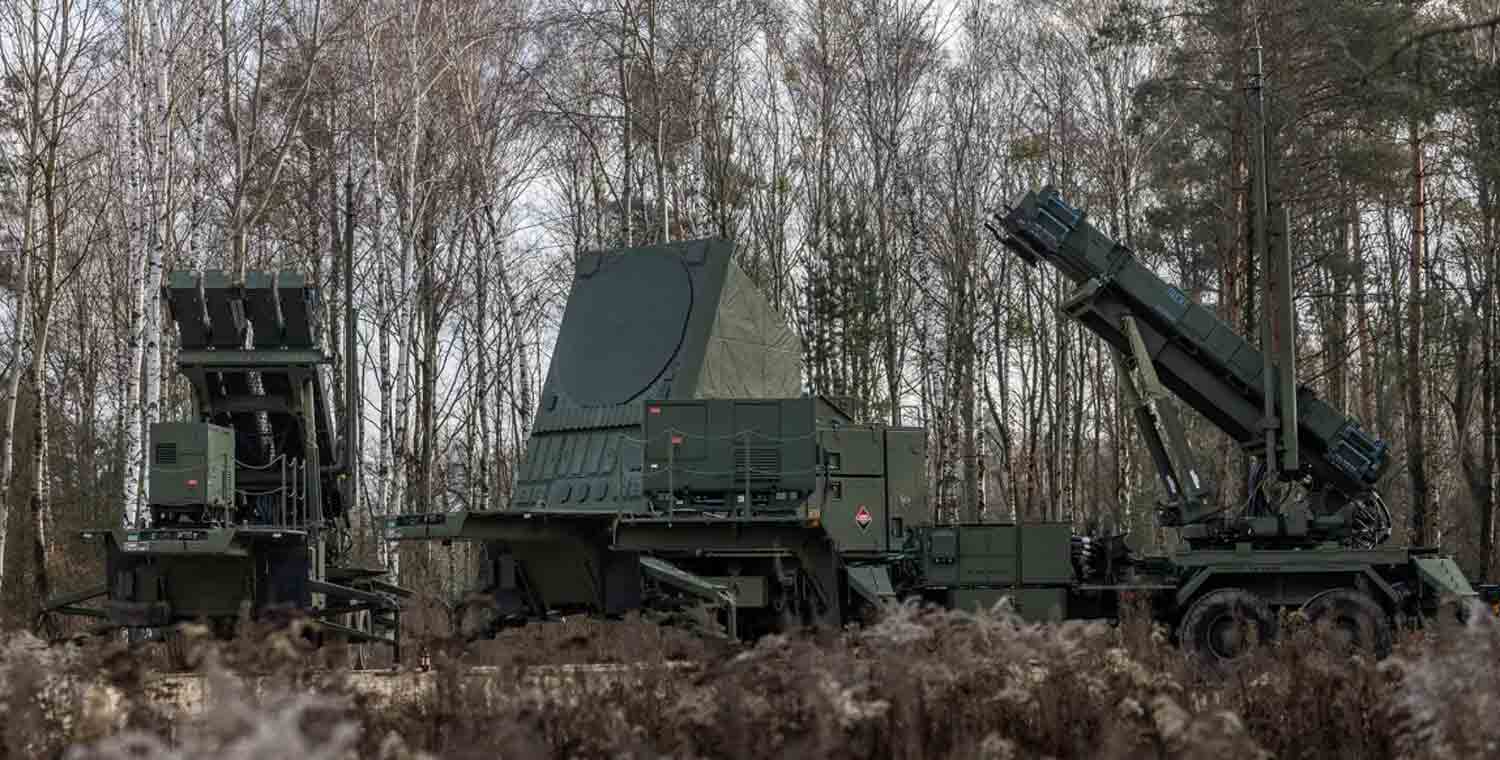
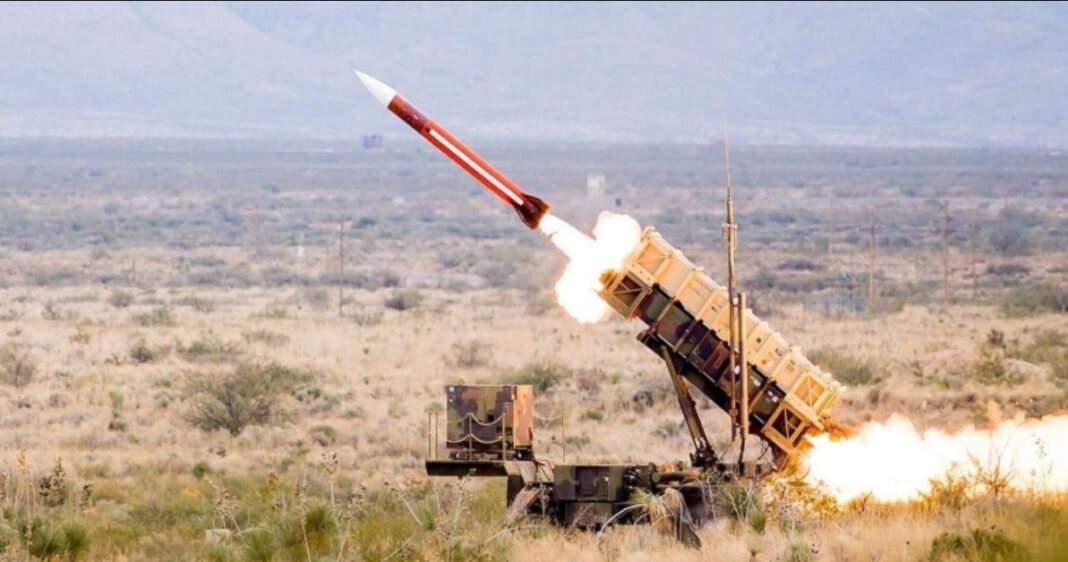
The U.S. Army has placed its first domestic order for older-generation PAC-2 Patriot interceptor missiles in more than three decades, signalling a major shift in American air defence procurement as wartime demand continues to outpace missile production.
The order, announced during RTX’s second-quarter earnings briefing, focuses on the PAC-2 GEM-T (Guidance Enhanced Missile-Tactical) interceptor. Although less sophisticated than the newer PAC-3 Missile Segment Enhancement (MSE), the PAC-2 remains highly effective against aircraft, cruise missiles and selected classes of ballistic missile threats.
The procurement decision reflects growing concerns inside the Pentagon that existing stocks of advanced interceptors cannot be replenished quickly enough during sustained high-intensity conflict.
Why Is the US Army Buying PAC-2 Missiles Again?
The return of the PAC-2 is primarily driven by economics, production capacity and operational necessity.
While the PAC-3 MSE represents the most advanced Patriot interceptor available today, it is also one of the world’s most expensive surface-to-air missiles and requires a significantly more complex manufacturing process.
The PAC-2 GEM-T, by comparison, is considerably cheaper, faster to produce and remains extremely effective against:
- Combat aircraft
- Cruise missiles
- Helicopters
- Drones
- Some tactical ballistic missiles
Rather than relying exclusively on high-end PAC-3 interceptors, the U.S. Army appears to be moving toward a layered air defence strategy, reserving PAC-3 missiles for the most demanding ballistic missile threats while employing PAC-2 interceptors against aircraft and cruise missiles.
This approach allows commanders to preserve valuable PAC-3 inventories without sacrificing overall air defence effectiveness.
PAC-2 vs PAC-3 Patriot Missile Comparison
| Feature | PAC-2 GEM-T | PAC-3 MSE |
|---|---|---|
| Primary Mission | Aircraft, cruise missiles, limited ballistic missile defence | Tactical ballistic missile defence, cruise missiles, aircraft |
| Kill Method | Blast-fragmentation warhead | Hit-to-kill kinetic interceptor |
| Guidance | Semi-active radar homing | Active radar seeker with advanced guidance |
| Missile Size | Larger missile | Smaller interceptor |
| Missiles per Patriot Launcher | 4 | Up to 16 |
| Production Cost | Lower | Significantly higher |
| Manufacturing Complexity | Moderate | Very high |
| Best Against | Aircraft and cruise missiles | Ballistic missiles and advanced manoeuvring targets |
| Combat Value | Cost-effective layered defence | High-end missile defence |
Key Takeaway
The PAC-2 GEM-T remains an excellent interceptor for defeating conventional aerial threats at a lower cost, while the PAC-3 MSE is designed to destroy ballistic missiles through direct kinetic impact. Together, they provide complementary capabilities within the Patriot air defence system.
Patriot Missile Stocks Under Severe Pressure
The renewed PAC-2 procurement comes amid mounting concerns over the sustainability of U.S. precision-guided munitions inventories following months of high-intensity military operations.
According to multiple Western reports, the U.S. Army expended more than 800 Patriot anti-ballistic missile interceptors during just five days of combat operations against Iranian forces in early March 2026.
The pace of expenditure far exceeded production capacity, forcing Washington to seek additional interceptor supplies from allied nations. Reports indicated that Poland possessed one of the few NATO Patriot inventories that had not already been significantly depleted.
The conflict exposed the enormous logistical burden of defending against large-scale missile attacks, where dozens of interceptors may be fired within hours.
Production Cannot Keep Pace With Demand
Industry estimates suggest that annual production of PAC-3 MSE interceptors remains at roughly 600 missiles per year, well below the numbers required to replenish wartime expenditure.
Production challenges are further complicated because manufacturing lines are already committed to:
- U.S. Army procurement
- Foreign Military Sales (FMS)
- Existing international contracts
- NATO replenishment programmes
As a result, defence officials have acknowledged that new Patriot missile orders may now require four to five years before delivery.
The Patriot missile has become one of NATO’s most supply-constrained precision-guided weapons, with several allied nations also reporting declining interceptor inventories.
Pentagon Reassesses Air Defence Strategy
The decision to restart PAC-2 purchases reflects a broader reassessment of U.S. air defence planning.
Rather than relying solely on premium interceptors, military planners increasingly favour a layered inventory in which lower-cost missiles engage routine aerial threats while advanced interceptors remain available for ballistic missile defence.
This mirrors practices employed by several modern integrated air defence systems worldwide, where different interceptor types are assigned according to the threat level.
Such an approach not only reduces operational costs but also increases the number of available interceptors during prolonged conflicts.
America’s Defence Industrial Base Faces Wartime Reality
The recent conflict has also exposed deeper structural weaknesses within the U.S. defence industrial base.
Since the end of the Cold War, defence procurement has largely been designed around relatively low peacetime production rates rather than sustained wartime manufacturing.
Many advanced missile systems depend on specialised electronic components, rocket motors and precision guidance technologies produced by a limited number of suppliers. These industrial bottlenecks make rapid production expansion extremely difficult.
To manage shortages, Washington has reportedly delayed or suspended certain arms deliveries to partners in Asia and Europe while redeploying key missile defence assets—including THAAD batteries and Patriot systems—from the Indo-Pacific to meet more urgent operational requirements elsewhere.
Strategic Implications
The revival of PAC-2 production represents more than the return of an older missile. It reflects a growing recognition that modern warfare demands both technological superiority and industrial scale.
While the PAC-3 MSE remains the Patriot system’s premier interceptor for defeating ballistic missiles, the PAC-2 GEM-T offers a practical, affordable solution for countering the majority of conventional aerial threats. By integrating both missile types into a layered defence architecture, the U.S. Army aims to improve operational resilience while easing pressure on limited stocks of its most advanced interceptors.
As global demand for air and missile defence systems continues to rise, the Pentagon’s decision underscores a broader lesson emerging from recent conflicts: victory depends not only on possessing the most advanced weapons, but also on the ability to produce them in sufficient numbers.