Pakistan’s reported negotiations with Kuwait over expanding defence cooperation are attracting attention far beyond Islamabad and Kuwait City. On the surface, the discussions appear to be another routine military dialogue between two long-standing partners. In reality, however, they may reflect a much larger strategic shift underway in the Gulf.
The negotiations suggest that Gulf monarchies are increasingly looking beyond traditional American security guarantees while simultaneously linking defence cooperation with energy security and long-term infrastructure investment. If that trend continues, Pakistan could emerge not merely as a military partner but as an important middle power shaping the Gulf’s evolving security architecture.
The key question is not whether Pakistan will deploy troops to Kuwait. Pakistani officials have already dismissed speculation about combat deployments. The more important question is why Kuwait is exploring deeper military ties now—and what that says about the changing balance of power in the Gulf.
The Iran War Has Exposed the Limits of Existing Security Guarantees
The 2026 Iran conflict fundamentally altered Gulf security calculations.
Repeated missile and drone attacks against military installations and critical infrastructure demonstrated that even countries hosting American forces remain vulnerable to sustained precision strikes. Kuwait itself experienced attacks on military facilities, airports and logistics infrastructure, exposing weaknesses in regional air-defence networks.
For decades, Gulf states relied heavily on American military protection.
Today, that strategy appears increasingly insufficient.
Rather than replacing Washington, Gulf governments appear to be diversifying their security partnerships.
Pakistan fits naturally into that strategy because it already maintains decades-long military relationships across the Gulf while remaining politically acceptable to most regional capitals.
Why Pakistan Matters More Than Many Assume
Pakistan is often viewed simply as another Muslim-majority military power.
That assessment overlooks several strategic advantages.
Pakistan possesses:
- One of Asia’s largest standing militaries.
- Combat experience across multiple operational environments.
- Indigenous defence production.
- A mature military training system.
- Close defence relationships with China, Saudi Arabia and Gulf states.
Unlike many middle powers, Pakistan can offer both manpower and increasingly sophisticated defence technology.
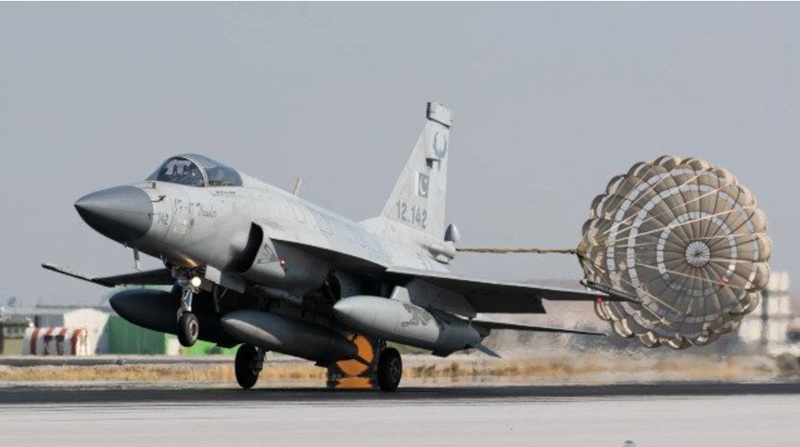
Its experience operating modern air-defence systems, combat aircraft and drone capabilities makes it an attractive security partner for countries facing persistent missile threats.
This Is About Deterrence, Not Troops
Much of the public discussion has focused on whether Pakistan could send troops or fighter aircraft to Kuwait.
That is probably the wrong question.
Official statements from both governments continue to describe the discussions in terms of:
- Training
- Technical cooperation
- Cybersecurity
- Personnel exchanges
- Defence coordination
This suggests Kuwait may currently value Pakistani expertise more than Pakistani soldiers.
In modern warfare, improving air-defence integration, command-and-control systems and interoperability may provide greater long-term value than simply hosting additional foreign forces.
The Energy Dimension May Be Even More Important
Perhaps the most overlooked aspect of these negotiations is energy.
Pakistan remains heavily dependent on Gulf oil imports.
Meanwhile, Kuwait is considering expanded investment in Pakistan’s petroleum storage infrastructure and energy logistics.
This transforms the relationship.
Instead of simply exchanging military cooperation for political goodwill, both countries appear to be constructing a broader strategic partnership in which:
- Pakistan enhances Gulf security.
- Kuwait strengthens Pakistan’s energy resilience.
- Both countries reduce strategic vulnerabilities created by instability around the Strait of Hormuz.
In other words, defence cooperation increasingly serves economic security.
Can Pakistan Sustain Multiple Gulf Commitments?
This may become Islamabad’s greatest strategic challenge.
Pakistan already maintains extensive defence cooperation with Saudi Arabia.
Expanding similar commitments elsewhere in the Gulf would inevitably raise difficult questions about:
- Military readiness.
- Force availability.
- Defence budgets.
- Operational sustainability.
Pakistan’s military is large, but expeditionary deployments require specialized personnel, logistics, maintenance and airlift capabilities.
If future Gulf crises expand, Islamabad could eventually face competing requests from multiple regional partners.
Managing those commitments without strategic overstretch will require careful political judgement.
Strategic Neutrality Remains Pakistan’s Biggest Asset
Another factor often ignored is Pakistan’s diplomatic position.
Unlike many regional powers, Islamabad maintains working relationships with:
- Saudi Arabia.
- Kuwait.
- China.
- The United States.
- Iran.
That diplomatic flexibility gives Pakistan influence beyond its military capabilities.
If Islamabad becomes viewed as taking sides too openly inside Gulf rivalries, it risks weakening the very strategic balance that currently makes it valuable.
Its ability to combine defence cooperation with diplomatic mediation may ultimately prove more important than any future troop deployment.
The Emerging Gulf Security Model
Taken together, these developments point toward a broader transformation.
The Gulf appears to be moving away from dependence on a single security guarantor toward a layered network involving:
- American military power.
- Regional partnerships.
- Indigenous defence industries.
- Middle-power security providers such as Pakistan.
- Expanded missile defence cooperation.
- Integrated energy-security planning.
This represents a significant evolution in Gulf strategic thinking.
What Should Analysts Watch?
Several indicators will determine whether these discussions become strategically significant:
- Expansion of joint military exercises.
- Air-defence integration projects.
- Defence industrial cooperation.
- Cybersecurity agreements.
- Intelligence-sharing mechanisms.
- Kuwaiti investment in Pakistan’s energy infrastructure.
- Future defence procurement involving Pakistani equipment.
If these areas advance, the relationship could become one of the Gulf’s most important emerging security partnerships.
Final Assessment
The Pakistan-Kuwait dialogue should not be viewed merely as another bilateral defence discussion.
Instead, it represents a test case for how Gulf security may evolve in an era where missile warfare, energy vulnerability and geopolitical uncertainty increasingly overlap.
For Pakistan, the opportunity is considerable. It can strengthen its defence exports, attract Gulf investment and expand its strategic relevance.
The challenge, however, is equally significant. Islamabad must deepen its Gulf partnerships without becoming militarily overstretched or undermining its carefully balanced regional diplomacy.
The outcome of these negotiations may therefore reveal less about Pakistan-Kuwait relations and more about the future architecture of security in the Gulf itself.