Tuesday, April 21, 2026
Home Blog Page 100

Russia and Ukraine have conducted a major prisoner of war exchange, according to Moscow

0

Ukraine has released 150 Russian soldiers from captivity in a significant prisoner exchange, as reported by the Defense Ministry in Moscow via a Telegram post on Monday. In return, Ukraine received an equal number of its own troops.

The exchange was facilitated by the United Arab Emirates, according to the ministry. The released Russian soldiers were first taken to Belarus, where they received essential medical and psychological care, along with the opportunity to connect with their families, the statement noted.

The soldiers are set to be transported to Russia for additional treatment and rehabilitation, the ministry further indicated.

This marks the first exchange of this nature since October, when both sides swapped 95 servicemen. That previous exchange was also mediated by the UAE. In November, Moscow and Kiev exchanged the remains of deceased soldiers, with Ukraine receiving 563 bodies and Russia 37.

Moscow had earlier accused Kiev of hesitance in reclaiming its soldiers from detention. In early December, Russian human rights ombudsman Tatyana Moskalkova published a list of servicemen in custody, claiming that Ukrainian officials were unwilling to consider them for exchange.

“Zelensky does not need 630 Ukrainian citizens who were captured. He abandoned them,” commented Foreign Ministry spokeswoman Maria Zakharova regarding the list at that time.

In mid-December, Hungarian Prime Minister Viktor Orban proposed mediating a significant prisoner exchange between Moscow and Kiev, potentially involving around 700 soldiers from each side. He later mentioned that Ukraine had declined his offer.

An aide to Vladimir Zelensky referred to Orban as “a meddlesome messenger” for Russian President Vladimir Putin, asserting that “no one” who genuinely seeks peace would require such individuals.

Kremlin spokesman Dmitry Peskov stated that Russia was open to Orban’s proposal and had even reached out to the Hungarian embassy with relevant suggestions.

What are the reasons behind Russia’s dismissal of Trump’s proposal for a truce in Ukraine?

0
Ukrainian service members from a battalion, fire a howitzer M119 at a front line, amid Russia's attack on Ukraine, near the city of Bakhmut, Ukraine.

Russia has dismissed a proposal put forth by the team of US President-elect Donald Trump aimed at resolving the Russia-Ukraine conflict. The plan suggested postponing Ukraine’s NATO membership in exchange for a ceasefire, as reported by Russian state media.

Trump’s victory in the November election, along with his ongoing criticism of Ukraine and US financial support for Kyiv, has raised concerns among NATO allies regarding potential concessions he may seek from Ukraine. His assertion that he could end the war within a day has further fueled these worries.

The Kremlin’s rejection of what appears to be a significant aspect of Trump’s proposed truce highlights warnings from analysts who have advised caution in assuming that Russia will achieve a resolution to the conflict on its own terms.

What exactly is Trump’s peace proposal for Ukraine, what has been rejected by Russia, and what are the reasons behind it?

Trump has been somewhat reticent about disclosing the specifics of his plan. In a podcast interview with Lex Fridman in September, he stated, “I can’t give you those plans because if I give you those plans, I’m not going to be able to use them. They’ll be unsuccessful. Part of it’s surprise.”

During his campaign, Trump claimed he could resolve the Ukraine conflict within 24 hours. However, in a December 12 interview with Time magazine, he remarked that “the Middle East is an easier problem to handle than what’s happening with Russia and Ukraine.”

Trump and his senior advisors have proposed several concepts for a ceasefire in Ukraine. Here are the key points:

  • On November 6, the Wall Street Journal (WSJ) reported that Trump’s strategy for a ceasefire includes postponing Ukraine’s NATO membership by 20 years, based on information from three sources close to Trump.
  • Trump’s Vice President JD Vance revealed potential aspects of this plan during an interview on the Shawn Ryan Show in September. Vance indicated that the existing boundary between Russia and Ukraine would be transformed into a “demilitarized zone,” reinforced to prevent further Russian invasions.
  • According to the WSJ, this demilitarized zone would cover approximately 1,290 km (800 miles). While it is uncertain who would oversee the zone, an unnamed member of Trump’s team mentioned that “the barrel of the gun is going to be European,” as reported by the WSJ.
  • Vance also indicated that as part of the plan, Ukraine would need to relinquish some of its territories currently occupied by Russia, including areas in Luhansk, Donetsk, Kherson, and Zaporizhzhia. Since 2014, Russia has occupied about 20 percent of Ukrainian land.
  • On November 27, Trump appointed retired General Keith Kellogg as his special envoy for the Russia-Ukraine conflict. In April, Kellogg co-authored a strategic document proposing that the US could continue to supply arms to Ukraine, provided that Kyiv agrees to engage in peace discussions with Moscow.
  • Kellogg’s document further proposed that NATO could suspend Ukraine’s membership application and that Russia might receive some relief from sanctions in return for its involvement in peace negotiations.
  • In an interview with Time magazine, Trump expressed strong disapproval of Ukraine’s recent missile strikes into Russian territory. He stated, “I vehemently oppose sending missiles hundreds of miles into Russia. What is the purpose of this?” He emphasized that such actions would only serve to intensify the conflict. In late November, Ukraine utilized long-range weapons supplied by the US and UK to target Russia, following Ukrainian President Volodymyr Zelenskyy’s advocacy for permission to use these missiles for strikes within Russia, a request that had previously been denied.

    What did Russia say?

    On December 26, during his annual press conference, Russian President Vladimir Putin dismissed the notion that delaying Ukraine’s NATO membership would be acceptable to Moscow.

    Putin remarked that although he is not familiar with the details of Trump’s proposal, President Joe Biden had previously suggested in 2021 postponing Ukraine’s accession by 10 to 15 years. He rhetorically questioned, “What difference does it make to us – today, tomorrow, or in 10 years?” in response to a journalist’s inquiry, as recorded in a Kremlin transcript.

    Subsequently, on Sunday, the Russian state news agency TASS reported Foreign Minister Sergey Lavrov reinforcing Putin’s stance against some of Trump’s suggestions regarding Ukraine.

    Lavrov stated, “We are certainly not satisfied with the proposals made by representatives of the president-elect’s team to postpone Ukraine’s membership in NATO for 20 years and to deploy a peacekeeping contingent of ‘UK and European forces’ in Ukraine,” as quoted by TASS.

    He further noted that Russia has not yet received any formal “signals” from the United States concerning the “Ukrainian settlement.” Lavrov clarified that until Trump takes office on January 20, only Biden’s outgoing administration is authorized to communicate with Moscow.

    In a related development, on Thursday, President Putin expressed Moscow’s willingness to engage in peace talks with Ukraine, potentially hosted in Slovakia. This statement followed a meeting with Slovakian Prime Minister Robert Fico, who has expressed skepticism regarding the European Union’s military assistance to Ukraine.

    What actions might Russia take?

    Timothy Ash, an associate fellow in the Russia and Eurasia programme at Chatham House, a London-based think tank, stated, “Putin is bluffing; he seeks a negotiation.” In an interview with Al Jazeera, Ash explained that while Putin will adopt a tough stance leading up to discussions, outright rejecting proposals, he ultimately requires a resolution due to the unsustainable nature of a prolonged conflict and the significant casualties involved. Should Trump propose a deal allowing Russia to retain control over the Ukrainian territories it currently occupies, as suggested by Vance, Ash believes Moscow would likely agree.

    “Trump holds a strong position, while Putin is at a disadvantage,” Ash noted. “Trump can endure a lengthy conflict since the U.S. benefits from substantial defense sales without incurring any casualties. It is hoped that Trump recognizes this.”

    How has Ukraine responded?

    On December 7, Trump held a meeting with Zelenskyy and French President Emmanuel Macron in Paris. Following their discussions, Trump informed the New York Post that Zelenskyy expressed a desire for a ceasefire, stating, “He wants to make peace. We didn’t talk about the details.”

    Previously, Ukraine had emphasized that any peace agreement must include the annulment of Russia’s annexation of Ukrainian territories, particularly Crimea, which was taken in 2014.

    However, in a Sky News interview released on November 29, Zelenskyy altered his position. He remarked, “To halt the active phase of the war, we need to bring under NATO’s protection the territories of Ukraine that we currently control.” He added, “We must act swiftly. Subsequently, we can reclaim the occupied territories through diplomatic means.”

    Ash commented to Al Jazeera that this represents a significant concession by Zelenskyy regarding territorial issues.

    While NATO allies have assured that Ukraine is on an “irreversible” path toward membership, they remain cautious about admitting Ukraine while it is engaged in conflict with Russia. This caution stems from the NATO treaty’s mutual defense clause, which states that an attack on one member is considered an attack on all. Thus, Ukraine’s accession to NATO would mean that all member states would be at war with Russia.

    With Russia dismissing any compromise regarding NATO membership—allowing Ukraine to join, but only in two decades—it remains uncertain how Kyiv and Moscow can resume negotiations. NATO membership is a key element of Zelenskyy’s proposed peace strategy.

    Nonetheless, Ash suggests that Zelenskyy may also be open to compromising on NATO membership. However, he emphasized that Zelenskyy would not waver on the issue of Ukraine’s security.

    Ash emphasized the importance of ensuring that any agreement with Putin prevents future invasions of Ukraine. He stated that this could be achieved through either bilateral security guarantees from Western nations or strong commitments to provide Ukraine with the necessary resources for self-defense, similar to the support given to Israel or South Korea.

    In a related development, while Putin and Fico enjoyed a cordial meeting in Moscow last week, Zelenskyy criticized the Slovak government. On Saturday, he accused Fico of initiating a “second energy front” against Kyiv at Moscow’s behest. Currently, Russian gas flows through Ukraine to Slovakia, Moldova, and Hungary under a contract that is set to expire at the end of this year.

    Following his discussions with Putin, Fico indicated that Slovakia might consider retaliatory measures against Kyiv if gas transfers are halted on January 1, 2025.

Kremlin asserts that there are no justifiable reasons to conclude the conflict in Ukraine

0
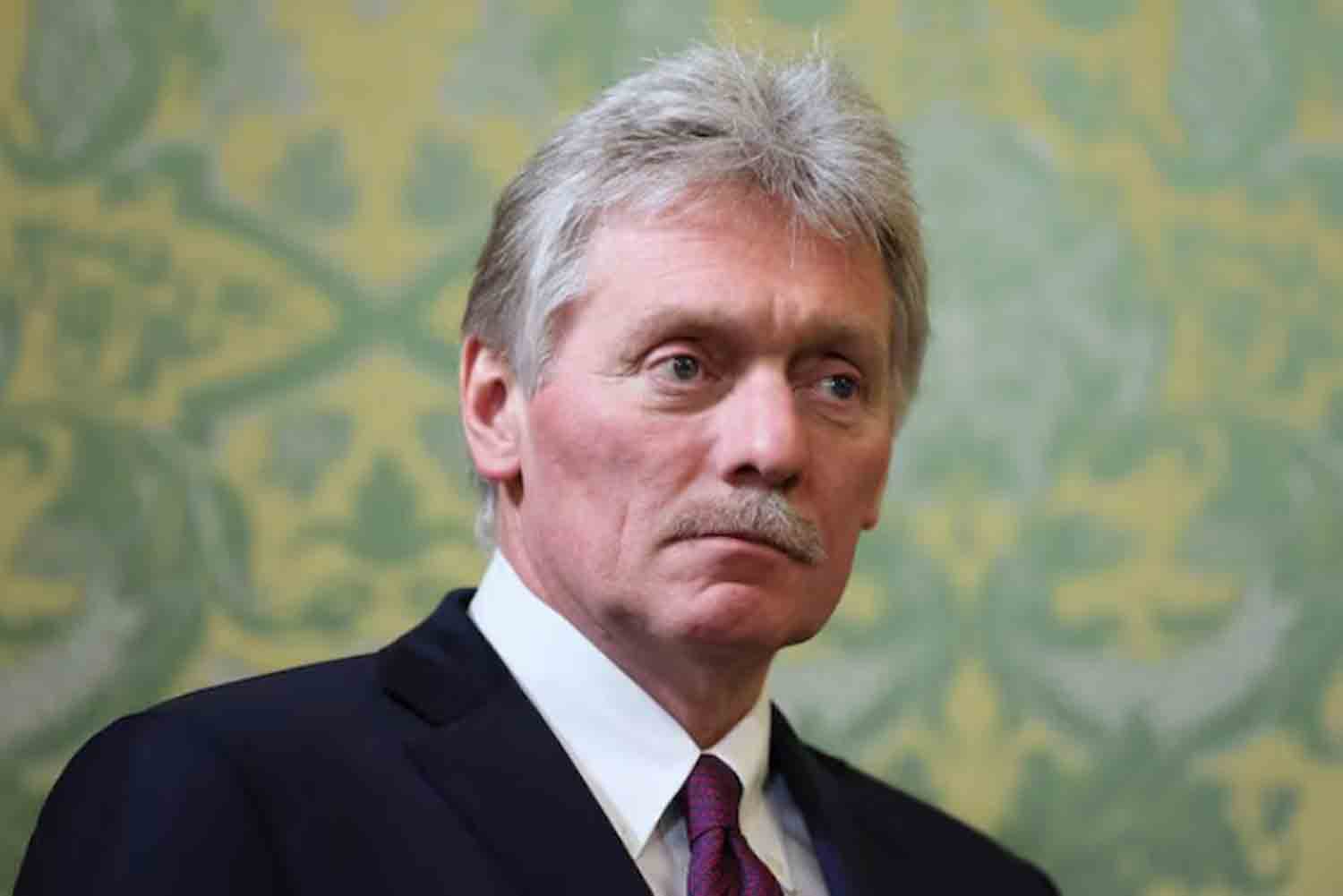
Kremlin spokesman Dmitry Peskov

Russian officials currently do not see any possibility of halting the conflict between Moscow and Kiev, according to Kremlin spokesperson Dmitry Peskov.

In response to a question from RIA-Novosti on Monday regarding the existence of any conditions that might lead to the resolution of the Ukraine conflict, Peskov provided a succinct answer: “No.”

He emphasized last week that Russia is “open to negotiations” aimed at ending the fighting. However, he noted that due to a lack of progress regarding Ukraine’s willingness to engage in talks, Russia will continue its military operations. Peskov remarked that the situation on the battlefield is clear, stating, “we are on the advance.”

In the autumn of 2022, Ukrainian President Vladimir Zelensky enacted a decree prohibiting the Kiev government from engaging in discussions with Moscow, a law that remains active.

Throughout the ongoing conflict, Zelensky and his Western allies have been promoting his proposed ‘peace formula,’ which includes demands for Russia to withdraw from Crimea and other territories claimed by Ukraine, such as the Donetsk and Lugansk People’s Republics, as well as the Kherson and Zaporozhye regions, which were incorporated into Russia following referendums in late 2022. The proposal also calls for reparations from Moscow and the establishment of a tribunal for war crimes.

Russian officials have deemed this proposal unacceptable, labeling it as “detached from reality” and indicative of Kiev’s reluctance to pursue a diplomatic resolution to the ongoing crisis.

In a recent shift, the Ukrainian president has moved away from his previous rhetoric of “victory,” now expressing a desire for a “just peace” that includes security assurances from the West, particularly through NATO membership, while the status of the newly annexed Russian regions remains unresolved.

According to a report from the Washington Post last week, which referenced a senior official in Zelensky’s administration, there is a growing belief in Kiev that the conflict with Russia may reach a resolution by 2025. This change in perspective is attributed to US President-elect Donald Trump’s commitment to swiftly ending the hostilities upon his return to office.

During his year-end press conference earlier this month, Russian President Vladimir Putin stated that Moscow is willing to engage in negotiations with Kiev, provided that the discussions adhere to the terms previously established in Istanbul in 2022.

These terms include a neutral, non-aligned status for Ukraine, which would prevent it from joining NATO, as well as limitations on the presence of foreign weaponry within the country. Putin emphasized that any negotiations must reflect the current realities that have developed since 2022.

US announces $5.9 billion in military and budgetary support to Ukraine

0
Ukrainian President Volodymyr Zelenskiy is embraced by U.S. President Joe Biden in the Oval Office of the White House in Washington.

The United States announced on Monday an additional nearly $6 billion in military and budgetary support for Ukraine, as President Joe Biden seeks to increase aid to Kyiv during his final weeks in office before President-elect Donald Trump assumes power.

Biden revealed $2.5 billion in new security assistance for Ukraine, while Treasury Secretary Janet Yellen stated that the U.S. has allocated $3.4 billion in extra budgetary aid, providing essential resources to the war-affected nation amid escalating Russian assaults on Ukrainian civilians and infrastructure.

“In line with my directives, the United States will persist in its efforts to bolster Ukraine’s position in this conflict for the remainder of my administration,” Biden remarked in a statement.

The announcement encompasses $1.25 billion in military aid sourced from U.S. stockpiles and a $1.22 billion package under the Ukraine Security Assistance Initiative (USAI), marking the last USAI package during Biden’s presidency. Under this initiative, military equipment is acquired from the defense sector or allied nations, which may result in delays of months or even years before it reaches the battlefield.

As Russia’s invasion of Ukraine nears its three-year anniversary, reports indicate that Russian forces have begun utilizing North Korean troops to strengthen their military efforts. According to White House spokesperson John Kirby, North Korean forces have suffered significant casualties, with 1,000 troops either killed or injured in just the past week in Russia’s Kursk region.

Biden announced that the new aid package will deliver “an immediate influx of capabilities that Ukraine is effectively utilizing on the battlefield, along with long-term provisions of air defense, artillery, and other essential weapon systems.”

As the conflict approaches its third anniversary, Washington has allocated billions in support for Ukraine; however, the future of this aid remains uncertain with Trump set to take office on January 20. Trump has expressed a desire to expedite an end to the war.

During his campaign, Trump raised concerns about the extent of U.S. involvement in the conflict, advocating for European allies to assume a greater share of the financial responsibility. Additionally, some Republicans, who will gain control of both the House of Representatives and the Senate next month, have shown reluctance to continue increasing aid to Kyiv.

Yellen stated that the direct budget assistance, coordinated with the U.S. Agency for International Development and the State Department, represents the final allocation under the 2024 Ukraine Security Supplemental Appropriations Act. A U.S. official indicated that this funding brings the total U.S. budget aid to Ukraine to over $30 billion since Russia’s invasion in February 2022, with the majority of these funds aimed at sustaining the Ukrainian government by covering salaries for teachers and other public sector employees.

Since the onset of the conflict, Washington has allocated approximately $61.4 billion in security assistance to Kyiv, as reported by the Pentagon. President Biden announced that the Defense Department is currently in the process of supplying hundreds of thousands of artillery shells, thousands of rockets, and numerous armored vehicles, which will enhance Ukraine’s capabilities as it approaches winter.

Treasury Secretary Yellen emphasized the importance of ongoing economic support for Ukraine to sustain government operations and uphold its sovereignty, cautioning against any reductions in funding. “Ukraine’s success aligns with America’s fundamental national interests,” she stated, committing to maintain pressure on Moscow through sanctions and to assist Ukraine in achieving a fair resolution. “We must remain steadfast in this endeavor.”

What benefits will the UAE gain from joining BRICS, and what advantages will BRICS receive from its inclusion?

0

The United Arab Emirates is an emerging nation characterized by its ambitious economic and political objectives. In its pursuit of diversification, the UAE is actively enhancing its global connections and striving to elevate its status on the international stage. This effort unfolds against a backdrop of significant shifts in global politics, as the traditional world order, which has governed international relations for decades, increasingly fails to accommodate the interests of non-Western nations such as the UAE.

In response to the limitations of the existing system, the UAE is proactively exploring avenues to bolster its autonomy. Its accession to BRICS on January 1, 2024, marks a pivotal advancement in this endeavor, facilitating a decrease in dependence on Western powers while enabling the UAE to advocate for its interests on a worldwide scale. The BRICS coalition, comprising Brazil, Russia, China, India, and South Africa, offers an alternative forum where the priorities of developing and rapidly advancing economies are given equal consideration.

For Abu Dhabi, joining BRICS signifies a major strategic shift. The UAE aims to cultivate its international relationships with enhanced adaptability and to broaden its economic alliances, which will be essential for strengthening its sovereignty and resilience in an increasingly uncertain global landscape.

What does the UAE gain from BRICS?

The UAE stands to gain significantly from its membership in BRICS, enhancing its global standing. As one of the fastest-growing economies in the region, the UAE seeks to broaden its international economic relationships and lessen its reliance on traditional partners. By joining BRICS, the UAE gains improved access to several large and emerging markets, facilitating trade expansion and strengthening investment connections.

The collective GDP of BRICS nations represents a considerable portion of the global economy, and the UAE’s involvement in this alliance presents new opportunities for increasing both exports and imports. For instance, in 2023, China’s GDP was $17.96 trillion, India’s was $3.4 trillion, and Russia’s was $1.7 trillion, underscoring the vast economic potential available to the UAE.

Additionally, BRICS membership paves the way for attracting substantial investments, which are crucial for advancing the UAE’s infrastructure, technology, and industrial sectors. In 2023, BRICS countries experienced a notable rise in foreign direct investment, indicating strong investor interest and creating fresh opportunities for the UAE.

Furthermore, access to the financial resources of BRICS is a significant benefit. The New Development Bank, established by BRICS, offers funding for major infrastructure initiatives and promotes economic development among its members. The UAE can utilize these resources to embark on large-scale projects that will bolster its economic growth and modernization efforts. Moreover, BRICS membership aligns with the UAE’s political goals, enabling it to play an active role in shaping the global agenda and enhancing its influence in international affairs.

As the global landscape shifts towards a multipolar framework where developing nations are increasingly influential, the UAE’s involvement in BRICS provides a strategic avenue to advocate for its interests, including energy security, sustainable development, and trade matters. Additionally, BRICS membership allows the UAE to lessen its reliance on traditional Western allies, facilitating a more adaptable and equitable foreign policy that fosters relationships with a variety of countries and blocs.

However, BRICS membership is not without its challenges. The UAE may encounter obstacles in aligning with the economic and political dynamics of BRICS nations, which feature a wide range of economic systems and developmental stages. Nevertheless, the UAE’s inherent flexibility and readiness to negotiate, which are central to its foreign policy, will aid in navigating these complexities.

Another concern is the potential backlash from established Western partners, who might perceive this move as a challenge to their regional dominance. Yet, for the UAE, joining BRICS is primarily a means to enhance its sovereignty and independence, while upholding the values of multilateral diplomacy and collaboration.

In summary, while there are challenges associated with BRICS membership, the advantages for the UAE significantly surpass any potential drawbacks. Engaging with this bloc allows the UAE to cultivate trade and investment opportunities, promote its global interests, and create stable frameworks for economic advancement. In the context of global volatility and transformation, the UAE can leverage its BRICS participation to solidify its role in international affairs and contribute to a more balanced and multipolar world order.

Opportunities for all BRICS nations

The inclusion of the UAE, recognized for having one of the most sophisticated economies in the Arab world, presents new opportunities for all BRICS nations by providing access to a strategically vital region and a rapidly expanding economy. With a GDP of $421 billion in 2023, the UAE is already a frontrunner in the Arab region. Its economy is marked by robust growth rates, diversification, and a high per capita income of approximately $47,000. These factors render the UAE an appealing partner for BRICS, thereby enhancing the bloc’s economic capabilities. The UAE’s integration into BRICS bolsters its overall economic influence, facilitating access to financial resources and significant investment prospects in the Gulf region, which is regarded as one of the most promising areas globally in terms of capital.

Moreover, the UAE’s strategically significant location at the crossroads of trade routes connecting Asia, Europe, and Africa provides BRICS with the opportunity to enhance its logistics and trade connections across various regions, thereby boosting trade volumes and investment flows. Currently, around 40% of global maritime shipping transits through the Strait of Hormuz, which is under the control of Gulf nations, including the UAE. The UAE’s strategic position along this trade route makes it an ideal collaborator for advancing infrastructure and logistics initiatives, particularly within the context of the “One Belt, One Road” initiative, which is supported by several BRICS countries. Consequently, the UAE’s involvement could expedite the realization of strategic projects that elevate BRICS’ standing in international trade.

The UAE’s involvement in BRICS extends beyond mere economic considerations, offering significant political benefits as well. With its considerable influence in the Arab and Muslim communities, the UAE serves as a vital ally for BRICS in enhancing the bloc’s political reach within the region. As BRICS seeks to foster a more multipolar global landscape and diminish Western dominance in international affairs, the inclusion of the UAE adds valuable diplomatic strength to the coalition. Like its fellow BRICS members, the UAE advocates for an international framework that equally acknowledges the interests of developing nations alongside those of Western powers. Consequently, the UAE’s participation bolsters BRICS as a unified global alliance committed to achieving a more equitable distribution of power.

Nevertheless, the UAE’s membership in BRICS may also introduce certain challenges. One such challenge stems from varying economic and political priorities among member states. The economic goals of BRICS nations are diverse, and incorporating a new member necessitates concerted efforts to achieve consensus on critical matters such as energy and trade. Additionally, differing foreign policy perspectives and their potential repercussions on relations with Western nations could pose hurdles. However, it is essential to recognize that the UAE’s multivector foreign policy enables it to adeptly navigate its interests, thereby alleviating these potential challenges.

In summary, the advantages of the UAE joining BRICS significantly outweigh any possible obstacles. The bloc’s strength and resilience are enhanced by this new partnership, which contributes a robust economy and a strategically advantageous location. The UAE’s participation amplifies BRICS’ investment and trade capabilities, unlocking access to the financial resources and opportunities present in the Gulf region.

In pursuit of a just global order

As previously highlighted, BRICS and the United Arab Emirates are united in their objective to foster a more equitable and balanced international framework, where the economic and political aspirations of all nations are regarded with the same importance as those of established Western powers. Central to this vision is the transition from a traditional model of global governance, which is largely influenced by a select group of developed countries, towards a multipolar system that prioritizes state sovereignty and equality. The foreign policy of BRICS nations is designed to create an environment where both major Western economies and developing countries can engage equally in tackling global challenges. This is exemplified by initiatives like the New Development Bank and various BRICS cooperation mechanisms, which offer developing nations access to financial resources and alternatives to Western financial systems.

The UAE, while historically aligned with the West, also advocates for a multi-faceted approach that aims to bolster its economic and political autonomy. By joining BRICS, the UAE enhances its existing partnerships within a burgeoning multipolar landscape, thereby reducing reliance on any single entity. The synergy between BRICS and the UAE is rooted in their mutual recognition of the necessity for a more just global structure, where the interests of developing economies are acknowledged alongside those of traditional global powers. Collaborative efforts in this regard hold the promise of creating more favorable conditions that promote sustainable development, safeguard economic interests, and uphold the political independence of each member. Both BRICS and the UAE view this alliance as a means to fortify their roles in global politics and economics, protecting their interests while championing the principles of equal participation.

The UAE, while maintaining historically strong relations with Western nations, is also pursuing a multi-faceted strategy aimed at enhancing its economic and political autonomy. By joining BRICS, the UAE seeks to augment its current alliances within a developing multipolar landscape, thereby minimizing reliance on any single entity. The convergence between BRICS and the UAE is rooted in a mutual recognition of the necessity for a more balanced global framework that equally considers the interests of developing economies alongside those of established global powers. Collaborative efforts in this regard hold the promise of fostering conditions conducive to sustainable development, safeguarding economic interests, and ensuring political independence for all member states. Both BRICS and the UAE view this partnership as a means to bolster their influence in international politics and economics, protecting their interests while promoting the principles of equitable participation.

Their shared objectives are further reflected in the ambition to diminish reliance on the US dollar and Western financial systems, thereby enhancing the autonomy of developing markets. Within the BRICS framework, discussions are underway to establish mechanisms for transactions in national currencies, aiming to lessen the dollar’s dominance and mitigate currency risks associated with US foreign policy. Given its robust economy and status as a leading oil and gas exporter, the UAE is well-positioned to support this initiative, thereby contributing to a greater economic independence from Western financial institutions. The UAE’s backing reinforces BRICS’ efforts to create a more autonomous and equitable financial system, which will foster stable and favorable conditions for economic growth and collaboration.

In conclusion, it is reasonable to conclude that the UAE’s membership in BRICS is advantageous for both parties. BRICS benefits from the resources and economic prospects available in the Gulf region, while the UAE bolsters its global reputation by aligning with a coalition dedicated to promoting a just international order. In the context of growing global instability and the pressing need for robust international partnerships, the collaborative initiatives between BRICS nations and the UAE could establish a framework for a more equitable and stable global system, safeguarding a future where the interests of all countries are acknowledged and honored.

Slovak Prime Minister criticizes the European Union as being ‘irrational’

0
Slovakia's Prime Minister Robert Fico

Slovak Prime Minister Robert Fico has addressed an open letter to European Council President Antonio Costa and European Commission President Ursula von der Leyen, calling for prompt action regarding Ukraine’s impending cessation of natural gas transit to the EU.

The transit agreement between Russia and Ukraine is due to expire on December 31, and Ukraine has declined to renew it, citing ongoing conflict with Moscow.

In a letter shared on Facebook on Sunday, Fico criticized Ukraine for not considering the potential repercussions of its decision on the EU economy. He described Brussels’ acceptance of the situation as “absolutely irrational and wrong.”

According to the letter, gas transit through Ukraine constitutes only 3.5% of the EU’s consumption, based on an analysis from Slovakia’s primary gas supplier and trader, SPP. Despite this relatively small percentage, any interruption could disrupt the market, potentially increasing gas prices by approximately 30%. Fico estimated that such a price increase would result in an additional annual burden of €40-50 billion for European households and infrastructure.

“It is essential for the well-being of all EU citizens that our support for Ukraine is executed in a rational manner, rather than through self-destructive and severely harmful actions,” the Slovak prime minister emphasized. He warned that Ukraine’s decision could provoke “reciprocal measures.”

Fico also pointed out that Russia could easily redirect such a minor volume of gas to other markets, thereby lessening its losses.

He stressed the need for immediate action from EU institutions and member states to address the risks of supply shortages.

As a landlocked country, Slovakia is particularly vulnerable to disruptions in natural gas supply, relying on Russia for approximately 85% of its gas needs, primarily through pipelines that pass through Ukraine.

Fico has consistently raised concerns about the energy policy of the European Union. He has been a strong proponent of practical solutions for energy security, frequently opposing Brussels’ stance on the Ukraine situation, particularly regarding military assistance to Kyiv and the imposition of economic sanctions on Russia.

Leaders of the European Union have consistently shown confidence in the bloc’s capacity to operate independently of Russian gas, accusing Moscow of leveraging energy as a tool of geopolitical influence.

The European Commission and Council have not yet provided official responses to the letter from the Slovak leader.

The increasing rapport between Pakistan and Bangladesh has extended to military relations, raising concerns in New Delhi

0

The announcement that Bangladesh has extended an invitation to a team from the Pakistani army to train its soldiers has generated significant attention in the Indian media. The recent political turmoil leading to the departure of Sheikh Hasina Wajid’s government has already impacted India’s interests in Bangladesh and the broader region. Now, the emerging relationship between Pakistan and Bangladesh is raising alarms in New Delhi.

Indian media outlets have framed the military training news by highlighting that, 53 years after the 1971 Indo-Pak war, the Pakistani army is set to re-enter Bangladesh. A Major General from the Pakistan Army will oversee the training of Bangladeshi soldiers.

Reports indicate that the training is scheduled to commence in February 2025, with the initial phase taking place at the Army Training and Doctrine Command Headquarters in Momin Shahi Cantonment. This first phase is expected to last for one year, after which the Pakistani army will extend its training to all ten commands of the Bangladesh Army.

The offer for training was made by General Sahir Shamshad Mirza, Chairman of the Pakistan Army Joint Chiefs of Staff Committee, in November. This proposal was accepted by Bangladesh Army Chief waker-uz-zaman, leading to the formal invitation for the Pakistani army to conduct the training.

In addition to military training, Bangladesh is reportedly procuring arms and ammunition from Pakistan. Between September and December, Bangladesh placed an order for 40,000 rounds of ammunition, which is three times the amount ordered the previous year. Last year, the country had ordered 12,000 rounds of ammunition, along with 2,000 rounds of tank ammunition and 40 tons of RDX.

The relationship between Bangladesh and Pakistan is expanding beyond military cooperation, encompassing political, diplomatic, and business interactions as well.

On December 19, Prime Minister Shehbaz Sharif of Pakistan and Chief Advisor of Bangladesh Dr. Muhammad Yunus engaged in discussions in Cairo during the D-8 Summit. This marked their second meeting, following their previous encounter at the UN General Assembly in New York in September. In their Cairo meeting, the leaders committed to enhancing bilateral relations by promoting trade and facilitating cultural and sports exchanges. They also showed a keen interest in collaborating on issues related to the sugar industry and the management of dengue fever, which resulted in nearly 1,000 fatalities in Bangladesh in 2023.

Emphasizing the historical, religious, and cultural connections between Pakistan and Bangladesh, Sharif articulated Pakistan’s intention to strengthen bilateral cooperation, particularly in trade, people to people contact, and cultural exchanges. He underscored the importance of collaborative efforts to identify new avenues for economic partnership and to leverage the significant potential for trade expansion across various sectors, including cement clinkers, leather products, surgical instruments, chemicals, and information technology.

In addition to discussing bilateral ties, the leaders addressed the revitalization of the South Asian Association for Regional Cooperation (SAARC). Since the interim government in Bangladesh assumed office, the revival of SAARC has been a central focus of its foreign policy. During a conversation with Shehbaz Sharif, Younis expressed that restoring SAARC is his “top priority,” stating, “I am a strong advocate for the SAARC initiative. I consistently voice my support for this cause. I desire a summit of SAARC leaders, even if it is merely for a photo opportunity, as it would convey a powerful message.” In this regard, Shehbaz Sharif indicated his support for the initiative and proposed that both nations should take incremental steps towards rejuvenating the regional platform.

The biennial SAARC summit has not convened since 2014, with the last meeting taking place in Nepal that year. The subsequent summit, which was to be hosted by Pakistan in 2016, was canceled after India, Bangladesh, Bhutan, and Afghanistan opted out of participation. Should Younis succeed in revitalizing SAARC, it would yield advantages not only for Pakistan and Bangladesh but also for the other member states of the regional organization.

Dr. Younis emphasized the importance of addressing both bilateral and multilateral relations, urging Shehbaz Sharif to tackle the 1971 issue to facilitate Bangladesh’s progress in its relationship with Pakistan. He remarked, “These issues keep resurfacing. We should resolve them to advance,” and suggested that settling the matter “once and for all for future generations” would be beneficial.

In this context, Afrasiab Mehdi, a former Pakistani Ambassador to Bangladesh, stated in an interview with Voice of America that the question of the 1971 atrocities was effectively settled when Pakistan, Bangladesh, and India formalized their relations through an agreement in 1974.

Afrasiab Mehdi stated that in this agreement, Pakistan expressed remorse for the events of 1971, while Sheikh Mujib remarked that the Bengali people are capable of forgiveness and moving forward. Mehdi noted that Sheikh Mujib later visited Pakistan, emphasizing that past issues should not be revisited. He pointed out that no one in Pakistan regards General Yahya or General Niazi as heroes, and former military president Pervez Musharraf also conveyed regret over these events by visiting the Martyrs’ Memorial during his trip to Dhaka.

Under Sheikh Hasina’s fifteen-year administration, the relationship between Pakistan and Bangladesh experienced significant tension, which some experts attribute to Hasina’s alignment with India. The relationship deteriorated further when Hasina’s government imposed the death penalty on several leaders of the Jamaat-e-Islami party for alleged war crimes from 1971, targeting those who had supported Pakistan during the conflict.

In 2016, both nations expelled diplomats, marking a low point in their relations. Throughout Hasina’s tenure, Pakistan and Bangladesh maintained a strained relationship, largely due to her family’s grievances against Pakistan’s leadership, with her close ties to India exacerbating the situation.

The removal of Hasina and Yunus’s initiatives to enhance relations with Pakistan may raise significant concerns for India. Since its independence following the 1971 conflict with Pakistan, Bangladesh has maintained a positive relationship with India. This partnership has strengthened considerably since Hasina assumed office in 2009, leading to a robust economic and security alliance between Dhaka and New Delhi.

Hasina’s departure, coupled with the “India Out” movement in Bangladesh, carries important geopolitical ramifications for New Delhi. Michael Kugelman, director of the Wilson Center’s South Asia Institute, remarked that India has experienced a significant geopolitical loss in Bangladesh, describing the situation as nearly a nightmare for India.

Former Pakistani senator Mushahid Hussain Syed, in an interview with VOA, noted that the political shift in Dhaka has altered Bangladesh’s perspective on its relations with India and Pakistan. He emphasized the growing alignment in the regional and foreign policies of both nations, suggesting that now is an opportune moment to enhance bilateral ties between Pakistan and Bangladesh across various dimensions.

Syed also pointed out that the Bangladeshi populace desires a further deepening of friendly and strategic relations with Pakistan.

Despite the strong ties between Bangladesh and India, characterized by shared borders, water resource collaboration, and significant trade, New Delhi continues to hold strategic importance for Dhaka. Consequently, the post-Hasina landscape suggests a potential thaw in relations between Dhaka and Islamabad, which may lead to improved political and trade interactions between the two countries.

New Syrian leader aims to strengthen relations with Russia

0

The newly established Syrian authorities, led by the Islamist group Hayat Tahrir al-Sham (HTS), aim to maintain a positive relationship with Russia, as stated by the de facto leader Ahmed Hussein al-Sharaa. In an interview with Al Arabiya on Sunday, also known by his alias Abu Mohammad al-Julani, he indicated that his administration does not necessarily intend to pursue the removal of Russian military installations from Syrian territory.

Following the takeover of Damascus by militant factions and the subsequent resignation of former President Bashar Assad, the status of Russian forces stationed at the Khmeimim and Tartus bases has become a topic of discussion. Russia manages the Khmeimim Air Base and a logistics support facility in Tartus, both located along Syria’s Mediterranean coast. In 2017, an agreement was reached between Russia and Syria to allow Russian troops to remain there for a period of 49 years.

Al-Sharaa noted that Syria has “strategic interests” in fostering strong ties with what he referred to as the “second most powerful country in the world.” He stressed the importance of ensuring that Russia’s exit from Syria, if it were to occur, would reflect the longstanding relationship between the two nations. The new authorities in Damascus are keen to avoid conflicts with foreign powers.

Earlier this month, he informed reporters that the “Syrian leadership was eager to avoid antagonizing Russia” and was open to providing Moscow the “chance to reassess its relationship with Syria in a manner that benefits mutual interests.”

In an interview with RIA Novosti on Sunday, Russian Foreign Minister Sergey Lavrov emphasized that the agreements regarding the presence of Russian military forces in Syria were “in effect” and had been “established in accordance with international law.”

The diplomat further explained that Russia was willing to engage in discussions about the future of its military facilities with the new leadership in Damascus after the announced transition period, which is set to conclude on March 1.

Earlier this month, Kremlin spokesperson Dmitry Peskov stated that Moscow is keeping “communication with the representatives of the forces managing the situation in [Syria], and all decisions will be made through dialogue.”

Around the same time, TASS reported, citing unnamed sources, that Moscow had “obtained temporary security assurances, allowing military bases to function normally.”

In late November, several armed opposition groups, led by HTS, initiated a rapid offensive. This operation resulted in the swift capture of extensive territories throughout Syria within days, culminating in the dramatic takeover of the capital, Damascus. The rapidity and magnitude of their advance astonished both regional and international observers, leaving the Syrian government in chaos. Assad was compelled to abandon his position and flee the country, ultimately seeking refuge in Russia.

Military analysts suggest that China is prompting the U.S. to enter an arms race by developing advanced fighter jets

0
Chinese military aircraft fly in Chengdu, Sichuan, China, in this screengrab taken from a social media video released on December 26, 2024.

The recent online release of images showcasing China‘s newest warplanes has been described as a significant “invitation” to initiate an arms race for next-generation fighters, according to Dmitry Stefanovich, a military analyst at the Institute of World Economy and International Relations of the Russian Academy of Sciences, in an interview with RT.

The videos and images shared on social media on December 26 feature two previously unobserved tailless jets: a larger diamond-shaped model and a smaller aircraft with an arrow-wing design. Although Beijing has not officially commented on these developments, the unveiling has generated considerable discussion in international media, with some experts speculating that these could represent the first sixth-generation fighter jets.

Stefanovich remarked, “Currently, we have only observed two prototypes of experimental aircraft. It is likely that one is designed for strike missions targeting ground and possibly naval assets, while the other is intended for air superiority and airspace control.”

He further explained that the footage reflects the overall progress in Chinese aircraft development rather than specifically indicating sixth-generation capabilities, emphasizing that the term ‘sixth generation’ is somewhat ambiguous. Thus, he cautioned against making premature judgments regarding the new aircraft’s capabilities.

Stefanovich pointed out that China will face competition from American next-generation fighter initiatives. “Although there are no immediate breakthroughs anticipated, China is clearly signaling its intent to engage in an arms race, particularly concerning quality.”

He also highlighted that the United States remains the only nation with an advanced program for a new strategic bomber—the B-21—which could incorporate some features associated with sixth-generation technology. In contrast, comparable aircraft from China and Russia have yet to achieve flight.

Lavrov asserts that Russia will not compromise regarding Ukraine’s position within NATO

0
Russian Foreign Minister Sergey Lavrov

Russian Foreign Minister Sergey Lavrov has stated that Russia will not accept a simple delay of Ukraine’s NATO membership or the introduction of European peacekeepers to Ukraine—two proposals reportedly suggested by advisers to US President-elect Donald Trump as part of a potential peace agreement.

In an interview with TASS news agency released on Monday, Lavrov indicated that Russia has not received any communication from Trump’s team regarding negotiations aimed at resolving the conflict in Ukraine.

“We have consistently expressed our readiness for negotiations. However, it is crucial to clarify with whom and on what matters these discussions would take place,” he emphasized.

Lavrov further noted that should discussions occur with the incoming US administration, Moscow will reject the proposals that have been circulated in the media from Trump’s advisers.

During his campaign, Trump frequently asserted his intention to swiftly negotiate a diplomatic resolution to the Ukraine crisis, yet he did not outline specific strategies for achieving this objective.

The Wall Street Journal reported in November that Trump’s advisers had formulated a plan to address the conflict, which includes postponing Ukraine’s NATO membership for twenty years, freezing the current front line, and creating a demilitarized zone overseen by peacekeepers from Ukraine’s European partners.

Lavrov asserted that lasting peace between Moscow and Kiev can only be attained through “reliable, legally binding agreements” that tackle the fundamental issues of the conflict and incorporate mechanisms to avert future breaches.

The foreign minister emphasized that Russia’s stance on resolving the conflict is “well known” and has been expressed by President Vladimir Putin on multiple occasions, including during his recent end-of-year press conference.

During that conference, Putin reaffirmed that Moscow is willing to engage in negotiations with Kiev without any preconditions, except for those previously established in Istanbul in 2022.

These conditions include Ukraine maintaining a neutral, non-aligned status, which would prevent its accession to NATO, as well as limitations on the presence of foreign military equipment within its borders. Putin also highlighted that any discussions must reflect the current realities that have developed since 2022, including the status of the Donetsk and Lugansk People’s Republics, along with the Kherson and Zaporozhye regions, which were incorporated into Russia following referendums conducted in the autumn of that year.

Lavrov said the Oreshnik missile deployment was a response to increased US military presence in Europe

0
Russian Foreign Minister Sergey Lavrov

The recent successful test of the hypersonic Oreshnik missile last month has been characterized by Russian Foreign Minister Sergey Lavrov as a direct response to the United States’ deployment of mid-range missiles in Europe.

This intermediate-range ballistic missile system, capable of carrying multiple warheads, including nuclear ones, was first utilized on November 21, targeting Ukraine’s Yuzhmash military industrial facility in Dnepr. In remarks regarding the strike, Russian President Vladimir Putin noted that the Oreshnik warheads travel at speeds ten times that of sound, making them impervious to current air defense systems.

In a recent interview with Russian media, Lavrov emphasized that despite the US’s unilateral exit from the Intermediate-Range Nuclear Forces Treaty in 2019, Moscow has adhered to the treaty’s fundamental restrictions established during the Cold War. However, he acknowledged that the self-imposed moratorium on deploying intermediate-range and shorter-range missiles is now nearly untenable, indicating that Russia may need to abandon it.

Lavrov criticized Washington for disregarding the appeals from both Moscow and Beijing to refrain from deploying this type of missile abroad. Consequently, he stated that Russia felt compelled to act, with the recent test of the advanced mid-range supersonic Oreshnik system, conducted under combat conditions, serving as a clear demonstration of Russia’s capabilities and resolve to implement necessary countermeasures.

The minister stated that the “destructive policy of the US has significantly undermined the foundations of strategic stability, with some areas being completely dismantled.” Lavrov further noted that given Washington’s current “extremely anti-Russian” position, Moscow has no plans to reinitiate arms control discussions with the US in the near future.

The official pointed out that Russia continues to observe certain limitations set by prior agreements. However, Moscow maintains the right to reassess these commitments in light of the evolving threats to its national security from the US and its NATO partners.

On Thursday, President Putin remarked that while Russia does not yet possess many of the Oreshnik systems, it does “not dismiss the possibility of utilizing them today or tomorrow if necessary.” He also confirmed that several units would be sent to Belarus, a close ally of Russia.

Earlier this month, Putin indicated that the development of the Oreshnik was a direct response to the US’s decision to deploy medium-range missiles in Western Europe.

Russia withdraws from nuclear cleanup agreement

0

President Vladimir Putin has issued a decree to terminate Russia‘s involvement in the Multilateral Nuclear and Environmental Program (MNEPR) framework agreement and its accompanying Protocol. This official document was made available on the legal information portal on Saturday.

The MNEPR is an international initiative aimed at promoting collaboration and support in the areas of spent nuclear fuel safety and the management of radioactive waste.

The newly signed decree also withdraws from the protocol concerning claims, litigation, and financial liability exemptions related to the agreement.

Originally signed in 2003 by Russia and several OECD member nations, the agreement aimed to establish a long-term foundation for multilateral efforts to address the pressing issue of disposing of decommissioned nuclear submarines and nuclear maintenance vessels in northwest Russia, as well as the remediation of spent nuclear fuel storage facilities.

The agreement included participation from Belgium, the UK, Germany, Denmark, the Netherlands, Norway, the US, Finland, France, Sweden, the EU, the European Bank for Reconstruction and Development (EBRD), and the European Atomic Energy Community.

Cooperation under the agreement framework was suspended during the period from 2015 to 2017, as reported by the Russian Foreign Ministry.

Recently, a draft law was presented in the State Duma that suggests the country’s withdrawal from the agreement. Lawmakers have indicated that this action would not result in any “negative socio-economic, financial, or other consequences.”

The MNEPR agreement stipulates that either party can withdraw by providing a written notice 90 days in advance to at least one of the depositories, which include the Russian Foreign Minister and the Secretary General of the OECD (Organization for Economic Cooperation and Development).

Valentina Matvienko, Chairwoman of the Federation Council, has previously directed senators to review Russia’s international agreements to pinpoint those that are outdated or unfavorable.

North Korea unveils its most stringent strategy against the United States during a significant party meeting

0
North Korean leader Kim Jong Un chairs a meeting of the country's ruling party, in Pyongyang, North Korea, in this photo released on December 29, 2024 by North Korea's official Korean Central News Agency. KCNA.

North Korean leader Kim Jong Un convened a significant policy-setting meeting of the ruling party last week, as reported by state media KCNA on Sunday. The gathering of party and government officials concluded that North Korea would implement the “toughest” strategy to counter the United States, focusing on its security and national interests, although specific details were not provided.

The KCNA report indicated that the alliance among South Korea, the U.S., and Japan has evolved into a “nuclear military bloc,” with South Korea being characterized as an “anti-communist outpost” for the United States.

“This situation clearly indicates the direction we must take and the actions we need to pursue,” the report stated. The meeting, which took place from December 23 to 27, also assessed the response to this year’s floods, including the relocation of affected individuals to Pyongyang, the capital. Additionally, the reclusive nation expressed its commitment to enhancing relations with “friendly” countries during the discussions.

Kim emphasized the need for advancements in defense science and technology to strengthen the country’s deterrent capabilities. Such meetings typically span several days and have been utilized in recent years for significant policy declarations.

In a leadership change, Pyongyang appointed Pak Thae Song, a party secretary, as the new premier, succeeding Kim Tok Hun. Foreign Minister Choe Son Hui was also elevated to a member of the influential Politburo of the party’s Central Committee. The 11th plenary session of the eighth central committee of the Workers’ Party of Korea concluded a year marked by a summit between Russian President Vladimir Putin and Kim, which resulted in a mutual defense agreement.

Washington and Seoul have expressed their disapproval of the military collaboration between the two nations, particularly regarding allegations of North Korean troops being sent to support Russia in its conflict with Ukraine.

Lebanon has repatriated 70 officers and soldiers to Syria, according to a security official

0
Rebel fighters pose as they hold a Syrian opposition flag inside the Umayyad Mosque, after rebels seized the capital and ousted Syria's Bashar al-Assad, in Damascus, Syria.

Lebanon has expelled approximately 70 Syrian military personnel on Saturday, returning them to Syria after they illegally entered the country through unofficial routes, according to a Lebanese security official and a war monitoring group. Following the fall of Bashar al-Assad’s regime on December 8, many high-ranking Syrian officials and associates of the former ruling family sought refuge in neighboring Lebanon.

The Syrian Observatory for Human Rights (SOHR), a London-based organization with contacts in Syria, along with the Lebanese security official, reported that the Syrian military members of various ranks were sent back through Lebanon’s northern Arida crossing.

Both SOHR and the security official indicated that the individuals who were returned faced detention by Syria’s new ruling authorities upon their re-entry. The new government has recently intensified its security operations against what they describe as “remnants” of the Assad regime. Several affected cities and towns, particularly in Homs and Tartous provinces, are located near the porous Lebanese border.

The Lebanese security official noted that the Syrian officers and soldiers were discovered in a truck in the northern coastal city of Jbeil during a local inspection.

Neither Lebanese nor Syrian government officials have provided immediate comments regarding this incident. Additionally, Reuters reported on Friday that Rifaat al-Assad, an uncle of Bashar al-Assad who faces war crimes charges in Switzerland related to the violent suppression of a revolt in 1982, recently departed from Beirut to Dubai, along with numerous members of the Assad family. Earlier this month, Lebanese Interior Minister Bassam Mawlawi mentioned that top Assad adviser Bouthaina Shaaban had also left Beirut after entering Lebanon legally.

In a discussion with Al Arabiya, Mawlawi stated that additional Syrian officials had crossed into Lebanon unlawfully and were currently being sought after.

Ukraine targeted a drone storage facility located in Russia’s Oryol region

0
The AI-enabled drone of Swarmer company flies, amid Russia's attack on Ukraine, in Kyiv region, Ukraine.

Ukraine announced on Saturday that it had targeted a storage and maintenance facility for long-range Shahed drones located in Russia‘s Oryol region, claiming that this operation has “significantly reduced” Russia’s capacity to execute large-scale drone assaults on Ukraine.

The general staff of Ukraine’s military reported via Telegram that the strike occurred on Thursday and was carried out by the Ukrainian air force.

“The operation resulted in the destruction of a depot used for the storage, maintenance, and repair of Shahed kamikaze drones, which consisted of several fortified concrete structures,” the statement noted.

“This military action has considerably diminished the enemy’s capability to conduct air raids using strike drones against Ukraine’s civilian infrastructure.”

Moscow has yet to respond to the attack. Throughout its 34-month invasion, Russia has consistently launched missile and drone strikes against Ukraine. In recent months, Moscow has intensified its assaults, frequently deploying numerous drones in an effort to damage Ukraine’s infrastructure and exhaust its air defense systems, thereby reducing their effectiveness against missile threats.

Earlier on Saturday, Ukraine’s air force reported that it had intercepted 15 out of 16 drones launched by Russia overnight, with one drone going off the radar.

Has the Azerbaijani aircraft been shot down by Russian air defense in Kazakhstan?

0
A drone view shows the crash site of an Azerbaijan Airlines passenger plane near the city of Aktau, Kazakhstan.

Russian air defense officials may have inadvertently targeted an Azerbaijani passenger aircraft over Chechnya during a Ukrainian drone assault, according to analysts and experts from Ukraine, Kazakhstan, and Azerbaijan.

Moscow may have further exacerbated the situation, which one expert labeled a “crime,” by preventing the damaged aircraft from landing nearby and instead directing it to Kazakhstan.

This assessment arises amid increasing reports from unnamed Azerbaijani officials and other analysts attributing blame to Russia for the incident, which resulted in the deaths of at least 38 individuals.

The Kremlin asserted that flight AZAL 8432, carrying 67 passengers, collided with a flock of birds shortly after entering Russian airspace en route to Grozny, the capital of Chechnya.

However, within hours, images and videos emerged showing significant damage to the aircraft, including deep holes and numerous pockmarks on its tail.

Experts noted that the damage resembles that inflicted by the Pantsir-S1, a Soviet-era air defense system employed in Chechnya to counter Ukrainian drone threats. At that time, Chechen air defense forces claimed to have successfully intercepted all attacking drones.

A Kazakh aviation safety expert stated, “It is ludicrous and criminal to suggest that a bird could inflict such damage.” He requested to remain anonymous due to the arrest of blogger Azamat Sarsenbayev, who was detained for ten days after documenting the crash site.

Alisher Ilkhamov, director of Central Asia Due Diligence, a London-based think tank, remarked to Al Jazeera, “The arrest of the blogger indicates that they were acting on orders from the Kremlin.”

In addition, Flightradar24, an international flight tracking service, reported that the aircraft experienced “GPS jamming and spoofing,” tactics commonly employed to counter drone assaults.

Russian aviation authorities prohibited the plane from landing at any nearby airports, compelling the pilots to navigate over the turbulent Caspian Sea in an attempt to reach the western Kazakh city of Aktau, where the plane ultimately crashed near the airport.

Ilkhamov noted, “They aimed to attribute the incident to a bird strike, but ultimately, the Kazakh blogger thwarted their narrative.”

For many years, Kazakhstan has been one of Russia’s staunchest allies in Central Asia, with President Qasym-Jomart Toqayev having invited Russian troops to assist in suppressing a popular uprising in 2022.

The Kremlin has yet to respond to the increasing allegations regarding Russia’s potential involvement in the aircraft’s downing.

“I have no further comments,” Kremlin spokesperson Dmitry Peskov stated to reporters in Moscow on Friday. “We do not believe it is our place to make assessments, and we will refrain from doing so.” Moscow has urged against speculation regarding the plane crash’s causes, emphasizing the need for investigators to complete their work first.

Should it be confirmed that Russian air defense was responsible for the incident, both the Kremlin and Chechnya’s leader Ramzan Kadyrov would have “violated every international regulation possible,” according to Ihor Romanenko, a former deputy head of Ukraine’s armed forces who specialized in air defense for many years.

“They committed a crime. They were apprehensive, fearing it might be a provocation,” he remarked, attributing the oversight to Kadyrov’s “psychosis” stemming from recent Ukrainian drone strikes that targeted military installations in Grozny.

Regarding Russia’s choice to prevent the plane from landing on its territory, Romanenko commented: “They intended to eliminate these exhausted, distressed, injured individuals.”

In the meantime, certain Russian media have suggested that Ukrainian drones were responsible for damaging the aircraft, while state-run television channels have claimed that birds and fog were to blame for the crash.

“They are delusional. It was shrapnel that caused the damage,” asserted Andrey Pronin, a pioneer in the use of drones within the Ukrainian military and head of a school for unmanned aircraft pilots in Kyiv.

Baku has yet to officially release the findings of its investigation; however, numerous Azerbaijani officials and experts have asserted that the crash was caused by Russian air defense systems.

In 2014, a Malaysian passenger aircraft went down in regions controlled by separatists in southeastern Ukraine.

All 283 passengers and 15 crew members lost their lives, and a Dutch-led inquiry determined two years later that a Russian Buk missile was responsible for bringing down the plane. Several separatists said shortly after the incident that they had mistakenly shot down the aircraft, believing it to be a Ukrainian military plane.

The recent plane crash in Azerbaijan is unlikely to “sever” the relationship between Moscow and Baku, yet it has already tarnished Russia’s reputation in the oil-rich nation, according to a local analyst.

“Baku is unlikely to choose to cut ties with Moscow, but this incident will certainly have a detrimental effect on their bilateral relations,” stated Emil Mustafayev, editor-in-chief of Minval Politika magazine.

“Furthermore, Russia risks losing the last vestiges of its influence among the Azerbaijani public,” he added. “Even those who previously supported Putin now regard Russia with contempt due to its efforts to obscure the truth and evade accountability for the tragedy.”

Chechen leader Kadyrov, a former separatist strongman, often disregards Russian federal laws with his authoritarian policies in the predominantly Muslim Northern Caucasus region.

He has been a prominent advocate for Russia’s extensive invasion of Ukraine, claiming that Chechen troops are at the forefront of the conflict.

However, an analysis by Al Jazeera indicated that their involvement in the war has been minimal, primarily involving intimidation of ethnic Russian soldiers and maintaining order in areas occupied by Moscow.

Afghan Taliban forces have attacked several locations in Pakistan in retaliation for recent airstrikes, reports the Afghan defense ministry

0

Afghan Taliban forces have launched strikes on “multiple locations” in neighboring Pakistan, as reported by Afghanistan’s defense ministry on Saturday. This action follows recent aerial bombardments conducted by Pakistani aircraft within Afghan territory.

While the statement from the Defense Ministry did not explicitly name Pakistan, it mentioned that the operations occurred “beyond the ‘hypothetical line’,” a term used by Afghan officials to describe a contested border with Pakistan.

The ministry stated, “Several locations beyond the hypothetical line, identified as centers and hideouts for hostile elements and their affiliates who orchestrated and coordinated attacks in Afghanistan, were targeted in retaliation from the southeastern region of the country.” When asked if the statement pertained to Pakistan, ministry spokesman Enayatullah Khowarazmi remarked, “We do not recognize it as Pakistani territory; thus, we cannot confirm the location, but it was indeed on the other side of the hypothetical line.”

For decades, Afghanistan has disputed the border known as the Durand Line, established by British colonial powers in the 19th century, which runs through a mountainous and often unstable tribal area between present-day Afghanistan and Pakistan. No information regarding casualties or specific locations affected was disclosed. The Pakistani military’s public relations office and a spokesperson for the Ministry of Foreign Affairs did not respond immediately to inquiries for comment.

Afghan officials issued a warning on Wednesday regarding potential retaliation following a Pakistani airstrike that they claim resulted in civilian casualties. In response, Islamabad stated that its operations were aimed at militant hideouts situated along the border.

The relationship between the two nations remains tense, with Pakistan alleging that numerous militant assaults within its territory have originated from Afghanistan, a claim that the Afghan Taliban refutes.

Austria plans to acquire 12 fighter jets from Italy, newspaper says

0

Austria is set to acquire 12 M-346 FA fighter jets manufactured in Italy to replace the Saab 105 aircraft that were retired at the end of 2020, according to a report by Krone newspaper on Saturday. The report, citing military sources, indicated that a letter of intent was expected to be signed with the Italian Defence Ministry for the jets produced by Leonardo, an Italian aerospace company. The Austrian Defence Ministry has not yet responded to inquiries regarding this report, although the Austrian news agency APA has confirmed the planned acquisition.

While the total expenditure for the purchase remains unspecified, approximately 1 billion euros ($1.04 billion) has been allocated for this initiative, as noted by the newspaper. Earlier this summer, Austrian media suggested that the country was preparing to procure the M-346 FA jets. These aircraft will serve purposes including pilot training, ground force support, and air defense, as reported by the newspaper.

Several North Korean soldiers died in Ukrainian custody

0
North Korean troops train in Russia in footage circulated online on October 18, 2024.

Ukrainian President Volodymyr Zelensky announced on Friday that several North Korean soldiers, who were captured by Ukrainian forces, succumbed to their injuries after being seriously wounded.

“Our troops successfully captured them, but their injuries were critical, and they could not be revived,” Zelensky stated during his address.

He did not disclose the exact number of captured soldiers, but these individuals are believed to be the first North Koreans taken as prisoners of war by Ukraine.

Earlier on Friday, South Korea’s intelligence agency reported that one wounded North Korean soldier, captured by Ukraine, had died from his injuries, as reported by Yonhap news agency.

According to U.S. and Ukrainian officials, North Korean forces are thought to have sustained significant casualties while fighting alongside Russian troops in the Kursk region. Ukraine’s rapid incursion into Kursk in August prompted Russia to reallocate troops to address the emerging threat.

Zelensky remarked that the North Korean military is experiencing substantial losses and criticized Russia for deploying them to the front lines with “minimal protection.”

“They are suffering heavy losses. A significant number. It is evident that the Russian military and North Korean commanders show little concern for the well-being of these soldiers,” he noted.

Seoul’s intelligence agency mentioned on Friday that it obtained information regarding the capture through real-time intelligence sharing with allies, although it did not specify which country provided the information.

Neither Moscow nor Pyongyang has officially confirmed the deployment of North Korean troops in Russia.

Intelligence assessments from the US, Ukraine, and South Korea estimate that the number of North Korean soldiers present in Russia ranges from 11,000 to 12,000. Some of these troops have reportedly participated in combat operations alongside tens of thousands of Russian forces in efforts to reclaim areas in Kursk.

Ukrainian sources suggest that over 3,000 North Korean soldiers have either been killed or injured in Kursk, while a senior US official indicated that North Korea has experienced “several hundred” casualties, both dead and wounded, in the region since October.

According to a South Korean lawmaker, approximately 100 North Korean soldiers are believed to have died and nearly 1,000 have sustained injuries since their deployment to Kursk, as reported by the country’s intelligence agency.

Kyiv officials have accused Russia of attempting to obscure the presence of North Korean soldiers on the battlefield.

Earlier this month, the Ukrainian military reported that documents obtained from three North Korean soldiers killed in Kursk were fraudulent military identification papers featuring Russian names and birthplaces.

President Zelensky has claimed that Russia is trying to hide the casualties among North Korean troops, employing drastic measures to alter the identities of those killed in action.

“Russians are attempting… to literally incinerate the faces of North Korean soldiers who have died in battle,” Zelensky stated in a message on X on December 17, accompanied by a video allegedly showing Russian soldiers burning the bodies of North Korean troops.

Zelensky also warned of the potential for North Korea to send more troops and military supplies to support the Russian army, following a briefing from Oleksandr Syrskyi, Commander-in-Chief of Ukraine’s Armed Forces.

On Friday, Russian President Vladimir Putin communicated with North Korean leader Kim Jong Un, affirming that the two nations will continue to uphold the comprehensive strategic partnership treaty signed in June, which encompasses a mutual defense agreement, as reported by both Russian and North Korean state media.

China has unveiled a new amphibious assault ship to enhance its military capabilities in competition with the United States

0
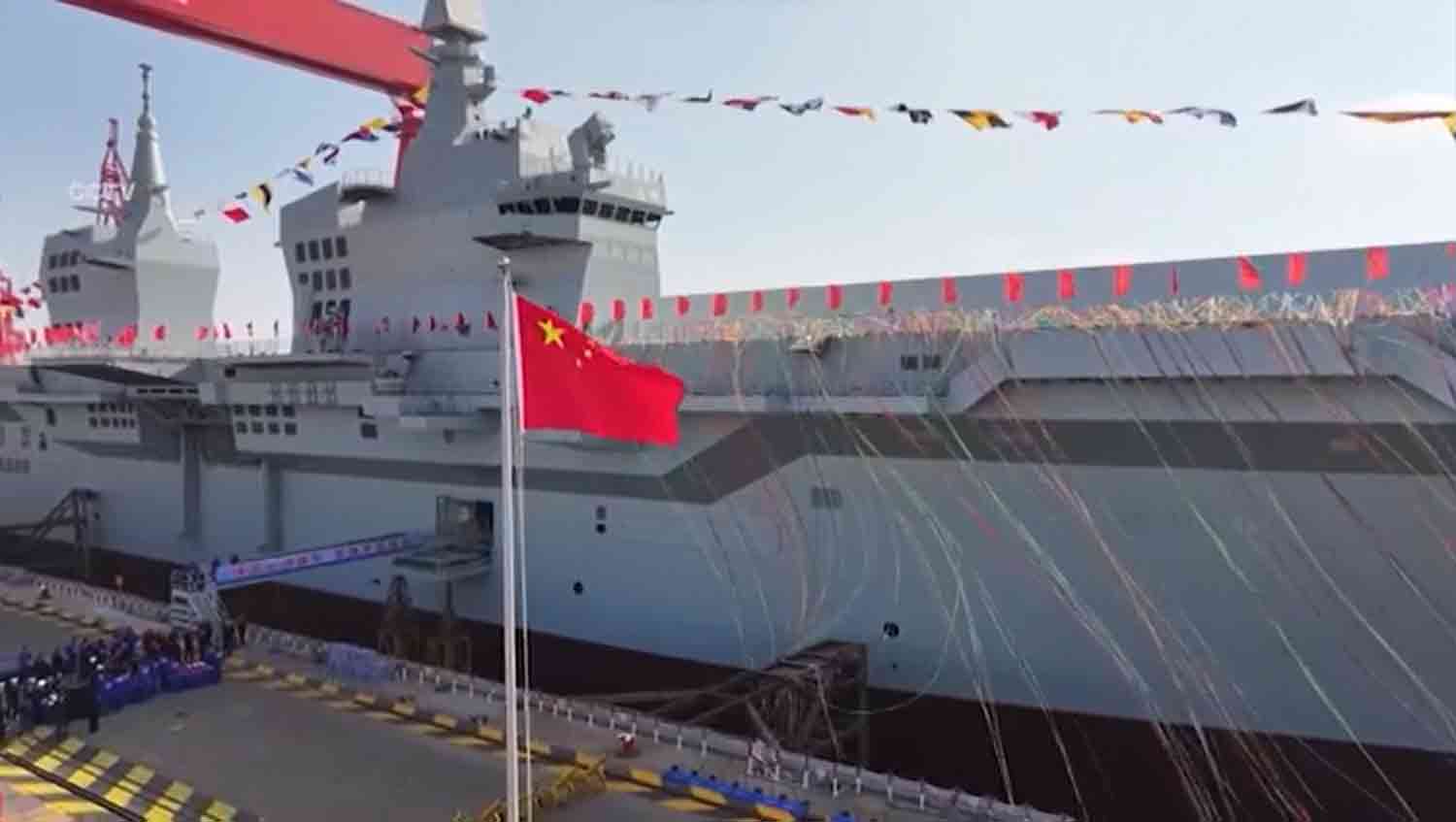
Type 076 amphibious assault ship, China

China has unveiled its inaugural next-generation amphibious assault ship, significantly enhancing the capabilities of its rapidly growing navy as it aims to compete with the military strength of the United States.

The Type 076 amphibious assault ship was launched on Friday during a ceremony at a shipyard in Shanghai, as reported by the People’s Liberation Army Navy (PLAN).

Designated Sichuan, after a province in southwestern China, this domestically developed vessel is recognized as a crucial component in the Navy’s evolution and its ability to conduct long-range operations, according to the statement.

As the largest naval force globally, China is constructing aircraft carriers and large warships at an impressive rate, striving to extend its influence beyond its borders and match the military dominance of the US.

With a full-load displacement exceeding 40,000 tons, the Type 076 is among the largest amphibious assault ships worldwide, featuring a twin-island superstructure and a comprehensive flight deck, as noted by the PLAN.

Significantly, it incorporates an electromagnetic catapult system, enabling it to transport fixed-wing aircraft alongside helicopters and amphibious vehicles typically associated with this class of warship, the PLAN further stated.

The electromagnetic catapult system will allow the Type 076 to launch larger and heavier aircraft than it could without this technology. This advancement means that the aircraft can carry increased fuel loads, thereby extending their operational range and enhancing the ship’s capabilities as a combat platform. Additionally, the aircraft will be able to transport more bombs or missiles, significantly increasing their lethality.

Currently, only one other warship globally, the USS Gerald R Ford, the latest aircraft carrier of the US Navy, utilizes the electromagnetic catapult system.

China’s newest aircraft carrier, the Fujian, which is undergoing sea trials and has not yet been commissioned, is also equipped with an electromagnetic system.

The amphibious assault ships of the US Navy are designed to operate the F-35B, a short-takeoff and vertical landing variant of the stealth fighter jet utilized by the US Navy, Marine Corps, and Air Force.

As of now, the PLA Navy does not possess a manned counterpart to the F-35B, which may lead to the deployment of similar fixed-wing aircraft on the Fujian.

However, a report released earlier this year by the Center for Strategic and International Studies indicates that the Type 076 could serve as a significant drone platform.

“If it is limited to unmanned systems, the Type 076’s air wing will be highly capable. China boasts an advanced and growing arsenal of UAVs, including the GJ-11 stealth combat drone, the WZ-7 reconnaissance drone, and the CASC Rainbow strike UCAV, among others,” states the August report from CSIS, which was informed by satellite imagery of the ship during its construction.

The CSIS report highlights that the Type 076 is anticipated to include a range of helicopters and amphibious landing craft, with the latter having the capacity to deploy over 1,000 marines.

Due to its substantial size, the Type 076 is expected to accommodate more resources compared to China’s smaller Type 075 amphibious assault ships, the US Navy’s America-class amphibious assault ships, and Japan’s Izumo-class helicopter carriers, which are currently being modified to support the F-35B.

Carl Schuster, a military analyst and former US Navy captain, emphasized that the size of the Type 076 is significant.

“This reflects the PLA Navy’s dedication to expeditionary and amphibious warfare, as well as an increasing capability in this area,” he noted, pointing out the implications for the rivalry between the world’s two largest naval forces, China and the United States.

“It illustrates China’s advancing maritime power projection capabilities at a time when the US Navy’s focus and ability to conduct expeditionary, amphibious, and humanitarian assistance operations have notably declined,” Schuster added, having previously served as the director of operations at the US Pacific Command’s Joint Intelligence Center.