Tuesday, April 21, 2026
Home Blog Page 99

Zelenskiy announces that Ukraine is set to restore diplomatic relations with Syria

0
Ukraine's President Volodymyr Zelenskiy appears at a joint press conference

Ukrainian President Volodymyr Zelenskiy announced on Thursday that he is preparing to restore diplomatic relations with Syria, following the recent overthrow of the Russia-aligned government in Damascus. This statement came after a visit to Syria by Foreign Minister Andrii Sybiha and Agriculture Minister Vitaliy Koval, who noted that Ukraine had already dispatched a shipment of food aid.

“We are working towards resuming diplomatic relations with Syria and enhancing our collaboration within international organizations,” Zelenskiy stated.

Ukraine severed its diplomatic ties with Syria in June 2022 after the Syrian government recognized the “independence” of the Russia-occupied regions in Ukraine’s Donetsk and Luhansk areas. In light of the recent changes in Syria’s leadership, Ukraine is now seeking to establish connections with the new Islamist authorities. Russia, which invaded Ukraine in 2022, was a key supporter of former President Bashar al-Assad and has granted him political asylum.

Additionally, Zelenskiy mentioned plans to boost trade with Lebanon and to significantly increase agricultural exports, aiming to raise them from $400 million. He also indicated that Ukraine would send 500 metric tons of wheat flour to Syria as part of the humanitarian “Grain from Ukraine” initiative, in partnership with the U.N. World Food Programme. This shipment is expected to support approximately 167,000 Syrians for a month, according to Koval in a televised interview.

He mentioned that this shipment is not the final one, noting that Syria has expressed interest in receiving deliveries of oil, sugar, and meat. “Currently, through government discussions, we recognize that support must be consistent and enduring, rather than a temporary measure; it should be reliable and long-term,” Koval stated. Additionally, Moscow has indicated that it is in communication with the new administration in Damascus regarding the status of Russian military installations in Syria.

Azerbaijan rebukes Iran over ‘insulting statements’ its president

0
Aliyev toured the static display of the JF-17 Block-III

Azerbaijan has summoned the Iranian charge d’affaires in Baku following the broadcast of a religious ceremony on Iranian television that included remarks perceived as insults directed at Azerbaijani President Ilham Aliyev.

In a statement released on Wednesday, the ministry indicated that Seyyed Jafar Aghayi Marian, the Iranian embassy’s charge d’affaires in Azerbaijan, received a formal note of “strong protest” regarding the “insulting statements” made against Azerbaijan and its leadership.

Baku also conveyed its significant discontent regarding what it termed the “anti-Azerbaijani sentiment” prevalent in Iran. The Foreign Ministry asserted that the “slanderous and biased information” about Azerbaijan reportedly disseminated by Iranian media undermines the “spirit of bilateral relations, goals, and objectives” established between the two nations.

The incident occurred in the Iranian city of Ardabil on December 29. According to a statement from the Ardabil Grand Mosque, as reported by local media, “an individual unexpectedly made emotionally charged statements that disparaged certain foreign figures,” which deviated from the approved agenda. A widely circulated video clip purportedly shows a speaker criticizing both Aliyev and Turkish President Recep Tayyip Erdogan regarding their foreign policy.

Iranian officials have acknowledged that the diplomat was summoned, labeling the remarks in question as “ill-considered.” They reiterated that Tehran’s core policy is to foster amicable relations with neighboring countries, particularly Azerbaijan.

Mojtaba Demirchilu, assistant to the head of the Iranian Foreign Ministry and head of its Eurasian department, stated, as reported by the IRNA news agency, that “the protest from the Azerbaijani Foreign Ministry was prompted by the thoughtless and inappropriate comments made by an individual during a ceremony in one of our country’s northwestern cities.”

Demirchilu further stressed that “such statements do not reflect the official stance of Iran’s leadership.”

In July, Azerbaijan reopened its embassy in Tehran and resumed consular services four months later, after the embassy had been closed in January 2023 due to an attack on the building, which Baku labeled as “a terrorist act.” An investigation by Iranian authorities concluded that the incident stemmed from “personal and family-related issues.”

Israeli airstrikes have resulted in the deaths of at least 37 individuals in Gaza, according to medical sources

0
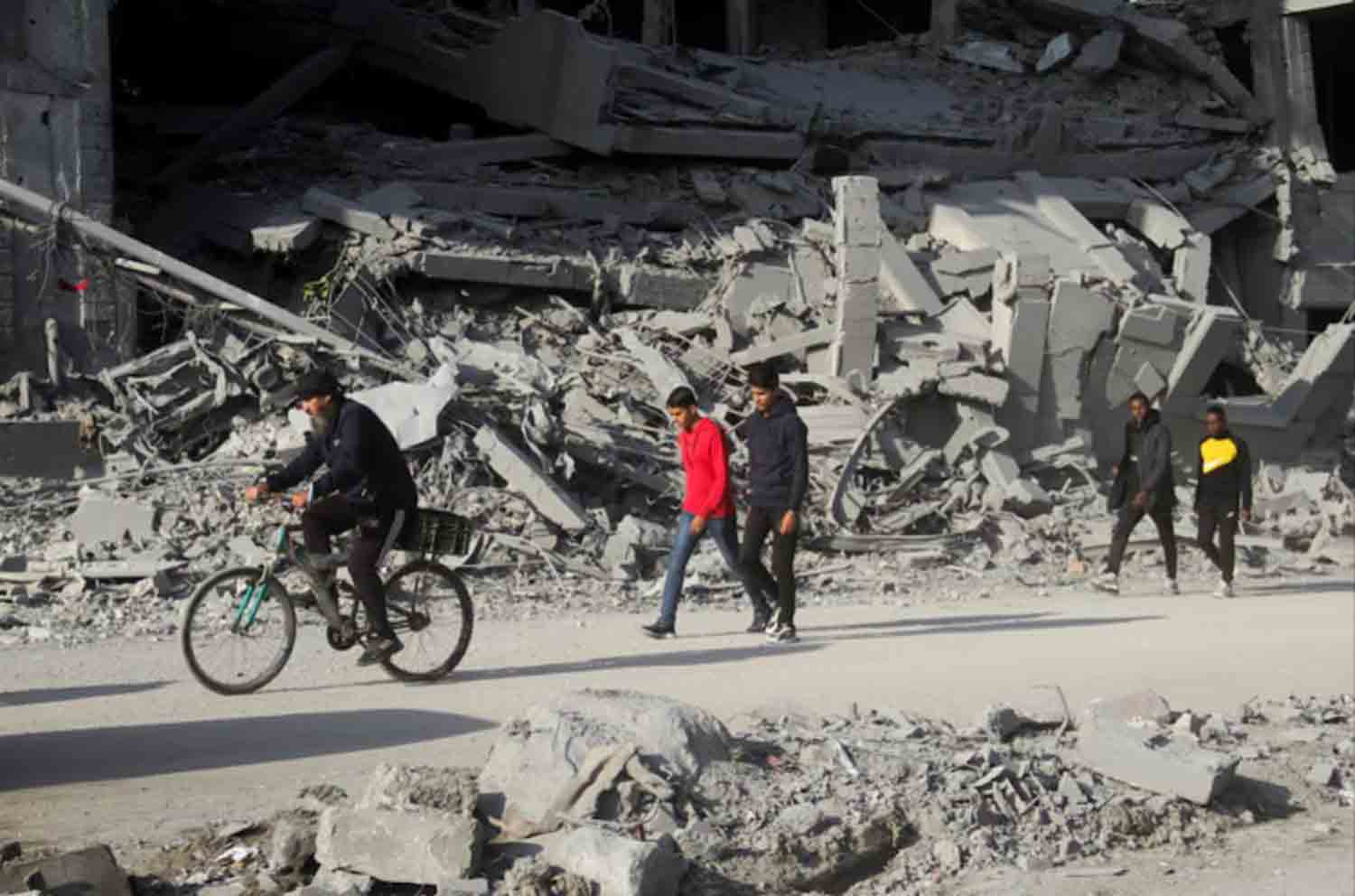
Buildings lie in ruin in Beit Hanoun in the Gaza Strip, amid the ongoing conflict between Israel and Hamas, as seen from southern Israel.

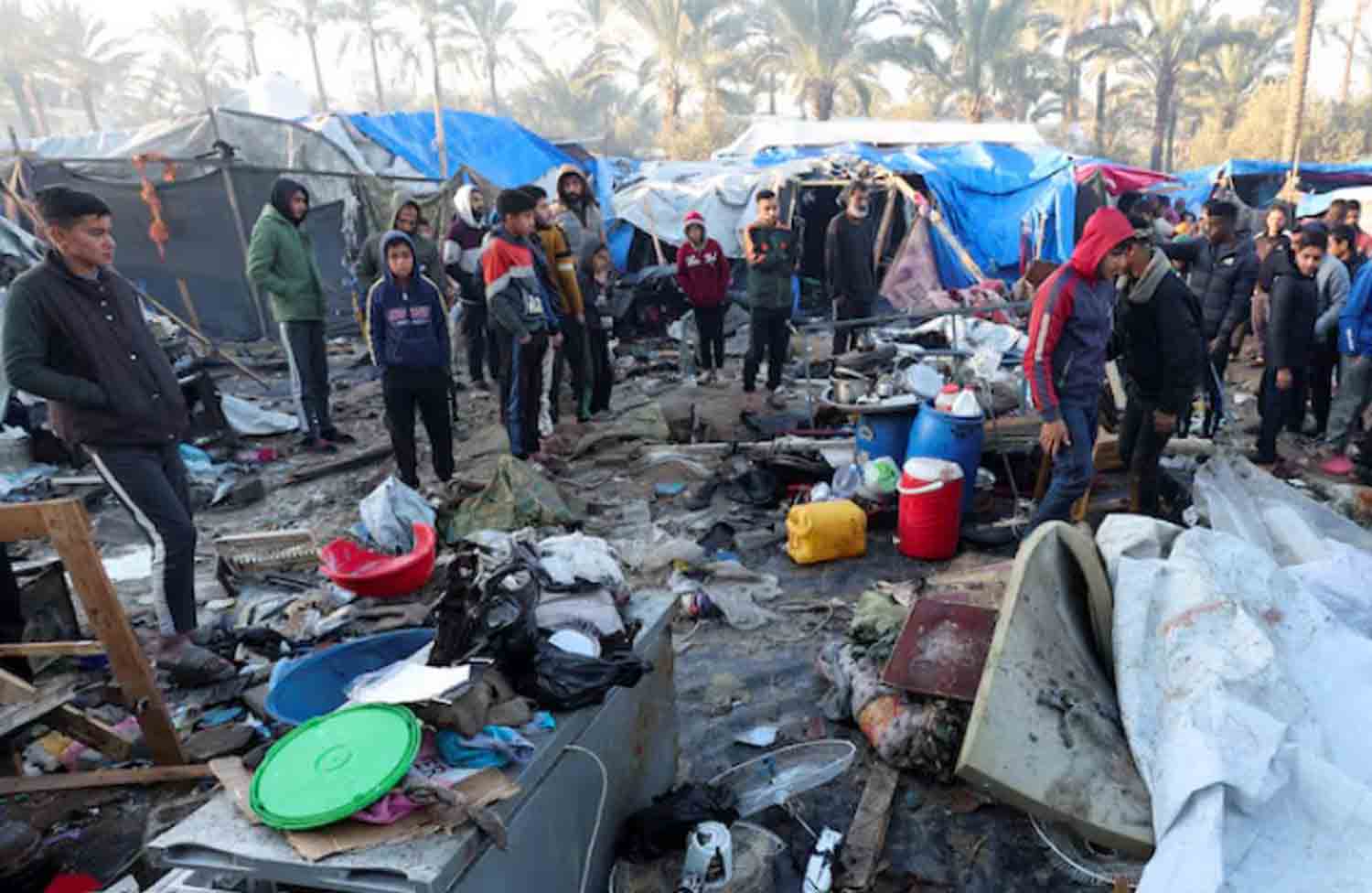
Israeli airstrikes resulted in the deaths of at least 37 Palestinians throughout the Gaza Strip on Thursday, with 11 fatalities occurring in a tent encampment housing displaced families, according to medical sources. Among the deceased were women and children located in the Al-Mawasi district, which had previously been designated as a humanitarian zone for civilians amid the ongoing conflict between Israel and Hamas, now in its 15th month.

The Hamas-run Gaza interior ministry reported that Mahmoud Salah, the director general of Gaza’s police department, and his aide, Hussam Shahwan, were among those killed in the attack. The ministry condemned the assassination of the police director, stating that such actions by the occupying forces were aimed at exacerbating chaos and increasing the suffering of the local population.

The Israeli military confirmed that it carried out an intelligence-driven strike in Al-Mawasi, targeting Shahwan, whom they identified as the head of Hamas security forces in southern Gaza, but did not acknowledge Salah’s death.

In addition, other Israeli airstrikes claimed the lives of at least 26 Palestinians, including six at the interior ministry headquarters in Khan Younis, as well as others in the Jabalia refugee camp, Shati (Beach) camp, and Maghazi camp in central Gaza. The Israeli military stated that these operations were aimed at Hamas militants believed to be operating from a command and control center located within the Khan Younis municipality building in the designated humanitarian area.

In response to inquiries regarding the reported 37 fatalities, an Israeli military spokesperson stated that the operations in Gaza are conducted in accordance with international law and that “feasible precautions” have been implemented to reduce civilian casualties. The military has accused militants in Gaza of utilizing densely populated residential areas for protection, a claim that Hamas refutes.

Additionally, Islamic Jihad, a smaller ally of Hamas, reported launching rockets into the southern Israeli kibbutz of Holit, located near Gaza, on Thursday. The Israeli military confirmed that it intercepted one of the projectiles that had originated from southern Gaza.

According to Gaza’s health ministry, the conflict has resulted in the deaths of over 45,500 Palestinians. The majority of Gaza’s 2.3 million residents have been displaced, and significant portions of the densely populated coastal region lie in devastation. The hostilities were ignited by Hamas’ cross-border assault on southern Israel on October 7, 2023, which resulted in the deaths of 1,200 individuals and the abduction of 251 others to Gaza, as reported by Israeli sources.

What advantages does China possess in the US-China technology trade conflict in 2025?

0

China has recently initiated a series of retaliatory measures in response to U.S. pressure to impose sanctions on its technology sector. These actions include halting the supply of rare earth elements and penalizing American firms operating within China. President-elect Donald Trump has consistently indicated his intention to impose tariffs on Chinese exports, and analysts anticipate that once he assumes office, he will intensify restrictions on Chinese technology. What additional strategies might Beijing employ in the ongoing trade and technology conflict with the United States in 2025?

United States is intensifying its “chip war” against China

On December 23, the U.S. government announced the initiation of a “Section 301” investigation into China’s traditional semiconductor sector. This inquiry aims to assess China’s ambitions to dominate the market for traditional chips, also referred to as mature process chips, and the implications of this dominance for the U.S. economy. These mature process chips are essential across various industries, including automotive, healthcare, infrastructure, aerospace, and defense.

In response, China’s Ministry of Commerce criticized the U.S. investigation as unilateral and protectionist, asserting that it would disrupt and distort the global chip industry and supply chain, ultimately harming the interests of American companies and consumers.

The United States’ strategy to maintain its lead in the “chip war” has become central to its efforts to restrict China’s technological advancements. In the semiconductor sector, this strategy encompasses two main components: limiting China’s access to cutting-edge chip technology and equipment, and enforcing export controls that prevent the shipment of high-end chips and lithography tools necessary for production to China. Additionally, the U.S. is scrutinizing China’s subsidies for traditional chips to mitigate the risk of low-end Chinese chip products flooding the international market.

On December 2, the Bureau of Industry and Security (BIS) within the U.S. Department of Commerce implemented a new set of export control measures targeting China, aimed at diminishing its capacity to manufacture advanced node semiconductors essential for next-generation weapon systems, artificial intelligence (AI), and sophisticated computing technologies. This initiative also involved adding 136 Chinese firms to the U.S. Department of Commerce’s Entity List and imposing regulations on over 20 types of semiconductor manufacturing equipment, along with three software tools used in semiconductor development and production.

Ruby Scanlon, an assistant fellow at the Center for a New American Security (CNAS), noted that China’s options for direct retaliation in the chip technology arena are limited due to the dominance of the U.S. and its allies in advanced processes. She remarked to VOA, “When the United States restricts the export of leading Nvidia chips to China, China may find it challenging to respond in kind, as they lack the capability to produce advanced chips domestically.”

Restrictions on rare earth elements

In reaction to the restrictions placed on China by the United States and its allies, China has recently implemented a series of counteractions.

An article published by China Daily on December 25 highlighted that these counteractions include the enforcement of export controls on critical resources such as rare earth minerals, which are crucial for military and technological applications.

Data from relevant U.S. agencies indicates that China holds approximately 68% of the world’s gallium reserves and produces over 90% of the global supply. The total proven reserves of germanium worldwide stand at 8,600 tons, with the United States and China controlling 45% and 41% respectively; over the past decade, China has supplied 68.5% of the world’s germanium. Furthermore, China’s production of graphite constitutes about 77% of the global total.

There is a growing belief that gallium, germanium, antimony, and other dual-use materials primarily supplied by China could serve as a strategic tool against the United States. On December 3, the Chinese Ministry of Commerce announced a ban on the export of key minerals, including gallium, germanium, antimony, and superhard materials, specifically targeting the United States. This marks the first instance of China imposing such a ban on these materials, which have extensive military applications, solely against the U.S.

The Wall Street Journal highlighted in a December 30 article that China’s export restrictions on essential minerals have led to tighter prices in the global market. This situation has prompted international competitors to boost their investments in the sector, thereby easing the purchasing process and costs for American buyers.

The article noted that while China is a leading producer and refiner of these critical minerals, it is not the sole supplier worldwide. Data from the U.S. Census Bureau indicates that last year, the United States imported more unprocessed gallium from Canada than from China, with Germany being the primary source of processed germanium.

According to the International Trade Center (ITC), the U.S. reliance on rare earths from China has diminished in recent years. Specifically, the share of germanium imports from China has decreased from approximately 75% in 2023 to 33.9% currently, while gallium imports from China now represent only 9.1% of total imports, a significant drop from 39.6% two years ago.

The Center for Strategic and International Studies (CSIS) previously reported that Ingal Stade GmbH in Germany, which halted operations in 2016, responded to the surge in global gallium prices by announcing plans to resume production in 2021. Additionally, Australia possesses substantial reserves of zinc and bauxite, which are crucial for gallium production, and Alcoa’s facilities near its Pinjarra alumina refinery may enhance Australia’s gallium production capabilities.

Data from the U.S. Geological Survey indicates that China’s dominance in global rare earth production decreased from 98% in 2010 to 70% in 2022, attributed to increased production capacity in Australia and the United States.

Scott Lincicome, vice president of macroeconomics and trade policy at the Cato Institute, remarked that China’s price advantage in rare earths is not sustainable. He stated to VOA, “While they may enjoy a temporary price edge, they are likely to lose their market influence over time… This is due to the emergence of alternative production sources, which will lead to lower prices.”

Moreover, exerting pressure on U.S. companies could diminish the willingness of foreign firms to invest in China.

Additionally, it is anticipated that China will continue to target American companies in its trade and technology conflicts.

Following the latest round of U.S. chip technology export restrictions imposed on China on December 2, China initiated an antitrust investigation into U.S. chip giant Nvidia, claiming that the company may have breached China’s Anti-Monopoly Law and the antitrust agreement established with Chinese regulators during Nvidia’s prior acquisition of an Israeli tech firm.

“Antitrust has emerged as a crucial tool for the Chinese government to counter the United States,” noted Scanlon from the Center for a New American Security.

Scanlon also anticipated that the Chinese government might replicate its earlier strategies against Australia by creating covert barriers for American products entering the port.

“Under a Trump administration, we can expect an increase in tariffs on Chinese technology exports to the U.S.,” she stated. “Similar to the first Trump administration, we are likely to witness reciprocal tariff hikes from China against the U.S. … Consequently, tariffs on American goods will also rise.”

“China has limited options available to them. They might choose to postpone the importation of perishable goods from the U.S., a tactic frequently employed against other nations.”

In April 2020, following Australia’s call for an inquiry into the origins of the coronavirus, China imposed barriers on Australian exports, including barley, wine, and timber, in the subsequent months. Numerous vessels carrying Australian coal were left stranded at Chinese ports for extended periods, unable to receive clearance to unload.

Simultaneously, the Chinese government has established an “unreliable entity list,” which subjects companies to additional challenges when operating in China. In September, Beijing indicated it was contemplating adding PVH, the parent company of U.S. clothing brands Calvin Klein and Tommy Hilfiger, to this list due to reports of the company’s boycott of “Xinjiang cotton.” China has faced allegations of utilizing forced labor in Xinjiang factories, a claim that the Chinese government refutes.

The analysis by the Wall Street Journal indicates that imposing penalties on American firms operating in China may not be as impactful as it once was. Currently, China’s economy is experiencing a downturn, primarily due to the real estate crisis and a significant decline in foreign investment. Increased pressure on American businesses could lead them to scale back their operations in China and deter new investments from entering the market.

China might consider devaluing the yuan and liquidating U.S. Treasury bonds

China could implement some limited counteractions at the currency and treasury levels. The potential devaluation of the yuan, along with Beijing’s substantial reserves of U.S. Treasuries, is viewed by some analysts as a strategic asset to counter U.S. actions.

A weaker yuan could make Chinese exports more competitive in the U.S. market, especially in response to anticipated high tariffs. However, the Wall Street Journal notes that such depreciation could also trigger capital flight from China, a scenario that the Chinese government aims to avoid. Economists suggest that while the Chinese authorities may accept a controlled and moderate depreciation of the yuan, they would resist any drastic declines.

Stephen Roche, an economist and Yale University professor who previously chaired Morgan Stanley Asia, cautioned in a Financial Times article on December 13 that China, including Hong Kong, retains over $1 trillion in U.S. Treasuries. Should tensions between the two nations escalate further and China opts to divest from these Treasuries, it could inflict severe damage on the U.S. economy.

The Wall Street Journal’s analysis suggests that China’s actions may ultimately be detrimental to itself, while the United States possesses strategies to counter China’s sell-off.

Experts indicate that the Federal Reserve can stabilize the bond market through unlimited bond purchases. If China sells U.S. Treasury bonds, it will result in the Chinese government holding a significant amount of U.S. dollars, necessitating investment in alternative assets. Should China opt to sell U.S. dollars in favor of purchasing RMB, it would lead to an increase in the RMB exchange rate, which contradicts China’s objective of boosting exports.

Is increasing investment in semiconductors the correct strategy?

Analysts have noted that in response to Washington’s technology “strangulation” strategy, China’s long-term approach must involve substantial investment to develop its own high-end chip industry.

“Since the passage of the (U.S.) CHIPS Act, China has invested three times more than the United States,” stated James Lewis, director of the CSIS Strategic Science and Technology Program. “China has a robust technological foundation and skilled engineers. Although they encounter challenges, they are capable of overcoming them.”

This year, China has committed to raising over 300 billion yuan (approximately 47 billion U.S. dollars) to bolster semiconductor development. The third phase of the National Integrated Circuit Industry Investment Fund, known as the “Big Fund,” was registered in May with a capital of 344 billion yuan, surpassing the first two phases and marking the largest semiconductor investment fund in China’s history.

The initial two phases of the “Big Fund” were launched in 2014 and 2019, respectively. The first phase had a registered capital of 138.7 billion yuan, while the second phase’s registered capital increased to 204 billion yuan.

Lewis forecasts that China may eliminate its reliance on advanced U.S. chip technology within the next five years. He noted that five years ago, China was uncertain about its intentions to develop its own chips. Although they have been working on establishing a domestic chip industry for some time, their commitment was not as strong. Currently, however, they are dedicated to creating their own products, indicating that they will eventually become independent from Nvidia.

Chinese company’s satellite-to-ground laser communication technology surpasses that of Starlink

0

A Chinese company has outpaced Starlink by implementing satellite-to-ground laser communication technology, paving the way for advancements in 6G, ultra-high-resolution remote sensing, and sophisticated satellite positioning systems, as reported by local media on Thursday.

Chang Guang Satellite Technology Co., recognized as the nation’s first remote-sensing satellite manufacturer and operator of the Jilin-1 satellite constellation, achieved a remarkable 100 Gbps data transmission speed during tests conducted last week, according to the South China Morning Post.

This milestone is ten times faster than the previous record and involved data transfer between a ground station mounted on a truck and one of the 117 satellites in the Jilin-1 constellation, as stated by the company.

Wang Hanghang, the head of the company’s laser communication ground station, noted that this advancement positions Chang Guang Satellite ahead of Starlink, the space venture owned by billionaire Elon Musk.

“We believe they may possess the technology, but we have already initiated large-scale deployment,” Wang remarked.

The company intends to equip all satellites within the Jilin-1 constellation with laser communication systems to boost operational efficiency, aiming for a network of 300 satellites by 2027, he further explained.

The next generation of wireless technology, 6G, is expected to significantly exceed 5G speeds, achieving over a terabit per second with extremely low latency of just 100 microseconds.

It seeks to deliver global connectivity by integrating networks on land, in the air, and in space, utilizing higher frequency waves, including those in the terahertz spectrum.

United States is evaluating possible regulations to limit or prohibit Chinese drones

0
A drone is seen in the sky as Chinese drone maker DJI holds a demonstration to display an app that tracks a drone's registration and owner in Montreal, Canada.

The U.S. Commerce Department announced on Thursday that it is contemplating new regulations that could impose restrictions or outright bans on Chinese drones within the United States, citing concerns related to national security. The department is inviting public feedback by March 4 regarding potential measures aimed at protecting the drone supply chain, highlighting that threats from China and Russia could enable adversaries to remotely access and manipulate these devices, thereby compromising sensitive U.S. information.

China represents a significant portion of the U.S. commercial drone market. In September, Commerce Secretary Gina Raimondo indicated that the department might implement restrictions akin to those that would effectively prohibit Chinese vehicles from entering the U.S. The emphasis will be on drones equipped with Chinese and Russian technology, including chips and software. She expressed hope in November to finalize regulations concerning Chinese vehicles by January 20.

The decision to establish new rules regarding the restriction or ban of Chinese drones will fall to the administration of President-elect Donald Trump, who will assume office on January 20. Over the past year, Washington has taken various measures to limit the presence of Chinese drones. Last month, President Joe Biden enacted legislation that could prevent China-based companies like DJI and Autel Robotics from introducing new drone models in the U.S. An unspecified U.S. agency is required to assess within a year whether drones from these companies pose unacceptable national security threats.

DJI, the leading global drone manufacturer, which accounts for over half of all commercial drones sold in the U.S., stated that if no agency completes the required study, it would hinder the company’s ability to launch new products in the U.S. In September, the House of Representatives voted to prohibit new DJI drones from operating in the country. In October, DJI filed a lawsuit against the Defense Department for including it on a list of companies allegedly collaborating with Beijing’s military, asserting that this classification is erroneous and has resulted in financial damage to the company.

DJI informed Reuters in October that Customs and Border Protection had halted the importation of certain DJI drones into the United States, referencing the Uyghur Forced Labor Prevention Act. The company asserted that no forced labor is utilized at any point in its production process. U.S. legislators have consistently expressed worries regarding the potential data transmission, surveillance, and national security threats posed by DJI drones, claims that the company disputes.

In 2019, Congress prohibited the Pentagon from purchasing or utilizing drones and components produced in China.

The era of Russian gas in Europe concludes as transit through Ukraine ceases

0
A view shows the Gazprom logo installed on the roof of building in Saint Petersburg, Russia.

Russian gas deliveries to Europe through Ukraine are scheduled to cease on New Year’s Day, marking the end of Moscow’s extended influence over the European gas market. The oldest gas export route from Russia to Europe, a pipeline established during the Soviet era, is expected to close by the end of 2024 as a five-year transit agreement between Russia and Ukraine comes to an end. Data from Ukraine’s gas transit operator indicated on Tuesday that Russia had not made any requests for gas shipments on January 1.

Following the onset of the war in Ukraine in February 2022, the European Union significantly decreased its reliance on Russian gas by exploring alternative energy sources. Remaining purchasers of Russian gas, including Slovakia and Austria, have secured substitute supplies, and analysts predict that the cessation of gas flows will have a negligible impact on the market. European benchmark gas prices were recorded at 48.50 euros per megawatt hour on Tuesday, showing only a slight increase from the opening trade.

However, the halt in gas supplies will carry substantial geopolitical implications. Since the invasion of Ukraine, Moscow has lost its significant share of gas exports to EU countries to competitors such as the United States, Qatar, and Norway, prompting the EU to further reduce its dependence on Russian gas. Once the leading global gas exporter, state-owned Gazprom reported a $7 billion loss in 2023, marking its first annual deficit since 1999.

The cessation of affordable Russian gas supplies has significantly impacted Europe’s economy, leading to a pronounced slowdown, increased inflation, and a deepening cost-of-living crisis. Although Europe has swiftly sought alternative energy sources, the absence of Russian gas has intensified longstanding worries regarding its diminishing global competitiveness, particularly concerning the future of Germany’s industrial sector.

EFFECTS OF THE UKRAINE CONFLICT

For decades, Russia and the Soviet Union established a substantial presence in the European gas market, which peaked at approximately 35%. However, the ongoing war in Ukraine has nearly obliterated Gazprom’s business in this sector.

Most gas routes from Russia to Europe are now closed, including the Yamal-Europe pipeline through Belarus and the Nord Stream pipeline under the Baltic Sea, which was damaged in 2022. The Soviet-era pipeline that runs through Ukraine transports gas from Siberia, passing through Sudzha—currently under Ukrainian control—before continuing into Slovakia, where it branches off to the Czech Republic and Austria. Ukraine has declined to negotiate a new transit agreement.

As a result, Ukraine is forfeiting around $800 million annually in transit fees from Russia, while Gazprom is projected to lose nearly $5 billion in gas sales to Europe through Ukraine. The termination of the transit agreement is not expected to trigger a repeat of the gas price surge seen in the EU in 2022, as the remaining gas volumes are relatively minor. In 2023, Russia exported approximately 15 billion cubic meters (bcm) of gas via Ukraine, accounting for only 8% of the peak Russian gas flows to Europe recorded in 2018-2019.

On Tuesday, Gazprom reported it would deliver 37.2 million cubic meters, down from 42.4 million cubic meters on Monday. Subsequently, Ukraine’s gas transit operator indicated that as of 1500 GMT, Russia had not scheduled any gas flows for January 1 through the Ukrainian pipeline to Europe. The suspension of supplies through Ukraine will significantly affect Moldova, a nation that was formerly part of the Soviet Union.

Hungary and several other nations are still importing Russian gas through the TurkStream pipeline, which runs beneath the Black Sea. Despite this, Hungary has expressed a strong interest in maintaining the supply route through Ukraine as well.

US has imposed sanctions on Iranian and Russian organizations for election interference

0

On Tuesday, the United States enacted sanctions against entities in Iran and Russia, alleging their involvement in efforts to disrupt the upcoming U.S. election. The U.S. Treasury Department announced that these entities, which include a subsidiary of Iran’s Revolutionary Guards Corps and a group linked to Russia’s military intelligence, were attempting to “incite socio-political discord and sway the U.S. electorate during the 2024 election.”

According to the Treasury, the Cognitive Design Production Center had been planning influence operations since at least 2023, while the Moscow-based Center for Geopolitical Expertise (CGE) disseminated disinformation regarding election candidates and funded the production of deepfake content. The Treasury also noted that CGE altered a video to create “unfounded allegations against a 2024 vice presidential candidate,” although it did not disclose the identity of the candidate in question.

In November, Republican Donald Trump won the presidency, defeating Democratic candidate Kamala Harris, marking a significant return four years after his previous exit from the White House. “The governments of Iran and Russia have targeted our electoral processes and institutions, aiming to create divisions among the American populace through focused disinformation efforts,” stated Bradley Smith, the Treasury’s Acting Under Secretary for Terrorism and Financial Intelligence.

“The United States will remain vigilant against adversaries who would undermine our democracy.”

President Putin faces challenges from Trump’s erratic foreign policy after 25 years in power

0
Russian President Vladimir Putin chairs a meeting

On December 31, 1999, Russian President Boris Yeltsin made a surprising announcement on national television, revealing his decision to resign and hand over the presidency to his prime minister.

“Why hold onto power for an additional six months when the nation has a capable leader ready to assume the presidency, a man whom nearly all Russians are counting on for a brighter future?” Yeltsin stated, recognizing the hardships faced by ordinary citizens due to the Soviet Union’s collapse. “Why obstruct his path?”

That capable leader was relatively unknown at the time: Vladimir Putin, a former KGB officer. This New Year’s Eve marks a significant milestone, as Putin will celebrate 25 years as Russia’s foremost leader, serving both as president and during a four-year period as a dominant prime minister.

As 2024 approaches its conclusion, Putin’s hold on power seems more robust than ever. On the battlefield in Ukraine, Russian troops have made strides in a protracted war of attrition, particularly in the Donbas region. Domestically, the political arena has been largely cleared of rivals following the death of the nation’s most notable opposition figure, Alexey Navalny.

Just a month after Navalny’s passing in a remote prison located north of the Arctic Circle, the Kremlin leader easily secured reelection in a contest that allowed him to assert a significant mandate, regardless of the fairness of the process.

Putin may appear self-assured, yet new uncertainties loom ahead. US President-elect Donald Trump campaigned with a commitment to end Russia’s aggression in Ukraine. Although his strategy for achieving a negotiated resolution remains unclear, Trump has made one point explicit: he desires a swift conclusion to the conflict.

“Ending that war is one of my top priorities, and President Putin has expressed a desire to meet with me as soon as possible,” Trump stated at a recent gathering in Arizona. “We must wait for this, but it is essential to bring the war to an end.”

It is no surprise that there were no celebrations in Moscow following Trump’s reelection. Putin has invested heavily in the war in Ukraine, placing his nation’s economy on a wartime footing, strengthening ties with North Korea and Iran to sustain military operations, and finding himself on the International Criminal Court’s wanted list—all in pursuit of the ambitious goal of undermining Ukraine’s existence as a sovereign state.

Nonetheless, there are areas of overlap between Trump and Putin. The 2018 Helsinki summit demonstrated Trump’s willingness to disregard long-standing diplomatic norms, mirroring Putin’s approach, and Trump’s expressed admiration for Putin’s authoritarian style has raised concerns among US observers regarding similar tendencies domestically. However, Trump’s unpredictable foreign policy stance suggests that the Kremlin may need to brace itself for a negotiation process that could be anything but straightforward.

Retired Army Lt. Gen. Keith Kellogg, who is set to become Trump’s special envoy for Russia and Ukraine, has compared the ongoing conflict to a “cage fight” between the two nations, suggesting that Trump could act as a referee.

“You have two fighters, and both are looking to tap out; a referee is needed to step in and separate them,” he stated during an appearance on Fox Business. “I believe President Donald J. Trump has the capability to facilitate that… I think he can bring both sides to the table – eventually – for discussions.”

The practicality of this analogy remains uncertain. Recently, Ukrainian President Volodymyr Zelensky has adjusted his stance, acknowledging that Ukraine lacks the capacity to reclaim all the territory lost to Russia. Similarly, during his year-end press conference, Putin indicated a willingness to engage in negotiations, asserting, “Politics is the art of compromise. We have always maintained that we are open to both negotiations and compromises.”

However, beyond these general statements, Putin provided little in the way of concrete details, spending much of his lengthy televised session projecting an image of strength to both the Russian public and the incoming Trump administration.

For example, when NBC’s Keir Simmons questioned whether setbacks in foreign policy, such as the fall of Syrian President Bashar al-Assad, would place him in a position of weakness during negotiations, Putin responded, “We intervened in Syria a decade ago to prevent the establishment of a terrorist stronghold there, similar to what we witnessed in other nations, like Afghanistan. We have largely accomplished that objective.”

Despite the challenges faced by the Assad regime, Russia still retains some diplomatic influence in the Middle East.

Hanna Notte, the Eurasia program director at the James Martin Center for Nonproliferation Studies, a U.S.-based non-profit organization, stated that Russia retains significant leverage in Syria, particularly due to its position as a permanent member of the United Nations Security Council.

She emphasized the importance of Russia’s influence within the UN Security Council, where it holds the power to exercise its veto, which is crucial for Hayat Tahrir Al-Sham (HTS), the de facto rulers of Syria, in any discussions regarding the legitimacy of a new Syrian government. Notte remarked, “In any processes related to a political transition in a post-Assad era involving the United Nations, it is essential to ensure that Russia is not positioned unfavorably.”

On the economic front, President Putin continues to promote optimistic narratives, despite the struggles faced by ordinary Russians due to soaring food prices and a declining ruble. However, such narratives have their limits. In a recent assessment, Alexandra Prokopenko, a fellow at the Carnegie Russia Eurasia Center in Berlin, pointed out that Russia’s overstimulated wartime economy may be nearing a critical juncture.

She noted, “With each passing month, the pressure mounts. The Kremlin is nearing a tipping point where the social contract between the state and its citizens will inevitably change. Russians are increasingly being asked to tolerate growing inequality and a deterioration in their quality of life in exchange for short-term stability and a sense of national pride. Yet, even this arrangement is becoming increasingly untenable.”

Having risen to power 25 years ago on a promise of strong governance following a tumultuous decade during the Yeltsin era, Putin now faces new challenges in a time of uncertainty.

Kim Jong-un pledges to implement the most stringent anti-US policy to date

0
North Korean leader Kim Jong Un chairs a meeting of the country's ruling party, in Pyongyang, North Korea, in this photo released on December 29, 2024 by North Korea's official Korean Central News Agency. KCNA.

North Korean leader Kim Jong-un has pledged to enhance the nation’s defense capabilities and to pursue the most stringent anti-US measures to date, in a speech given shortly before US President-elect Donald Trump is set to assume office.

During a gathering of the ruling Workers’ Party on Friday, Kim characterized the United States as “the most reactionary state,” asserting that it maintains anti-communism as a fundamental aspect of its policy, as reported by the KCNA news agency.

He further labeled the US alliance with Japan and South Korea as “a nuclear military bloc for aggression,” referring to South Korea as “a blatant anti-communist stronghold of the US.”

In closing, Kim urged for “the most rigorous anti-US counteraction to be launched aggressively by [North Korea] in pursuit of its long-term national interests and security.”

The relationship between Kim and Trump was marked by tension at the beginning of Trump’s first term, with both leaders frequently exchanging personal insults and nuclear threats, including Trump’s warning of a potential attack on Pyongyang with “fire, fury and frankly power the likes of which this world has never seen before.”

The two leaders ultimately set aside their aggressive rhetoric and engaged in a series of direct meetings. While these summits did not yield any enduring agreements, both the United States and North Korea temporarily reduced their military activities, with Pyongyang decreasing the number of ballistic missile tests until President Joe Biden assumed office in 2021.

Since 2022, Kim’s military has conducted over 100 test launches of ballistic and cruise missiles, including one in September that KCNA reported was equipped with a “super-large” 4.5-ton warhead. A month later, North Korean commanders allegedly instructed frontline artillery units to be fully prepared to fire upon Seoul after South Korean drones released propaganda leaflets over the North Korean capital.

In response, the United States and South Korea have intensified the scale and frequency of their military exercises since 2022, with the latest drills in November featuring an American aircraft carrier alongside South Korean and Japanese fighter jets.

Pyongyang has denounced these exercises, labeling them as “provocative war drills for aggression.”

Yemen’s Houthis vow to continue self-defense after U.S. airstrikes

0
Houthi-mobilized fighters ride atop a car in Sanaa, Yemen

Yemen’s Houthis spokesperson, Mohammed Abdulsalam, stated that the nation will persist in its self-defense following multiple U.S. airstrikes that targeted facilities in the capital, Sanaa, on Tuesday.

The U.S. military confirmed that it conducted strikes against Houthi positions in Sanaa and along Yemen’s coast on both Monday and Tuesday. According to a statement from the U.S. Central Command, “On December 30 and 31, U.S. Navy vessels and aircraft targeted a Houthi command and control center, as well as advanced conventional weapon production and storage sites, which included missiles and uncrewed aerial vehicles (UAVs).”

The Iran-aligned militant group has been engaged in attacks on commercial shipping in the Red Sea for over a year, aiming to impose a naval blockade on Israel, claiming their actions are in support of the Palestinians amid Israel’s ongoing conflict in Gaza.

UN has released a critical report regarding Israeli assaults on hospitals in Gaza

0
Palestinians carry a dead body at the site of an Israeli strike on Al-Wafaa hospital, according to the Palestinian civil defense, amid the ongoing conflict between Israel and Hamas, in Gaza City.

A report released by the U.N. Human Rights Office on Tuesday criticized Israeli strikes on hospitals in Gaza, highlighting the significant damage inflicted on the health system of the Palestinian territory and raising serious questions regarding Israel’s adherence to international law.

The report, which details various assaults occurring between October 12, 2023, and June 30, 2024, indicated that these attacks have severely impacted Palestinians’ ability to receive medical care.

The 23-page document concluded that the hostilities in Gaza, following the Hamas attacks on October 7, 2023, have effectively “devastated” the local healthcare infrastructure. It stated, “The obliteration of the healthcare system in Gaza, along with the extensive loss of life among patients, medical personnel, and other civilians during these assaults, is a direct result of the neglect of international humanitarian and human rights law.”

The Israeli military has not yet responded to requests for comments regarding the report.

In recent days, Israel has carried out operations targeting hospitals in Gaza, which have faced backlash from figures such as the head of the World Health Organization (WHO). The Israeli military has claimed that Hamas utilizes hospitals as operational bases and that individuals detained at these facilities are suspected militants. While the U.N. report referenced these claims, it noted that insufficient evidence has been made public to support them.

The report indicated that intentionally targeting hospitals and locations housing the sick and injured, provided they are not military targets, would constitute war crimes. It also cautioned that a systematic pattern of human rights violations against civilians could amount to crimes against humanity. Israel has consistently dismissed such claims.

In response to the report, the U.N. noted that the Israeli government asserted its military had implemented extensive measures to reduce civilian harm and limit disruptions, including offering aid, establishing evacuation routes, and setting up field hospitals.

However, U.N. High Commissioner for Human Rights, Volker Türk, remarked that the findings of the report highlighted a “blatant disregard for international humanitarian and human rights law.” He stated, “As if the relentless bombing and the dire humanitarian situation in Gaza were not enough, the one sanctuary where Palestinians should have felt safe in fact became a death trap.”

According to Palestinian health officials, Israel’s military campaign against Hamas in Gaza has resulted in over 45,500 Palestinian deaths and has devastated the region. The conflict was ignited by a Hamas assault on southern Israel on October 7, 2023, which resulted in the deaths of 1,200 individuals and the abduction of 251 hostages to Gaza, as reported by Israeli sources.

Xi says no one can stop China’s ‘reunification’ with Taiwan

0
Chinese President Xi Jinping

Chinese President Xi Jinping asserted in his New Year’s address on Tuesday that no force can prevent China’s “reunification” with Taiwan, issuing a stern warning to those he considers pro-independence advocates both on the island and abroad.

Over the past year, Beijing has intensified its military activities near Taiwan, frequently deploying warships and aircraft into the surrounding waters and airspace, which Taiwanese officials interpret as a gradual attempt to establish a permanent military presence.

China views Taiwan, which operates under a democratic government, as part of its territory. However, Taiwan’s administration firmly disputes these claims, stating that only its citizens have the authority to determine their future and that Beijing must honor the choices made by the Taiwanese people.

Xi emphasized in his televised speech on China’s state broadcaster CCTV, “The people on both sides of the Taiwan Strait are one family. No one can sever our family bonds, and no one can stop the historical trend of national reunification.”

In his New Year’s address from the previous year, Xi declared that China’s “reunification” with Taiwan is unavoidable, urging people on both sides to unite in a shared purpose and partake in the revival of the Chinese nation.

Tensions have remained elevated throughout the year in the sensitive Taiwan Strait, particularly following the election of Lai Ching-te, who is labeled a “separatist” by Beijing, as Taiwan’s new president in May.

Earlier this month, China conducted a significant deployment of naval forces in the vicinity of Taiwan and throughout the East and South China Seas, following Lai’s stopover in Hawaii and Guam during a Pacific trip that drew criticism from Beijing.

China, which has not ruled out the use of force to assert control over Taiwan, has carried out two sets of military exercises around the island this year, framing them as warnings against “separatist actions” and pledging to take additional measures if necessary.

The ongoing U.S. arms sales to Taiwan, permitted under the Taiwan Relations Act, have further complicated Beijing’s relationship with Washington.

China has consistently cautioned the U.S. against establishing any military connections with Taiwan and has imposed sanctions on military suppliers and their executives.

China denies allegations of having targeted the US Treasury in a cyberattack

0
A bronze seal for the Department of the Treasury is shown at the U.S. Treasury building in Washington, U.S.,

Beijing responded on Tuesday to allegations that a state-sponsored Chinese actor was responsible for a cyber breach at the US Treasury Department, labeling the accusations as “baseless.”

The Treasury Department reported that the breach allowed unauthorized access to several of its workstations, as detailed in a letter to Congress.

The incident reportedly occurred earlier this month when the actor infiltrated a third-party cybersecurity service provider, enabling remote access to workstations and certain unclassified documents.

In response, China’s foreign ministry rejected the allegations, asserting that Beijing “has consistently opposed all forms of hacking and is particularly against the dissemination of false information aimed at discrediting China for political gain.”

Foreign ministry spokeswoman Mao Ning emphasized, “We have repeatedly expressed our stance on these unfounded accusations that lack supporting evidence.”

Following the alert from its provider BeyondTrust, the Treasury reached out to the US Cybersecurity and Infrastructure Security Agency and has been collaborating with law enforcement to evaluate the situation’s impact.

A spokesperson for the department confirmed, “The compromised BeyondTrust service has been deactivated, and there is no indication that the threat actor retains access to Treasury systems or information.”

In a communication to the Senate Banking Committee leadership, the Treasury Department stated: “Current indicators suggest that the incident is linked to a state-sponsored Advanced Persistent Threat (APT) actor from China.”

An APT is characterized by a cyber intrusion where an attacker gains and maintains unauthorized access to a target, often remaining undetected for an extended duration.

While the department did not disclose specific details regarding the impact of the breach, it indicated that additional information would be provided in a forthcoming supplemental report.

“The Treasury is committed to addressing all threats to our systems and the data we manage,” the spokesperson emphasized.

Concerns over cyberattack

In recent years, numerous nations, particularly the United States, have expressed significant concern regarding what they describe as hacking activities supported by the Chinese government, targeting their governmental, military, and commercial sectors.

China has denied these accusations, asserting its opposition to and efforts to combat all forms of cyberattacks.

In September, the U.S. Justice Department announced the dismantling of a cyber-attack network that had compromised 200,000 devices globally, claiming it was operated by hackers affiliated with the Chinese government.

In February, US officials announced the dismantling of a hacker network referred to as “Volt Typhoon.” This group was reportedly focused on compromising critical public sector infrastructure, including water treatment facilities and transportation systems, under the direction of China.

In 2023, Microsoft, a leading technology company, reported that hackers based in China had infiltrated the email accounts of several US government agencies in search of intelligence. The group, known as Storm-0558, successfully accessed email accounts across approximately 25 organizations and government entities. Notably, the accounts of the State Department and Commerce Secretary Gina Raimondo were among those affected in this incident.

Xi pledges ‘world peace’ in New Year’s message to Putin

0
Chinese President Xi Jinping meets with Russian President Vladimir Putin in Kazan, Russia.

Chinese President Xi Jinping expressed his commitment to fostering “world peace” in a New Year’s message directed to Russian President Vladimir Putin, as reported by state media on Tuesday.

“Regardless of how the international landscape evolves, China will remain resolute in its efforts to deepen reform comprehensively… and to advance world peace and development,” Xi stated, according to the state broadcaster CCTV.

Since the onset of Putin’s extensive invasion of Ukraine in February 2022, China has aimed to position itself as a neutral entity, in contrast to the United States and other Western countries.

However, it continues to maintain a close political and economic alliance with Russia, prompting some NATO members to label Beijing as an “enabler” of the conflict, which China has not condemned.

As reported by CCTV, Xi conveyed to Putin: “Amid unprecedented changes and a turbulent international environment, China and Russia have consistently progressed together along the correct path of non-alignment, non-confrontation, and not targeting any third party.”

The two leaders maintain a robust personal connection, with Xi referring to his Russian counterpart as his “best friend,” while Putin values him as a “reliable partner.”

Their alliance has remained steadfast even amid a decade of escalating tensions with Western nations, particularly highlighted by Russia’s ongoing conflict in Ukraine.

Xi pointed out to Putin that 2024 will mark the 75th anniversary of diplomatic relations between China and Russia, which he described as “a new important milestone in the relationship between the two countries,” as reported by CCTV.

“After three-quarters of a century filled with various challenges, the relationship between China and Russia has grown increasingly mature and stable,” Xi stated, according to CCTV.

France announced that it conducted missile strikes targeting ISIS in Syria over the past weekend

0

France conducted missile strikes in Syria over the weekend, targeting locations associated with the Islamic State, as announced by French Armed Forces Minister Sebastien Lecornu on Tuesday.

“On Sunday, French air forces executed precise strikes against Islamic State positions within Syrian territory,” Lecornu stated on the social media platform X.

This airstrike by France came shortly after a similar operation by the United States, which reported the elimination of two Islamic State operatives.

Syria is now confronted with an uncertain political landscape following the ousting of former President Bashar al-Assad by the Hayat Tahrir al-Sham (HTS) group on December 8.

The rapid campaign led by HTS concluded a 13-year civil war, yet it has raised numerous questions regarding the future of this multi-ethnic nation, where foreign powers such as Turkey and Russia hold significant and potentially conflicting interests.

2024: Militancy increases in Pakistan, 1,600 civilians and security personnel martyred

0

A recent report released on Monday highlighted that the surge in terrorist bombings and gun assaults in Pakistan has led to the deaths of over 1,600 civilians and security personnel in 2024.

The annual report, published by an independent think tank based in Islamabad, comes in the context of increasing violence across the nation, particularly impacting the Khyber Pakhtunkhwa and Balochistan provinces that share borders with Afghanistan.

Pakistan claims that banned transnational groups have been executing violent acts from safe havens in Afghanistan, with their operations escalating since the Taliban’s takeover in August 2021.

The Center for Research and Security Studies (CRSS) reported that civilians accounted for 60% of the total casualties in 2024. The report also indicated that the Pakistani military, intelligence, police, and other law enforcement agencies have experienced the highest frequency of terror attacks and fatalities in a decade.

Since January 1, 685 security personnel have lost their lives, marking the highest toll since nearly 800 were killed in militant attacks and counterterrorism efforts in 2014.

The revival of militancy is primarily linked to two major groups: Tehrik-i-Taliban Pakistan (TTP) and the Baloch Liberation Army (BLA). Both groups are recognized as international terrorist organizations by the United Nations and the United States and frequently claim responsibility for assaults on security forces and other targets. TTP operates mainly in Khyber Pakhtunkhwa, while BLA and its allied ethnic Baloch separatist factions carry out insurgent activities in Balochistan.

The Pakistani government has yet to issue a response to the recent report; however, an army spokesperson held a live news conference on Friday, stating that “383 courageous officers and soldiers were martyred” during counterterrorism operations throughout Pakistan in 2024. No additional details were provided.

On Monday, the Khyber Pakhtunkhwa Counter Terrorism Department released a statement indicating that militant attacks and security operations against insurgents led to the deaths of nearly 150 members of the provincial police force, with another 230 individuals injured.

The Center for Research and Security Studies (CRSS) has recorded around 250 fatalities among Pakistani security forces, including military personnel, specifically in Balochistan. The remaining casualties were reported from Punjab, Sindh, and other areas.

The nonprofit think tank noted that its findings are based on open-source data and official reports. It regularly publishes assessments of the security landscape in Pakistan and emphasizes its commitment to fostering research and impartial analysis on its website.

The Taliban government has refuted claims that Afghan territory is being used by individuals allowed to threaten neighboring nations, including Pakistan.

Last week, Taliban officials reported that Pakistani aircraft had targeted several sites within the eastern Afghan border province of Paktika, asserting that these strikes resulted in nearly 50 deaths, identifying the victims as “refugees” from Pakistan.

Islamabad has chosen not to publicly address the reported airstrikes; however, Pakistani security officials quickly confirmed the cross-border attacks on the condition of anonymity. They indicated that the strikes were aimed at TTP hideouts, leading to the death of more than twenty prominent militants and the destruction of training facilities.

On Saturday, the Taliban’s Defense Ministry released a statement asserting that its border forces responded by targeting multiple locations within Pakistan. An independent assessment of the claims from both Pakistan and Afghanistan has yet to yield definitive conclusions.

Ukraine reports that a naval drone has successfully destroyed a Russian helicopter for the first time

0
Long-range Peklo (Hell) missile drones are displayed in Kyiv.

Ukrainian military intelligence reported on Tuesday that one of its naval drones successfully destroyed a Russian helicopter and inflicted damage on another in the Black Sea. During a confrontation near Cape Tarkhankut on Crimea’s western coast, a Magura V5 maritime drone, armed with missiles, targeted a Russian Mi-8 helicopter, according to Ukraine’s GUR intelligence agency via Telegram. This incident marks the first occasion where a Ukrainian naval drone has successfully engaged an aerial target.

There has been no response from Russian officials. Mikhail Razvozhaev, the governor of Sevastopol appointed by Russia, stated on Telegram that two unmanned drone vessels were destroyed off the coast overnight. Since Russia’s large-scale invasion in February 2022, Ukraine has significantly increased its drone production and developed naval attack drones. The incident involving the downing of a Russian helicopter by a Ukrainian naval drone was also noted by the well-known Russian military blogger, Voenny Osvedomitel. The GUR indicated that a second Russian helicopter was able to return to the airfield after sustaining damage from the attack.

In footage released by GUR, a helicopter can be seen flying over water and being struck by multiple projectiles, ultimately falling after the assault. Kyiv’s military has employed maritime drones to target Russian warships and installations on the Crimean peninsula, which was seized and annexed by Moscow in 2014.


Biden spent four years strengthening US alliances in Asia. Will they last through Trump’s next term?

0
Donald Trump meets with Chinese President Xi Jinping

For America’s allies in Asia, the looming prospect of Donald Trump‘s return to the White House is particularly concerning at this juncture.

China has been actively modernizing its military capabilities and nuclear stockpile, while also becoming more assertive in its territorial claims in the South China Sea and regarding Taiwan. Meanwhile, North Korea has intensified its aggressive rhetoric and its pursuit of nuclear program. Both nations have deepened their cooperation with Russia amid its ongoing conflict in Ukraine, thereby connecting the instability in Asia to the fractured peace in Europe.

For many years, the United States has provided security assurances to its regional allies, maintaining a significant presence of active-duty troops in the area—more than in any other part of the world. Thousands of American soldiers are stationed at extensive bases in treaty allies South Korea and Japan, and the US is committed to supporting countries like the Philippines and Australia in the event of an attack.

These nations are now bracing for an American leader who has criticized what he perceives as the complacency of US allies regarding defense spending, shown a tendency to align with authoritarian leaders, and advocated for an “America first” stance in international relations.

US-aligned leaders in Asia are grappling with numerous uncertainties regarding Trump, as noted by regional observers.

Will he demand higher defense expenditures that allies may struggle to meet? Is there a risk he could take drastic measures to withdraw US forces if those demands are not satisfied? Might he strike deals with leaders such as China’s Xi Jinping, North Korea’s Kim Jong Un, or Russia’s Vladimir Putin that could compromise the interests of US allies?

Conversely, could he potentially reinforce US alliances and adopt a more confrontational stance against America’s adversaries?

Amid this uncertainty, leaders throughout the region are actively seeking to establish robust relationships with the unpredictable incoming US president, who is known for tying foreign policy decisions to personal connections.

Many are cautiously observing President-elect Trump’s proposal to impose 10% tariffs on all imports and potentially over 60% on goods from China, actions that could lead to significant economic repercussions throughout Asia.

As Trump’s inauguration in January approaches, Asian governments are grappling with critical questions regarding how he will navigate U.S. security alliances with both allies and adversaries, particularly in times of crisis.

‘Indispensable power?’

Following World War II, the United States established a network of alliances globally to act as a strong deterrent against future global conflicts. A key objective was to prevent the proliferation of nuclear weapons by placing various nations under the protective umbrella of the U.S. nuclear arsenal.

Many in Washington and throughout Asia believe that these alliances in the Asia-Pacific region have become increasingly vital as tensions rise among nations.

China has strengthened its security partnerships with Russia, a NATO adversary, and has been accused of supporting Moscow’s military efforts by purchasing Russian exports and supplying essential dual-use goods for its defense capabilities. Additionally, Beijing has intensified its threats against Taiwan, the self-governing democracy it claims as its own and has pledged to seize, if necessary, through force.

In the South China Sea, the China Coast Guard has recently engaged in aggressive actions against Philippine vessels, using water cannons and even axes, despite a significant international ruling that rejected its claims over much of this strategically important waterway.

North Korea has intensified its threats against South Korea and the United States while conducting weapons tests. According to US officials, it is also providing support to Russia’s military efforts through the supply of ammunition, missiles, and, in a significant recent development, soldiers.

As Trump re-enters a more complicated global landscape compared to the beginning of his first term eight years ago, analysts in Asia note that his primary focus seems to be on increasing economic pressure on China rather than addressing regional security concerns.

Sam Roggeveen, director of the Lowy Institute’s International Security Program in Sydney, remarked that Trump’s main priority is predominantly centered on the economic relationship with China, emphasizing the need for the United States to maintain its economic competitiveness. However, there is little indication that he is significantly invested in the military or strategic dynamics in East Asia.

Roggeveen further stated that the evidence suggests a different direction. While Trump advocates for a robust military to protect the United States, he does not seem to embrace the notion of America as an essential power with a distinct global security responsibility.

The new administration and its advisors have consistently raised doubts about the benefits of US alliances and questioned the justification for American lives and resources being committed to overseas conflicts.

Earlier this year, Trump surprised European leaders by suggesting that he would permit Russia to act freely against any NATO member that fails to meet the defense spending requirements set by the US-led alliance.

Preparing for Trump 2.0

As the election approached, Trump shifted his attention to Asia, asserting in a Bloomberg News interview that, if elected, South Korea would be required to pay $10 billion annually to host US troops—approximately eight times the amount recently agreed upon by Seoul and Washington.

South Korea currently allocates over 2% of its gross domestic product to defense, a figure regarded by the United States as a standard for its allies. In the last ten years, the nation has also covered 90% of the expenses associated with the expansion of Camp Humphreys, the largest US military base overseas.

However, comments made by Trump have raised concerns in Seoul regarding the potential for renegotiation of cost-sharing agreements for US troops. This is particularly significant given the five-year agreement established earlier this year, which will increase Seoul’s defense spending by 8.3% in 2026 compared to the previous year. Some analysts warn that a failed renegotiation could lead to a decision by Trump to reduce or withdraw US forces, which are crucial for countering threats from North Korea.

Such developments, along with a growing perception of diminishing US commitment, might drive Seoul to consider developing its own nuclear capabilities. Experts caution that this could initiate a troubling trend, encouraging other middle powers to pursue similar paths.

The situation has become increasingly complex for South Korea in its dealings with Trump. Recently, lawmakers voted to impeach President Yoon Suk Yeol following his unexpected declaration of martial law, and shortly thereafter, they also voted to impeach acting president Han Duck-soo. The nation now faces a prolonged period of political instability, which observers believe is critical to address, especially in fostering strong leader-to-leader relationships.

Duyeon Kim, an adjunct senior fellow at the Center for a New American Security based in Seoul, emphasized that the primary challenge lies in the ability of Seoul and Washington to communicate effectively.

This communication is crucial to prevent “devastating consequences and surprises” within the US-South Korea alliance, which could arise from the harsh rhetoric previously employed by Trump against allies, she noted.

In Japan, analysts have expressed concerns regarding Prime Minister Shigeru Ishiba’s capabilities in comparison to the late Shinzo Abe, who was recognized for his adeptness in engaging with the former president during his initial term.

As a key American ally in Asia, Japan is expected to highlight its significant shifts in defense strategy since Trump’s last administration.

Tokyo has moved away from the pacifist constitution established by the US after World War II, committing in 2022 to increase defense spending to approximately 2% of its GDP by 2027 and to procure American cruise missiles.

Countries across the region are also observing whether the Trump administration will continue the efforts initiated under Biden to create a “lattice work” of interconnected US partnerships in Asia, which is part of the administration’s strategy to “invest, align, compete” in response to Beijing.

Biden strengthened the Quad security alliance, which includes India, Japan, Australia, and the United States, and established the AUKUS partnership between Australia, the United Kingdom, and the US, aimed at providing Australia with nuclear-powered submarines. Additionally, he facilitated significant enhancements in Japan’s security collaboration with South Korea, the Philippines, and Australia.

In contrast, Trump, characterized by his unpredictable approach during his presidency, could either maintain, alter, or intensify these alliances. Meanwhile, America’s Asian partners are likely to seek ways to mitigate any potential reduction in US support.

“The United States is no longer a constant in international relations; it has become a variable,” remarked Murata Koji, a political science professor at Doshisha University in Japan.

“This necessitates that we broaden our security efforts beyond the United States,” he added, emphasizing Tokyo’s need to strengthen its ties with Europe over mutual concerns.

China is closely monitoring these developments.

Nevertheless, experts in the region generally believe that significant shifts in the US military presence under Trump are unlikely, particularly regarding troop reductions or the dissolution of alliance agreements, especially in light of the American focus on the challenges posed by China.

“Geopolitical realities will compel him to maintain a military presence in the region. I envision a scenario more focused on renegotiation rather than outright withdrawal,” stated Collin Koh, a senior fellow at the S. Rajaratnam School of International Studies in Singapore.

Countries are not only weighing the potential drawbacks of Trump’s possible return, Koh noted, but are also influenced by perceptions in Asia regarding Biden’s indecisiveness on Ukraine, which complicates matters for the beleaguered nation.

“With Trump potentially back in office, there may be a renewed sense of optimism that he will approach crises with more decisiveness than Biden,” he remarked.

Nonetheless, there are apprehensions that an anticipated aggressive economic stance towards China could exacerbate communication breakdowns between the US and Chinese military forces, increasing the likelihood of confrontation. Additionally, if new American tariffs adversely affect US allies, they might find themselves increasingly dependent on the world’s second-largest economy.

Conversely, Trump has also expressed some willingness to engage with China, suggesting in recent remarks to CNBC that he views certain elements of his post-pandemic policy on China as “overreaching.”

The issue of Trump’s approach to Taiwan is significant, as it is often viewed as a potential catalyst for conflict between the US and China.

An ‘insurance company’

President Biden has consistently moved away from the traditional American stance of ambiguity, explicitly stating that the US would come to Taiwan’s defense in the event of a Chinese invasion. He also authorized military aid for Taiwan for the first time as Beijing increased its military activities in the region.

In contrast, the president-elect has seemingly weakened US-Taiwan relations, suggesting in a Bloomberg interview that Washington functions merely as an “insurance company” for Taiwan and asserting that the island should compensate the US for its defense. In an October interview with the Wall Street Journal, he indicated that he would impose tariffs ranging from 150% to 200% if China were to invade Taiwan.

However, the response of the Trump administration in such a scenario remains uncertain. Trump’s selection for secretary of state, Senator Marco Rubio, is a strong supporter of Taiwan, while his vice presidential choice, JD Vance, has expressed concerns that providing air defense systems to Ukraine could diminish the US’s capacity to support Taiwan’s defense in the event of a Chinese attack.

This perspective has raised alarms among observers in Asia.

Many in the region believe that Trump’s approach to the Ukraine conflict will convey an important message to Russia’s allies, including China, Iran, and North Korea—nations that some in Washington worry could form a perilous alliance. These apprehensions are particularly pronounced regarding China, which is likely monitoring the situation as it contemplates its own ambitions concerning Taiwan.

Trump has claimed he could resolve the Ukraine war “in 24 hours” and has advocated for an “immediate ceasefire and negotiations,” a stance that aligns with Beijing’s official position on the conflict, which has drawn criticism from the US and its allies for allegedly favoring Russia.

“I know Vladimir well. This is his time to act. China can help. The world is waiting!” Trump stated in a recent post on his social media platform, Truth Social.

The implications of this rhetoric could have far-reaching effects for Asia.

“If Russia is perceived to emerge victorious from this situation, it will solidify the relationship between Russia and China,” remarked Robert Ward, director of geo-economics and strategy at the International Institute for Strategic Studies in the UK.

“Xi Jinping will be closely observing how credible Western deterrence is, how reliable NATO is, and how willing the West is to engage in a conflict—issues that are intrinsically linked to Taiwan.”

Flight from Russia stayed on U.S. soil for two days, clarification from Moscow

0
Spokeswoman of Russia's Foreign Ministry Maria Zakharova

A passenger aircraft from the ‘Rossiya’ special flight squadron was dispatched to the United States to facilitate the rotation of Russian diplomats, as stated by Foreign Ministry spokeswoman Maria Zakharova.

Previously, various Russian Telegram channels reported, based on FlightRadar data, that the government plane had remained on US territory for two days, leading to online speculation regarding the flight’s intentions and its possible connection to discussions between Moscow and Washington.

The ‘Rossiya’ fleet is typically reserved for senior Russian officials and Kremlin-affiliated journalists. Earlier this year, the squadron’s aircraft were involved in a significant exchange, facilitating the transfer of 26 individuals between Russia and the US, marking the largest prisoner swap since the Cold War.

The recent flight was operated by a Russian Il-96-300 last week. The aircraft departed from St. Petersburg airport on December 25, traveled to Moscow, then proceeded to Washington via New York, and returned to Moscow through New York on December 28.

During a press briefing on Monday, Zakharova clarified that the flight’s objective was “another rotation of diplomats.”

In October, Anatoly Antonov, Russia’s ambassador to the United States, concluded his tenure and returned to Moscow. Subsequently, Kommersant reported that the position would be assumed by Aleksandr Darchiev, the head of the North America Department at the Foreign Ministry, who previously held the role of Russian envoy to Canada.

The Foreign Ministry has not indicated when the new ambassador will arrive in Washington. Last week, Zakharova mentioned that the new envoy remains in Moscow.

The relationship between Moscow and Washington has deteriorated since the escalation of the Ukraine conflict in February 2022.

In recent years, both countries have frequently expelled each other’s diplomats. In 2017, the United States mandated the closure of the Russian Consulate in San Francisco, along with the properties of Russia’s trade mission in Washington and New York. In retaliation, Moscow called for the closure of the American Consulate in St. Petersburg. In 2020, the United States halted operations at two of its remaining consulates in Russia.