Monday, April 20, 2026
Home Blog Page 80

Israel has instructed thousands of Lebanese citizens to refrain from returning to the border region

0

The Israeli military has instructed thousands of displaced Lebanese individuals to refrain from returning to their villages near the border until further notice. This directive comes a day after the army announced that its forces would continue to operate in southern Lebanon beyond the Sunday deadline for withdrawal.

This deadline is part of a ceasefire agreement that concluded last year’s conflict between Hezbollah and Israel. The deal, facilitated by Washington and Paris, required Israeli forces to withdraw from southern Lebanon as the Iran-backed group’s weapons and personnel were removed from the region, and the Lebanese army was deployed, all within a 60-day timeframe that concludes on Sunday.

However, Israel stated on Friday that the Lebanese government had not fully implemented the terms of the agreement, leading to the decision for Israeli troops to remain beyond the deadline, although the duration of their stay was not specified. On Saturday, Lebanon’s U.S.-backed military accused Israel of delaying its withdrawal.

In a statement shared on the social media platform X, the Israeli military released a map indicating a southern area that includes numerous villages, declaring that residents are prohibited from returning home until further notice. The statement warned, “Anyone who moves south of this line puts themselves in danger.” This line extends from Shebaa, located less than 2 km (1.5 miles) from the eastern border, to Mansouri in the west, approximately 10 km (6 miles) from the border.

The ceasefire concluded a conflict that occurred alongside the Gaza war, culminating in a significant Israeli offensive against Hezbollah, which displaced over a million people in Lebanon and severely weakened the militant group.

Hezbollah lawmaker Ali Fayyad expressed concern that signs indicating Israel’s failure to withdraw on schedule represent a serious threat to the agreements established by the Lebanese government.

He urged the government to reassess its stance and seek the most effective strategies to ensure the Israeli withdrawal, emphasizing the need to reassure the Lebanese populace, particularly those in the south who are experiencing significant frustration. This statement was disseminated by Hezbollah.

The Israeli military has reported ongoing efforts to confiscate Hezbollah’s weapons and dismantle its infrastructure in the southern region. Meanwhile, the White House emphasized the urgent necessity for a brief extension of the ceasefire. French President Emmanuel Macron informed his Lebanese counterpart, Joseph Aoun, that he was engaging in discussions to sustain the ceasefire and ensure the agreement’s full implementation, as stated by the Lebanese presidency. Aoun reiterated to Macron the importance of compelling Israel to adhere to the agreement to maintain stability in the southern area.

Israel stated that its operations against Hezbollah are focused on ensuring the safe return of tens of thousands of Israelis who were compelled to evacuate their homes in northern Israel due to rocket attacks from Hezbollah.

In a statement released on Saturday, the Lebanese army advised residents to refrain from entering the border area, highlighting the dangers posed by landmines and unexploded ordnance left by Israeli forces.

The army confirmed that it has been actively working to enhance its presence south of the Litani River since the ceasefire was established.

The statement noted that delays in several phases were caused by the Israeli forces’ slow withdrawal, which has complicated the army’s deployment efforts. The army remains prepared to finalize its deployment as soon as the Israeli forces retreat.

U.S. has suspended nearly all aid to Ukraine for 90 days, and Trump has ordered a review of foreign assistance programs

0
Secretary of State, Sen. Marco Rubio testifies during his Senate Foreign Relations confirmation hearing at Dirksen Senate Office Building.

US Secretary of State Marco Rubio has put a hold on nearly all aid grants to Ukraine for a period of 90 days, as reported by Politico on Friday. This decision follows President Donald Trump‘s directive for a comprehensive review of all foreign assistance.

Rubio has directed diplomatic and consular offices to implement “stop-work orders” on almost all “existing foreign assistance awards,” according to an internal document cited by Politico.

The report indicates that this order has taken State Department officials by surprise and seems to impact funding for military support to Ukraine.

Three current officials and two former officials familiar with the situation informed Politico that Rubio’s directive implies that “no further actions will be taken to disburse aid funding to programs already approved by the US government.”

The BBC, which also examined the State Department memo, noted that the freeze appears to encompass a wide range of assistance, from development aid to military support.

While the Pentagon previously assured Voice of America that the aid freeze would not impact “security assistance to Ukraine,” Rubio’s memo reportedly only allows exceptions for military aid to Israel and Egypt, without reference to any other nations.

Journalist Ken Klippenstein shared what he claimed to be a copy of Rubio’s guidance, which “pauses all new obligations of funding, pending a review, for foreign assistance programs” financed through the State Department and the US Agency for International Development (USAID).

Trump, who assumed office on Monday, has mandated a 90-day halt on all foreign development assistance to evaluate program effectiveness and alignment with U.S. foreign policy.

A USAID representative informed Reuters that the suspended programs include support for educational institutions and healthcare services, such as emergency maternal care and child vaccinations.

Since February 2022, USAID has allocated $2.6 billion in humanitarian aid, $5 billion in development assistance, and over $30 billion in direct budget support, as stated on its website.

According to the Pentagon, the U.S. has delivered nearly $66 billion in military assistance to Ukraine since February 2022.

Trump has consistently criticized his predecessor, Joe Biden, for providing unconditional aid to Ukraine and has pledged to implement measures to reduce costs. He has also committed to swiftly negotiating a peace agreement between Moscow and Kiev.

Philippines halts South China Sea exploration following China’s ‘intimidation’ actions

0
An aerial view shows the Philippine-occupied Thitu Island, locally known as Pag-asa, in the contested Spratly Islands, South China Sea.

The Philippines announced on Saturday the suspension of a scientific survey in the South China Sea due to “harassment” and aggressive actions from China’s coast guard and navy towards its fisheries vessels.

Manila and Beijing have experienced a series of escalating tensions in the contested waters of the South China Sea. China asserts its claim over nearly the entire strategic waterway, which facilitates $3 trillion in annual trade, overlapping with the claims of the Philippines, Indonesia, Malaysia, and Vietnam.

On Friday, two vessels from the Philippine Bureau of Fisheries, en route to collect sand samples from Sandy Cay near the Philippine-controlled Thitu Island, faced “aggressive maneuvers” from three Chinese Coast Guard ships, according to a statement from the Philippine Coast Guard.

The Philippine Coast Guard reported that four small Chinese boats were deployed to “harass” two rigid hull inflatable boats sent by the fisheries bureau to transport personnel to Sandy Cay. Additionally, a Chinese navy helicopter was observed hovering at an “unsafe altitude” over these vessels.

The Philippine Coast Guard stated that the survey operations were halted “due to this ongoing harassment and the lack of regard for safety demonstrated by the Chinese maritime forces.” The Chinese embassy in Manila has not yet responded to a request for comment. During discussions on January 16, Manila and Beijing agreed to seek common ground and explore avenues for cooperation despite their ongoing disputes in the South China Sea.

An international arbitration tribunal determined in 2016 that China’s assertions, which rely on historical maps, lack legal foundation under international law, a ruling that Beijing refuses to acknowledge.

Mexico has declined to allow a U.S. military flight to deport migrants, according to sources

0

Mexico has declined a request from President Donald Trump‘s administration to permit a U.S. military aircraft, tasked with deporting migrants, to land on its territory, according to officials from both the U.S. and Mexico who spoke to Reuters.

On Friday, U.S. military aircraft conducted two flights to Guatemala, each carrying approximately 80 migrants. However, plans for a C-17 transport aircraft to land in Mexico were halted after the country refused permission.

The decision, initially reported by NBC News, was confirmed by both U.S. and Mexican officials, although the Mexican official did not specify the rationale behind the denial.

Requests for comments from the U.S. State Department, the Pentagon, and Mexico’s foreign ministry went unanswered.

Relations between the U.S. and Mexico have intensified since Trump commenced his second term on Monday, declaring a national emergency at the shared border. He has deployed 1,500 additional U.S. troops to the area, with indications that more could follow soon.

The president has labeled Mexican drug cartels as terrorist organizations, renamed the Gulf of Mexico to the Gulf of America, and threatened to impose a 25% tariff on Mexican goods starting in February.

In response, Mexican President Claudia Sheinbaum has aimed to de-escalate tensions and has shown willingness to accommodate Mexican nationals being returned. However, she has expressed opposition to mass deportations, emphasizing the importance of Mexican immigrants to the U.S. economy.

The deployment of U.S. military aircraft for deportation flights is a measure taken by the Pentagon in response to President Trump’s national emergency declaration issued on Monday. Historically, U.S. military planes have facilitated the relocation of individuals between countries, as seen during the withdrawal from Afghanistan in 2021. According to a U.S. official, this marks the first instance in recent history where military aircraft have been utilized to transport migrants out of the United States.

The Pentagon has announced plans to utilize military flights to deport over 5,000 immigrants currently in custody in El Paso, Texas, and San Diego, California. Additionally, Guatemalan authorities reported that a third flight carrying approximately 80 deported migrants arrived on Friday via a chartered commercial aircraft.

Saudi Arabia’s $600 billion deal with the U.S. includes investments and procurement, according to the minister

0
US President Donald Trump and Saudi Arabia's Crown Prince Mohammed bin Salman speak during the family photo at G20 Osaka Summit in Osaka, Japan, on 28 June 2019.

Saudi Economy Minister Faisal Alibrahim stated on Friday that the kingdom’s $600 billion investment initiative with the United States encompasses both investments and procurement from both public and private sectors.

These remarks marked the first public comments from a Saudi official following U.S. President Donald Trump‘s suggestion that the kingdom’s “investment” should be increased to $1 trillion. According to Saudi Arabia‘s state news agency, the crown prince had previously confirmed the kingdom’s commitment to enhancing its investments and trade with the United States over the next four years, potentially exceeding the $600 billion figure.

Alibrahim, speaking at the World Economic Forum in Davos, emphasized that this amount reflects a robust relationship between the two nations when asked about the possibility of raising the figure to $1 trillion, as proposed by Trump. He noted, “This number represents investments, procurement, public and private sector, and it’s just a mirror reflection of the strong relationship.”

Trump had mentioned on Thursday that “Saudi Arabia will be investing at least $600 billion in America,” adding that he would encourage the crown prince, whom he described as a “fantastic guy,” to increase the total to around $1 trillion.

Recent government data indicated that U.S. exports of goods to Saudi Arabia have significantly outpaced Saudi foreign direct investment in the United States in recent years.

When questioned about the possibility of Saudi Arabia lowering oil prices—following Trump’s comments about urging the kingdom and OPEC to do so—Alibrahim reiterated that Riyadh is committed to ensuring long-term stability in the oil market. Oil prices experienced a decline after Trump’s statements on Thursday, although they saw a partial recovery on Friday.

The stance of the kingdom, as well as that of OPEC, focuses on ensuring long-term market stability to guarantee sufficient supply in response to increasing demand, including from the United States and the artificial intelligence sector, according to Alibrahim. He also mentioned that a World Economic Forum event will be held annually in Saudi Arabia beginning in the spring of 2026, following a meeting that took place there last year.

China Positions Itself as a Global Leader in Hypersonic Missile Technology, Outpacing the U.S. and Russia

0

The global competition for hypersonic munitions is rapidly escalating. On January 21, India achieved a significant milestone by successfully conducting a ground run for an active-cooled scramjet combustor. This development follows India’s earlier test of its first long-range, domestically produced hypersonic missile just a few months prior.

The test of this long-range hypersonic missile, capable of delivering various payloads over distances exceeding 1500 km, took place on November 16, 2024. This accomplishment by India’s Defense Research and Development Organisation (DRDO) highlights the nation’s ability to develop an active-cooled scramjet combustor, which is crucial for the advancement of hypersonic vehicles.

Hypersonic technology enables nations to combine extreme speed, agility, and low-altitude flight, making these weapons more difficult to track and intercept. Unlike traditional ballistic missiles, hypersonic weapons do not adhere to a predictable ballistic path and can maneuver towards their targets. Hypersonic cruise missiles can achieve speeds exceeding Mach 5, which is over five times the speed of sound, or more than 5,400 km/h.

Hypersonic weapons are primarily categorized into two types: Hypersonic glide vehicles, which are launched from rockets and glide to their targets, and Hypersonic cruise missiles, which are powered by high-speed, air-breathing engines known as ‘scramjets’ once they have acquired their targets.

Scramjets are innovative air-breathing engines that maintain combustion at supersonic speeds without the need for moving parts. According to DRDO, the ground test of the scramjet combustor demonstrated several significant achievements, including successful ignition and stable combustion, indicating its potential for operational deployment in hypersonic vehicles.

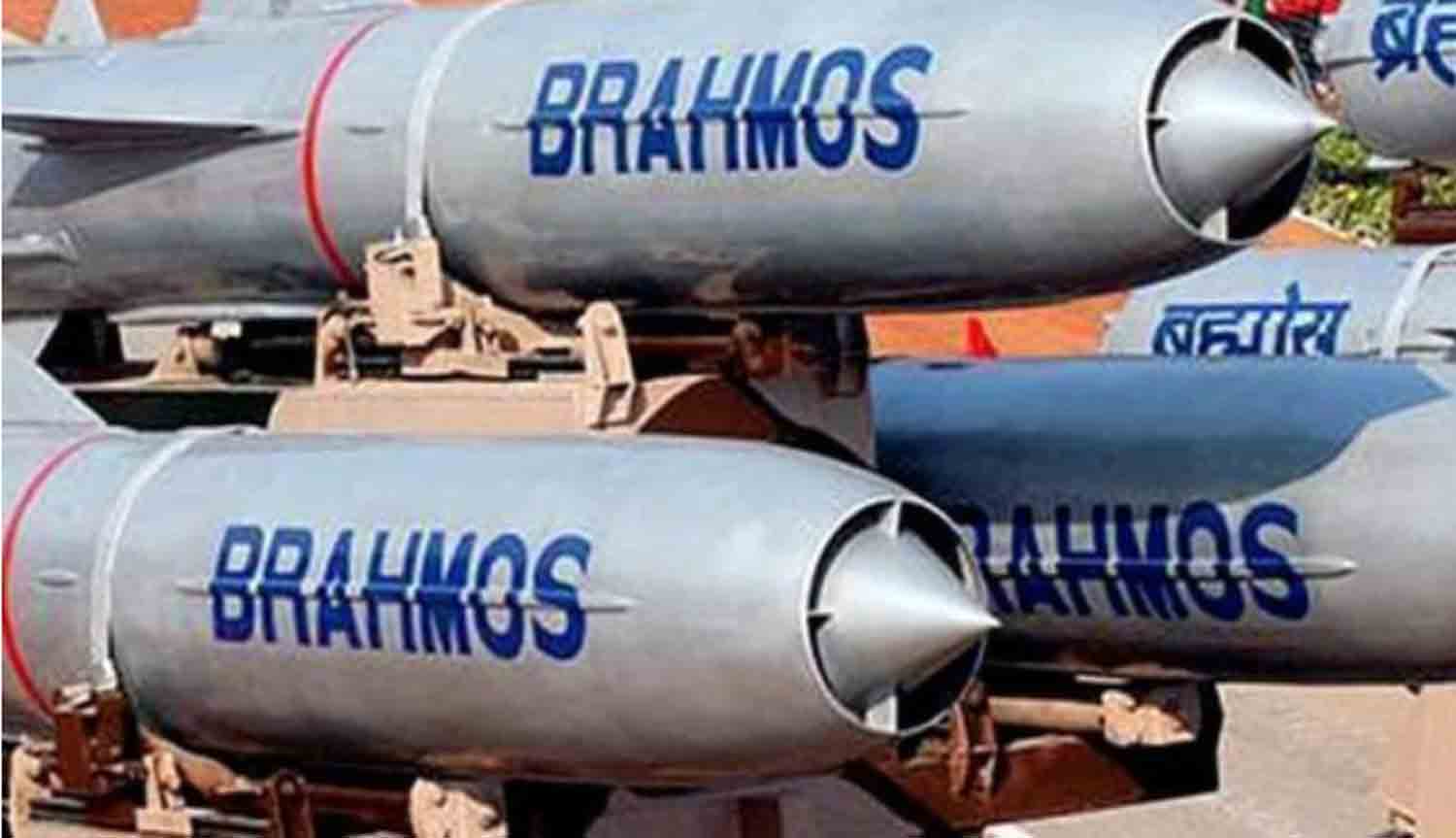
India and Russia formalized their collaboration through a Memorandum of Understanding in 2009. The BrahMos-2 missile is designed to utilize hypersonic scramjet technology, primarily aimed at striking deeply entrenched enemy nuclear facilities and other heavily fortified sites.

Additionally, India has created an advanced ceramic Thermal Barrier Coating (TBC) that exhibits exceptional thermal resistance, capable of functioning at temperatures exceeding the melting point of steel.

In November 2024, India successfully tested its hypersonic missile, joining an exclusive group of nations that includes the United States, Russia, China, and North Korea. This missile test, along with the scramjet engine evaluation, followed China’s unveiling of the GDF-600 hypersonic glide vehicle at the prominent Zhuhai air show.

These developments are the culmination of extensive research efforts aimed at creating a hypersonic missile, a concept that originated in 2007 when the Indian Army adopted the BrahMos Missile system. At that time, then-President Dr. APJ Abdul Kalam proposed that the Mark-II variant of BrahMos evolve into a hypersonic cruise missile.

Scramjet technology plays a crucial role in the development of hypersonic weapons. Unlike traditional subsonic or ramjet engines, scramjets utilize supersonic airflow, compressing air before it is mixed with hydrogen fuel, enabling the engine to reach speeds exceeding Mach 5. India initiated its scramjet technology testing in 2016, achieving a significant milestone on August 28 of that year when the Indian Space Research Organisation (ISRO) successfully tested two domestically developed scramjet engines.

To advance its scramjet capabilities, India conducted tests of a homegrown hypersonic technology demonstrator vehicle (HSTDV) in 2019 and 2020, powered by a scramjet engine. Although the 2019 test did not succeed, the subsequent test in 2020 was successful, with the scramjet-equipped HSTDV flying for approximately 22-23 seconds at a speed of Mach 6.

Conducting a ground run for a missile engine is essential, as it allows engineers to rigorously assess its performance prior to launch, helping to identify any potential issues related to functionality, combustion, thrust, and overall system integrity.

The ignition process in a scramjet engine has been likened to “keeping a candle lit in a hurricane,” according to the Defence Research and Development Organisation (DRDO). The DRDO further explained that the scramjet combustor employs an advanced flame stabilization technique that ensures a stable flame is maintained within the combustor at airspeeds exceeding 1.5 km/s.

Several innovative and promising ignition and flame-holding techniques were explored through various ground tests to develop the scramjet engine configuration. The DRDO highlighted that the indigenous creation of endothermic scramjet fuel, a first for India, was a key factor in this advancement, achieved collaboratively by DRDL and industry partners. This fuel provides significant cooling enhancements and facilitates ignition.

In the Global Race for Hypersonic Technology

The competition for hypersonic weaponry is intensifying worldwide, with China recognized by the US Department of Defense as the leading nation in hypersonic technology, outpacing both the US and Russia in the development of conventional and nuclear-capable hypersonic systems.

In 2023, the People’s Liberation Army successfully tested its DF-27 intermediate-range ballistic missile equipped with a hypersonic glide vehicle, allowing it to easily penetrate missile defense systems, as revealed by a recent intelligence leak.

The DF-17 medium-range ballistic missile, armed with a hypersonic glide vehicle, is expected to significantly enhance the capabilities of the PLA’s missile arsenal, according to the 2023 China Military Power Report. While the DF-17 is capable of carrying nuclear warheads, it is primarily intended for conventional operations.

India’s aspirations are driven by the progress made in China’s hypersonic technology.

The United States is also striving to keep pace. On December 12, 2024, the US Army’s Rapid Capabilities and Critical Technologies Office, in collaboration with the US Navy Strategic Systems Programs, successfully conducted an end-to-end flight test of a conventional hypersonic missile.

The Long-Range Hypersonic Weapon (LRHW), commonly referred to as Dark Eagle, represents the culmination of more than two years of efforts to operationalize the weapon from its trailer-based launcher. This missile is engineered to counter sophisticated “anti-access/area denial capabilities,” which are integral to China’s defensive posture in the Pacific, as noted by the Congressional Research Service.

In contrast to the hypersonic programs of China and Russia, the United States is developing hypersonic weapons that are intended to be conventionally armed. The US Congressional Report titled ‘Hypersonic Weapons: Background and Issues for Congress’ suggests that US hypersonic systems will likely demand higher precision and present more technical challenges compared to the nuclear-capable systems of China and Russia.

Russia has equipped its Sarmat intercontinental ballistic missile (ICBM) with the nuclear-capable Avangard hypersonic glide vehicle (HGV) and is reported to have deployed its Zircon hypersonic missile in the ongoing conflict in Ukraine.

North Korean state media has announced a test of the Hwasong 16B hypersonic missile, which President Kim Jong Un has characterized as a “critical component of the nuclear deterrent.”

In this context, India’s pursuit of hypersonic weapons is viewed as a strategy to enhance its strategic capabilities. The Defence Research and Development Organisation (DRDO) has indicated that the missile can accommodate “various payloads,” suggesting the potential for both conventional and nuclear options.

Afghan Taliban’s foreign ministry has condemned the ICC’s arrest warrants for its leaders

0
The International Criminal Court building is seen in The Hague, Netherlands.

Afghanistan’s Taliban foreign ministry issued a statement on Friday expressing its strong condemnation and rejection of the International Criminal Court‘s (ICC) request for arrest warrants targeting two Taliban leaders. The ministry characterized the warrants, which allege the persecution of women and girls, as lacking a legitimate legal basis, marked by double standards, and driven by political motives.

The ICC prosecutor revealed on Thursday that he was seeking warrants for Haibatullah Akhundzada, the Taliban’s supreme spiritual leader, and Abdul Hakim Haqqani, who has held the position of chief justice in Afghanistan since 2021.

The prosecutor noted that persecution has been ongoing throughout Afghanistan since August 15, 2021, the date when Taliban forces seized control of Kabul following a two-decade insurgency against the Western-supported government. Since regaining power as foreign troops withdrew, the Taliban has imposed severe restrictions on women’s access to public life, employment, and education, including the closure of high schools and universities to female students.

The Taliban’s foreign ministry further stated, “It is unfortunate that during the two decades of occupation in Afghanistan, this institution (ICC) ignored the war crimes and crimes against humanity perpetrated by foreign forces and their local allies.”

Human rights organization Amnesty International responded on Friday, calling the ICC prosecutor’s announcement “an important development.” Amnesty Secretary General Agnès Callamard emphasized, “This is a crucial step towards holding accountable all those allegedly responsible for the gender-based deprivation of fundamental rights.”

Amnesty International has urged the ICC prosecutor to revisit a 2021 decision that deprioritized investigations into alleged war crimes committed by international forces during their two-decade involvement in Afghanistan.

She expressed concern that this decision may foster the belief that international justice is applied selectively, favoring the interests of powerful nations and their allies while undermining the rights of victims of international law violations.

Hungary wants Ukraine gas transit to resume as EU sanctions rollover looms

0
Hungarian Prime Minister Viktor Orban

Hungary is urging the European Union to encourage Ukraine to restart gas transit from Russia to Europe, as stated by Prime Minister Viktor Orban on Friday. This request highlights the contentious discussions expected as the EU prepares to extend its sanctions against Russia in the upcoming week.

Hungary has yet to determine its position on the sanctions extension, which is scheduled for the end of this month. The EU’s sanctions are renewed biannually and require unanimous agreement from all 27 member states.

Orban, whose administration has fostered closer economic and political ties with Moscow compared to other EU nations, reiterated his opposition to the sanctions on Friday, claiming they have inflicted 19 billion euros ($19.9 billion) in financial losses on Hungary, although he did not specify the basis for this figure.

“Currently, the issue of sanction renewal is on the table, and I have urged EU leaders to recognize that this situation cannot persist,” Orban stated during a broadcast on state radio.

“It is unacceptable that we bear the consequences of supporting Ukraine while facing our own challenges,” he remarked, referencing Ukraine’s recent decision to halt Russian gas deliveries to Europe via the Druzhba pipeline.

“We request that they persuade Ukraine to resume gas transit,” Orban added, emphasizing that Budapest also seeks assurances that Ukraine will not disrupt Russian crude oil imports.

EU foreign ministers are scheduled to convene on Monday to discuss the sanctions extension, and Hungary’s foreign minister has indicated that a significant debate is anticipated, noting that Hungary will also consult with its U.S. allies in the coming days.

In December 2023, Orban delayed EU assistance to Ukraine for several weeks. While Western European nations have made strides in reducing their dependence on Russian energy, Hungary, being landlocked, relies on Russia for approximately 80% of its gas and the majority of its crude oil.

The gas supplied to Hungary is transported through the Turkstream pipeline via Serbia, and the country did not receive any gas from Ukraine in the previous year.

The European Union has frozen billions of euros in funding for Budapest due to worries that Orban has undermined democratic checks and balances.

Trump claims a trade deal with China is possible, calling his chat with Xi ‘friendly’

0
Donald Trump meets with Chinese President Xi Jinping

U.S. President Donald Trump characterized his recent discussion with Chinese President Xi Jinping as amicable, expressing optimism about the potential for a trade agreement with China.

SIGNIFICANCE

The leaders of the two largest global economies engaged in a conversation addressing various topics, including TikTok, trade relations, and Taiwan, prior to Trump assuming office on Monday. Since his inauguration,

Trump has mentioned the possibility of implementing a 10% punitive tariff on Chinese imports, citing concerns over fentanyl being trafficked from China to the U.S. through Mexico and Canada. However, he has not yet enacted the tariffs he had pledged during his campaign. Additionally,

Trump has issued warnings of potential tariffs against the European Union, Mexico, and Canada.

NOTABLE STATEMENTS

“It went well. It was a positive and friendly discussion,” Trump remarked regarding his call with Xi during an interview with Fox News that aired on Thursday evening.
“I can do that,” he responded when asked about his ability to negotiate a fair trade deal with China.
While Trump expressed a preference to avoid imposing tariffs on China, he acknowledged their significance, referring to them as a “tremendous power.”
“But we have one very significant leverage over China, and that’s tariffs, which they wish to avoid. I would prefer not to resort to that, but it remains a powerful tool against China,” Trump elaborated.

CONTEXT

The United States and China are currently facing a multitude of diplomatic and economic conflicts. These include a growing technological and military competition, contentious trade issues, and concerns from Washington regarding the ownership of the popular social media application TikTok, which is owned by the Chinese company ByteDance.

Top Russian security official warns that the risk of armed conflict between nuclear powers is increasing, TASS reports

0

Sergei Shoigu, the secretary of Russia‘s Security Council and a former defense minister, has expressed concerns regarding the escalating risk of armed conflict between nuclear nations, as reported by the state news agency TASS on Friday.

According to TASS, Shoigu indicated that the intensifying geopolitical competition among major powers is heightening the likelihood of such confrontations.

He further alleged that the NATO military alliance is amplifying its operations near the eastern borders of Russia and Belarus, engaging in both offensive and defensive drills in the region.

Russia claims to have successfully thwarted a major drone attack from Ukraine targeting 13 regions, including Moscow

0

Russian air defenses successfully thwarted a significant drone assault from Ukraine overnight, intercepting and destroying 121 drones aimed at 13 regions, including Moscow, according to a statement from Russia’s Defense Ministry on Friday. The report did not provide details regarding any casualties or damage.

The ministry indicated that six drones were neutralized over the Moscow region, with one being intercepted directly over the capital. Other drones targeted various regions, including those adjacent to Ukraine and Kursk, where Ukrainian forces maintain a presence despite ongoing Russian military efforts to dislodge them.

Additionally, twenty drones were reported to have targeted the Ryazan region, located southeast of Moscow. Unverified videos shared on Telegram by local bloggers depicted what they described as significant fires in the area, claiming that an oil storage facility and a power station were struck. Reuters has not been able to verify these claims.

Pavel Malkov, the governor of Ryazan, reported on Telegram that emergency services were responding to the aftermath of the drone attack. He noted that a fire had been extinguished after debris from a drone damaged a residential building.

Moscow Mayor Sergei Sobyanin stated early Friday that air defenses had intercepted Ukrainian drone attacks at four different locations around the capital. In his Telegram update, Sobyanin mentioned that defenses in Kolomna and Ramenskoye, located southeast of Moscow, successfully repelled “enemy” drones, although he did not specify the number intercepted. He assured that there were no reported damages or casualties at the sites where debris fell, and that specialized emergency teams were on the scene.

Sobyanin reported that two drones approaching Moscow were intercepted by air defenses in Podolsk, located to the south of the capital. He also noted that one drone was downed in Troitsky, to the southwest, and another in Shchyolkovo, to the northeast.

According to Russian news agencies citing Rosaviatsiya, the federal aviation authority, operations at two Moscow airports, Vnukovo and Domodedovo, were temporarily suspended but have since resumed. As a result, six flights were redirected to alternative airports.

In Kursk, Mayor Igor Kutsak indicated that the overnight drone attack had caused damage to power lines, resulting in an electricity outage in one district of the city.

The Defence Ministry’s statement confirmed that drones were also destroyed in the border regions of Bryansk and Belgorod, as well as over the Russian-annexed Crimean Peninsula. Additionally, the regions of Saratov, Rostov, Voronezh, Tula, Oryol, and Lipetsk were reported as targets.

Philippine military says US missile deployment will boost preparedness and regional security

0

The Philippine armed forces announced on Friday that the deployment of U.S. military Typhon missile launchers in the country aligns with Washington’s enduring defense partnership with the Philippines.

According to armed forces spokesperson Francel Margareth Padilla, the main goal of this deployment is to enhance the readiness of the Philippine military, facilitate better understanding and interoperability with advanced weapon systems, and bolster regional security.

Padilla’s comments followed a Reuters report indicating that the U.S. military has relocated the mid-range capable launchers to a different site within the Philippines.

The initial deployment of these weapons in April 2024 during military exercises prompted strong criticism from China, which accused the Philippines of escalating tensions in the region. On Thursday, Beijing urged the Philippines to “correct its wrong practices.”

Padilla emphasized that the United States and the Philippines, as treaty allies, “coordinate closely on all aspects of the MRC deployment, including its positioning.”

The Typhon launchers are capable of firing various missiles, including Tomahawk cruise missiles, which can reach targets in both China and Russia from Philippine territory. Additionally, the SM-6 missiles they carry can engage air or sea targets over 200 kilometers (165 miles) away.

“These arrangements reflect shared operational considerations and mutual consultations between our two nations,” Padilla said.

Could Trump ignite a mineral ‘gold rush’ in Greenland?

0
Icebergs float in Disko Bay, near Ilulissat, Greenland.

The mineral resources of Greenland, an Arctic island, have gained international attention following U.S. President Donald Trump‘s remarks about acquiring the territory from Denmark, raising concerns among European allies.

These sentiments were reiterated by Vice President JD Vance during a January 12 appearance on “Fox News Sunday,” where he stated, “There is a deal to be made in Greenland,” highlighting the island’s abundance of valuable natural resources.

Historically, Greenland’s mining sector has faced challenges in achieving profitability, but this situation may be on the verge of transformation.

Rich in minerals

Currently, Greenland operates just one commercial mine, known as White Mountain, situated north of the capital, Nuuk. This mine is characterized by its anorthosite rock, which is abundant in calcium and other minerals.

The operator, Lumina Sustainable Materials, exports the rock from Greenland’s western coast to markets in Asia, Europe, and North America, where it is utilized in the production of various items, including fiberglass, paint, fillers, cement, and polymers. There are ongoing initiatives to tap into the aluminum reserves found within the anorthosite.

“Greenland is a nation rich in minerals. We have minerals literally everywhere,” stated Bent Olsvig Jensen, Lumina’s managing director in Greenland, during an interview.

Numerous mining companies globally are engaged in exploration and feasibility studies throughout Greenland, yet White Mountain stands as the sole commercial operation currently active in the market.

Competition from China

The region is rich in rare earth elements, including lithium and scandium, which are essential for technologies like batteries. At present, China dominates the global supply chains for these critical materials.

Former President Trump has consistently asserted that U.S. control over Greenland is vital for “international security.” His remarks sparked significant political reactions in both Greenland and Denmark, but mining firms perceive a potential opportunity.

“His interest in Greenland could actually facilitate greater investment access, which is crucial for the industry’s growth in the region,” stated Jensen. “Therefore, I certainly welcome it. It is essential for both the industry and the political landscape in Greenland to align ourselves with Trump and the U.S.”

‘Not for sale’

While Greenland operates with a high degree of autonomy, Denmark retains responsibility for the island’s defense.

Naaja Nathanielsen, Greenland’s minister for resources, reiterated the government’s longstanding position regarding Trump’s interest: open for business, but not for sale.

“We are eager for American investments and seek collaboration with the U.S. State Department, and we have been advocating for this for quite some time,” she remarked.

Greenland entered into an agreement with the Trump administration in 2019 aimed at enhancing its mining sector.

“The U.S. supported our direct outreach to investors globally, and this agreement has recently concluded. We have been seeking renewed engagement from the U.S. for some time now,” Nathanielsen stated.

Challenges

Despite the acknowledged mineral resources of Greenland, securing investment in the mining sector has been a persistent challenge.

“For many years, we have observed a reluctance among investors to commit to high-risk, long-term projects. Currently, we hold only one American-owned license, while we have 23 from Canada, 23 from the U.K., and around 10 from Denmark. Thus far, U.S. involvement in this area has been limited. We certainly welcome it, as there are numerous opportunities available,” Nathanielsen remarked.

The government of Greenland is advocating for complete independence from Denmark. Proponents believe that the island’s mineral resources could eventually serve as the economic basis for full statehood. However, significant progress is still needed, according to Ulrik Pram Gad, an analyst at the Danish Institute for International Studies in Copenhagen.

“If the goal is to extract minerals and achieve economic self-sufficiency for Greenland, there must be an increase in international processing capabilities,” Gad noted.

It is essential to carefully consider how to ensure that mining projects provide tangible benefits to local communities rather than replicating a model of exploitative extraction. If not managed properly, the Greenlandic population may ultimately oppose these initiatives, he noted.

The potential for profit is not guaranteed. The Aappaluttoq mine, which produced rubies and pink sapphires, ceased operations in 2023 when its operator, Greenland Ruby, declared bankruptcy with debts totaling $71 million. The company is currently undergoing restructuring and is in search of new investors to resume its activities.

Greenland spans 2.1 million square kilometers, much of which remains covered in ice for a significant portion of the year.

“We are situated in the Arctic, which presents certain logistical challenges,” stated Jensen from Lumina. “Not all areas of Greenland are accessible year-round, but we can devise plans to navigate these issues.”

Jensen emphasized that investors need to exercise patience to achieve profitability.

“Developing a project from initial exploration to a fully operational mine capable of production and sales is a lengthy process. As is often said in the mining industry, ‘Time is money.'”

In the West Bank, Trump is allowing Netanyahu to take aggressive actions that could destabilize the region

0
An Israeli military vehicle stands on the street during an Israeli raid, in Jenin, in the Israeli-occupied West Bank.

Those who believed that US President Donald Trump would emerge as the peace-promoting leader the Middle East has long sought should reconsider in light of the current situation in the Occupied West Bank.

The Israeli army is unleashing devastation in Jenin, seemingly unfazed by 15 months of ongoing conflict, as they witness the striking scene of numerous well-equipped Hamas fighters and vehicles encircling the Red Cross transport that carried the first three Israeli hostages released.

The visuals from the hostage release in Gaza City have left the Israeli public reeling, challenging the prevailing narratives of complete victory. “After a year and four months filled with information and unfounded tales of total triumph and retribution, the Israeli public is confronted with images from Gaza of Toyotas, armed Hamas members, and a city rising from its ruins,” remarked journalist Israel Frey to Middle East Eye.

It is important to note that the extensive ground offensive against the West Bank refugee camps was premeditated. However, its timing was strategically significant in retaining Bezalel Smotrich, Israel’s far-right finance minister and the de facto consul general of the occupied West Bank, in the cabinet, especially after he threatened to resign over the ceasefire in Gaza.

Additionally, Smotrich’s agenda included a commitment to overhaul the army leadership.

If you believe that Lt. General Herzi Halevi, Israel’s highest-ranking general who stepped down this week, has taken sufficient action in Gaza to warrant an arrest warrant from the International Criminal Court (ICC), then his successor will certainly be of interest.

In light of the recent settler assault on the Palestinian town of Funduq, coinciding with Trump’s decision to lift sanctions on the most violent extremist groups, one might conclude that Israel has merely paused its operations in Gaza, only to redirect similar violence towards the West Bank. Within hours, ten bodies were left on the streets of Jenin, too perilous to recover.

Does this indicate that the framework for Trump’s second term has already been established, and is this the shape it will take?

A repetition of the ideal partnership?

The evidence is undeniable: all elements are aligned for a resurgence of the ideal partnership with Israel that Trump cultivated during his first term.

Trump permitted Israel to annex the occupied Golan Heights—a decision likely to provoke future conflict with Syria—leveraged the Abraham Accords to undermine the Palestinian cause, and relocated the US embassy to Jerusalem.

For his second and final term, Trump has appointed Mike Huckabee as ambassador, who denies the existence of a Palestinian identity; Pete Hegseth as defense secretary, who advocates for the construction of a Third Temple on the site of the Al Aqsa mosque; and Steve Witkoff as peace envoy, who proposes relocating Gazans to Indonesia.

Trump has made it abundantly clear that he shows little concern for the plight of seven million Palestinians.

His interest, along with that of his son-in-law Jared Kushner, lies in viewing Gaza as the largest demolition site globally, primarily due to the potential for lucrative beachfront development. “Beautiful things could be done over there, fantastic things,” the president remarked.

However, the well-being of the local population seems to be of no concern to him.

To be fair, Trump’s indifference extends beyond Palestinians to all Arabs, regardless of their wealth. His relationship with Saudi Arabia is primarily transactional, hinging on the financial contributions of Crown Prince Mohammed Bin Salman.

When reflecting on his first foreign trip, Trump recalled his visit to Riyadh, primarily because Saudi Arabia had committed to purchasing $450 billion in American goods. “I don’t know, if Saudi Arabia wanted to buy another $450 billion, or $500 billion we will put it for inflation,” he stated.

Unaware of the ongoing humanitarian crisis and focused on maintaining authority, Trump surrounds himself with advisors who echo Israel’s most extreme viewpoints. This raises the question: will he once again serve as a convenient ally for Israeli Prime Minister Benjamin Netanyahu? Is Netanyahu’s strategy truly aimed at preventing the establishment of a Palestinian state before it can even take shape?

The answer is complex. The alliance of Trump with an Israel increasingly influenced by religious Zionism is evident. This ideology holds more sway in Israel today than it did in 2017, no longer relegated to the fringes.

It now plays a significant role in the occupation of the West Bank, influences the border police, and has permeated the upper ranks of the military and judiciary. It has become a voice in Netanyahu’s cabinet that cannot be overlooked and has compelled a Democratic president to respond. The religious Zionist movement rightfully expects unwavering support from the Trump administration.

This is indeed accurate. However, neither Trump nor Netanyahu is operating within the reality they believed they had under control in 2017.

If left unchecked, an unrestrained Israel could pose a significant source of instability in the region, affecting Trump just as it did Biden.

A challenging environment for aging leaders

Netanyahu may have leveraged his brief encounter with Witkoff as a rationale for pursuing a ceasefire that could have been achieved last July, but there are also increasing domestic motivations for this decision now.

On the surface, public opinion polls appear contradictory. Sixty percent of Israelis assert that there are no innocents in Gaza, yet between 60 and 70 percent advocate for an end to the conflict.

This inconsistency stems from a profound lack of empathy towards Palestinians.

The weariness among Israelis is primarily due to the toll the conflict has taken on their own soldiers’ lives, the injuries sustained, the economic impact, and the disruption to their accustomed Western lifestyle, which this generation of Israelis views as their entitlement.

As noted by my colleague Meron Rapoport, the ongoing war has become a significant burden for the government, military, and society at large.

Israeli society is more divided than ever. The weekly protests by families of hostages have intensified pressure on a government that has argued, without success and contrary to all evidence, that only military action could secure the safe return of the hostages.

Internal dissent against an ongoing war has reached unprecedented levels.

The ceasefire in Lebanon did not alleviate the pressure on Netanyahu; rather, it intensified it. As he approaches the midpoint of his current term as Prime Minister, Netanyahu is acutely aware that his political future is at stake if he maintains this course.

Setting aside his accountability for the attacks on October 7, the loss of over 400 soldiers and countless injuries raises the question: for what purpose have they sacrificed their lives, especially if Hamas continues to thrive amidst the devastation in Gaza?

If public sentiment indicates that Israel is fatigued by war, why then is it initiating another conflict in the West Bank and expanding its occupation of Syrian territory beyond what it currently holds in Gaza?

Partial annexation

Netanyahu appears to be astute in his understanding of Washington’s limits.

Trump’s intervention in the Gaza conflict is primarily focused on the Israeli hostages. Once they are returned, or most of them are, Israel may act freely in Gaza or the West Bank.

When asked about the future of the ceasefire while signing executive orders in the Oval Office, Trump remarked, “It’s not our war. It is their war. I am not confident. But I think they’re very weakened on the other side.”

Additionally, the military actions in the West Bank and the replacement of Halevi are necessary to maintain Smotrich’s support. Smotrich has been candid about this, stating that the upcoming period will see a shift in senior military leadership in preparation for a renewed offensive in the Gaza Strip.

Team Trump is closely aligned with efforts in the West Bank aimed at dismantling refugee camps in anticipation of partial annexation.

Elise Stefanik, nominated by Trump for the position of US ambassador to the UN, asserts that Israel holds biblical authority over Judea and Samaria. In her view, Palestinians do not possess rights as a distinct people, nor do they share the same rights as Israelis.

However, it would be shortsighted to reduce Netanyahu’s objectives to this singular focus. He understands that his actions in Jenin will not only lead to the city’s destruction but also undermine the Palestinian Authority, which is already struggling to maintain its existence.

The Authority cannot endure as a mere extension of the Israeli military’s operations in Jenin, Tulkarm, Nablus, and other centers of resistance.

We should anticipate a rise in defections from its armed and trained Preventive Security Force, reminiscent of the Second Intifada.

Netanyahu is acutely aware of this reality.

Israel’s greatest vulnerability

For Netanyahu, the governance framework he envisions for the West Bank mirrors that of Gaza—reverting to a system of individual agreements with local leaders.

Similar to Gaza, the West Bank will be subjected to enduring Israeli military oversight. However, a significant distinction from Trump’s initial term is evident.

Israel has not only alienated an entire generation of American Jews through its actions in Gaza but has also lost the support and sympathy of the broader region, which, as of October 6, appears to have relegated the Palestinian cause to the background.

A new wave of leaders in Saudi Arabia and the United Arab Emirates has emerged, showing little concern for the Palestinian issue. Prior to the devastation in Gaza, Israel was on the verge of achieving a decisive victory.

Israel’s tendency to misinterpret the sentiments of its Arab neighbors represents its most significant vulnerability.

The nation has yet to grasp that its military campaign in Gaza has galvanized and mobilized a new generation of Arabs in a way that no previous conflict has in Israel’s tumultuous history.

What could possibly drive a Moroccan to forsake the promise of Green Card permanent residency in the United States, opting instead for the perilous streets of Tel Aviv where death by knife attack looms?

Morocco eagerly embraced the Abraham Accords. What value does that agreement hold now?

Israel appears remarkably detached from its regional context, perceiving its role solely as the dominant force in a contentious environment.

Should Israel proceed with its intentions regarding the West Bank, it risks further radicalizing six million Palestinians in Jordan and countless East Bankers to an unprecedented degree.

The U.S. military, under Trump’s administration, will be compelled to respond, given the multitude of assets and bases in the region that are highly susceptible to the sentiments of the local populace.

Jordanian Foreign Minister Ayman Safadi has repeatedly cautioned about these repercussions, yet his warnings have gone unheeded. “The West Bank is adjacent to our borders, and the situation is precarious; developments there could jeopardize regional security,” Safadi stated.

Trump will find it impossible to overlook the potential collapse of Jordan if it occurs. Its neighboring countries will also be unable to dismiss the implications. This situation will not merely be “their” issue, but his as well, posing a threat to the entire U.S. military presence in the area.

We are confronted with an American administration that lacks a fundamental understanding of the Palestinian people. They view the region exclusively through an Israeli lens.

This has always been the case, but the current level of narrow-mindedness is more pronounced than ever.

Such a perspective is a formula for disaster, sowing the seeds for future conflicts. The anti-war stance that Trump once championed will soon fade into obscurity.

As Gaza remains calm, Israel is shifting its attention to the West Bank. Here’s the rationale behind this change

0
Israeli soldiers stand guard as Palestinians displaced by an Israeli military operation evacuate from the Jenin refugee camp in the West Bank.

The Israeli military has escalated its operations throughout the occupied West Bank, focusing on Palestinian militant groups, establishing roadblocks, and isolating communities from external access.

This sudden increase in Israeli security activities in the West Bank has resulted in the deaths of at least 10 individuals and coincides with the initiation of a fragile ceasefire process in Gaza, which involves the phased release of Israeli hostages and a gradual withdrawal of Israeli forces.

This development also reflects a growing confidence among the Israeli right and many within the settler movement, influenced by remarks from certain officials in the Trump administration suggesting that Israel has the right to annex significant portions of the West Bank, which is home to over three million Palestinians.

Current Situation in the West Bank

Israeli Defense Minister Israel Katz has indicated a shift in strategy in the West Bank, stating that the military will implement tactics derived from the Gaza offensive to dismantle militant organizations and, as he puts it, “prevent the resurgence of terrorism.”

The Jenin refugee camp, located in the northern part of the West Bank and known for its narrow alleys and strong militant presence, is at the forefront of the Israel Defense Forces’ (IDF) latest operations.

On Tuesday, Katz announced that Operation “Iron Wall” aims to “eradicate terrorists and their infrastructure within the camp, ensuring that terrorism does not re-emerge after the operation concludes – a key lesson learned from the strategy of repeated incursions in Gaza.”

The operation in Jenin aims to achieve more than previous military actions. According to Jenin governor Kamal Abu Al-Roub, hundreds of civilians have evacuated the camp, leaving it nearly deserted. He informed CNN on Thursday that water supplies have been cut off and the region is currently “under siege.”

Recent operations by the IDF have led to the establishment of additional roadblocks throughout the West Bank. The Colonization and Wall Resistance Commission reported on Thursday that there are now close to 900 military checkpoints, including over 173 iron gates that have been set up since October 2023.

Al-Roub characterized the IDF’s actions as “one of the largest and most intense” operations to date, noting that more than 20,000 individuals have been displaced and many have been detained.

Palestinian media reported on Thursday that the IDF has set up roadblocks near Ramallah and has sealed off a village in that vicinity. Furthermore, military checkpoints in the Nablus area have been strengthened, resulting in thousands of individuals being stranded due to extensive delays.

In Jericho, residents faced difficulties leaving the area as military checkpoints were closed. Palestinian journalists indicated on Thursday that tear gas was deployed against individuals waiting at a checkpoint in Jericho.

A woman reportedly died from a heart attack at a checkpoint near Hebron after the IDF obstructed her transfer to a hospital, according to the Palestinian Ministry of Health on Wednesday.

Mustafa Barghouti, an independent Palestinian politician, informed CNN that a journey from Ramallah to Jericho, which typically takes 45 minutes, can extend to five hours on certain days.

“Movement from both the southern and northern regions of the West Bank is largely immobilized, while illegal Israeli settlers traverse freely and continue to assault Palestinian vehicles on the roads,” he stated.

“We are witnessing alarming trends of unlawful force being applied in the West Bank that are unnecessary, indiscriminate, and excessive. This mirrors the strategies employed by Israeli forces in Gaza,” remarked Angelita Caredda, the Middle East and North Africa regional director for the Norwegian Refugee Council (NRC).

The IDF asserted on Thursday that the checkpoints serve as “a tool in our fight against terror, facilitating civilian movement while providing a layer of screening to prevent terrorists from escaping.”

What impact does the ceasefire have on the situation in the West Bank?

The operation commenced two days after the initiation of the first phase of the Gaza ceasefire, indicating a shift in the Israeli government’s priorities.

Far-right Finance Minister Bezalel Smotrich stated on Tuesday: “We have started to alter the security strategy in Judea and Samaria [the Biblical term many Israelis use to refer to the West Bank] as part of our campaign to eliminate terrorism in the area.”

He further asserted that the cabinet had determined that security in the West Bank has become an official objective of war for Israel. However, the Prime Minister’s Office did not verify this assertion.

The ceasefire in Gaza has enabled Israeli security forces to shift their focus to the West Bank, where Hamas-aligned groups have increased their activities. However, there is a concern that heightened Israeli military operations in the West Bank could jeopardize the ongoing ceasefire in Gaza.

Katz has repeatedly claimed that Iran is fueling the rise in militant activity in the West Bank by providing arms to these groups.

“We will not permit Judea and Samaria to mirror the situations in Gaza or southern Lebanon… We will take action to sever Iran’s influence in the refugee camps of the West Bank and safeguard the security of the local communities and residents.”

Israeli officials have indicated that the Palestinian Authority (PA) has struggled to effectively address and suppress militant factions. A December operation by Palestinian security forces targeting militants in Jenin achieved minimal results. The militant groups include the Al Aqsa Martyrs’ Brigade, Palestinian Islamic Jihad, and the Qassem Brigades, which operate collectively under the Jenin Battalion.

According to a senior military source cited by Israel’s Channel 11 on Thursday, “The PA has done what it can. We acknowledge the necessity to act against the terrorists’ capabilities; we are no longer waiting for their intentions. Our objective is to neutralize the Jenin battalion.”

The impact of the Trump administration on regional dynamics

For some right-wing Israelis, the arrival of the Trump administration, coupled with successes in weakening Hamas and Hezbollah, presents a distinct opportunity to enhance Israeli dominance in the region.

During his initial term, Trump shifted the longstanding US position on settlements, declaring them not illegal, a stance that was reversed by Biden. Several of Trump’s appointees have indicated that Israel possesses the right to annex the West Bank.

Currently, over 500,000 Jewish settlers reside in the Israeli-occupied West Bank, territory seized from Jordan during the 1967 conflict. International law regards these Jewish settlements as illegal.

Elise Stefanik, who is expected to be the new US ambassador to the United Nations, expressed her agreement with the notion that Israel has a “biblical right” to annex the West Bank. Mike Huckabee, anticipated to be the US ambassador to Israel, has previously stated that there is “no such thing as a Palestinian.”

On his first day in office, Trump lifted sanctions that the previous Biden administration had imposed on far-right Israeli settler groups and individuals accused of violence against Palestinians in the occupied West Bank.

Violence against Palestinians by extremist settlers has become a frequent occurrence in the West Bank. In 2024, the UN reported 1,420 incidents of settler violence that resulted in casualties and/or property damage in the West Bank, including East Jerusalem.

While some perpetrators were apprehended, the Israeli Defense Ministry recently opted to release Jewish settlers held under administrative detention, citing the anticipated release of terrorists as part of the Gaza ceasefire agreement.

Katz remarked that the decision to release the settlers would “send a clear message of strengthening and encouraging settlement, which is at the forefront of the struggle against Palestinian terror and increasing security challenges.”

The modernization of the Turkish navy, referred to as the “Blue Homeland” initiative

0

The Turkish naval forces are currently undergoing a significant modernization initiative, driven by the enhanced capabilities of the Turkish defense industry. This initiative, often referred to as “Blue Homeland Modernization” by stakeholders, aims to substantially boost the “Power Transfer Capability” of the Turkish Armed Forces (TSK).

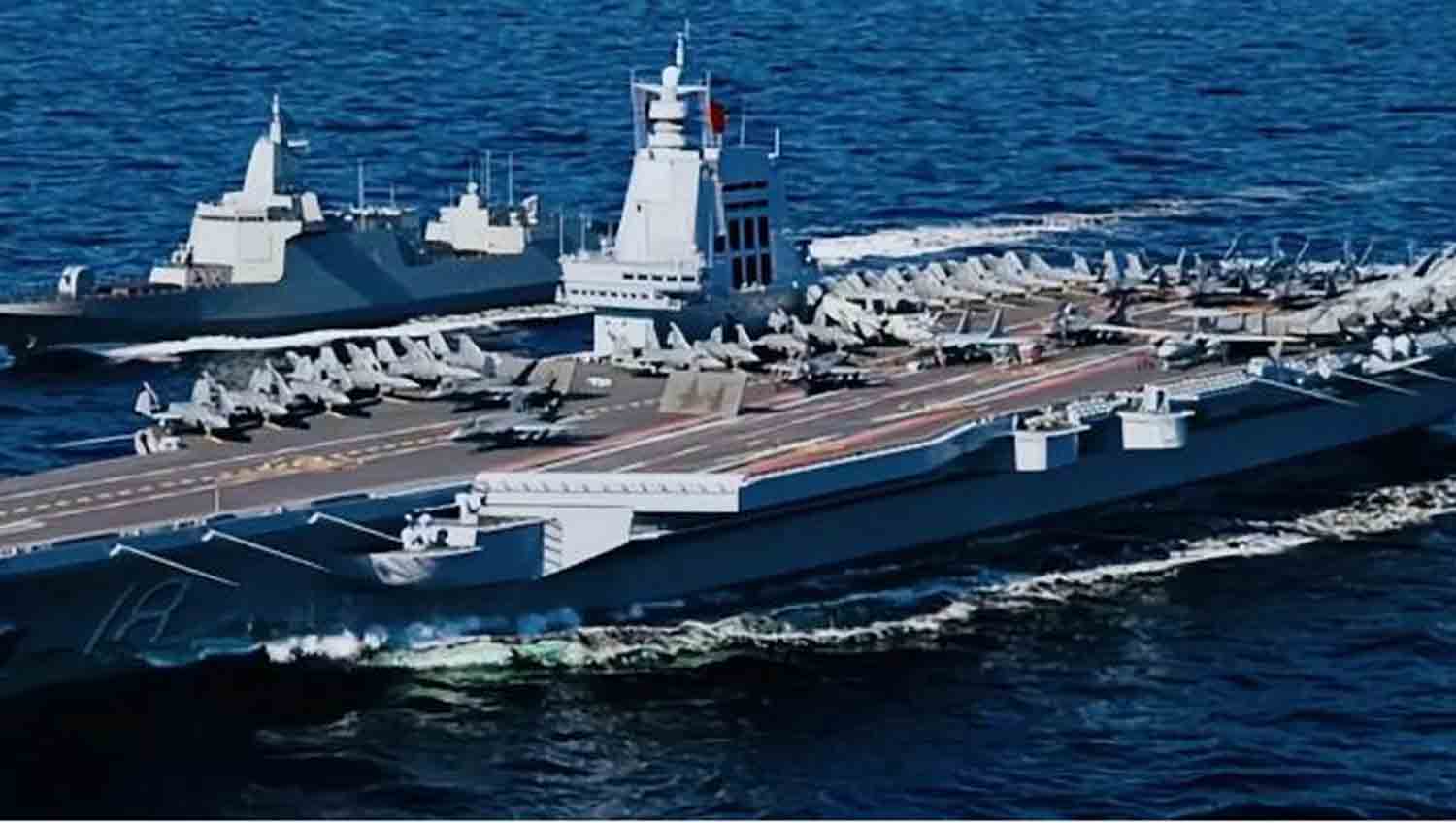
At present, Türkiye is constructing 31 distinct naval platforms, which include destroyers, frigates, corvettes, fast patrol boats, offshore patrol vessels, submarines, mine countermeasure vessels, and landing ships. Recently, it was announced that the construction of the National Aircraft Carrier (MUGEM) has officially commenced. Upon its completion, Türkiye will possess its first aircraft carrier.

The largest naval asset in the Turkish fleet is the TCG Anadolu multi-purpose amphibious assault ship (LHD), developed in collaboration with Spain and commissioned in 2023. The TCG Anadolu has recently been utilized for landings and takeoffs by the Bayraktar TB3 armed unmanned aerial vehicle, created by Baykar, marking it as the “world’s first UCAV ship.” Additionally, naval adaptations of the Kızılelma and Anka-3 platforms are set to be developed for MUGEM. In summary, Türkiye is incorporating unmanned aerial vehicle technology, which has already made significant strides on land and in the air, into its naval operations.

This growing capability is also evident in Türkiye’s warship export activities. The country is producing military naval platforms for various nations, including four Milgem corvettes for Pakistan, two for Ukraine, three for Malaysia, two logistics support vessels for Portugal, two offshore patrol vessels for Nigeria, and two fast patrol boats for Qatar. There is also a rising demand for large-scale projects from the Gulf region.

The Turkish defense industry is actively developing the platforms, weaponry, and sensor systems intended for use on these platforms. Recent advancements include the ATMACA anti-ship missiles, Çakır cruise missiles, the Midlas vertical launch system, the HİSAR-D air defense missile, the CENK AESA search radar, the Gökdeniz close-in weapon system (CIWS), the 76 mm naval gun, the ARES-2 electronic warfare suite, and AKYA heavy-class torpedoes. These innovations highlight Türkiye’s emergence as a viable alternative to Europe, the U.S., Russia, and China in the procurement of advanced defense products.

In alignment with its “Blue Homeland Strategy,” Türkiye is fully engaged in enhancing its naval capabilities. The activation of its naval base in Qatar and the establishment of a naval task force in Somalia are strategic moves aimed at expanding its global influence and interests.

Recently, President Recep Tayyip Erdoğan announced an increase in Türkiye’s missile range to 800 kilometers (497 miles), with plans to develop missiles capable of reaching 2,000 kilometers in the near future. This development serves as a significant message to Greece and the international community. Historically, Türkiye has maintained a military rivalry with Greece, characterized by tense relations since World War I. Efforts to balance military procurement have been made, but the advancements in the Turkish defense industry over the past decade have shifted the dynamics of this rivalry. With missiles now capable of striking any location in Greece, Türkiye’s strategic focus has expanded beyond regional concerns, allowing it to operate on a global scale, as Greece is no longer viewed as a primary threat.

A clearer understanding of the strategic significance of the “Blue Homeland” concept and policy for Türkiye can be illustrated through the situation in Libya. Following a deadlock after the coup, the dynamics in Libya shifted dramatically with Türkiye’s intervention. The presence of Turkish warships providing an air defense shield for the Government of National Unity (GNU) forces, along with the deployment of Turkish UCAVs and military advisory support from experienced Turkish Armed Forces personnel, has altered the balance of power, diminishing the influence of Khalifa Haftar’s forces. This shift exemplifies the importance of being “strong on the ground,” which necessitates a robust arsenal of warships, missile systems, and various defense industry assets. Crucially, it also involves training military personnel to effectively operate these advanced weapons.

The year 2030 is pivotal for the Turkish navy, as it is projected to possess eight Mılgem ISTIF class frigates, ten HISAR class offshore patrol vessels, six Reis class submarines, mechanized landing platforms, fast patrol boats, and additional support vessels by that time. The navy will also incorporate numerous advanced naval platforms, weaponry, and sensor systems. Upon the completion of the first phase of the Blue Homeland Modernization, the Turkish navy is expected to rank among the largest naval forces not only in the Black Sea, Mediterranean, and Aegean regions but also globally.

Reports from Seoul suggest North Korea is preparing to deploy more troops to Russia

0
Soldiers participate in a demonstration during the training of the Korean People's Army's air and amphibious combat units, in this picture.

South Korea’s military reported on Friday that it suspects North Korea is gearing up to send additional troops to Russia to assist in the conflict against Ukrainian forces, despite having already faced casualties and the capture of some soldiers.

The Joint Chiefs of Staff (JCS) stated, “With four months elapsed since the troop deployment for the Russia-Ukraine conflict, and following numerous casualties and captures, North Korea is believed to be expediting preparations for a further troop dispatch.”

The JCS did not elaborate on what specific follow-up actions Pyongyang might undertake. Additionally, North Korea is reportedly preparing to launch a spy satellite and an intercontinental ballistic missile (ICBM), although the JCS noted there are currently no indications of imminent activity.

Earlier this month, Ukrainian President Volodymyr Zelenskiy announced that two North Korean soldiers had been captured in Russia’s Kursk region, marking the first instance of Ukraine taking North Korean soldiers alive since their involvement in the war began last autumn.

According to assessments from Ukraine and Western sources, North Korea has deployed approximately 11,000 soldiers to support Russian forces in the Kursk region, which Ukraine had seized in a surprise attack last year. Reports indicate that over 3,000 of these soldiers have been killed or injured, as per Kyiv’s figures.

While both Moscow and Pyongyang initially downplayed the reports regarding North Korea’s troop deployment, Russian President Vladimir Putin acknowledged in October that North Korean soldiers were present in Russia, and a North Korean official stated that any such deployment would be considered lawful.

The increasing collaboration follows President Putin’s trip to Pyongyang in June 2024, during which the leaders formalized a “Comprehensive Strategic Partnership Treaty” that encompasses a mutual defense agreement.

Trump announces plans to contact North Korea’s Kim Jong Un

0
U.S. President Donald Trump and North Korean leader Kim Jong Un stand at the demarcation line in the demilitarized zone separating the two Koreas, in Panmunjom, South Korea.

U.S. President Donald Trump stated in a Thursday interview that he intends to re-establish communication with North Korean leader Kim Jong Un, following the development of a working relationship during his first term.

“I’ll reach out to him again,” Trump remarked during his conversation with Fox News’ Sean Hannity.

Trump’s defense nominee Hegseth narrowly passes the Senate’s preliminary vote

0

The U.S. Senate voted narrowly on Thursday to move forward with the nomination of Pete Hegseth, a former Fox News host and military veteran, for the position of Secretary of Defense under President Donald Trump. This decision paves the way for a confirmation vote later this week. The vote was 51-49 on a procedural motion to end debate, with nearly all of Trump’s Republican colleagues supporting the nomination, despite recent allegations regarding Hegseth’s personal conduct.

Senators Lisa Murkowski and Susan Collins were the only Republicans to join all Democrats and independents in opposing the nomination. The Senate is expected to hold a confirmation vote for Hegseth late on Friday. Hegseth has emerged as one of the most contentious nominees in Trump’s cabinet, facing scrutiny over his management experience and multiple allegations of inappropriate behavior and excessive drinking, which he has denied.

An affidavit released this week from Hegseth’s former sister-in-law claimed that he abused his second ex-wife to the extent that she once sought refuge in a closet and provided friends with a code word for emergencies. Additionally, Democratic lawmakers have raised concerns over various incidents involving Hegseth, including a 2017 sexual assault allegation that did not lead to charges, which he also denies.

In 2017, Hegseth reached a settlement of $50,000 with the woman who accused him of sexual assault, as revealed in his response to a written inquiry from Democratic Senator Elizabeth Warren, according to her office’s communication with Reuters.

HEGSETH, SUPPORTERS, DENY ALLEGATIONS

Hegseth and his supporters firmly reject the allegations against him. He has denied any wrongdoing towards Samantha Hegseth, and Republican senators who have supported him stated that they conducted meetings with him, examined his FBI file, and reviewed other relevant documents, concluding that he is well-suited to lead the Pentagon.

“Following this comprehensive evaluation, I am absolutely confident in my judgment that Mr. Hegseth is ready to assume the role of Secretary of Defense, and that the allegations against him are baseless and do not withstand scrutiny,” stated Roger Wicker, Chairman of the Republican Senate Armed Services Committee.

Hegseth has largely avoided meetings with most Democratic senators, including those on the armed services committee, which conducted his confirmation hearing.

Recently, Trump has encouraged his fellow Republicans to support the 44-year-old veteran, and many have rallied behind him, asserting that he would bring a “warrior” ethos back to the U.S. military. In posts on Truth Social, Trump expressed that Hegseth “will make a GREAT Secretary of Defense” and emphasized his “Complete and Total support.”

Democrats have expressed significant opposition to his nomination. Prior to Thursday’s vote, Senate Democratic Leader Chuck Schumer remarked, “Is Pete Hegseth truly the best candidate we can find for Secretary of Defense? Let’s be honest, he isn’t. He doesn’t even come close!”

OVER 1 MILLION TROOPS, NEARLY $1 TRILLION BUDGET

If confirmed, Hegseth would oversee 1.3 million active-duty personnel and nearly 1 million civilians employed by the U.S. military, which operates with an annual budget approaching $1 trillion. Should he assume leadership at the Pentagon, observers will be keen to see if he initiates changes within the military’s leadership structure, how he addresses personnel matters such as the inclusion of women in combat roles, and his positions on significant foreign policy challenges, including the conflict in Ukraine, rising tensions with China, and issues in the Middle East.

Hegseth has been critical of diversity, equity, and inclusion programs within the military, and in his recent book, he questioned whether the top U.S. general’s position is influenced by his race.

Historically, Hegseth has been a vocal opponent of women serving in combat, though he has softened this view in pursuit of support for his confirmation, including from Republican Senator Joni Ernst, a military veteran and sexual assault survivor who initially had reservations about Hegseth but later became a strong advocate for his nomination.

Both allies and adversaries of the U.S. are preparing for a new ‘America First’ phase

0
U.S. Secretary of State Marco Rubio meets with Indian External Affairs Minister Dr. Subrahmanyam Jaishankar, Australian Foreign Minister Penny Wong, and Japanese Foreign Minister Iwaya Takeshi at the State Department in Washington, U.S.

Less than a day after U.S. President Donald Trump took office on Monday, newly appointed Secretary of State Marco Rubio engaged with foreign ministers from America’s key allies in the Indo-Pacific region, known as the “Quad,” which includes Australia, India, and Japan. This meeting coincided with the USS Carl Vinson completing its first significant training exercise of 2025 in waters near the Philippines.

While there has been considerable attention on resolving conflicts in Ukraine and the Middle East, it is not surprising that the Trump administration quickly turned its focus to nations critical to the U.S. strategy in confronting China.

However, early indications suggest that this new era may bring significant changes. Both America’s allies and adversaries seem to be adjusting to this evolving landscape. In his inaugural speech, Trump proclaimed a new “golden age” for the U.S., emphasizing military enhancement and territorial expansion—an ambition not voiced by any U.S. president in over a century. Notably, he did not mention allies or partners, instead prioritizing the concept of “America first” in all dealings.

During a recent address to State Department staff, Rubio emphasized that U.S. foreign policy would be focused on advancing national interests, stating, “Anything that makes us stronger or safer or more prosperous … that will be our mission.” Former British Foreign Secretary David Miliband remarked to a UK broadcaster that Trump was elected as a disruptor, conveying the message: “Buckle up.” He noted that there is skepticism regarding the notion that America benefits from its role as a global stabilizer, acknowledging the need to respect Trump’s electoral mandate while recognizing the seriousness of his intentions.

Japanese Foreign Minister Takeshi Iwaya, who met with Rubio on Tuesday, was an early advocate of this rhetoric, emphasizing that Japan has been the largest foreign investor in the United States for the past five years and is now significantly increasing its defense spending, aligning with Trump’s demands.

On Thursday, NATO Secretary General Mark Rutte supported this view, stating that Trump was “correct” in urging U.S. allies to enhance their defense contributions.

Collectively, the Quad ministers expressed strong opposition to any unilateral actions in the region that aim to alter the status quo through force or coercion. This statement seemed to indirectly reference Taiwan, which China has consistently asserted it intends to “reunify” with the mainland, and U.S. military officials have indicated that Beijing may be poised to invade as early as 2027.

Several of Trump’s Pentagon appointees, including Elbridge Colby, the incoming Under Secretary of Defense for Policy, have contended that the U.S. should prioritize addressing the growing threat from China, potentially reallocating resources away from Europe and specifically Ukraine. However, they have also cautioned that Taiwan needs to enhance its own defense capabilities significantly.

This latter point could pose an early challenge for the Trump administration. Taiwan’s opposition Kuomintang party, which was the Nationalist government that governed the island after fleeing from mainland China in 1949 and is now the most pro-China of the major parties, appears poised to obstruct the defense spending increases advocated by the ruling Democratic Progressive Party.

With increasing pressure from intensified Chinese patrols in their airspace and waters, a scenario where local politics hinder Taiwan’s defense buildup would be a worst-case outcome for President Lai Ching-te’s administration in Taipei. There are already concerns regarding remarks from Trump and Vice President J.D. Vance suggesting that Taiwan is not doing enough to warrant continued U.S. support.

Both Taiwan and the Philippines are likely encouraged by recent comments made by Rubio.

“If the Chinese are genuinely committed to stabilizing U.S.-China relations and preventing conflict, they must refrain from any actions—whether rational or irrational—concerning Taiwan and the Philippines,” Rubio stated during his Senate confirmation hearing last week. “They need to cease their provocations regarding Taiwan and the Philippines, as it compels us to redirect our focus in ways we would rather avoid.”

QUESTIONS ON EUROPE, UKRAINE

In contrast, Trump has emphasized his resolve to resolve conflicts in other regions as an indication of his commitment to preventing a broader global confrontation.

“I will bring an end to the war in Ukraine, halt the turmoil in the Middle East, and avert World War Three from occurring – and you have no idea how close we are,” he declared at a pre-inauguration rally.

Thus far, this approach appears to have facilitated the initiation of hostage releases under the Gaza ceasefire agreement, along with a pledge from Iran-aligned Houthi militants in Yemen to refrain from attacking vessels not associated with Israel in nearby waters.

On his True Social media platform late Wednesday, Trump urged Russian President Vladimir Putin to end the “ridiculous war” in Ukraine or face heightened sanctions, taxes, and tariffs.

Ukrainian President Volodymyr Zelenskiy expressed to Bloomberg during the World Economic Forum in Davos this week that he believes U.S. troops should be included in any peacekeeping mission following the war in Ukraine. He stated, “Even if some European allies think it can be done without them, it cannot. No one will take risks without the United States.”

Both Zelenskiy and French President Emmanuel Macron emphasized the necessity for Europe to enhance its own defense capabilities during the forum.

Last week, there were significant concerns regarding the potential for the new Trump administration to reduce military collaboration with allies or, at the very least, to insist that they increase their contributions. This topic loomed large during a meeting of NATO and allied defense chiefs in Brussels.

The meeting included representatives from NATO’s 32-nation military committee, as well as delegations from Japan, South Korea, Australia, and several other nations. U.S. Joint Chiefs Chairman, Air Force General Charles “CQ” Brown, an African-American F-16 pilot, attended the gathering. He has faced calls for removal from likely incoming Secretary of Defense Pete Hegseth, who criticized him for being overly focused on diversity. Brown has refrained from commenting on this matter but has indicated his intention to complete his term.

In recent months, NATO officials have been actively working to establish its latest command unit, NSATU – NATO Security Assistance and Training for Ukraine – based in Wiesbaden, Germany. This unit consists of around 700 personnel from allied and partner nations, coordinating the delivery of weapons to the Ukrainian government in response to Russia’s invasion.

NATO Supreme Allied Commander Europe, General Chris Cavoli, who also serves as America’s leading commander on the continent, indicated that NSATU will involve the deployment of allied resources to safeguard weapons delivery sites from any potential Russian threats. Earlier this month, when Russian drones neared the NATO border while traversing Ukraine, Norwegian F-35 jets were deployed to intercept them should they breach alliance territory, although they ultimately did not.

Cavoli highlighted the rapid establishment of NATO’s new BALTIC SENTRY mission, which employs ships, aircraft, and drones to monitor suspected Russian activities that could interfere with critical subsea pipelines and cables. He noted that this initiative exemplifies the capabilities of NATO’s European members to operate independently of the United States, although other officials acknowledged that the drones benefited from U.S. expertise.

UNANSWERED QUESTIONS

NATO officials are optimistic that Trump and his associates will interpret these developments as evidence that Europe is attentive to security concerns. However, the reality remains that most European nations are still significantly below the 5% GDP defense commitment that Trump advocates. To date, only Lithuania and Poland have committed to achieving this target, while many other allies continue to fall short. Equally crucial is not only how Trump engages with allies but also how his relationship with potential adversaries evolves.

He has proposed new tariffs of 10 percent on Chinese imports, a decision directly associated with accusations that China has been facilitating the distribution of the highly addictive drug fentanyl into the United States and neighboring countries, a claim that Beijing refutes.

These proposed tariffs are significantly lower than the 60 percent rate that Trump suggested during his campaign for the presidency.

Chinese President Xi Jinping, who declined Trump’s invitation to the inauguration—an action that may have portrayed him as overly subservient—held what seemed to be a cordial conversation with Trump on the Friday before he took office. During this call, they discussed trade matters and the recent U.S. prohibition of the Chinese social media app TikTok, while Xi also extended his congratulations on Trump’s electoral victory.

Trump has credited TikTok with garnering support from younger voters and has vowed to reverse the Biden administration’s ban on the platform.

Shou Zi Chew, TikTok’s CEO, who was born in Singapore, attended the inauguration and was seated next to Tulsi Gabbard, Trump’s nominee for Director of National Intelligence.

This situation may already be causing concern among U.S. allies, many of whom view TikTok as a tool for Chinese state influence, which is also utilized by Russia, and are apprehensive about Gabbard’s appointment.

The former congresswoman from Hawaii and U.S. Army reservist has yet to receive approval from the Senate but has previously met with and largely supported the ousted Syrian leader Bashar al-Assad, as well as echoed Kremlin narratives, particularly regarding Ukraine.

America’s potential adversaries are also assessing the implications of these developments.

Putin and Xi conducted a videoconference shortly after the inauguration ceremony in the U.S., likely to strategize on their response to Trump’s new transactional policies. Additionally, Russia recently finalized a defense agreement with another nation, although it did not include a mutual defense clause similar to the one established with North Korea.

The Trump administration is expected to seek ways to create divisions among China, Russia, North Korea, and Iran to diminish their collaborative efforts. However, this coalition, referred to as the new “axis of resistance” or “upheaval,” aims to see the unraveling of America’s alliances that have upheld Western dominance since 1945.