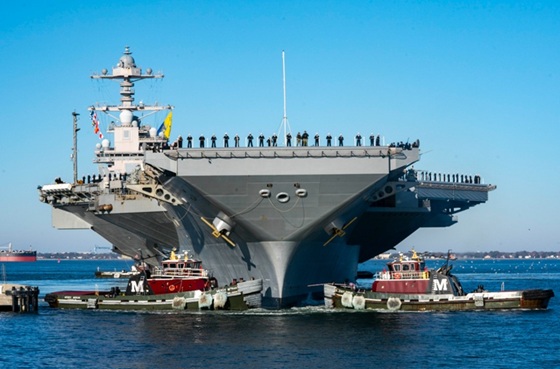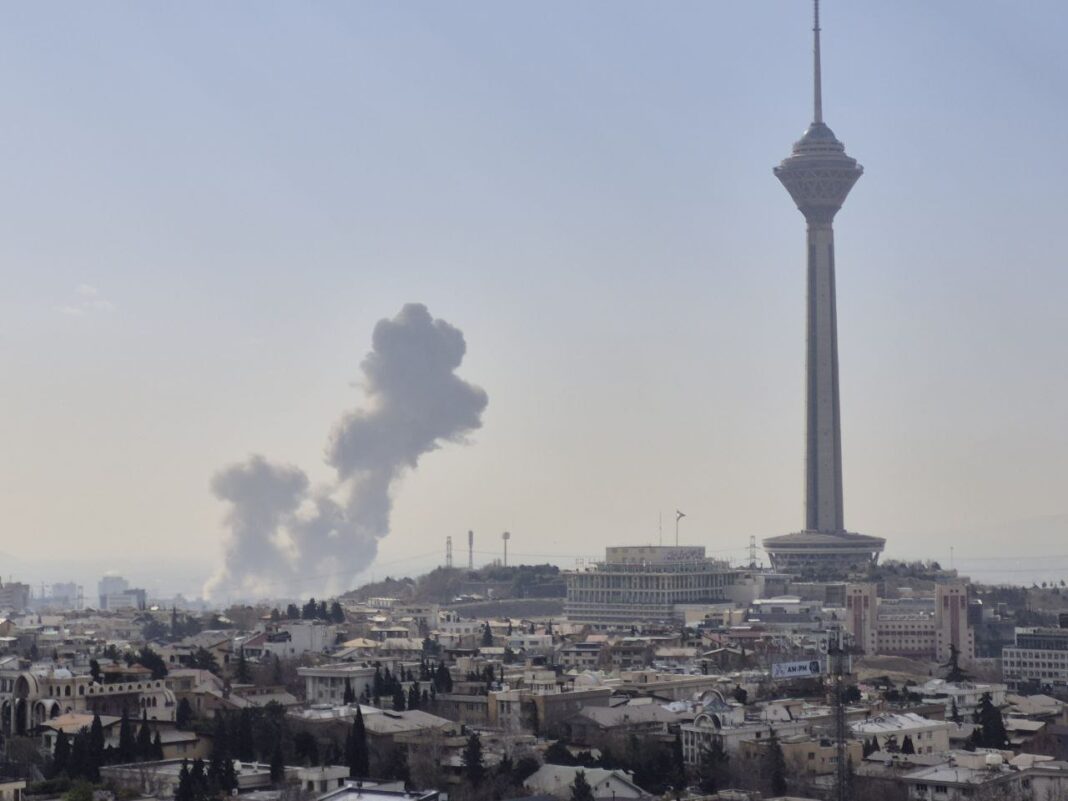
The United States’ declaration of war on Iran aimed at achieving regime change has drawn immediate comparisons to the 2003 Iraq invasion under President George W. Bush. However, while the echoes of Iraq are unmistakable, the strategy pursued by President Donald Trump differs in four significant ways.
This evolving crisis also places Iran and Israel at the center of an increasingly volatile Middle East confrontation.
1. No Attempt at UN Security Council Approval
Before launching the 2003 invasion of Iraq, the Bush administration sought backing from the United Nations Security Council, arguing that Iraq possessed weapons of mass destruction.
In contrast, Trump did not attempt to secure international authorization before initiating military operations against Iran. The absence of UN engagement signals a unilateral approach, potentially increasing diplomatic isolation and global criticism.
2. No Congressional Authorization Vote
In 2002, 77 US Senators voted to authorize military force against Iraq, while 23 voted against it. The Senate vote provided political legitimacy and bipartisan backing for Bush’s war effort.
This time, Trump did not seek a Senate vote prior to launching strikes. The lack of Congressional authorization raises constitutional and political questions about executive war powers and domestic support for prolonged military action.
3. A Much Smaller Coalition
The Iraq invasion was conducted by a broad international alliance known as the “Coalition of the Willing,” officially comprising 49 countries.
By contrast, the current military campaign appears limited primarily to US-Israel coordination. Israeli Prime Minister Benjamin Netanyahu has publicly supported regime change in Tehran and praised Trump’s leadership.
The narrower coalition may complicate long-term sustainability, burden-sharing, and international legitimacy.
4. Air Power Instead of Ground Troops
Perhaps the most significant operational difference lies in military deployment.
The Iraq invasion involved massive ground troop deployments aimed at occupying territory and dismantling Saddam Hussein’s regime. Trump has implied that the current strategy will rely primarily on air power.
Historically, air campaigns alone have rarely achieved full regime change without accompanying ground operations. Analysts warn that while airstrikes can degrade infrastructure, they often fail to decisively overthrow entrenched governments.
Trump’s Justification: Missiles and Nuclear Ambitions
In a video address, Trump described the operation as “massive and ongoing,” claiming Iran was developing long-range missiles capable of threatening Europe, US forces overseas, and eventually the American homeland.
However, intelligence sources cited in media reports indicate there is no current evidence that Iran possesses missiles capable of striking the United States. Iran does maintain short- and medium-range ballistic missile capabilities that threaten US forces and allies in the Middle East.
Trump also accused Tehran of rebuilding its nuclear program after prior US strikes that he previously claimed had destroyed nuclear facilities.
Israel’s Position: Regime Change as Strategic Goal
Netanyahu framed the joint US-Israel action as an opportunity for the Iranian people to overthrow what he described as a “murderous terrorist regime.” He called on Iranians to “cast off the yoke of tyranny” and pursue a free and peaceful future.
Israel is reportedly preparing for several days of sustained strikes, with the possibility of extending operations if necessary.
The alignment between Washington and Jerusalem underscores Israel’s longstanding security concerns regarding Iran’s nuclear program and regional proxy networks.
Regional Implications and Escalation Risks
The unfolding campaign carries significant risks:
- Retaliation against US troops in the Middle East
- Escalation through proxy groups
- Disruption of commercial shipping routes
- Broader regional destabilization
The strategic gamble appears to rest on the assumption that sustained airstrikes and political pressure could trigger internal regime collapse.
History, however, offers mixed lessons. The Iraq War led to prolonged insurgency, regional instability, and geopolitical consequences that continue to shape Middle Eastern politics more than two decades later.
Conclusion: A High-Stakes Gamble
While the rhetoric surrounding regime change in Iran recalls 2003, the execution strategy is markedly different: no UN approval, no Senate vote, a minimal coalition, and reliance on air power.
Whether this approach will achieve its stated objectives—or instead open a new chapter of regional conflict—remains uncertain. What is clear is that the stakes are extraordinarily high, not only for Iran and Israel, but for the global security order itself.