Modern air combat is no longer won through dramatic dogfights between fighter jets twisting through the sky.
The decisive moment increasingly happens Far beyond visual range (BVR) often before pilots even realize they are being targeted.
In this new battlespace, missiles—not maneuverability—define aerial advantage.
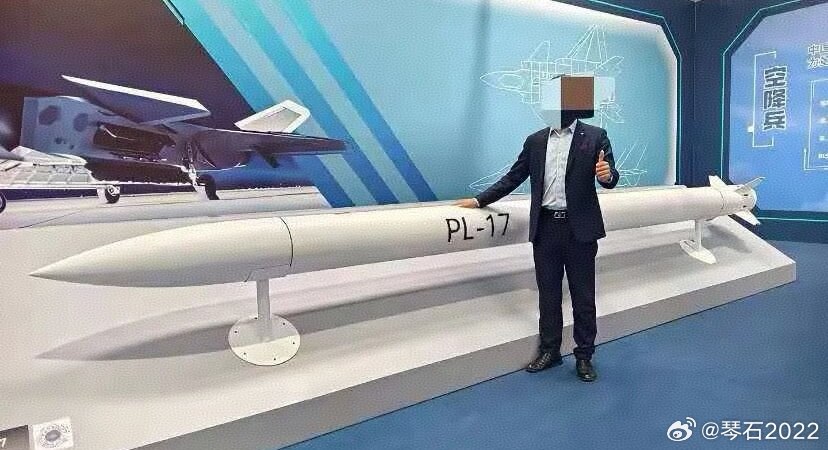
And few emerging weapons illustrate this shift more clearly than China’s PL-17, a missile increasingly viewed not as a fighter killer— but as A system killer.
Its mission is simple:
Destroy the aircraft that make modern air warfare possible.
Not frontline fighters.
But:
- Airborne early warning aircraft (AWACS)
- Refueling tankers
- ISR platforms
- Command-and-control aircraft.
In military terms “Kill the eyes and ears first.”
That doctrine could fundamentally reshape how the United States and its allies operate in contested airspace.
What Is China’s PL-17 Missile?
The PL-17 is a long-range air-to-air missile developed for the People’s Liberation Army Air Force (PLAAF).
Unlike conventional air-to-air missiles optimized for dogfighting or fighter interception, the PL-17 was reportedly designed specifically for:
High-value airborne targets
including:
✔ AWACS aircraft
✔ Tankers
✔ Reconnaissance aircraft
✔ Battle-management platforms.
The missile reportedly evolved from China’s broader missile family developed under:
Aviation Industry Corporation of China
building upon earlier systems such as:
PL-12
and:
PL-15.
Its goal is not merely range.
Its goal is:
Disruption of an entire combat system.
The Real Target Is Not Fighters — It’s Airpower Infrastructure
The United States fights wars differently than many militaries.
American airpower relies heavily on Force multipliers
Aircraft that enable combat rather than conduct it directly.
These include:
E-3 Sentry
AWACS planes.
KC-46 Pegasus
tankers.
ISR platforms.
Electronic warfare aircraft.
Without them:
American fighters become dramatically less effective.
That is where the PL-17 enters the equation.
Instead of trying to defeat stealth fighters directly,
China increasingly appears focused on Breaking the support architecture behind them.
How the PL-17 Changes Air Warfare
Traditional Model:
Tankers + AWACS → Fighters → Strike
PL-17 Strategy:
Destroy Tankers/AWACS → Fighters Lose Range & Awareness
This matters because:
Modern fighters do not fight alone.
They fight inside Networks and networks have vulnerabilities.
How the PL-17 Works
The missile reportedly prioritizes Extreme reach rather than close-range agility.
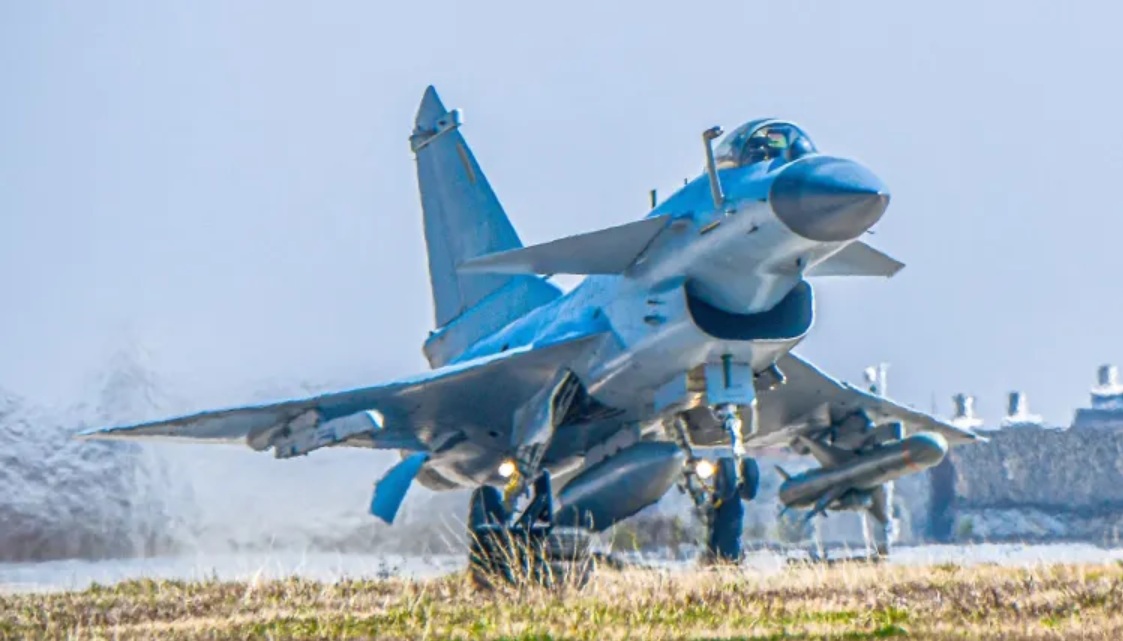
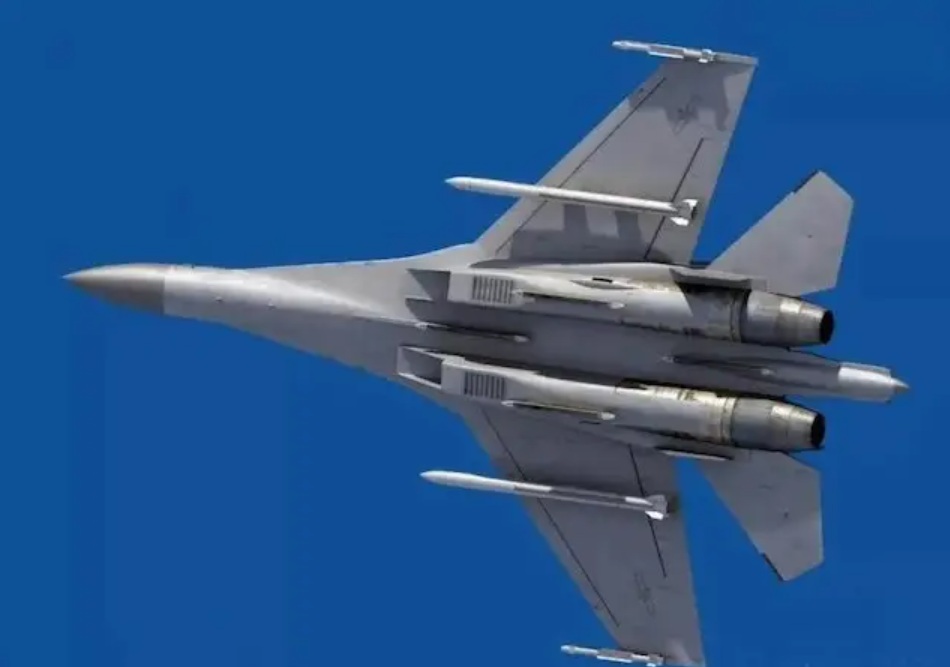
After launch from aircraft such as:
J-16
or potentially:
Chengdu J-20
the missile climbs to high altitude to reduce drag and extend range.
Analysts believe it uses:
- Inertial navigation
- Mid-course guidance updates
- Offboard targeting.
That means:
The launching aircraft may not need to maintain radar lock
throughout the engagement.
Instead:
Targeting data may come from:
- Satellites
- Drones
- AEW&C systems
- Other fighters
inside a larger Chinese kill chain.
In its terminal phase:
The missile activates onboard seekers to strike its target.
CHART: PL-17 vs AIM-120 vs AIM-260
| Missile | Country | Main Role | Estimated Range | Primary Target |
|---|---|---|---|---|
| PL-17 | China | Support aircraft killer | Very long range | Tankers, AWACS |
| AIM-120 AMRAAM | US | Multi-role BVR | Medium-long | Fighters |
| AIM-260 JATM | US | Next-gen BVR | Classified | Fighters + support |
The comparison highlights:
China and America increasingly think differently about air warfare.
The U.S. traditionally prioritizes:
Air superiority
China increasingly prioritizes:
Air denial.
The Taiwan Problem
The missile matters most in Taiwan Strait and the South China Sea.
Any conflict around Taiwan would depend heavily on US long-range airpower Fighters operating from:
- Guam
- Okinawa
- Japan
- Aircraft carriers
would rely extensively on Tanker aircraft to sustain combat operations.
But tankers cannot operate close to contested airspace.
The PL-17 worsens this challenge.
If China can push tankers Hundreds of kilometers farther back fighter endurance falls sharply.
The result:
Fewer sorties. Shorter time on station. Lower combat effectiveness.
That creates operational friction even without destroying many aircraft.
China’s A2/AD Strategy
The missile fits squarely into Beijing’s Anti-Access / Area Denial (A2/AD) strategy.
The goal is not necessarily:
Winning outright
Instead:
It seeks to make intervention:
Too costly, too difficult, or too risky.
China already fields:
- Anti-ship ballistic missiles
- Long-range SAM systems
- Electronic warfare capabilities
- Maritime denial systems.
The PL-17 extends that denial logic into The air domain.
China’s Layered A2/AD Bubble
Layer 1:
Ballistic anti-ship missiles
Layer 2:
Long-range surface-to-air systems
Layer 3:
Stealth fighters + PL-15
Layer 4:
PL-17 targeting support aircraft
Result:
Airpower becomes harder to sustain.
The PL-17’s Biggest Strength
The missile’s greatest advantage is:
Psychological and operational disruption
Even if only partly effective,
it forces adversaries to rethink:
- Flight routes
- Tanker locations
- AWACS positioning
- Refueling timing.
Military planning becomes more complicated.
And complication itself creates:
Deterrence value.
But There Are Limits
Despite concern,
the missile is not invincible.
Analysts identify several weaknesses.
1. Specialized mission
The PL-17 appears optimized for:
Large, slow-moving aircraft
not agile fighter jets.
2. Heavy dependence on targeting networks
Long-range missiles require:
Reliable sensor fusion
Without robust targeting,
range advantages diminish quickly.
3. Large physical size
Its large airframe limits stealth aircraft integration.
Internal carriage may remain difficult for some platforms.
4. Much remains unverified
Exact performance remains classified.
Many assessments rely on:
Open-source analysis.
How the US Could Respond
Washington is unlikely to ignore the threat.
Potential countermeasures include:
✔ More stealth tankers
✔ Distributed basing
✔ Longer-range fighters
✔ Electronic warfare
✔ Escort packages
✔ New missiles like:
AIM-260 JATM
The U.S. Air Force increasingly emphasizes:
Distributed combat operations
precisely because large centralized air architectures are becoming vulnerable.
Why the PL-17 Matters
The PL-17 matters because it reflects a larger truth:
Modern air combat is becoming systemic
Victory increasingly depends less on:
Who has the better fighter
and more on:
Who can destroy the network behind the fighter.
China appears increasingly focused on:
Crippling the enablers
of Western airpower.
That represents a major shift in military thinking.
Conclusion: The Future of Air Warfare Is About Systems, Not Dogfights
Much about the:
PL-17
remains secret.
Its exact range.
Its kill probability.
Its operational maturity.
But its intended purpose is already clear:
Hold the most valuable nodes of enemy airpower at risk.
If successful,
the missile could reshape:
- US Pacific operations
- Taiwan contingency planning
- Air refueling doctrine
- AWACS survivability.
The era when air superiority meant simply fielding better fighters may be fading.
Increasingly: