


For decades, military balance in South Asia was measured largely through:
- Fighter squadron numbers
- Pilot quality
- Missile inventories
- Combat aircraft procurement
That calculation is now changing rapidly.
The rise of AI-enabled fighter drones and Loyal Wingman aircraft is beginning to reshape how airpower is measured across the Indo-Pacific.
Increasingly, future air superiority may depend less on the number of pilots a country possesses and more on:
Autonomous combat ecosystems
built around:
- Artificial intelligence
- Sensor fusion
- Networked warfare
- Manned-Unmanned Teaming (MUM-T).
The growing strategic attention surrounding:
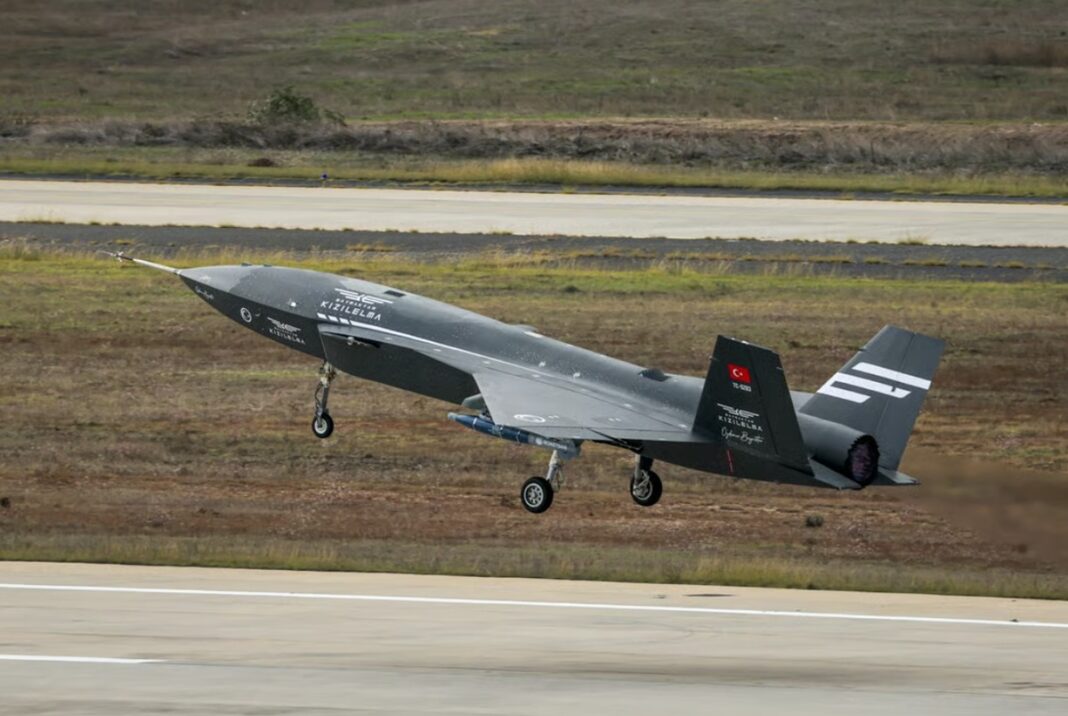
Bayraktar Kızılelma
and:
Boeing MQ-28 Ghost Bat
suggests South Asia may be entering the early stages of a new airpower competition centered on AI warfare rather than traditional fighter fleets.
Why the Pakistan Air Force’s Türkiye Visit Drew Attention
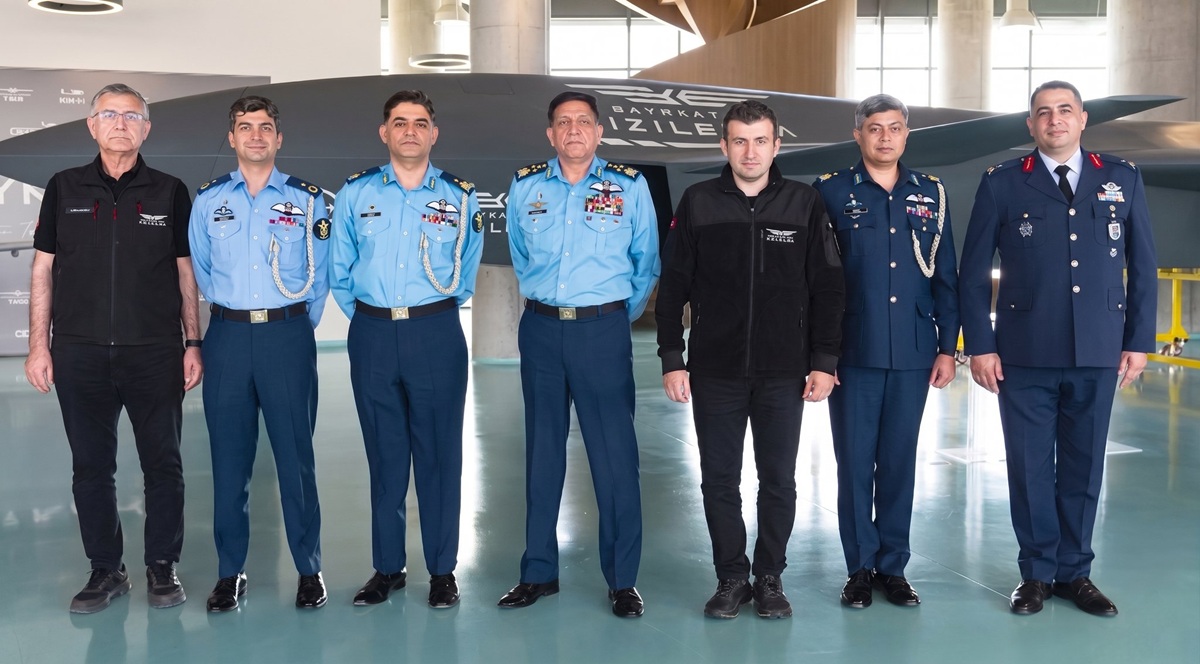
Pakistan Air Force Chief Air Marshal Zaheer Ahmed Baber Sidhu is currently on an Official Visit to Türkiye where He met with Turkish Air Force Commander General Ziya Cemal Kadıoglu and other Senior Officers.
The high-level talks focused on Strengthening Bilateral Defense Ties… pic.twitter.com/lww741ECKk
— Armed Forces Update (@ArmedUpdat1947) May 22, 2026
The appearance of Zaheer Ahmed Baber Sidhu alongside the Bayraktar Kızılelma during his recent Türkiye visit immediately triggered speculation across defense circles.
Military symbolism increasingly functions as Strategic signaling, particularly in defense diplomacy.
Meetings involving Ziya Cemal Kadıoğlu,Turkish Defense Minister, Yaşar Güler and Baykar CTO Selçuk Bayraktar, suggested discussions extending beyond ceremonial engagement.
Official messaging emphasized:
- Aerospace cooperation
- Emerging technologies
- Unmanned systems
But analysts increasingly viewed the visit as part of a broader shift toward:
AI-driven air combat architectures.
What Is the Bayraktar Kızılelma?
The Bayraktar Kızılelma is not a traditional UAV optimized only for surveillance or strike missions.
Instead, it increasingly resembles a Stealth-oriented autonomous combat aircraft designed specifically for:
- Contested airspace
- Manned-Unmanned Teaming
- Loyal Wingman operations.
The aircraft reportedly combines:
✔ AI-assisted autonomy
✔ High subsonic speed
✔ AESA radar integration
✔ Internal weapons bays
✔ Beyond-visual-range combat capability.
Its estimated 500 nautical mile combat radius and speeds approaching Mach 0.9 place it closer to fighter-like operational profiles than traditional drones.
The aircraft reportedly carries payloads approaching 1,500 kilograms allowing missions involving:
- Precision strike
- Electronic warfare
- Reconnaissance
- Air-to-air combat.
The Most Important Feature: Air-to-Air Combat Capability
Perhaps the most strategically significant feature of Bayraktar Kızılelma is its reported ability to carry Gökdoğan air-to-air missiles.
The Gökdoğan uses active radar guidance technology conceptually comparable to Western AIM-120 AMRAAM systems.
Reported engagement ranges exceeding 65 kilometers give the drone meaningful beyond-visual-range capability.
That matters because most UCAV programs historically focused on Strike missions rather than autonomous aerial combat.
The Kızılelma increasingly blurs that distinction.
A November 2025 test reportedly demonstrated successful engagement of a jet-powered target drone using beyond-visual-range missile technology.
That milestone drew major attention because it suggested autonomous combat aircraft may soon participate directly in air superiority missions.
Pakistan’s Strategic Interest Goes Beyond Procurement
Analysts increasingly believe Pakistan’s interest in Turkish systems involves more than acquiring another aircraft platform.
Instead, Islamabad may be seeking entry into a broader AI warfare ecosystem.
Pakistan and Türkiye already maintain close cooperation involving:
- UAV development
- Defense exports
- Aerospace collaboration.
Defense analysts increasingly speculate about potential Local assembly or co-production arrangements which could strengthen Pakistan’s long-term defense autonomy and wartime resilience.
Pakistan Air Force doctrine already includes growing exposure to:
Manned-Unmanned Teaming (MUM-T)
through Turkish and Chinese systems.
That may provide doctrinal advantages as future combat operations increasingly integrate autonomous aircraft alongside manned fighters.
India Is Moving in the Same Direction
India is simultaneously exploring its own:
Collaborative Combat Aircraft
future.
Indian military engagement with:
Boeing MQ-28 Ghost Bat
has accelerated through India-Australia defense consultations focused on:
- AI warfare
- Collaborative combat systems
- Autonomous aircraft integration.
The:
Boeing MQ-28 Ghost Bat
developed with Australian participation,
is designed around:
Western coalition warfare architectures
particularly integration with:
- F-35 fighters
- F/A-18 aircraft
- NATO-style networked operations.
Unlike the Turkish design philosophy emphasizing fighter-like aggressiveness,
the MQ-28 prioritizes:
✔ Endurance
✔ Sensor fusion
✔ Electronic warfare
✔ Distributed ISR.
Its modular architecture allows rapid reconfiguration depending on mission requirements.
Kızılelma vs MQ-28: Two Different Philosophies
| Capability | Bayraktar Kızılelma | Boeing MQ-28 Ghost Bat |
|---|---|---|
| Primary Philosophy | Fighter-style UCAV | Collaborative ISR wingman |
| Air-to-Air Missiles | 2× Gökdoğan BVR missiles | 1× AIM-120 demonstrated |
| Speed | Near Mach 0.9 | Lower emphasis on speed |
| Weapons Bays | Internal bays | Future Block-3 internal bays |
| Operational Focus | Autonomous combat | Networked support |
| Ecosystem | Turkish / emerging powers | Western coalition systems |
The competition increasingly reflects:
A clash of military ecosystems
not simply aircraft specifications.
Why This Matters for South Asia
South Asia’s military balance may increasingly depend upon:
AI-enabled force multiplication
rather than traditional fighter inventories alone.
Autonomous combat aircraft could provide:
✔ Additional combat mass
✔ Lower operational costs
✔ Reduced pilot exposure
✔ Distributed combat capability.
This matters especially because both:
Pakistan
and:
India
face budgetary and manpower limitations relative to larger powers such as:
China.
AI combat aircraft potentially offer ways to expand combat capability without proportionally expanding pilot pipelines or expensive fighter fleets.
The Bigger Indo-Pacific Picture
The rivalry also fits into a broader geopolitical shift.
The future market for:
Loyal Wingman aircraft
may become one of the most important defense competitions of the next decade.
Unlike traditional fighter exports,
AI combat aircraft create:
- Long-term software dependencies
- Logistics ecosystems
- Sensor integration networks
- Strategic partnerships.
Countries purchasing autonomous combat aircraft may effectively join broader:
Military technology ecosystems
for decades.
That gives the competition strategic significance extending far beyond South Asia.
Conclusion: South Asia’s Next Arms Race May Be About AI
Neither Pakistan nor India currently has confirmed procurement deals involving these systems.
Much remains uncertain regarding:
- Deployment timelines
- Industrial participation
- Operational doctrine
- AI integration.
But one reality is increasingly clear:
South Asia’s next airpower competition may involve AI ecosystems as much as fighter aircraft.
The rise of systems like:
Bayraktar Kızılelma
and:
Boeing MQ-28 Ghost Bat
signals a transition toward a new era where:
- Pilots work alongside autonomous drones
- AI supports combat decision-making
- Sensor fusion outweighs aircraft numbers.
The future balance of airpower in the Indo-Pacific may increasingly depend not only on who possesses the best fighters—
but on:


