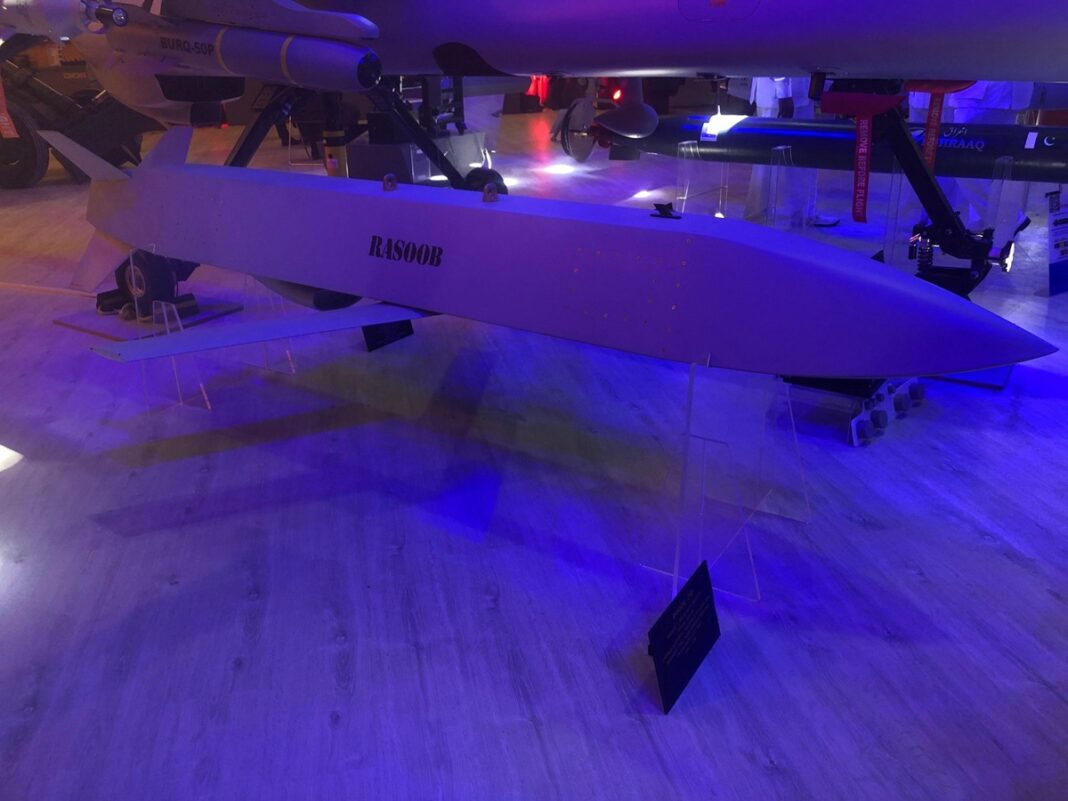
Pakistan’s unveiling of the Rasoob-250 at the IDEAS 2024 defence exhibition in Karachi marked more than the debut of another indigenous missile system.
The lightweight cruise missile reflects a broader shift underway in military planning, where survivability, precision and distributed operations are increasingly valued over larger warheads and concentrated strike platforms. Analysts say the missile could signal how Pakistan intends to adapt its conventional deterrence posture to a rapidly evolving battlefield environment.
RASOOB – INSIDE THE ENEMY HEART#GIDS unveiled the Rasoob-250 advanced air-launched cruise missile at IDEAS 2024. It features a stealth design and can be deployed from UAVs, helicopters, and maritime patrol aircraft. With a range of 250 km, a 75 kg warhead, a cruising speed of… pic.twitter.com/QZ0ppTn9Lz
— International Defence Analysis (@Defence_IDA) November 20, 2024
Developed by:
Global Industrial Defence Solutions
(GIDS), with likely engineering involvement from Pakistan’s:
Air Weapons Complex
under the:
National Engineering and Scientific Commission
framework, the missile remains under development through mid-2026 despite growing discussion surrounding near-term operational deployment.
Unlike larger Pakistani cruise missile systems often associated with strategic deterrence, the Rasoob-250 has been positioned primarily as a conventional precision-strike weapon emphasizing low observability, broad platform compatibility and stand-off engagement capability. Analysts increasingly view its significance less through traditional missile metrics centered on warhead size and more through concepts of:
anti-access and area denial (A2/AD)
and distributed warfare.
Smaller Missile, Different Logic
The Rasoob-250 reportedly weighs around:
285 kilograms
including its booster package, while analysts believe the “250” designation likely refers to its baseline weight category before launch augmentation systems are incorporated.
Rather than prioritizing destructive mass, the missile reportedly carries a:
75-kilogram semi-armour-piercing warhead
optimized for precision engagement against selected infrastructure and surface targets. That approach mirrors broader trends in military planning, where precision and survivability increasingly outweigh payload size in shaping battlefield outcomes.
Its reported operational range of:
350 kilometres
extends significantly beyond earlier assessments suggesting closer to 250 kilometres and is increasingly treated by analysts as the likely intended combat performance threshold.
The missile reportedly flies at approximately:
Mach 0.7
using low-altitude terrain-following and sea-skimming profiles designed to complicate radar detection and reduce reaction windows for air-defence systems.
Pakistan claims accuracy below:
five metres circular error probable
suggesting advanced guidance integration potentially involving inertial navigation, satellite positioning and terrain-following technologies. Although propulsion details remain undisclosed, analysts believe a compact turbojet derivative developed by Pakistan’s missile industry may power the system while preserving dimensional flexibility for multiple launch platforms.
Stealth Over Speed
Perhaps the missile’s most consequential feature is its apparent emphasis on:
low observability
rather than speed.
Its compact dimensions, angular shaping and reported use of composite materials indicate deliberate efforts to reduce radar cross-section compared with larger cruise missile systems already in Pakistan’s inventory. The missile’s X-tail design resembles elements of Pakistan’s:
Ra’ad-II
and:
Taimoor
suggesting an evolutionary design approach rather than an entirely new engineering pathway.
Military analysts caution that stealth should not be interpreted as invisibility.
Instead, reduced observability compresses defensive reaction timelines, particularly during terminal attack phases.
Against maritime targets, sea-skimming flight paths combined with radar horizon limitations can significantly complicate interception efforts, particularly for naval formations dependent on layered air-defence systems and rapid reaction timing. Even small delays in target identification can reduce interception probabilities.
Part of a Broader Shift in Warfare
The Rasoob-250’s emergence reflects wider military lessons emerging from conflicts in:
Ukraine
and the Middle East, where relatively inexpensive precision-guided munitions have often generated disproportionate operational effects.
Military organizations increasingly seek compact precision systems deployable from numerous launch platforms to complicate adversary targeting cycles and reduce dependence on vulnerable, high-value strike aircraft operating near contested airspace.
Pakistan appears to be pursuing a similar model.
The missile’s relatively small logistical footprint may enable broader geographic dispersion, simplified storage and lower transportation burdens compared with larger stand-off weapons. Within dispersed warfare concepts, such systems allow commanders to sustain strike capability without concentrating offensive power in a limited number of expensive frontline platforms.
Designed for Multiple Platforms
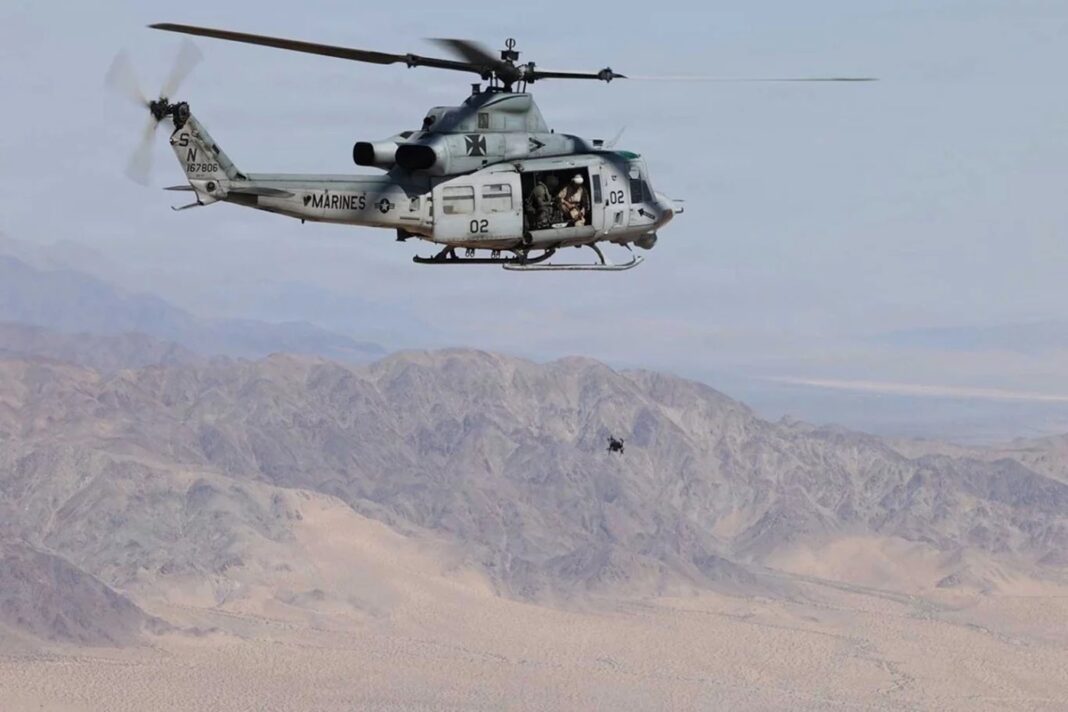
One of the Rasoob-250’s more significant characteristics is its intended compatibility across multiple launch systems.
Pakistani planners have signalled ambitions to deploy the missile across:
- Unmanned aerial systems
- Maritime patrol aircraft
- Helicopters
- Traditional fighter platforms
Potential platforms include:
Shahpar III
alongside maritime patrol aircraft such as:
Sea Eagle
and:
Sea Sultan.
Analysts also point to potential future integration aboard:
JF-17 Thunder
and even internal carriage possibilities on future low-observable fighter aircraft such as:
Shenyang J-35
if acquired by Pakistan.
Such flexibility would disperse precision strike capability across numerous platforms rather than concentrating offensive capacity inside a small number of elite combat aircraft, potentially complicating adversary operational planning.
Arabian Sea Implications
The missile also carries potential implications for security dynamics in the:
Arabian Sea
where Pakistan increasingly appears to frame maritime deterrence through anti-access and area-denial concepts.
Analysts suggest the missile’s stealth-oriented profile and sea-skimming flight behavior could increase operational risk calculations for naval forces operating near Pakistani waters, particularly if integrated into broader surveillance and targeting networks.
This does not fundamentally alter the regional naval balance.
India continues to maintain significant advantages across fleet size, naval aviation and maritime force projection.
However, military planners note that even modest tactical shifts can generate disproportionate planning consequences because commanders must account for increasingly diverse threat vectors and compressed reaction windows.
In that sense, the Rasoob-250 may function less as a revolutionary weapon and more as a:
planning disruptor
introducing additional uncertainty into maritime operating environments.
Export Ambitions and Strategic Questions
Pakistan positions the Rasoob-250 as its third principal air-launched cruise missile family after the strategic:
Ra’ad
program and export-oriented:
Taimoor.
Its debut at IDEAS 2024 also suggests ambitions beyond domestic military use.
Analysts say the missile could eventually support Pakistan’s broader defence-industrial diplomacy goals, particularly among countries seeking lower-cost precision strike systems without reliance on expensive Western procurement ecosystems.
Yet important questions remain.
The missile continues developmental testing, and its eventual operational impact will depend on:
- Production scale
- Platform integration
- Targeting and ISR networks
- Deployment doctrine
- Regional countermeasures.
For now, analysts increasingly view the Rasoob-250 not as a strategic revolution, but as an incremental — though potentially important — shift toward cheaper, stealthier and more operationally dispersed precision warfare capabilities that could reshape future military calculations in and around the Arabian Sea.