The deployment of the 31st Marine Expeditionary Unit (MEU) toward the Persian Gulf has sparked intense discussion among military analysts about the possibility of a US operation targeting Kharg Island, Iran’s primary oil export hub.
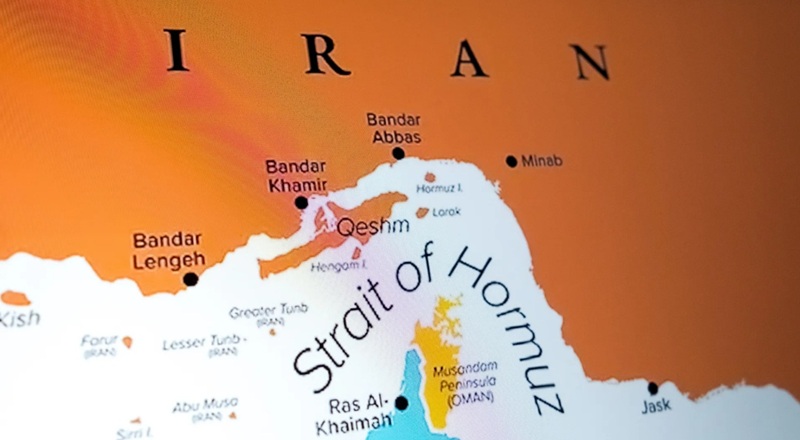
However, operational realities suggest that such an assault would face significant challenges, particularly with the Strait of Hormuz currently closed to military navigation.
USS Tripoli and the Limits of Amphibious Assault
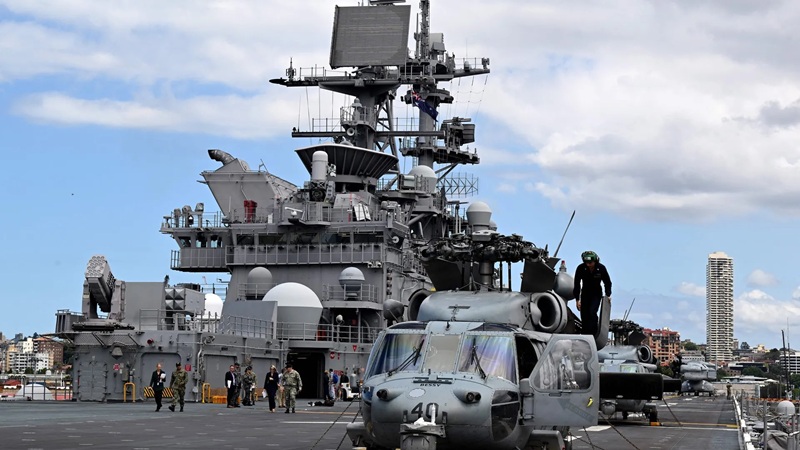
The USS Tripoli, an America-class amphibious assault ship carrying the embarked 31st MEU, is one of the most powerful amphibious platforms in the US Navy.
Yet despite its capabilities, the vessel cannot easily approach Kharg Island under current conditions.
With the Strait of Hormuz closed and Iranian missile threats covering large portions of the Gulf, attempting to move large amphibious ships into the region would expose them to significant risk.
Modern anti-ship missiles, drones, and coastal defense systems have dramatically changed the operational environment in the Persian Gulf.
Warnings From Marine Corps Doctrine
The vulnerability of large naval platforms in contested environments was highlighted by former Marine Corps Commandant General David Berger in his 2019 Commandant’s Planning Guidance.
Berger warned that long-range precision weapons and expanding maritime threats were increasingly challenging the United States’ ability to project power from large amphibious ships.
He noted that concentrating forces aboard a small number of major vessels could make them attractive targets during high-intensity conflicts.
The warning emphasized the need for distributed operations and flexible deployment strategies rather than relying solely on traditional amphibious assaults.
A Possible Air Assault Scenario
If US Marines were tasked with seizing Kharg Island, analysts suggest the operation would likely need to be launched from land bases rather than from the sea.
Under such a scenario, Marine units and their MV-22 Osprey tilt-rotor aircraft could deploy to regional bases in Kuwait or Bahrain.
From there, Marines could conduct an airborne assault onto the island.
However, both Kuwait and Bahrain have recently faced Iranian missile and drone attacks, adding further risk to such an operation.
Historical Lessons: The Battle of Koh Tang
Military observers have compared the potential operation to the 1975 Battle of Koh Tang in the Gulf of Thailand.
In that mission, US Marines attempted a helicopter assault to rescue American merchant sailors captured by the Khmer Rouge.
The operation quickly turned into a deadly confrontation when Marines encountered heavily entrenched enemy forces.
During the initial landing, three helicopters were shot down and five others damaged, severely complicating the assault.
By the end of the operation, 38 Marines and US Air Force personnel were killed, with additional casualties during the extraction phase.
Three Marines were mistakenly left behind during the chaotic withdrawal and were later captured and executed.
The battle remains one of the most costly helicopter assault operations in modern Marine Corps history.
Risks of a Kharg Island Assault
Analysts warn that an assault on Kharg Island could face similar or even greater challenges.
Iran has heavily fortified its strategic oil infrastructure and surrounding islands with air-defense systems, anti-ship missiles, and drone capabilities.
A large-scale Marine landing under these conditions would likely encounter strong resistance and could expose aircraft and troop transports to significant losses.
Strategic Debate in Washington
The possibility of such an operation has revived debates within US military circles about the role of amphibious forces in modern high-threat environments.
Some observers have questioned whether traditional doctrines still apply in an era where adversaries possess advanced missile and drone capabilities.
Historical precedent also shows that military leaders have sometimes challenged operational plans before major conflicts.
During the lead-up to the 1991 Gulf War, then-Marine Corps Commandant General Al Gray reportedly formed a planning group to review operational concepts related to the liberation of Kuwait.
Uncertain Path Ahead
As tensions between the United States and Iran continue to escalate, the movement of the 31st MEU into the region is likely to remain closely watched.
Whether the deployment is intended as a deterrent, a contingency force, or preparation for potential operations remains unclear.
What is certain is that any attempt to seize Kharg Island would involve significant operational risks in one of the most heavily defended maritime regions in the world.