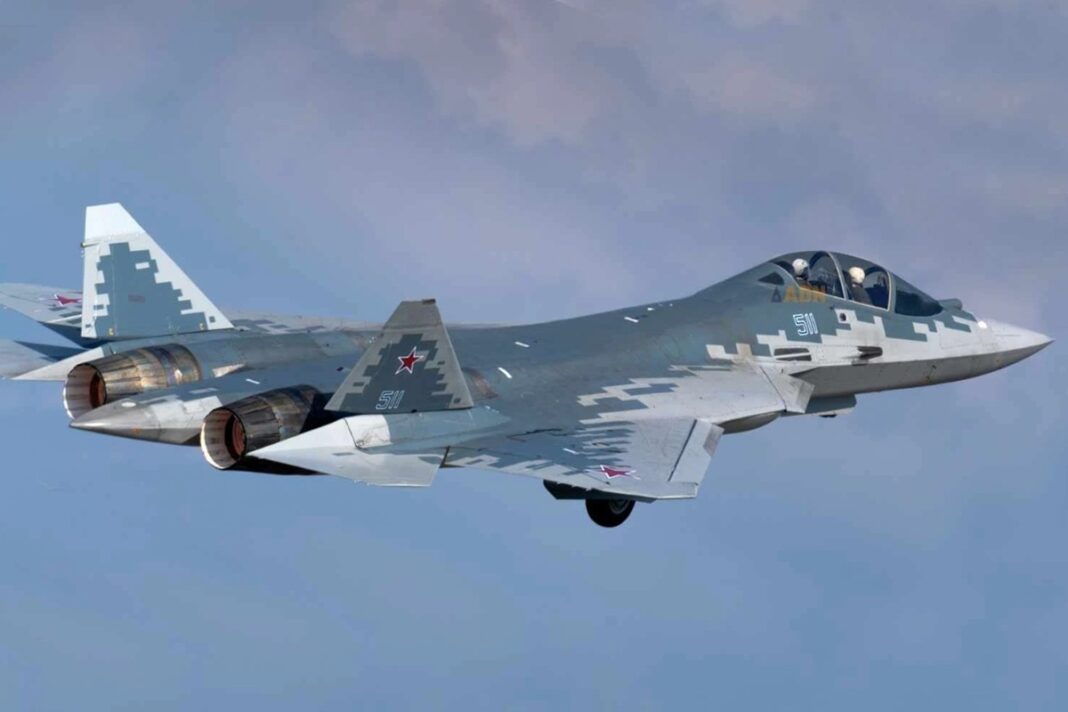
Russia’s most advanced combat aircraft, the Sukhoi Su-57 is increasingly being used in Ukraine — but not in the way many expected.
Rather than penetrating heavily defended Ukrainian airspace in classic stealth-fighter fashion, the aircraft is reportedly launching Kh-59 missile and Kh-69 missile from protected positions hundreds of kilometers behind the frontline.
The reported pattern suggests Moscow is adopting a cautious but strategically important doctrine:
Using the Su-57 as a protected standoff strike platform rather than risking it in deep-penetration combat.
Ukraine Says Su-57 Activity Is Increasing
🇷🇺🇺🇦RUSSIA Deploys Su-57 Stealth Fighters For High-Tempo Operations Across the Ukrainian Frontlines as Fleet Slowly Expands in 2026″
The Russian Aerospace Forces were reported on March 29 by multiple Western and Ukrainain sources to have deployed Su-57 fifth generation fighter… pic.twitter.com/maykD3hWdI
— Global Surveillance (@Globalsurv) May 29, 2026
According to Ukrainian Air Force communications and air-monitoring channels released in May 2026, Russia has increased Su-57 operations linked to long-range cruise missile attacks.
A strike on Dnipro on May 3 reportedly involved Su-34 and Su-57 aircraft launching Kh-59 missile and Kh-69 missile systems.
Subsequent Ukrainian monitoring alerts suggested continued activity originating from:
- Kursk region
- Azov Sea area near Mariupol
- Crimea.
Russia has not officially confirmed the operations, meaning much of the reporting remains based on Ukrainian military communications and open-source monitoring.
Still, analysts say the pattern appears increasingly consistent.
Why Russia Is Keeping the Su-57 Far From the Front
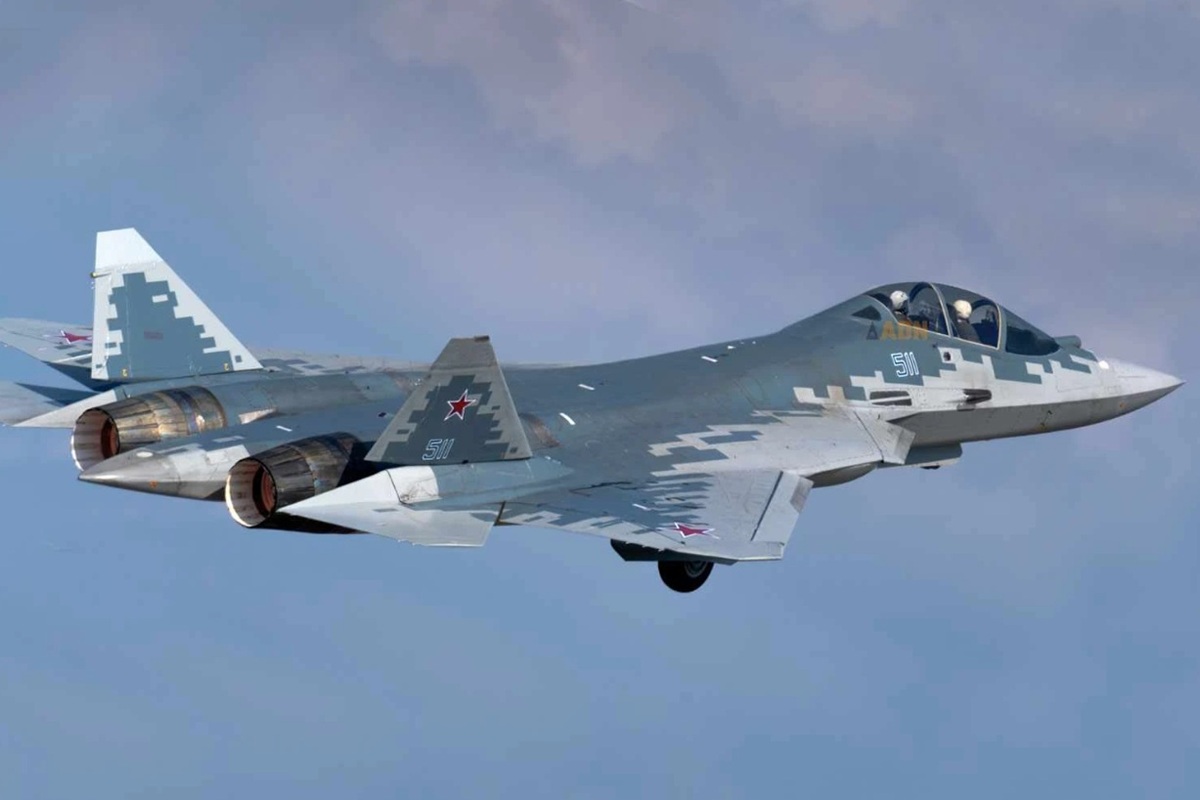
The reported launch geometry explains much about Moscow’s strategy.
According to Ukrainian monitoring, Su-57 aircraft are often operating:
200–400 kilometers behind the frontline
inside Russian or Russian-controlled airspace.
That places them:
Well beyond the engagement range
of most Ukrainian:
- Patriot systems
- NASAMS batteries
- Urban air-defense networks.
In practice, Russia appears to be maximizing:
Aircraft survivability
while still delivering precision strike capability.
The formula is straightforward:
Distance + precision missiles = reduced risk.
Rather than exposing a scarce fifth-generation aircraft to interception, Russia lets missiles penetrate contested airspace instead.
The Su-57 Is Becoming a Missile Truck — Not a Penetration Fighter
Traditionally, stealth fighters are designed to:
Penetrate enemy air defenses directly.
Aircraft like the:
F-35 Lightning II
or:
F-22 Raptor
are built around entering highly contested airspace.
But Russia appears to be employing the:
Su-57
differently.
Instead of deep penetration,
the fighter increasingly functions as:
A protected standoff missile launcher
inside a wider reconnaissance-strike network.
That network reportedly integrates:
✔ Sensors
✔ Command links
✔ Electronic warfare
✔ Missile routing
✔ Reconnaissance data.
The aircraft becomes:
A node in a larger strike architecture
rather than acting alone.
Why the Kh-69 Missile Matters
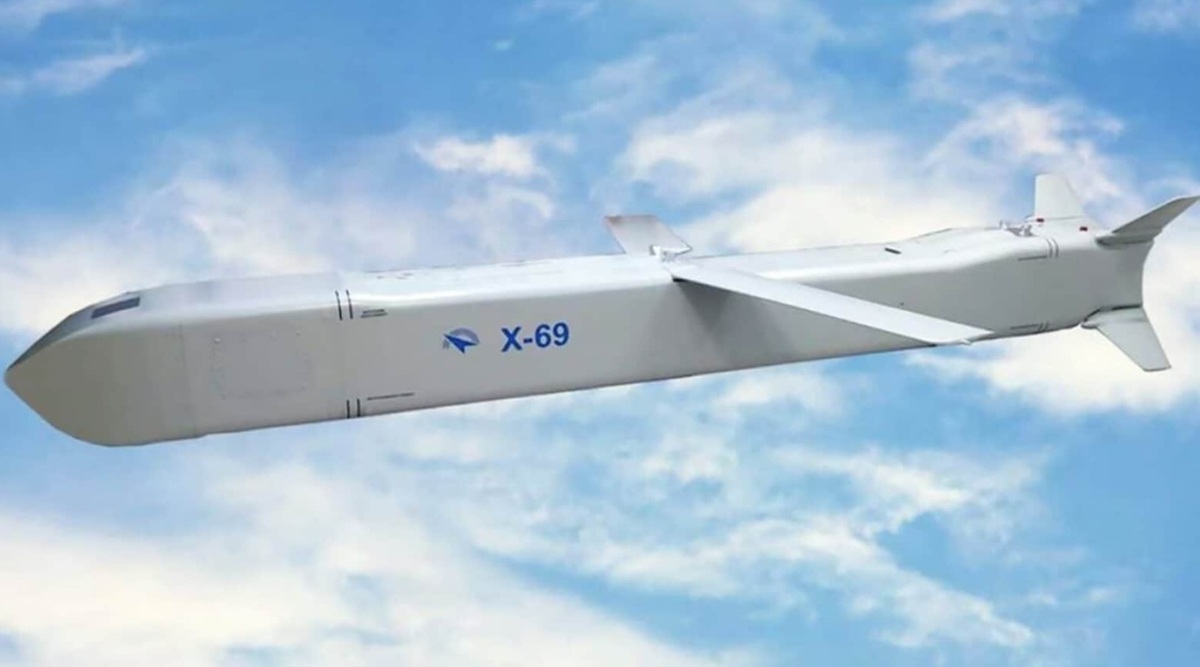
The key weapon enabling this doctrine may be the:
Kh-69 missile.
Unlike older cruise missiles,
the:
Kh-69
was reportedly designed to fit internally inside the:
Su-57,
helping preserve radar signature reduction.
Russian sources typically estimate:
400 km range
for domestic variants,
while export figures suggest approximately:
290 km.
The missile reportedly combines:
✔ Low-altitude flight profiles
✔ Reduced radar signature
✔ Precision guidance systems
✔ Internal-carriage compatibility.
That makes it particularly suited for:
Protected standoff warfare.
Instead of risking the fighter,
Russia sends the missile deep into contested airspace.
How Russia’s Su-57 Strike Model Works
Step 1:
Su-57 remains inside Russian-controlled airspace.
Step 2:
Aircraft launches:
Kh-69 missile
or:
Kh-59 missile
from safe range.
Step 3:
Missiles fly low-altitude routes toward targets.
Step 4:
Ukraine’s air defenses intercept incoming weapons —
not necessarily the launch aircraft.
This shifts the burden of defense toward:
Breaking the kill chain
rather than destroying the fighter itself.
Ukraine Faces a Difficult Operational Problem
For:
Ukraine,
the challenge is not only detecting the aircraft.
The bigger problem is:
The missile after launch.
Cruise missiles flying:
- Low altitude
- Complex routes
- Short warning windows
create difficult interception conditions.
This becomes even harder when combined with:
- Drones
- Decoys
- Ballistic missiles
- Multiple simultaneous attacks.
Ukraine has repeatedly intercepted advanced Russian weapons.
But standoff launch tactics increasingly compress reaction time.
Why Russia Is Being Extremely Careful With the Su-57
The Su-57
remains a Limited and politically sensitive asset for Moscow.
Unlike the:
Su-35S,
Su-34
or:
Su-30SM
the Su-57 fleet remains relatively small.
A confirmed combat loss would carry:
Military + political + symbolic costs
for the Kremlin.
That likely explains why wartime employment appears:
Selective and highly risk-managed.
By keeping the aircraft behind the frontline,
Russia can:
✔ Demonstrate operational use
✔ Test weapons integration
✔ Preserve the platform
✔ Avoid catastrophic losses.
The Bigger Goal: Russia’s Future Networked Air War
Perhaps the most important insight lies in what this says about:
Russia’s future doctrine.
The Su-57 increasingly appears designed not simply as:
A fighter aircraft
but as:
A command-and-control node inside a networked strike system.
Russian reporting increasingly points toward development of:
Su-57D
which may eventually coordinate:
- Combat aircraft
- Drones
- Cruise missiles
- Electronic warfare systems.
That could shift Russian airpower toward:
Distributed, networked warfare
rather than traditional fighter-centric combat.
Conclusion: The Su-57’s Real Role in Ukraine Is Becoming Clear
The Ukraine war is increasingly revealing something unexpected:
Russia is not treating the Su-57 like a classic stealth fighter.
Instead,
Moscow appears to be using it as:
A protected precision-strike platform
designed to launch long-range weapons from relative safety.
The aircraft’s greatest value may not lie in penetrating enemy airspace —
but in enabling:
A broader reconnaissance-strike ecosystem
that combines missiles,
sensors,
electronic warfare
and protected launch corridors.
If this pattern continues,
the Su-57’s most important contribution to the Ukraine war may not be stealth alone —
but what it reveals about: