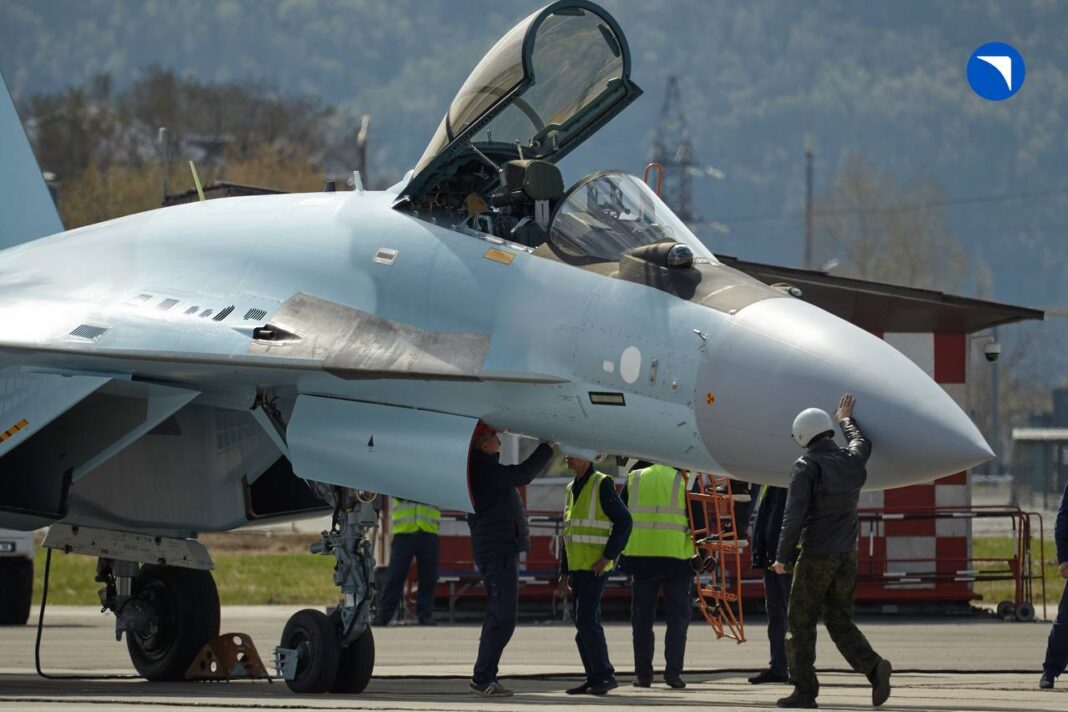
Russia’s latest delivery of Sukhoi Su-35S fighters may appear modest on the surface.
But strategically, the transfer highlights something increasingly decisive in modern warfare:
Industrial endurance is becoming as important as battlefield maneuver itself.
The announcement by United Aircraft Corporation (UAC) marked the second publicly confirmed Su-35S delivery to the Russian Aerospace Forces in 2026.
⚡🇷🇺 Russia receives new Su-35 fighter jets
Rostec has delivered a new batch of Su-35 multirole fighter jets to the Russian military, boosting its air combat capability.
The aircraft are designed for air superiority and precision strike missions. pic.twitter.com/6l6cWhwrPu
— Defence Index (@Defence_Index) May 26, 2026
But the deeper significance lies less in the number of aircraft delivered — and more in what the deliveries reveal about:
Russia’s ability to sustain combat aviation production during prolonged war.
The Ukraine War Is Becoming an Industrial War
The Russia-Ukraine War has increasingly evolved into:
A competition of industrial regeneration as much as military tactics.
Attrition in modern high-intensity warfare can rapidly degrade combat power unless states possess the industrial capacity to:
- Replace losses
- Sustain output
- Preserve operational tempo.
Russia’s latest:
Su-35S
transfer suggests Moscow increasingly views manufacturing continuity itself as a strategic weapon.
Despite sanctions, supply-chain disruptions and wartime economic strain, Russia appears determined to preserve tactical aviation regeneration as a central pillar of long-term military strategy.
What the Latest Su-35 Deliveries Reveal
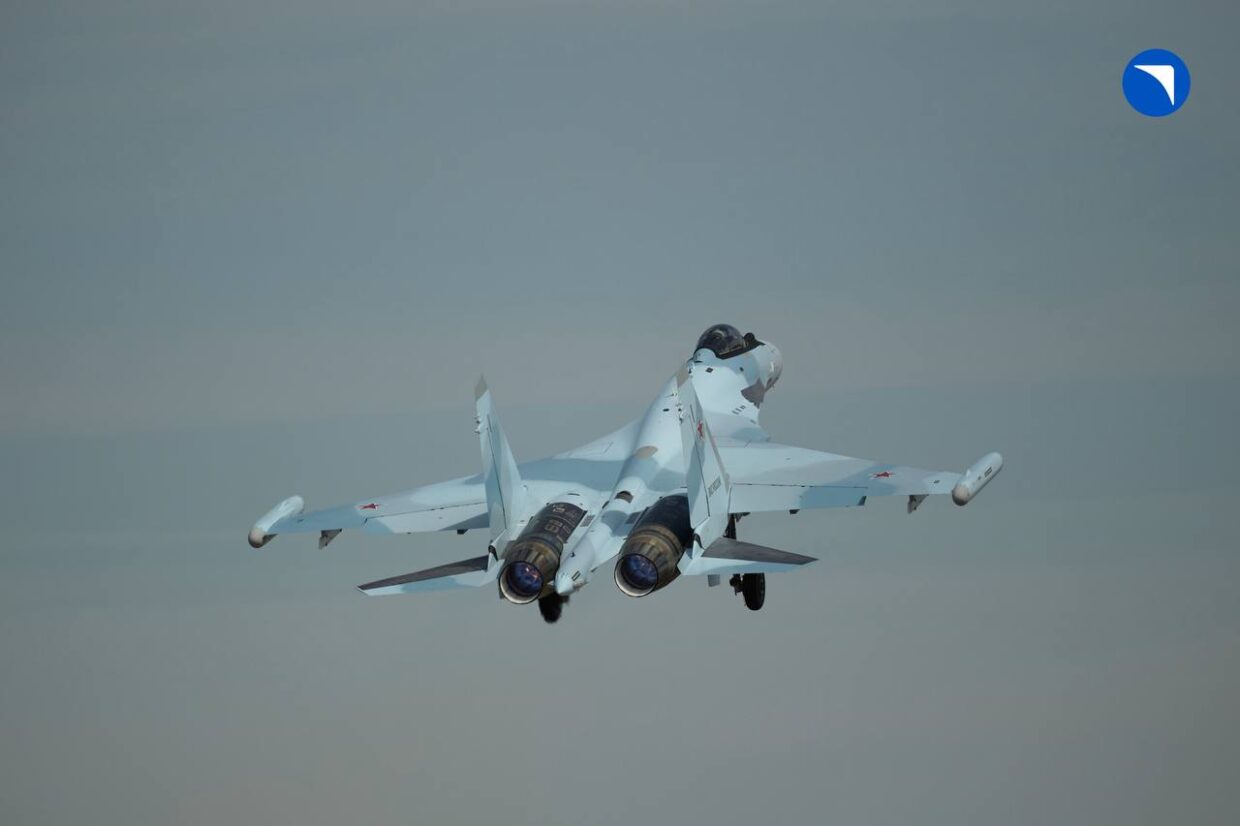
According to United Aircraft Corporation the aircraft completed:
- Full factory testing
- Ministry of Defense operational evaluations
before transfer.
That matters because it suggests Russia is attempting to Maintain combat-readiness standards even while accelerating wartime production cycles.
Moscow also continues withholding exact delivery numbers —a pattern analysts increasingly view as deliberate wartime information management.
Rather than simply protecting operational security, delivery opacity may now function as a strategic ambiguity tool designed to complicate Western intelligence assessments regarding:
- Fleet regeneration
- Attrition replacement
- Operational availability.
Russia’s Fighter Production Appears to Be Accelerating
Available production estimates suggest Su-35S output has risen significantly during the war.
Assessments cited in the draft indicate:
- 2025 may have been a record production year
- Seven documented delivery batches occurred in 2025
- Approximately 17–20 aircraft may have been transferred
- Production may have doubled compared to earlier post-Soviet rates.
By comparison, Russia reportedly produced around:
15 Su-35 aircraft during 2024
with lower visibility surrounding deliveries.
The appearance of two confirmed batches within the first five months of 2026 suggests Moscow has preserved industrial tempo despite prolonged wartime pressures.
CHART: Russia’s Estimated Su-35 Production Trend
| Year | Estimated Output Trend |
|---|---|
| Pre-2022 | Lower post-Soviet production tempo |
| 2024 | ~15 aircraft reportedly produced |
| 2025 | ~17–20 aircraft, record visible output |
| 2026 | Production rhythm continuing |
The trend suggests Russia increasingly views:
Combat aviation regeneration
as essential for sustaining long-duration conflict.
Why Industrial Capacity Matters More Than Ever
Modern warfare increasingly punishes states unable to regenerate combat losses quickly.
Historically, airpower can deteriorate rapidly once Replacement rates fall below attrition rates.
Russia appears increasingly focused on preventing exactly that scenario.
Open-source estimates suggest Russia has lost at least Seven to eight Su-35 aircraft during operations in Ukraine, although Ukrainian claims remain substantially higher.
But analysts increasingly argue the key issue is not total losses — it is whether Russia can replace losses faster than combat operations degrade fleet strength.
That calculation increasingly defines wartime endurance.
The Strategic Risk: One Factory, One Dependency
The Komsomolsk-on-Amur Aircraft Plant (KnAAZ) remains central to Russia’s fighter production ecosystem.
The concentration improves manufacturing efficiency — but also creates strategic vulnerability.
A major disruption at KnAAZ could impact:
- Su-35 production
- Tactical aviation modernization
- Wartime regeneration cycles.
Even a reported fire at part of the facility in April 2026 reportedly failed to significantly disrupt output, suggesting Russia has strengthened industrial resilience mechanisms during wartime.
Why the Su-35 Still Matters in the Drone Era
Despite enormous global attention surrounding:
- Drones
- Autonomous systems
- Missile warfare
Russia continues investing heavily in tactical aviation.
That reveals an important reality:
Conventional combat aircraft still matter in high-intensity war.
The Su-35S remains one of Russia’s most capable tactical aviation platforms.
The aircraft reportedly features:
✔ Twin AL-41F1S thrust-vectoring engines
✔ Speeds exceeding Mach 2.25
✔ Combat radius beyond 1,600 kilometers
✔ Irbis-E radar with long-range detection capability
✔ Twelve weapons hardpoints.
The fighter increasingly operates as a multidomain battlespace node rather than merely an air-superiority aircraft.
Ukraine Has Changed How the Su-35 Is Used
Operational experience in Ukraine appears to have significantly transformed Russian tactical aviation doctrine.
Rather than focusing solely on:
Air dominance missions
the Su-35S increasingly supports:
- Glide-bomb deployment
- Air-defense suppression
- Reconnaissance
- Drone interception
- Battlespace management.
That reflects a broader lesson emerging from modern war:
Survivability increasingly depends on stand-off operations and network integration.
Layered surface-to-air missile systems in Ukraine have forced combat aviation toward:
Distance-based warfare rather than deep penetration tactics.
The New Logic of Air Warfare
Old Model:
Fighters penetrate enemy airspace directly.
New Model:
Aircraft operate as:
- Sensor nodes
- Missile launch platforms
- Stand-off strike coordinators.
The Ukraine war increasingly demonstrates that:
Networking and survivability now matter as much as raw aircraft performance.
Why Russia Still Relies on the Su-35 Instead of the Su-57
The war also highlights limitations surrounding Russia’s Sukhoi Su-57 program.
While Moscow continues promoting the Su-57 as its future airpower platform, fleet size remains relatively limited.
That creates a classic wartime dilemma:
Elite technology vs combat mass.
In prolonged conflict, large numbers of available aircraft often provide greater operational utility than smaller fleets of highly advanced systems.
Russia therefore appears increasingly focused on scaling production of systems already embedded across operational units.
The Su-35S effectively functions as a strategic bridging platform preserving force continuity while Russia gradually expands fifth-generation capability.
The Bigger Strategic Message
Russia’s latest fighter deliveries reveal something broader than aviation procurement.
They illustrate how modern war increasingly transforms Factories into battlefields.
Military power is no longer determined solely by:
- Battlefield tactics
- Precision weapons
- Advanced technology.
It increasingly depends on:
✔ Industrial resilience
✔ Manufacturing sustainability
✔ Regeneration speed
✔ Wartime logistics continuity.
The side capable of Continuously regenerating combat power often gains strategic endurance advantages over opponents relying primarily on technological superiority alone.
Conclusion: Modern War Is Becoming a Contest of Regeneration
The delivery of additional Su-35S fighters may not dramatically change battlefield conditions overnight.
But strategically, it reflects a larger transformation underway in modern warfare.
The Ukraine conflict increasingly shows that Industrial endurance itself is becoming a form of military power.
Russia appears to understand that prolonged conflict is not won solely through dramatic offensives — but through the ability to:
Sustain force generation longer than the opponent can sustain attrition.
That lesson may ultimately shape military planning far beyond Russia and Ukraine as major powers increasingly prepare for an era where: