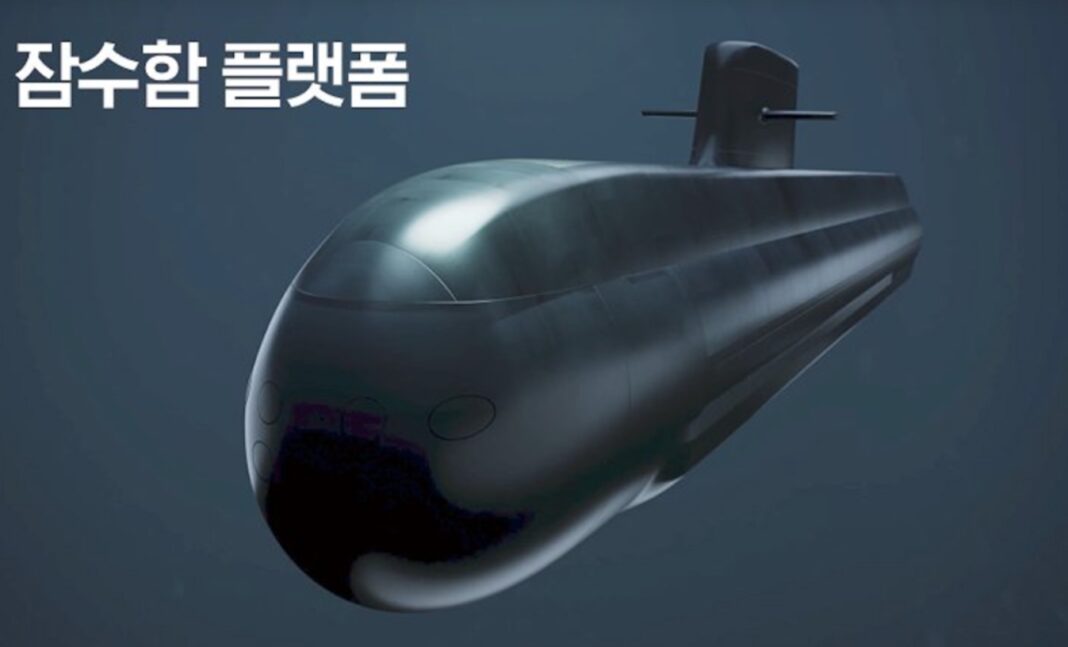
South Korea has officially confirmed plans to develop a new class of Jang Bogo N Project nuclear-powered submarines — a move that could fundamentally reshape the balance of naval power in East Asia.
The decision places South Korea on track to join an exclusive group of nations currently operating nuclear-powered submarines:
- United States
- United Kingdom
- France
- Russia
- China
- India.
NEW – South Korea reveals its “Jangbogo N Project,” the development of domestically produced nuclear-powered submarines, with the first one expected to be ready mid 2030. pic.twitter.com/T6k7oDisNS
— Disclose.tv (@disclosetv) May 26, 2026
The implications, however, extend far beyond simply fielding more capable submarines.
The program signals a deeper transformation in Seoul’s military thinking — from Peninsula defense to Regional strategic deterrence.
What Is the Jang Bogo N Project?
South Korea’s Ministry of National Defense recently published:
The Basic Plan for the Development of Nuclear-Powered Submarines in the Republic of Korea
outlining ambitions for a next-generation undersea force.
The name Jang Bogo N Project references South Korea’s first submarine class and symbolizes what may become Seoul’s most ambitious naval modernization effort yet.
According to the ministry,
the submarines will provide:
✔ Dramatically enhanced endurance
✔ Higher underwater mobility
✔ Greater operational range
✔ Improved survivability.
Unlike diesel-electric submarines, nuclear-powered boats can remain submerged for Months without surfacing for fuel.
That provides major operational advantages in contested maritime environments.
Why South Korea Wants Nuclear Submarines
Officially, Seoul frames the project primarily around North Korea and its growing missile and nuclear capabilities.
The defense ministry says the submarines will play a “Core role” in responding to:
North Korea’s submarine-launched missile and nuclear threats.
Pyongyang continues expanding:
- Nuclear weapons
- Ballistic missile inventories
- Submarine-launched missile capabilities.
There are also increasing concerns that North Korea may be pursuing its own Nuclear-powered submarines potentially with assistance from Russia.
For Seoul, that raises concerns about maintaining long-term undersea deterrence.
But China May Be the Bigger Strategic Driver
Many analysts believe the deeper geopolitical logic extends well beyond North Korea.
Increasingly, South Korea appears focused on:
The broader Indo-Pacific security environment
particularly the rise of China.
China now fields one of the world’s largest submarine fleets,
including both:
- Nuclear-powered submarines
- Advanced diesel-electric submarines.
Its naval modernization continues accelerating.
That shift has pushed regional states toward:
Long-range maritime deterrence strategies
rather than purely coastal defense.
The Jang Bogo N Project suggests Seoul increasingly wants:
Blue-water naval capability
able to operate well beyond the Korean Peninsula.
Who Operates Nuclear-Powered Submarines?
Current Nuclear Submarine Operators:
- United States
- Russia
- China
- United Kingdom
- France
- India
Future Operators:
- Australia (AUKUS)
- South Korea (planned)
The expansion reflects a broader Global shift toward long-endurance naval deterrence.
Did Trump Quietly Approve the Program?
One major geopolitical twist emerged last year.
According to reports, U.S. President Donald Trump publicly stated he had approved South Korea’s nuclear submarine ambitions.
Trump wrote on Truth Social that South Korea would receive authorization to build “Nuclear Powered Submarine[s]” instead of relying on “Old fashioned” diesel boats.
Historically, Washington resisted Seoul’s ambitions because of Nuclear proliferation concerns and legal restrictions under bilateral agreements governing Uranium enrichment and fuel reprocessing.
The latest announcement strongly suggests The U.S. position may now be changing.
The Fuel Problem: South Korea Still Needs US Help
Despite advanced shipbuilding capabilities, Seoul still faces one major challenge:Nuclear fuel.
South Korea cannot independently enrich uranium for naval propulsion without U.S. approval under existing agreements.
Reports suggest Washington may eventually provide: Enriched uranium fuel while South Korea develops Small modular naval reactors.
The arrangement would mirror aspects of the AUKUS framework helping Australia acquire nuclear-powered submarines.
Unlike Australia, however, South Korea already possesses:
A major civilian nuclear industry potentially shortening development timelines.
Could This Lead to Nuclear Weapons?
The biggest strategic question is:
Does nuclear propulsion eventually create a pathway toward nuclear deterrence?
Officially, South Korea remains committed to:
Treaty on the Non-Proliferation of Nuclear Weapons obligations.
The defense ministry emphasized Seoul will “Firmly fulfill” its non-proliferation responsibilities.
But the geopolitical reality is difficult to ignore.
All current nuclear submarine operators also possess Nuclear weapons.
Growing uncertainty regarding American security guarantees combined with North Korea and nuclear expansion has intensified domestic discussions in South Korea about whether independent nuclear deterrence may eventually become necessary.
For now, that remains politically sensitive — but increasingly difficult to dismiss.
Why Nuclear Subs Change Everything
South Korea already operates one of Asia’s most advanced conventional submarine fleets.
Its inventory includes:
- 12 Jang Bogo-class submarines
- 9 Sohn Won-yil-class submarines
- 3 Dosan Ahn Changho-class submarines.
The country is also fielding submarine-launched ballistic missiles (SLBMs) capable of providing a conventional second-strike deterrent.
So why nuclear propulsion?
Because nuclear submarines fundamentally alter Survivability and persistence.
Unlike diesel submarines, they can:
✔ Stay submerged for extremely long periods
✔ Travel faster
✔ Patrol farther from home waters
✔ Operate unpredictably.
That dramatically improves Deterrence credibility particularly in high-intensity conflict.
The Cost of Ambition
The project remains enormously ambitious.
Seoul expects construction timelines of roughly 10 years with vessels potentially serving for 30 years or longer.
Challenges include:
- Nuclear reactor design
- Specialized maintenance infrastructure
- Crew training
- Industrial scaling
- Fuel arrangements.
The total cost could run into Tens of billions of dollars over multiple decades.
The Bigger Strategic Message
The Jang Bogo N Project signals something larger than naval modernization.
It reveals:
South Korea increasingly sees itself as a regional power — not simply a frontline state confronting North Korea.
That shift aligns with broader trends across the Indo-Pacific, where countries are rapidly adapting to:
- China’s military rise
- North Korea’s unpredictability
- Questions about long-term U.S. commitments.
The result is a new era of Strategic self-reliance.
Conclusion: Seoul Is Entering a New Strategic Era
South Korea’s nuclear submarine ambitions represent one of the most important military developments in Asia in years.
The program will take time.
Its success remains uncertain.
But the strategic signal is unmistakable:
Seoul is preparing for a much more dangerous Indo-Pacific future.
Whether focused on North Korea, China or wider regional deterrence, South Korea increasingly appears unwilling to rely solely on traditional alliances for security.
The Jang Bogo N Project may ultimately become far more than a naval modernization effort.
It could mark: