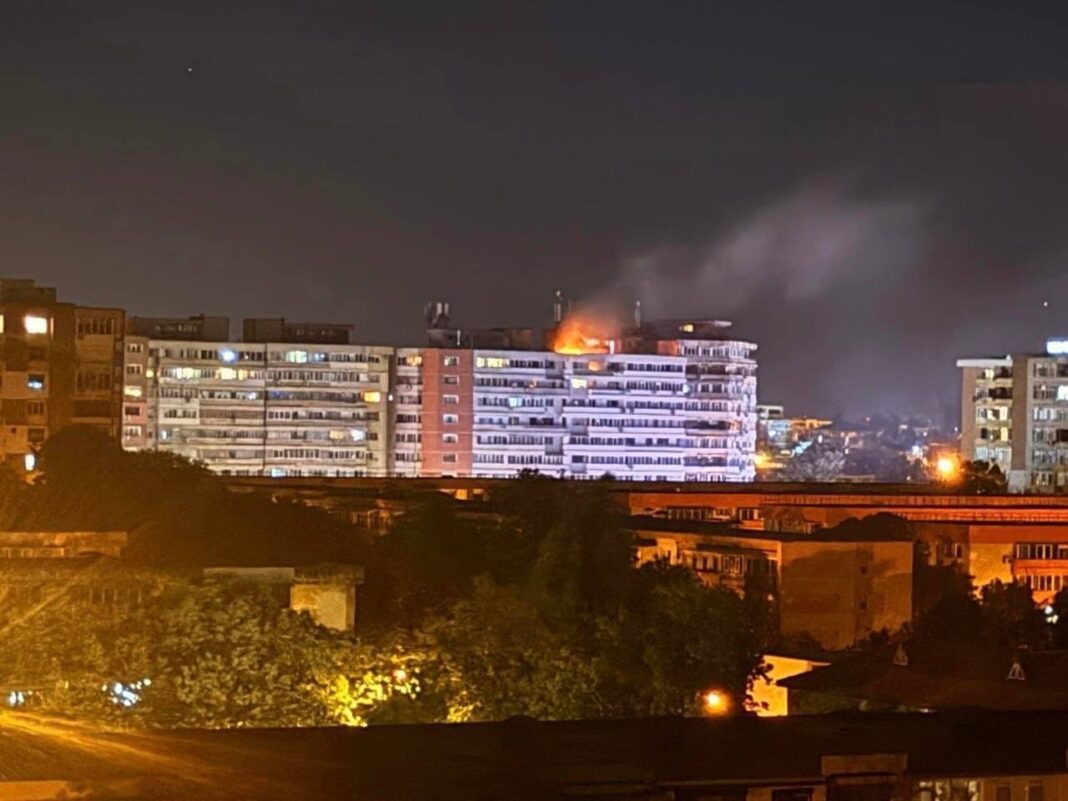
Three months into the war with Iran: one question continues to dominate political and security circles in Washington:
Why doesn’t President Donald Trump simply “finish the job”?
After weeks of military operations, repeated threats of escalation and calls from hawkish allies for stronger action, many expected the White House to intensify military pressure on Tehran.
Instead, the administration appears increasingly focused on:
Negotiation rather than escalation.
Behind that shift lies a growing recognition inside Washington that the costs of expanding the war may far outweigh the likely gains.
Trump’s Calculation: More War May Not Change the Outcome
According to a senior administration official, Trump’s view is becoming increasingly pragmatic.
“You would need a substantial escalation in order to meaningfully change things that are on the ground,” a senior administration official said.
The same official added:
“You could always get more through military conduct, the question is whether you could get something that is worth the cost.”
That calculation increasingly explains why Washington appears reluctant to return to major combat operations despite repeated political pressure.
WSJ: Trump had spoken to aides and outside advisers about the concept of expanding the scope of the 2020 (Abraham) accords in the hours before the regional call and told aides he planned to raise the point with his counterparts, U.S. officials said. But Middle Eastern leaders…
— Joumanna Nasr Bercetche (@JoumannaTV) May 27, 2026
The administration reportedly believes:
Limited military action has already reached the point of diminishing returns.
Iran absorbed sustained strikes, lost senior commanders, suffered infrastructure damage and endured economic pressure — yet the political system survived and Tehran’s strategic calculations remain largely unchanged.
The Central Contradiction of America’s Iran Strategy
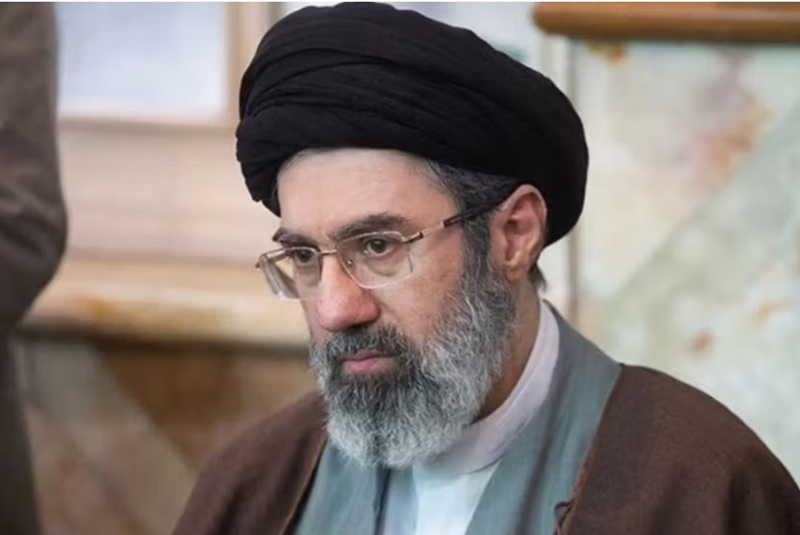
At the heart of Washington’s dilemma lies a long-standing contradiction:
America pursued maximal goals through limited means.
For years, both Washington and Israel implicitly pursued objectives that pointed toward:
Regime change in Iran
while simultaneously avoiding the military and political commitments needed to actually make regime collapse realistic.
Instead, the United States relied heavily on:
- Sanctions
- Regional pressure
- Intelligence operations
- Proxy partnerships.
In effect, Washington sought transformational outcomes without accepting the costs of transformational war.
That contradiction has become increasingly visible during the current conflict.
Why More Limited Strikes May No Longer Matter
Analysts increasingly argue that a return to:
Limited military strikes
would likely fail to fundamentally alter Tehran’s behavior.
Iran has already demonstrated:
✔ High tolerance for pressure
✔ Strategic patience
✔ Willingness to absorb damage for regime survival.
The conflict also reinforced a reality often underestimated in Washington:
Iran’s national security doctrine is built around resilience.
Rather than conventional battlefield dominance,
Tehran relies heavily on:
- Asymmetric warfare
- Missile deterrence
- Regional networks
- Strategic disruption capabilities.
That means even painful tactical damage may not necessarily force political capitulation.
The Energy Factor Has Created Mutual Deterrence
One of the biggest constraints on escalation is:
Energy security.
Major attacks on Iranian energy infrastructure — or broader Gulf escalation — could trigger:
✔ Massive oil price spikes
✔ Shipping disruptions
✔ Global inflation shocks
✔ Long-term environmental risks.
That has effectively created a form of mutual deterrence between Washington and Tehran centered around the Strait of Hormuz.
Both sides increasingly understand there are escalation thresholds whose consequences may become impossible to control.
For the White House, that reality appears increasingly difficult to ignore.
Trump Appears to Be Choosing the “Least Bad Option”
Against this backdrop, Trump increasingly appears to view diplomacy as:
The least costly available path.
Not necessarily because Washington trusts Tehran — but because alternatives look even worse.
From the administration’s perspective, the realistic choices increasingly appear to be:
Option 1: A prolonged regional war
Option 2: A massively expensive regime-change campaign
Option 3: Negotiation with Iran despite skepticism
The administration appears to believe:
Negotiation is the least bad outcome available.
That does not mean confidence in success is high.
But it reflects growing recognition that:
Military escalation alone is unlikely to solve the core problem.
Trump’s Abraham Accords Vision Faces Regional Reality
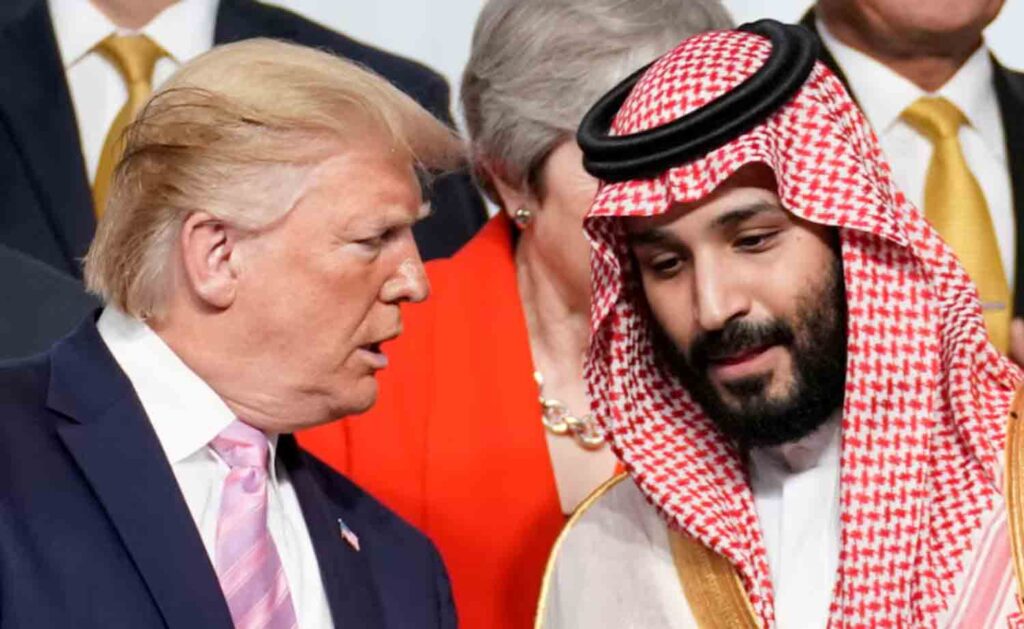
At the same time, Trump is reportedly trying to expand the Abraham Accords as part of a broader post-war settlement.
According to U.S. officials, Trump personally raised the idea during regional calls with Middle Eastern leaders — apparently surprising some counterparts who had not been briefed beforehand.
The ambition is clear:
Link regional diplomacy to wider Arab-Israeli normalization.
But analysts increasingly argue the plan faces major political obstacles.
Saudi Arabia Still Holds the Key
At the center of the normalization debate remains Saudi Arabia.
Riyadh has repeatedly made clear that meaningful normalization with Israel requires progress toward:
A Palestinian state.
Without movement on the Palestinian issue, regional observers say Saudi Arabia is unlikely to re-enter normalization talks in any serious way.
That creates a major challenge for Trump’s vision.
Because in practice, Saudi Arabia still shapes the political boundaries for many Arab and Muslim states considering normalization.
Iran Will Never Join a Pro-Israel Regional Architecture
Perhaps the biggest misconception emerging in Washington is the belief that Iran might somehow eventually integrate into a broader regional framework tied to Israel.
Analysts argue this is politically unrealistic.
Iran’s regional identity — particularly since Iranian Revolution — has been deeply built around opposition to Israeli regional influence.
That position is not merely tactical.
For Tehran, it represents a foundational ideological principle.
No amount of diplomatic incentives is likely to fundamentally alter that reality.
Washington May Be Misreading the Region Again
Critics increasingly argue the deeper issue is not simply diplomacy — it is strategic misunderstanding.
For years, some policymakers assumed Arab states would permanently deprioritize Palestine in favor of shared concerns over Iran.
But the limits of that assumption are increasingly visible.
Normalization does not happen in a political vacuum.
Regional legitimacy, domestic politics and public sentiment still matter.
And for many Arab governments, the Palestinian issue remains central — not secondary.
The Bigger Strategic Reality
The emerging reality for Trump is difficult:
Escalating the war may not achieve decisive victory.
But diplomacy may also require politically painful compromises.
Iran remains resilient.
Saudi Arabia remains cautious.
Israel remains skeptical.
And regional leaders increasingly prioritize:
Stability over confrontation.
That leaves Washington trapped in a familiar Middle Eastern dilemma:
No option looks clean, decisive or politically easy.
Conclusion: Trump’s Iran Policy Is Increasingly About Limiting Damage
For now, Trump appears to have made a core calculation:
The costs of escalation outweigh the likely benefits.
That does not mean Washington sees diplomacy as ideal.
Only that alternatives appear riskier.
The broader lesson emerging from the war may be uncomfortable for policymakers:
Military superiority does not automatically produce political outcomes.
And in Iran’s case, Washington increasingly appears to believe that: