The possibility of a direct US–Iran military confrontation is no longer theoretical. Fresh deployments of elite American forces—including special operations units and airborne troops—suggest that planning for a potential escalation may already be underway.
At the same time, Iranian sources claim that over one million fighters are prepared for a ground conflict, signaling readiness for a prolonged war.
This raises a critical question:
Could a US ground invasion of Iran succeed—or trigger a historic military failure?
Why the Strait of Hormuz Changes Everything
The Strait of Hormuz is the world’s most important oil chokepoint, carrying nearly one-fifth of global energy supplies.
US President Donald Trump warned that even near-total success in securing the strait would not be enough:
Even a 1% failure rate could mean a missile striking a billion-dollar ship.
🇺🇸🇮🇷 U.S. President Donald Trump said that even a 99% success rate in securing the Strait of Hormuz would be insufficient, as a single missile strike on a billion‑dollar vessel would still be unacceptable.
“The problem with the strait is this. One percent is unacceptable,… pic.twitter.com/bPtkfIwceY
— Visioner (@visionergeo) March 26, 2026
In modern warfare, small disruptions can cause massive global consequences.
Iran’s Strategy: Win Without Winning
Iran is unlikely to fight a conventional war. Instead, it is preparing for asymmetric conflict, designed to exploit weaknesses in a stronger opponent.
Key tactics include:
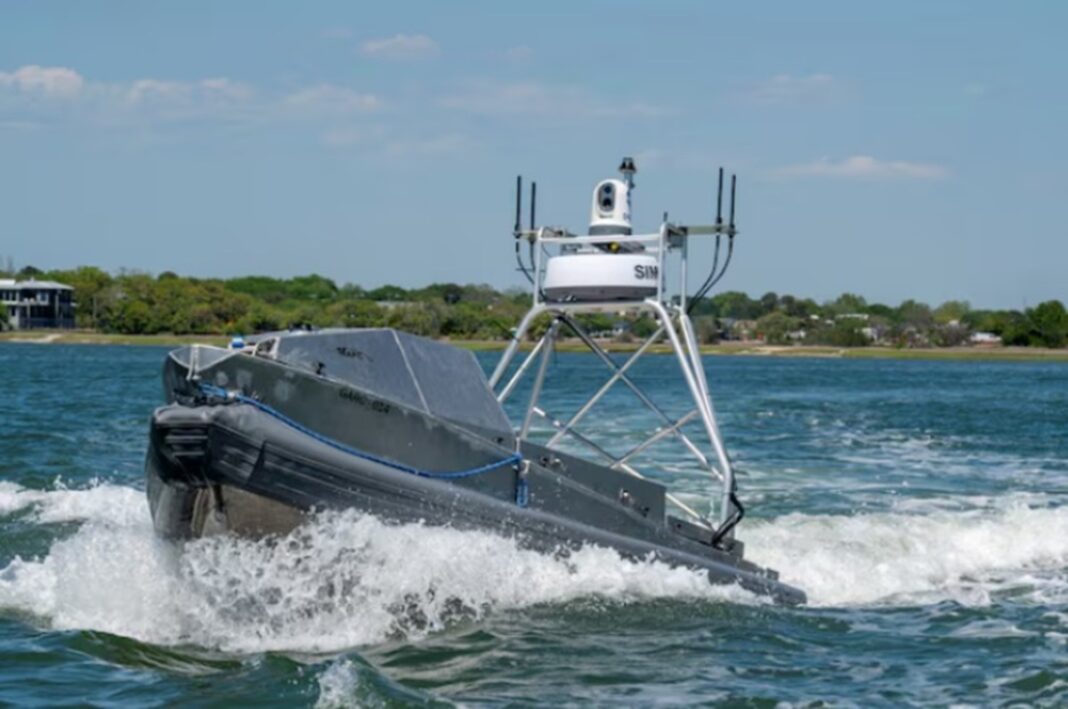
- Swarm attacks using fast boats
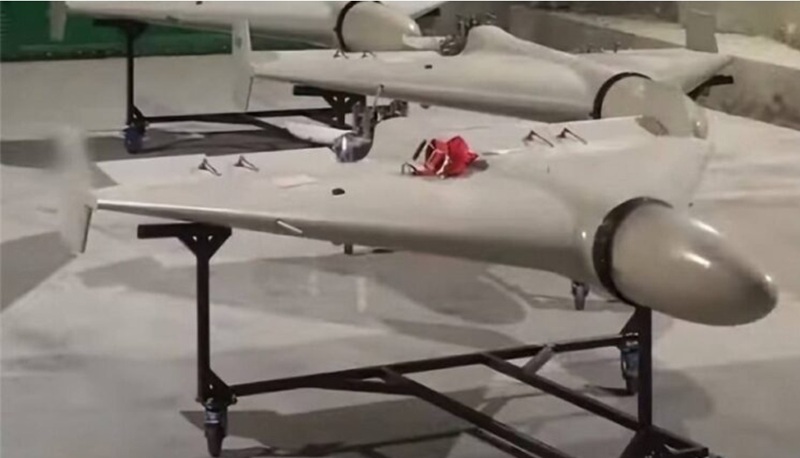
- Mass drone deployments
- Anti-ship missile strikes
- Naval mining operations
Meanwhile, Yemen’s Houthi forces have signaled readiness to join the conflict, potentially targeting another critical chokepoint—the Red Sea—expanding the war region.
The Ground Invasion Problem
Some analysts believe US discussions about landing zones such as Kharg Island may be misleading or strategic signaling rather than actual plans.
The reason is simple: geography strongly favors Iran.
- Iran’s coastline is backed by mountains
- Landing forces would be exposed immediately
- Retreat and resupply would be extremely difficult
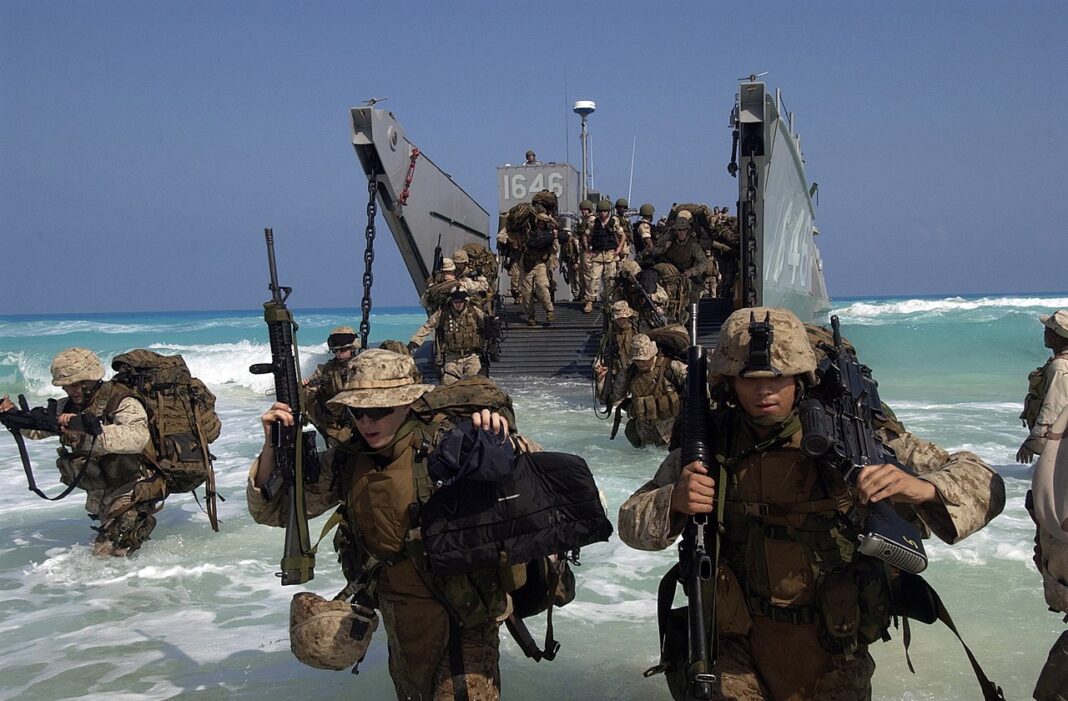
Even elite US Marine units could face severe losses under sustained missile and drone attacks.
A Dangerous Historical Parallel: Gallipoli
Experts increasingly compare the situation to the Gallipoli Campaign, one of the most costly failed invasions in modern history.
Led in part by Winston Churchill, Allied forces believed superior naval power would secure a quick victory.
Instead, they faced:
- Defenders holding elevated terrain
- Troops trapped on exposed beaches
- Collapsing logistics under constant fire
- Naval losses from simple mines
The result was catastrophic: massive casualties and eventual withdrawal.
Why Iran Could Be a “Persian Gallipoli”
Iran today shares several of the same advantages that doomed the Allied invasion in 1915:
Terrain Control
Mountains overlooking coastal landing zones provide dominant firing positions
Saturation Warfare
Thousands of drones and missiles can overwhelm advanced defenses
Logistics Advantage
- Iran: Short, internal supply lines
- US: Long, vulnerable supply chains
Chokepoint Power
The Strait of Hormuz functions like the Dardanelles—where even minor disruptions can collapse large-scale operations
A War That Won’t Stay Local
A US–Iran conflict could quickly expand into a multi-front regional war:
- Iraqi militias targeting US bases
- Houthi attacks on Red Sea shipping
- Disruption of global energy supply chains
The result: a conflict with global economic consequences
Reality Check: Technology vs Determination
Claims that Iran could collapse quickly under heavy bombardment echo past miscalculations in military history.
History shows:
- Superior technology does not guarantee victory
- Defenders with terrain advantage can neutralize stronger forces
Final Analysis
A US invasion of Iran would likely be:
- High-risk
- Logistically complex
- Economically disruptive
Rather than a quick victory, it could evolve into a prolonged and costly conflict with global consequences.
“In the Strait of Hormuz, dominance is not decided by power alone—but by geography, strategy, and resilience.”